
CIHS – Centre for Integrated and Holistic Studies

Date/Time:

Blog Post

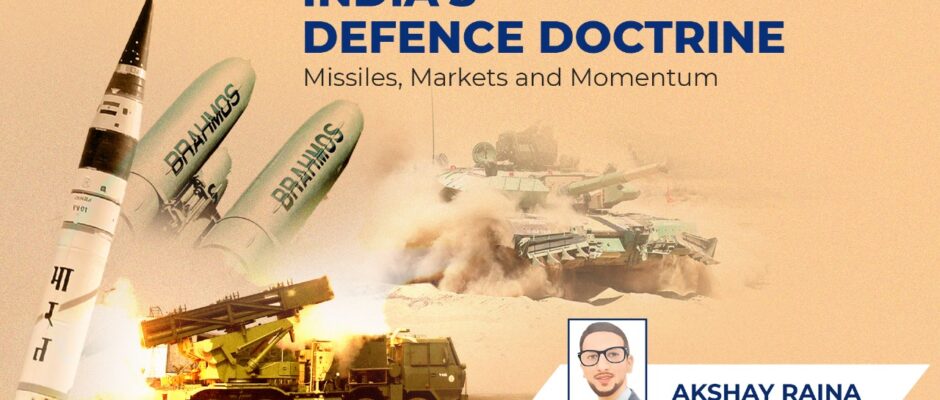
India's Defence Doctrine: Missiles, Markets, and Momentum

India’s Defence Doctrine: Missiles, Markets, and Momentum

India’s defence sector is undergoing a strategic renaissance evolving from self-reliance to global leadership as an exporter of cutting-edge, indigenous military technologies and a trusted partner in the international security architecture. Akshay Raina When it comes to national security, a country’s ability to rely on its own resources in times of conflict is crucial. For India, a rapidly growing global power with diverse security concerns, achieving self-reliance in defence production has become a top priority. This shift from dependency to self-sufficiency is no longer just a strategic aim; it’s a vital step toward safeguarding India’s defence needs while simultaneously strengthening its position in the global defence market. The country’s focus on enhancing indigenous defence production, through initiatives like Make in India, has completely transformed the landscape of defence manufacturing. In recent years, India has dramatically reduced its dependence on foreign imports, thanks to forward-thinking policies, increased collaboration between government agencies and private industries, and a strong emphasis on developing homegrown defence technologies. These efforts have also contributed to a significant rise in defence exports, signalling India’s emerging role as a major global defence producer and exporter. From Import Dependency to Self-Reliance India has historically been one of the world’s largest importers of defence equipment. However, this trend is rapidly changing. The introduction of the Defence Acquisition Procedure (DAP) 2020 by the Ministry of Defence was a pivotal move in this transformation. The DAP focuses on promoting the indigenization of defence production, strengthening India’s military capabilities and reducing the country’s reliance on foreign suppliers for key military hardware. A key aspect of this procedure has been the development of indigenization lists, alongside fostering innovation from domestic startups and MSMEs (Micro, Small, and Medium Enterprises), which are now integral to India’s defence ecosystem. The government’s investment in defence corridors and its efforts to promote collaboration between public sector undertakings (PSUs) and private entities have further accelerated this progress. Moreover, the relaxation of Foreign Direct Investment (FDI) limits in defence has encouraged global defence companies to establish manufacturing hubs in India, helping to fuel the growth of the domestic defence industry. Milestones in Indigenous Defence Production India’s move toward self-sufficiency in defence is marked by significant technological advancements and strategic achievements. India’s capabilities in defence manufacturing are no longer limited to just assembling products; the country is now designing and producing world-class technologies for its defence needs. Some of India’s notable indigenous defence products include: These products, alongside ongoing advancements in electronic warfare, radar technologies, and advanced fighter jets, exemplify India’s growing capability to design, develop and produce defence technologies to meet its strategic needs. With sustained investments in research and development, India is poised to reduce its dependence on foreign defence imports even further. India’s Expanding Defence Export Market India’s increasing self-reliance in defence is not only reducing the country’s dependence on imports but is also positioning India as a significant player in the global defence export market. Over 100 countries now purchase defence products from India, including helicopters, naval vessels, missiles, armored vehicles and aircraft. The rise in defence exports is largely attributed to the government’s focus on high-quality manufacturing, innovative technologies and streamlining the defence procurement process. Key achievements in India’s defence exports include: For instance, as per recent reports, India supplied over $250 million worth of Pinaka multi-barrel rocket launchers, anti-tank munitions and other ammunition to Armenia in 2022. India has also exported naval platforms and torpedoes to Mauritius, Myanmar, Sri Lanka and Vietnam and military trucks to Thailand. Additionally, Tata 8×8 LPTA trucks, based on the Tata 1623 platform, are being exported to the Royal Moroccan Army, marking another achievement in India’s defence exports. Future of India’s Defence Exports India’s defence exports are on an upward trajectory. As the country enhances its defence production capabilities, its growing export footprint positions India as a trusted supplier of affordable, high-quality defence products. The government’s ambitious target of reaching ₹50,000 crore in defence exports by 2029 reflects India’s determination to become a global leader in defence manufacturing. This rise in exports is not just about economics—it’s also about strengthening India’s strategic alliances globally. Deals with countries like the UAE, Armenia and Myanmar reflect India’s growing influence and the trust placed in its defence capabilities. By providing cutting-edge defence solutions at competitive prices, India is offering an alternative to traditional Western and Russian defence suppliers, which only further solidifies the country’s position in the global defence market. India’s Strategic Vision for Global Defence Leadership India’s defence sector has undergone a remarkable transformation over the past decade. Once one of the world’s largest importers of defence equipment, India is now rapidly becoming a top producer and exporter of world-class defence technologies. The government’s support for indigenous defence production, increased foreign investments and strategic initiatives like the Defence Acquisition Procedure (DAP) 2020 have paved the way for India to become self-reliant in defence production. India’s defence exports have surged significantly, from ₹686 crore in 2014-15 to ₹21,083 crore in 2023-24. With cutting-edge products like BrahMos, Pinaka and Tata 8×8 trucks, India is providing high-quality, reliable, and affordable defence solutions to the world. The country’s goal of achieving ₹50,000 crore in defence exports by 2029 is a clear indicator of India’s growing influence on the global defence stage. As the geopolitical landscape evolves, India’s role as a trusted defence partner and manufacturing leader will continue to grow, securing both its own defence needs and its position as a global strategic power. By prioritizing self-reliance, innovation and global partnerships, India is not just preparing for its future defence requirements but is also positioning itself as a leader in the global defence market. (Author is a seasoned media professional, content strategist and news analyst)
Read More
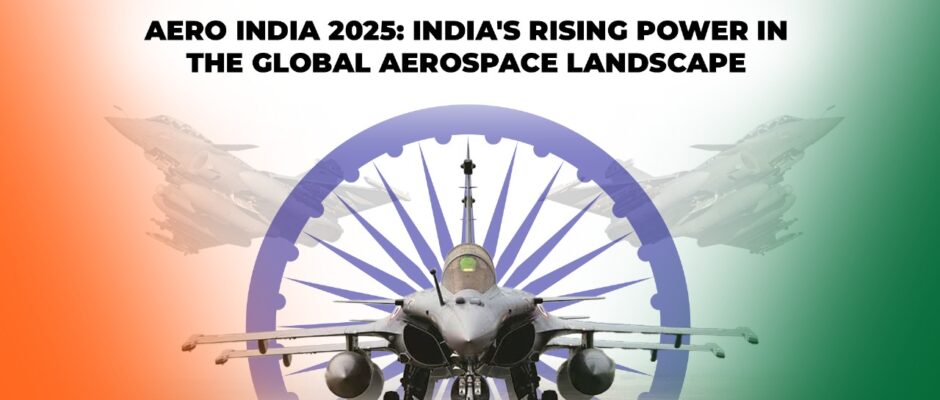
Aero India 2025: India’s Rising Power in the Global Aerospace Landscape

Aero India 2025: India’s Rising Power in the Global Aerospace Landscape

Akshay Raina India’s aerospace and defence sector has been rapidly evolving, reflecting the nation’s growing commitment to self-reliance, technological innovation and its aspiration to become a global leader in defence and aerospace technologies. This commitment  found its most visible expression in Aero India, the largest aerospace exhibition in Asia, which  was held in Bengaluru from February 10–14, 2025. With the theme “The Runway to a Billion Opportunities,” Aero India 2025 is set to demonstrate India’s prowess in airpower and cutting-edge aerospace technologies, while positioning the country as a key player in the global airspace race. As the global aerospace sector becomes increasingly competitive, India’s emerging leadership is not just crucial for national security but also for its growing geopolitical influence and economic growth. Significance of Aero India 2025 Aero India 2025 is not just another air show; it is a symbol of India’s transformation into a global aerospace powerhouse. For more than two decades, the event has served as a platform for technological exchanges, strategic dialogues, and international collaborations. It has enabled India to showcase its military and civilian aerospace innovations, while also fostering critical business and defence partnerships. With participants from over 50 countries, the 15th edition of Aero India is shaping up to be a historic event, one that aligns with India’s vision of becoming self-reliant in defence and aerospace sectors. In a world where air superiority is a crucial determinant of national security, the significance of Aero India cannot be overstated. The event is a reflection of India’s growing airpower capabilities and the nation’s ambition to innovate, manufacture, and deliver aerospace systems that are at par with the best in the world. It brings together industry leaders, policymakers and experts to discuss the current state and future of aerospace technologies, highlighting India’s increasing contribution to shaping the global airspace race. The Global Aerospace Race: India’s Position The global aerospace race has intensified in recent years, driven by rapid advancements in both military and civilian aviation. Major aerospace powers such as the United States, Russia, China, and the European Union have long dominated the field, but India is steadily making its mark. Aero India 2025 stands as proof of India’s determination to close the gap and become a dominant force in aerospace technology. India’s indigenous aircraft and defence systems—such as the HAL Tejas fighter jet, the indigenously developed drone systems, and advancements in satellite and space technologies—are now being recognized globally for their innovation and reliability. The presence of global aerospace giants, including Lockheed Martin, Boeing, Airbus, and Dassault Aviation, at Aero India 2025 further demonstrates India’s emerging status as a centre for cutting-edge aerospace technology. At the same time, India’s own aerospace industries, led by private and public sector enterprises such as Hindustan Aeronautics Limited (HAL), Bharat Electronics Limited (BEL), and several dynamic start-ups, are making remarkable strides in indigenization and innovation. The government’s “Make in India” and “Aatmanirbhar Bharat” initiatives are providing the necessary framework to boost local manufacturing and innovation in defence technologies, helping India reduce its dependence on foreign imports. The theme of Aero India 2025, “The Runway to a Billion Opportunities,” encapsulates the tremendous potential for India to transform into a hub for defence manufacturing and aerospace technologies. This transformation is not just about boosting national security but also creating economic opportunities and forging international partnerships that will benefit India in the long run. Technological Innovation and Strategic Collaboration One of the core highlights of Aero India 2025 is the event’s ability to showcase the latest advancements in aerospace and defence technologies. The event features a range of exhibits, from advanced fighter jets and unmanned aerial vehicles (UAVs) to futuristic space exploration technologies. Live air shows, dynamic aerobatic displays and technology demonstrations will allow attendees to witness the capabilities of modern aircraft, as well as the innovative platforms and solutions being developed in India. These exhibitions are an essential part of demonstrating India’s self-reliance in aerospace and defence. But Aero India is not just a display of technological prowess; it is also a key platform for strategic dialogues. The Defence Ministers’ Conclave participated by more than 162 delegates from 81 countries at the event, themed ‘BRIDGE – Building Resilience through International Defence and Global Engagement,’ serves as an important forum for enhancing India’s diplomatic ties with friendly nations. As the world’s geopolitical landscape becomes increasingly uncertain, stronger collaborations among like-minded countries in defence and aerospace are crucial. Aero India 2025 provides a platform to discuss these strategic partnerships, making it an essential venue for fostering trust, cooperation and mutual growth. The CEOs’ Round-Table, where participation includes from officials, delegates and global CEOs from 26 countries including global investors such as Boeing, Lockheed, Israel Aerospace , Industries, General Atomics, Liebherr Group, Raytheon Technologies, Safran, and General Authority of Military Industries (GAMI), which brings together global and domestic aerospace leaders, plays an instrumental role in advancing this vision of collaboration. The participation of foreign Original Equipment Manufacturers (OEMs) in India’s defence and aerospace sector will be pivotal in bolstering the country’s manufacturing capabilities and facilitating technology transfer. The event provides an opportunity to form business-to-business (B2B) and business-to-government (B2G) partnerships that can enhance India’s position in the global aerospace sector. India’s standing as a major hub for global production was set with solidified record-breaking defence and aerospace agreements at the recently concluded Aero India 2025 at Bangalore. Agreements between Dassault Aviation and Hindustan Aeronautics Limited (HAL) for the production of the Rafale-M were key partnerships besides Safran’s jet engine business venture. Lockheed Martin landed contracts for the expansion of the F-21 and C-130J, while Boeing strengthened its alliance with Tata Advanced Systems for fighter aircraft components. Edge Group’s drone development and MRO partnerships have enhanced India-UAE aerospace cooperation. DRDO inked Memorandums of Understanding with startups for AI-driven and hypersonic weapon technology, while Adani Defence collaborated on UAVs with Israel’s Elbit Systems. Increased funding accelerated the AMCA program, while Indo-Russian negotiations centered on Su-57 production. Rolls-Royce collaborated with Indian companies on sustainable aircraft fuel and

Read More