CIHS – Centre for Integrated and Holistic Studies

Date/Time:

Blog Post

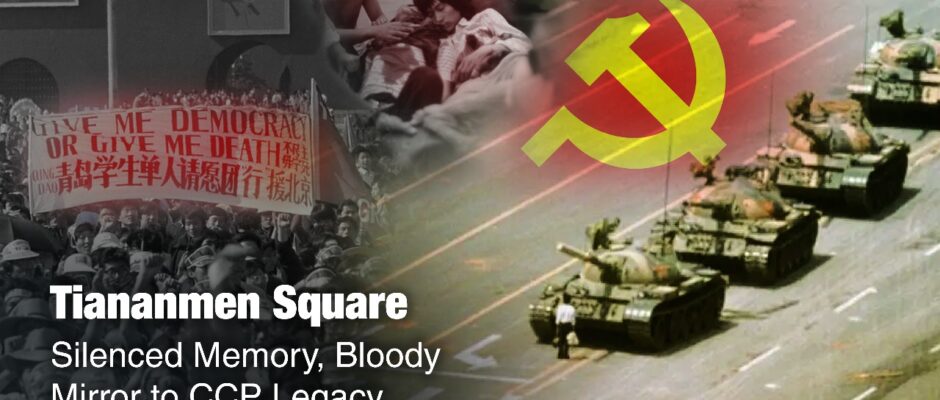
Tiananmen Square: Silenced Memory, Bloody Mirror to CCP Legacy

Tiananmen Square: Silenced Memory, Bloody Mirror to CCP Legacy

History, if buried, becomes a tool of tyranny. Memory, if preserved, becomes a weapon of liberty. The ghosts of Tiananmen still march in silence.  It is up to the world to give them voice. Pummy Pandita On June 3rd and early morning of June 4th, 1989, Chinese Communist Party (CCP) showed its draconian fangs and massacred the country’s youth and workers at Tiananmen Square. Thousands of unarmed workers and students protesting for democratic reforms and freedom from corruption were confronted with tanks, bullets and ferocity. Thirty-six years on, the Chinese dictatorship continues to erase, censor and sanitize that blood-soaked chapter from national psyche. But for the world at large, Tiananmen is still a beacon of defiance and a cautionary tale of enduring authoritarian rule. Although the death toll is veiled by censorship, estimates vary from hundreds to several thousand. What is undeniable is that CCP directed People’s Liberation Army (PLA) to suppress peaceful protests with iron fists and running the tanks over protestors. The iconic image of “Tank Man”, a solitary protester facing a line of tanks, was not mere momentary bravery. It was condemnation of a ruthless regime that perceived students waving placards as a danger to state security. Now, Chinese internet censors even suppress digits “64” and “1989.” Victims’ families, Tiananmen Mothers are subjected to surveillance, harassment and house arrests each anniversary. The attempt by state to rewrite history is a testament to its own fear: that memory is revolutionary and truth is subversive. Tiananmen was not an aberration; it was harbinger of CCP’s authoritarianism that changed but did not disappear. The censorship technologies, surveillance knowhow and suppression tactics that spawned in the wake of 1989 have since metastasized into contemporary surveillance state we witness in Xinjiang, Hong Kong, Tibet and increasingly within mainland China. The party that ran over students in Beijing constructed virtual concentration camps in Xinjiang in the name of “counter-terrorism.” And, the regime that shook at placards in 1989 now shakes at hashtags, virtual dissent and international scrutiny. Tiananmen was the bloody blueprint. Refinement, not remorse, followed. The world witnessed Tiananmen with horror in 1989. But it wasn’t long before trade interests and geopolitical convenience swept the outrage away. Within a few years, China was mainstreamed into global economy. In 2001, it was admitted to the WTO. Western firms poured in, drawn by cheap labour and state-forced exploitation, even as dissidents went missing and Nobel Peace laureates like Liu Xiaobo died in detention. This ideological bankruptcy, where democratic nations get friendly with the totalitarian ones in the interests of immediate gain, has only encouraged Beijing. West’s dependency on Chinese markets has made it an accessory to muffling Tiananmen’s memory. Why recall Tiananmen today? Because China’s political system, techno-authoritarian one-party rule with economic influence, is being shipped out; Chinese young people are coming off age in a state that not only revises the past but eliminates it and the struggle over narrative sovereignty is a battleground in the greater war for liberty in 21st century. Remembering Tiananmen is not about nostalgia. It is about marking the line in red between authoritarianism and civilization. It is about remembering that CCP’s “rise” rests upon coffins of protestors, bones of those it muzzled. The tanks are no longer rolling down Chang’an Avenue, but the infrastructure of fear, censorship and ideological control remains. For a world in which China’s economic influence and digital footprint become increasingly dominant, remembering Tiananmen is not merely historical amnesia—it is geopolitical suicide. It is imperative that governments, civil societies and international institutions not only to remember but act to raise voices that Beijing wants to suppress, to respond to Beijing’s international narrative warfare with unyielding truth and to see to it that those who stood in Tiananmen Square – armed with nothing but ideals and signs – did not die for nothing. (Author is head of operations at Centre for Integrated and Holistic Studies, a non-partisan think tank based in New Delhi)
Read More
Democracy Roiled in Bangladesh

Democracy Roiled in Bangladesh       

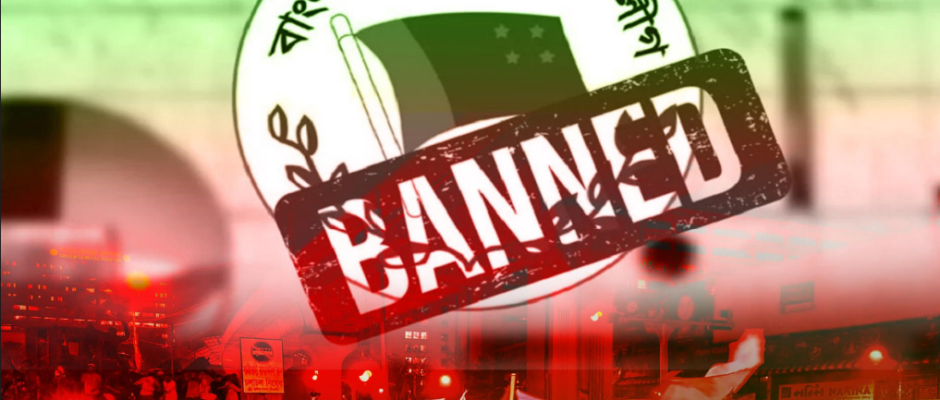
In a move unprecedented in political history, Bangladesh’s caretaker government, headed by Muhammad Yunus, has imposed a blanket ban on the Awami League (AL), one of the nation’s most politically influential parties in history.  The ban, put into effect via newly interpreted anti-terrorism and war crimes acts, represents an unprecedented turn in Bangladesh’s political history. With neither public trial nor parliament debate, this action has brought to fore serious issues of political impartiality, deterioration in democratic polity and legitimacy of transitional power.

Read More
Hindus in Bangladesh Face Existential Threat

Hindus in Bangladesh Face Existential Threat

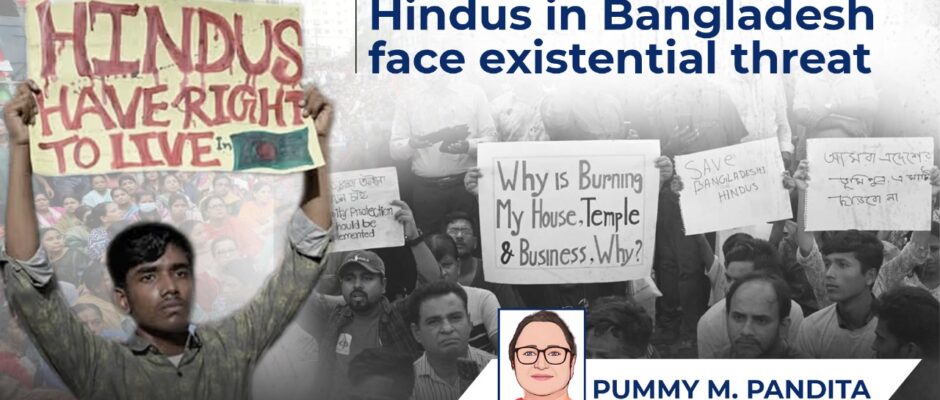
CIHS, UN reports meticulously documented atrocities against minorities while Yunus government is on denial mode. Pummy M Pandita Centre for Integrated and Holistic Studies (CIHS) had in August 2024 released a report titled “Hindu Genocide Unfolding in Bangladesh,” detailing systematic persecution of Hindus in that country. The report highlighted how minorities and in particular Hindus suffered oppression, forced conversions and violent attacks since partition of India in 1947. With the Hindu population dwindling from nearly 30 per cent in 1947 to less than 8 per cent today, the report documented the ” … ongoing ethnic cleansing.” CIHS report findings are further corroborated by United Nations Human Rights (UNHR) Office which released its own scathing report on the persecution of Hindus in Bangladesh. UN report reinforces the notion of targeted violence, displacement and systemic discrimination against Hindus, echoing concerns previously voiced by CIHS. The two reports underscore severity of crisis and the urgent need for international action. US Director of National Intelligence Tulsi Gabbard, in an interview, stated, “The long-time unfortunate persecution, killing, and abuse of religious minorities—Hindus, Buddhists, Christians, Catholics, and others—have been a major area of concern for the United States government and, of course, President Trump and his administration”. Bangladeshi however was unmoved and went on a denial mode. As per media reports, Chief Adviser’s press wing of Bangladesh’s interim government stated, “Bangladesh as a nation traditionally practices Islam that is famously inclusive and peaceful and it has made remarkable strides in its fight against extremism and terrorism.” Such response starkly contrasts the reality documented in both CIHS and UNHR reports. UNHR observations highlight a harsh reality: a systematic record of violence, displacement and persecution against a religious minority group in a state that takes pride in pluralism. This report is presented against the backdrop when rising extremism in South Asia is drawing international attention to the region and makes it acutely necessary that the situation must be evaluated factually with recourse to historical reality. Some specific incidents highlighted in the report are torching of three temples and the looting of about 20 houses in Burashardubi, Hatibandha and Lalmonirhat. UN report identifies these attacks to factors like religious and ethnic discrimination, targeted attacks on supposed supporters of former Awami League government among minorities, local communal land disputes, and personal conflicts. It also mentions involvement of some members and supporters of Jamaat-e-Islami and Bangladesh Nationalist Party (BNP) in perpetuating violence. Even after initial denials, Bangladesh’s interim caretaker government admitted at least 88 incidents of violence against minorities, predominantly Hindus, after August 2024. These happenings have raised significant concerns both within the country and globally, emphasizing urgent need for effective measures to protect minority communities in Bangladesh. Bangladesh has witnessed a considerable increase in widespread violence erupted following the ousting of former Prime Minister Sheikh Hasina in August 2024, disproportionately affecting Hindu minorities.  UN report documents that Hindu homes, businesses and temples were targeted on a systematic basis particularly in rural and historically tense areas. Some of the notable incidents include: Violence was not limited to these districts only. Other districts viz., Feni, Patuakhali, and Moulvibazar, also reported heinous crimes such as arson attacks on temples and brutal murder of Hindu individuals. These assaults, involving property destruction, arson and direct physical threats often exacerbated by inadequate police response suggest institutional impunity and perhaps political motivations.  UN Report states that there are several Bangladeshi localities which have emerged as hotspots of anti-Hindu attacks. The incidents recorded in report: The report documents these attacks with descriptions of victims, as verified by independent human rights groups. It is disturbing to record that police responses have been tardy or ineffective, permitting perpetrators to operate with impunity. The magnitude of the atrocities is appalling. UN report puts the number of deaths during the protests and violence that followed between July 1 and August 15, 2024, at an estimated 1,400. The overwhelming majority of these were caused by actions of Bangladesh’s security forces, who were accused of gross human rights abuses, including summary killings and shooting unarmed protesters. Children comprised around 12 – 13 per cent of these victims. Violence in Bangladesh mid-last year (2024) is not a lone phenomenon. The Hindu population in Bangladesh has been progressively dwindling due to amalgamation of targeted violence, legal discrimination and systemic exclusion. According to census 2022 data, Bangladesh’s population was 165,191,648 with percentage breakup detailed below: Religion Population Per cent breakdown Muslims 150,360,406 91.04 Hindus    13,130,109 07.95 Buddhists      1,007,468 0.61 Christians          495,475 0.30 Others          198,190  0.12 The reason for this decline is threefold—state indifference, mob violence and land grabs through Vested Property Act which has traditionally allowed seizure of Hindu-held property on various pretexts. Sheikh Hasina-led Awami League government in Bangladesh had presented itself as secular. The state’s inability to intervene strongly against perpetrators of violence against Hindus creates disquieting doubts about its commitment to protecting minorities. Though there have been some arrests after occurrence of violence, conviction is an exception and political convenience becomes the rule. The growing power of Islamist parties such as Hefazat-e-Islam has further intensified the issue as political parties are reluctant to act decisively against extremists for fear of electoral retribution. One of the worrying features brought out by UNHR report is the failure of law enforcement agencies to act. In spite of large-scale nature of the attacks, there was an overwhelming failure to intervene to save Hindu communities. This institutionalized impunity has encouraged perpetrators to continue perpetrating violence against minorities in a cycle of repetition. UN report also incriminates the former government and its security establishment for planning a calculated and well-coordinated effort to quell dissent. This included hundreds of extrajudicial executions, arbitrary arrests, detentions and cases of torture. These acts were said to have been committed with awareness and coordination of political leadership and top security officials, possibly constituting crimes against humanity. Global community has raised severe concerns regarding the developments. UN High Commissioner for Human Rights, Volker Türk, has demanded serious probes into all deaths

Read More
USCIRF 2025 - Distorting India’s Reality

USCIRF 2025: Distorting India’s Reality

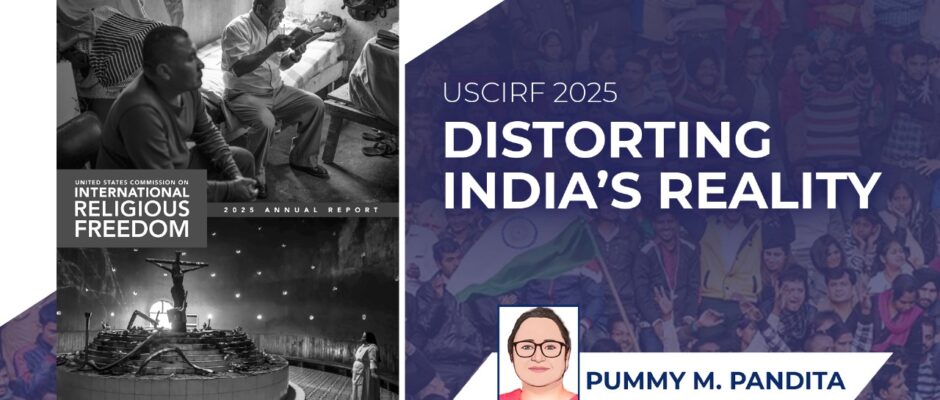
The USCIRF time and again spins a one-sided tale cherry-picking facts, sidelining India’s constitutional pluralism, and pushing a loaded narrative that fits their playbook more than ground realities. Pummy M. Pandita The U.S. Commission on International Religious Freedom’s (USCIRF) 2025 India report has once again revealed the commission’s fundamentally flawed methodology, dependence on biased data sources & selection, lack of transparency in evaluating religious freedom, and a one-sided narrative that misrepresents India’s thriving democracy and plural society. By selectively choosing incidents, depending on questionable sources, and willfully avoiding India’s constitutional framework, USCIRF has created a report that is neither objective nor credible. In selectively pointing out incidents in a vacuum and ignoring the broader framework of India’s constitutional protections for all religions, USCIRF goes against its own credibility. Not only does this report misrepresent the situation on the ground, but it also unfairly defames a nation that enshrines the rights of all its citizens. USCIRF has repeatedly refused to provide its sources of data in a manner that meets rigorous journalistic or academic transparency standards. Much of the incidents quoted in the report rely on politically driven NGOs,  lobby groups, and reports from organisations that have a recorded history of ideological bias against India. Reports tend to be based on media reports instead of official government statistics, police records, or independent judicial evaluations. This selective information distorts the actual picture of religious freedom in India. Most of these sources have already been identified as previously misreporting or manipulating facts to fit a specific agenda. The lack of primary research, government interaction, or varied local opinions in the report questions its credibility. India is targeted for scrutiny, yet the USCIRF overlooks or disparages such incidents or worse in other democracies, showing a distinct double standard. The report ignores the emergence of religious extremism among some minority communities, such as instances where religious radicalization put national security at risk or affected communal harmony. It disregards the constitutional protection afforded to minorities in countries like India’s strong judicial protections, affirmative action measures, and full participation of minorities in public life. USCIRF selectively reports on local incidents without context, repeatedly leaving out legal proceedings, counter-reports, and government action taken to respond to grievances. USCIRF consistently misinterprets India’s legal structure, labeling good governance actions like anti-conversion laws and policies regarding citizenship as discriminatory, although they are founded on constitutional provisions. The report also underplays violent extremism, secessionist forces, and foreign interference in Indian internal affairs, selectively labeling state reactions as “persecution” without drawing attention to threats to national security. USCIRF’s record of going after India has followed a general geopolitics design wherein reports have been used to lever diplomatic engagements. The USCIRF has specifically targeted the Citizenship (Amendment) Act 2019 (“2019 CAA”) passed by the Indian Parliament in 2019 and its continued criticism since then reveals an inaccurate understanding of the genesis of the law and the disrespect towards sovereign Indian democratic institutions. CAA is designed to offer refuge to persecuted religious minorities—Hindus, Sikhs, Buddhists, Jains, Parsis, and Christians—from neighboring Islamic states like Pakistan, Afghanistan, and Bangladesh. These minorities have long faced systemic oppression in their home countries. CAA does not affect Indian Muslims, who are in no way disadvantaged by the law. Yet USCIRF frames it as a discriminatory tool, conveniently ignoring that it aims to address religious persecution in neighboring Islamic nations. For good order sake, United States too has a similar Citizenship Act in the form of the Lautenberg Amendment, led by US Senator Frank Lautenberg in 1989-90, which facilitates citizenship to recognized persecuted religious minorities in the former Soviet Union. Iran was added subsequently through the Specter Amendment, that provided refugee status and ultimately citizenship to a group of minorities from three nations.  Why is USCIRF silent on that and not condemned this act also? The commission has also been accused of disproportionately targeting on some nations and ignoring serious religious freedom abuses in many other nations, which puts its motives and geopolitical agendas in question. Its inability to speak out against growing cases of persecution of Hindus, Sikhs, Buddhists, and other minority groups in the neighboring countries where blasphemy laws and institutional discrimination are prevalent. This inconsistency erodes the credibility of the USCIRF and raises questions about whether its reports are motivated by facts or political goals. Suggesting India as a Country of Particular Concern (CPC) is not only factually wrong but also smells of a conscious effort to mislead about India’s religious scenario. India is still one of the most religiously plural and diverse countries, where individuals from all religions are involved in government, business, and public life. However, USCIRF’s failure to recognize this diversity and continued legal protections for religious communities reveals its biased agenda. The report also criticises India’s anti-conversion laws, which are in place to prevent coerced religious conversions, often under the guise of marriage or social coercion. These laws, intended to protect vulnerable individuals from exploitation, have become a focal point of controversy. USCIRF dismisses this as Hindu nationalist propaganda, sidestepping the genuine concerns that prompted these laws. By recommending punitive measures like sanctions and diplomatic pressure against India, USCIRF has gone beyond its mandate and attempts to intrude into the sovereign decisions of a democratic country. These suggestions are not only counterproductive but also demonstrate a basic misunderstanding of India’s democracy and devotion to pluralism. USCIRF Report 2025 is an extremely defective, ideologically charged document that fails objective scrutiny. Its selective ire, methodological shortcomings, and transparency deficiencies make it unsuitable for serious policy discussion. It is an instrument of geopolitical politics, not an objective evaluation of religious freedom. India’s commitment to religious freedom is classified in its Constitution and defended by its democratic institutions. It is essential that any honest evaluation of India is provided based on verifiable data, integrated analysis, and a recognition of India’s pluralistic fabric USCIRF 2025: Distorting India’s Realitysomething the USCIRF report utterly fails to accomplish. USCIRF’s biased reports are not an isolated phenomenon. They fit into a larger pattern

Read More
Godhra Massacre: A Dark Reminder of Terror and Brutality

Godhra Massacre: A Dark Reminder of Terror and Brutality

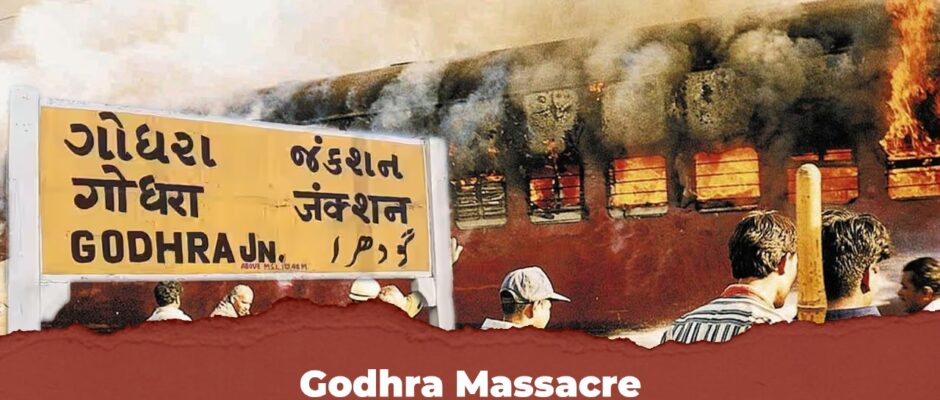
Pummy Pandita There are wounds that never go away, and some scars that don’t fade. One such terrible incident was the Godhra Massacre on February 27, 2002, when 59 defenceless Karsevaks, including women and children, were burned alive inside a locked train compartment in a planned, heartless attack. It was not a riot nor an accident but a calculated act of horror, carefully planned to convey a terrifying message. The attack, far from impromptu, was a carefully thought-out act of terror. Hundreds of Karsevaks, who had gone to pray at the Ram Janmabhoomi site in Ayodhya, were returning by Sabarmati Express. The train, which was forcibly stopped using emergency brakes, came to a halt at Phalia signal, located inside a Muslim slum that covered both sides of the railway track, was attacked by a crowd of more than a thousand people, armed with gasoline, acid bulbs, and iron rods, launched a coordinated attack shouting “Maro, Kapo (kato), Badhane Jalavi Do (Burn them all)”. They doused the coaches with flammable liquid and set them on fire, transforming the train into a death chamber. Heart chilling cries of children, mothers clinging desperately to their newborns, and old pilgrims made fruitless attempts to flee within that flaming compartment, but were all engulfed by the flames. In the most horrifying manner conceivable, bodies were mashed together and burned beyond recognition. A deliberate attempt was made to skew the facts even before the fire had subsided. For years, radicals and vested interests tried to push this atrocity under the carpet by claiming it was a “spontaneous reaction” or a “accident.” It was, however, clear from forensic evidence, eyewitness reports, and judicial investigations that the fire was set on purpose from outside. The attack was confirmed to have been meticulously planned and carried out after the Nanavati Commission and judicial processes rejected the accident argument. However, the burned remains of those defenceless Karsevaks—including small children who were burnt to ashes—tell a different tale, one of hate-fueled violence that is frequently attempted to be distorted by mainstream narratives. It was only after years of legal fight that 31 persons were found guilty by a special court, making them accountable for the devastation. The verdict recognised that the massacre was not an unplanned outburst but rather a deliberate act of communal violence. Many important masterminds and instigators, meanwhile, have not been held accountable. However, some fundamental questions remain: The Godhra Massacre is not just a chapter in history but a warning too. A cautionary tale on the perils of narrative manipulation, organised violence, and radicalisation. Society as a whole is put in danger when innocent individuals are killed for their convictions, truth is censored for political reasons, or justice is postponed or refused. There are people even today who still want to change history to hide the terrible events of that tragic morning. In the hearts of the families who lost loved ones, in the burned remnants of Coaches S-6 and S-7, and in the conscience of a country that will never forget, however, the truth endures. After 23 years of the massacre, cries for justice, remembrance, and the preservation of the truth can be heard from the ashes of those 59 souls.  It is a national wound that must never be forgotten! (Author is head of operations at Centre for Integrated and Holistic Studies, a non-partisan think tank based in New Delhi)
Read More
India’s 76th Republic Day: Significance and Beyond

India’s 76th Republic Day: Significance and Beyond

Pummy Pandita January 26 holds a special place in Bhartiya civilisation. It marks the Purna Swaraj Declaration of 1930, when the people of India vowed for complete independence, and, 20 years later, on January 26, 1950, adopted the Indian Constitution, ushering in the essence of a republic. The Constitution is not just a collection of laws, rather it is an evolving document that is inclusive, flexible, and dynamic. It embodies learnings from Bharat’s ancient sacred/ scriptures like the Vedas, Upanishads, Ramayana, Bhagavad Gita, Buddhist and Jain teachings, the spirit of Bharat’s ancient concept, “Vasudhaiva Kutumbakam” (the world is one family), concept of dharma (Duty and Righteousness), welfare state, equality and non-discrimination, moral and ethical governance, non-violence (ahimsa) and peace, liberty, equality and fraternity, environmental protection etc. Republic Day reminds us to uphold these principles as Bharat advances in the 21st century. It serves as a reminder to all citizens of their responsibility to help build a powerful, independent, and peaceful Bharat, advancing the idea of a timeless and transformative civilisation.Republic Day signifies the reaffirmation of Bharat’s enduring ideals of justice, equality, liberty, and brotherhood in addition to the development of a legal framework. Bharat’s capacity to reconcile its spiritual ethos with democratic values is demonstrated by the Constitution, which was drafted under the visionary leadership of Dr. B.R. Ambedkar. It provides a beacon of light for civilisation’s progress while tying together the oneness of a long-surviving civilisation. To represent India’s focus on developing cordial relations with countries around the world, the tradition of inviting a foreign dignitary as the Chief Guest to the Republic Day celebrations was instituted. This practice has both diplomatic and cultural significance, expressing India’s pluralistic ethos and soft power while showcasing its goals to fortify bilateral ties, communicate its dedication to regional and global peace, cooperation, and goodwill, and engage with the international community. The colourful procession, which highlights India’s cultural legacy, military force, and technical prowess, provides visiting dignitaries with an insight into the country’s variety and might. Indonesia, a fellow Asian country fighting for its independence, was among the first nations to acknowledge India’s independence.  Given the common history and culture, President Sukarno of Indonesia was the first Chief Guest on Republic Day in 1950, as this invitation also represented regional solidarity. In the years that followed, dignitaries from different nations were carefully selected in accordance with India’s foreign policy objectives. Initially, the emphasis was on inviting leaders from nearby Asian nations; as India’s international involvement increased, the focus shifted to Africa, Europe, and the Americas. Some of the most notable dignatories who have graced India’s Republic Day celebrations as Chief Guests: 1950s and 1960s: Laying the Foundation 1950 President Sukarno Indonesia   1955 Government General Malik Ghulam Muhammad Pakistan   1961 Queen Elizabeth II United Kingdom   1968 Prime Minister Alexei Kosygin Soviet Union   1970s and 1980s: Non-Aligned and Strategic Partnerships 1974 President Josip Broz Tito Yugoslavia   1976 Prime Minister Jacques Chirac            France   1980 President Valéry Giscard d’Estaing France   1988 President Junius Jayewardene Sri Lanka   1990s: Post-Cold War Adjustments 1992 President Mário Soares Portugal   1993 Prime Minister John Major United Kingdom   1995 President Nelson Mandela South Africa   2000s: Expanding Horizons 2003 President Mohammed Khatami Iran   2005 King Jigme Singye Wangchuck Bhutan   2007 President Vladimir Putin Russia   2010s: Global and Multilateral Focus 2015 President Barack Obama – The first sitting U.S. President to attend. USA   2018 Leaders of ASEAN nations A unique instance of inviting multiple leaders to commemorate 25 years of India-ASEAN ties.   2019 President Cyril Ramaphosa South Africa – Honoring Mahatma Gandhi’s 150th birth anniversary   2020s: Strengthening New Partnerships 2021: No Chief Guest – A rare break in the tradition due to COVID-19 pandemic   2023 President Abdel Fattah el-Sisi Egypt   The custom of having prominent foreign leaders as principal guests highlights Bharat’s expanding alliances and influence, reinforcing its position as a responsible global force. H.E. Prabowo Subianto, President of Indonesia, will be a distinguished guest at India’s 76th Republic Day celebrations. This decision strikes a deep chord with the economic, strategic, and civilisational bonds that unite the two biggest democratic and archipelagic countries in the world. The invitation highlights the strong alliance between India and Indonesia, which is based on shared values, history, and current geopolitical conditions. India and Indonesia established cordial ties because of their shared democratic heritage, pluralist culture, fight against colonial powers, and progressive leadership. At India’s first Republic Day in 1950, President Sukarno of Indonesia was the Guest of Honour. An Indonesian marching contingent will grace the ceremonial route during India’s Republic Day Parade, marking a historic event and a testament to the longstanding friendship between the two biggest maritime democracies in the world. This act highlights the long-standing connections between India and Indonesia, which are based on a common cultural heritage, a history of resistance to colonialism, and a shared goal for an open and free Indo-Pacific. Their involvement is a testament to the strong interpersonal ties and expanding strategic alliance that continue to influence peace and development in the region. As these two countries move forward together, their relationship shines brightly on the international scene as a symbol of respect and cooperation. Indonesia is willing to uphold the advice of its founding father, Soekarno: “Never ever forget history.” This is demonstrated by the preservation of oral, textual, and visual Indic tradition through literary works like the Kakawin Ramayana, the renowned architectural legacy like the Prambanan Temple, and the ongoing use of Sanskrit as the motto of governmental agencies. India and Indonesia’s relationship goes beyond the confines of contemporary statecraft. It is a connection created over centuries of intellectual dissemination, marine trade, and cultural interchange. The Indic stamp is irreversible, spanning from the era of the Majapahit and Srivijaya empires to the impact of Buddhism and Hinduism that still shapes Indonesian culture today. Java and Bali celebrate the Ramayana and Mahabharata just as much as Ayodhya and Kurukshetra do, creating

Read More
Ayodhya Overtakes Mecca, Vatican in Footfall

Ayodhya Overtakes Mecca, Vatican in Footfall

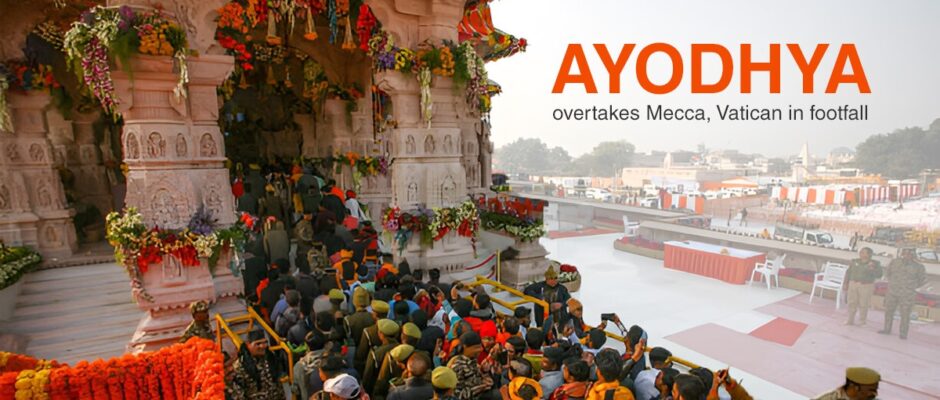
One Year after Bhagwan Ram Lalla’s  Pran Pratishta, the holy town holds out hope to be fulcrum of Hindu renaissance. Pummy Pandita Bhagwan Ram’s Pran Pratishta in January 2024 at his very birthplace in Ayodhya marked a new chapter in cultural and spiritual journey of Bharat. Since the construction of magnificent temple as abode of Ram Lalla, Ayodhya has undergone a transformation that devout Hindus connect to in spiritual terms and practicing faith. There’s no denying that Ayodhya, once a neglected, haunted and disconnected small town, is not any of these anymore. It’s bustling with devout people converging to Ayodhya by road, airways and superfast trains’ network. Infrastructure in Ayodhya has also undergone a sea change with roads, waterways and huge tourism circuit with hospitality points coming up in last one year. Footfall in Ayodhya as per estimates has crossed that of Vatican (6.7 Mn in 2023) and Mecca (1.83 Mn in 2024) many times over. As per Hindu calendar, January 11, 2025 marks first anniversary of Prana Pratishtha of Bhagwan Ram Lalla and the day would be celebrated as “Pratishtha Dwadashi” at Shri Ram Janmabhoomi Mandir in Ayodhya. A clutch of religious rites, devotional recitations, cultural acts and spiritual talks will be performed at the sanctum sanctorum and the entire Ayodhya Dham. Over three crore people are expected to witness the grand celebrations of Shri Ram’s Pran Pratishtha anniversary. Spiritual ceremonies will be held at Yajna Mandap, a dedicated location within the Mandir premises at break of dawn to kick off the celebrations. The Agnihotra ceremony involving lighting of fire will take place during 8 am – 11 am and again between 2 pm to 5 pm. This age-old Vedic practice is known for spiritual and cleansing and is carried out using mantras from Sukla Yajurveda. In addition to purifying the area, the ceremony will aid in fostering a spiritually uplifting atmosphere for the day’s activities. Highlights of the Day: Shri Ram’s Prasad, that’s regarded as a celestial blessing, will be offered all day long to devotees from early morning hours reflecting Bhagwan Ram’s grace. A Year of Record-breaking Footfall Shri Ram Lalla’s Pran Pratishtha has turned Ayodhya into a popular pilgrimage centre. An unprecedented 15 million pilgrims are estimated to have visited Shri Ram Mandir to seek the blessings of Shri Ram Lalla. Temple’s tremendous appeal was highlighted by daily footfall exceeding two lakh people daily during peak seasons like Ram Navami and Deepawali. Due to this massive influx of visitors, Ayodhya is now on par with Varanasi and Tirupati as one of India’s most popular pilgrimage destinations and overtaken both Mecca and Vatican, the two religious centres for faithful Muslims and catholic Christians respectively. Wider road networks, better train connectivity and recently opened Ayodhya International Airport have contributed to the boom in tourism. These advancements have made it easier for pilgrims from all over Bharat and the world to travel to Ayodhya. Economic Windfall Ayodhya has experienced exceptional economic growth due to constant influx of devotees. As per local authorities, the city’s yearly income from tourism-related activities has more than doubled hitting almost ₹4000 crore (approximately half a billion US dollars) in the most recent year – the key contributors included pilgrims’ arrival that has brought in about ₹15,000 crore ($1.8 billion) in tourism-related income. Occupancy rates at local establishments, such as restaurants, motels and guesthouses have increased significantly, surpassing 90 per cent during busy times. Infrastructure Development Realizing Ayodhya’s potential to into a world hub of spirituality, Uttar Pradesh state and Bharat’s central governments has made significant infrastructure investments: Spiritual and Cultural Renaissance Ram Lalla’s return to his abode and birthplace has ignited a cultural revival in Ayodhya. The city is now a thriving centre of faith based activity thanks to regular kirtans, bhajans and spiritual talks. To raise awareness of Shri Ram’s teachings, temple administration has planned a number of events that draw both young people and academics. Shri Ram Lalla’s return to Ayodhya also represents a cultural revival. It has inspired a generation to reconnect with their heritage and rekindled interest in Bharat’s legendary stories. The temple’s exquisite carvings and imposing construction serve as a tribute to the magnificence of traditional Indian craftsmanship. In addition to revitalising millions of people’s spiritual ties, Shri Ram Lalla’s Pran Pratishtha has transformed Ayodhya into a centre for both cultural and economic renaissance. Ayodhya is a living example of transformational power of Hindu faith as the city continues to change, striking a balance between its rich legacy and contemporary goals. While the first year of Shri Ram’s homecoming is significant, this holy place is expected to make even more waves in years to come. (Author is head of operations at Centre for Integrated and Holistic Studies, a non-partisan think tank based in New Delhi)Ayodhya Overtakes Mecca, Vatican in Footfall

Read More
Is it Biden’s Electoral Stunt?

Is it Biden’s Electoral Stunt?

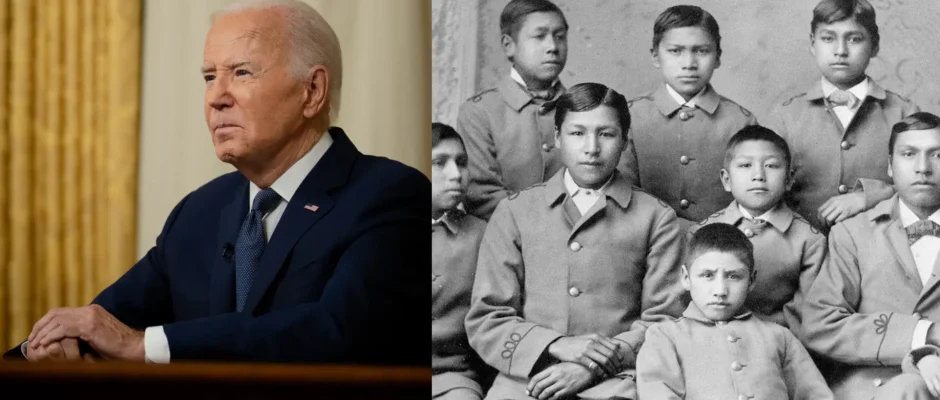
An apology to Native Americans for boarding school atrocities and mayhem by Church and government may not garner votes Pummy M Pandita Examining most sinister facets of American history has begun with outgoing President Joe Biden administration dramatically admitting to injustices and grave crimes committed against Native Americans especially the boarding school atrocities. The public apology to Native American communities for violence and cultural erasure that occurred during the boarding school era comes in the midst of tough election for democrats while Biden claims that ‘it was a crucial step’ in healing centuries-old scars. But key question still stands: is an apology sufficient? Native American history is characterised by unrelenting quest for cultural erasure and survival, as well as trauma, sorrow, and resiliency. A particularly sad period in this history is the era of Native American boarding schools when children were taken from their homes and sent to institutions managed by evangelists   in an effort to “civilise” them. Languages, holy customs and ties that bind families and communities were all shattered in the catastrophic massacre committed by these institutions. In a bid to shape them into what was perceived by Church as ideal of Western culture, many children endured severe punishments, emotional and physical abuse and frequently had their identities taken away. These policies caused irreversible harm, leaving Indigenous communities’ collective psyche with wounds that endure for generations. One of the bloodiest periods in contemporary history was the European colonization of native Americans, violence, exploitation and dehumanization that followed has influenced indigenous cultures and societies to this day. Deliberate uprooting, exploitation and near-eradication of Native American communities from days of first European settlers in 15th century is a grave tale of imperial aspiration posing as civilising missions. Native Americans’ lives are still profoundly affected by extensive wounds that have been inflicted on their land, traditions and histories. Children from indigenous communities in US and Europe baptized by force were tortured in the process of making them ‘civil’ and thousands lost their lives as many were buried live in the ‘Indian schools’. Doctrine of Discovery gave European kings authority to assert claims to territories that their explorers had “discovered” with logic that Native Americans who were considered “uncivilised” and “heathen,” had no right to their ancestral areas. In order to support the European agenda, Native people were de-humanized and land was turned into a resource to be conquered rather than a place to be revered. Colonizers brought enslavement, environmental degradation and bloodshed with them when they brought “civilization” and Christianity coupled with ‘forced evangelism’ of grave variety. Additionally, Native populations were forced into exploitative labour and economic dependency by European colonists. Native Americans were turned instruments of colonial wealth and forced labour in mines and plantations. An exploitative dynamic that persisted far into the periods of industrialization and capitalism was further cemented when their lands were turned into resources for Europeans to plunder. Native American communities continued to be among most economically disadvantaged and marginalized groups in United States, demonstrating long-term economic effects of these policies. Deb Haaland, first Native American Cabinet secretary, during her interaction with reporters earlier this week said, “For more than a century, tens of thousands of Indigenous children, as young as four years old, were taken from their families and communities and forced into boarding schools run by the US government and religious institutions. This includes my own family. For decades, this terrible chapter was hidden from our history books. But now, our administration’s work will ensure that no one will ever forget.” Native American Community members may not be fully convinced that a word of apology will correct the inhuman acts. Lakota People’s Law Project Director Chase Iron Eyes was quoted as saying, “An apology is an acknowledgment of wrongdoing, but it is not any form of redress. An apology is just the beginning of a necessary truth-telling. An apology is a nice start, but it is not a true reckoning, nor is it a sufficient remedy for long history of colonial violence.”  Cherokee Nation Principal Chief Chuck Hoskin Jr said, “We know from experience that true healing goes beyond words — it requires action, resources, and commitment. Cherokee Nation publicly acknowledged our own role in the painful history of Cherokee Freedmen and have worked to address positive change, and so too can this country.” President Biden’s apology is touted as indication that Democratic White House acknowledges these historical wrongs. For some, the apology may not seem genuine given that it comes ahead of the Presidential elections on first Wednesday next month. Essential question however is whether an apology is enough to mend wounds that are so profound that they span generations? The state-approved ‘Indian’ schools were subjected to severe, long-lasting harm because they were specifically designed to deprive Indigenous children of their culture and identity. No matter how well-written or sincere the words sound, they cannot reverse or erase the suffering that Indigenous communities endured. For Native Americans, healing will take more than just words; it will require action that recognises the pain in concrete ways. Imagine a scar from a serious injury that cannot be erased by apology. What is left is an obligation to address causes of the scar in the first place as well as to acknowledge the anguish.  Even though the government’s apology is long overdue, if it is made alone, it could be seen as meaningless. Destabilization of native society was a result of systemic violence that went beyond boarding schools and included resources exploitation, forced relocations and treaty violations. Only by changing policies and providing continuous assistance that enable native communities to recover their sovereignty, manage their lands and revive their cultures will there be true reparation. It’s critical to recognize that reconciliation is a multifaceted, continuous process rather than a single apology-marked event in the midst of a presidential election seeking to garner votes. Democrats must pledge to prevent mistakes of the past from happening again if it hopes to make significant progress. In addition, failing to

Read More

Silent Threat, Spread of Anti-Americanism!

Senators and Congressmen, women funded by foreign lobbies pose a serious threat to America’s security, integrity and its cohesion. Pummy Pandita It’s for United States Congress to defend American values and interests. Nonetheless, existence of senators with questionable ties and conduct imply that they might not put Americans welfare first. Anti-Americanism within US Congress has been a subject of debate for quite some time and of late, there have been reports suggesting some senators were outright “anti-American.” It’s not for the first time that such conversations have happened openly. There have been reports in past as well that politicians in US have harboured anti-American feelings. Claims of disloyalty were common throughout Cold War leading to rigorous scrutiny during McCarthy era. The rise of populism and partisan polarization in recent years has increased interest in priorities and allegiances of legislators. Setting precise standards is essential to identify anti-American senators in an unbiased manner. This can involve opposing important national security legislations through voting, publicly undermining American interests in statements and continue affiliations with groups that disagree with American policies and ideals. Opinions are diverse on senators and representatives in US Congress who are thought to be anti-American and have ties to foreign countries. Congresswoman Rashida Tlaib of Michigan’s 12th congressional district and Ilhan Omar of Minnesota have been discussed in the media to have reportedly harboured ‘anti-Americanism’. Congresswoman Rashida Tlaib During Israeli Prime Minister Benjamin Netanyahu’s speech to Congress, Rashida Tlaib, a member of self-styled “Squad” in US House of Representatives grabbed attention by waving a “War Criminal” placard. This brought out deep political rift about American policy towards Israel. One of the first Muslim women elected to Congress, Rashida Tlaib is a Palestinian-American recognized for her vocal support to Palestinian rights and condemnation of Israeli government practices. Alexandria Ocasio-Cortez, Ilhan Omar, Ayanna Pressley and other progressive lawmakers constitute the so-called “Squad” which includes Democratic congresswoman Rashida Tlaib of Michigan’s 12th congressional district. As one of the first two Muslim women elected to Congress in 2018, Tlaib created history. Robust progressive programs, such as Medicare for All, Green New Deal and substantial changes to criminal justice and immigration systems define her so called political agenda. The Incident • Tlaib’s demonstration was direct reaction to Netanyahu’s acts and policies which she and many others believe to be discriminatory towards the Palestinian people. The placard referred to Netanyahu as a “War Criminal,” a moniker that detractors frequently employ to characterize his involvement in military actions in the West Bank and Gaza. • Tlaib’s act was meant to highlight Palestinians suffering and human rights issues. It was also a critique of American administration’s persistent backing of Netanyahu. • The demonstration highlighted glaring differences in American politics over Israel. While a large majority of Congressmen back Israel wholeheartedly, others—especially progressive Democrats like Tlaib—are growingly skeptical of Israel’s practices and champion rights of Palestinian people. Tlaib’s political remarks and deeds reveal a bias against the United States. These accusations frequently focus on the following issues: Entry of anti-American elements into Congress is a reflection of the country’s wider political and ideological division which has important ramifications. Though some people find great strength in the story of anti-American infiltration in Congress as represented by individuals such as Rashida Tlaib, it is important to examine such assertions critically. A more nuanced picture becomes apparent when the evidence is carefully examined and larger political context is comprehended. Congresswoman Ilhan Oman: Ilhan Omar represents Minnesota’s fifth Congressional District. She is Somali American and second Muslim woman elected to Congress. Omar’s candidature stands out due to her strong opinions on a range of topics such as social justice, immigration and US foreign policy. She is frequently accused of having ties with foreign organizations that could sway her opinions not consistent with American interests. Omar has not shied away from making public her disapproval of American foreign policy, particularly as it relates to Israel and Palestine. US backing Israel was never appreciated by her and charged that lobbies like American Israel Public Affairs Committee (AIPAC) shaped US policy. Her position challenges US support for Israel, a vital ally in the Middle East which has long been established. Allegations of anti-Semitism have resulted from her remarks. In 2019, she implied that pro-Israel lobbyists were purchasing political power when she tweeted that United States political backing for Israel was “all about the Benjamins.” Both sides of the political spectrum strongly condemned this remark which resulted in a House resolution denouncing anti-Semitism. Omar’s reported ties with foreign organizations may have shaped her views against US foreign policy. Her affiliation with controversial Council on American-Islamic Relations (CAIR)—which receives funds from overseas—has been examined. There have also been claims that she has ties to Turkish and Qatari interests though concrete proof of these assertions is still hard to come by. As per reports, some of her opinions coincide with those of rogue governments. Her opposition to sanctions on nations like Venezuela and Iran considered United States’ rivals has been used as evidence of her anti-American inclination. Claim that certain members of Congress do not represent interests of United States is not exclusive to either Ilhan Omar or Rashida Tlaib. It points to broader worries about foreign meddling in American politics and possibility of outside influence on elected officials. Numerous political organizations and media outlets especially those on the conservative side have emphasized this. One major concern in American politics is influence of foreign lobbying. Foreign governments and entity lobbyists frequently try to sway American policy in favour of or against certain interests. Regulated and lawful activity notwithstanding, lobbying always carried the risk of conflicts of interest and improper influence. Source of campaign contributions was yet another concern in American elections.  As per American laws, it is illegal for foreigners to donate in the country’s elections. But, intricate web spun around political contributions makes it difficult to identify actual source of finances. In this backdrop questions have been raised on intentions and loyalty of public servants who

Read More