CIHS – Centre for Integrated and Holistic Studies

Date/Time:

Blog Post

Deepening Crisis

Deepening Crisis

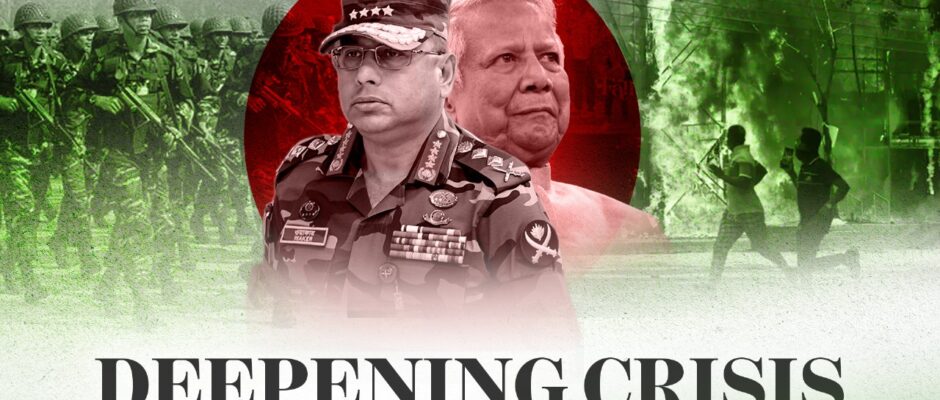
Shrinking democratic space, Yunus going jihadist way and western powers weary of his idiosyncrasies has turned Bangladesh a hotspot.  Rohan Giri Bangladesh is in the midst of a major crisis given the political chessboard that exposes changing power dynamics, jihdist takeover, assertion of the military junta and people left to fend for them with the state giving up on governance. It’s not mere domestic political reconfiguration but a crisis in the making with both national and regional consequences. At the heart of this narrative lies decline of a figure once championed in Western capitals, Muhammad Yunus and subdued recalibration of power that tells extensively about where Bangladesh is headed and how the world must understand this transition. Muhammad Yunus, once hailed as a Nobel laureate and Grameen Bank microfinance model builder, was long seen as a link with Western liberal values.  But in today’s Dhaka, Yunus no longer commands the stature of a unifying reformist and an elderly statesman. His legal troubles, political marginalisation and increasing distance from the country’s current power centres suggest a systemic and perhaps irreversible break from liberal-democratic experiment that he once symbolised. His estrangement from the Bangladesh Nationalist Party (BNP), historically the principal opposition to erstwhile ruling Awami League, marks a decisive shift. Even Yunus lacks institutional support from security establishments, rendering such alliances practically ineffective. A recent massive rally titled “Rally for Establishing Youth Political Rights” was held in Dhaka by three BNP-affiliated groups, Jatiyatabadi Chhatra Dal, Jubo Dal, and Swechchhasebak Dal as Yunus left for a four-day visit to Japan. BNP Acting Chairman Tarique Rahman addressed the rally virtually, criticising the Yunus-led government. Days earlier, a BNP delegation demanded an election roadmap by December and urged the interim government to avoid long-term policy decisions especially on issues like the Rohingya corridor and Chattogram port. The political gap left after fall from the Awami League’s unquestionable supremacy has not resulted in democratic transition, realignment of democratic forces.  Once a prominent player in Bangladeshi politics, Awami League under Sheikh Hasina, has been accused of authoritarian drift, methodical repression of opposition and getting alienated from voters. The conditions are ripe for alternative centres of power to emerge not necessarily from existing political formations but actors whose influence is wielded from behind the veil of legitimacy. One such actor is Bangladeshi military that has distanced from Yunus. Historically, taking a cautious, if not aloof, approach to overt governance. The current climate indicates its willingness to fill the power vacuum. Notably, words and postures emanating from within the army reflect displeasure with both existing political leadership and personalities, like Yunus, who are frequently portrayed as associated with Western liberal objectives. The military’s reluctance to re-embrace Yunus reveals a deeper strategic concern: aligning too closely with an internationally admired but locally polarising individual risks alienating burgeoning nationalist sentiments and undermining internal cohesion. Compounding the uncertainty is reemergence of hardline Islamic factions, particularly the Jamaat-e-Islami, long banned but far from being irrelevant. In times of institutional fragility, such groups often find space to maneuver, projecting themselves as defenders of moral order and religious authenticity. Their attempt to “call the shots” politically, often through proxies and sympathetic networks, is no longer a fringe development but a potential axis of influence, especially in disenfranchised and conservative constituencies. Under the guise of populism and faith-based legitimacy, ideological extremists are bound to acquire traction due to the Awami League and BNP’s combined weakness or non-existence in political arena. In this calculus, pro-democracy actors, while vocal and active, remain largely performative in impact. The civil society fabric of Bangladesh, which once brimmed with journalistic bravery, legal advocacy, and grassroots mobilisation, now finds itself overpowered by a combination of state repression, media censorship and judicial intimidation. Though aligned ideologically with purported liberal reformists such as Yunus, these elements are neither organised nor empowered to counter the influence of either the security apparatus or resurgent Islamist formations. Individuals who are more concerned with maintaining institutional or ideological domination than with preserving democracy are increasingly filling the gap left by middle-ground political participation. From a geopolitical standpoint, these internal realignments have not escaped the attention of regional and global powers. United States, under shifting administrations, have shown signs of strategic disinterest in Yunus continued involvement in Bangladeshi politics. At the same time, US seems to be investing in other forms of influence projection, most notably through declaration of interest in Saint Martin’s Island, a location with increasing significance due to its naval and logistical potential. Although formally within Bangladeshi territory, US maneuvers signal a willingness to challenge regional hegemonies through presence rather than partnership. Interestingly, the Bangladeshi army’s own worldview appears increasingly decoupled from traditional alignments. While military engagement with China continues through defence procurements and limited logistical cooperation, the army remains skeptical of Pakistan, a country with which historical scars and ideological differences remain deeply etched. Since New Delhi is well aware of Pakistan’s ongoing attempts to retain influence in Dhaka through both ideological and illegal means, this suspicion may be a means of fostering understanding with India. India’s own perspective on these developments is complex and evolving. New Delhi has traditionally favoured stability over unrest in its eastern neighbourhood. Assam Chief Minister Himanta Biswa Sarma has however articulated concerns about Bangladesh’s vulnerability to becoming a chokepoint, a potential “chicken neck” in a broader strategic contest involving China, US and radical Islamic networks. The parallel highlights a concern about India’s own strategic bottleneck, the Siliguri Corridor and how instability in Bangladesh could lead to logistical and security issues in the northeast. Indian engagement, therefore, is not only about diplomatic alignment but about protecting crucial linkages and resisting China’s growing influence. The present course of Bangladesh raises uneasy concerns for democracies in the West. Common trends that are frequently disregarded in favour of short-term strategic collaboration or economic stability include the emergence of hardline forces, dwindling liberal voices and the assertion of military prerogative. If these trends are not addressed, they run the risk of combining to
Read More
‘Mis-Reporting on War Against Terror’

‘Mis-Reporting on War Against Terror’

India faced serious issues when a few top international media outlets shred objectivity in their reportage on terror, terrorist organizations, their handlers and financiers. Rohan Giri In the dense fog of war against terror unleashed by India after dastardly killing of 26 tourists in Pahalgam, several international media outlets rushed not to inform, but to build slanted opinion in sync with their agenda-based narratives. From manipulated assumptions to selective outrage, recent reportage by outlets like The Independent, Al Jazeera, British Broadcasting Corporation (BBC), The Guardian, The Washington Post and The New York Times raises serious questions not just about journalistic standards but the intent behind this slanted coverage of war on terror. Even global news agency like Reuters fell to prey to such narratives. Between May 7 – 11, India’s Ministry of External Affairs (MEA) and Ministry of Defence (MoD) jointly released evidence and detailed press briefings were held showing how India’s calibrated military actions were in direct response to a spate of cross-border terror attacks traced to Pakistan-based jihadi networks. Indian government provided satellite Intelligence, precision strike data and official press briefings were held. But, the international media houses chose to bury facts, ignore or sidestep India’s security concerns, campaign against terror and gave platform to unverifiable Pakistani military propaganda. One big question was the possible agenda these media houses peddled during the conflict? London-based The Independent carried articles in series on terror attacks, military retaliation by India and the two full days of conflict. One piece suggested that Pakistan shot down three Indian Rafale fighter jets. Reuters went a step further and put the number of fighter jets lost by India at five.  The New York Times even claimed that it had evidence. But then, what’s the basis for these dispatches? Well, an old hand at international news agencies averred that the story was blurted  out by American security establishment sleuths that reportedly kept a watch on India’s precision strikes that led to destruction of nine terrorist sites in Pakistan occupied Jammu Kashmir and deep within Pakistan where over 100 terrorists were neutralised. Another version was that Chinese Communist Party apparatus swung into action. Its agenda that apparently was pushed big time. As per these media analysts, China was keen to portray that its military aircraft and missiles in Pakistani armour shot down the Rafale fighter jets. Beijing’s possible intent was to establish its superiority in tactical and technological superiority in a complex war theatre. The word around was that China was simultaneously looking at testing its fighters capabilities and missiles power as against French Dassault built Rafales and Indian missiles. Well, one wonders on ethical part of media ecosystem that comes under close scrutiny in trying war situation. But then, lobbies with geo-political interests and corporates pushing their defence ware also played out. Unverified claims made by Pakistani military as part of its psychological offensive was taken as ‘fact based’ news copy without third-party verification or forensic satellite imagery. Interestingly enough, the big unanswered question was why several international media outlets failed to pass muster by for not juxtaposing India’s official version or basic checks done with South Block that houses defence ministry on Raisina Hill. A story on similar lines filed by The New York Times team in South Asia with screaming headlines that India lost jets. This is contrary to Indian army version that all aircraft returned safely to their base. If Pakistan had such decisive victories shooting down as many as five Indian jets and global media networks reported this as the ‘absolute truth’ where’s the evidence? Did Pakistan present wreckage or pilot log information? Was evidence sought either from US security establishment, Chinese peddlers or Pakistani machinery? Is this objective ‘war reporting’ or part of the larger misinformation campaign launched by Islamabad, its backers and cahoots? Another write up by Independent claimed that India used Israeli-origin Harop drones against Pakistan in a provocative act insinuating recklessness. Again, no proof was offered, no drone telemetry was shown and no assessment was provided of the Harop’s actual precision capabilities. Were these articles meant to inform the reader—or feed into a broader narrative that paints India as a trigger-happy aggressor, irrespective of facts? Al Jazeera went a step further. It aired emotional testimonies from locals in Muridke who disputed India’s intelligence that a mosque in the town had doubled up as a terror training camp. Civilians deserve to be heard in a war situation. But, why was it that these newsmen with huge track record failed to piece together Muridke’s well-documented history as headquarters of Lashkar-e-Taiba. This is not classified information—it is part of the 26/11 Mumbai terror ATF reports and independent research. Why suppress this reality? Who benefits from painting that Muridke was a “victim”? Moving to the next peddler, The Guardian published a humanizing profile of Pakistan Army Chief General Asim Munir, portraying him as a composed and stabilizing force. What got omitted in the process was Munir’s leadership of Pakistani military that intensified support to jihadist proxies under the guise of “strategic depth”—a doctrine responsible for decades of regional instability. Why romanticize military leadership in a country where elected civilian voices are repeatedly silenced and the army retained unchecked power? Why does The Guardian avoid similar puff pieces for India’s civilian leadership during crisis management? In another article, The Guardian casually reported India’s accusations that Pakistani drones had attacked Indian civilian and military sites. It framed this as part of a “tit-for-tat” cycle—effectively equating defensive action with terrorist provocation. But how can a country’s retaliation after civilian deaths be presented as escalation? Is there no difference between attacking civilians and targeting terror camps based on intelligence? Meanwhile, The Washington Post centered its story on the theme of “misinformation”—but blurred the lines between Pakistan’s unverifiable claims and India’s official statements backed by data and press briefings. Does Washington Post really believe a constitutional democracy’s formal briefings are on par with WhatsApp forwards and anonymous leaks pushed by a military-intelligence complex with a known

Read More
Pahalgam to Ops Sindoor: A Case Study in India’s Counter-Terror Doctrine

Pahalgam to Ops Sindoor: A Case Study of India’s Counter-Terror

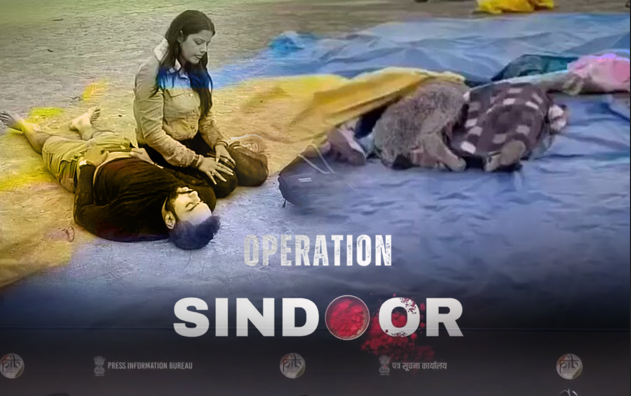
On the morning of April 22, 2025, in the tranquil and scenic hills of Pahalgam, Jammu and Kashmir, a brutal and premeditated terrorist assault took place—one that fundamentally altered India’s national security posture. Twenty-six civilians, including women and children, were executed at point-blank range by Pakistan-backed terrorists after being identified based on their religious affiliation. Eyewitness accounts confirmed that the attackers interrogated the victims about their Dharma (faith) and segregated them before unleashing gunfire. This atrocity was not merely an act of terror—it was a calculated religious pogrom designed to fracture India’s communal harmony and provoke sectarian unrest. Indian government swiftly classified the attack as a gross violation of international humanitarian norms and an extension of Pakistan’s long-standing policy of proxy warfare with a deeply communal subtext.

Read More
Operation Sindoor (May 7–10, 2025): India’s Military Response to Pakistan-backed Cross-Border Terrorism

Operation Sindoor (May 7–10, 2025): India’s Military Response to Pakistan-backed Cross-Border Terrorism

India has long accused Pakistan of using terrorism as a tool of state policy. Pakistani-based terrorist groups such as Lashkar-e-Taiba (LeT) and Jaish-e-Mohammed (JeM) are led by cadres who operate with impunity under Pakistani patronage. India routinely notes that these organizations are “Pakistan-based and supported”[1] and that top Pakistani military and civilian authorities tolerate – if not directly aid – their activities. In multiple public statements India has demanded that Pakistan “stop supporting terrorists and terror groups operating from their territory” and dismantle the infrastructure that enables them[2]. This longstanding dispute over Pakistan’s alleged state-sponsored terrorism has erupted in periodic crises over the past two decades.

Read More
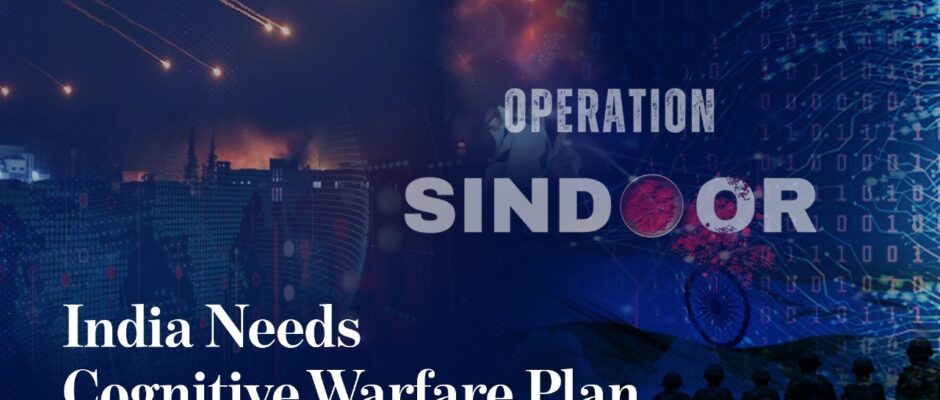
India Needs Cognitive Warfare Plan

India Needs Cognitive Warfare Plan

Fighting enemy on information highway as on ground emerges a big challenge and opportunity for Bharat that’s declared war on terror. Rohan Giri In the wake of Operation Sindoor, India’s precision strike against cross-border terrorist camps in Pakistan, a disturbing counteroffensive has emerged—not on the battlefield, but in the information domain. The recent statement by Communist Party of India (Marxist–Leninist)—disguised as a call for peace—reveals a deeper, coordinated attempt to delegitimize India’s national security concerns. On the parallel, certain social media influencers and public figures have echoed narratives that align more with Islamabad’s propaganda machinery than with India’s democratic discourse. Convergence of disinformation, ideological proxies and cognitive warfare by deftly manipulating freedom of speech calls for deep dive analysis. Cross-Border Strikes to Cognitive Warzones Operation Sindoor was launched in response to brutal killing of 26 Indian civilians by Pakistan-backed jihadi groups in Pahalgam. Indian Armed Forces counter-terror operation—based on actionable intelligence— neutralised multiple terror hideouts along Line of Control (LoC) and deep into Pakistan. Even before the word was out on the operation, a parallel battlefront opened in the digital sphere. Assorted Left extremists who have lost the plot and support of people re-grouped under CPI(ML) had the gumption to cynically talk about “war mongering,” “mock drills,” and “jingoism” instead of outright condemnation of terrorists, their backers and handlers. Deliberate attempt has been made by CPI-ML to shift focus away from campaign against terror, victims of terror to a narrative of false equivalence placing India’s defensive response and Pakistan’s terrorism on same plane. This is not an isolated political position. It is an ideological posture with global resonance—amplified by social media handlers, YouTubers, and creators whose content is now being routinely picked up by Pakistani media to discredit India’s war against terror. Cultural Expression as Cover for Subversion For instance, Neha Singh Rathore, a content creator and folk performer came under legal scrutiny for provocative posts that allegedly promote communal disharmony. Rathore’s content—strategically laced with satire and emotion—has been widely shared across borders, especially in Pakistani outlets eager to highlight India’s “internal repression.” While art and dissent is at core of democracies like Bharat, Rathore’s content is not organically critical, instead ideologically consistent with Pakistan’s strategic communication goals. The timing, targeting and terminology in such digital content reflect more than personal opinion—they indicate agenda-setting behaviour. CPI(ML) and figures like Rathore are not merely engaging in protest; they are building parallel narratives that erode legitimacy of India’s campaign against terror. When these narratives go viral, they serve the psychological warfare strategies of hostile powers. Beijing in 1962 to Islamabad Today Maoist and marxist gangs have a long history of siding with foreign adversaries. During 1962 Sino-Indian War, segments of CPI openly supported China dismissing Indian territorial claims and branding national mobilization as bourgeois nationalism. Today, the same ideological model has evolved, more sophisticated, digitally native and far more dangerous. By refusing to condemn cross-border terrorism and attacking India’s right to respond, CPI(ML)’s latest statement resurrects this playbook. It leverages democratic tolerance to inject disinformation, exploit communal sensitivities and erode confidence of Indian populace in its institutions. The party’s warning against “war preparations” and “state violence” is couched in humanitarian concern but functionally serves to paralyze India’s right to strategic deterrence. This is not peace activism—it is information sabotage. Legal and Civic Clarity India’s commitment to free speech under Article 19 of Constitution remains robust. This freedom is not absolute. The new Bharatiya Nyaya Sanhita (BNS) Section 152 replacing the colonial-era sedition law, rightly targets acts that threaten unity and integrity of nation including narrative warfare. In the digital era, narrative disruptors have become as strategically valuable to the enemy as traditional insurgents. Unlike overt enemies, these actors often present themselves as poets, comedians, journalists or social reformers. Their strength lies in ambiguity, their power in virality. Perception Wars and Legitimacy Battle International opinion is increasingly shaped by perception rather than policy. In this context, India’s counter-terror narratives must compete not only with traditional media but with decentralized content ecosystems that are vulnerable to infiltration, manipulation and illegal funding. When disinformation aligns with an adversary’s diplomatic strategy i.e., portraying India as an aggressor and the region as unstable, it not only undermines counterterrorism efforts but damages India’s geopolitical credibility in multilateral forums. Suspension of Indus Waters Treaty (IWT) following Pahalgam Terror attack was a bold diplomatic move, signaling a shift in India’s engagement with Pakistan. But without narrative control, such moves risk being framed globally as escalatory rather than defensive. Strategic Culture of Narrative Resilience India needs more than military readiness; it requires a strategic communication plan that integrates law, policy and narrative discipline. This includes: CPI(ML) statement and online activism that follows it are not expressions of dissent—they are symptoms of a deeper vulnerability: India’s tolerance for internal ideological actors who camouflage sedition as satire. As India rises on the world stage, its battles will increasingly be fought in the cognitive domain. Winning them will require legal, civic, and strategic clarity. (Author is a doctoral fellow at Amity University in Gwalior, content head at Centre for Integrated and Holistic Studies)

Read More
Brief - Pakistan Targets Sikhs, Gurdwara

Brief: Pakistan Targets Sikh Gurdwara

Pakistan’s army began an unprecedented campaign of cross-border small arms and artillery bombardments into Jammu & Kashmir almost immediately after April 22, 2025 Pakistan backed terrorist attack in Pahalgam (which killed 25 Tourists, after ascertaining their Hindu faith). By April 24, India had suspended the 1960 Indus Waters Treaty, and within hours Pakistan “resorted to unprovoked firing at various places along the LoC in J&K, starting from the Kashmir valley”.

Read More
Pahalgam Attack: Hypocrisy, Silence, and Truth

Pahalgam Attack: Hypocrisy, Silence, and Truth

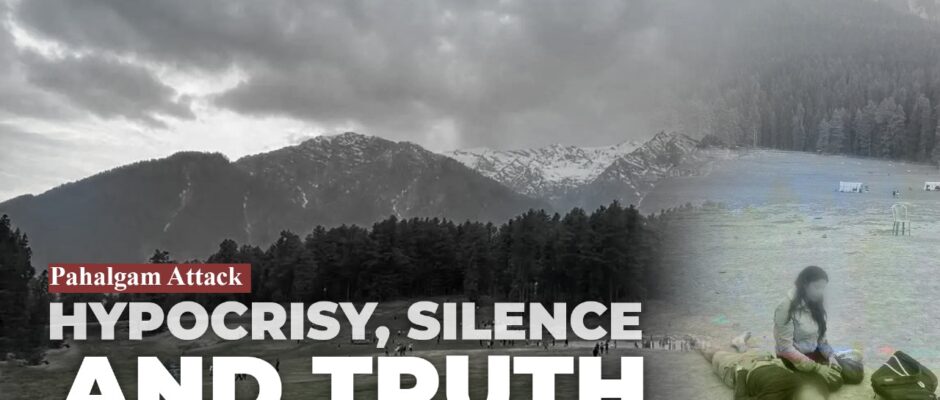
Rohan Giri On April 22, 2025, tourist destination of Pahalgam in Jammu and Kashmir, bore witness to an atrocity that defies human conscience. In a brutal terrorist attack orchestrated by Pakistan-backed terrorist groups, 26 Hindu tourists were singled out based on their faith and mercilessly executed. Their only ‘crime’ was being Hindu. Global media outlets rushed to distort the truth rather than mourning the victims or condemning the clear religious hatred behind the massacre. Reuters, BBC, New York Times, Al Jazeera, CNN, and others showcased once again the alarming moral bankruptcy within sections of international journalism deliberately downplaying religious targeting, sanitizing terrorists as “militants,” and portraying the blood-soaked valley through the lens of “Indian-administered Kashmir,” thus questioning India’s very sovereignty. This selective empathy, this sanitized barbarism, this intellectual dishonesty stands exposed. Pahalgam attack was not an isolated incident. It was the continuation of an ideological war against India’s civilizational essence. Pakistan’s military leadership has been candid about this. At the passing-out parade on April 16, 2025, at Pakistan Military Academy, Kakul, Pakistan’s Chief of Army Staff General Asim Munir brazenly declared: “The two-nation theory was based on the fundamental belief that Muslims and Hindus are two separate nations, not one. Muslims are distinct from Hindus in all aspects of life, religion, customs, traditions, thinking, and aspirations.” This ideological rigidity the very cancer that partitioned the Indian subcontinent continues to fuel terrorism, hatred, and separatism even today. Munir’s public reaffirmation of the two-nation theory is not just a historical reference; it is an active justification for ongoing violence in Kashmir. In parallel, at a rally organized by Lashkar-e-Taiba in Rawalkot on April 18, 2025,  to pay tribute to two terrorists, Akif Haleem and Abdul Wahab, JKUM/LeT commander Abu Musa threatened openly: “Jihad will continue, guns will rage, and beheading will continue in Kashmir. India wants to change the demography of Kashmir by giving domicile certificates to non-locals, and we will not let this happen.” Such public incitements to murder, terrorism, and ethnic cleansing are treated by Western media either as footnotes or are conveniently omitted altogether. The narrative of “demographic change” itself is a cruel inversion of reality.  The so-called “domicile certificates” that the Government of India grants are not tools of colonization, but instruments of justice, meant to reintegrate indigenous Hindu communities Kashmir is not a no-man’s land. It is the ancient land of Kashyap Rishi, one of the holiest sites of the Indic civilization. Restoration of native communities into their rightful homeland is a moral imperative, not an act of aggression. The Hindu American Foundation (HAF) issued a scathing critique of international media complicity.  In a powerful statement, HAF’s Executive Director summarized the media betrayal: “On April 22, 2025, the worst civilian terror attack in Kashmir since 2008 unfolded. 26 Hindu tourists were executed. Yet if you look at headlines from New York Times, Washington Post, CNN, BBC, Reuters, and AP you wouldn’t even know Hindus were targeted.  They downplay terrorism. Sanitize it. Hide the victims’ religious identities. Call terrorists ‘militants.’ This isn’t just tragic storytelling, it’s deliberate erasure.” This is not a mere reporting error. It is a systemic ideological bias that minimizes Hindu suffering and perpetuates anti-India stereotypes under the garb of neutrality. Terms like “Indian-administered Kashmir,” “militants,” and “tensions” dilute the reality of Pakistan-sponsored jihadist terror and instead, subtly vilify the Indian state. Would any Western media outlet ever call ISIS terrorists “militants”? Would they ever describe 9/11 attackers as “gunmen”?  Why then, when Hindu civilians are massacred, do standards suddenly change? The answer lies in a toxic cocktail of post-colonial condescension, ideological ignorance, and sheer intellectual dishonesty. This time, however, the narrative war met fierce resistance.  The global Indian diaspora an economic, academic, and cultural powerhouse rose in unprecedented solidarity. From Federation Square in Melbourne to Pakistan High Commission in London, from Copenhagen to Kathmandu, from Paris to Zurich to Helsinki, and across North America from Brampton to New York, Indians staged massive protests demanding justice for the victims. In Frankfurt, more than 300 Indian community members gathered at Central Railway Station, marching to Dom Romer, holding placards, chanting slogans against terrorism, and sending a strong message to the global conscience: Truth will not be silenced. This global mobilization was not spontaneous rage it was righteous anger forged over decades of media erasure, diplomatic duplicity, and institutional gaslighting. Indian expatriates—scientists, CEOs, artists, and teachers have realized that silence only emboldens lies.  From Zurich to Auckland, their unified cry reverberated: Stop justifying terror. Stop dehumanizing Hindu victims. Kashmir must be understood not as a “disputed territory” between two states but as a living civilizational landscape. It is a land where Adi Shankaracharya revived Sanatana Dharma atop the Shankaracharya Hill, where Shaivism blossomed into philosophical sophistication, where Sufi saints preached syncretism. It is not a medieval battleground between empires but an eternal testimony to India’s pluralistic ethos. The terror attacks and false narratives seek to destroy this rich civilizational memory. And that is precisely why India’s actions to secure, stabilize, and culturally revive Jammu and Kashmir are not just acts of national policy but acts of civilizational preservation. Every attempt to portray Jammu and Kashmir as “disputed,” every attempt to vilify the domiciles, is an assault on truth itself. Domicile for those historically belonging to Kashmir is not “changing demography” it is correcting injustice. Pakistan’s rhetoric about demography rings hollow in contrast to its own colonization of Gilgit-Baltistan, its demographic suppression of Balochistan, and its apartheid-like persecution of minorities. It’s time the world recognises this double standard. It is time for India to call out, with measured but firm diplomacy, the duplicity of global actors. Global Indian community’s anger is righteous. It is not the anger of vengeance, but of justice denied, victims forgotten, and narratives hijacked. The world ignored exodus in 1990 when Hindus were driven out in hundreds of thousands from their homes, Wandhama Massacre, Sikh Massacre in Chattisinghpora to name a few. It must not ignore Pahalgam 2025. History will not be kind

Read More
Vision That Works for Bengal Region

Vision That Works for Bengal Region

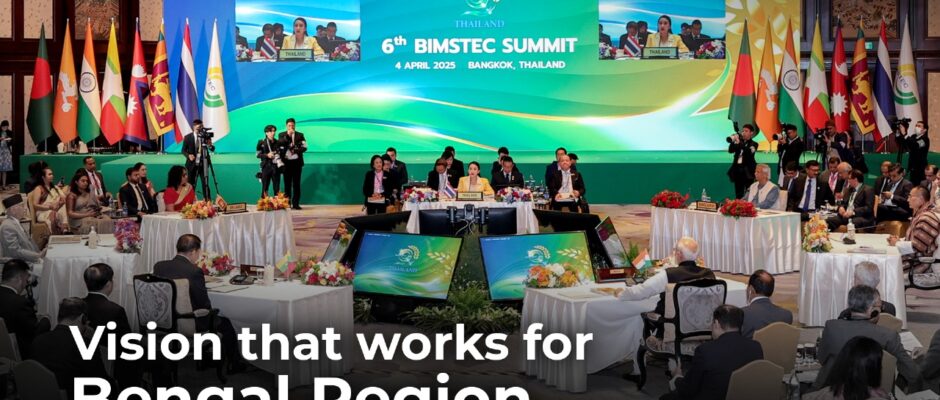
India’s 21-point Action Plan operationalizes cooperation through commerce, climate, connectivity and culture anchored in grounded capabilities. Rohan Giri For regional groups like BIMSTEC comprising seven nations straddling South and Southeast Asia there’s hardly a big need for grand declarations. Instead, practical architecture is need of the hour. The 21-point action plan discussed at the recent BIMSTEC summit in Bangkok, Thailand may provide a window of opportunity. The plan mooted by Prime Minister Narendra Modi may provide the template for sustainable relations between member-countries to navigate complexity of inter-dependence, climate risk and digital transition. The proposal has gained significance due to the timing and not ambitious objectives it seeks to achieve. Given that it is under-networked, Bay of Bengal region finds a key role that it can play in supply chain resilience, energy connection and climate vulnerability. A structured cooperation to deal with key issues is essential for sustaining the relationship for shared prosperity of people in the region. For instance, setting up Bay of Bengal Chamber of Commerce and the decision to hold an annual business summit will work wonders for the region. Emphasis on business and trade recognizes that economic integration is not only a desired goal but a necessity to further regional integration and ward off global disruptions. The move to explore possibility of undertaking trade in local currencies would help mitigate vulnerability to external financial disturbances. Deliberations on shift to digital infrastructure are equally well-founded. Recognizing uneven digital capacities in the region, the idea of conducting pilot research on applicability of India’s Digital Public Infrastructure (DPI) is prudent. Without pushing for adoption of digital infrastructure put together by Bharat, the proposal gains importance as it provides a clear path to digitizing economies in the region. The recommendation to look at possibility of interlinking India’s Unified Payments Interface (UPI) with regional payment systems reflects the urgent need for smoother cross-border financial flows that can positively impact tourism, small businesses and migrant remittances in segments often neglected. On physical infrastructure, it is still a long way to traverse while digital and financial corridors provide instant mobility. Reducing friction in transactions is inevitable if formal trade between countries were to flourish over long run and phase-out unofficial trade. The design of the plan seems to respect this peaceful realism. The action plan’s emphasis on disaster management and climate readiness shows where it exhibits greater insight. Along with cooperation between national disaster response authorities, the idea of creating a BIMSTEC Centre of Excellence for Disaster Management addresses a particularly acute regional vulnerability. Countries in Bay of Bengal region experience regular earthquakes, floods, and cyclones. Hence, the idea of a regional centre for excellence to manage disasters is more of shared insurance against environmental volatility. Similarly, space technology cooperation is important not to further geopolitical ambition but rather as an appreciation of vital involvement in remote sensing and satellite data. This will help in agricultural planning, weather forecasting and coastal surveillance. The idea of constructing ground training centers and cooperate on nano-satellites answers the quiet revolution in space democratisation. Access to space-based data can significantly impact small and mid-sized countries in BIMSTEC determining the difference between informed governance and ongoing vulnerability. The projects to train 300 young people each year; grant scholarships in forestry and traditional medicine and organize capacity-building programmes for diplomats and healthcare professionals highlight the commitment to regional prosperity. Collaborative efforts and sharing resources is an important component of this cooperation. Recommendations do not advocate depending just on institutions of any one nation. Rather, they advise utilizing existing resources and capabilities to help people in the area. For example, public health where the support for traditional medicine research and cancer care training program through Tata Memorial Centre answers both epidemiological trends and cultural settings. These are not meant to be soft-power weapons. These are responses to address gaps in healthcare impacting millions of people. Calls for security cooperation without securitisation and proposed ministerial level conclave to solve shared issues like cybercrime, terrorism, and trafficking are bang on the dot. Soft security threats which often undermine governance in post-pandemic global order pose a greater challenge than traditional military hazards. Energy integration is one area that can be fast tracked with a regional electric grid link. With Energy Centre now operational in Bengaluru, the plan aims to go beyond statements to technological harmony. Dynamic load balancing, made possible by shared grid infrastructure, lowers storage needs, fits with climate targets, and helps balance loads. These are required for sustaining economic growth in medium to long term. Youth involvement and cultural interaction, regional athletics meet and Hackathon presents a gentler but not softer approach to regionalism. These are areas that enable development of shared generational identity Many times, multilateral organizations fail not because of bad policies but loss of public credibility. Sporting and cultural interactions act as slow-burning engines to create relationships that legislation by itself cannot support. A long-standing focus for BIMSTEC is maritime connectivity which is sought to be furthered by the plan to set up Sustainable Maritime Transport Centre. The plan emphasises not only shipping routes but research, creativity and capacity-building. Given the Bay of Bengal’s growing strategic relevance for world supply chains and the environmental hazards of overuse, this emphasis provides a relevant junction between economic value and environmental sensibility. Collectively, the 21 ideas do not suggest that a new pole in world affairs is emerging. They do not assert extraordinary uniqueness. Rather, they capture demands of modern regionalism. They respond to pragmatic questions that legislators all through Global South face: How might regional cooperation be less vulnerable? How can one build without overreaching? How can one integrate without imposing control? India’s approach is conditional upon regional needs and not grandiose or minimalist. It understands that leadership in multilateral environments, especially among close neighbours is something to be operationalised through credibility, patience and alignment rather than declarations. The recommendations stay anchored in viability by providing existing institutional capability instead of building whole new systems. (Author is a doctoral

Read More
Money, Mosques and Jihadists ravage Europe

Money, Mosques and Jihadists ravage Europe

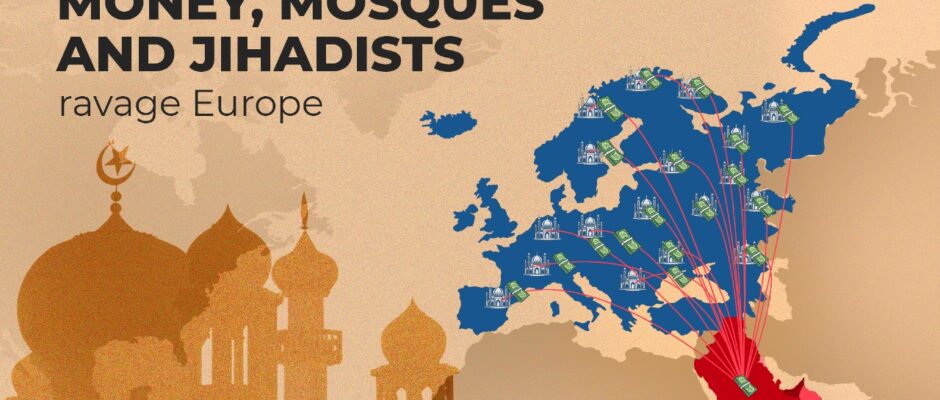
Unregulated foreign funding to religious extremist organizations has led to spread of Jihadists that altered demography, threaten democracy, social fabric. Rohan Giri First, it was United States and United Kingdom that reported increasing presence of Islamist networks, their infiltration into public institutions and society. Now, it’s the turn of Europe to confront a comparable proliferation of jihadist ecosystem that has led to demographic transformation, threat to democracy and socio-economic fabric in the region, Substantive support from Gulf monarchies, Turkey and Iran apart from others has enabled spread of jihadist networks through religious centres, cropping up of ideological organizations and expansion of their financial networks that bolstered subversive narratives. Although religious pluralism is easily recognized as a fundamental right, unregulated influence of foreign entities has generated significant concerns regarding integration, social cohesion and security. Saudi Arabia has reportedly been an important financial catalyst for the difficulties confronting Europe. During 2010 – 20, Riyadh disbursed more than $1.3 billion to Islamist groups in Europe via Muslim World League and International Islamic Relief Organisation. These funds have facilitated setting up Wahhabi-affiliated religious infrastructure, exemplified by Grand Mosque of Brussels. The mosque, seized by Belgian authorities in 2018 had historically served as a hub for ideological influence. In France, Germany and UK, institutions funded by Saudi Arabia have influenced religious discourse, frequently deterring assimilation into local cultures. Qatar has taken an alternative approach, leveraging considerable financial resources to endorse organizations that align with its geopolitical ambitions. During 2014 – 21, more than $ 650 million was allocated to European mosques, NGOs and Islamist networks through Qatar Charity and Qatar Foundation. A 2019 report explained how Qatari financing supported Muslim Brotherhood’s operations in Europe with monetary transfers channeled through intricate networks. Institutions including East London Mosque, Finsbury Park Mosque and Cordoba Foundation have received Qatari support, promoting narratives that highlight social segregation. In France, localities such as Trappes have seen rise of insular enclaves, partially influenced by Qatari-funded efforts that promote parallel social and economic frameworks. Turkey wields its influence via direct governmental intervention. Directorate of Religious Affairs, known as Diyanet supervises over 900 mosques in Germany controlling religious discourse and appointing imams who disseminate Ankara’s political and religious ideologies. German intelligence agencies have voiced apprehension regarding Turkey’s increasing influence especially since President Erdogan has urged Turkish populations in Europe to oppose integration. The Turkish-supported Milli Görüş movement, operating throughout Western Europe, promotes an Islamist socio-political paradigm that contests European secular principles. The 2016 Berlin Christmas Market incident underscored the threat of radicalisation within networks shaped by foreign-controlled religious entities. Iran uses a more nuanced, yet consequential, strategy. Tehran has expanded its influence in Shia communities in the UK, Sweden, and Germany through AhlulBayt World Assembly and Al-Mustafa International University. Financial networks associated with Hezbollah that frequently masquerade as charitable organizations have enabled both ideological proliferation and remittance of funds to Middle East. British intelligence agencies have recognized Hezbollah’s financial operations as a security threat; yet these activities continue to operate under legal safeguards intended for religious entities. In addition to conventional religious financing, financial instruments like Islamic banking and microfinance have been critical in supporting these networks. Islamic Relief Worldwide, active throughout Europe, has acquired a million dollars in donations from the Gulf in the past ten years. Despite framing these donations as humanitarian assistance, a significant portion of the funding serves to bolster ideological influence and establish economic dependency. Qatar Charity’s microfinance projects in France and Belgium have cultivated insular economic systems, wherein enterprises adhering to particular ideological stances prosper, while broader integration into the European market is impeded. Involvement of mosque networks in funding extremist groups has garnered heightened attention. Europol and intelligence services have disclosed instances in which foreign-funded mosques in France, Belgium, and Germany have served as channels for terrorist financing. A 2023 Europol report indicated that a minimum of 20 European mosques received funding and were subsequently associated with radical organisations in Middle East. In 2017, German police closed the Berlin Fussilet Mosque upon uncovering its connections to perpetrator of Berlin Christmas Market incident. France has implemented the same actions, shuttered 89 mosques during 2020 – 23, accommodating extremist factions and facilitating financial transactions for jihadist organizations. Security ramifications of these advances are significant. Extremist networks, developed and shaped by foreign financing, were linked to 2015 Charlie Hebdo attack, 2017 Manchester Arena bombing and 2020 Vienna terrorist attack. Certain European governments have implemented resolute measures. In 2021, Austria, led by Chancellor Sebastian Kurz, initiated closure of mosques directly associated with funding from Turkey and Gulf nations. France’s anti-separatism law, implemented the same year, established rigorous transparency mandates for foreign-funded religious organizations with an objective of diminishing external ideological influence. These efforts notwithstanding, Europe’s comprehensive response remains fragmented. Germany persists in permitting Turkish-controlled religious institutions to function with minimal supervision. UK has not yet implemented effective measures against Qatari-supported organisations, despite evidence linking them to terrorist ideologies. Despite being comprehensive, European Union’s counter-terrorism measures have encountered difficulties in combating ideological infiltration within communities. Resultant demographic changes and the impact on democracy are seriously being debated in Europe. Muslim population in Europe, currently estimated at 44 million, is anticipated to increase to 76 million by 2050. Migration and demographic changes are the elements of societal wellbeing; nonetheless, the inability to facilitate integration and mitigate foreign ideological influence threatens to exacerbate societal divisions. Reports of concurrent legal systems, voluntary segregation, and growing establishment of localised religious administration in regions of France, Belgium, Sweden and Germany signify an issue that transcends security and social stability. Europe may have to embrace a proactive strategy moving forward. Enhanced transparency in foreign fund raising is crucial along with stringent implementation of regulations aimed at preventing external influence from compromising national unity. De-radicalization initiatives must be enhanced by prioritizing community-driven efforts that promote common values instead of exacerbating differences. Safeguarding of Europe’s democratic, secular and inclusive identity will hinge on policymakers’ readiness to address these problems with a measured yet resolute approach. If ignored, the impact

Read More