
CIHS – Centre for Integrated and Holistic Studies

Date/Time:

Blog Post

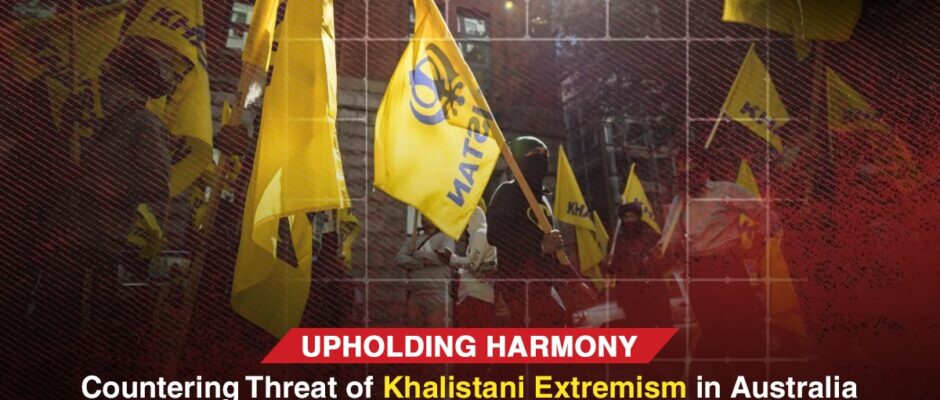
Upholding Harmony: Countering the Threat of Khalistani Extremism in Australia

Upholding Harmony: Countering the Threat of Khalistani Extremism in Australia

Proposed anti-harassment laws by Victoria’s Premier and uneven anti-terror enforcement expose gaps in protecting Indian diaspora communities, especially Hindus from Khalistani & Islamists. Triveni Kaul  Australia prides itself on being a vibrant multicultural society, celebrating diversity and fostering harmony among its communities. However, recent incidents involving Khalistani extremism have disrupted this balance, targeting Indian and Hindu diaspora. The emergence of such extremism poses a grave challenge to Australia’s social fabric and raises urgent questions about the safety of vulnerable communities within this framework. Addressing this issue is critical to preserving Australia’s inclusive ethos and ensuring justice for those affected. Over the past few years, Khalistani extremists—advocates for a separate Sikh state carved out of India—have amplified their activities in Australia. While they claim to pursue political objectives, their actions have often crossed into the realm of harassment, vandalism, and violence, disproportionately affecting the Indian and Hindu diaspora. These incidents demand immediate attention to safeguard the multicultural ideals that underpin Australia’s identity. Australian Indian/Hindu Diaspora Indian Australians, particularly Hindus, have increasingly found themselves at the receiving end of targeted attacks fueled by Khalistani extremism. Reports of temple vandalism, such as the defacement of iconic Hindu temples in Melbourne earlier this year, have sent shockwaves through the community. Graffiti glorifying separatist leaders and slogans promoting violence have not only defiled sacred spaces but also instilled a sense of insecurity among devotees. Harassment and intimidation tactics have extended beyond physical locations to digital spaces, where diaspora members have faced online abuse and threats for expressing their views. Community leaders have reported incidents of individuals being followed, heckled at public events, and receiving threatening messages for opposing extremist narratives. The psychological toll on victims, compounded by fears of escalating violence, has been profound. The most alarming aspect of these challenges is the sense of alienation it fosters. Many Indian Australians feel let down by the lack of decisive action to address their grievances, raising concerns about equitable protection within Australia’s multicultural framework. This growing disillusionment risks undermining trust in the system and eroding the social cohesion that defines Australian society. Legal Frameworks Disparity Australia has robust laws to counter terrorism and hate crimes. However, the rise of Khalistani extremism highlights gaps in existing frameworks, particularly in addressing forms of violence that straddle the line between political activism and community harm. Victoria has recently proposed anti-harassment laws aimed at protecting individuals and communities from targeted abuse. These laws, if enacted, could offer a crucial safeguard for diaspora groups facing systematic intimidation. However, critics argue that enforcement will be key, as legislation alone cannot deter well-organized extremist networks. Australia’s anti-terrorism legislation—designed to counter threats from all forms of extremism—provides mechanisms to monitor and prosecute individuals engaging in terror-related activities. Yet, its application has been uneven, with limited cases of enforcement against those propagating Khalistani extremism. This disparity underscores the need for nuanced legal interpretations that recognize the diaspora’s unique vulnerabilities. Recent dialogues between Indian and Australian authorities have signaled a shared commitment to combating extremism. Joint initiatives to curb funding channels for extremist groups, coupled with intelligence-sharing agreements, mark important strides. However, tangible outcomes remain elusive, necessitating deeper collaborations and policy alignment. Policy Recommendations To address the growing threat of Khalistani extremism and protect the Indian/Hindu diaspora, a multi-pronged approach is essential. Key recommendations include: Concluding Observations Targeting of Indian and Hindu diaspora by Khalistani extremists represents a direct threat to Australia’s multicultural values. Proactive measures are essential to protect the rights of vulnerable communities and uphold the principles of diversity and inclusion. Australia’s commitment to multicultural harmony must translate into decisive action against extremism. By strengthening legal protections, fostering community engagement, and enhancing collaborations with India, Australia can ensure that its social fabric remains resilient in the face of divisive forces. Safeguarding the Indian and Hindu diaspora is not just about protecting a minority; it is about preserving the ideals that make Australia a beacon of coexistence and mutual respect. (Author is a corporate professional and foreign affairs enthusiast, she is a contributing writer at CIHS)
Read More

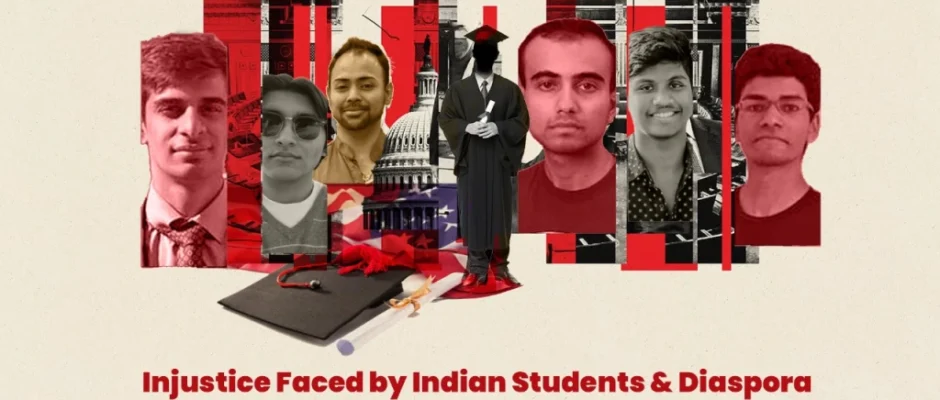
Injustice Faced by Indian Students & Diaspora in the United States: Neglected Safety and Crimes

Triveni Kaul United States was/is a dream destination for quality education and better futuristic opportunities amongst the international students for several years. The most significant number of students are made up of Indian community. Even though Indian students have made substantial contribution to the academic and financial growth of the US, however they constantly encounter a wide range of threats and difficulties, from safety concerns to racial prejudices. It is an alarming situation for Indian student diaspora as the US government allegedly disregards the safety and well-being of the larger international community. With their unbeatable skills, Indian community is leading the multi-trillion-dollars technology, medicine, and academic industries. In federal taxes they pay more than $12 billion annually and represent about one percent of the country’s population. Indian community accounting nearly eight percent of all doctors, ten percent professionals in technology business and in the sector of startup Indian founders accounts approximately twenty five percent. In venture capital Indian American entrepreneurs have raised over $30 billion. With over 400,000 Indian-owned businesses making almost $100 billion in revenue, the community is vibrant to economic progress. To enrich America’s social fabric, community contributes over $1.5 billion annually to philanthropic causes. This strong presence fosters innovation and cultural diversity across the nation. Notwithstanding these outstanding contributions, hate crimes and racial prejudice continue to target the Indian student community. The worry has grown in light of the xenophobic rhetoric and targeted attacks in recent years. It appears that verbal, physical, and violent attacks are intended against Indian students. The tragic case of Srinivas Kuchibhotla, an Indian engineer who was shot and killed in Kansas in 2017 while a man yelled, “Get out of my country,” serves as a grievous reminder of the risks this population faces. These instances are often covered by media, yet they are just a tip of the iceberg. Because of disdain for the legal system or fear of repercussions, many hate crimes remain overlooked. The lack of strong punishment to offenders and frequently mild sentences further encourage others to carry out similar crimes. Systemic failure in effective dealing of hate crimes has created an atmosphere of insecurity and fear amongst Indian students.  Recent incidents of suspicious attacks and police response underscore the severity of the situation. In the beginning of this year (January-February 2024) more than nine Indian students were killed. On January 23, Kevin Dave’s police car reportedly struck Jaahnavi Kandula, a 23-year-old Indian student in Seattle, USA. Officer Dave was reportedly driving at a speed of around 120 km/h when the incident occurred while responding to a drug overdose call. Further to the grief, bodycam footage from Seattle Police Department shows Officer Daniel Auderer making a flippant remark about terrible accident, saying, “Just write a cheque.” The amount is USD 11,000. Most astonishing is that The King County Prosecutor’s Office decided not to file criminal charges against Seattle Police Officer Kevin Dave. In November 2021, the tragic murder of Pravin Varughese, a 19-year-old Indian American student at Southern Illinois University. Varughese was found dead in a wooded area, and police preliminarily reported hypothermia as the cause of death. However, an independent autopsy discovered that he had suffered blunt force trauma in the head, raising worries of foul play. The investigation was marred by holdups and speculative mismanagement of proofs, leading to extensive condemnation of local law enforcement’s response. Similarly, the case of Sharath Koppu, a 25-year-old Indian student at the University of Missouri-Kansas City, emphasized the vulnerabilities confronted by Indian students. Koppu was shot and killed in July 2018 during an attempted robbery at a restaurant where he worked part-time. The occurrence sparked outrage and prompted attention to the larger concern of safety for international students, predominantly those who work in unquestionably unsafe environments to support their education. Another troubling incident occurred in 2019 when Vamshi Reddy Mamidala, a 27-year-old computer science master’s student, was found dead in his California residence. Although the exact cause of his death is still unknown, the case has highlighted the need for improved safety precautions for off-campus students. Indian students repeatedly feel their concerns are not taken seriously and these crime reports are overlooked by law enforcement and government authorities. This negligence stems from cultural misunderstandings, racial biases, and administrative inadequacies. At the time of assistance, a lot of students claim to be patronized or ignored, and police may neglect to file complaints or carry out in-depth investigations. In addition to sustaining a cycle of injustice and neglect, this lack of responsiveness erodes confidence in law enforcement. For Indian students, added difficulties are aggravated by US immigration and visa laws. Getting an H-1B visa, which is essential to work and live in US, is becoming more and more challenging. Ambiguity over visa approval and concerns about deportation increase tension and anxiety. Stability is brought about by restrictive immigration laws and regular adjustments to regulations. Even though it was later reversed, the Trump administration’s attempt to deny visas to foreign students enrolled in online programs during the COVID-19 outbreak exposed their vulnerability and caused concern for many of them regarding their future in the US. The psychological well-being of students is significantly impacted by the persistent fear of violence, prejudice, and uncertainty pertaining to immigration. Due to the stigma and the dearth of counselling facilities that are sensitive to cultural differences. (Incomplete sentence) Even though institutions offer mental health services, they frequently aren’t enough to meet the requirements of international students. The inability to communicate, cultural differences, and the fear of misunderstandings prevent them from asking for assistance, which exacerbates their sense of injustice and loneliness. In order to guarantee the security and well-being of students, educational institutions can play a crucial role. To combat discrimination, universities must be proactive in offering counselling that is culturally sensitive, providing diverse education, and establishing clear procedures for reporting hate crimes. It’s also critical to support overseas students in developing a sense of community. The biases and indifferences that Indian Americans and students experience have to be seriously

Read More