CIHS – Centre for Integrated and Holistic Studies

Date/Time:

Canada Unsafe for Indians & Hindus

Recent years have posed significant challenges to Canada’s reputation as a safe destination for immigrants, particularly for Indians. Nation’s appeal as a place of opportunity and inclusivity notwithstanding, reports of hate crimes, violence against Indians, Hindus and racial prejudice have increased. This radicalism and governmental biases have mounted concerns regarding safety. (Author Pummy Pandita is head of operations at Centre for Integrated and Holistic Studies, a non-partisan think tank based in New Delhi)

Read More

Dreams, Promising Careers to Abrupt Death!

Harsh realities faced by Indian students seeking opportunities in US, Europe, UK & Australia need immediate recognition with comprehensive solutions Rohan Giri Shocking murder of Chirag Antil, 24-year-old student in Vancouver, Canada brings to fore pressing concerns that overseas students in particular from India faced while studying abroad. Chirag’s murder is not a singular instance. It’s culmination of several other such cases.  It should be seen in light of the troubling trend of violence that impacts students who travel to several countries across geographies for education, leisure, work and business apart from leisure. A string of murders or deaths that were reported by media houses from different countries prompts immediate concerns about the adequacy of safety and protection measures for these expatriates. Since beginning of 2024, more than eleven Indian students in United States alone have tragically died, either as victims of murder or under suspicious circumstances. Chirag’s case follows an unsettlingly recognizable pattern: like most such occurrences, police investigations continue without capturing any of the perpetrators. US and Canadian authorities and media outlets till now have viewed many of these incidents as part of crime statistics and road rage. But, it’s important to recognize that each of these incidents signifies a profound and tragic loss for the families who have endured loss of their children. Chirag, hailed from Sonipat, Haryana, aspired to continue his studies in Canada. But, abrupt end to his life casts a long shadow over safety and wellbeing of our youngsters in these self-proclaimed advanced societies and nations. The response—or lack thereof—from local authorities, as well as perceived indifference, can exacerbate the family’s trauma. According to Chirag’s brother, Romit, communication from Canadian police has been minimal leaving the family to grapple for answers and support. Chirag’s murder has till date not been directly linked to targeted killing, but it is important to recognize the general threat perception for Indian diaspora in certain regions including threats from extremist groups.  Khalistani extremist activity has been of significant concern in parts of Canada apart from US, European cities and UK. These extremist elements have had targeted persons of Indian origin over the years, creating a climate of fear and insecurity among the community. Violence plagues Vancouver as multiple gangs often engage in clashes, frequently involving innocent bystanders in their violent fights. Harsh Khatri, a close friend of Chirag Antil has told Glacier Media, “Antil was in the wrong place at the wrong time and misidentified.” Although Khatri did not explicitly attribute the occurrence to any particular gang or plot, the hint was apparent: these gangs are still actively and dangerously operative in Vancouver. A violent rampage from December 2020 to May 2021 highlights this dark reality resulting in loss of over fifteen lives due to gang-related violence. These violent clashes reflect picture of a city grappling with a persistent battle against gang violence where misidentification could lead to death. The city’s cycle of violence is heavily influenced by drug traffickers operating at medium to high levels. On March 30, 2024 gunfire broke out during daytime hours causing mayhem on streets of downtown Vancouver. The incident occurred on a Saturday afternoon, causing frightened visitors to quickly seek shelter in surrounding establishments and cafés. Eyewitness claimed that the assault was directed towards a specific individual who is believed to be a member of the infamous Brothers Keepers gang. The victim was inside a black SUV when bullets ruthlessly penetrated it. With a sense of urgency, the impaired vehicle rushed uncontrollably from an alley onto Robson Street, resulting in a collision with another SUV. In the midst of this disorder, two dogs sustained bullet injuries, requiring immediate medical attention from a veterinarian. There were no other injuries recorded. Nevertheless, the individuals responsible for the shootings are still unidentified and not apprehended and this resulted in the community not being able to cope with the ongoing recurrence of violence associated with gangs. Situation emphasizes the importance of strong and effective support mechanisms for students, both from the countries hosting them and from their home country’s diplomatic channels. The efforts made by Chirag’s family to bring his body back to their home country Bharat with the help of an internet fundraising platform (GoFundMe) and involvement of Indian authorities highlight larger problem of bureaucratic and logistical obstacles that can intensify the sorrow experienced by grieving families. Indian government and its diplomatic missions overseas have consistently expressed concern about escalation in extremist activities and their potential consequences for security of Indian diaspora. Indian students in Canada have an extra level of vulnerability which necessitates that they be more cautious and take stronger security measures. Extremist factions have a tendency to escalate isolated incidents into larger confrontations or deliberate assaults on individuals with Indian affiliation. The lack of immediate and transparent communication from Canadian authorities, as described by the family, points to a need for improved international cooperation on such sensitive incidents. Diplomatic entities must proactively engage and support nationals in distress, ensuring they do not navigate foreign legal and procedural mazes alone. Chirag’s death brings to light essential measures for safety of international students. Educational institutions and local governments must bolster their efforts to ensure these young individuals are not just seen as temporary residents or tuition payers but as integral, protected members of the community. Enhanced safety measures, clear communication channels and dedicated support for international students are imperative to prevent such tragedies and nurture a truly inclusive and secure environment. Tragic end to Chirag Antil’s promising journey is a call for action by all stakeholders involved in international student mobility. It’s a reminder of the responsibilities that host nations like US, European members, UK and Australia should shoulder towards these young lives, far from home, in pursuit of their avocation. (the author is Head of Content at Centre for Integrated and Holistic Studies, a New Delhi based non-partisan think-tank)

Read More

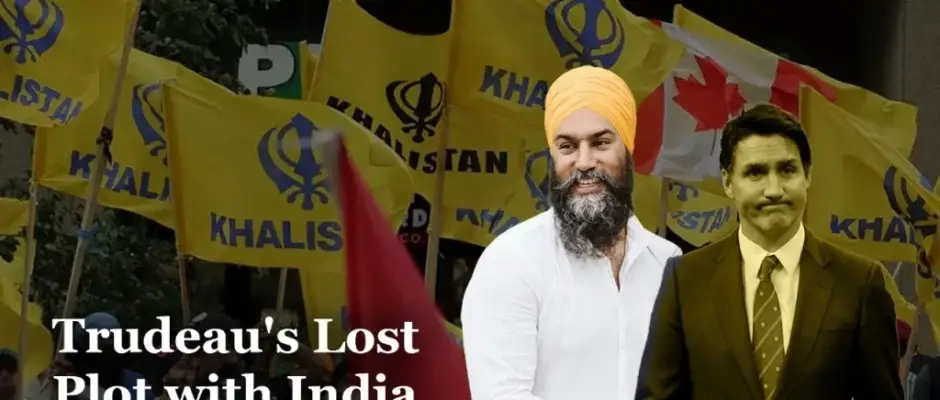
Trudeau’s Lost Plot with India

Trudeau’s political gambits with Canada-based extremists threaten to undermine the fabric of Canada’s national interests, casting a long shadow over its democratic values and international relations, especially with India. Rahul PAWA  In a development that could further complicate the already strained ties between Ottawa and New Delhi, a commission established by the Trudeau administration to probe foreign interference allegations has officially called on the government to release information about India’s possible role in meddling with Canada’s electoral processes. This request unfolds against a backdrop of concerns raised by the Canadian Security Intelligence Service, which has pointed to covert efforts by China to influence the outcomes of Canada’s recent federal elections. A top-secret briefing report, later obtained by various news organizations, highlights the urgent need for Canada to strengthen its defences against such covert activities. The document sheds light on the sophisticated and wide-ranging campaign led by the People’s Republic of China, leveraging everything from diplomatic channels to grassroots community organizations to influence every stratum of society and governance. Adding a new layer to the narrative, the agency has expanded its scrutiny to include India, expressing its apprehensions in a detailed three-page memo that categorises India alongside China as a formidable threat to the democratic integrity of Canada. The report expressly singles out India, anticipating an uptick in interference efforts and strongly advising on the critical importance of bolstering Canada’s democratic systems and institutions to guard against external meddling. In an unfolding scenario that seems straight out of the saying ‘the pot calling the kettle black’, Prime Minister Justin Trudeau, recently labeled as the worst Canadian Prime Minister in the last fifty years, is fervently aiming for a fourth term in office—a milestone last reached in 1908. Despite facing significant hurdles, including trailing behind the opposition Conservatives in polls throughout 2023, Trudeau is unwavering in his quest for re-election, seeking to surpass the achievements of his father, Pierre Trudeau, who narrowly missed winning a fourth electoral term in 1979. Yet, Trudeau’s relentless pursuit of power bears a hefty price for the Canadian people, especially against the backdrop of deteriorating ties with India, the world’s fifth-largest economy, which is seemingly distancing itself from Trudeau’s politics. This growing estrangement is largely credited to Trudeau and his close confidant, Jagmeet Singh Dhaliwal of the New Democratic Party. Since ascending to office in 2015, Prime Minister Justin Trudeau, in alliance with Jagmeet Singh, has navigated the complex waters of Canadian politics with a strategy that leans heavily on the support of Pakistan backed and homegrown Khalistani separatist factions in Canada. This reliance is not merely a reflection of contemporary political strategy but also echoes a longstanding tradition within Canadian politics of providing sanctuary to individuals and organizations known for their dissent against Indian sovereignty. Throughout his tenure, Canada’s political landscape has seen Trudeau’s open endorsement of factions with a history of terrorism and violence within the Khalistani context, a stance that became more marked in the face of competition for the same voter base from Jagmeet Singh. This tactical courtship of Khalistani supporters and sympathisers by Trudeau has significantly influenced his administration’s policies towards India and its substantial diaspora in Canada evidenced by stands taken during India’s farmers protests and during illegitimate referendum dramas in Canada. This demographic, consisting of individuals from both India and Pakistan represents a critical vote bank, ostensibly enabling Trudeau to maintain his grip on power. However, this approach has raised concerns over the compromise of the broader interests of the Canadian people, highlighting a scenario where Trudeau’s political gain is seemingly placed above national welfare. Further demonstrating how their own Prime Minister has placed political gain above all, disrupting the delicate balance between fulfilling national interests and chasing personal political ambitions, especially by jeopardising the economic, moral, and internationally friendly relations with India and her citizens.  In a resolute and unified rebuttal to the latest misadventure to the accusations raised by the commission under the Trudeau government, the Indian Foreign Ministry vehemently dismissed the accusations as “baseless,” “absurd,” and “motivated.” The Ministry highlighted that similar claims had been brought up during Trudeau’s discussions with the Indian Prime Minister, only to be “completely rejected.” Furthermore, the statement from the Indian Foreign Ministry emphasised, “It is not the policy of the Government of India to meddle in the democratic processes of other countries. Contrary to these allegations, it is, in fact, Canada that has been found interfering in India’s internal matters.” The statement also reiterated India’s longstanding concern regarding Canada’s approach towards separatists, terrorists, and anti-India groups. This sharp rebuttal does more than just dismiss the claims; it redirects the focus onto the underlying diplomatic friction between the two nations, emphasizing India’s strongest objections to Canada’s treatment of elements opposed to Indian interests. The intensifying diplomatic standoff between Ottawa and New Delhi marks a pivotal moment, casting a spotlight on Prime Minister Justin Trudeau’s approach of political appeasement toward Canada-based Khalistani extremist factions. This strategy, aimed at securing votes and maintaining power, appears to have jeopardised the broader interests of Canada in favour of Trudeau’s personal political ambitions. The engagement with Khalistani elements by the Trudeau administration has not only soured relations with India but also underscored the fragile interplay between domestic political tactics and the responsibilities of international diplomacy. The firm rejection by the Indian government of the allegations put forth by a commission established under Trudeau’s government deepens the diplomatic divide, signalling a dramatic shift away from a foundation of mutual respect and shared democratic ideals. This situation has led to a moment of reckoning, with India responding with decisive words that challenge the veracity of the Canadian Prime Minister’s stance, thereby reshaping the contours of an intricate bilateral relationship. (Rahul Pawa is director of research at the Centre for Integrated and Holistic Studies in Delhi, India, specialising in international law, crime, security, future-tech & futuristic warfare.)

Read More

Bharat’s G-20 Presidency for World

Roadmap for human centric, inclusive & green development with climate justice; re-designing multilateral banks, leadership for global south big takeaways Narendra Modi During its time, India achieved the extraordinary: It revitalised multilateralism, amplified the voice of the Global South, championed development, and fought for the empowerment of women. Today marks 365 days since India assumed the G20 presidency. It is a moment to reflect, recommit, and rejuvenate the spirit of Vasudhaiva Kutumbakam — “One Earth, One Family, One Future”. As we undertook this responsibility last year, the global landscape grappled with multifaceted challenges: Recovery from the Covid-19 pandemic, looming climate threats, financial instability, and debt distress in developing nations — all amid declining multilateralism. In the midst of conflicts and competition, development cooperation suffered, impeding progress. Assuming the G20 chair, India sought to offer the world an alternative to the status quo, a shift from a GDP-centric to human-centric progress. India aimed to remind the world of what unites us, rather than what divides us. Finally, the global conversation had to evolve — the interests of the few had to give way to the aspirations of the many. This required a fundamental reform of multilateralism as we knew it. Inclusive, ambitious, action-oriented, and decisive — these four words defined our approach as G20 president, and the New Delhi Leaders’ Declaration (NDLD), unanimously adopted by all G20 members, is testimony to our commitment to deliver on these principles. Inclusivity has been at the heart of our presidency. The inclusion of African Union (AU) as a permanent member of G20 integrated 55 African nations into the forum, expanding it to encompass 80 per cent of the global population. This proactive stance has fostered a more comprehensive dialogue on global challenges and opportunities. The first-of-its-kind ‘Voice of the Global South Summit’, convened by India in two editions heralded a new dawn for multilateralism. India mainstreamed the Global South’s concerns in the international discourse and has ushered in an era where developing countries take their rightful place in shaping the global narrative. Inclusivity also infused India’s domestic approach to G20, making it a People’s Presidency that befits the world’s largest democracy. Through “Jan Bhagidari” (people’s participation) events, the G20 reached 1.4 billion citizens, involving all states and Union Territories (UTs) as partners. And on substantive elements, India ensured that international attention was directed to broader developmental aims, aligning with the G20’s mandate. At the critical midpoint of the 2030 agenda, India delivered the G20 2023 Action Plan to Accelerate Progress on the Sustainable Development Goals (SDGs), taking a cross-cutting, action-oriented approach to interconnected issues, including health, education, gender equality and environmental sustainability. A key area driving this progress is the robust Digital Public Infrastructure (DPI). Here, India was decisive in its recommendations, having witnessed the revolutionary impact of digital innovations like Aadhaar, UPI, and Digilocker first-hand. Through the G20, we successfully completed the Digital Public Infrastructure Repository, a significant stride in global technological collaboration. This repository, featuring over 50 DPIs from 16 countries, will help the Global South build, adopt, and scale DPI to unlock the power of inclusive growth. For our One Earth, we introduced ambitious and inclusive aims to create urgent, lasting, and equitable change. The Declaration’s Green Development Pact addresses the challenges of choosing between combating hunger and protecting the planet, by outlining a comprehensive roadmap where employment and ecosystems are complimentary, consumption is climate-conscious, and production is planet-friendly. In tandem, the G20 Declaration calls for an ambitious tripling of global renewable energy capacity by 2030. Coupled with the establishment of the Global Biofuels Alliance and a concerted push for Green Hydrogen, the G20’s ambitions to build a cleaner, greener world are undeniable. This has always been India’s ethos, and through Lifestyles for Sustainable Development (LiFE), the world can benefit from our age-old sustainable traditions. Further, the Declaration underscores our commitment to climate justice and equity, urging substantial financial and technological support from the Global North. For the first time, there was a recognition of the quantum jump needed in the magnitude of development financing, moving from billions to trillions of dollars. The G20 acknowledged that developing countries require $5.9 trillion to fulfil their Nationally Determined Contributions (NDCs) by 2030. Given the monumental resources required, the G20 emphasised the importance of better, larger, and more effective Multilateral Development Banks. Concurrently, India is taking a leading role in UN reforms, especially in the restructuring of principal organs like the UN Security Council that will ensure a more equitable global order. Gender equality took centre stage in the Declaration, culminating in the formation of a dedicated Working Group on the Empowerment of Women next year. India’s Women’s Reservation Bill 2023, reserving one-third of India’s Parliament and state legislative assembly seats for women, epitomises our commitment to women-led development. The New Delhi Declaration embodies a renewed spirit of collaboration across these key priorities, focusing on policy coherence, reliable trade, and ambitious climate action. It is a matter of pride that during our presidency, G20 achieved 87 outcomes and 118 adopted documents, a marked rise from the past. During our G20 presidency, India led deliberations on geopolitical issues and their impact on economic growth and development. Terrorism and the senseless killing of civilians are unacceptable, and we must address them with a policy of zero tolerance. We must embody humanitarianism over hostility and reiterate that this is not an era of war. I am delighted that during our presidency, India achieved the extraordinary: It revitalised multilateralism, amplified the voice of the Global South, championed development, and fought for the empowerment of women everywhere. As we hand over the G20 presidency to Brazil, we do so with the conviction that our collective steps for people, planet, peace, and prosperity, will resonate for years to come. (Author is Prime Minister of India)

Read More

India’s Firm Message to Canada: Tackle Khalistani Extremism, Preserve Bilateral Ties

Rohan Giri Diplomatic relations between India and Canada have been thrown into a state of disarray after insinuations on possible  Indian involvement in murder of Hardeep Singh Nijjar, a proscribed terrorist identified as a member of Khalistan Tiger Force. These claims by Canadian Prime Minister Justin Trudeau have ignited tensions, prompting a sharp rebuke from India’s Ambassador to Canada, Sanjay Kumar Verma that criticised Canada for damaging bilateral relations. Verma asserted that the accusations lack substantial evidence and may have been influenced by high-level directions. Allegations of India’s involvement in reported murder of Hardeep Singh Nijjar, a Khalistani terrorist who had obtained Canadian citizenship, emerged after Canadian Prime Minister Justin Trudeau’s address in the country’s Parliament on September 18. He had claimed to have “credible evidence that the Indian government assassinated a Canadian citizen on Canadian soil.” This serious assertion put a strain on bilateral relations. However, India recognised as a robust and healthy democracy, has no historical record of engaging in such clandestine activities and consistently championed the path of peace both regionally and globally. In an interview to ‘The Globe and Mail’, Indian envoy Sanjay Kumar Verma offered a forceful rebuttal to these allegations chastising Canada for failing to furnish any concrete or pertinent details that would substantiate their accusations. He expressed apprehension regarding the investigation’s integrity, hinting at possibility of high-level interference in investigative proceedings. The accusations triggered significant diplomatic fallout and unilaterally Canada escalated further by suspending an Indian diplomat. Retaliating, India declared a Canadian senior diplomat persona non grata and requested the Canadian government to withdraw a substantial number of its diplomatic staff from India. This diplomatic spat loomed as a potential threat to the broader bilateral engagement between the two countries. Verma scrutinised validity and admissibility of the purported evidence underpinning Canada’s claims, pointing out that diplomatic exchanges were safeguarded by international law and not admissible in a legal context or for public revelation. He called on Canada to explain the methods used to obtain these conversations and raised the possibility that the alleged wiretaps could have involved impersonated voices. India has on multiple occasions drawn attention to its pending extradition requests, which it alleges Canada has consistently overlooked. Following the accusations against India, the Ministry of External Affairs labeled Canada as a “safe haven for terrorists, gangsters, and criminals.” This characterisation is not made lightly; it mirrors the perception of contemporary Canada and has added further tension to the already strained diplomatic relations. The fabric of India-Canada relations has been further frayed by a deeply troubling series of events in Canada. There is a growing wave of hostility, as sacred Hindu sites and the assets of the Indian community have come under repeated attack. This disturbing trend has escalated to a point where the safety of Indian diplomats in Canada is now in jeopardy.  The aftermath of the killing of Hardeep Singh Nijjar has unleashed a torrent of direct threats and vitriolic hate speech aimed at the Indian diplomatic corps. The atmosphere of intimidation has been starkly illustrated by the appearance of menacing posters throughout Canada. These posters not only advocate for the assassination of Indian officials but audaciously depict them as adversaries of the Canadian state, ratcheting up the diplomatic tension to an alarming degree. This volatile situation casts a shadow over the Indian community in Canada and puts the diplomatic ties between the two nations on a knife-edge. In a comprehensive analysis, as an international think tank, Centre for Integrated and Holistic Studies, raised alarm in its latest report about the escalating threat of Khalistani extremism in Canada, particularly during Prime Minister Trudeau’s administration. The report stressed that this radical movement, bolstered by Pakistani support, has intensified, putting a strain on Canada’s social fabric and its long-standing multicultural values. Ties between Canada and India have deteriorated, attributed in part to Trudeau’s interactions with Khalistani proponents and his unsubstantiated accusations against India. These actions have not only marred Trudeau’s leadership but reflect political influence of Jagmeet Singh, the NDP leader known for his Khalistani linkages and frequent anti-India commentary.  CIHS report warned that the Canadian government’s perceived indifference towards growing Khalistani presence could incentivise separatist sentiments, potentially triggering a secessionist referendum. Such developments threaten Canadian unity and sovereignty.  The think tank underlined the urgency for Canada to repair its diplomatic relations with India. Moreover, it called on Western nations to tackle Khalistani extremism with an unwavering adherence to the rule of law and a commitment to security, human rights, and democratic principles. The response to this issue is critical, the report concludes, as it will significantly shape the future of international relations and the global order. Trudeau has seemingly overlooked these critical issues. The unchecked growth of separatist movements poses a real and significant threat to the security of Canada. It seems he fails to acknowledge the true character of terrorism, which knows no religious or ideological limits. No amount of diplomatic veneer can mask this reality. Historical patterns suggest that the consequences of neglecting such threats often have a way of returning to their origin with compounded force Addressing these challenges with substantive dialogue and addressing the influence of Khalistani factions in Canada is crucial for restoring confidence and strengthening the bilateral relationship. The current diplomatic impasse highlights the importance of adhering to diplomatic norms, international law, and the protection of envoys abroad. Prime Minister Justin Trudeau’s approach, which seems to prioritise internal political advantages over international protocol, reflects a departure from statesmanlike conduct. Such a strategy may jeopardise the diplomatic bond with India and other law-abiding democracies worldwide. (author is manager – operations at New Delhi based non-partisan think tank, Centre for Integrated and Holistic Studies)

Read More

Canada’s Darkening Horizon: Red Flags and Alarming Trends

The dynamics between India and Canada are treading on thin ice, revealing a landscape where Canada’s interests seem to be diverging significantly from Prime Minister Trudeau’s actions and statements. It’s crucially morphing into a “Canada versus Trudeau” scenario, highlighting an urgent call for a recalibration of Canada’s stance. Dive deeper into the unfolding scenario and explore potential resolutions in CIHS special report on “Canada’s Darkening Horizon: Red Flags and Alarming Trends”

Read More

Justin Trudeau on a Sticky Wicket!

Khalistani terror links, snapping ties with Bharat, ignoring bread and butter issues, dissent within ruling party may not help Canadian PM secure a fresh mandate Dr Amrit Pal Kaur Canadian Prime Minister Justin Trudeau made explosive comments on September 19 suspecting Indian role in killing of terrorist Hardeep Singh Nijjar in June 2023. Outrageous as these comments were, they were damaging in equanimity. Trudeau’s statements within and outside the Canadian Parliament led to an unwanted and unwarranted diplomatic war with India that could and should have been avoided. Given that Trudeau is leading a minority government with support from parties like New Democratic Party, it seems to be his political exigency to comment on any and everything Indian. The myopic view of the present Canadian dispensation with regard to Indo-Canadian relations only puts a mammoth question mark on Trudeau’s acumen as a statesman. Instead of behaving like head of a leading country like Canada, Trudeau managed to cut a sorry figure for himself in global international political matrix. Big question, however is, why Trudeau jumped the gun and declare something which may not be true at all. Did the purported ‘Five Eyes’ intelligence sharing mechanism that includes US, United Kingdom, Australia, Canada and New Zealand fail to deliver?   The reasons are palpable. The drama in wake of his visit to Delhi for G-20 summit, much on the line of Shakespearean script, was peppered with generous amount of prejudice against India acted as immediate trigger for his outpouring in Parliament.  It is more than clear that Trudeau is playing to domestic gallery with the allegations against India. As much as he wishes to make it an issue of international nature, it is essentially a domestic concern for Canada. As the New Democratic Party led by Jagmeet Singh, a sikh descent, is a crucial partner in Trudeau Government and Sikhs hold crucial votes in the Canadian elections. Therefore, his inkling towards everything Sikh is quite evident. There is clear evidence of Canadian Government’s support to extremist groups which have terror links as well as entertain separatist agenda against India. From facilitating Khalistani referendum to permission for vile speeches against India, the separatists have been given support short of recognition by the Canadian Government. The killing of Nijjar is portrayed as an assassination project of Government of India in the light of his terror history. Nijjar, an Indian citizen, had reached Canada seeking political asylum in 1997 after two failed attempts and with forged documents. In Canada, he eventually became the chief of Khalistan Tiger Force. He became the leader of a Gurudwara committee in Surrey, British Columbia in 2020. Nijjar was a deemed terrorist as notified by Government of India for his involvement in terror related activities in the country. This perhaps worked to Trudeau’s advantage and against India.  However, there are other aspects that Trudeau seems to be happily oblivious to or conveniently ignored. For one, the Sikh diasporic politics in Canada is as much about the heft and influence among hardworking community and the leadership of a Gurudwara is one such accolade which contributes to a Sikh death might have to do with leadership of Gurudwara as well as the local politics of his region. Second, there are credible reports that Nijjar was involved in the terrorist activities in India including a bomb blast in Punjab. He is known to have visited Pakistan to meet his links there. Third, as much as Trudeau believes in assassination theories, India is a peace loving and rule abiding democratic country with a long-standing impeccable record that’s under constant scrutiny. Trudeau and his government do not seem to realise the dangerous nature of separatist or extremists driven politics. Clearly, they have not witnessed the violence and fear of terrorism on the scale Indians and especially people of Punjab have seen. Separatists came to India via the Canadian route as there are hardly any takers in India for it. Way too much blood has been shed and precious lives have been lost to the grotesque creature of terrorism that its knock on the doors of Punjab makes Punjabis fearful. It took decades to restore semblance of normalcy in Punjab and the separatist agenda seeks to undo it. Indian government’s fury is understandable given the context and recent terror history. No one in India wants to turn the clock back to vile 80’s. Peace, love and stability are preached in Sikhism and Sikhs of today seek to maintain it in their homeland. Trudeau’s petty politics seeks to threaten it without realizing the fragile nature of this calm. Fanning separatist flames may have grave repercussions in Canada and India well. Indians, of all faiths, who do not vouch the handful separatist fringe elements are being threatened under the very eye of the administration. Security of Indian Diplomatic corps is also compromised when the separatists protested outside Indian Consulate, distributed flyers with names of Indian diplomats and put up posters. These grave incidences not only present a weak figure of Trudeau Government abroad but also create a fearful environment within Canada. These developments propelled Indian government to temporarily stay on issuing visas to Canadian nationals. Whereas India is accused of violating Canadian sovereignty, Canada has not performed its duty to protect the Indians, their properties, businesses, jobs and Indian diplomats. Trudeau has conveniently resorted to a cover up of these facts. In fact, if not controlled, the separatists may even become a credible threat to Canadian security as well when this creature that Trudeau is nurturing turns to face him. He does not seem to realize that terrorism has no religion and does not harbour faith in humanity and no amount of sugarcoating will change its essential nature. If the hope is to fan a fire across continents will keep their hearth safe, then history has shown time and again that chickens eventually come home to roost. Prime Minister Justin Trudeau has shown anything but statesmanship for petty gains in domestic politics costing the nation a

Read More

Trudeau goes Khalistan, Pakistan way!

Latest reshuffle in his council of ministers may not have addressed concerns on Canadian soil becoming fulcrum of anti-India elements Rohan Giri Canadian Prime Minister Justin Trudeau has recently reshuffled his council of ministers ahead of the upcoming general elections. This reshuffle involved making change of portfolios and work responsibilities of ministers along with four Indo-Canadians. As Canada reconfigured its leadership, discerning and assessing its implications for the country’s partners like India becomes pertinent. Evolving political dynamics in Canada and resulting strategic adjustments warrant careful consideration in the global arena. In specific, four Indo-Canadian ministers’ responsibilities were changed or promoted: Anita Anand, Kamal Khera, Harjit Sajjan, and Arif Virani. Notably, Anita Anand was promoted as President of Treasury Board, transitioning from her previous role as the Minister of National Defense. Similarly, Kamal Khera moved from a senior portfolio to become Minister for Diversity, Inclusion, and Persons with Disabilities. Harjit Sajjan, having served as International Development Minister, now holds the position of Minister for Emergency Preparedness. Arif Virani, another Indian-Canadian and the representative of Parkdale-High Park in Toronto made his cabinet debut as the Minister of Justice and Attorney General. Understanding their influence and engagement within the sizeable Indo-Canadian community and Indian affairs becomes crucial owing to the significant role overseas Indians play in influencing New Delhi’s relations with Ottawa. Professor-turned-politician Anita Anand is particularly vocal about her Indian heritage taking immense pride in her grandfather, freedom fighter VA Sundaram, who worked alongside Mahatma Gandhi during the freedom struggle. Anand’s involvement extended to assisting the panel in investigating tragic 1985 Air India Kanishka bombing. On 35th anniversary of the bombing, she tweeted, “The victims of the bombing of Air India 182 and their families are in my thoughts today and always. I am privileged to know some of you and honour the memories of your loved ones with you.” Anita Anand also held a position on advisory board of the Canada India Foundation, an organisation established in 2007 to bolster bilateral ties. During the cabinet transition, Kamalpreet Khera, representative for Brampton West in the House of Commons has taken on significant role of Minister for Diversity, Inclusion, and Persons with Disabilities. Khera’s Indo-Canadian background goes back to her ancestors from Ropar in Punjab. She is known to have close ties with Navdeep Bains, a former Canadian politician who served as Minister of Innovation, Science, and Industry during 2015 – 21. There have been reports pointing to strong links Navdeep Bains has with Khalistani movement. Bains has allegedly been groomed by World Sikh Organization (WSO), a pro-Khalistan hard line organisation accused of radicalizing Sikh community and fostering divisions apart from piloting anti-India propaganda. Relationship between Navdeep Bains and Kamalpreet Khera is said to be more than just acquaintanceship. Bains is regarded as mentor and guide to Khera. Indian authorities have expressed their concern to the Canadian government multiple times regarding separatist activities on the latter’s soil. Prime Minister Trudeau’s cabinet reshuffle also sparked reports on Harjit Sajjan, his association with Khalistani elements and his tacit support for their radical activities. Hitherto Punjab Chief Minister, Captain Amarinder Singh had publicly ostracised Sajjan as a “Khalistani supporter”. Singh had been a proponent of imposing sanctions on Canada for its ‘open and covert’ support to Khalistani terrorists. Captain Singh had called for global pressure on Canada to prevent the use of its soil for perpetrating terror against India, particularly the Sikh community targeted by Khalistani terrorists. Reports pointed to Harjit Sajjan’s parents, Kundan Singh Sajjan and Vidya Kaur Sajjan’s long term membership of WSO. Another notable Indo-Canadian that figured in the latest cabinet reshuffle is Arif Virani, who spent 15 years as human rights and constitutional lawyer before entering politics. Virani is vocal about purported Islamophobia and remained deeply committed to the trumped up issue. Since his initial election, he consistently advocated against Islamophobia, both on the ground and within the Parliament. Notably, he sought inputs from Muslim groups on how to tackle online hate faced by Muslims before Liberals introduced Bill C-36 in June 2021. Primary objective of this bill was to combat online hate with focus on addressing Islamophobia that Virani thinks is prevalent. Arif Virani was involved in a study on M-103, a non-binding motion in the 42nd Canadian Parliament urging the government to condemn Islamophobia and all forms of systemic racism and religious discrimination. Additionally, he is associated with the Aga Khan Foundation of Canada, an organisation working in various countries. The foundation faced accusations of involvement in money laundering Canadian Prime Minister Justin Trudeau’s decision to include Khalistani and Pakistani jihadist elements in his council of ministers may not go well with New Delhi. Comprehensive research conducted by veteran journalist Terry Milewski titled, “Khalistan: A Project of Pakistan” unequivocally demonstrates that the Khalistan movement poses not only a threat to India but also significant concern for Canada. Prime Minister Justin Trudeau’s undeniable link with anti-India elements underscore the risk it poses to bilateral relations and global security environment. (Author is operations manager at Centre for Integrated and Holistic Studies, non-partisan think tank based in New Delhi)

Read More

Freedom of Expression or License to Incite? A Close Look at Khalistan Protests

Rohan Following the assassination of Hardeep Singh Nijjar, the leader of the Khalistan Tiger Force, some Khalistan supporters have made unsubstantiated allegations insinuating the involvement of Indian authorities in his murder. Consequently, a few Khalistani hardliners have disseminated a threatening poster displaying photographs of notable Indian diplomats based in the UK: High Commissioner Vikram K Doraiswami and Council General Dr Shashank Vikram. Additionally, the banned organization Sikh for Justice has released a poster featuring High Commissioner Sanjay Kumar Verma and Counsel General Smt. Apoorva Shrivastava, accompanied by the phrase “Killers in Toronto.” This poster suggests that “Kill India” is the actual moniker of the extremist movement associated with Khalistani factions. During a press briefing, Mr Arindam Bagchi, the spokesperson for the Ministry of External Affairs of India, voiced a steadfast and decisive response, declaring, “the dissemination of posters promoting violence against Indian diplomats and diplomatic establishments abroad is deemed unacceptable. We unequivocally condemn such actions in the strongest possible terms.” Mr Bagchi emphasised that the Indian government has taken stringent measures to address this issue by liaising with authorities from Canada, the United States, the United Kingdom, and Australia, expressing the seriousness of the situation and soliciting their cooperation in tackling the problem of menacing posters distributed by Khalistani operatives. In a show of solidarity for Nijjar, individuals linked with Khalistani extremism have staged protests in front of Indian consulates situated in Canada, the United States, the United Kingdom, and Australia on July 8th. Show of Strength Fizzles Out The expected Khalistan rallies, instigated by extremist elements backed by Pakistan, outside Indian consulates in Canada, Australia, the United Kingdom, and the United States, have conclusively shown their lack of influence. These protests were organised in the wake of the infamous “Kill India” poster’s dissemination by Khalistani extremist factions operating in Western countries. The gatherings saw a minimal presence of Khalistan supporters. Based on video footage of the events, the maximum number of protesters noted in Surrey, British Columbia, Canada, was roughly 20, with the turnout in Toronto being marginally higher. In San Francisco, a procession of about 15 vehicles crossed the Bay Bridge and gathered in front of the Indian consulate. In Australia, a handful of protests occurred outside the Indian consulate in Melbourne. A comparable situation developed in London, where no more than 30 individuals with Khalistani affiliation congregated opposite the Indian High Commission. Despite a substantial police presence, they chanted slogans and delivered speeches for over two hours before dispersing. Counter Protest by Indian Diaspora Despite the inflammatory intentions behind the Khalistani rallies, these gatherings received limited support and faced robust opposition from the Indian community. Particularly in Toronto, the presence of the Indian community overshadowed the Khalistani protesters, thwarting their efforts. Their poorly planned attempt to desecrate the Indian flag was effectively foiled by a courageous individual of Indian origin, underscoring unity and resilience in the face of divisive agendas. The overwhelming response from the Indian community exemplified their steadfast commitment to protecting the Indian consulate and its diplomats from petty criminals backed by Pakistan. Their resonant chants of “Bharat Mata ki jai” (Victory to Mother India), “Vande Mataram” (I bow to thee, Mother), and “Long Live India” echoed with unwavering Indian nationalism. The Indian community showcased maturity and restraint, choosing peaceful means to demonstrate solidarity with India. Notably, the Indian Consulate in San Francisco has been targeted in the past, highlighting the need for enhanced security measures. Members of the Indian diaspora categorically expressed their support for the Indian Consulate and firmly stood against the threats posed by Khalistani elements to Indian diplomats. Freedom of Expression For Whom? Over time, India has consistently appealed to all countries, both collectively and individually, not to provide a platform for separatist elements, cautioning that such actions could affect bilateral relations. However, despite these appeals, the United States, Canada, the United Kingdom, and Australia permitted rallies by Khalistani extremists. These countries have contended that their commitment to democracy means they regard freedom of expression as a fundamental value and cannot limit peaceful mobilisation.This raises the question of whether a commitment to democracy extends to permitting terrorists to hold peaceful demonstrations. Are the governments of these countries oblivious to Khalistani terrorist activities, or was this permission deliberately granted? Should Canada forget the tragic Kanishka bombing? Should the world forget the heinous act that took the lives of 268 Canadian citizens (many of whom had Indian origins), 27 Britons, and 24 Indians at an altitude of 31,000 feet? Allowing terrorist organisations to protest outside Indian consulates and high commissions jeopardises the safety and security of diplomats. As per Article 79 of the Vienna Convention on Consular Relations of 1963, which covers various aspects of consular relations, host states have a specific duty to take all necessary measures to protect consular premises, prevent intrusion or damage, and ensure the peace and dignity of consular posts. Khalistani terrorists have committed numerous acts of terrorism within and beyond India. Thus, based on freedom of expression, would these countries allow the Islamic State in Iraq and Syria (ISIS) to protest peacefully? They would not. A balanced approach that respects freedom of expression while prioritising the safety and security of individuals and diplomatic missions is needed. Granting permission for protests to extremist organisations undermines democratic principles and sends the wrong message to those involved in violent and extremist activities. Countries must adopt a strong stance against terrorism and extremist ideologies, guaranteeing the protection of all individuals and diplomatic premises. (Author is operations manager at Centre for Integrated and Holistic Studies, non-partisan think tank based in New Delhi)

Read More

Canada Turns Breeding Ground for Khalistani Subversives!

Hindus were attacked in Mississauga during Diwali celebrations. Slogan mongering & sword wielding Khalistanis led these attacks. Canada seems to be going bonkers on tackling the malice of a distinct minority as well as vocal Sikhs that profess Khalistan. While peace-loving large community of Sikhs living in  Canada have contributed to its prosperity and progress, the minority Khalistani faction seems to be the ones that are on rampage. And, Prime Minister Justin Trudeau’s government seems bending backwards to support this miniscule number that made hue and cry of a Khalistani referendum staged farcically. In India and elsewhere, overwhelmingly Sikh community has found peace with their inclusion in the larger Hindu society. But, in last few years, the extremist elements that supported and fuelled terror in the Indian border state have been pushing the Khalistani envelope. What’s more worrying is the diabolical stance taken by successive Canadian Prime Ministers on tackling this vociferous and aggressive minority sikh fringe elements. Calls for putting a stop to the farce of Khalistan referendum have gone on deaf ears. Instead, the Canadian government has taken the line that it cannot stop Sikhs from expressing their views as long as the process was peaceful, democratic and within parameters of Canadian laws. Under no circumstance would the ordinary Canadians support a separatist movement of any kind. While India has already banned Khalistani propagating outfits, Canada should follow suit rather than looking the other way. Frequent attacks on Hindu population, their property and places of worship by these subversives are symptomatic of the malice brewing in Canadian society. By no stretch of imagination would such acts be endorsed in the guise of free speech. Global community will have to join hands in debunking both the Khalistanis and their handlers in the Canadian government. If the Trudeau government is committed to rule of law, peace and tranquility in Canada and India, strong bilateral relations across gamut of issues, then it should come forward with a complete ban on scheduled November 6 farcical referendum on Khalistan. By same measure, can India allow its land to be used for a bogus referendum or vote on Ontario being part of Canadian Republic? Indian government’s recent demarche to the Justin Trudeau-led Canadian government to put a stop to the alleged Khalistan referendum is more than justified and as per international laws of jurisprudence. Ahead of the alleged Khalistani vote, Hindus were attacked in Mississauga city on October 24 evening during Diwali celebrations. Slogan mongering and sword wielding Khalistani supporters executed pre-mediated violent attacks periodically. For instance, the Shrimad Bhagavad Gita Park in Brampton was vandalized with local government twiddling its thumb. Majority sikh population in India and Canada have never supported the Pakistan-backed Khalistani separatist elements. On September 18, banned outfit Sikh for Justice (SFJ) staged yet another farcical vote on Khalistan. In apparent solidarity with these subversive elements, Trudeau administration provided the government-run Gore Meadows Community Center in Brampton for the misdeed.  The small fringe group in Canada that supports Khalistan uses radical rhetoric to foment anti-India sentiment. It is deeply disturbing that the management of most Gurdwaras in Canada have not been with community that believes in its tenth guru, Gurunanak who himself was a great peacenik. Before the September 14 vote, Khalistani terrorists defaced the Bochasanwasi Akshar Purushottam Swaminarayan (BAPS) temple in Toronto with anti-India slogans, i.e., ‘Khalistan Zindabad, Hindustan Murdabad’. The temple walls were vandalized and protests from Indian High Commission in Ottawa went unheard or responded to. In recent past Khalistani extremists have had targeted Hindu temples repeatedly. Six Hindu temples were attacked in Toronto also in a bid to divide the Hindus and Sikhs that have co-existed and prospered peacefully in India and world over. Miscreants stole money from donation boxes, vandalized the idols of Gods and Goddesses, damaged temple property as well as ornaments from the stolen idols. Canadian Hindus were legitimately concerned and living under a cloud of fear while the federal government looked away. Time and again, Khalistani radicals and Pakistanis targeted non-Muslims and non-Sikhs. Attacks on properties and temples of Hindus are evidence that Hinduphobia is on the rise in Canada. Hindus are utterly appalled by the Trudeau government’s approach and police failure to take decisive action against the radical elements.  In November 2021, National Investigation Agency (NIA) in India had formally requested its Canadian counterparts to designate Sikhs for Justice as a terrorist outfit. Instead of banning the outfit, SFJ was given a free run and government assistance thrown in to help the separatists. In the process, Canada has openly shielded and protected anti-India propagandists and entities.  Unfortunately, Liberal Party of Canada of Justin Trudeau has long supported the extreme Khalistani elements. It is believed that some of his party’s politicians were close to Khalistani sympathizers and activists. It is reported that Sukh Dhaliwal and Andrew Kania, two Liberal MPs, presented a petition in the House of Commons in 2010 demanding that the government recognize 1984 Sikh riots in India as an act of genocide. In a private motion in Ontario assembly in 2017, Liberal Party member Harinder Malhi referred to 1984 riots as acts of genocide. In 2018, a couple of Canadian politicians happened to participate in the Khalsa Day Parade. Even Prime Minister Justin Trudeau attended this event in 2017. Canadian government seems to knowingly entertain the idea of Khalistan under the leadership of Trudeau. In the process, Canada has become a breeding ground for Pakistan-backed Khalistanis. Time and again, they challenged sovereignty of India while Canada ignored global call to refrain them. Prime Minister Justin Trudeau’s inaction showed that he has had explicitly or implicitly supported the attacks on the sovereignty of another nation.

Read More
  • 1
  • 2