
CIHS – Centre for Integrated and Holistic Studies

Date/Time:

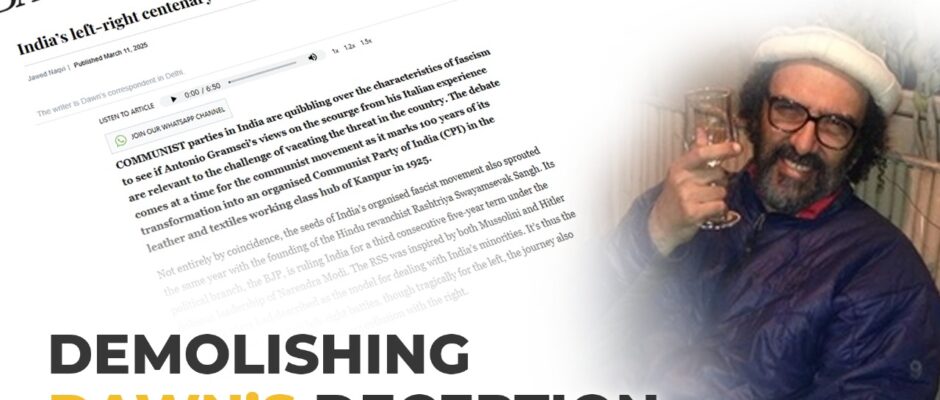
Demolishing the Dawn’s Deception

Demolishing Dawn’s Deception

Rohan Giri Dawn.com, the Pakistani news outlet that hosts Naqvi’s fabrications, has a long history of anti-Indian prejudice, regularly publishing articles that undermine Indian sovereignty and national interests. While it claims to support democracy, it rarely, if ever, scrutinizes Pakistan’s establishment with the same zeal as it does India. The hypocrisy is apparent. It is a journal that thrives on manufactured frustration with India while deliberately avoiding the dictatorial reality of its country. Jawed Naqvi’s most recent piece in The Dawn, “India’s left-right centenary,” is another example of selective indignation and intellectual dishonesty. It is deliberately written to support the myth that Rashtriya Swayamsevak Sangh (RSS) is the face of fascism in India. In his distinctive manner, Naqvi weaves together hypocritical historical allusions, ideological prejudices, and plain lies to create a story that has been disproven time and time again but is still promoted by those who are unwilling to confront except facts. In addition to criticizing RSS, his piece highlights the larger intellectual squalor that plagues segments of the Indian left and its supporters abroad. Exposing his distortions is not only necessary but also morally required since, if allowed unchecked, lying takes on the appearance of reality. Naqvi’s argument’s basic tenet is a sloppy and false analogy between RSS and European fascism. It reveals a basic misinterpretation—possibly deliberate—of fascism as well as the intellectual and historical foundations of RSS. RSS has never aspired to be an authoritarian entity, in contrast to Hitler’s racial superiority or Mussolini’s corporatist state. It continued to be a sociocultural movement dedicated to self-reliance, national cohesion, and a continuation of civilization. The alleged similarities to European fascism are merely rhetorical instruments employed by people who wish to discredit the movement without actually participating in its activities. The irrationality of this accusation is further demonstrated by the fact that RSS has never supported racial supremacy, a one-party system, or a dictatorship—all of which are fundamental elements of fascism. Decentralization of authority, community-driven governance, and cultural revival—values that are directly in conflict with the core of fascist ideology—have, if anything, always been at the heart of RSS’s priorities. Naqvi’s assertion that Hitler and Mussolini were the inspiration for RSS is a well-worn fallacy that has been repeatedly disproved but is still brought up by individuals with political frustrations. The accusations are the result of selectively misinterpreting words made by specific people while disregarding the broader context. Distorting historical facts to suit a convenient political narrative is the height of intellectual dishonesty. Unlike the Communist parties, which notoriously followed the Soviet line even at the expense of national interests, the RSS has no history of working with colonial or imperialist regimes. In 1942, the Communists fiercely opposed the Quit India Movement, calling it “subversive,” at the direction of their bosses in Beijing and Moscow. They weakened the quest for independence, whereas RSS struggled diligently at the grassroots level to foster cultural awareness and a sense of pride in the country. If the study of treachery is the goal, then the Communist parties—not RSS—need to be examined. Communists teaching about nationalism is blatantly ironic. Communists were involved in violent uprisings, such as the Telangana Rebellion, which aimed to impose a Soviet-style revolution in India, while the RSS was working to unite the nation. Naqvi romanticizes this uprising as a noble peasant battle, but in reality, it was a violent and terrifying war. Under the guise of “revolution,” the Communist objective has always been to sow disarray, erode democratic institutions, and open the door for authoritarian control. It should come as no surprise that democracy has always suffered the most when Communists have taken control, whether in North Korea, the USSR, or Maoist China. The people’s rejection of their outdated, foreign-imposed ideology is what is causing their electoral downfall in India, not any alleged “fascist” repression. Naqvi’s attempts to demonize the RSS and cover up the wrongdoings of Indian Communists are blatant examples of selective amnesia. The CPI’s record is marked by obvious blemishes, including its ideological subservience to foreign powers, its unwillingness to support the 1962 war effort against China, and its vacillations on important national challenges. On the other hand, RSS has supported Indian army in needs, increased disaster relief, and supported national defense. These are not theoretical claims; they are demonstrable realities. Naqvi, however, avoids them out of convenience since they contradict his rhetoric. It is a flagrant fabrication to say that RSS and its inspired individuals were “apologists for colonialism.” The Communist leadership frequently undermined nationalist initiatives and remained ambivalent about India’s independence. While RSS karyakartas were actively involved in opposing British rule. The goal of the RSS was to create a robust, independent society that could fend off colonial domination on all fronts—politically, culturally, and economically. The Communist concern with quick and frequently violent upheavals was always in conflict with these long-term objectives. If we look at Jawed Naqvi explicitly, his history of anti-Hindu and anti-Indian hatred is well known. His publications frequently echo the talking points of Pakistan’s official narratives, raising doubts about his integrity, ethics and journalism. His previous pieces, such as “Hindutva Terrorism: Another View” and “The Crooked Timber of Modi’s India,” all follow the same formula: they show Muslims as unforgiving victims, Hindus as aggressors, and India as a country on the verge of collapse. The outrage is blatantly selective. He highlights every perceived or actual weakness in India’s democracy, but he says nothing about Pakistan’s deep state, its persecution of minorities, or its decline into political and economic catastrophe. Naqvi’s most recent article is not a rare occurrence; rather, it is a component of a larger trend—a network of authors and journals that want to discredit India’s revival of civilization by calling it “fascist.” A typical example of projection is this one. Extremist Islamism and Communism, I call that Islamo-leftist, the exact ideologies Naqvi espouses, have committed some of the most horrific crimes in recorded history. More than 100 million people have died as a result of communism worldwide, and extremist Islamist beliefs have sunk entire
Read More
Grooming Gangs, Forced Conversions, and Sexual Jihad - Truth That The Quint Ignores

Grooming Gangs, Forced Conversions, and Sexual Jihad: Truth That The Quint Ignores

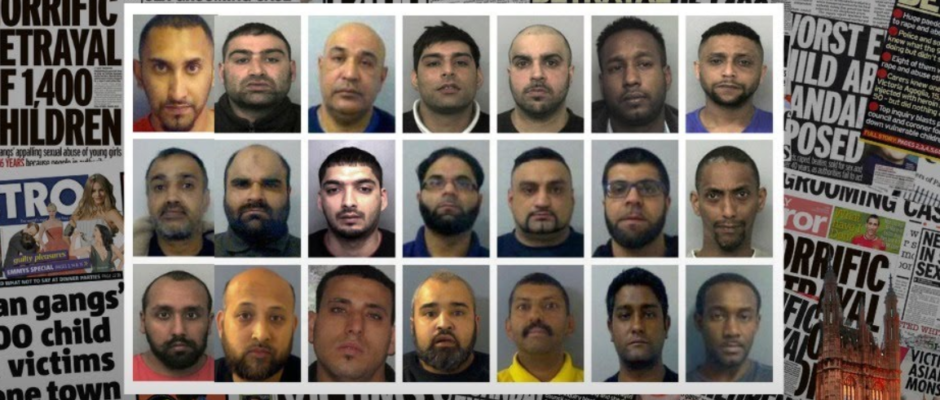
Rohan Giri The article published by The Quint under the title “‘Zalim Hindu’ Porn: How AI is Mass Producing Pornographic Images of Muslim Women” is a classic example of selective outrage, deliberate victimhood, and an attempt to whitewash an issue that has been a global concern: the systematic targeting, abuse, and exploitation of non-Muslim women by Islamist networks. The piece, while raising concerns about AI-generated images, fails to acknowledge the far more sinister, real-world atrocities committed under the guise of religious supremacy, sexual jihad, and the systematic grooming of women across the world. Furthermore, The Quint’s report ignores the mindset that underpins these systemic abuses in addition to misrepresenting the extent of the problem. It reveals an underlying bias by focusing on Muslim women as the main targets of digital manipulation while neglecting the real, physical, and pervasive crimes against non-Muslim women. Those who have actually suffered under theocratic despotism and radical Islamist exploitation are marginalized by this selective reporting, which feeds a false perception. The article diverts attention from the deeply rooted issues within radicalized portions of society rather than addressing the real offenders. If journalism’s purpose is to reveal injustice and defend the victims, The Quint’s strategy is dreadfully inadequate. Rather than advocating for responsibility and significant change, it feeds a false narrative that downplays the pain of thousands of women around the globe. Whether it is through love jihad or forced conversions in South Asia, institutionalized oppression in Islamist-dominated nations, or grooming gangs in the UK, the very real and systematic targeting of non-Muslim women must be included in any meaningful conversation about gender-based violence. Failing to do so not only makes such journalism less credible, but it also gives the very forces that support these abuses more power. Global Patterns of Exploitation: 1. Love Jihad in India and South Asia 2. Grooming Gangs in the UK and Europe 3. Sexual Harassment and Assault by Islamists Selective Outrage: Ignoring the Real Perpetrators The article focuses on AI-generated images as the ‘real’ attack on Muslim women while ignoring: Instead of addressing these grave violations, the article cherry-picks instances that align with its victimhood narrative, conveniently sidestepping the global reality of Islamist sexual exploitation. Hypocrisy on Women’s Rights The article’s attempt to paint Muslim women as ‘targets’ is ironic considering that: Weaponizing Victimhood to Mask Real Aggression The article deliberately ignores the well-documented Islamist strategy of using sexual exploitation as a form of religious and demographic warfare. Rather, it erases the pervasive atrocities experienced by non-Muslim women while selectively highlighting a specific internet concern. Media Complicity and Suppression of Truth Western and Indian mainstream media often remain silent on these crimes due to fears of offending Islamist groups or being labeled ‘Islamophobic.’ Erasing Non-Muslim Women’s Trauma for Political Gains While the article condemns the supposed fetishization of Muslim women in AI-generated images, it ignores the rampant objectification, abuse, and sexual slavery of non-Muslim women by Islamist radicals. The trauma of thousands of Hindu, Sikh, Yazidi, and Christian women is dismissed in favor of manufactured outrage over online content. Addressing the Real Issue If there is to be a discussion on sexual violence, it must include the very real, ongoing atrocities committed under Islamist doctrines worldwide. To focus solely on AI images while ignoring mass rapes, forced conversions, and systematic abuse of non-Muslim women is not just hypocritical—it is complicit in enabling the true perpetrators. Women’s safety is a global issue, and it is high time that the world confronts the well-documented, systematic targeting of non-Muslim women instead of peddling selective outrage to divert attention from real-world crimes. This is not about any phobia, as propagandists might claim; it is about recognizing and combating a dangerous ideology that continues to wreak havoc on innocent women across the globe. Until these harsh realities are acknowledged, any conversation on gender-based violence remains incomplete, biased, and morally bankrupt. (Author: Rohan Giri is a journalism graduate from Indian Institute of Mass Communication (IIMC) New Delhi, and Manager Operations at CIHS.) References

Read More
The Polis Project Exposed - A Web of Bias, Misinformation, and Deception

The Polis Project Exposed: A Web of Bias, Misinformation, and Deception

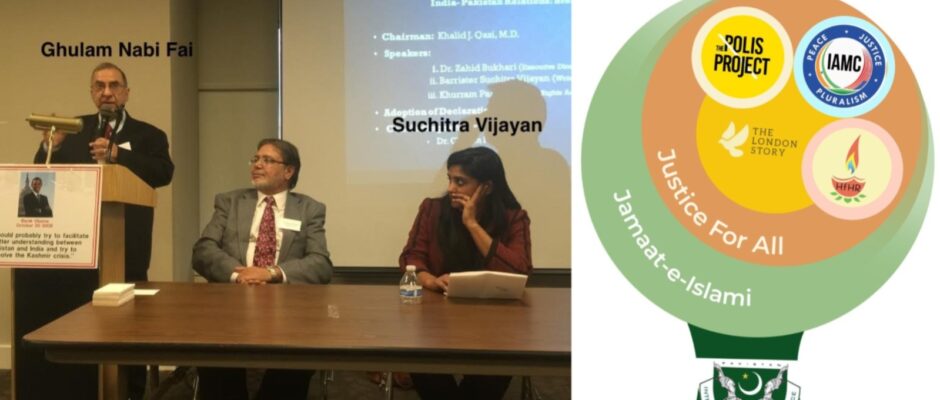
Rohan Giri The Polis Project bills itself as a journalism and research group, but its activities betray a much darker purpose. Instead of being an impartial organisation dedicated to the truth, it routinely targets Hindu organisations and India, spreading misleading information while omitting the realities of religious persecution and intricate geopolitics. Under its cover of human rights, it serves as a platform for anti-India propaganda, twisting the truth and influencing opinions around the world to support its political agenda. Another illustration of The Polis Project’s continuous effort to discredit Hindu organisations and harm India’s reputation abroad is the recent propaganda report it released titled “Transnational Funding in Hindu Supremacist Movements”. This purported report is a politically driven attempt to paint Hindu institutions as extremist fronts rather than an unbiased analysis of financial networks.  With an aim to provide the impression that there is an organised supremacist movement, where none actually exists, the paper has selectively omitted important information, using inflammatory language, and cherry-picking statistics. It vilifies organisations involved in humanitarian, educational, and cultural preservation efforts while willfully ignoring the actual threats posed by radical groups operating in South Asia and abroad. There is a certain pattern to the Polis Project’s operations. While ignoring grave human rights abuses in other regions of the world, it unfairly criticises India. Its obsession to depict the current Indian government as authoritarian, using hyperbolic phrases like “genocide” and “fascism”, is to stir up indignation and sway global opinion. By creating a biased narrative that ignores the complexity of religious conflicts and communal tensions in India, their reporting on sociopolitical events distorts reality. While ignoring the persecution of Hindus in Bangladesh, Pakistan, and Kashmir, it creates the impression that India is an oppressive state by publicising certain occurrences and interpreting them with a preconceived ideological framework. Deep state funding, particularly those supported by George Soros, is the source of the Polis Project rather than an independent organisation. Its creator, Suchitra Vijayan, has a history of endorsing radical groups while posing as an activist. A cursory glance at her social media activity shows that she publicly supports people who have been charged with inciting violence, such as Umar Khalid, who was detained for his role in the Delhi riots. She also offered assistance to Irfan Mehraj, a “journalist,” who was detained in connection with a terror financing investigation in 2023. Mehraj was identified by the National Investigation Agency (NIA) as a close associate of Khurram Parvez, a well-known anti-Indian activist and a prominent member of the Jammu and Kashmir Coalition of Civil Societies (JKCCS), a group connected to dubious financial dealings that aid separatist elements. The Polis Project’s operating structure further demonstrates foreign influence over it. As per Disinfo Lab’s claim, the administrator of its Facebook page is headquartered in Pakistan, which raises severe questions regarding its legitimacy and motivation. Although its propaganda efforts are focused on India, its digital presence indicates external management, raising the prospect of planned influence tactics aimed against India’s stability. This aligns with broader international efforts to amplify divisive narratives against the country. Even outside of its digital activities, The Polis Project has close connections to groups that have openly supported separatist and Islamist causes. The Indian American Muslim Council (IAMC), an organisation well-known for advocating against India on global forums, regularly features in its events. Despite IAMC’s acknowledged affiliations with extremist organisations, The Polis Project finds common ground with them, confirming that it is far from being an unbiased research organisation. Its unclear funding structure is another issue. The Polis Project says it is transparent, although it hasn’t given a detailed account of where its funding comes from. Its closed financial sources raise serious concerns, and as a nonprofit organisation with headquarters in the United States, it is nevertheless vulnerable to outside interference. Who provides the funding for it? What outside parties gain from its persistent anti-Indian propaganda campaign? The ambiguity surrounding these issues suggests a conscious attempt to hide the foreign entities that might be controlling its operations. Besides targeting Hindus in India, The Polis Project has also reached out to the Hindu diaspora around the world. It attempts to damage the standing of charitable endeavours carried out by Hindu communities around the world by unjustly associating Hindu cultural organisations and charities with a purported supremacist purpose. Claims that organisations like Sewa International, Ekal Vidyalaya Foundation, and Hindu Swayamsevak Sangh are political fronts are unfounded, despite the fact that they have played important roles in social service, education, and disaster relief. Discrediting the Hindu diaspora and stifling its contributions to social advancement are deliberate goals. The Polis Project’s utter silence over the religious persecution of Hindus is another example of its duplicity. It vigorously promotes stories of state-led persecution of minorities in India, but it ignores the violent attacks on Hindu communities around the world, the systematic discrimination and persecution of Hindus in Bangladesh and Pakistan, and ethnic cleansing in Kashmir. Its selective activism reveals its lack of sincere support for human rights and demonstrates that its goals are not to promote justice but to pursue a political agenda. India’s sovereignty is being undermined globally by The Polis Project, who continuously depicts India as an authoritarian state. It is in line with larger efforts to destabilise India as it presents internal policies as dictatorial, supports separatist language, and purposefully leaves out important background information. This cannot merely be the result of a journalistic error, but a well calculated move to damage India’s reputation internationally. In an effort to undermine India’s position as a rising global force and sow internal strife, it manipulates narratives for the benefit of outside interests. With a blatant ideological agenda, the Polis Project is not an impartial monitor. Its biased narratives, foreign affiliations, selective activism, and untransparent funding make it clear that it is an anti-India propaganda tool. It is crucial to refute its misinformation with factual arguments and stop its lies from becoming widely accepted in global discourse. Organisations with a stake in dividing

Read More
  • 1
  • 2