CIHS – Centre for Integrated and Holistic Studies

Date/Time:

Trump's Orders - Impact on Indians and the Diaspora

Trump’s Orders Impact on Indians and The Diaspora

On January 20, 2025, Donald Trump was re-elected to the White House and took oath of office as 47th President of the United States. Without wasting any time, he signed a number of presidential orders on his first day in office to carry out the pledges he made during the campaign. These directives, while intended to address local issues, have important ramifications for populations around the world, especially Indians and the Indian diaspora. The possible effects of these orders on trade, immigration, bilateral relations, and cultural links between India and the US are examined in length in this Explainer.

Read More
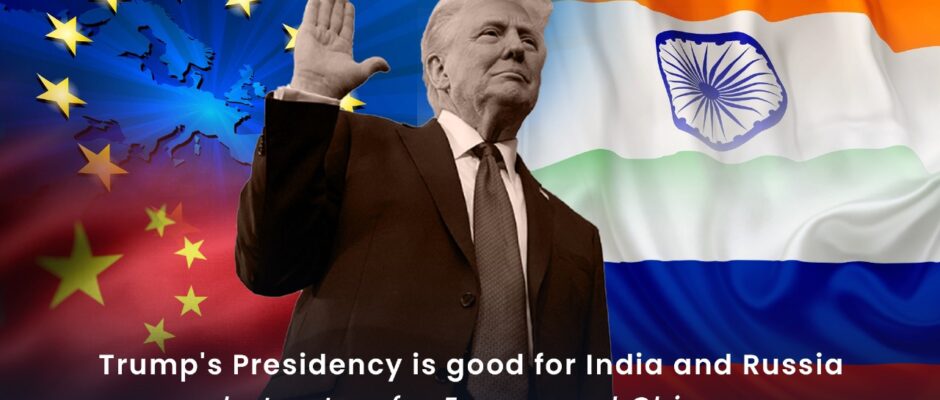
Trump's Presidency is good for India and Russia, but not so for Europe and China

Trump’s Presidency is good for India and Russia, but not so for Europe and China

N. C. Bipindra The transition in the US administration was completed on January 20 with Donald Trump taking over as the President for the second time. But his arrival at the White House has triggered anxiety worldwide, both among US allies and rivals in geopolitics. As the axiom goes, change is the only constant. Donald Trump has voiced a change in the US policy on all matters the world is concerned about. Soon after assuming office, Trump began implementing the policy directions he pushed during the presidential campaign.In the past few days, Trump has signed executive orders that could impact US ties with friends and rivals in Europe and Asia. Among his first decisions, Trump announced withdrawal from the World Health Organisation (WHO) and the Paris Accords on Climate Change. The U.S. has been a member of the WHO since its formation in 1948. Trump’s order said the US was leaving WHO for mishandling the COVID-19 pandemic that originated in China and due to its inability to demonstrate independence from the inappropriate political influence of WHO members, an indirect reference to China. The US has been the largest funder of the WHO contributing 18 percent of the overall budget, which for 2024-25 was US$6.8 billion. Trump has argued that these global initiatives have extracted more pound of flesh from the US than others, particularly castigating WHO for overtly siding with China on global health matters. These moves by Trump could cripple WHO’s capability for intervention in case of a pandemic like the Coronavirus while poorer nations would be forced to fend for themselves in such an existential crisis.The next in the line for his targeted attack could be NATO, which too has been criticised by Trump for too much financial demand it puts on the US for Europe’s security and protection. In 2024, the US provided the largest share of NATO’s funding, at 15.9 percent, approximately US$567 million. If the US withdraws funding to NATO, it could immediately dent the security of Ukraine in its war with Russia. Ukraine is a non-NATO nation yet has received huge arms support from NATO nations since the war began in February 2021. The US has provided about US$175 billion in funding for Ukraine to purchase arms from NATO nations for its war with Russia. Trump has repeatedly stated in his poll campaign that he would end the Russia-Ukraine conflict in a day, and his plan seems to be withdrawing funding to Ukraine’s war effort and announcing that Ukraine shall not be part of NATO, a key bone of contention for Russia to inflict the war on Kyiv in “self-defense.” If Trump indeed goes ahead and pulls out of NATO funding, Volodymyr Zelensky would be the loser, and Vladimir Putin would have reasons to rejoice. However, this is a political tightrope that Trump should be willing to walk, as the public sentiment among Americans is more sympathetic towards Ukraine than Russia. Trump’s presidency impact is already visible in West Asia, where the warring Israel and Hamas in Gaza Strip have struck a ceasefire accord just hours before the transition in the US Administration. Trump has already claimed full credit for this halt in the bloody hostilities between Israelis and Palestinians. Yet, Trump is likely to favour Israel more in this conflict and has previously expressed full support for the Jews’ right to defend themselves post the October 7 attacks of 2023 by Hamas terrorists. Trump has time and again said that he would dismantle the anti-Jewish elements from US educational institutions and administration, and this doesn’t bode well for those faux supporters of Hamas terrorism and the Wokes inside the US. In the case of China, Trump is expected to pursue a hard line and there are several anti-China hawks among his supporters and administration. There are already talks of tariffs coming China’s way, and an External Revenue Service has been announced to leverage imports to find revenue for the US administration. Already Canada and Mexico are facing the brunt, with several sneaky remarks from Trump of integrating these neighbours as US territory. The trade war with China is expected to see a rise in the days to come, as so would the hate-hate relations over the Indo-Pacific region, particularly Chinese President Xi Jinping’s obsession with annexing Taiwan. In this regard, the first meeting of Quad Foreign Ministers a day after Trump took office in Washington DC is an indicator and the sentiments expressed in that meeting only buttressed that sentiment. India on the other hand would enjoy a smooth relationship post the administrative transition in the US, with some minor pinpricks such as import tariffs for Indian goods and H1-B visas for its talent pool to find employment in the high-paying market in the US. But the two nations security and defence relations are looking northward. India is as important to the US as the US is to India. Both nations can’t afford to lose sight of a common enemy in China. As they say, an enemy’s enemy is a friend. And this is truer in geopolitics today than ever. Indian Prime Minister Narendra Modi’s friendship with Trump will be a huge positive. Remember the ‘Ab ki Baar, Trump Sarkar’ at Houston in Texas in September 2019, and it will bring a positive outcome for India and the US. India and the US are partners in defending the freedom of navigation in the Indo-Pacific, and their bilateral naval exercise, Malabar, has been elevated into a Quad nations’ maritime best practices platform to achieve interoperability among their navies. The direction of their military cooperation is only expected to expand in the next four years, even as the two nations pursue joint development and production of military wares in India through agreements between their military research and development agencies apart from public and private arms companies. India specifically enjoys bipartisan support in the US Congress, with Republicans and Democrats overwhelmingly supporting greater ties, calling New Delhi a natural partner of Washington DC. US Congress

Read More
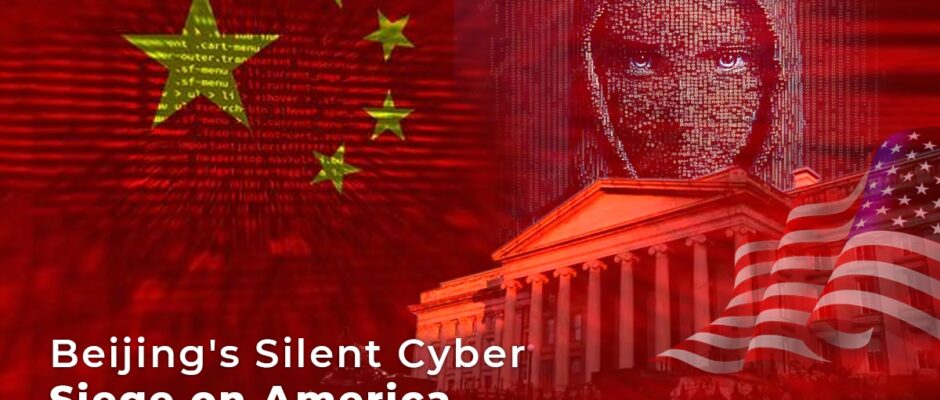
Beijing’s Silent Cyber Siege on America

Beijing’s Silent Cyber Siege on America

Throughout 2024, Chinese state-sponsored hacker groups like Volt Typhoon and Salt Typhoon orchestrated a series of cyber offensives, targeting everything from U.S. telecommunications to Guam’s critical infrastructure. Rahul Pawa On a December morning in 2024, a silent invasion unfolded—unseen, unheard, yet profoundly destabilising. The U.S. Treasury Department, the nerve center of American economic power, fell victim to a meticulously planned cyberattack attributed to the Chinese Communist Party (CCP). This was no ordinary breach. It was a calculated strike targeting the Office of Foreign Assets Control (OFAC) and the Office of the Treasury Secretary—both critical enforcers of sanctions against Chinese entities embroiled in cyber operations and arms deals with Russia. As the sun rose over Washington, D.C., officials scrambled to assess the damage. Anne Neuberger, the U.S. Deputy National Security Advisor for Cyber and Emerging Technologies, stood before the press, her tone somber but resolute. “This was not just espionage. This is part of a broader strategy to undermine our critical infrastructure and economic sovereignty,” she declared. Behind her words lay months of escalating cyber conflict, a crescendo that had been building since the CCP’s hybrid tactics first gained traction. The December breach was merely the tip of the iceberg. Throughout 2024, Chinese state-sponsored hacker groups like Volt Typhoon and Salt Typhoon orchestrated a series of cyber offensives, targeting everything from U.S. telecommunications to Guam’s critical infrastructure. Volt Typhoon, dismantled in January, had covertly commandeered hundreds of routers across the United States, laying the groundwork for attacks on water treatment facilities, electrical grids, and transportation systems. Meanwhile, Salt Typhoon focused on high-profile targets, infiltrating devices used by key political figures, including Donald Trump and his running mate, Senator J.D. Vance. Salt Typhoon’s activities, described by Neuberger as “an unparalleled espionage operation,” breached nine major U.S. telecom providers, stealing sensitive data and leaving behind dormant malware—a ticking time bomb designed to cripple American defences at a critical juncture. “This is not about immediate damage,” explained Rob Joyce, the National Security Agency’s cybersecurity director. “It’s a long game—preparing to paralyse us when we’re most vulnerable, perhaps during a conflict over Taiwan.” While the United States grapples with the looming specter of a cyber Armageddon, Taiwan stands as the front line of Beijing’s digital onslaught. In 2024, Taiwan’s National Security Bureau reported an average of 2.4 million cyberattacks daily, a staggering escalation from the 1.2 million daily incidents the previous year. These attacks targeted military systems, government networks, and critical infrastructure, all under the shadow of Taiwan’s January elections. Beijing’s strategy is clear: to undermine Taiwan’s democratic process and weaken its defences ahead of a potential invasion. The CCP’s disinformation campaigns, deployed in tandem with cyberattacks, sought to erode trust in Taiwan’s institutions. Yet, as Taiwanese President Tsai Ing-wen reaffirmed her nation’s commitment to sovereignty, the island’s resilience became a rallying cry for democracies worldwide. Compounding the threat is China’s deepening partnership with Russia in cyber and information operations. Ukrainian intelligence reports from 2022 revealed CCP-linked spyware embedded in over 600 Ukrainian defense ministry websites—an ominous precursor to Moscow’s invasion. By 2024, this synergy had expanded to include the exchange of malware and tactics, raising alarms in Washington about the potential for coordinated cyberattacks on the U.S. homeland. “Imagine a cyber Pearl Harbor, but orchestrated by two of our greatest adversaries,” warned Senator Mark Warner, Chair of the Senate Intelligence Committee. His words echoed the growing fears in Washington: that Beijing and Moscow’s digital axis could escalate from sabotage to all-out cyber warfare. The battle isn’t confined to cyberspace. In January 2024, Taiwan’s northern coast faced an economic lifeline’s severance when the Shunxin 39, a vessel with ties to Hong Kong-based Chinese interests, allegedly damaged a vital undersea telecom cable. Weeks later, the Yi Peng 3, a Chinese-flagged vessel, severed cables in the Baltic Sea, raising suspicions of deliberate sabotage. Beijing denies these incidents are acts of war, dismissing them as accidents. However, the frequency and precision of these events suggest otherwise. For Taiwan, already reeling from cyberattacks, these disruptions are a chilling reminder of its vulnerability. As the CCP’s cyber arsenal grows, the United States finds itself in an uncomfortable reality: unprepared for the scale and sophistication of Beijing’s hybrid tactics. The December Treasury hack, focused on intelligence gathering, underscores the need for a robust cyber defense strategy. OFAC, a linchpin in the U.S. sanctions regime, had sanctioned multiple Chinese firms in 2024 for their role in supplying arms to Russia and conducting cyberattacks. By breaching OFAC, Beijing sought to anticipate and counter future sanctions. The broader implications are stark. Guam, home to vital U.S. military installations, has emerged as a prime target. The island’s infrastructure was repeatedly probed in 2024, likely as a rehearsal for disrupting American operations in the Pacific. “Guam is the canary in the coal mine,” Joyce remarked. “If we can’t protect it, how can we hope to defend Taiwan?” As President-elect Trump, takes office, he has vowed to “bring the fight to Beijing.” Yet, the path forward is fraught with challenges. Building a resilient cyber defense infrastructure, forging alliances, and holding adversaries accountable will require a Herculean effort. The Treasury breach is a sobering reminder of what’s at stake. It’s not just about stolen data or disrupted systems; it’s about the erosion of trust in institutions, the weakening of defences, and the existential threat to democratic governance. As Anne Neuberger aptly put it, “Cybersecurity isn’t just a technical issue—it’s a national security imperative. And in this battle, complacency is not an option.” (Author is Research Director at Centre for Integrated and Holistic Studies, New Delhi based non-partisan think-tank)

Read More
How Paranoia Fuels Extremism in the West

How Paranoia Fuels Extremism in the West

Political leaders, irrespective of alignment, must reject zero-sum polarisation in favour of constructive engagement. Rahul Pawa In contemporary politics, the dichotomy of so-called “left” and so-called “right” often feels antiquated, especially in today’s age where these terms trace their origins to ancient seating arrangements in the French Estates-General. Yet, this outdated framework persists, weaponised to sow division and fuel hysteria. A particularly troubling trend is how the so-called left amplifies fears of right-wing to stoke paranoia, demonise opposition, and justify authoritarian measures. This approach had often skewed public perception, contributed to polarisation and even incited extremist acts. Case studies from United States, France, United Kingdom and other European nations highlight how this phenomenon unfolded with devastating outcomes. Recently held US elections offered a stark example. In the lead-up, left-leaning media and political figures frequently portrayed right-wing factions as existential threats to democracy. After Supreme Court’s controversial decision on gun control and abortion, fear-mongering narratives accused conservative groups of orchestrating a “rollback of rights.” Protests turned violent in some cities with activists attacking federal buildings and clashing with law enforcement. Demonising right-wing ideological thought extended beyond policy critiques, painting all conservatives as complicit in fostering extremism. This framing ignored nuances of political diversity and fueled retaliatory violence such as targeting of conservative candidates campaign offices in swing states. In France, narrative weaponisation during 2022 presidential elections against Marine Le Pen and National Rally party is illustrative. Left-leaning factions likened Le Pen’s platform to resurgence of France’s Vichy-era authoritarianism framing her as threat to democratic values. Media narratives blamed her rhetoric for purported rise in hate crimes, despite scant evidence linking her supporters to such incidents. Simultaneously, left-wing protests turned violent, targeting police and municipal buildings in urban centres like Paris and Marseille. The overlooked irony is that these violent outbursts mirrored extremism that left purportedly opposed. In United Kingdom, post-Brexit era saw left campaigners amplifying fears of xenophobia and regressive nationalism. Following murder of Labour Member of Parliament, Jo Cox in 2016, left-leaning media individuals and outlets portrayed Brexit movement as intrinsically tied to hate and division. This framing extended into parliamentary debates where MPs opposed to Brexit were hailed as defenders of democracy against imagined and cooked up right-wing threats. The left’s relentless focus on demonising the rightist values and ideas overshadowed legitimate policy debates on sovereignty and economic strategy. This polarisation contributed to incidents like violent altercations outside polling stations during 2019 general elections. Germany’s 2019 Halle synagogue attack became another flashpoint for left leaning strategists pointed to what they peddled as rising right-wing extremism to be dominant security threat. While this attack was a serious incident of antisemitic violence, narrative focus eclipsed broader challenge posed by jihadist terror. For instance, 2016 Berlin Christmas market attack where 12 lost lives and injured dozens, underscored the enduring threat of Islamist extremism. Yet, narratives from left-leaning factions consistently prioritised framing right formations as more of immediate danger. This may be part of a design to gloss over Islamist-linked plots and incidents that represented significant public safety risks. Across Europe, similar dynamics have unfolded. In Sweden, immigration debates have been marred by accusations of xenophobia directed at right-wing parties, stifling substantive discussions on integration and crime. Giorgia Meloni’s leadership of Brothers of Italy party was met with relentless attempts to associate her with fascist ideologies. Such narratives not only polarised electorates but also led to erosion of public trust in democratic institutions. By framing right wing formations as omnipresent threat, left not only fueled cycles of insecurity and reactionary extremism but also covered up their own irrelevance. Consequences of weaponising paranoia are far-reaching. Left groupings of every shade and variety have by design in fact exacerbated polarisation, radicalisation of individuals on both ends of the spectrum and undermined societal cohesion. Cyclical nature of this rhetoric—where fear of the right justifies retaliatory measures—perpetuates violence and distracts from addressing genuine threats. For instance, 2023 French riots following a police shooting were framed by left-leaning media as response to systemic racism and right wing policies. This framing overshadowed law enforcement’s perspective and criminal elements involved in unrest further polarising public opinion. To mitigate destructive impact of these narratives, a commitment to nuanced, fact-based discourse is essential. Media outlets may have to prioritize accuracy over sensationalism ensuring balanced reporting that reflects complexity of security challenges. Civic education initiatives should empower citizens to critically evaluate political rhetoric, fostering resilience against manipulation. Political leaders, irrespective of alignment, must reject zero-sum polarisation in favour of constructive engagement. Left campaigners weaponisation of fear highlights a troubling trend in present day politics. By demonising right political parties, individuals and groups what’s being done is to amplify paranoia and exacerbate cycles of extremism, undermining the democratic fabric of society. Case studies from United States, France, United Kingdom and beyond reveal dangers of such narratives underscoring urgent need for evidence-based engagement and mutual respect. In an era where simplistic labels fail to capture political realities, societies must transcend outdated binaries and recommit to principles of objectivity, transparency and fairness. (Author is Research Director at Centre for Integrated and Holistic Studies, New Delhi based non-partisan think-tank) (Author is Research Director at Centre for Integrated and Holistic Studies, New Delhi based non-partisan think-tank)
Read More
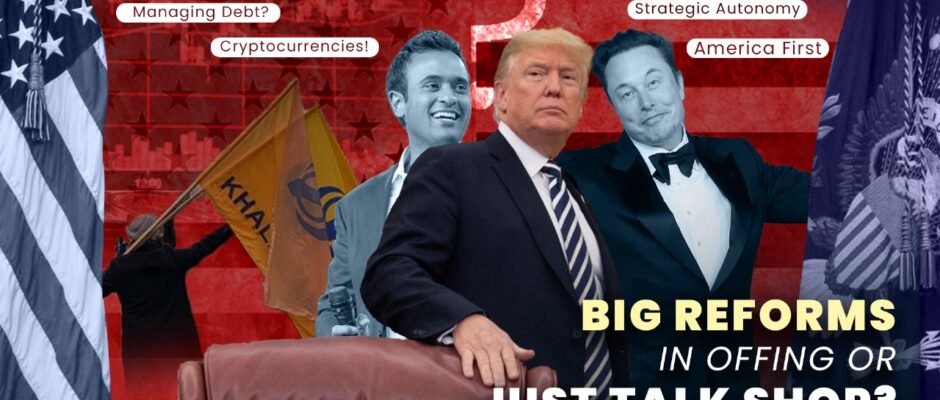
Big Reforms in Offing or Just Talk Shop?

Big Reforms in Offing or Just Talk Shop?

Republican White House under President Trump will have to respect and partner with Bharat in sync with her ‘strategic autonomy’ framework. K.A.Badarinath Exuberance aside, Donald Trump is ready to don the mantle as 47th President, United States of America. Trump’s return to White House has several messages for diverse stakeholders. While these groups grapple with the reality, there’s no denying that huge drama continues to unfold as transfer of power to Grand Old Party began. After Republicans decisive show in the just concluded Presidential elections and democrats tasting big defeats, the new government takes shape to run this powerful country for four years. Trump seems to be all out for tapping talent and leadership at the high table with cabinet berths and elsewhere. For development hawks like me, picking Vivek Ramaswamy and Elon Musk to bring about structural reforms in governance is a big message to ‘one and all’. Belt tightening measures, living within one’s own earnings and limiting both public and private debt is something which would happen as consequence. Unless belt-tightening measures are spelt, there are very limited options before President Trump to manage or sustain US $ 35.95 trillion piled up by October 2024. More than the public and intra-government debt that’s hit the roof, speed with which its multiplying without any let up is all the more mind-boggling. Every hundred days, this debt goes up US $ one trillion and over 14 per cent of annual federal spending goes into servicing this debt. In this backdrop, aggressive governance reforms to cut wasteful expenses, prune bureaucracy and reduce the flab are what’s paramount if US were to chart a sustainable socio-economic development policy framework for the future. Newly carved out Department of Government Efficiency under Musk and Indo-American entrepreneur Vivek Ramaswamy will have to chart this futuristic plan. Down-sizing the US government by 2026 when the country would celebrate its 250-year of independence is something to watch out for. If serious efforts were to be made at governance reforms, healthy economic growth posted in last two quarters at 3 per cent and 2.7 per cent could act as right spring board. Better public debt and intra-government debt management would provide further impetus to the United States economy having implications far and wide. Lesser regulations and revamping federal agencies is again governance reform. Most conversations relate to making crypto currencies regulation more attractive and mainstream these digital currencies. US Federal Reserve has been grappling for policy framework to deal with ‘unregulated’ crypto-currencies that are virtually outside the central bank’s domain. Globally an accepted governance framework is what was on the drawing board especially when the G-20 Presidents and Prime Ministers met in New Delhi a few months back. Bharat along with Brazil and other large developing countries have had pushed for an agreed framework for crypto currencies. Digital rupee was found as an immediate alternative to cryptos that are not recognized as currency in Bharat nor can they be offered as collateral for any transaction. President Trump’s policy towards crypto currencies will also have huge impact on global financial transactions and currencies managed by central banks. The move to ‘de-dollarize’ trade deals and make them happen in local currencies may gain momentum as discussed at recent BRICS summit. President Trump’s majority in both houses of US Parliament must be leveraged to push far and wide digitized dollar as immediate priority rather than tilting aggressively to cryptos before hammering a consensus on the policy framework with US partners. Crypto-currencies exposure or linkages with President Trump’s personal business empire may impact the US government’s possible policy shift on the issue. On evolving a workable security blueprint, President Trump’s pick of national security advisor in Florida Congressman Michael Waltz has been widely reported. Unlike the Democrats who have been infiltrated by Lefties, President Trump may like to go lethal vis-à-vis China. Waltz antecedents as India caucus co-chair in the US and Trump’s own antipathy for anything China especially on trade front may provide enough impetus to both trade and security framework vis-à-vis China. US President-elect Trump had talked about huge tariffs up to 60 per cent against Chinese goods and services. Well, his stated position on Indo-Pacific seeking to limit expansionist China, exposing the ‘unholy’ Pakistan – China nexus and Waltz pressing for strategic security partnership with India may turn music for Bharat’s lovers. One will have to await the new security doctrine and blueprint to be churned out by the President’s new team that will have large implications for Bharat. It will never be honky dory with President Trump all the way even for US closest partners. His policy would centre on ‘give and take’ that’s termed ‘transactional’ by his detractors and staunch supporters. His America First policy towards trade, investments, security and outlook is mostly on the lines of ‘Bharat First’ adopted as a belief, doctrine and work programme by Prime Minister Narendra Modi. Trade engagement that’s hugely in favour of Bharat in annual engagement of US $ 150 billion may be leveraged to ‘extract his pound of flesh’ if past experience is any indication. From Bharat’s perspective, be it democrats or republicans, she has to be on her own. New Delhi’s engagement with President Trump should be on ‘equitable’ terms as partners rather than being viewed as subservient low creature. President Trump cannot ignore the new reality of ‘a rising Bharat’ that has adopted ‘strategic autonomy’. He needs to respect and partner with this new world power as Russian President Vladimir Putin has described. President Trump cannot dismiss Bharat’s ‘strategic autonomy’ doctrine as done by the out-going Democratic White House led by Joe Biden. (Author is Director and Chief Executive, Centre for Integrated and Holistic Studies, a New Delhi based non-partisan think tank)

Read More
US Elections: Will Donald Trump deliver for Bharat?

US Elections: Will Donald Trump deliver for Bharat?

The 2024 US presidential election holds critical implications for global politics and economies with countries like India closely watching the outcome. This analysis compares key policy positions of Donald Trump and Kamala Harris highlighting how each candidate’s potential leadership could shape Indian economy and bilateral relations. To understand dynamics at play, it’s worth revisiting narrow 2000 election between Al Gore and George W. Bush where each candidate gained and lost modest leads throughout the race, ultimately ending in deadlock. The 2024 election is distinctly different with results reflecting a decisive shift in favour of Republicans in an increasingly polarized political landscape. Donald Trump and Republicans that emerged victorious face the daunting task of governing an increasingly divided nation. Polls indicated a tight race, yet beneath these numbers were profound shifts in American politics, some of which spotlighted key issues in Harris’s record and underscored difficulties she would have faced if she had won the White House.

Read More
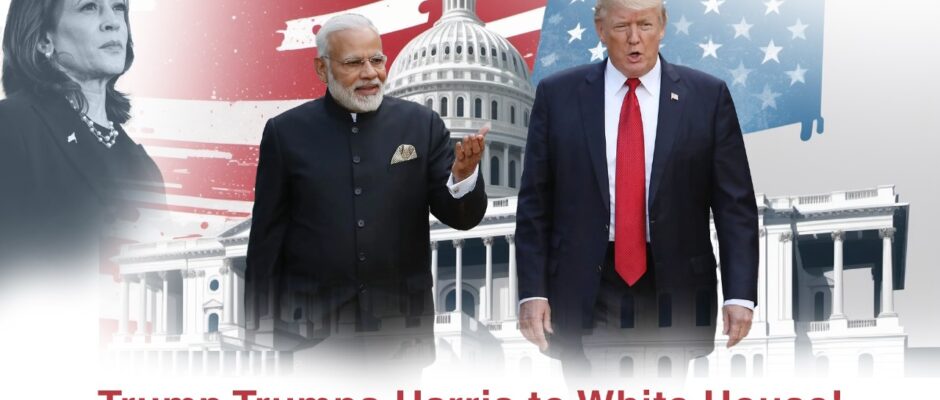
Trump Trumps Harris to White House!

Trump Trumps Harris to White House!

Choices made at this critical juncture will undoubtedly shape future of US and Bharat, global order. World watches with keen interest as these two powerful democracies cruise ahead. Rahul Pawa In a stunning political slugfest marked by fervent debates and impassioned rallies, Donald Trump emerged victorious in United States presidential election reclaiming White House. Even as Trump romped home, widespread anticipation and speculation about implications for both United States and its global relationships continued far and wide.  As dust settles from a heated, nerve wracking electoral battle, the narrative of Trump’s second term begins to take shape, weaving a complex web of promises and projections that could redefine America’s role on the world stage, particularly regarding its strategic partnership with India. With a renewed mandate, Trump steps back into office bringing with him a resolute commitment to an “America First” agenda that’s loosely designed on lines of ‘India First’ policy framework of Indian government under Prime Minister Narendra Modi. This mantra resonates deeply with Trump’s supporters who yearn for robust American presence in global affairs. His approach to foreign policy is characterized by determination to strengthen ties with India, a country he recognizes as essential to US strategic interests in an increasingly multiplex geopolitical landscape. By sidestepping criticisms of India’s internal matters—particularly concerning Jammu and Kashmir—Trump positions himself as a steadfast ally, respecting India’s sovereignty while forging a deeper partnership. One of the hallmarks of Trump’s presidency is his focus on national security and his victory sets the stage for robust collaboration with India on counter-terrorism. Trump has long championed the importance of addressing security threats emanating from Pakistan, a stance that aligns closely with India’s own challenges. His administration’s commitment to enhancing intelligence-sharing and joint operations signifies serious approach to addressing terrorism. This proactive alignment may fortify both the nation’s defences providing a united front against shared adversaries. As the world grapples with complexities of security threats, this partnership could emerge as a crucial alliance in maintaining stability in the region. Trade relations are another area poised for significant enhancement under Trump’s leadership. His pro-business policies aim to dismantle trade barriers and promote investment, creating a favourable environment for economic cooperation. American businesses are eager to tap into India’s burgeoning market, which promises growth opportunities across various sectors, from technology to agriculture. Trump’s focus on reducing regulatory hurdles could lead to a surge in bilateral trade, fostering economic integration that benefits both countries. This approach stands in contrast to Kamala Harris’s proposed policies, which might have introduced stricter regulations and compliance standards that could complicate trade dynamics. Culturally, Trump’s presidency is likely to strengthen the ties between United States and India. His vocal advocacy for religious freedoms resonates within the context of India’s pluralistic and inclusive society. By condemning religious persecution and supporting rights of Hindus globally, Trump aligns himself with India’s efforts to promote global inclusivity. This commitment could foster goodwill between the two nations, enhancing their cultural exchange and mutual understanding. In contrast, Harris’s approach, while supportive of human rights, may not have addressed the specific challenges faced by different communities in India, particularly Hindus, potentially limiting the depth of the relationship. Geopolitical relations become increasingly competitive especially with Chinese Communist Party’s rising influence in the Indo-Pacific region. Trump administration emphasizes the need for a strong military presence to counterbalance this threat. His advocacy for the Quad alliance—comprising United States, India, Japan, and Australia—demonstrates a commitment to collective security and stability. This alliance represents a strategic partnership that is likely to enhance India’s standing in the region while ensuring that the US remains a significant player in the Indo-Pacific. In contrast, Harris’s diplomatic approach may have leaned towards multilateral engagement focusing on dialogue without same level of assertiveness that many view as necessary in countering regional threats. As Trump navigates complexities of his second term, implications for US -India relations become will become increasingly clearer. His administration’s focus on economic cooperation, security collaboration, and cultural understanding are expected to build a framework for partnership poised to thrive in the coming years. The world watches closely, recognising that the choices made during this administration will resonate far beyond the borders of both nations. In this new chapter, Trump’s victory signifies more than just a personal triumph; it represents a decisive shift toward a more assertive foreign policy, one that embraces partnerships grounded in shared interests and mutual respect. The journey ahead is illuminated by the shared aspirations of two democracies ready to engage with the complexities of a changing world. Looking ahead, the potential for transformative collaboration between United States and India is immense. As both nations navigate the challenges of the 21st century, they stand at the forefront of a new era of global engagement. The combination of Trump’s commitment to economic revitalization and national security, along with India’s ambitions on global stage, creates an opportunity for powerful partnership that can address the pressing issues of our time. As the Trump administration sets its agenda, it is clear that India will play a central role in U.S. foreign policy. The historical ties between the two nations, steeped in shared democratic values and mutual respect, provide a strong foundation for a future characterised by collaboration. The potential for joint initiatives in emerging technology, defense, and climate change is vast, and as both countries seek to assert their influence on the global stage, the U.S.-India partnership will be a critical component of that strategy. Furthermore, Trump’s approach to governance may resonate well with India’s leadership style, fostering a sense of camaraderie that extends beyond mere political manoeuvring. As both leaders navigate the complexities of domestic and international challenges, their ability to forge a strong working relationship could yield significant benefits for their respective countries and the broader global community. As Donald Trump embarks on second term, the implications for US -India relations are profound. The potential for a transformative partnership, built on shared interests and mutual respect is within reach. With a focus on economic growth, national security

Read More
Is it Biden’s Electoral Stunt?

Is it Biden’s Electoral Stunt?

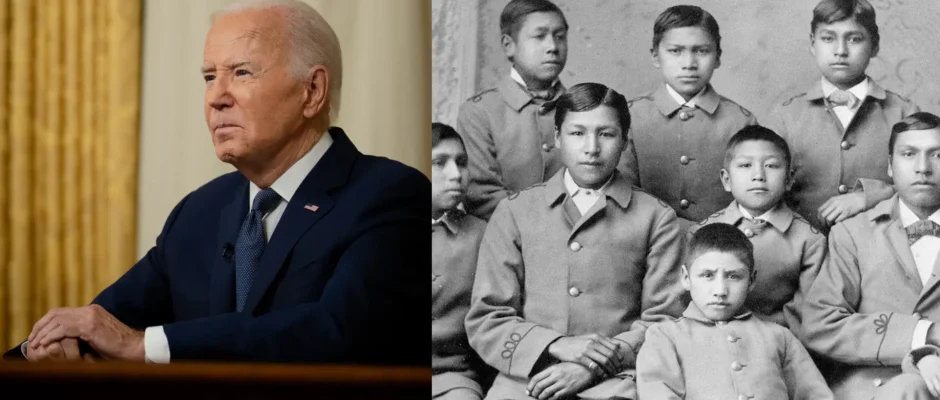
An apology to Native Americans for boarding school atrocities and mayhem by Church and government may not garner votes Pummy M Pandita Examining most sinister facets of American history has begun with outgoing President Joe Biden administration dramatically admitting to injustices and grave crimes committed against Native Americans especially the boarding school atrocities. The public apology to Native American communities for violence and cultural erasure that occurred during the boarding school era comes in the midst of tough election for democrats while Biden claims that ‘it was a crucial step’ in healing centuries-old scars. But key question still stands: is an apology sufficient? Native American history is characterised by unrelenting quest for cultural erasure and survival, as well as trauma, sorrow, and resiliency. A particularly sad period in this history is the era of Native American boarding schools when children were taken from their homes and sent to institutions managed by evangelists   in an effort to “civilise” them. Languages, holy customs and ties that bind families and communities were all shattered in the catastrophic massacre committed by these institutions. In a bid to shape them into what was perceived by Church as ideal of Western culture, many children endured severe punishments, emotional and physical abuse and frequently had their identities taken away. These policies caused irreversible harm, leaving Indigenous communities’ collective psyche with wounds that endure for generations. One of the bloodiest periods in contemporary history was the European colonization of native Americans, violence, exploitation and dehumanization that followed has influenced indigenous cultures and societies to this day. Deliberate uprooting, exploitation and near-eradication of Native American communities from days of first European settlers in 15th century is a grave tale of imperial aspiration posing as civilising missions. Native Americans’ lives are still profoundly affected by extensive wounds that have been inflicted on their land, traditions and histories. Children from indigenous communities in US and Europe baptized by force were tortured in the process of making them ‘civil’ and thousands lost their lives as many were buried live in the ‘Indian schools’. Doctrine of Discovery gave European kings authority to assert claims to territories that their explorers had “discovered” with logic that Native Americans who were considered “uncivilised” and “heathen,” had no right to their ancestral areas. In order to support the European agenda, Native people were de-humanized and land was turned into a resource to be conquered rather than a place to be revered. Colonizers brought enslavement, environmental degradation and bloodshed with them when they brought “civilization” and Christianity coupled with ‘forced evangelism’ of grave variety. Additionally, Native populations were forced into exploitative labour and economic dependency by European colonists. Native Americans were turned instruments of colonial wealth and forced labour in mines and plantations. An exploitative dynamic that persisted far into the periods of industrialization and capitalism was further cemented when their lands were turned into resources for Europeans to plunder. Native American communities continued to be among most economically disadvantaged and marginalized groups in United States, demonstrating long-term economic effects of these policies. Deb Haaland, first Native American Cabinet secretary, during her interaction with reporters earlier this week said, “For more than a century, tens of thousands of Indigenous children, as young as four years old, were taken from their families and communities and forced into boarding schools run by the US government and religious institutions. This includes my own family. For decades, this terrible chapter was hidden from our history books. But now, our administration’s work will ensure that no one will ever forget.” Native American Community members may not be fully convinced that a word of apology will correct the inhuman acts. Lakota People’s Law Project Director Chase Iron Eyes was quoted as saying, “An apology is an acknowledgment of wrongdoing, but it is not any form of redress. An apology is just the beginning of a necessary truth-telling. An apology is a nice start, but it is not a true reckoning, nor is it a sufficient remedy for long history of colonial violence.”  Cherokee Nation Principal Chief Chuck Hoskin Jr said, “We know from experience that true healing goes beyond words — it requires action, resources, and commitment. Cherokee Nation publicly acknowledged our own role in the painful history of Cherokee Freedmen and have worked to address positive change, and so too can this country.” President Biden’s apology is touted as indication that Democratic White House acknowledges these historical wrongs. For some, the apology may not seem genuine given that it comes ahead of the Presidential elections on first Wednesday next month. Essential question however is whether an apology is enough to mend wounds that are so profound that they span generations? The state-approved ‘Indian’ schools were subjected to severe, long-lasting harm because they were specifically designed to deprive Indigenous children of their culture and identity. No matter how well-written or sincere the words sound, they cannot reverse or erase the suffering that Indigenous communities endured. For Native Americans, healing will take more than just words; it will require action that recognises the pain in concrete ways. Imagine a scar from a serious injury that cannot be erased by apology. What is left is an obligation to address causes of the scar in the first place as well as to acknowledge the anguish.  Even though the government’s apology is long overdue, if it is made alone, it could be seen as meaningless. Destabilization of native society was a result of systemic violence that went beyond boarding schools and included resources exploitation, forced relocations and treaty violations. Only by changing policies and providing continuous assistance that enable native communities to recover their sovereignty, manage their lands and revive their cultures will there be true reparation. It’s critical to recognize that reconciliation is a multifaceted, continuous process rather than a single apology-marked event in the midst of a presidential election seeking to garner votes. Democrats must pledge to prevent mistakes of the past from happening again if it hopes to make significant progress. In addition, failing to

Read More

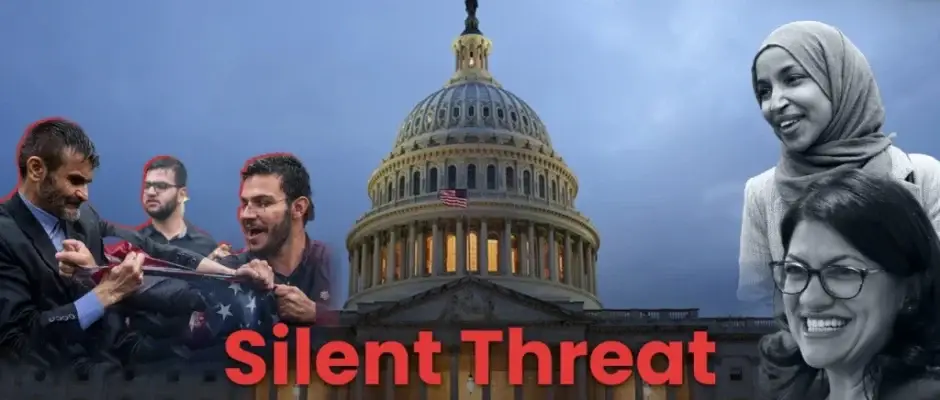
Silent Threat, Spread of Anti-Americanism!

Senators and Congressmen, women funded by foreign lobbies pose a serious threat to America’s security, integrity and its cohesion. Pummy Pandita It’s for United States Congress to defend American values and interests. Nonetheless, existence of senators with questionable ties and conduct imply that they might not put Americans welfare first. Anti-Americanism within US Congress has been a subject of debate for quite some time and of late, there have been reports suggesting some senators were outright “anti-American.” It’s not for the first time that such conversations have happened openly. There have been reports in past as well that politicians in US have harboured anti-American feelings. Claims of disloyalty were common throughout Cold War leading to rigorous scrutiny during McCarthy era. The rise of populism and partisan polarization in recent years has increased interest in priorities and allegiances of legislators. Setting precise standards is essential to identify anti-American senators in an unbiased manner. This can involve opposing important national security legislations through voting, publicly undermining American interests in statements and continue affiliations with groups that disagree with American policies and ideals. Opinions are diverse on senators and representatives in US Congress who are thought to be anti-American and have ties to foreign countries. Congresswoman Rashida Tlaib of Michigan’s 12th congressional district and Ilhan Omar of Minnesota have been discussed in the media to have reportedly harboured ‘anti-Americanism’. Congresswoman Rashida Tlaib During Israeli Prime Minister Benjamin Netanyahu’s speech to Congress, Rashida Tlaib, a member of self-styled “Squad” in US House of Representatives grabbed attention by waving a “War Criminal” placard. This brought out deep political rift about American policy towards Israel. One of the first Muslim women elected to Congress, Rashida Tlaib is a Palestinian-American recognized for her vocal support to Palestinian rights and condemnation of Israeli government practices. Alexandria Ocasio-Cortez, Ilhan Omar, Ayanna Pressley and other progressive lawmakers constitute the so-called “Squad” which includes Democratic congresswoman Rashida Tlaib of Michigan’s 12th congressional district. As one of the first two Muslim women elected to Congress in 2018, Tlaib created history. Robust progressive programs, such as Medicare for All, Green New Deal and substantial changes to criminal justice and immigration systems define her so called political agenda. The Incident • Tlaib’s demonstration was direct reaction to Netanyahu’s acts and policies which she and many others believe to be discriminatory towards the Palestinian people. The placard referred to Netanyahu as a “War Criminal,” a moniker that detractors frequently employ to characterize his involvement in military actions in the West Bank and Gaza. • Tlaib’s act was meant to highlight Palestinians suffering and human rights issues. It was also a critique of American administration’s persistent backing of Netanyahu. • The demonstration highlighted glaring differences in American politics over Israel. While a large majority of Congressmen back Israel wholeheartedly, others—especially progressive Democrats like Tlaib—are growingly skeptical of Israel’s practices and champion rights of Palestinian people. Tlaib’s political remarks and deeds reveal a bias against the United States. These accusations frequently focus on the following issues: Entry of anti-American elements into Congress is a reflection of the country’s wider political and ideological division which has important ramifications. Though some people find great strength in the story of anti-American infiltration in Congress as represented by individuals such as Rashida Tlaib, it is important to examine such assertions critically. A more nuanced picture becomes apparent when the evidence is carefully examined and larger political context is comprehended. Congresswoman Ilhan Oman: Ilhan Omar represents Minnesota’s fifth Congressional District. She is Somali American and second Muslim woman elected to Congress. Omar’s candidature stands out due to her strong opinions on a range of topics such as social justice, immigration and US foreign policy. She is frequently accused of having ties with foreign organizations that could sway her opinions not consistent with American interests. Omar has not shied away from making public her disapproval of American foreign policy, particularly as it relates to Israel and Palestine. US backing Israel was never appreciated by her and charged that lobbies like American Israel Public Affairs Committee (AIPAC) shaped US policy. Her position challenges US support for Israel, a vital ally in the Middle East which has long been established. Allegations of anti-Semitism have resulted from her remarks. In 2019, she implied that pro-Israel lobbyists were purchasing political power when she tweeted that United States political backing for Israel was “all about the Benjamins.” Both sides of the political spectrum strongly condemned this remark which resulted in a House resolution denouncing anti-Semitism. Omar’s reported ties with foreign organizations may have shaped her views against US foreign policy. Her affiliation with controversial Council on American-Islamic Relations (CAIR)—which receives funds from overseas—has been examined. There have also been claims that she has ties to Turkish and Qatari interests though concrete proof of these assertions is still hard to come by. As per reports, some of her opinions coincide with those of rogue governments. Her opposition to sanctions on nations like Venezuela and Iran considered United States’ rivals has been used as evidence of her anti-American inclination. Claim that certain members of Congress do not represent interests of United States is not exclusive to either Ilhan Omar or Rashida Tlaib. It points to broader worries about foreign meddling in American politics and possibility of outside influence on elected officials. Numerous political organizations and media outlets especially those on the conservative side have emphasized this. One major concern in American politics is influence of foreign lobbying. Foreign governments and entity lobbyists frequently try to sway American policy in favour of or against certain interests. Regulated and lawful activity notwithstanding, lobbying always carried the risk of conflicts of interest and improper influence. Source of campaign contributions was yet another concern in American elections.  As per American laws, it is illegal for foreigners to donate in the country’s elections. But, intricate web spun around political contributions makes it difficult to identify actual source of finances. In this backdrop questions have been raised on intentions and loyalty of public servants who

Read More

Boys Play Big in Muddied Waters!

US, China with diverse agendas coupled with religious extremist forces in Islam and evangelists may shrink open space to operate for Bharat that has big stakes in Bangladesh K.A.Badarinath The big boys are at play. Bangladesh government under Nobel laureate Muhammad Yunus is bound to be pulled apart by both United States of America seeking to establish a military base in South Asia and Chinese Communist Party led by President Xi Jingping that’s seeking unquestioned dominance in Asia. Jamaat-e-Islami and Bangladesh National Party (BNP) led by Khalid Zia would play willing tools in the big boys power play with Pakistan reduced to a lackey of minor variety. There’s denying that Muslim Brotherhood that’s globally dreaded would complicate the equation with its Islamist – Jihadist agenda on Bharat’s Eastern frontiers. ‘Razakars’ would become handy frontline private army in the hands of jihadist Muslim leadership internationally. There have been reports that already these Razakars have taken over civic policing as an occupational army of zealots. Well, tasks for Bharat are cut out after Sheikh Hasina’s government fell last week, Awami League purged, safe exit to her provided in a swift deal and Army took reins in a coup. Though interim government headed by Yunus and a battery of over dozen advisors have taken charge, nothing seems to have changed on the ground while Army calls the shots. Bangladesh’s under-belly has several layers that must be understood before Bharat gets to the drawing board to establish a working relationship with the new Army controlled, Yunus fronted regime given that Chinese, US and Pakistan deep state haggling for their pound of flesh. The ‘transitional’ Yunus regime got legitimacy as Democratic White House was first to recognise the government. Secretary of State’s spokesperson was drafted to convey that US was ‘ready and looked forward’ to working with Dhaka under Yunus. St Martin Island also known as ‘Narikel Jinjira’ (Coconut Island) or ‘Daruchini Dweep’ (Cinnamon Island) off-the-Chittagong coast may be eyed by US to set up a military base to lord over both Bharat and her expansionist neighbour China. Direct US presence in the region may not be encouraged or welcomed by Bharat given the strategic implications. Also, Bharat would get cut off virtually from entire South East Asia in terms of trade, investment and services. Church driven ‘Project K’ to carve out an artificial autonomous region christened as ‘Kukiland’ will come to the forefront. Church’s fancy idea of a separate Christian state encompasses parts of Bangladesh, Burma and Bharat’s Manipur and Mizoram. This Christian agenda is expected to get complete backing of White House under President Joe Biden or his possible successor Kamala Harris. Even if Donald Trump upstages the democrats and gets elected in November 2024 elections, this agenda may get going. Even if general elections in Bangladesh were to be held anytime now, a pliable government in Dhaka is what Washington DC may expect to see in the saddle given that Awami League is virtually out of power play. On the other hand, China would try and get Teesta River Project and other infrastructure ventures that provide Beijing proximity to India’s ‘chicken neck’ area. Weeks before Hasina government fell, US $ two billion worth interest free, concessional, commercial loans apart from grants were reportedly promised by China after a meeting that Bangladesh Prime Minister had with President Xi. On face of it, funding infrastructure projects either directly or through Asian Infrastructure Investment Bank (AIIB) may not just be limited to investment push. Instead, it will result in strategic issues for Bharat giving China advantage at her doorstep. Third dimension to Bangladesh story is the Jamaat-e-Islami backed by Pakistan and part of larger Muslim Brotherhood going berserk would pose serious challenges to Bharat. Jamaat pursuing genocide of Hindus in Bangladesh has been widely reported. CIHS has meticulously documented these grave crimes. Jamaat is popular as ‘congregation of Muslims’. Known as the largest Muslim formation founded in 1975, Jamaat was banned from political participation by Bangladesh Supreme Court in 2013 citing its opposition to religious freedom or practice of faith. Within its ambit were other organizations like Al – Badr, Al – Shams and self-styled peace committee that formed the jihadist network. All these are pronouncedly anti-Hindu, Buddhists and Christians in Bangladesh. Evangelists and Islamist forces are expected to be on collusion course given their extremely divergent agendas for Bangladesh. Bid to carve out an autonomous Christian area by extreme evangelists with backing from US may be at odds with ‘theocratic’ ‘Islamist’ state that Jamaat may like to evolve Bangladesh into. Conflict between evangelists and Muslims may turn rough reported from several cities in European countries. Contrarian geo-political forces in China, US and religious extremism donned by evangelists and Jamaat leaves very little space for open, flexible and forward thinking democratic agenda in Bangladesh. This is a heady mix in which India will have to tread carefully to safeguard her geo-political and strategic interests apart from that of Hindus and Indian origin people living in Bangladesh. Rightly, Prime Minister Narendra Modi has emphasised that Yunus government in Bangladesh must take steps to protect Hindus lives, properties, businesses especially women that have been targeted by Jihadists. For Bharat, dealing with influx of Bangladeshis fleeing the violence torn country may be a big priority apart from safeguarding her people in Bangladesh. Secondly, New Delhi may have to swerve through muddy waters that have become playground for both US and China apart from minions like Pakistan. Thirdly, recalibrating equations with Dhaka given an array of forces from far-left extremists, religious jihadists to military establishment may pose a big challenge. Fourthly, pursuing her agenda of peace, tranquillity and prosperity in South Asia may not be easy for Bharat. Fifthly, smoothening relations with Bangladesh may turn tricky while former Prime Minister and senior Awami League leader Sheikh Hasina continue to be respected state guest in Delhi. Sixthly, working with likeminded stakeholders to ring in democracy with all forces in tact may be a tall order. Seventhly, relatively tension free

Read More