
CIHS – Centre for Integrated and Holistic Studies

Date/Time:

Blog Post

The Xi Phenomenon

The Xi Phenomenon

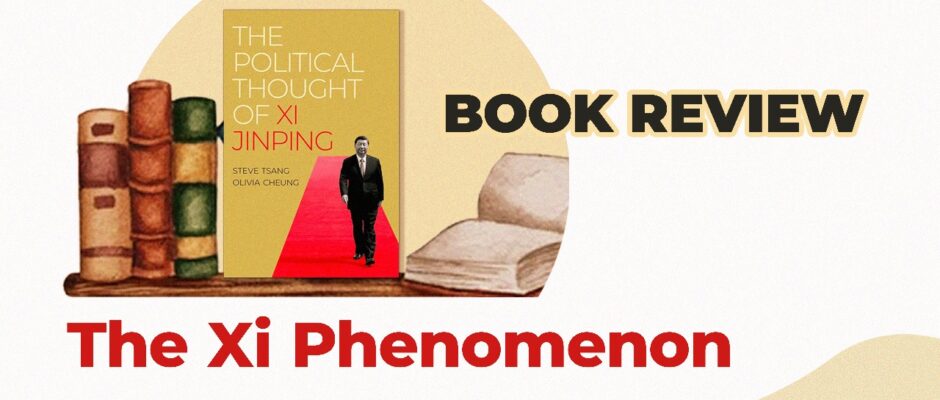
Book by Tsang, Steve and Olivia Cheung: The Political Thought of Xi Jinping, Oxford University Press, New York, (2024). Dr Amritpal Kaur There are rare moments in contemporary, post second world war history where a single country could challenge international order so comprehensively while sitting in the wings for most of the time. It can only be facilitated by mercurial rise in its fortune and prosperity to propel or make any entity so significant that their actions and reactions generate waves around the world. China story is exactly that which captures its economic rise while the politico-economic-historical antecedents continue to be an enigma for global communities. Yet, it is a country that’s challenging accepted norms for nation-states in international order. At the centre of this debate on China’s rise and its aggressive behaviour is the leadership of President Xi Jinping who has turned a virtual dictator in the communist party order. The book, The Political Thought of Xi Jinping, seeks to deal with the phenomenon called Xi Jinping. Xi’s political thought has become important to understand contemporary China essentially because unlike his predecessors led by Deng Xiaoping, Xi grabbed and held onto the supreme political power within Chinese Communist Party and Peoples’ Republic of China. This surreal rise of Xi’s dictatorship is unprecedented since days of Mao Zedong with implications largely unknown for future of Party-state of China. The book contextualizes Xi thought within Marxist-Leninist framework where the party helmed by a singular entity is lynchpin of domestic political system and international posturing. As far as domestic system is concerned, the debate is largely settled since supremacy of CCP is unquestionable and is unchallenged. Both the power and propaganda of CCP are aimed to ensure regime’s iron-clad grip on the people, their lives and destiny including families. Xi’s over-bearing influence along with his close inner circle coterie is so huge that, even CCP fades away pathetically before this towering personality propped up by business tycoons and oligarchs.  Since China has no democracy, lack of political liberties for the people is sought to be offset by all-encompassing comprehensive state propaganda where Party and its supreme leader Xi are branded as their saviours. Via his politics and propaganda, President Xi has been successful in taking complete hold over the party by appointing his close buddies to key posts. In the process, he has equated allegiance to him akin to the party. Through his Thought he has projected himself as the party and nothing else. The book argues that leaders before Xi had worked in collective leadership mode. Xi on the contrary does not share power with anyone else and hence there is a greater need to project the threat to Chinese state in the absence of Xi and his indispensability as the competent and core Helmsman of China. Centralization of power by Xi has its international implications. It is one thing for Xi to mould Chinese political system as per his ‘whims and fancies’ and portraying it as the Marxist-Leninist-Maoist ideology. But it’s altogether a different ball game if that state becomes second largest economy and second largest state in terms of population. The sheer power projection of Chinese state internationally is concerning enough if President Xi prominently discusses the ‘external dangers’. Under him overt docile appearance of China, given by Deng and his famous quote of ‘Bide the time and hide the capacity’ has been decidedly shed away and in its place has come the aggressive posturing in neighbourhood and ‘wolf-warrior’ diplomacy. The signals are clear, Xi is pressing the accelerator of Chinese foreign policy to bring it at par with ‘comprehensive power’ of China and with the command and respect it should get as one of the leading powers. The book in effect is soft landing the impact of China’s feverish growth aspirations on countries in its vicinity and larger international system. For example, discussion on critical technologies that China seeks to master has a dual purpose; to make it self-sufficient and making the world dependent on it rather the other way round. These technologies include frontier areas like Artificial Intelligence, machine learning and at the same time developing ‘asymmetrical assassin’s maces’ technologies which can give China decided edge over other countries. Coupled with oft-quoted Xi concept of Tianxia which is ‘Sino-centric world order’, a concentration of cutting-edge technologies will only accentuate the Chinese power. If there is one power differential which will decide true security of any country with other dimensions being near equal, it will be technology. The power of future is not much in number of armed personnel or billions in GDP, but in growth sprouts of cutting-edge technology and human endeavour which can fundamentally change human condition itself. President Xi understands this crucial aspect and hence the focus on the scientific developments in China. Secondly dual circulation of economy also seeks to keep the world dependent on China. China must be self-sufficient economically and this too seeks to insulate PRC from global headwinds and to keep the world from weaponizing trade in its dealing with China. Ironically, if that happens international community will be taking a leaf out of the Chinese manual. President Xi, through his thought is asking people of China to be prepared for difficult times ahead. However, the question is, China is preparing for ‘difficult times ahead’ and ‘external danger’ then surely, it’s not seeking to cooperate with comity of nations. The book does not clearly discuss this implication of Xi’s thought. The present book attempts to chart political thought of President Xi in the times when he has emerged as the strongman. It seeks to understand the impact of Xi’s thought on China and countries around China, albeit in a very limited way. For example, the book discusses only East Asian countries and Africa in the segment of China and ‘Common Destiny of Humankind’. Both these segments of international community are either harmless or weak in comparison to PRC. However, real depth of analysis would have come had the book discussed
Read More

China, A Tough Nut to Crack

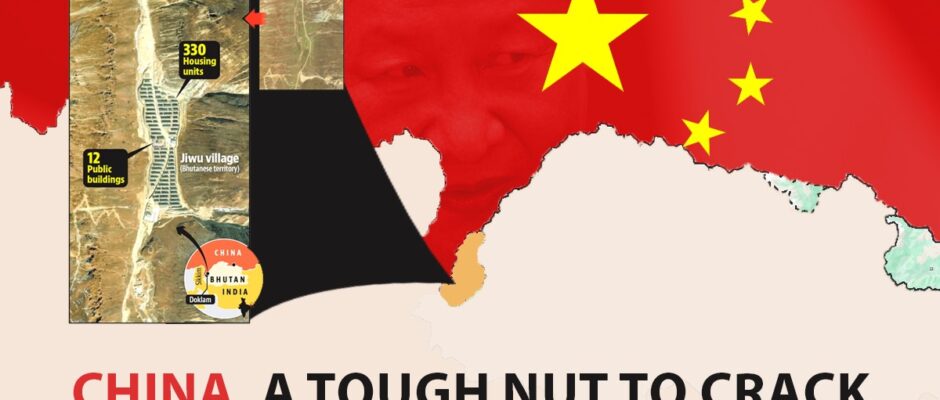
China may not be a dependable ally for Bharat. Reconciliation and reset noises made by President Xi’s hawks could be tactical and unsustainable. Dr Amritpal Kaur Is China a dependable ally for Bharat? Or, is it safe to play a balancing act between China under President Xi Jingping and US where Donald Trump is expected to take charge as President beginning 2025? Both Beijing and Washington DC pose different sets of challenges given Bharat’s 75-years’ experience post-independence from British imperialistic rule. At a time when there has been huge debate on ‘strategic autonomy’ as an instrument of Bharat’s state policy, there have been key developments ranging from threats hurled by US President-designate Donald Trump on tariffs regime to Beijing moving to purportedly normalize relations with Bharat. Undertones of the incoming Republican regime and firmly trenched third-term Chinese Communist Party regimes are different.  At a time when strategists in New Delhi were breathing easy at lasting solution to clashes on Eastern Ladakh front, China opened a new front on Dokolam front with contours of its expansionist face coming to the fore. Reportedly, China encroached into Bhutanese territory, crossed the buffer zone and put up as many as 22 villages in last eight years. Drone images of these villages constructed on Bhutanese territory and splashed on front pages of major Bharat newspapers reflected on the intent of Chinese communist party regime. Parceling away pieces of neighbours’ territory and encroachment by design has been well rehearsed strategy of dragon regime. These images apart from US closing-in that China has never backed out from both Ladakh and Dokolam front came at a time when Bharat’s national security advisor Ajit Doval was in Beijing to attempt ‘normalizing’ relations with President Xi’s hardnosed negotiators. Ramifications of Chinese incursions into Bhutanese territory have strategic and regional security implications. China’s deliberate efforts to alter ground realities and impose a fait accompli are seen in construction of settlements on the Doklam plateau, a region vital to India’s Siliguri Corridor. In violation of 1998 China-Bhutan agreement which explicitly calls for maintaining status quo and refraining from unilaterally altering borders, this makes an absurdity of China’s claims and evasive justifications for the acts. These advances are a flagrant imitation of China’s use of armed force to occupy South China Sea in order to evade its duties under international law and further its expansionist objectives. It’s in this backdrop that cautious attempts made to resolve broader Bharat -China ties have taken place. On October 21, 2024 on sidelines of BRICS summit in Kazan Russia, Indian Foreign Secretary Vikram Misri announced that India and China had reached a patrolling agreement on the Line of Actual Control leading to disengagement in areas where issues had arisen in 2020. This announcement paved way for a brief meeting between Prime Minister Modi and President Xi Jinping on sidelines of BRICS summit, a first in about five years since Galwan clashes of 2020. On November 19, Bharat’s Minister of External Affairs Dr. S. Jaishankar met his Chinese counterpart Wang Yi on sidelines of G-20 Summit in Rio De Janeiro.  He was matter of fact and reiterated that disengagement at two contentious points on Indo-Chinese Border is a ‘welcome step’. There is a long way to go in Indo-China relations and it’s a fact. A day after, on November 20, Defense Minister Rajnath Singh met his Chinese counterpart Admiral Dong Jun on sidelines of Asean Defense Ministers’ Meeting Plus in Vientiane, Laos where he too stressed on need to maintain harmonious relations between the two Asian neighbors. Flurry of meetings indicate possible rapprochement between India and China according to optimists. But, caution is imperative given history of the two Asian giants coupled with present day real politic.  It is hard to miss conspicuous concoction of events and processes happening around which have forced Chinese to even concede that border disengagement was going on, something to their eyes a tactical compromise giving away the psychological advantage to Bharat. Given that Chinese rarely give away the territory they captured after ‘salami-slicing’ the pressure must have been great for Beijing to engage with India in a positive way. The question it begs is, what exactly changed for the Chinese in past two years that from showing off the Commander of Galwan clash as the hero in the National Assembly, which crowned President Xi with unprecedented third term, to a visible attempt at bonhomie with India? It is significant to look beyond South Asia to recent happenings in the world. To begin with, United States elected Donald Trump as its new President. If previous Trump administration is guide to his second term outlook, Chinese have a reason to brace themselves for the ride. Coupled with military maneuvering of PLA in Taiwan Strait to indicate the tensions between China and Taiwan, it makes sense for them to not open another front with India, so that focus remains on its southeast border. Secondly, Chinese ally Russia is fighting war in Europe for more than two years now and another ally Iran is engaged in West Asian conflict with Israel which has potential to spill out into the larger region war creating stress on the Sea lanes of trade and communication, something crucial for China. In strategic parlance, it makes sense to not open another theater of conflict or at least keep other areas peaceful should the push comes to shove, but the sensible would see the game and ask whether underlying structural problems in Indo-Chinese relations have been resolved before we declare the ‘reset’ of ties. If History is the guide to Indo-China relations, beyond early days of Nehru era, relations between the two were never ‘friendly’.  Chinese internal conversations show that even then India was seen as stooge of Imperial Britain and Liberal democracy which is diagonally opposite Communist China. The era of reforms and globalization had given hope to believe that thriving trade and commerce would act as a credible deterrence against any hostilities, but even here the unhealthy trade deficit between the two

Read More