CIHS – Centre for Integrated and Holistic Studies

Date/Time:

Blog Post

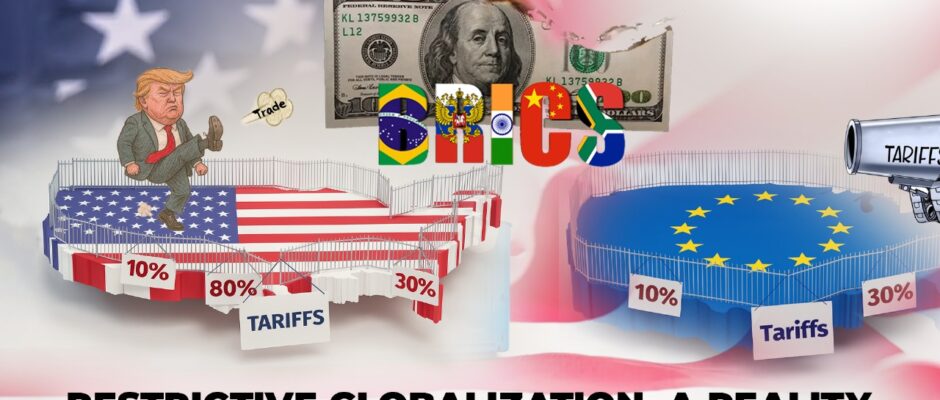
Restrictive Globalization, a Reality

Restrictive Globalization, a Reality

From tariff wars, currencies slugfest to restrictive market dynamics is redefining globalization. Giving spiritual spread to materialistic play may be the option. K.A.Badarinath A couple of months into Republican Presidency, Donald J Trump has stood his reputation of being a disruptor of trade, investments and global economic order. This disruption may not be limited to trade and investment related engagement. Currency markets would also feel the heat and extend the churn to both debt and equity markets. Come August 1, about a dozen nations will await what’s in store for them in terms of tariffs to be slapped by President Trump. Given the kind of statements made by Republican White House, the upheaval and its impact will be felt all over. From Bharat’s perspective, we will have to redefine globalization as hitherto understood from western perspective. From tariffs on individual products to country-specific duties, Donald Trump is all set to rewrite the way trade would be conducted across geographies. US President announced differential tariff regimes for both strategic partners and others. Beginning August 1, duties slapped on Japan and South Korea was 25 per cent across the board without exception. Duties on South Africa were a wee-bit higher at 30 per cent on exports ranging from precious stones, diamonds to metals. Letters despatched to 14 countries in last couple of days has slapped huge duties on exports to US ranging from 25 to 40 per cent on goods and services consumed by America from Thailand, Myanmar, Laos, Cambodia, Serbia, Indonesia, Malaysia, Bosnia and Herzigovina. Well, over and above, 10 per cent on each of BRICS nations that have committed to doing business either in their own currency or non-dollar terms. US President Trump sees this as a big threat to hegemony of American Green back. Three to four options have been exercised by countries across the spectrum doing business or trade deals with US. Many countries have decided to adopt a ‘wait and watch’ approach hoping that President Trump would wind down on these tariff walls set up to protect domestic industry and service providers. Some including Bharat, South Korea and Japan have owed to negotiate tariffs across the table to make things work before the August 1 deadline. For instance, US Republican administration has targeted export of steel, iron, aluminium and copper from Bharat with 50 per cent import duty. On pharmaceutical products, US has threatened to slap 200 per cent tariff. Trump administration is pushing levers to gain access to Bharat’s huge agriculture market and dairy apart from selling aggressively genetically modified products. So far, New Delhi has not blinked. It’s a huge relief to witness the hard bargains sought to be made by Piyush Goyal and team. There’s a lot written about Trump’s flip flop on tariffs. But, European Union is no saint. Border carbon tax to be levied by EU to essentially protect its domestic industry is again a big disruptor of global trade. Carbon Border Adjustment Mechanism (CBAM) will become operative beginning 2026. Steel, cement, fertilizers and electronic goods imported by EU member countries will slap a carbon tax. BRICS including India rejected the impost as ‘unilateral’, ‘restrictive’ and ‘artificial trade barrier’ in the guise of ‘environmental concerns’. China and India in particular would feel the impact of this carbon tax big time. It’s not tariffs alone that are turning the head on globalization preached by Western powers in last quarter of a century or more. Free markets, unrestricted trade and services, movement of people that were once hallmark of ‘free and globalized world’ are getting redefined thanks to protective and restrictive policies of western powers. Tariff wars alone may not kick the basic western concept of globalized world. These wars are extending beyond trading blocks, groups that are considered regional, multi-lateral and pluri-lateral in membership, nature of trade, investment and economic engagement. For instance, currency markets are set to experience huge upheaval if the 13-member BRICS group goes ahead with its own currency or plan to trade in respective currencies rather than linking these deals to US dollar. This has upset President Trump as a ‘very anti-American move’ and threatened with 10 per cent additional duties on BRICS and its allies. As on date, over 90 per cent trade deals are settled in US dollars and about 58 per reserves are in American green back. Increasingly, ‘de-dollarization’ is gaining ground to explore an alternative reserve currency. While differences on common BRICS currency have delayed the move, country specific currency deals have gained momentum. Gold-back currency is what the BRICS seems to be exploring even as India is set to take over the group’s presidency. Needless to say, Bharat as chair of BRICS has a big role to play in re-balancing its own and group’s interests vis-à-vis the European Union and US. Large energy deals between China and Russia have been squared off in Roubles and Yuan. Bharat has paid for oil imports from Russia in rupees, Yuan and even Dirhams. Hence, there’s no reason to dis-believe that local currencies cannot gain predominance and dislodge the US dollar. It’s not just duties and currencies market that get re-defined in the ‘neo-global liberalized world’.  Second World War era Bretton Woods institutions role may also have to be redefined taking on board the new reality of restrictive trade, investments, diversified currencies that will extend to movement of skilled workers. Multi-lateral organizations like World Bank, IMF, WHO or for that matter even United Nations may have to look for re-defined role, fresh mandate and projects to keep themselves relevant taking on board the new reality. Groups like Quad and BRICS will have to find ways to deal with emerging socio-economic realities. Globalization from western perspective and agenda has turned a full circle. It needs rejig. Going beyond entrenched economic models that are getting challenged is what needs to be done. Finding new rhythm and song in world affairs is something that may have to be worked out. Spiritual globalization going beyond markets and dollars may be the
Read More
Trump’s Tantrums & Lies!

Trump’s Tantrums & Lies!

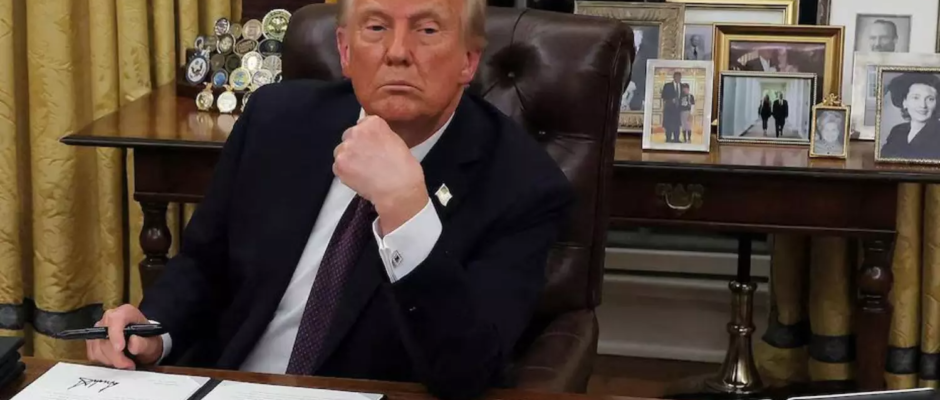
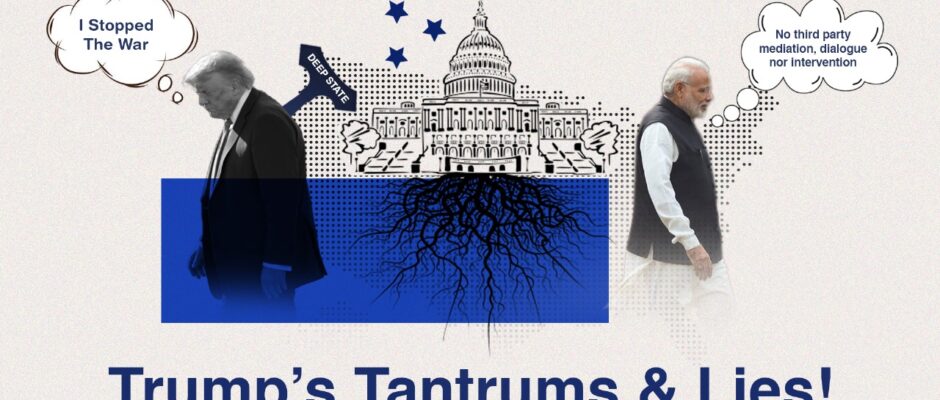
Quixotic dealing with strategic allies untenable, US may lose out on India and get cornered as the deep state and left lobbies plays dirty. K.A.Badarinath Overwhelming opinion amongst intelligentsia is that US President Donald Trump is throwing tantrums and lying through his teeth. His repeated claims from Washington DC, Kananaskis – the venue for G-7 summit – and elsewhere have come under close scrutiny internationally. First big claim that President Trump made was to have successfully mediated between Bharat and Pakistan during the week-long conflict to avert a nuclear war. The two countries fought a limited war following daylight murder of 26 tourists in Pahalgam of Jammu and Kashmir by ISI sponsored terrorists in April 25, 2025. Yesterday, Indian Prime Minister Narendra Modi categorically debunked President Trump’s falsified claims from White House and outside. Neither was there any mediation, dialogue nor intervention by President Trump to pause the armed conflict. Instead, ‘Operation Sindhoor’ was paused only at specific and desperate request of Pakistan military establishment through regular channels of communication after Bharat pounded its airbases deep. In fact, Trump had gone ahead and tweeted to claim his leadership role in dissuading the South Asian neighbours from going to a major nuclear war. Yesterday, President Trump went a step further and pointed out that international media did not write about his ‘stellar role’ as peacenik between the arch rivals. On the contrary, in his 35-minutes telephonic conversation with Trump, Modi unambiguously stated that the latter had no role whatsoever. Indian foreign office ‘read out’ by Secretary Vikram Misri clearly dismissed in most certain terms any mediation by President Trump. What’s laughable is that Donald Trump repeated his bombastic claim from Oval office that he stopped the war even after getting a ‘earful’ from Modi. Second big claim of President Trump that trade deal between India and US was used as leverage to bring around Prime Minister Modi. Again, this has been outright dismissed outright by India. President Trump’s suggestion that trade deal in the works between India and US leveraged to prevent a larger war was again billed as ‘preposterous’ and ‘untrue’. To drive home India’s unambiguous position on war with terror infested Pakistan, Modi firmly and politely declined Trump’s invite to stop over in Washington DC for a chat citing ‘prior commitments’.  One cannot recall if American President’s invite was ever declined by Indian leadership in the past. Few things have been stated crystal clear to President Trump in the telephonic conversation whether he liked it or not. India will not and never accept mediation with Pakistan. This is key articulation of the country’s policy as part of its ‘strategic autonomy’ framework. Yet another point made was that funding, sponsoring and abetting terrorism will now on be considered war against India and not Proxy war. And, hence, Bharat reserves the right to hit back in a manner it deems fit. Thirdly, Jammu & Kashmir is non-negotiable, integral to India and only discussion could be on areas under illegal occupation of Pakistan. In last few weeks, India exercised maximum restraint in not taking on President Trump’s claim either directly or indirectly. Yesterday’s phone call between the two leaders reflected clarity in articulation India’s position.  On the parallel, General Asim Munir of Pakistan getting close to White House, having a closed door lunch with President Trump is something that clearly indicates complete disruption in US foreign policy under Republican Presidency. Reports that President Trump promised hitherto denied defence technologies to Pakistan for using its territory to strike against Iran has its own implications. Old foreign policy hands have an independent analysis on the chain of events including President Trump’s claims that have been eventually denied by Indian foreign secretary Misri. Entire rule book in diplomatic niceties have been consigned to dust bin by President Trump and his bunch of policy advisors from corporate world while dealing with Presidents and Prime Ministers. Hosting General Asim Munir has its own nuances and messaging for sure. President Trump seems to have realized that General Munir could be deployed to could push the American agenda in Asia. Using Pakistani airbases and army entry – exit points across 1000 kilometres long border with Iran will only expand the war theatre between Israel and Iran. Courting Pakistan at most critical junctures have had happened even in the past. Hence, Trump – Munir lunch may not have come as a big surprise for some Indian security hawks. Also, Donald Trump may be looking at a defunct and rudderless Pakistan as ‘potential market’ for clinching transactional business deals as well as go down in human history with a ‘peace nobel’ courtesy Islamabad’s leadership. One big suspicion is that American deep state may be playing dirty against Prime Minister Modi’s decisive leadership as it had attempted at  denying his re-election for a third consecutive term. Cosying up of Pakistan military establishment with Republican White House may have come after a successful trade deal hammered out by Trump and Chinese Communist Party’s iron-fisted President Xi Jingping. In ultimate analysis, President Trump comes out as an ‘undependable ally’ for anyone including Bharat. Disruptions in equations with friends and foes may be treated with equanimity by the slippery Trump administration. Rising American societal unrest that has begun to show up in demonstrations and protests may only deepen threatening the very idea of ‘United States of America’. American deep state and Left aligned lobbies entrenched over decades are bound to exploit the churn to their advantage. In the process, there’s huge possibility of President Trump getting cornered. In the process, Trump may lose out on India. (Author is Director & Chief Executive of New Delhi based think tank, Centre for Integrated and Holistic Studies)

Read More
Titanic Shifts Inevitable!

Titanic Shifts Inevitable!

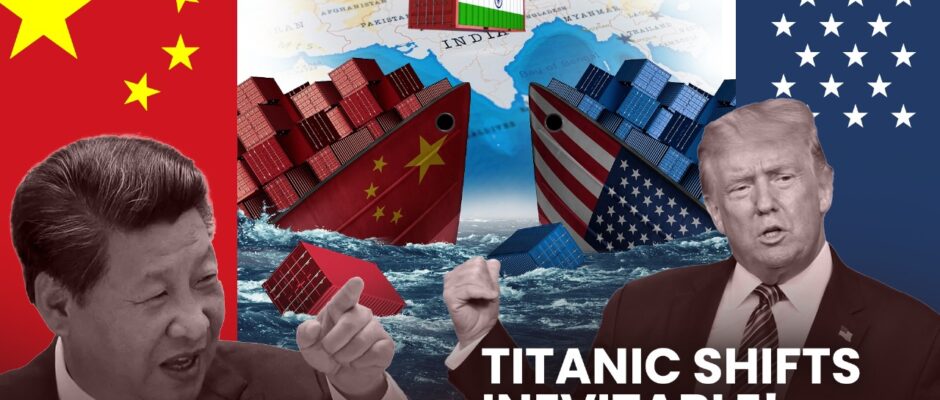
Trump’s tariff wars provide a window of opportunity to Bharat for proving its mettle as a global force to reckon with its own economic development model. K.A.Badarinath There’s a huge body of analyses on possible impact of tariff orders signed by US President Donald Trump in last few weeks. Those in favour and against have argued emphatically leaving room for further discussion given that tariffs, trade and economic engagement has gained pre-eminence and a developing story. Several analysts described recalibration of tariffs as trade war. Yet others have attempted to look at implications of the trade centric conflict overflowing into geo-political stratosphere.  Markets – equities, currencies, commodities, bullion and a host of financial products – felt the immediate impact. There has been roil in the market place. Billions of dollars’ worth investors’ wealth either vanished over night or partially restored as tariff orders were released by the White House in quick succession beginning ‘liberation day’ as Trump pompously described. Companies, services providers and logistics firms scurried for cover even as President Trump essentially targeted European Union with whom US has a trade deficit of $ 200 billion and China with deficit exceeding US $ 300 billion. Sixty countries – friends and foes – were treated by Trump with derision and slapped with counter-tariffs to bring down the US trade deficit that piled up to US $ 1.2 trillion. Some economists also pointed to trade surpluses run by US with about 100 countries which were royally ignored by ‘transactional Trump’ administration. Trump’s political agenda in run up to 2024 Presidential campaign centred around correcting the ‘unfair’ ripping of American people, businesses and denying his ‘voters’ the job opportunities thereby shifting manufacturing out of US. This is also the biggest ‘political agenda’ item of Trump that got him into power for a defining second four-year term. Apart from addressing domestic core whites’ constituency that were central to his ‘Make America Great Again’ agenda, Trump’s belief centre’s around ‘lifting the burden of American people’ on whose shoulders the world rejoices. Now that the trade, tariffs, manufacturing and jobs agenda gets to be implemented in US, the signals are ominous for anyone and everyone to pick up and put their counter-offensive in place. A lot of counter-offensive from US trade partners was kept on hold as 90-days window to fast-track trade and economic partnership negotiations began in Washington DC and elsewhere. China, however, has been treated differently after having slapped 145 per cent duties on most goods and services exported to US. China that countered with 84 per cent tariff on US goods and services was not part of the 90-days pause plan announced by President Trump. For now, trade war has turned direct and vicious between US and China while the latter owed ‘fight to finish’ action plan. Trade centric war is evolving and one may not see much hope in bringing this to an early close as negotiations between trade partners and US would be a long drawn process. Even if trade issues are sorted out, the impact would be profound on Western model of ‘globalization’ that got rolled out post-World War II and setting up of Bretton Wood institutions is bound to hit reset button. A fresh look at global trade and economic engagement is something that’s unavoidable or rather inevitable. This re-engagement will have huge bearing on socio-economic development paradigm of global communities especially with larger number of people reeling under poverty. A more America-centric economic policy roll out by Trump and ‘inward’ looking framework would lead to conceding geo-political and economic space to big players like Communist China. Each country – big or small – will have to learn fast to fend for itself and not depend on big brothers in either US, China or European Union. Next four years may also see ‘many more’ socio-economic self-reliance campaigns. It’s in this context that Bharat’s ‘self-reliance’ campaigns being run last eleven years would gain significance as existing value chains get rejigged, decoupling and re-engagement were definitively on the horizon. Bharat’s ‘strategic autonomy’ in terms of foreign policy and by extension, economic engagement, will hold strong. Unwilling to react in a hurry, announce counter-measures in a huff like several members of European Union or China, Bharat fell back on ‘time tested’ autonomous policy postulation. Free Trade Agreements (FTAs) with US, European Union and United Kingdom may have to be reworked with other economic parameters like investments more closely aligned. Secondly, given that Bharat has been treated ‘even handed’ with 26 per cent additional tariff, New Delhi should resist the temptation of falling into anti-US blocks. This should not translate to closing the door firmly on China that offered to align with Bharat to take on US. Thirdly, Bharat may consider making new partners on equitable and respectable terms that’s ‘mutually beneficial’ and ‘long lasting’ while economic engagement takes on new hue and different shade. Fourthly, measured and nuanced approach to trade, economic, development and geo-political engagement may have to be pursued in the spirit of ‘vasudaiva kutumbakam,’ the world is one big family. Fifthly, given that Bharat is on an ascent mode, wading through economic uncertainties globally and achieving its objective of becoming a ‘responsible economic power house’ will have to be carefully crafted. Sixthly, open, flexible, rules and regulations driven economic engagement with a ‘human face’ in reaching out to last man standing in queue should be basis for Bharat’s approach. Seventhly, this is the perfect time and context to present its own model of socio-economic development model that’s not exploitative, solely driven by consumer centric approach and instead push for synergies between nature and human living that’s sustainable in terms of judicious utilization of resources. Eighthly, realignment of global forces, both geo-political and market centric, is inevitable. And, carving out a distinct role for itself with responsibility is what’s recommended. Ninthly, falling back big on indigenous knowledge, development ecosystem based on sanatan Dharmic values for shared prosperity will test Bharat’s mettle. Tenthly, leadership role cannot be played from

Read More
Don’t Mess Up with Bharat!

Don’t Mess Up with Bharat!

Restructuring US industry to make its products competitive must be President Trump’s primacy and not wage tariff wars with strategic allies. K.A.Badarinath One of the most searched on internet these days is tariffs. After US President Donald J Trump talked round the corner, stakeholders across geographies have begun to make sense of these tariff lines. There’s, however, no reason why Bharat should give in to demands of quixotic President Trump who’s been holding forth with media twenty four by seven. President Trump also seems to be in tearing hurry to make early impact as head of Republican White House. Hence, he set the April 2 deadline to impose massive tariffs on Bharat’s export of products and services. Tariffs is a long story beginning with Donald Trump’s first term four years back when he went ahead and imposed tariffs on steel products, pharmaceuticals etc. There’s definitely an imbalance in trade. Its advantage Bharat as US $ has a deficit of US $ 45.6 billion on bilateral trade worth US $ 191 billion. And, India has reportedly made some proposals to rework the economic, trade and investment relations between the largest and oldest democracies globally. One way could be to enhance defence purchases worth US $ 20 billion by Bharat. Another possibility is to increase energy products including LNG and other hydrocarbon products. But, US may not be able to seize the window of opportunity opened by Bharat during bilateral engagement. Firstly, US defence establishment and deep state may not facilitate sale of F 35 fighter aircraft to Bharat.  A big section of US set up is wary of even floating a joint venture to jointly produce F-35 aircraft with a non-NATO strategic ally like Bharat. This joint venture possibly based out of Bhagyanagar aka Hyderabad need not limit itself to catering to Indian defence forces. It can become hub for exports to other destinations. Stringent protocols and agreement on who gets access to such advanced fighter jets could have been put in the blue print. Story of energy purchases is more or less similar. Would US be able to match or provide equivalent prices offered by Russia on crude, refined or liquefied natural gas products? Either spot or long term contracts, US energy products may not be cost competitive vis-à-vis the middle-east or Russian sources. For an expanding economic force like Bharat, every dollar paid per barrel translates to US $ one billion higher import bill. Insurance and freight differentials are again too huge for Bharat to enter into long term contracts with US. Reciprocal tariffs from April 2 have been proposed by President Trump who thinks that the Bharat is fleecing American people. As per World Trade Organization data, this may not be altogether true. As against an aggregate US tariff of 2,2 per cent, Bharat levies 12 per cent that’s in sync with WTO norms under differential tariff regime. President Trump may have a point relating to individual products like automobiles on which tariffs were brought down by Bharat to 70 per cent from 125 per cent on high end luxury cars. On motor cycles, the applicable tariff line is set at 40 per cent as against 50 per cent earlier. Threat to impose 25 per cent tariff on all Indian goods may not work for US except for addressing political constituency of Donald Trump or for optics. Indian goods constitute just 2.7 per cent of all US imports and do not even figure in top ten exporting countries to America. There’s no reason for mature friends like US and Bharat to haggle over manageable trade imbalance. Instead, working on the big picture like more than doubling the bilateral trade to US $ 500 billion by 2030 and clinching a ‘credible and sustainable’ trade deal in next one year is what’s more significant. Simultaneously, US may have to rework its manufacturing and supply chains to be cost and quality competitive instead of rampaging in over pitched verbal duel with friends and foes alike. Re-inventing  American manufacturing base to align with new age cut throat competition is something that Trump may have to work on beginning with massive restructuring of its industry. US and Trump may not realize this ‘Make America Great Again’ dream unless some hard work is put into it. America may have to expand its bouquet of products and services that can compete in the global market with new forces on the block. Trump’s complaint is that subsidies, non-tariff barriers and VAT system in Bharat hinder American exports. Well, his policy hawks may have conveniently forgotten that Value Added Tax (VAT) regime has come to an end several years back and it’s been subsumed into Goods and Services Tax (GST). On subsidies, US have a very weak case. Can Donald Trump’s advisors prove that America does not subsidise its industry? In Bharat, food, fertilizers and oil products constituted a large part of subsidy bill till a couple of years ago. Retail petroleum products prices have virtually been aligned with market demand and supply chain. There’s no depth in the argument that Bharat subsidises its petroleum products. It’s an emphatic no. Till a couple of years ago, kerosene was the only big subsidized oil product. After having taken piped gas and through cylinders to virtually every household, there’s hardly a big demand for kerosene. Food subsidy or free food grains to the vulnerable sectors is definitely a reality in Bharat. And, its well within its right to fight poverty and hunger through the Prime Minister’s anna yojana. In fertilizers, Bharat is more or less sufficient on urea while DAP and complex fertilizers subsidy is on the slide each year. Minimal subsidy available on a couple fertilizers is support given to farmers for ensuring enough food grains output for 1.4 billion and ward off imports. On non-tariff barriers, US are yet to come up with a list of such restrictions put in place by Bharat. If restricted access to Bharat’s agricultural markets is an issue, US will have

Read More
Modi Magic for Middle Class Works Wonders

Modi Magic for Middle Class Works Wonders

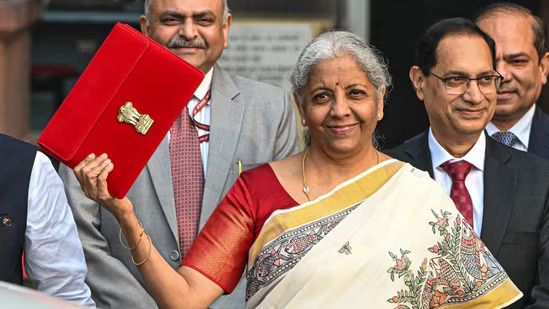
Consumption led growth, deregulation & reforms coupled with political and economic consolidation is what the budget attempts smartly! K.A.Badarinath Prime Minister Narendra Modi led government’s first full budget in its third term has deftly managed numbers, stuck to fiscal prudence & consolidation glide path, fiscal deficit reined in, borrowings manageable and put the economy on a consumption overdrive by providing huge tax relief of Rs 102660 crore. The vast middle class taxpayers who are also biggest consumers of goods and services will dance home with the goodies provided by finance minister Nirmala Sitharaman that presented her eighth consecutive budget for the Modi government on Saturday. Relief in personal income tax through rejig in both slabs and rates is the highest provided by any government in post-independence history of Bharat. And, there’s a big political message as well. Stick to the right of centre BJP-led National Democratic Alliance without drifting away. And, you will only be happy. This message is particularly important after Prime Minister Modi led alliance managed a wafer thin majority in Lok Sabha during last general elections. Also, Prime Minister Modi, BJP and NDA seem to be in no mood to let up the consolidation drive undertaken in assembly elections of Maharastra, Haryana and elsewhere post-Lok Sabha elections in June 2024. Also, in National Capital Region, Delhi’s assembly elections set for February 5, BJP has targeted the middle-class voters who are also taxpayers in a big way There may be naysayers that point fingers at huge tax exemptions and relief and Nirmala Sitharaman’s strategy to spend Rs 50.65 lakh crore to perk up growth in medium term beyond seven per cent in especially challenging conditions internationally. She has definitely not announced any ‘run away’ spending but put money where its seriously required to avoid the much feared ‘middle income trap’, keep the economy competitive, combative and at the same time expand smartly. Putting more than Rs 100,000 crore in hands of taxpayers, rewarding them handsomely for their contribution and thereby perk up consumption demand is to take economic growth way beyond 6.3 – 6.8 per cent projected in economic survey presented on Friday. Projected fiscal deficit at 4.4 per cent for 2025-26 over 4.8 per cent in current fiscal is achievable given buoyancy in tax receipts and reflects government’s steadfast commitment to consolidation, limit borrowings and shift big to infrastructure spending on capital account at Rs 15.48 lakh crore that translates to over 3.1 per cent of GDP. Borrowings would be limited at Rs 11,53,834 crore next fiscal to actual Rs 11,62,678 crore in the year ending March 31, 2025. Over next one year beginning April 1, 2025, the country’s gross domestic product in actual terms would expand to Rs 356,97,923 crore as against Rs 324,11,406 crore projected for 2024-25. Deregulation and fresh bout of reforms as an economic strategy – both policy side and taxation – recommended in Economic Survey have been accepted by Modi government. Taking stock of regulations and lifting controls has been corner stone of government’s liberalization programme when the economic liberalization was fine-tuned by Atal Bihari Vajpayee regime two decades back. Fresh overtures to reform, deregulate and thereby liberalize the economy is something Modi government would pursue to realize its full potential as it readies the journey to ‘developed nation’ status free from poverty by 2047. Focusing on agriculture, investments, micro, small & medium enterprises (MSMES) apart from exports as four growth engines is refreshing and a departure from traditional ways of looking at four economic pillars. At a time when assorted Left leaning farmers groups hit the ground seeking legal guarantee for minimum support prices (MSP) for their produce, Modi government has presented a different model to make farming a profitable enterprise, push up rural prosperity and take the famed Bharat growth story to hinterlands. Apart from sprucing up agricultural credit, mission for pulses, cotton, developing 100 agriculture-based districts, Makhana mission and initiative for vegetables and fruits is noteworthy.  Focusing on Micro, small and medium enterprises as growth engine is something that will gel well with the BJP’s core constituency of small businesses. And, it makes eminent sense to take these over 4.5 crore small enterprises up the value chain and align them to export markets to deliver both goods and services. Fund of Funds for start-ups, prioritizing footwear, leather and toys, extending first time entrepreneurship to five lakh scheduled caste and tribes women and ‘make in India’ for the world schemes would expand the landscape of these enterprises that have become hallmark of Bharat’s industry in last ten-odd years. Announcement on national manufacturing mission for MSMEs is something that will lead to consolidation of these tiny enterprises but also provide framework for nurturing and embellishing their operations in long term. The two growth engines that are significant are investments and exports given global uncertainties especially in Europe, return of Donald Trump as American President, China and Russia getting closer on geo-political front. Setting up an omnibus export mission, bringing the MSMEs to put them on export mode and involving banks, financial institutions is a pragmatic way of tiding over the global uncertainties especially in wake of ‘Make America Great Again’ and ‘Make Europe Great Again campaigns. Setting up global capability centres in different states and bharat trade net for easing documentation related issues for exporters would only add to ease of exporting Bharat’s goods and services to global consumers. Government led investments in infrastructure, mobilizing global resources for large signature projects would trigger private and foreign funds commitment to both green field and expansion projects. One big opportunity for both private and foreign players would be 100 Gw nuclear power projects that would eventually replace the heavily polluting coal-fired power plants. Nuclear mission will provide an opportunity for foreign players apart from putting together a regulatory framework given that the sector is being opened up for first time. For the first time in last few years, Bharat has opened the insurance sector wider for foreign investments with 100 per cent

Read More
Go Big, Go Bold!

Go Big, Go Bold!

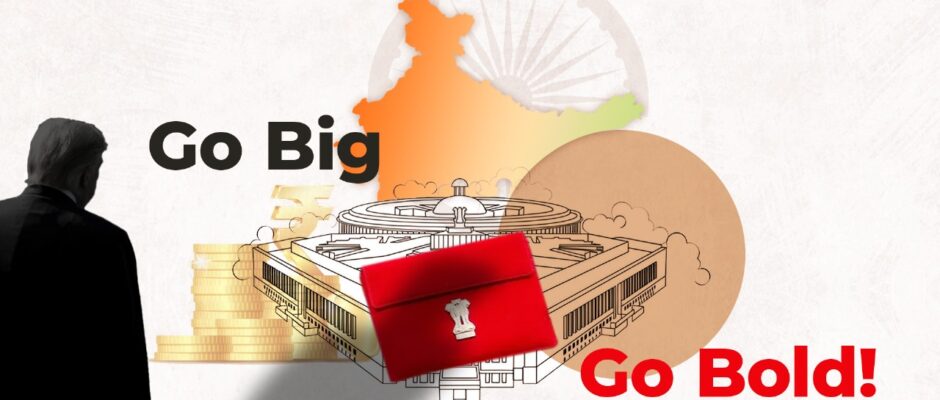
Transactional Trump, EU policy recast, realignment of global forces with China & Russia moving closer may cast a long shadow on Modi government’s eleventh year budget. K.A.Badarinath Post-elections in United States, Donald J Trump assuming charge as American President coupled with realignment of forces globally will weigh-in on Finance Minister Nirmala Sitharaman as she readies to present her eighth federal budget in a row this Saturday. Nirmala Sitharaman may have to take on board Trump’s constant haggling that Bharat was a high tariff destination for American goods. More importantly, clubbing Brazil and Bharat with China for imposing high tariffs as a way to balance trade may be on top of the mind. A deficit of $ 32 billion that US have with India in bilateral trade of US $ 118 billion during 2024 is the big trigger for ‘transactional’ Trump who is expected to push hard for ‘rebalancing’ transactions. In fact, this is the biggest factor for Trump to threaten across the board tariff of over 2.5 per cent on all Indian goods, services and push for sale of defence equipment. A possible way out may be found when Prime Minister Narendra Modi meets Trump during his France visit next month. This apart, what finance minister Sitharaman would consider is Commerce Ministry analysis on all economic issues that Trump talked about at his inauguration as President on January 20 and virtual address at Davos World Economic Forum the day after. In fact, this will easily go into Finance Minister Sitharaman’s tabulations on oil prices, US $ and Indian rupee pricing apart from her fiscal deficit projections that are expected to be in line with her announcement in the last budget a couple of months back. In line with ‘Make America Great Again’ campaign of Donald Trump, European Union pushing for ‘Make Europe Great Again’ line may have its bearing on developing large economies like Bharat, Brazil, South Africa etc. The 27-nation block and Trump may have taken a leaf out of Prime Minister Modi’s “India First” or “Bharat First” campaign that led to mobilization of Hindutva or Bharatiya forces at political level as well as socio-economic front. Though European Commission President Ursula Vonder Leyen holds that Europe is already great, she commissioned a report on union’s competitiveness from Mario Draghi to provide a firm roadmap to sustain healthy growth rates over next 25 years. This reassessment will definitely have its impact on exporters from Asia like India that’s just becoming a player to reckon with both in investments and trade. Serious conversations within European Union end to her dominance in automobiles, emergence of China as a big player in automobiles as well as artificial intelligence, non-availability or limited access to cost-effective oil from Russia will have to be factored by Nirmala Sitharaman as she goes about fine-tuning Bharat’s roadmap to 2047. Union budget is definitely a big occasion to look back, assess and work on futuristic economic policy framework in the wake of global realignment of force, China and Russia moving closer, big debate on capitalism versus communism, conservatives to liberals, Left of centre to far right politics within and outside the country. Narendra Modi government as one can recollect have smartly deployed every penny to win hearts of 1.4 billion people in last eleven years. Even without majority seats in Lok Sabha on its own during last June elections, Modi and his economic policy making team led by Nirmala Sitharaman has not diminished or deviated one wee bit. This eleventh-year budget of BJP-led NDA will be no different. Fiscal consolidation, prudence in spending, continuation of its well laid out taxation policy and spreading the wings to cover more and more vulnerable sections in the ambit of famed Bharat ‘growth story’ will clearly be visible in vision and action. Expanding scope of highly successful Production Linked Incentives (PLI) scheme hitherto introduced in 2020 would not only expand industrial base, create new jobs opportunities but also offer an excellent platform for foreign investors. Till date about Rs. 1.32 lakh crores foreign investment (US$ 16 billion) have been realized thereby leading to a massive jump in manufacturing output at Rs. 10.90 lakh crore (US$ 130 billion). Over 850,000 jobs have been created due to this industrial expansion under the scheme alone. ‘Make in India’ and ‘Make for the World’ is a great policy liner that has stood test of times for Modi government. Matrix for the scheme where foreign and domestic investors plough-in has to be expanded across sectors especially defence and security to exploit the potential for investments, technology and jobs creation. Finance Minister Nirmala Sitharaman will have to announce Modi government’s policy framework to manage Artificial Intelligence (AI) like DeepSake, Qwen developed by China with its alignment to Chinese Communist Party (CCP). Already, there are enough indications that AI Compute Facility that secured 18,000 GPUs will drive the artificial intelligence initiative that’s ‘open sourced, application focused and flexible’. Data privacy and data localization policy may have to be dovetailed to ensure that our artificial intelligence initiative is in sync with the country’s diverse needs. Quick investments and development of ‘generative’ artificial intelligence networks may have to be prioritized by Modi government and the dedicated mission may have to develop a framework to deal with the issues. Nirmala Sitharaman may have to opt for policy reforms to push the pedal on governance that eases ‘way of living’ and enhances ‘living standards’ for people in rural and semi-urban areas. Bringing equivalent focus on middle and lower-middle class apart from most vulnerable sections into the ambit of budget and economic policy making will also be a saleable preposition for the finance minister. Given the kind of direct cash benefits announced in different states as part of competitive political slugfest may have to be addressed immediately to nourish a healthy work culture to enhance productivity in industry, agriculture, services and allied areas. From free power, heavily subsidised gas to cash offers, both opposition parties and ruling NDA partners have gone for the kill

Read More
Disruption In World Order Guaranteed!

Disruption in World Order Guaranteed!

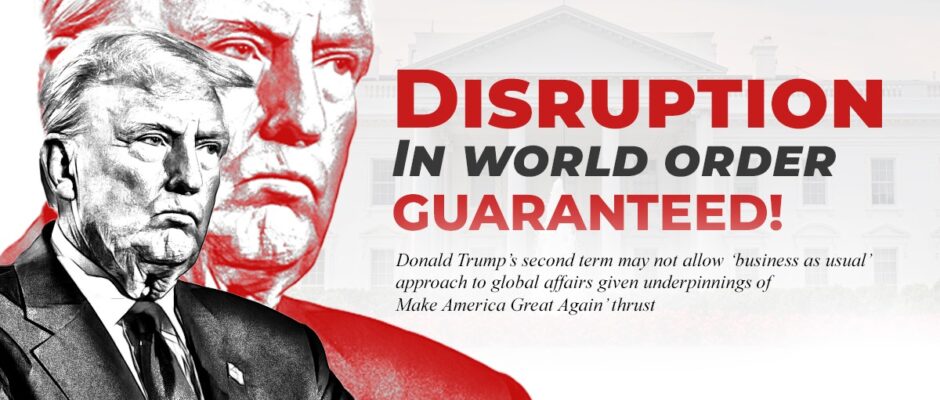
Donald Trump’s second term may not allow ‘business as usual’ approach to global affairs given underpinnings of ‘Make America Great Again’ thrust. K.A.Badarinath Across continents one big question that’s seriously debated and pored over is what’s in store during second term of President Donald Trump that would kick off in three weeks from now. Jokes, boardroom banter, hate, repulsion to cult following notwithstanding, Donald John Trump cannot be ignored as President United States of America (USA) given the landslide mandate that Americans have given him. One can rest be assured, he would make next four years very eventful at Oval Office after having gained serious insights into functioning of the Presidential role in his first term that ended in turbulence. Trump would not let the world forget in a hurry that he’s the only President who has been returned to White House after eviction from White House after Grover Cleveland several decades ago. Hence, it’s not surprising that from Africa, Asia, Europe to West Asia, tongues have begun to wag on state of play with staunch and determined Republican President at the hot seat in White House. But, what can easily be predicted is pursuit of aggressive ‘America First’ and ‘Make America Great Again’ that would dominate Trump Presidency on all fronts, be it economy, investment and trade, civilizational ties, diplomatic engagements, wars and conflicts in which US has direct or indirect linkages. Ultra nationalist sentiment of Western variety will have a sway during Trump regime within and beyond American borders. Expressive articulation of America First and Make America Great Again cannot be missed. A thorough review of all engagements including Israel, Ukraine and other conflict zones would become a priority for President Trump. And, rogue states like Pakistan are expected to face big time shove if Trump has his way. China may top Trump agenda with 50 per cent tariffs proposed on all exports to United States to rebalance bilateral trade. These levies would turn as many products non-competitive forcing Bejing to rethink its export strategy using third country labels to overcome the proposed tariff barriers. Bharat along with other BRICS member countries have already been put on alert as Trump has threatened with 100 per cent tariffs if the big developing countries went ahead with a common currency regime rivalling the American dollar. ‘De-dollarization’ move apart, Bharat may have to revisit its list of 30 US goods identified in 2018 and approached World Trade Organization for levying retaliatory tariffs on US. Also, sticky issues like Gautam Adani’s case in American courts and reported life bid on Khalistani terrorist Gurupatwant Singh Pannun will have to be dealt with deftly. Of late, growing anti-Bharat sentiment being belted out by American media outlets especially following Sriram Krishnan’s appointment as advisor on artificial intelligence to Trump may have to be addressed. Future of H1B work visas, US citizenship to children of such visas has turned absolutely uncertain. President Trump may have to take a call on this key issue. On two occasions in his first term, Trump had referred to 50 per cent restrictive duties on Harley Davidson motorcycles by Bharat. Even after his re-election in recent weeks, President-elect Trump described Bharat as ‘tariff king’. He conveniently chose to not refer to hiked tariffs on Indian steel and metallic products exports by him in his first term. Though the volume and value of defence exports to US are modest at US $ 1.5 billion, they may come under scanner of quixotic Trump. There are several such Indian export items that may be put to scrutiny by new regime. No wonder, Prime Minister Narendra Modi despatched his foreign minister Subramanyam Jaishankar to US in preparation for bilateral engagement with the ‘Don’. Modi who shares personal rapport with Donald Trump is expected to find a way out given that Indian investors are waiting in the wings to take larger positions – directly or indirectly — in US markets. President Trump would prioritize huge cuts in ‘federal spending’ of ‘non-essential’ and ‘non-strategic’ expenses by his government given the burgeoning long term deficits that US has piled up over years. Every dollar spent may be accounted for especially with technology czars like Elon Musk breathing down the neck pushing for ‘government efficiency’ on resources. Under President Trump, ‘radical left lunatics’ may get a big bashing on the butt that would eventually inflict damage on support structures for democrats. These Left hardliners have been peddling narratives that ‘liberal, open democratic character’ of US was under threat once the ‘Don’s’ second term began in 2025. Narrative battles in US between Left leaning ‘self-proclaimed’ liberals and Republicans under Donald Trump are expected to intensify further. Basically, ‘business as usual’ may not be possible with Donald Trump. Be it Canada, Panama, Greenland, Syria or elsewhere, there’s bound to be restlessness in Republican White House demanding a big changeover. Donald Trump seeking to turn Canada into 51st state of US sent shivers for Justin Trudeau who’s fighting with his back to the wall seeking re-election later next year. Here again, Trump demanded lowering of tariffs and in return offered US security cover to Canadians as fifty first state. Similarly, Panama was put on notice by Donald Trump who made two significant points from his perspective. One, the Panama Canal was being illegally controlled by Chinese people liberation army and the tariffs on movement of American goods were too huge that warranted a rollback. Thirdly, Donald Trump may have hit a raw nerve when he sought American pound of flesh in administration of resources-rich Greenland. Given that European Union has effective control on Greenland, Brussels may not take Trump’s comments rather lightly and forced to engage with him on the issue apart from legal migration and infiltration across US and EU member countries. Donald Trump may like to leave his imprint as a global leader in his four-year regime that’s bound to be eventful and has the potential to change face of global engagement. (Author is Director & Chief Executive at

Read More
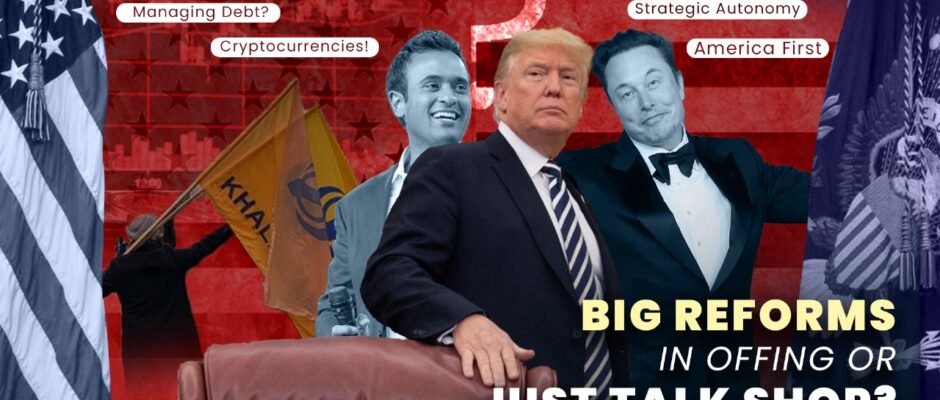
Big Reforms in Offing or Just Talk Shop?

Big Reforms in Offing or Just Talk Shop?

Republican White House under President Trump will have to respect and partner with Bharat in sync with her ‘strategic autonomy’ framework. K.A.Badarinath Exuberance aside, Donald Trump is ready to don the mantle as 47th President, United States of America. Trump’s return to White House has several messages for diverse stakeholders. While these groups grapple with the reality, there’s no denying that huge drama continues to unfold as transfer of power to Grand Old Party began. After Republicans decisive show in the just concluded Presidential elections and democrats tasting big defeats, the new government takes shape to run this powerful country for four years. Trump seems to be all out for tapping talent and leadership at the high table with cabinet berths and elsewhere. For development hawks like me, picking Vivek Ramaswamy and Elon Musk to bring about structural reforms in governance is a big message to ‘one and all’. Belt tightening measures, living within one’s own earnings and limiting both public and private debt is something which would happen as consequence. Unless belt-tightening measures are spelt, there are very limited options before President Trump to manage or sustain US $ 35.95 trillion piled up by October 2024. More than the public and intra-government debt that’s hit the roof, speed with which its multiplying without any let up is all the more mind-boggling. Every hundred days, this debt goes up US $ one trillion and over 14 per cent of annual federal spending goes into servicing this debt. In this backdrop, aggressive governance reforms to cut wasteful expenses, prune bureaucracy and reduce the flab are what’s paramount if US were to chart a sustainable socio-economic development policy framework for the future. Newly carved out Department of Government Efficiency under Musk and Indo-American entrepreneur Vivek Ramaswamy will have to chart this futuristic plan. Down-sizing the US government by 2026 when the country would celebrate its 250-year of independence is something to watch out for. If serious efforts were to be made at governance reforms, healthy economic growth posted in last two quarters at 3 per cent and 2.7 per cent could act as right spring board. Better public debt and intra-government debt management would provide further impetus to the United States economy having implications far and wide. Lesser regulations and revamping federal agencies is again governance reform. Most conversations relate to making crypto currencies regulation more attractive and mainstream these digital currencies. US Federal Reserve has been grappling for policy framework to deal with ‘unregulated’ crypto-currencies that are virtually outside the central bank’s domain. Globally an accepted governance framework is what was on the drawing board especially when the G-20 Presidents and Prime Ministers met in New Delhi a few months back. Bharat along with Brazil and other large developing countries have had pushed for an agreed framework for crypto currencies. Digital rupee was found as an immediate alternative to cryptos that are not recognized as currency in Bharat nor can they be offered as collateral for any transaction. President Trump’s policy towards crypto currencies will also have huge impact on global financial transactions and currencies managed by central banks. The move to ‘de-dollarize’ trade deals and make them happen in local currencies may gain momentum as discussed at recent BRICS summit. President Trump’s majority in both houses of US Parliament must be leveraged to push far and wide digitized dollar as immediate priority rather than tilting aggressively to cryptos before hammering a consensus on the policy framework with US partners. Crypto-currencies exposure or linkages with President Trump’s personal business empire may impact the US government’s possible policy shift on the issue. On evolving a workable security blueprint, President Trump’s pick of national security advisor in Florida Congressman Michael Waltz has been widely reported. Unlike the Democrats who have been infiltrated by Lefties, President Trump may like to go lethal vis-à-vis China. Waltz antecedents as India caucus co-chair in the US and Trump’s own antipathy for anything China especially on trade front may provide enough impetus to both trade and security framework vis-à-vis China. US President-elect Trump had talked about huge tariffs up to 60 per cent against Chinese goods and services. Well, his stated position on Indo-Pacific seeking to limit expansionist China, exposing the ‘unholy’ Pakistan – China nexus and Waltz pressing for strategic security partnership with India may turn music for Bharat’s lovers. One will have to await the new security doctrine and blueprint to be churned out by the President’s new team that will have large implications for Bharat. It will never be honky dory with President Trump all the way even for US closest partners. His policy would centre on ‘give and take’ that’s termed ‘transactional’ by his detractors and staunch supporters. His America First policy towards trade, investments, security and outlook is mostly on the lines of ‘Bharat First’ adopted as a belief, doctrine and work programme by Prime Minister Narendra Modi. Trade engagement that’s hugely in favour of Bharat in annual engagement of US $ 150 billion may be leveraged to ‘extract his pound of flesh’ if past experience is any indication. From Bharat’s perspective, be it democrats or republicans, she has to be on her own. New Delhi’s engagement with President Trump should be on ‘equitable’ terms as partners rather than being viewed as subservient low creature. President Trump cannot ignore the new reality of ‘a rising Bharat’ that has adopted ‘strategic autonomy’. He needs to respect and partner with this new world power as Russian President Vladimir Putin has described. President Trump cannot dismiss Bharat’s ‘strategic autonomy’ doctrine as done by the out-going Democratic White House led by Joe Biden. (Author is Director and Chief Executive, Centre for Integrated and Holistic Studies, a New Delhi based non-partisan think tank)

Read More

No Place for Terror, Let’s talk Peace

Bharat pushes for peace and stability in West Asia as conflict spread beyond Israel, Hamas to Iran, Yemen & Lebanon after elimination of Hezbollah chief Nasrallah. West Asia is on the boil. Arc of conflict that was hitherto limited to Hamas and Israel has now expanded sending shivers across global markets, security establishments and deep state actors. Israel and her Prime Minister Benjamin Netanyahu seem determined to take on their rivals in full blown conflict. The multi-pronged war strategy of Israel Defence Forces (IDF) has flummoxed Shia and Sunni organizations across Iran, Lebanon, Yemen and other territories. ‘Axis of Resistance’, brainchild of Iran, suffered serious setback after Hezbollah supreme commander and General Secretary Hassan Nasrallah, half a dozen top commander of this private militia were assassinated by Israel last week. It’s not just top leadership and Shura Council that got wiped out. Weapon depots and related infrastructure were pulled down thereby dealing body blow to Hezbollah. Simultaneous, psychological warfare launched by Israel was unprecedented after Hezbollah, Houthi militants and other lesser known groups supported Hamaz terrorists in their fight against IDF. After Islamic Resistance Movement popularly known as Hamas, a largely a Sunni terrorist organization attacked Israel on October 7 last year, other militia in West Asia have joined forces to take on Israel. This is the fifth such bloody, violence ridden conflict since 2008 between Hamas and Israeli forces after Yom Kippur War in 1973. Single handed, Israel has taken on both Sunni and Shia militant groups on all three fronts, air, waters and land conflicts. Most security analysts averred that it’s a proxy war between Hamas and Israel while the big boys were lending huge support to both sides. China has sided with Hamas. Russia has lent support to Hamas as against Israel. Though Moscow condemned the ‘terror’ act of Hamas, President Vladimir Vladimirovich Putin has refused to designate Hamas as a ‘terrorist’ organization. If Chatham House analysis was to go by, Chinese approach has been distinctly different. It went a step ahead and attempted at brokering a ‘peace deal’ between competing Palestinian groups, Farah and Hamas. And, recognition of Hamas, gave big impetus to this militant organization on Gaza strip and West Bank. On the contrary, both United States and major European powers have solidly backed Israel in its conflict with Hamas and its allies. US under either Democrats or Republicans, over the years have been with Israel since 1960s after having recognized it as a sovereign state. In the expanding conflict, as per reports, US have provided support to Israel on multiple fronts. On the parallel, US launched its own campaign against Islamic State and ISIS to keep its terrorists at bay and prevent them from joining ranks with Hamas, Hezbollah and Houthis. Major European powers have backed Jews in their fight against Muslim militants and terror groups. In the melee, Bharat has taken a very nuanced, strategically independent, balanced position. Prime Minister Narendra Modi has rejected all shades and forms of terror irrespective of the region or religion that they profess. Bharat was among the first few countries to condemn Hamas mindless invasion into Israel in last October. Also, Bharat – Israeli relations are strategic and multi-faceted across areas especially in arms, ammunition and technology transfers apart from non-strategic areas like agriculture, trade, investment and public digital infrastructure. On the other hand, Bharat has not designated Hamas as a ‘terrorist’ organization. But, New Delhi has not supported its ‘inhuman, violent, barbaric and faith-driven tactics’ that escalated after its initial hit on Israel in October 2023. Bharat mooted ‘peace and stability’ in West Asia and rejected terror in all forms, hues and shades. Bharat has been one of few top countries that provided succour with food and medicines to conflict ravaged Palestinians.  Prime Minister Modi has emerged a peacenik and plans to mediate between parties and secure a lasting solution to vexed conflict. Condemning terror, New Delhi has demanded release of all Israeli hostages held by Hamas as bargaining chip. Bharat has big stakes in West Asia that account for over 70 per cent of its crude oil imports which is easily US $ 100 billion per annum. Escalation of conflict would only disrupt crude supplies leading to fluctuations in prices of both spot and deferred supplies. Oil imports are one big factor in Bharat’s economic policy making while imported crude fuels her huge economic expansion. Secondly, Iran has been a big Bharat ally in the region with trade and investment relations going beyond the normal. Bharat has been a partner in Tehran’s development of Chabahar port that would open up fresh opportunities in Central Asian republics. Thirdly, with over 210 million muslims, Bharat has a big balancing act to play out as she has been home to both Shias and Sunnis. Also, given socio-economic progression of Muslim minorities, it would like both sides to have structured discussions for ensuring lasting peace. Fourthly, millions of Indian diaspora have made West Asia their home for decades. Ensuring their security, wellbeing, protecting their businesses and jobs apart from Indian investments would be primacy. Fifthly, Bharat has earned its stars by keeping away from lobbies and coteries in this conflict. It has all the wherewithal to play a significant role in the region along with other key stakeholders. Sixthly, Prime Minister Modi has had meetings with both Israel’s Netanyahu and Palestine President Mohamoud Abbas last fortnight on the sidelines of Quad meetings in US. His relationships with these two leaders along with world powers should positively be leveraged to bring about peace in West Asia. K.A.Badarinath (Author is Director and Chief Executive at Centre for Integrated and Holistic Studies, New Delhi)  

Read More

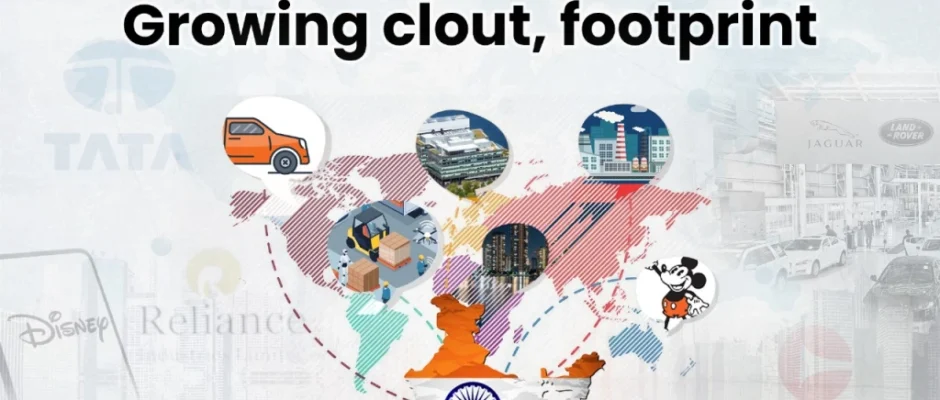
Growing Clout, Footprint

Bharat’s businesses have come off age, taken over several global brands, top line corporates lock, stock, barrel or partnered in US, UK & Europe K.A.Badarinath Two large deals sealed in just one week speak volumes about Indian corporates verve, gut and appetite for going global. Reliance Industries Ltd (RIL) and Walt Disney tango in Bharat’s media, television and entertainment industry is not limited to creation of US $ 8.5 billion behemoth. It opens up a zillion opportunities for Indian companies, vendors and challenges competition to surpass this milestone. This joint venture also marks Bharat’s film-makers, entertainment and media firms going global hand in hand with best in the industry. Asia’s richest businessman Mukesh Ambani and his wife Nita Ambani being hands on RIL – Walt Disney gives a spicy twist to the deal. Going forward, the joint venture model can work well and logically in global territories and it throws up an opportunity for Reliance – Disney – Century Fox to become a formidable player in media and entertainment sectors internationally. Another home grown billionaire from The Punjab, Sunil Bharti Mittal sent tongues wagging when Bharti Airtel group heralded by him emerged biggest stakeholder in the British iconic telecom services provider, British Telecom. Buying out the Israeli magnate Patrick Drahi led Altice group’s entire stake and cornering 24.5 per cent in British Telecom for US $ 4 billion is the icing on cake for Sunil Bharti Mittal whose Bharti group provides telecom services in 17 countries. In the process, Mittal has emerged largest stakeholder in British Telecom, hitherto the public telecom services provider. What would have been more satisfying for Sunil Bharti Mittal is that life has come full circle. Before 2010, British Telecom held over 21.5 per cent stake in Mittal’s then fledgling Bharti Airtel. This deal not only provides high-stakes branding push but allows Bharti Airtel access to United Kingdom’s 5G technologies, artificial intelligence networks and cutting edge technologies. Deutsche Telecom and T-Mobile Holdings with 12 per cent each are the two other large owners of British Telecom. Strategic insights in telecom, media and corporate markets in United Kingdom and Europe are something Sunil Bharti Mittal should look forward to being at head table of British Telecom. Bharti is not the first Indian company to go shopping in United Kingdom, US or Europe for iconic companies and brands that were seen as value enhancing prepositions. Most talked British brand and company acquired was Jaguar Land Rover by Tata group that was once mocked at for having produced the smallest and modest ‘Nano’ car. Uptight United Kingdom honchos could hardly come to terms with being led by a coloured team of Tata professionals to turn around the JLR that was once seen as a drain on the company and Britain was struggling to save the automobile brand. When Ratan Tata, easily the most celebrated businessman walked into the boardroom of Ford on March 26, 2008 to acquire JLR business at US $ 2.3 billion, disbelief and disconnect confounded top leadership team of British company. In 15-years, the group has turned around JLR into a kicking Bharat – British brand that’s hard to compete with. Tata group was labelled audacious when it took Corus Steel in $ 12 billion bid around the same time to emerge UK – Europe’s one of the largest players in steel market. While this was happening, Reliance bought out one of the oldest and most recognized British toy company Hamleys with 259-years corporate history and British battery technology company, Faradion made global industry sit up to the onset of Indian buyers. Reliance acquisitions were relatively more modest, around the same time, Kumarmangalam Birla, yet another Indian billionaire had set eyes on Atlanta-based Aluminium major Novelis and acquired it in 2007 for a whopping US $ six billion. This catapulted the Aditya Birla group into fortune 500 companies list. After initial rush of half a dozen big ticket takeovers about 15-years back, scores of global brands and businesses came the Indian way or partnered to stay afloat. The list seems quite a long one and this phenomenon is across sectors. Several of them were risky investments and the familial story of turnaround for many Western companies was scripted by Indian businesses that stayed nimble footed for quite some time. For instance, none would have imagined that fourth Indian billionaire Anand Mahindra owned diversified group, Mahindra and Mahindra pumped life into BSA Motorcycles that stopped production about five decades ago. Birmingham Small Arms Company founded way back in 1861 known for producing motorcycles after Mahindra and Mahindra took over this defunct brand in 2022. As per Grant Thornton research, Indians own about 964 companies in UK alone as of last year if one were to go by a Reuters despatch earlier this month. It may not be an overstatement, to say that Bharat’s businesses have arrived. (Author is Director & Chief Executive of Centre for Integrated and Holistic Research based in New Delhi)

Read More
  • 1
  • 2