CIHS – Centre for Integrated and Holistic Studies

Date/Time:

Blog Post

PM Modi Leads India’s Global AI Charge

PM Modi Leads India’s Global AI Charge

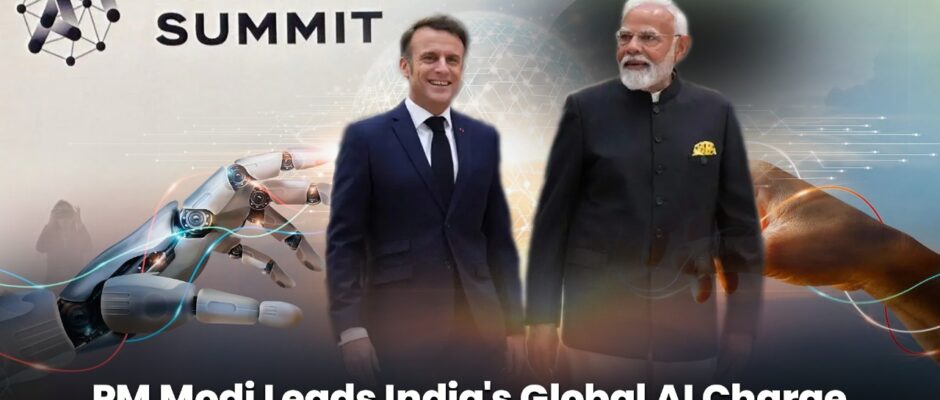
Rahul Pawa When the next AI Summit convenes, it will be on Indian soil, in a country that is scripting its own AI destiny one built on access, equity, and innovation. In the heart of Paris, under the ornate ceilings of the Grand Palais, the world witnessed a pivotal moment in technological history. The AI Action Summit, co-chaired by French President Emmanuel Macron and Indian Prime Minister Narendra Modi, convened global leaders, tech magnates, and policymakers to chart the future of artificial intelligence (AI). The two-day summit, held against the backdrop of rapid technological advancements, became a stage where India positioned itself not just as a participant but as a formidable force in the global AI ecosystem. Prime Minister Modi, in his opening address, eloquently stated, “We are at the dawn of the AI age, where this technology is fast writing the code for humanity and reshaping our polity, economy, security, and society.” He emphasised the unparalleled impact of AI, urging collective global efforts to establish governance frameworks that uphold shared values, address inherent risks, and build trust among nations. Governance, he asserted, was not merely about risk management but about fostering an environment where innovation could thrive, ensuring AI’s benefits reach all, particularly the so called “Global South”. As the summit unfolded, world leaders laid out their stakes in the AI race. French President Emmanuel Macron made a bold statement, unveiling a €109 billion investment in France’s AI sector. With characteristic flair, he highlighted France’s clean energy advantage, stating, “Here, there is no need to drill. It’s plug, baby, plug.” His words highlighted the urgency of aligning AI innovation with sustainable infrastructure, a challenge that nations around the world are grappling with. Meanwhile, U.S. Vice President JD Vance struck a different tone, advocating a laissez-faire approach to AI development. He warned against overregulation, suggesting that excessive oversight could stifle innovation. “We must allow AI to evolve freely, driven by market forces rather than bureaucratic constraints,” he remarked, in sharp contrast to Europe’s push for tighter AI governance. The European Commission’s President Ursula von der Leyen, however, took a measured stance, emphasizing the need for responsible AI development. “AI must be an enabler, not a disruptor. We must strike the right balance between innovation and ethics, ensuring technology serves humanity, not the other way around,” she stated, reinforcing the bloc’s commitment to structured AI oversight. Amid these competing visions, it was Modi’s announcement that India would host the next AI Summit that sent a resounding message. India, he declared, was not content with being a consumer of AI but was determined to be a key architect of its future. With its vast population, diverse linguistic landscape, and thriving tech ecosystem, India offered a unique testing ground for AI models that could be scaled globally. The timing of Modi’s announcement was strategic. Just last year, the Indian Cabinet had approved an ambitious ₹10,300 crore outlay for the IndiaAI Mission, a sweeping initiative designed to cement the country’s position as a global AI powerhouse. This mission, spanning the next five years, aims to build a robust AI infrastructure, develop indigenous AI models, and foster innovation through public-private partnerships. A key pillar of this initiative is the IndiaAI Compute Capacity, a scalable infrastructure deploying over 10,000 Graphics Processing Units (GPUs) to power AI research and applications. India’s AI ambitions extend beyond infrastructure. The IndiaAI Innovation Centre (IAIC) is set to become a hub for cutting-edge AI research, focusing on developing Large Language Models (LLMs) tailored to India’s linguistic multiplicity. The initiative will also enhance the IndiaAI Datasets Platform, ensuring access to high-quality, bias-free datasets critical for developing fair and accurate AI systems. As Modi took the stage once again to discuss the ethical challenges of AI, his message was clear—AI must be transparent, inclusive, and free from biases that perpetuate social inequalities. “We must build quality data sets, free from biases. We must democratise technology and create people-centric applications. We must address concerns related to cybersecurity, disinformation, and deep fakes. And we must also ensure that technology is rooted in local ecosystems for it to be effective and useful,” he emphasised. Bias in AI, he warned, was one of the most pressing concerns of the modern era. From image recognition systems that favour Western-centric depictions to healthcare AI models that perform poorly on non-white populations, the risks were vast. “Ask AI to generate an image of a person writing with their left hand, and it is likely to depict a right-handed writer instead, because right-handed examples dominate its training data,” he explained, offering a simple yet profound example of how deeply embedded biases can shape AI’s outputs. The urgency of ethical AI governance was emphasised by the presence of Chinese Vice Premier Zhang Guoqing, a stark reminder of the geopolitical stakes in AI supremacy. China’s aggressive AI push, underpinned by vast data pools and state-controlled development, has raised concerns among Western nations about the implications of an AI arms race. In contrast, India positioned itself as a neutral player—advocating for open-source AI models, transparency, and global cooperation to ensure AI serves humanity at large. As the summit concluded, a new global AI landscape had begun to take shape—one where India was no longer on the periphery but at the forefront of shaping policies, driving innovation, and ensuring ethical governance. When the next AI Summit convenes, it will be on Indian soil, in a country that is scripting its own AI destiny—one built on access, equity, and innovation. In the words of Prime Minister Modi, “The future of AI must be inclusive, just as the future of humanity must be inclusive. Let us build it together.” (Author is Research Director at Centre for Integrated and Holistic Studies, New Delhi based non-partisan think-tank)
Read More
Japan & Bharat: Friends for Eternity

Japan & Bharat: Friends for Eternity

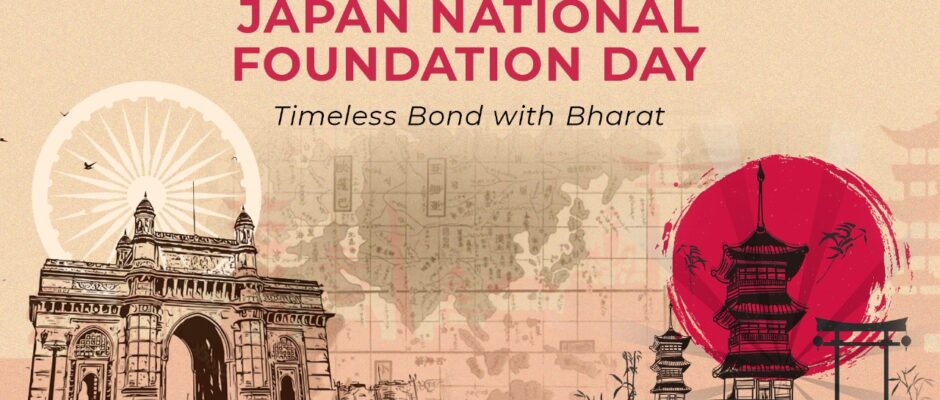
As Japan rings in its national foundation day, Bharat is on the curve joining this momentous occasion in shared values & principles of righteousness based on ‘dharma’. Rahul Pawa Across vast expanse of time and geography, few relationships between nations carry the depth and grace of one shared by Bharat (India) and Japan. Rooted in shared values, spiritual kinship and mutual admiration, this bond transcends transactional nature of alliances. Instead, it thrives on profound cultural, philosophical and historical ties that unite these two ancient civilizations. It is a connection that reflects the very essence of human harmony, a quiet testament to enduring power of shared ideals and aspirations. In rich history of human civilization, where threads of culture, faith and tradition intertwine, relationship between Bharat and Japan stand out as a masterpiece of enduring harmony and shared aspirations. This bond, etched into hearts of both nations, is not merely a product of modern diplomacy but connection spanning millennia. As Japan commemorates its National Foundation Day on February 11, celebrating ascension of Emperor Jimmu in 660 BCE and founding of the nation, it is an opportune moment to reflect upon rich and layered bond between these two great civilizations. In intricate cartography of Edo period, Japan placed India at centre of the world. Not out of geographical ignorance, but as a conscious act of reverence. Bharat—Tenjiku, as they called it—was more than a distant land; it was a spiritual homeland, birthplace of a philosophy that shaped Japan’s moral compass. For a nation that revered teachings of Buddha, India was not a foreign country but sacred extension of its identity. Long before ink of modern diplomacy touched parchment, flow of ideas between these two ancient civilizations had begun. When Indian monk Bodhisena arrived in Japan during eighth century, it was not a fleeting encounter but a moment of profound resonance. Invited to preside over consecration of the Great Buddha at Todai-ji Temple, he embodied the living bridge between two people united by in search for enlightenment. The ceremony, performed with sacred intent, symbolized more than the completion of a statue—it was consecration of a bond, a promise that these two cultures would remain intertwined. Maps of Edo period tell another story, quiet but potent. They show an India shaped not by geography but by imagination—a land of myths, wisdom and cosmic order. For Japan, steeped in Buddhist cosmology, India was not merely a place but metaphor for spiritual awakening. These maps, with their sprawling ovoid depictions of Tenjiku held India as axis of a world harmonized by Dharma. Such reverence is rare, even in annals of history. It speaks of a relationship not driven by conquest or commerce but by shared ideals and mutual awe. As tides of time shifted, threads of this bond remained unbroken. The rise of Zen Buddhism in Japan was deeply inspired by Indian Mahayana traditions transforming not just religious practice but essence of Japanese culture. The simplicity of Zen gardens, quiet grace of tea ceremony and meditative depth of haiku—all bear faint yet indelible imprint of India’s spiritual heritage. In turn, Japan’s refinement of these traditions added new dimensions to them, demonstrating unique capacity to absorb and elevate what it embraced. Culinary exchanges between Bharat and Japan are yet another testament to this quiet partnership. The artful simplicity of Japanese sushi finds an echo in intricate preparation of Indian thalis. The reverence for natural flavours in Japanese cuisine resonates with vegetarian traditions of India born from principles of ahimsa. Every shared meal, every borrowed recipe, is a silent acknowledgment of the kinship that transcends borders. The 20th century, with all its upheavals, tested this ancient bond but never weakened it. During India’s struggle for independence, figures like Fujii Guruji, founder of the Nippozan Myohoji Buddhist Order, stood in solidarity with India. His belief that the land of Buddha must be free to realize its spiritual destiny reflects depth of understanding between the two nations. Even as Japan pursued its own path of modernization, the connection to India remained alive, quietly influencing its worldview and aspirations. Today, the relationship between Bharat and Japan has evolved into a partnership of equals.  “Special Strategic and Global Partnership” is not a mere diplomatic phrase but continuation of an ancient dialogue. It is a collaboration born out of trust and shared values, manifesting in initiatives like Mumbai – Ahmedabad High – Speed Rail and Quad Alliance. These are not just projects or policies—they are modern expressions of an enduring friendship that began in monasteries and temples. Yet, essence of this bond lies not in its politics but in its people. Japanese tourists bow in reverence at Bodh Gaya, site of Buddha’s enlightenment, while Indian students embrace precision and innovation of Japanese education. The principle of Vasudhaiva Kutumbakam—the world as one family—and Kizuna—bonds of friendship—find living expression in these interactions. They remind us that this is not a relationship of convenience but one of conviction. As Japan celebrates its National Foundation Day, it is a moment to reflect on the legacy of this bond. February 11, marking ascension of Emperor Jimmu, symbolizes beginning of a journey, not just for Japan but for a relationship that has stood test of time. It is a day to honour ideals that have united Bharat and Japan: pursuit of harmony, reverence for tradition, and unyielding belief in a better tomorrow. This is not just a tale of two nations—it is a story of two spirits, kindred and enduring. As the cherry blossoms bloom in Japan and sacred rivers flow in Bharat, they carry with them whispers of an ancient friendship, timeless and unbroken. (Author is Research Director at Centre for Integrated and Holistic Studies, New Delhi based non-partisan think-tank)

Read More
What Deepseek's CCP Bias Means for the Future of AI Governance

What Deepseek’s CCP Bias Means for the Future of AI Governance

Battle for AI supremacy is not just about who builds the best models, but who controls the narratives these models generate. Rahul Pawa The rise of DeepSeek AI has sent tremors through the global technology landscape. A Chinese AI startup, born from the mind of a hedge fund magnate, has not only introduced an artificial intelligence model that rivals Silicon Valley’s best but also inadvertently exposed the geopolitical and ideological rifts within the AI industry. While DeepSeek’s technological advancements have been lauded for efficiency and cost-effectiveness, its apparent ideological leanings toward the Chinese Communist Party (CCP) have ignited a deeper conversation about bias, control, and the shifting balance of power in AI development. The global financial markets were caught off guard when DeepSeek unveiled its latest AI model, R1. Developed with a fraction of the resources used by US tech giants, R1 proved that Chinese firms could innovate despite severe restrictions on access to high-end hardware. Wall Street responded violently—Nvidia, Alphabet, and Microsoft collectively lost over $1 trillion in market value in a single day. This moment has been described as a new ‘Sputnik moment,’ signalling China’s growing self-reliance in AI research and its ability to leapfrog Western competitors through ingenuity rather than brute computational force. DeepSeek’s rise was achieved not through endless scaling of large language models, as pursued by OpenAI and Google, but through optimising AI architecture with limited resources. This feat highlights the possibility that Western AI development has grown inefficient, reliant on excessive funding and compute power rather than fundamental innovation. However, this technological marvel comes with a less celebrated feature—ideological constraints embedded within its responses. Investigations into DeepSeek’s chatbot functionality revealed a concerning trend: its responses consistently aligned with the official narratives of the CCP. Unlike ChatGPT, which provides balanced perspectives, DeepSeek outright refuses to answer politically sensitive questions, including those about the Tiananmen Square massacre, Falun Gong, and human rights violations in Xinjiang. In some cases, it actively defends CPC’s position, asserting that allegations of intellectual property theft and repression are unfounded. This raises critical ethical and legal questions about AI governance. If an AI system is designed to omit or distort information to align with a state’s interests, can it still be considered a neutral technology? More importantly, how should democratic societies respond when AI models are weaponised for ideological influence? DeepSeek’s success forces us to reconsider the very nature of AI development. Historically, the West has popularised AI as an apolitical, objective tool—an assumption now challenged by China’s entry into the field with explicitly communist undertones. The strategic implications are profound: AI is no longer just a competition of technological prowess but a contest over narrative control. The fact that DeepSeek has quickly become one of the most downloaded AI applications in the United States further complicates matters. With AI-powered chatbots increasingly serving as sources of information, what happens when the most sophisticated tools are programmed with government-approved biases? The digital information ecosystem, already fragile due to misinformation and deepfake technology, could face an unprecedented crisis where AI itself becomes a propagandist. Western nations have been slow to recognise the extent of AI’s role in shaping global ideological conflicts. While concerns over AI ethics have largely centred on bias within Western frameworks—such as racial or gender discrimination—DeepSeek highlights a different challenge: the embedding of nationalistic narratives into AI. This raises a crucial regulatory question: should democratic governments intervene when foreign AI models propagate state-driven narratives? If so, how can they do so without infringing on free speech or overstepping into technological protectionism? The European Union’s AI Act and the US government’s AI Executive Order have addressed transparency and accountability in AI but are ill-equipped to counter foreign influence through AI-driven information control. As DeepSeek’s influence grows, it is clear that AI is no longer just a technological arms race but a front in the broader geopolitical struggle between open and authoritarian systems. If AI models like DeepSeek can be moulded to serve CCP interests, the world must prepare for a future where AI-driven narratives shape global public opinion in unseen and insidious ways. DeepSeek may have begun as an experiment in maximising AI efficiency, but its real impact lies in its demonstration of AI’s potential as a ideological tool. The battle for AI supremacy is not just about who builds the best models, but who controls the narratives these models generate. In this light, DeepSeek’s emergence is not merely an economic disruption—it is an ideological challenge to the very foundations of the global AI industry. (Author is Research Director at Centre for Integrated and Holistic Studies, New Delhi based non-partisan think-tank)
Read More
The Case Against Tahawwur Hussain Rana

The Case Against Tahawwur Hussain Rana

Rahul Pawa Mumbai terrorist attacks, carried out between November 26 and 29, 2008, targeted prominent locations, including the Taj Mahal Palace Hotel, Chhatrapati Shivaji Maharaj Terminus, and Nariman House. The attacks exposed the Pakistan Army’s use of asymmetrical warfare through terrorism and sparked international outrage. The United Nations-proscribed Pakistan-based terror organization Lashkar-e-Taiba orchestrated the assault, utilising reconnaissance conducted by David Coleman Headley, a Pakistani origin American terrorist and agent. Headley’s work was supported by Tahawwur Hussain Rana, who used his immigration consultancy as a front for surveillance activities. Rana, a former officer in the Pakistani Army, fled to the United States after deserting his post and later established an immigration consultancy in Chicago. Rana and David Coleman Headley, whose birth name is Daood Gilani, were childhood friends. This longstanding relationship formed the foundation of their collaboration in Lashkar-e-Taiba’s operations. Headley, an American citizen who became a radicalised terrorist, leveraged Rana’s connections with the Pakistan Army and its spy agency, Inter-Services Intelligence (ISI), to carry out reconnaissance missions in Mumbai. Headley’s dual role as an informer and an operative added complexity to the case. Rana, a Canadian citizen, was implicated as a facilitator who allowed Headley to use his immigration consultancy business as a front to secure visas and establish a cover in Mumbai. This association positioned both individuals as key conspirators—Rana as a Canadian terrorist and Headley as an American terrorist—in one of the most devastating attacks in modern Indian history. In 2011, Rana was tried in the United States District Court for the Northern District of Illinois on charges of conspiracy to provide material support to terrorism in India and a terror plot in Denmark and providing material support to a Pakistan based designated terrorist organization, Lashkar-e-Taiba. The jury acquitted him of charges related to the Mumbai attacks but convicted him on charges concerning the Denmark plot and material support to Lashkar-e-Taiba. Rana was sentenced to 14 years in prison, serving seven years before being granted compassionate release during the COVID-19 pandemic. India’s push for Rana escalated in December 2019 when it submitted a diplomatic note to the United States seeking his extradition. The charges outlined included conspiracy to wage war, commit murder, and carry out terrorist acts, alongside forgery and using falsified documents—offenses under India’s Penal Code and the Unlawful Activities (Prevention) Act. On May 16, 2023, a U.S. magistrate judge certified Rana’s extradition, rejecting his arguments under the Non Bis in Idem principle (double jeopardy) and affirming probable cause. Central to Rana’s defense was the claim that his extradition violated Article 6 of the 1997 U.S.-India Extradition Treaty. The principle prohibits extradition if the individual has been convicted or acquitted in the requested state for the same offence. Rana’s defense argued that the Indian charges overlapped with those addressed in his U.S. trial. However, the U.S. courts adopted an “elements-based” approach, analysing whether the legal elements of the Indian charges differed from those tried in the U.S. The Ninth Circuit emphasised the distinction between “offence” and “acts,” concluding that India’s charges involved unique elements, such as forgery related to the Reserve Bank of India application, which were not addressed in the U.S. proceedings. This interpretation aligned with prior jurisprudence, including Zhenli Ye Gon v. Holt, which distinguished between conduct and elements of a crime under treaty law. While India’s extradition request relied heavily on the testimony of David Headley, a self-confessed operative of Lashkar-e-Taiba. Rana’s defense attacked Headley’s credibility, citing his criminal background, ties to Pakistan’s ISI, and alleged manipulative tendencies. Nonetheless, the courts adhered to the limited scope of habeas corpus review in extradition cases, focusing solely on whether there was “any competent evidence” to support probable cause. The Ninth Circuit ruled that Headley’s testimony, corroborated by documentary evidence, met the requisite standard. On January 21, 2025, the U.S. Supreme Court dismissed Rana’s petition for a writ of certiorari, marking the end of his legal battle against extradition. The denial upheld lower court rulings and reinforced the interpretation of the extradition treaty. U.S. Solicitor General Elizabeth Prelogar’s arguments played a pivotal role, highlighting that not all conduct underlying India’s charges was addressed in the U.S. trial, such as forgery-related offenses. For survivors and families of the 26/11 victims, Rana’s extradition symbolises a step toward justice. The attacks remain etched in India’s collective memory, and prosecuting those responsible—regardless of nationality—affirms the principle that terrorism knows no borders. Rana’s extradition also underscores the role of diplomacy in resolving complex legal cases. The US administration’s backing of India’s request reflects broader strategic ties between the two nations. Such cooperation sets a precedent for future extraditions in cases of global significance. The case against Tahawwur Hussain Rana exemplifies the interplay of law, geopolitics, and counter-terrorism. It highlights the challenges of prosecuting transnational crimes while adhering to principles of justice and treaty law. By affirming Rana’s extradition, the U.S. judiciary has reinforced the efficacy of extradition treaties as tools of international law, signalling that perpetrators of terrorism will face accountability, irrespective of borders. The case also serves as a poignant reminder of the enduring impact of the Pakistan Army and ISI backed Mumbai attacks and the global commitment required to combat terrorism, especially emanating from Pakistan. (Author is Research Director at Centre for Integrated and Holistic Studies, New Delhi based non-partisan think-tank)
Read More
Beijing’s Silent Cyber Siege on America

Beijing’s Silent Cyber Siege on America

Throughout 2024, Chinese state-sponsored hacker groups like Volt Typhoon and Salt Typhoon orchestrated a series of cyber offensives, targeting everything from U.S. telecommunications to Guam’s critical infrastructure. Rahul Pawa On a December morning in 2024, a silent invasion unfolded—unseen, unheard, yet profoundly destabilising. The U.S. Treasury Department, the nerve center of American economic power, fell victim to a meticulously planned cyberattack attributed to the Chinese Communist Party (CCP). This was no ordinary breach. It was a calculated strike targeting the Office of Foreign Assets Control (OFAC) and the Office of the Treasury Secretary—both critical enforcers of sanctions against Chinese entities embroiled in cyber operations and arms deals with Russia. As the sun rose over Washington, D.C., officials scrambled to assess the damage. Anne Neuberger, the U.S. Deputy National Security Advisor for Cyber and Emerging Technologies, stood before the press, her tone somber but resolute. “This was not just espionage. This is part of a broader strategy to undermine our critical infrastructure and economic sovereignty,” she declared. Behind her words lay months of escalating cyber conflict, a crescendo that had been building since the CCP’s hybrid tactics first gained traction. The December breach was merely the tip of the iceberg. Throughout 2024, Chinese state-sponsored hacker groups like Volt Typhoon and Salt Typhoon orchestrated a series of cyber offensives, targeting everything from U.S. telecommunications to Guam’s critical infrastructure. Volt Typhoon, dismantled in January, had covertly commandeered hundreds of routers across the United States, laying the groundwork for attacks on water treatment facilities, electrical grids, and transportation systems. Meanwhile, Salt Typhoon focused on high-profile targets, infiltrating devices used by key political figures, including Donald Trump and his running mate, Senator J.D. Vance. Salt Typhoon’s activities, described by Neuberger as “an unparalleled espionage operation,” breached nine major U.S. telecom providers, stealing sensitive data and leaving behind dormant malware—a ticking time bomb designed to cripple American defences at a critical juncture. “This is not about immediate damage,” explained Rob Joyce, the National Security Agency’s cybersecurity director. “It’s a long game—preparing to paralyse us when we’re most vulnerable, perhaps during a conflict over Taiwan.” While the United States grapples with the looming specter of a cyber Armageddon, Taiwan stands as the front line of Beijing’s digital onslaught. In 2024, Taiwan’s National Security Bureau reported an average of 2.4 million cyberattacks daily, a staggering escalation from the 1.2 million daily incidents the previous year. These attacks targeted military systems, government networks, and critical infrastructure, all under the shadow of Taiwan’s January elections. Beijing’s strategy is clear: to undermine Taiwan’s democratic process and weaken its defences ahead of a potential invasion. The CCP’s disinformation campaigns, deployed in tandem with cyberattacks, sought to erode trust in Taiwan’s institutions. Yet, as Taiwanese President Tsai Ing-wen reaffirmed her nation’s commitment to sovereignty, the island’s resilience became a rallying cry for democracies worldwide. Compounding the threat is China’s deepening partnership with Russia in cyber and information operations. Ukrainian intelligence reports from 2022 revealed CCP-linked spyware embedded in over 600 Ukrainian defense ministry websites—an ominous precursor to Moscow’s invasion. By 2024, this synergy had expanded to include the exchange of malware and tactics, raising alarms in Washington about the potential for coordinated cyberattacks on the U.S. homeland. “Imagine a cyber Pearl Harbor, but orchestrated by two of our greatest adversaries,” warned Senator Mark Warner, Chair of the Senate Intelligence Committee. His words echoed the growing fears in Washington: that Beijing and Moscow’s digital axis could escalate from sabotage to all-out cyber warfare. The battle isn’t confined to cyberspace. In January 2024, Taiwan’s northern coast faced an economic lifeline’s severance when the Shunxin 39, a vessel with ties to Hong Kong-based Chinese interests, allegedly damaged a vital undersea telecom cable. Weeks later, the Yi Peng 3, a Chinese-flagged vessel, severed cables in the Baltic Sea, raising suspicions of deliberate sabotage. Beijing denies these incidents are acts of war, dismissing them as accidents. However, the frequency and precision of these events suggest otherwise. For Taiwan, already reeling from cyberattacks, these disruptions are a chilling reminder of its vulnerability. As the CCP’s cyber arsenal grows, the United States finds itself in an uncomfortable reality: unprepared for the scale and sophistication of Beijing’s hybrid tactics. The December Treasury hack, focused on intelligence gathering, underscores the need for a robust cyber defense strategy. OFAC, a linchpin in the U.S. sanctions regime, had sanctioned multiple Chinese firms in 2024 for their role in supplying arms to Russia and conducting cyberattacks. By breaching OFAC, Beijing sought to anticipate and counter future sanctions. The broader implications are stark. Guam, home to vital U.S. military installations, has emerged as a prime target. The island’s infrastructure was repeatedly probed in 2024, likely as a rehearsal for disrupting American operations in the Pacific. “Guam is the canary in the coal mine,” Joyce remarked. “If we can’t protect it, how can we hope to defend Taiwan?” As President-elect Trump, takes office, he has vowed to “bring the fight to Beijing.” Yet, the path forward is fraught with challenges. Building a resilient cyber defense infrastructure, forging alliances, and holding adversaries accountable will require a Herculean effort. The Treasury breach is a sobering reminder of what’s at stake. It’s not just about stolen data or disrupted systems; it’s about the erosion of trust in institutions, the weakening of defences, and the existential threat to democratic governance. As Anne Neuberger aptly put it, “Cybersecurity isn’t just a technical issue—it’s a national security imperative. And in this battle, complacency is not an option.” (Author is Research Director at Centre for Integrated and Holistic Studies, New Delhi based non-partisan think-tank)
Read More
Islamophobia, Free Speech, and Bharat's Inclusive Approach

Islamophobia, Free Speech, and Bharat’s Inclusive Approach

As the UK continues to grapple with the complex intersection of Islamophobia, grooming gangs, and free speech, it must also decide if it is ready to confront all forms of religious intolerance including Hinduphobia with equal urgency. Rahul PAWA In recent political discourse, the question of how to define and tackle Islamophobia has gained increasing prominence in the UK. The Labour Party, led by Prime Minister Sir Keir Starmer and Deputy Prime Minister Angela Rayner, is currently considering the adoption of a formal definition of Islamophobia. While some support this move, arguing it is crucial to safeguard Muslim communities, others raise concerns about its potential consequences—particularly for free speech. These critics warn that such a definition, much like the one introduced for anti-Semitism in 2016 under Theresa May’s government, could ultimately be used to suppress critical discussion of Islam. The term “Islamophobia” itself is still under intense scrutiny. Defined by the All Party Parliamentary Group (APPG) on British Muslims in 2018 as a form of racism targeting expressions of “Muslimness or perceived Muslimness,” it has been applied to a wide range of events and behaviors. However, the ambiguity of this definition—along with its evolving use—raises critical questions. Is Islamophobia truly a “phobia,” a fear of the religion or its adherents, or is it a term that encompasses prejudice and cultural conflicts that extend beyond mere fear? This issue has come to the forefront at a particularly delicate time in the UK, as broader social issues surrounding cultural and religious tensions also take center stage. For instance, the rise of discussions about the country’s grooming gang scandals—particularly in Rotherham, Rochdale, and Oxford—has created a political and social backdrop that adds complexity to the Islamophobia debate. The grooming gang issue in the UK, which involved men of Pakistani Muslim exploiting young girls, has raised uncomfortable questions about how communities of different faiths and cultures integrate into British society. The gangs operated across multiple towns, with the Rotherham case alone documenting over 1,400 girls who were victims of systematic abuse spanning 16 years. Public inquiries like the Jay Report and Operation Stovewood have exposed deep institutional failures to address the scale of the abuse, with accusations that political correctness and fear of being labeled racist or Islamophobic allowed the issue to fester unchallenged. The cultural aspect of these crimes—many of the perpetrators being from Muslim backgrounds—has been largely avoided in public discourse. Politicians, law enforcement officials, and even journalists have often been reluctant to address the role that certain cultural practices and religious ideologies may play in such crimes, due to the fear of being accused of Islamophobia. The reluctance to openly discuss the perpetrators backgrounds adds another layer of difficulty to the issue, as it becomes wrapped up in the broader question of how to engage with a community that feels increasingly marginalised yet protected by a label as politically charged as “Islamophobia.” In this environment, debate over defining Islamophobia becomes especially crucial. Critics of a formal definition argue that such a measure could turn into a legal or cultural “blasphemy law,” limiting the ability to critique Islam, its teachings, and its influence on certain practices—especially in the case of controversial issues like the grooming gang scandal. The term “Islamophobia” is now widely used to describe various forms of anti-Muslim hostility, but its scope remains an issue of intense debate. While some argue that the term is necessary to combat rising hostility toward Muslims, others caution that it has been applied too broadly. At present, the term can encompass everything from hate crimes to political disagreements, creating a situation where almost any criticism of Islamic practices could potentially be deemed Islamophobic. Books like Islamophobia by Chris Allen and Islamophobia: The Challenge of Pluralism in the 21st Century edited by John L. Esposito have delved into these issues, examining the phenomenon from various perspectives, including its ideological, political, and historical roots. However, even these texts struggle to create justify a definition, often acknowledging the vagueness that exists in how the term is applied. For example, not every rejection of a mosque-building permit is necessarily an act of anti-Muslim discrimination. Similarly, critiques of Muslim culture, or the religion itself, should not automatically be seen as manifestations of Islamophobia. Yet, without clear boundaries, the term runs the risk of being misused to stifle debate, particularly when such discussions intersect with sensitive topics like radicalisation, terrorism, and immigration. In this context, India’s call for a broader, more inclusive understanding of understanding and tolerance, guided by its timeless principle of Vasudeva Kutumbakam—the world is one family—has become increasingly relevant. At the United Nations in March 2024, India’s Permanent Representative, Ruchira Kamboj, made a strong case for recognising that religious phobias extend beyond the Abrahamic faiths. While the global conversation often focuses on Islamophobia, India pointed out that followers of non-Abrahamic religions, such as Hindus, Buddhists, and Sikhs often a target of hinduphobia having also faced significant religious intolerance, which has been largely overlooked by international bodies. Kamboj’s remarks are particularly poignant as global religious intolerance continues to rise. In countries like the UK, USA, Canada, Bangladesh Australia and Sri Lanka, attacks on Hindu temples, Sikh Gurdwaras, and Buddhist monasteries are on the rise. Yet these forms of religious phobia receive far less attention than anti-Muslim prejudice. By advocating for a more inclusive definition of religious intolerance, India is challenging the world to recognise the realities of all religious minorities, not just those from the Abrahamic faiths. As the debate over Islamophobia continues to evolve, world faces a complex challenge: how to balance the protection of communities from hate, while preserving the right to free speech. By broadening the definition of religious phobias, India is not merely adding a voice to the debate—it is issuing a challenge to the global community to act more inclusively. If the international community is serious about combating hate and discrimination, it must not ignore any form of religious persecution, whether it targets Jews, Muslims, Hindus, Sikhs, or Buddhists or others. As

Read More
Liberal’sBuried Trudeau, Not the Damage

Liberal’s Buried Trudeau, Not the Damage

Resignation of Justin Trudeau is not a graceful exit—it is a desperate attempt to escape the consequences of a decade of disastrous leadership. Rahul Pawa As Canadian Prime Minister Justin Trudeau stepped onto the podium to announce his resignation after nearly a decade in power, the cameras caught a glare of watery eyes—a fleeting moment that offered no apologies, no remorse, and no acknowledgement of the catastrophic failures he was leaving behind. His tearful speech was a performance, a calculated exit designed to mask the truth behind a legacy that has shredded Canada’s reputation both domestically and internationally. “I cannot be the leader during the next elections due to internal battles,” he said, yet there was no hint of regret for the chaos he and his party have wrought. His resignation, far from an act of accountability, is simply a way to fade into the background, as if stepping down could erase the damage done. But as Trudeau walks away from the throne, the real problem lies not in his departure but in the Liberal Party’s utter refusal to reckon with the devastation they have caused. The elephant in the room is clear: the Liberal Party, under Trudeau’s disastrous reign, has become a hollow shell of its former self, a party more concerned with its own survival than with the well-being of the Canadian people. The Liberal Party of Canada has spent years falsely posing as a beacon of progressive ideals. Under Trudeau, it was supposed to be a force for environmental change, social justice, and economic fairness. Yet, when the time came to translate those ideals into action, the party faltered. Trudeau’s policies, which were supposed to lift the country into a new era of prosperity, have instead driven Canada into a downward spiral of economic instability, housing crises, and soaring crime rates. Housing costs, the centrepiece of Trudeau’s promise to help Canadians, have become an albatross around the neck of the average citizen. While the political elite continues to live in insulated luxury, Canadians from coast to coast are locked out of the housing market, watching as their dreams of homeownership slip further away. Meanwhile, Trudeau’s carbon tax, hailed as a key part of his green agenda, has burdened struggling families with ever-higher costs for basic necessities. It has done little for the environment but has stifled the very people it was supposed to help. And as if that weren’t enough, Trudeau’s spending spree—marked by reckless debt accumulation—has left the Canadian economy on the brink of collapse. Yet through all this, the Liberal Party has refused to change course. Trudeau may leave, but his party’s deep-rooted dysfunction will remain. The party’s ideological straitjacket has made it impossible to acknowledge the need for real, pragmatic solutions. Instead, they have chosen to push their mistakes under the rug and hope Canadians forget the damage done. The resignation of Justin Trudeau is not a graceful exit—it is a desperate attempt to escape the consequences of a decade of disastrous leadership. His tearful farewell, devoid of genuine apology or contrition, speaks volumes about his political character. Rather than confront the failure of his policies, Trudeau has chosen to flee the battlefield, hoping that his departure will allow his legacy to fade quietly into the background. But the truth is that Trudeau’s departure will not erase the toxic trail he leaves behind. His time in office has left a stain on Canada’s international standing, one that cannot be wiped away with a mere exit speech. His foreign policy blunders have not only alienated key allies but have also severely damaged Canada’s reputation on the global stage. Trudeau’s inexplicable support for the Khalistani separatist movement, while simultaneously attempting to maintain diplomatic relations with India, is a case study in political incoherence. His actions have only served to deepen the rift between Canada and one of its most important international partners. The rupture in relations with India—fueled by Trudeau’s stubbornness and failure to act in Canada’s best interest—has been compounded by growing tensions with Saudi Arabia, a key player in global oil markets. Under Trudeau, Canada has become a diplomatic pariah, a country whose foreign policy is marked more by ideological posturing than by strategic thought. But Trudeau’s biggest political failure lies not in foreign relations but in his alliance with Jagmeet Singh and the NDP. This unholy pact has enabled Trudeau to push through policies that have driven Canada to the brink—policies that have prioritised the whims of the ideological left over the real needs of Canadian citizens. The NDP’s support of the carbon tax, among other misguided policies, has left the working class reeling, unable to make ends meet as they grapple with rising costs and stagnant wages. As Trudeau steps aside, the Liberal Party is left in a state of disarray. The leadership contest to replace him is less about rebuilding Canada and more about securing the political future of those who helped drive the country into chaos. The race for the leadership is nothing more than a power struggle between those who have spent years enabling Trudeau’s disastrous policies. Rather than a moment of reckoning, the leadership contest is just another attempt to sweep the party’s failings under the rug. The internal divisions within the Liberal Party are apparent for all to see. Instead of focusing on the issues that matter to Canadians—housing, crime, inflation—the party’s leadership contenders are preoccupied with securing their own fiefdoms. They continue to act as if the Canadian people will forget the damage done by Trudeau and his party. But the electorate is not so easily fooled. Trudeau’s carbon tax, far from being the green panacea he promised, has turned into a political and economic disaster. While Trudeau touted the tax as a means to reduce emissions and combat climate change, the reality has been far different. For most Canadians, the carbon tax has meant nothing but higher prices at the gas pump and skyrocketing grocery bills. Yet Trudeau’s party, unwilling to admit fault, continues

Read More
How Paranoia Fuels Extremism in the West

How Paranoia Fuels Extremism in the West

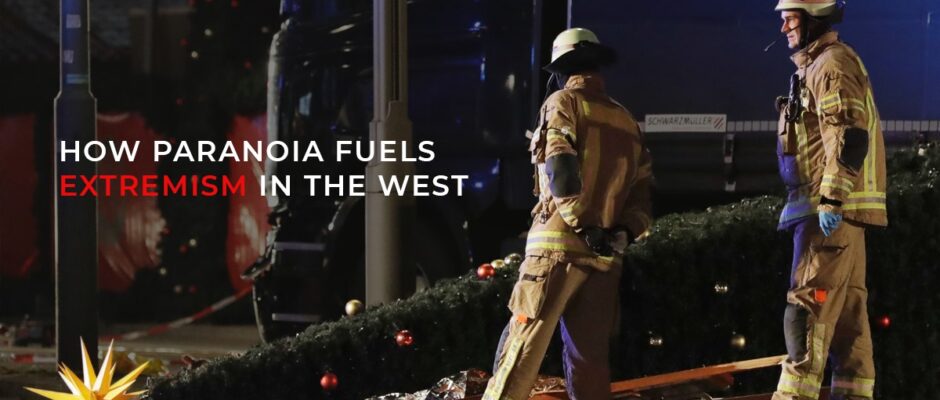
Political leaders, irrespective of alignment, must reject zero-sum polarisation in favour of constructive engagement. Rahul Pawa In contemporary politics, the dichotomy of so-called “left” and so-called “right” often feels antiquated, especially in today’s age where these terms trace their origins to ancient seating arrangements in the French Estates-General. Yet, this outdated framework persists, weaponised to sow division and fuel hysteria. A particularly troubling trend is how the so-called left amplifies fears of right-wing to stoke paranoia, demonise opposition, and justify authoritarian measures. This approach had often skewed public perception, contributed to polarisation and even incited extremist acts. Case studies from United States, France, United Kingdom and other European nations highlight how this phenomenon unfolded with devastating outcomes. Recently held US elections offered a stark example. In the lead-up, left-leaning media and political figures frequently portrayed right-wing factions as existential threats to democracy. After Supreme Court’s controversial decision on gun control and abortion, fear-mongering narratives accused conservative groups of orchestrating a “rollback of rights.” Protests turned violent in some cities with activists attacking federal buildings and clashing with law enforcement. Demonising right-wing ideological thought extended beyond policy critiques, painting all conservatives as complicit in fostering extremism. This framing ignored nuances of political diversity and fueled retaliatory violence such as targeting of conservative candidates campaign offices in swing states. In France, narrative weaponisation during 2022 presidential elections against Marine Le Pen and National Rally party is illustrative. Left-leaning factions likened Le Pen’s platform to resurgence of France’s Vichy-era authoritarianism framing her as threat to democratic values. Media narratives blamed her rhetoric for purported rise in hate crimes, despite scant evidence linking her supporters to such incidents. Simultaneously, left-wing protests turned violent, targeting police and municipal buildings in urban centres like Paris and Marseille. The overlooked irony is that these violent outbursts mirrored extremism that left purportedly opposed. In United Kingdom, post-Brexit era saw left campaigners amplifying fears of xenophobia and regressive nationalism. Following murder of Labour Member of Parliament, Jo Cox in 2016, left-leaning media individuals and outlets portrayed Brexit movement as intrinsically tied to hate and division. This framing extended into parliamentary debates where MPs opposed to Brexit were hailed as defenders of democracy against imagined and cooked up right-wing threats. The left’s relentless focus on demonising the rightist values and ideas overshadowed legitimate policy debates on sovereignty and economic strategy. This polarisation contributed to incidents like violent altercations outside polling stations during 2019 general elections. Germany’s 2019 Halle synagogue attack became another flashpoint for left leaning strategists pointed to what they peddled as rising right-wing extremism to be dominant security threat. While this attack was a serious incident of antisemitic violence, narrative focus eclipsed broader challenge posed by jihadist terror. For instance, 2016 Berlin Christmas market attack where 12 lost lives and injured dozens, underscored the enduring threat of Islamist extremism. Yet, narratives from left-leaning factions consistently prioritised framing right formations as more of immediate danger. This may be part of a design to gloss over Islamist-linked plots and incidents that represented significant public safety risks. Across Europe, similar dynamics have unfolded. In Sweden, immigration debates have been marred by accusations of xenophobia directed at right-wing parties, stifling substantive discussions on integration and crime. Giorgia Meloni’s leadership of Brothers of Italy party was met with relentless attempts to associate her with fascist ideologies. Such narratives not only polarised electorates but also led to erosion of public trust in democratic institutions. By framing right wing formations as omnipresent threat, left not only fueled cycles of insecurity and reactionary extremism but also covered up their own irrelevance. Consequences of weaponising paranoia are far-reaching. Left groupings of every shade and variety have by design in fact exacerbated polarisation, radicalisation of individuals on both ends of the spectrum and undermined societal cohesion. Cyclical nature of this rhetoric—where fear of the right justifies retaliatory measures—perpetuates violence and distracts from addressing genuine threats. For instance, 2023 French riots following a police shooting were framed by left-leaning media as response to systemic racism and right wing policies. This framing overshadowed law enforcement’s perspective and criminal elements involved in unrest further polarising public opinion. To mitigate destructive impact of these narratives, a commitment to nuanced, fact-based discourse is essential. Media outlets may have to prioritize accuracy over sensationalism ensuring balanced reporting that reflects complexity of security challenges. Civic education initiatives should empower citizens to critically evaluate political rhetoric, fostering resilience against manipulation. Political leaders, irrespective of alignment, must reject zero-sum polarisation in favour of constructive engagement. Left campaigners weaponisation of fear highlights a troubling trend in present day politics. By demonising right political parties, individuals and groups what’s being done is to amplify paranoia and exacerbate cycles of extremism, undermining the democratic fabric of society. Case studies from United States, France, United Kingdom and beyond reveal dangers of such narratives underscoring urgent need for evidence-based engagement and mutual respect. In an era where simplistic labels fail to capture political realities, societies must transcend outdated binaries and recommit to principles of objectivity, transparency and fairness. (Author is Research Director at Centre for Integrated and Holistic Studies, New Delhi based non-partisan think-tank) (Author is Research Director at Centre for Integrated and Holistic Studies, New Delhi based non-partisan think-tank)
Read More
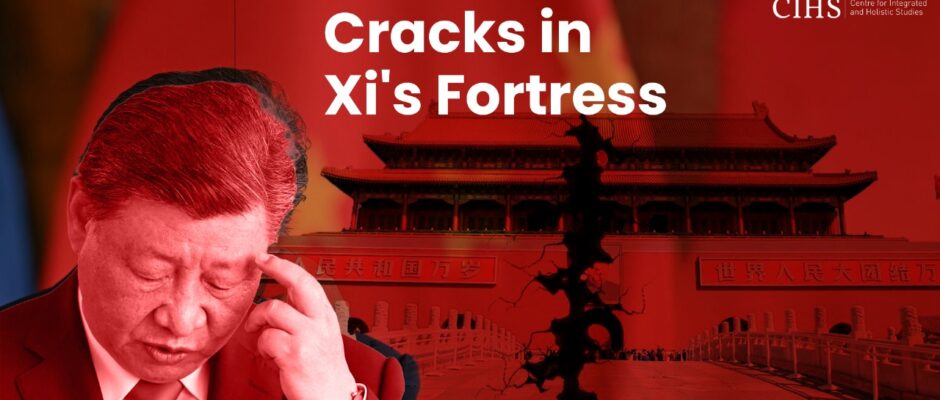
Cracks in Xi's Fortress

Cracks in Xi’s Fortress

CCP inability and intolerance to resolve people’s grievances, economic woes, joblessness led to rise in number of “Zhang Xianzhong” attacks. Rahul Pawa China in 2024 has seen a startling surge in violent attacks on civilians, with over 20 incidents leaving more than 90 people dead and scores injured. These incidents, often described as “Zhang Xianzhong” attacks or “revenge on society” attacks expose deep societal fractures and challenging the image of stability and control that Xi Jinping’s leadership has meticulously cultivated. The attacks which included car-ramming and mass stabbings reflect a dangerous cocktail of economic despair, social grievances and a government increasingly out of touch with people’s issues. Last month, a 62-year-old man drove an SUV into crowds in Zhuhai, Guangdong Province that led to killing 35 and injuring 43. His motive, reportedly rooted in bitterness over a divorce settlement was a stark reminder of how personal grievances in today’s China are escalating into public tragedies. President Xi, in an uncharacteristically direct response, urged local authorities to “draw lessons” from the case and strengthen prevention measures. Yet, this rare acknowledgment of failure only highlighted limits of Chinese Communist Party’s (CCP) ability to control a society increasingly defined by tensions and resentment. These attacks are not anomalies. In 2024 alone, incidents like a stabbing spree in Wuxi that left eight dead, a car-ramming attack in Changsha that killed eight and at least ten school attacks have painted grim picture of a nation under siege from within. While Beijing’s strict censorship obscures much of the data, social media tallies and local reports suggest that the frequency and lethality of these events are on rise. Schools, once considered safe havens, have become frequent targets with attacks mirroring a wave of school violence last seen in 2010. Then, six schools were attacked in quick succession, killing over 15 children. Today’s resurgence of similar violence points to unresolved structural issues that have only deepened under Xi’s rule. Chinese netizens navigating state’s ever-present censorship have adopted the term “Zhang Xianzhong” to describe these attacks. The phrase refers to 17th-century rebel whose campaigns of mass killing were seen as acts of revenge on society. While officials quickly scrub mentions of the term online, its persistence reflects an undercurrent of fear and frustration among citizens. The attackers largely armed with knives or vehicles due to strict gun control laws often cite grievances ranging from economic hardships to personal injustices. Analysts believe these attacks are symptomatic of an eroding social contract in China where economic slowdown, unemployment and widening inequalities have left millions disillusioned. Economic despair is perhaps the most potent driver of this unrest. China’s post-COVID recovery has been sluggish with youth unemployment exceeding 20 per cent and small businesses closing at an alarming rate. The once-thriving property market has collapsed, household debt is mounting and local governments are grappling with financial insolvency. These pressures are not limited to economic woes; they are deeply personal, affecting livelihoods, aspirations and social cohesion. Promise of prosperity that once underpinned CCP’s legitimacy is faltering and with it, the trust of a society that had largely bought into Xi’s vision of a “Chinese Dream.” Making matters worse is CCP’s shrinking tolerance for dissent. The longstanding system of petitioning where citizens could formally lodge grievances with government has been effectively gutted. Local officials, fearing repercussions for their regions’ perceived instability, now block petitioners from reaching Beijing or dismiss complaints altogether. A 2022 regulatory revision further centralized complaint resolution at the local level, creating a perverse incentive for officials to suppress grievances rather than resolve them. For many citizens, this has closed one of the last remaining avenues for seeking justice in an increasingly opaque and authoritarian state. In such a climate, acts of violence become not just crimes but desperate expressions of discontent. They are, as one netizen put it before their post was censored, “the sound of a society breaking apart.” The CCP, ever wary of its image, has responded by doubling down on surveillance and control. Local governments are now tasked with identifying “high-risk” individuals—those categorized under what the state calls the “four nothings” (no spouse, no children, no income, no assets) and the “five losses” (financial, relational, social, mental or other critical stressors). In Zhuhai, this framework was deployed following the deadly vehicle attack, with authorities instructed to proactively monitor and intervene in lives of these vulnerable groups. While these measures may offer short-term reductions in violence, they do little to address root causes of societal discontent. Instead, they risk further alienating a population already weary of state overreach. Critics warn that treating citizens as potential threats rather than partners in governance will only deepen the divide between people and state. Moreover, China’s increasingly invasive surveillance apparatus, though technologically sophisticated, is ill-equipped to tackle complex, deeply human factors driving these attacks. Xi Jinping’s leadership is at a precarious crossroads. For years, he has positioned himself as China’s most powerful leader since Mao Zedong, centralizing authority and eliminating dissent within the party. But the events of 2024 have exposed vulnerabilities in his governance model. The rise in violent attacks, coupled with economic stagnation and growing public frustration is eroding the very foundation of his rule. Internationally, these issues are undermining Xi’s efforts to portray China as a stable and orderly superpower. The targeting of foreigners in some attacks has added another layer of complexity. In September, a ten year old Japanese boy was fatally stabbed near a school in Shenzhen, an incident followed by similar attacks on Japanese nationals in other cities. While Beijing has labeled these as isolated acts, they point to a growing strain of xenophobia and anti-foreigner sentiment under Xi’s rule. This ethno-nationalism, once a tool for consolidating domestic support, is now proving to be a double-edged sword, damaging China’s global reputation and risking diplomatic fallout. As 2024 draws to a close, CCP is scrambling to project an image of control. Xi’s speeches emphasize stability, his officials announce plans to address grievances and state media highlight the supposed

Read More
Trump Trumps Harris to White House!

Trump Trumps Harris to White House!

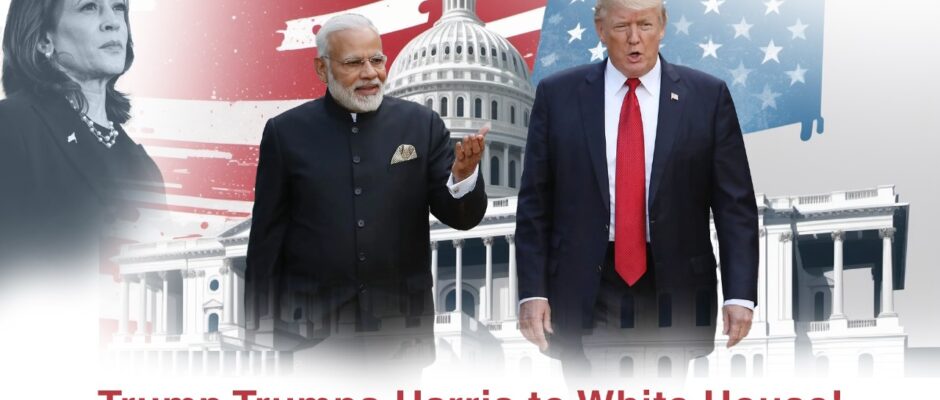
Choices made at this critical juncture will undoubtedly shape future of US and Bharat, global order. World watches with keen interest as these two powerful democracies cruise ahead. Rahul Pawa In a stunning political slugfest marked by fervent debates and impassioned rallies, Donald Trump emerged victorious in United States presidential election reclaiming White House. Even as Trump romped home, widespread anticipation and speculation about implications for both United States and its global relationships continued far and wide.  As dust settles from a heated, nerve wracking electoral battle, the narrative of Trump’s second term begins to take shape, weaving a complex web of promises and projections that could redefine America’s role on the world stage, particularly regarding its strategic partnership with India. With a renewed mandate, Trump steps back into office bringing with him a resolute commitment to an “America First” agenda that’s loosely designed on lines of ‘India First’ policy framework of Indian government under Prime Minister Narendra Modi. This mantra resonates deeply with Trump’s supporters who yearn for robust American presence in global affairs. His approach to foreign policy is characterized by determination to strengthen ties with India, a country he recognizes as essential to US strategic interests in an increasingly multiplex geopolitical landscape. By sidestepping criticisms of India’s internal matters—particularly concerning Jammu and Kashmir—Trump positions himself as a steadfast ally, respecting India’s sovereignty while forging a deeper partnership. One of the hallmarks of Trump’s presidency is his focus on national security and his victory sets the stage for robust collaboration with India on counter-terrorism. Trump has long championed the importance of addressing security threats emanating from Pakistan, a stance that aligns closely with India’s own challenges. His administration’s commitment to enhancing intelligence-sharing and joint operations signifies serious approach to addressing terrorism. This proactive alignment may fortify both the nation’s defences providing a united front against shared adversaries. As the world grapples with complexities of security threats, this partnership could emerge as a crucial alliance in maintaining stability in the region. Trade relations are another area poised for significant enhancement under Trump’s leadership. His pro-business policies aim to dismantle trade barriers and promote investment, creating a favourable environment for economic cooperation. American businesses are eager to tap into India’s burgeoning market, which promises growth opportunities across various sectors, from technology to agriculture. Trump’s focus on reducing regulatory hurdles could lead to a surge in bilateral trade, fostering economic integration that benefits both countries. This approach stands in contrast to Kamala Harris’s proposed policies, which might have introduced stricter regulations and compliance standards that could complicate trade dynamics. Culturally, Trump’s presidency is likely to strengthen the ties between United States and India. His vocal advocacy for religious freedoms resonates within the context of India’s pluralistic and inclusive society. By condemning religious persecution and supporting rights of Hindus globally, Trump aligns himself with India’s efforts to promote global inclusivity. This commitment could foster goodwill between the two nations, enhancing their cultural exchange and mutual understanding. In contrast, Harris’s approach, while supportive of human rights, may not have addressed the specific challenges faced by different communities in India, particularly Hindus, potentially limiting the depth of the relationship. Geopolitical relations become increasingly competitive especially with Chinese Communist Party’s rising influence in the Indo-Pacific region. Trump administration emphasizes the need for a strong military presence to counterbalance this threat. His advocacy for the Quad alliance—comprising United States, India, Japan, and Australia—demonstrates a commitment to collective security and stability. This alliance represents a strategic partnership that is likely to enhance India’s standing in the region while ensuring that the US remains a significant player in the Indo-Pacific. In contrast, Harris’s diplomatic approach may have leaned towards multilateral engagement focusing on dialogue without same level of assertiveness that many view as necessary in countering regional threats. As Trump navigates complexities of his second term, implications for US -India relations become will become increasingly clearer. His administration’s focus on economic cooperation, security collaboration, and cultural understanding are expected to build a framework for partnership poised to thrive in the coming years. The world watches closely, recognising that the choices made during this administration will resonate far beyond the borders of both nations. In this new chapter, Trump’s victory signifies more than just a personal triumph; it represents a decisive shift toward a more assertive foreign policy, one that embraces partnerships grounded in shared interests and mutual respect. The journey ahead is illuminated by the shared aspirations of two democracies ready to engage with the complexities of a changing world. Looking ahead, the potential for transformative collaboration between United States and India is immense. As both nations navigate the challenges of the 21st century, they stand at the forefront of a new era of global engagement. The combination of Trump’s commitment to economic revitalization and national security, along with India’s ambitions on global stage, creates an opportunity for powerful partnership that can address the pressing issues of our time. As the Trump administration sets its agenda, it is clear that India will play a central role in U.S. foreign policy. The historical ties between the two nations, steeped in shared democratic values and mutual respect, provide a strong foundation for a future characterised by collaboration. The potential for joint initiatives in emerging technology, defense, and climate change is vast, and as both countries seek to assert their influence on the global stage, the U.S.-India partnership will be a critical component of that strategy. Furthermore, Trump’s approach to governance may resonate well with India’s leadership style, fostering a sense of camaraderie that extends beyond mere political manoeuvring. As both leaders navigate the complexities of domestic and international challenges, their ability to forge a strong working relationship could yield significant benefits for their respective countries and the broader global community. As Donald Trump embarks on second term, the implications for US -India relations are profound. The potential for a transformative partnership, built on shared interests and mutual respect is within reach. With a focus on economic growth, national security

Read More