CIHS – Centre for Integrated and Holistic Studies

Date/Time:

Blog Post

Balochi Struggle Hits a Milestone!

Balochi Struggle Hits a Milestone!

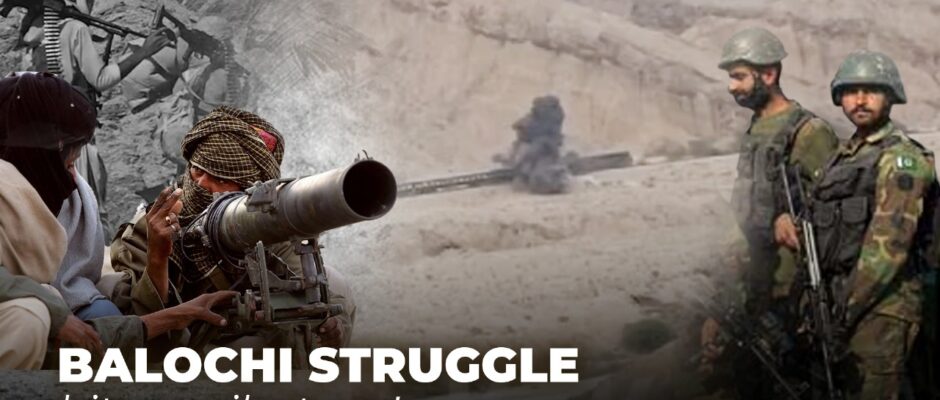
Balochi fighters under BRAS with centralized military command pose significant challenges to both Pakistan, China. Rohan Giri & Dr. Shailendra Pathak Given continued rejection of their rights, how long can one ignore Balochis’ call for justice? Balochistan has a long history of identity crisis and struggle for Balochis’ rights that are closely entwined. For decades in continuum, Balochi population suffered political marginalization, financial difficulties and cruel suppression of their dreams. Evolving Balochi resistance marks a significant shift in this long-lasting conflict, potentially influencing the region’s political dynamics and bringing the ongoing suffering to the forefront of global attention. An alliance of Baloch fighters, Baloch Raji Aajoi Sangar (BRAS) has revealed a major re-organisation, bringing several factions under one centralized military command. This stage marks an ideological unity of all forces not limited to just military plan of action. BRAS have plans for strengthening its position in response to challenges in the area by moving from broken guerrilla tactics to methodical and coordinated armed operation. A thorough and orderly military force produced by this reorganisation would provide the foundation for a “Baloch National Army.” Under a common strategic framework, this reform seeks to unite leaders and activists from all factions, thereby strengthening a more powerful and long-lasting resistance. Immediate consequences of this re-organization are severe. For Pakistan, it presents a protracted and strong opposition with significant challenges in implementing its military and economic agenda. For instance, stability is essential to China’s investments in forced occupation area under China-Pakistan Economic Corridor (CPEC). On the parallel, BRAS declaration raises questions on security of CPEC projects. Regrouping of Balochi fighters, highlights a battle, often overlooked, that significantly impacts regional stability. The conflict in itself is shaped by long history of disputed sovereignty and political unrest. Balochistan which comprises four former princely states of Kharan, Makaran, Las Bela and Kalat was declared an independent state along with India and Pakistan. During partition, princely kingdoms had the freedom to remain independent, join India or align with Pakistan. Khan of Kalat, Mir Ahmed Yar Khan chose to be independent while three others chose to be with Pakistan. Pakistan objected to this proclamation, nevertheless, which set off several forceful policies. By unilaterally declaring accession of Kharan, Makaran and Las Bela in March 1948, Muhammad Ali Jinnah isolated Kalat and drove its ultimate integration into Islamic Republic of Pakistan. With political persecution, economic marginalization and breaches of human rights defining Balochi struggle, this controversial union set the stage for fresh challenges. Balochistan boasts of immense natural resources while its people live in extreme poverty. Pakistan’s businesses have been powered for decades by the Sui gas field of Dera Bugti. But, unfortunately most Baloch houses still cook on woodfire. Reko Diq mines in Chagai district have large copper and gold deposits, but only international companies and Islamabad gain from them leaving Balochi people impoverished. Balochistan’s enforced economic structure has long been a cause of conflict since failures in equitable distribution of resources. BRAS seek to highlight its struggles against what it regards as economic marginalization. The effort includes halting highways, targeting infrastructure associated with CPEC and advocating for Balochi sovereignty over resources. Linked with long-standing demand for nondiscriminatory development, the revolt now has an economic aspect in addition to a fight for political acceptance. Under BRAS, establishment of a Baloch armed force could offer a mechanism for strategic action that has the potential for tipping the regional power balance. Immediately after BRAS declared its restructuring, Balochi fighters burst into a breathtaking display of force. A significant ally in BRAS, Balochistan Liberation Army (BLA) hijacked Jaffar Express train in Balochistan on March 11, 2025 carrying about 500 people. In a shootout, Baloch fighters killed at least 20 persons and kidnapped about 182 allegedly military and police personnel, blowing up the tracks. The BLA had issued an ultimatum threatening to execute hostages if their demands were unfulfilled. Pakistani government backed by Chinese powers that be responded with military action, resulting in continued confrontations. Hijacking the Jaffar Express was seen as direct reaction to official persecution and forced disappearances which had destroyed Baloch towns over decades. The Jaffar Express hijacking proved BRAS capacity for large-scale, well-coordinated operations and flashed a considerable rise in opposition activity. Balochistan still struggles with major human rights abuses and forced disappearances top the list of concerns. Human rights groups say thousands of Balochi men, students, activists and political workers have vanished over time. Human Rights Council of Balochistan (HRCB) reported that in February 2025, they recorded 144 cases of forced disappearances. Out of these, one person was reported dead, 102 remained untraced and 41 have come back. On top of that, 46 people lost their lives including some who were killed without a fair trial. They’ve identified 40 of these victims but six remain unknown. There is a substantial human cost associated with these disappearances. Families march thousands of kilometres in search of missing near and dear ones, carry images of their lost loved ones. Though demand for responsibility and openness is growing, international community’s intervention in yet to gain momentum. On the other hand, BRAS has continued with its struggle for rights and respect. Balochistan’s battle is not a lonely endeavour. It is entwined with regional and global issues. Seeing Baloch nationalism as a constant security issue, Pakistan has deployed strong militarism and intelligence operations to limit the uprising. Balochistan is seen by China as a component of its larger strategic objective with projects like Gwadar Port through its Belt and Road Initiative having enormous financial value. Nonetheless, BRAS’s most recent activities suggest a continuous risk to regional stability. BRAS have time and again expressed concerns about foreign investments that do not benefit local communities. If the alliance increases frequency of disruptions to CPEC projects, there could be more security issues. China has asked Islamabad to ensure protection of its interests in the wake of infrastructure attacks. The evolving conditions present a challenging chore for all relevant stakeholders. Grave situation in Balochistan receives very little international
Read More
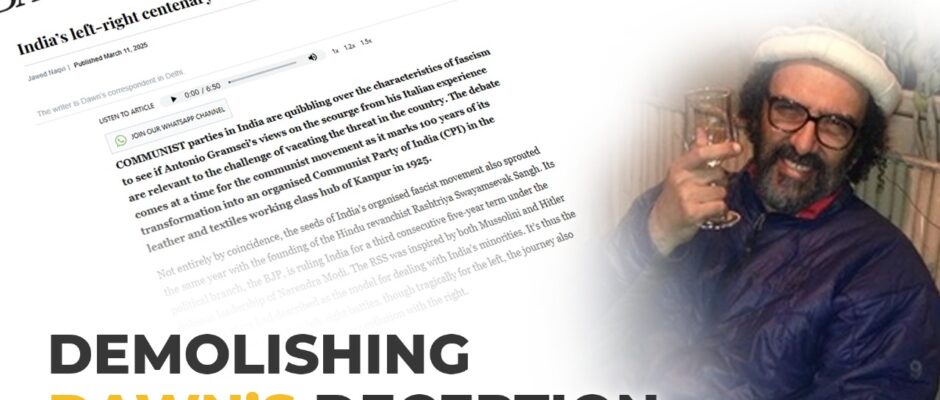
Demolishing the Dawn’s Deception

Demolishing Dawn’s Deception

Rohan Giri Dawn.com, the Pakistani news outlet that hosts Naqvi’s fabrications, has a long history of anti-Indian prejudice, regularly publishing articles that undermine Indian sovereignty and national interests. While it claims to support democracy, it rarely, if ever, scrutinizes Pakistan’s establishment with the same zeal as it does India. The hypocrisy is apparent. It is a journal that thrives on manufactured frustration with India while deliberately avoiding the dictatorial reality of its country. Jawed Naqvi’s most recent piece in The Dawn, “India’s left-right centenary,” is another example of selective indignation and intellectual dishonesty. It is deliberately written to support the myth that Rashtriya Swayamsevak Sangh (RSS) is the face of fascism in India. In his distinctive manner, Naqvi weaves together hypocritical historical allusions, ideological prejudices, and plain lies to create a story that has been disproven time and time again but is still promoted by those who are unwilling to confront except facts. In addition to criticizing RSS, his piece highlights the larger intellectual squalor that plagues segments of the Indian left and its supporters abroad. Exposing his distortions is not only necessary but also morally required since, if allowed unchecked, lying takes on the appearance of reality. Naqvi’s argument’s basic tenet is a sloppy and false analogy between RSS and European fascism. It reveals a basic misinterpretation—possibly deliberate—of fascism as well as the intellectual and historical foundations of RSS. RSS has never aspired to be an authoritarian entity, in contrast to Hitler’s racial superiority or Mussolini’s corporatist state. It continued to be a sociocultural movement dedicated to self-reliance, national cohesion, and a continuation of civilization. The alleged similarities to European fascism are merely rhetorical instruments employed by people who wish to discredit the movement without actually participating in its activities. The irrationality of this accusation is further demonstrated by the fact that RSS has never supported racial supremacy, a one-party system, or a dictatorship—all of which are fundamental elements of fascism. Decentralization of authority, community-driven governance, and cultural revival—values that are directly in conflict with the core of fascist ideology—have, if anything, always been at the heart of RSS’s priorities. Naqvi’s assertion that Hitler and Mussolini were the inspiration for RSS is a well-worn fallacy that has been repeatedly disproved but is still brought up by individuals with political frustrations. The accusations are the result of selectively misinterpreting words made by specific people while disregarding the broader context. Distorting historical facts to suit a convenient political narrative is the height of intellectual dishonesty. Unlike the Communist parties, which notoriously followed the Soviet line even at the expense of national interests, the RSS has no history of working with colonial or imperialist regimes. In 1942, the Communists fiercely opposed the Quit India Movement, calling it “subversive,” at the direction of their bosses in Beijing and Moscow. They weakened the quest for independence, whereas RSS struggled diligently at the grassroots level to foster cultural awareness and a sense of pride in the country. If the study of treachery is the goal, then the Communist parties—not RSS—need to be examined. Communists teaching about nationalism is blatantly ironic. Communists were involved in violent uprisings, such as the Telangana Rebellion, which aimed to impose a Soviet-style revolution in India, while the RSS was working to unite the nation. Naqvi romanticizes this uprising as a noble peasant battle, but in reality, it was a violent and terrifying war. Under the guise of “revolution,” the Communist objective has always been to sow disarray, erode democratic institutions, and open the door for authoritarian control. It should come as no surprise that democracy has always suffered the most when Communists have taken control, whether in North Korea, the USSR, or Maoist China. The people’s rejection of their outdated, foreign-imposed ideology is what is causing their electoral downfall in India, not any alleged “fascist” repression. Naqvi’s attempts to demonize the RSS and cover up the wrongdoings of Indian Communists are blatant examples of selective amnesia. The CPI’s record is marked by obvious blemishes, including its ideological subservience to foreign powers, its unwillingness to support the 1962 war effort against China, and its vacillations on important national challenges. On the other hand, RSS has supported Indian army in needs, increased disaster relief, and supported national defense. These are not theoretical claims; they are demonstrable realities. Naqvi, however, avoids them out of convenience since they contradict his rhetoric. It is a flagrant fabrication to say that RSS and its inspired individuals were “apologists for colonialism.” The Communist leadership frequently undermined nationalist initiatives and remained ambivalent about India’s independence. While RSS karyakartas were actively involved in opposing British rule. The goal of the RSS was to create a robust, independent society that could fend off colonial domination on all fronts—politically, culturally, and economically. The Communist concern with quick and frequently violent upheavals was always in conflict with these long-term objectives. If we look at Jawed Naqvi explicitly, his history of anti-Hindu and anti-Indian hatred is well known. His publications frequently echo the talking points of Pakistan’s official narratives, raising doubts about his integrity, ethics and journalism. His previous pieces, such as “Hindutva Terrorism: Another View” and “The Crooked Timber of Modi’s India,” all follow the same formula: they show Muslims as unforgiving victims, Hindus as aggressors, and India as a country on the verge of collapse. The outrage is blatantly selective. He highlights every perceived or actual weakness in India’s democracy, but he says nothing about Pakistan’s deep state, its persecution of minorities, or its decline into political and economic catastrophe. Naqvi’s most recent article is not a rare occurrence; rather, it is a component of a larger trend—a network of authors and journals that want to discredit India’s revival of civilization by calling it “fascist.” A typical example of projection is this one. Extremist Islamism and Communism, I call that Islamo-leftist, the exact ideologies Naqvi espouses, have committed some of the most horrific crimes in recorded history. More than 100 million people have died as a result of communism worldwide, and extremist Islamist beliefs have sunk entire

Read More
Grooming Gangs, Forced Conversions, and Sexual Jihad - Truth That The Quint Ignores

Grooming Gangs, Forced Conversions, and Sexual Jihad: Truth That The Quint Ignores

Rohan Giri The article published by The Quint under the title “‘Zalim Hindu’ Porn: How AI is Mass Producing Pornographic Images of Muslim Women” is a classic example of selective outrage, deliberate victimhood, and an attempt to whitewash an issue that has been a global concern: the systematic targeting, abuse, and exploitation of non-Muslim women by Islamist networks. The piece, while raising concerns about AI-generated images, fails to acknowledge the far more sinister, real-world atrocities committed under the guise of religious supremacy, sexual jihad, and the systematic grooming of women across the world. Furthermore, The Quint’s report ignores the mindset that underpins these systemic abuses in addition to misrepresenting the extent of the problem. It reveals an underlying bias by focusing on Muslim women as the main targets of digital manipulation while neglecting the real, physical, and pervasive crimes against non-Muslim women. Those who have actually suffered under theocratic despotism and radical Islamist exploitation are marginalized by this selective reporting, which feeds a false perception. The article diverts attention from the deeply rooted issues within radicalized portions of society rather than addressing the real offenders. If journalism’s purpose is to reveal injustice and defend the victims, The Quint’s strategy is dreadfully inadequate. Rather than advocating for responsibility and significant change, it feeds a false narrative that downplays the pain of thousands of women around the globe. Whether it is through love jihad or forced conversions in South Asia, institutionalized oppression in Islamist-dominated nations, or grooming gangs in the UK, the very real and systematic targeting of non-Muslim women must be included in any meaningful conversation about gender-based violence. Failing to do so not only makes such journalism less credible, but it also gives the very forces that support these abuses more power. Global Patterns of Exploitation: 1. Love Jihad in India and South Asia 2. Grooming Gangs in the UK and Europe 3. Sexual Harassment and Assault by Islamists Selective Outrage: Ignoring the Real Perpetrators The article focuses on AI-generated images as the ‘real’ attack on Muslim women while ignoring: Instead of addressing these grave violations, the article cherry-picks instances that align with its victimhood narrative, conveniently sidestepping the global reality of Islamist sexual exploitation. Hypocrisy on Women’s Rights The article’s attempt to paint Muslim women as ‘targets’ is ironic considering that: Weaponizing Victimhood to Mask Real Aggression The article deliberately ignores the well-documented Islamist strategy of using sexual exploitation as a form of religious and demographic warfare. Rather, it erases the pervasive atrocities experienced by non-Muslim women while selectively highlighting a specific internet concern. Media Complicity and Suppression of Truth Western and Indian mainstream media often remain silent on these crimes due to fears of offending Islamist groups or being labeled ‘Islamophobic.’ Erasing Non-Muslim Women’s Trauma for Political Gains While the article condemns the supposed fetishization of Muslim women in AI-generated images, it ignores the rampant objectification, abuse, and sexual slavery of non-Muslim women by Islamist radicals. The trauma of thousands of Hindu, Sikh, Yazidi, and Christian women is dismissed in favor of manufactured outrage over online content. Addressing the Real Issue If there is to be a discussion on sexual violence, it must include the very real, ongoing atrocities committed under Islamist doctrines worldwide. To focus solely on AI images while ignoring mass rapes, forced conversions, and systematic abuse of non-Muslim women is not just hypocritical—it is complicit in enabling the true perpetrators. Women’s safety is a global issue, and it is high time that the world confronts the well-documented, systematic targeting of non-Muslim women instead of peddling selective outrage to divert attention from real-world crimes. This is not about any phobia, as propagandists might claim; it is about recognizing and combating a dangerous ideology that continues to wreak havoc on innocent women across the globe. Until these harsh realities are acknowledged, any conversation on gender-based violence remains incomplete, biased, and morally bankrupt. (Author: Rohan Giri is a journalism graduate from Indian Institute of Mass Communication (IIMC) New Delhi, and Manager Operations at CIHS.) References

Read More
The Polis Project Exposed - A Web of Bias, Misinformation, and Deception

The Polis Project Exposed: A Web of Bias, Misinformation, and Deception

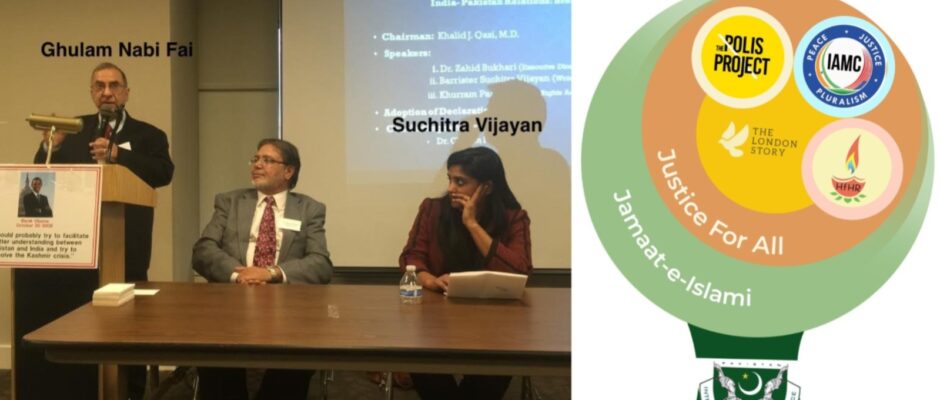
Rohan Giri The Polis Project bills itself as a journalism and research group, but its activities betray a much darker purpose. Instead of being an impartial organisation dedicated to the truth, it routinely targets Hindu organisations and India, spreading misleading information while omitting the realities of religious persecution and intricate geopolitics. Under its cover of human rights, it serves as a platform for anti-India propaganda, twisting the truth and influencing opinions around the world to support its political agenda. Another illustration of The Polis Project’s continuous effort to discredit Hindu organisations and harm India’s reputation abroad is the recent propaganda report it released titled “Transnational Funding in Hindu Supremacist Movements”. This purported report is a politically driven attempt to paint Hindu institutions as extremist fronts rather than an unbiased analysis of financial networks.  With an aim to provide the impression that there is an organised supremacist movement, where none actually exists, the paper has selectively omitted important information, using inflammatory language, and cherry-picking statistics. It vilifies organisations involved in humanitarian, educational, and cultural preservation efforts while willfully ignoring the actual threats posed by radical groups operating in South Asia and abroad. There is a certain pattern to the Polis Project’s operations. While ignoring grave human rights abuses in other regions of the world, it unfairly criticises India. Its obsession to depict the current Indian government as authoritarian, using hyperbolic phrases like “genocide” and “fascism”, is to stir up indignation and sway global opinion. By creating a biased narrative that ignores the complexity of religious conflicts and communal tensions in India, their reporting on sociopolitical events distorts reality. While ignoring the persecution of Hindus in Bangladesh, Pakistan, and Kashmir, it creates the impression that India is an oppressive state by publicising certain occurrences and interpreting them with a preconceived ideological framework. Deep state funding, particularly those supported by George Soros, is the source of the Polis Project rather than an independent organisation. Its creator, Suchitra Vijayan, has a history of endorsing radical groups while posing as an activist. A cursory glance at her social media activity shows that she publicly supports people who have been charged with inciting violence, such as Umar Khalid, who was detained for his role in the Delhi riots. She also offered assistance to Irfan Mehraj, a “journalist,” who was detained in connection with a terror financing investigation in 2023. Mehraj was identified by the National Investigation Agency (NIA) as a close associate of Khurram Parvez, a well-known anti-Indian activist and a prominent member of the Jammu and Kashmir Coalition of Civil Societies (JKCCS), a group connected to dubious financial dealings that aid separatist elements. The Polis Project’s operating structure further demonstrates foreign influence over it. As per Disinfo Lab’s claim, the administrator of its Facebook page is headquartered in Pakistan, which raises severe questions regarding its legitimacy and motivation. Although its propaganda efforts are focused on India, its digital presence indicates external management, raising the prospect of planned influence tactics aimed against India’s stability. This aligns with broader international efforts to amplify divisive narratives against the country. Even outside of its digital activities, The Polis Project has close connections to groups that have openly supported separatist and Islamist causes. The Indian American Muslim Council (IAMC), an organisation well-known for advocating against India on global forums, regularly features in its events. Despite IAMC’s acknowledged affiliations with extremist organisations, The Polis Project finds common ground with them, confirming that it is far from being an unbiased research organisation. Its unclear funding structure is another issue. The Polis Project says it is transparent, although it hasn’t given a detailed account of where its funding comes from. Its closed financial sources raise serious concerns, and as a nonprofit organisation with headquarters in the United States, it is nevertheless vulnerable to outside interference. Who provides the funding for it? What outside parties gain from its persistent anti-Indian propaganda campaign? The ambiguity surrounding these issues suggests a conscious attempt to hide the foreign entities that might be controlling its operations. Besides targeting Hindus in India, The Polis Project has also reached out to the Hindu diaspora around the world. It attempts to damage the standing of charitable endeavours carried out by Hindu communities around the world by unjustly associating Hindu cultural organisations and charities with a purported supremacist purpose. Claims that organisations like Sewa International, Ekal Vidyalaya Foundation, and Hindu Swayamsevak Sangh are political fronts are unfounded, despite the fact that they have played important roles in social service, education, and disaster relief. Discrediting the Hindu diaspora and stifling its contributions to social advancement are deliberate goals. The Polis Project’s utter silence over the religious persecution of Hindus is another example of its duplicity. It vigorously promotes stories of state-led persecution of minorities in India, but it ignores the violent attacks on Hindu communities around the world, the systematic discrimination and persecution of Hindus in Bangladesh and Pakistan, and ethnic cleansing in Kashmir. Its selective activism reveals its lack of sincere support for human rights and demonstrates that its goals are not to promote justice but to pursue a political agenda. India’s sovereignty is being undermined globally by The Polis Project, who continuously depicts India as an authoritarian state. It is in line with larger efforts to destabilise India as it presents internal policies as dictatorial, supports separatist language, and purposefully leaves out important background information. This cannot merely be the result of a journalistic error, but a well calculated move to damage India’s reputation internationally. In an effort to undermine India’s position as a rising global force and sow internal strife, it manipulates narratives for the benefit of outside interests. With a blatant ideological agenda, the Polis Project is not an impartial monitor. Its biased narratives, foreign affiliations, selective activism, and untransparent funding make it clear that it is an anti-India propaganda tool. It is crucial to refute its misinformation with factual arguments and stop its lies from becoming widely accepted in global discourse. Organisations with a stake in dividing

Read More
Sovereignty, Democracy & Strategy for Global Stability

Strategy for Global Stability

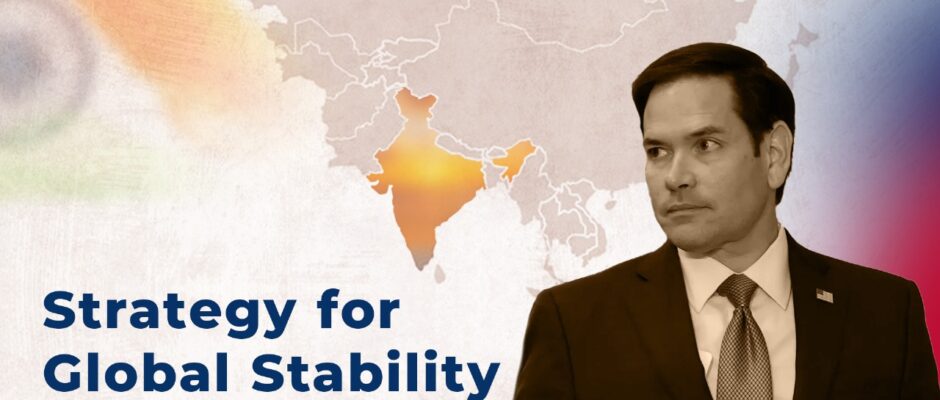
Marco Rubio may emerge key keg in President Donald J Trump’s second innings with Asia on boil, China, Pakistan fueling instability. Rohan Giri “We are at an inflection point. Nations that value sovereignty, democracy and individual freedom must come together to preserve these ideals against rising authoritarian forces.” Marco Rubio, newly appointed US secretary of state said on ‘global authoritarianism and geopolitical shifting in 2024’. The message was loud and clear to everyone who knew Rubio’s approach. Although he did not take names, his comments were obviously directed at China and Pakistan, two prominent South Asian countries. There was a bigger story behind Rubio’s sensible foreign policy strategy, one that focused on strengthening ties with India. The vision Rubio aimed to advance appeared to be reflected in India’s strategic ambitions, rich cultural legacy and shared values as a growing nation. Rubio’s involvement in US-India relations began much before his ascent to become US Secretary of State. In his tenure as a senator, Rubio advocated US – India Defense Cooperation Act of 2024. This significant bill was more than just a diplomatic gesture; it sought to strengthen Bharat’s position as a key point in US Indo-Pacific policy. Among its significant provisions was an extraordinary clause mandating Department of Defense to prioritize transfer of advanced technologies to India, a clear sign of trust and collaboration. “India stands at the crossroads of global security,” Rubio pointed out at a Senate hearing. “It’s strategic location, vibrant democracy and shared interests with United States making it an indispensable ally in this era of uncertainty.” His buttressed his argument with facts rather than just political overstatement. India became world’s most populated country in 2023 surpassing China. With an average annual growth rate of eight per cent, its defense budget had been increasing rapidly and its naval expansion demonstrated its desire to establish control in Indian Ocean which Rubio identified as crucial for global trade and stability. Rubio’s concentration on Indo-Pacific was intrinsically linked to his strong stance against China. Rubio had been raising concerns long before it became common in Washington DC to speak out against Beijing. From speeches opposing China’s Belt and Road Initiative (BRI) to op-eds warning about dangers of economic dependency, his stance was consistent. “Nations embracing China’s loans do so at their peril,” he cautioned in 2019. By 2024, the predictions had come true, as countries such as Sri Lanka and Pakistan were neck deep in catastrophic debt owing to Chinese-funded projects. To Rubio, Quad—an alliance of United States, India, Japan and Australia—was critical to resisting China’s ambitions. He firmly supported the alliance’s naval drills and strategic consultations, seeing them as critical to countering Beijing’s growing aggressive behaviour in South China Sea. India’s geographic advantage and historic difficulties with China made it a key component of Rubio’s program. “A strong India is not just in America’s interest,” he asserted; “it’s in the interest of every nation that values a free and open Indo-Pacific.” However, Rubio’s concerns extended beyond China. Pakistan, with its complicated history of state-sponsored terrorism, was another target of his critique. Throughout his legislative career, he pushed for measures to hold Islamabad accountable for its actions. US – India Defense Cooperation Act even included a provision requiring State Department to produce detailed reports on Pakistan’s use of proxy groups against India. Rubio didn’t believe in just identifying terrorism—he demanded action. “American taxpayer’s dollars should never fund regimes that harbour terrorists,” he declared in a Senate speech, pointing to Pakistan government’s links to terrorist groups like Jaish-e-Mohammed and Lashkar-e-Taiba. However, US had close military relationship with Pakistan through aid agreements like SEATO (Southeast Asia Treaty Organization). Rubio’s strong standpoint resonated in New Delhi. Rubio’s push to make foreign aid contingent on verifiable counter-terrorism actions sent a clear message: the era of unhampered support for Islamabad was over. His foreign policy demonstrated a deeper cultural alignment even as it was directed by geopolitical concerns. Rubio condemned persecution of religious minorities around the world in a statement released in October 2023. He said that upholding rights of religious minorities is crucial to maintaining world peace and order in addition to being morally right. Hindu communities in Bharat and the United States, who had long pushed for world attention to persecution of Hindus in nations like Bangladesh and Pakistan resonate in these remarks. Congressman Raja Krishnamoorthi urged the Senate to address continuous violence against Hindus in Bangladesh during Rubio’s confirmation hearing as Secretary of State.  Rubio affirmed his commitment to defending religious freedom and framed it as a key component of American foreign policy. He underlined that defending rights of religious minorities is crucial to maintaining world peace and is essential to global stability. More than just opposing China or criticizing Pakistan, Rubio’s interactions with India were part of a larger vision for just and peaceful world order. In addition to being a strategic ally, he saw Bharat as a country whose core principles—pluralism, democracy, and resilience—were aligned to those of US. Vibrant industries including technology and pharmaceuticals drove the record $191 billion commerce between United States and India by 2024. Indian-American population which is currently hovers at over 4.5 million has made significant contributions to education, engineering and medicine. Rubio saw these numbers as concrete proof of close and long-lasting relations between the two countries and not just statistics. What sets Rubio apart is his ability to seamlessly blend pragmatic foreign policy with broader cultural and civilizational narratives? He avoids making loud proclamations about being “pro-India.” Instead, his actions—championing defense agreements, advocating for Hindu rights and emphasizing shared values—speak volumes. His approach is one of alignment rather than assertion, subtly integrating Bharat’s interests into broader framework of US geopolitics. For Asia Pacific, Rubio represents unique harmony between values and practicality. His initiatives not only address urgent problems like regional security and terrorism but open the door for future collaboration. His acknowledgment of India’s strategic and cultural significance is more than just a diplomatic ploy; it shows his sophisticated awareness of changing world.

Read More
Nepal Falls to Dragon Debt Trap

Nepal Falls to Dragon Debt Trap

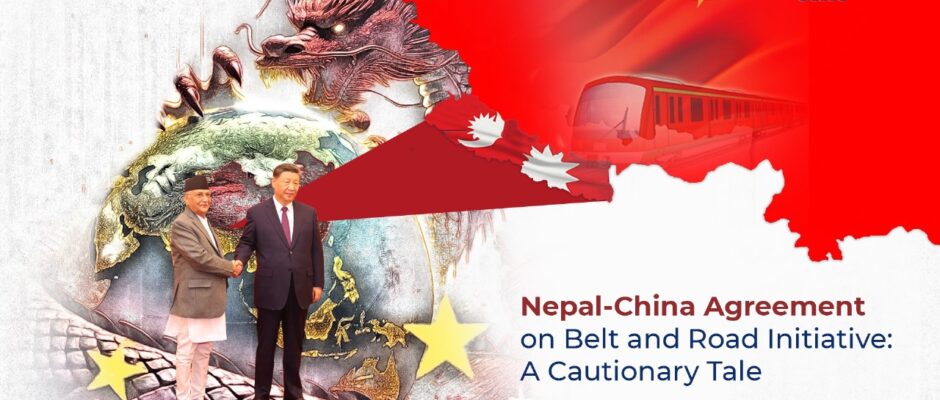
Nepal stares at huge economic costs built into BRI while President Xi pursues his expansionist geo-political interests in South Asia. Rohan Giri Earlier this month, Nepal’s communist regime sealed a deal with China to join ill-famed Belt and Road Initiative (BRI) that pushed several least developed and developing countries into the dragon debt trap. The dragon pact marks a key policy shift for Nepal moving it away from its millennial ally Bharat with civilizational links and signifies : closer alignment with Beijing. While the deal promises economic benefits especially through infrastructure development, it raises significant concerns about Nepal’s sovereignty, financial stability and regional security. More than a bilateral development project, BRI threatens to exacerbate Nepal’s internal challenges and entangle it in China’s geopolitical web. A Faustian Bargain Chinese President Xi Jingping’s signature project, Belt and Road Initiative, has been pushed aggressively as passage to economic growth for the developing nations where much-needed infrastructure would be in place, thereby enhancing trade connectivity and promoting economic growth. For Nepal, being a landlocked country on brink of economic revival, BRI seemed like just the ticket to lift isolation. Beneath the purported economic attraction lies a much darker reality — one of financial vulnerability, political dependency, and loss of sovereignty. The deal, while touted as a historic step by ruling Communist government, is nothing short of a Faustian bargain for Nepal. Prime Minister KP Sharma Oli deciding to go to China as his destination for the first foreign trip after assuming office and subsequently endorsing the BRI, marks a dramatic shift in Nepal’s foreign relations, which were traditionally close cultural and economic ties with India. But, with rising proximity to China — and its growing political and economic influence — comes an entirely new set of dangers that could be disastrous for Nepal. China’s Economic Mirage Behind the BRI lies a worrying financial model which has already ensnared several countries in crippling debt. BRI is mostly financed through huge loans from China usually on terms that put developing countries at risk of default. The countries that embraced the BRI such as Sri Lanka and Pakistan have been saddled with unsustainable debts. A case in point is how Sri Lanka was forced to lease Hambantota Port to a Chinese firm for 99 years following its failure to service the loans. Apprehension about Nepal getting into the vicious debt trap is very valid for this reason alone. Nepal, with a miniscule industrial base, having chronic fiscal deficit and depends on foreign aid, makes this over-leveraging risk extremely high. For one, BRI-sponsored Pokhara International Airport has already faced operational setbacks due to dearth of international flights that now faces the added headache of India’s airspace ban. The economic rationale for Nepal to continue pursuing Chinese loans is increasingly unclear especially when one considers the broader regional dynamics and Nepal’s precarious economic wherewithal. Communist Regime’s Illusory Promises The appeal of BRI to Nepal Communist government cannot be underestimated. Indeed, the ruling regime led by Nepal Communist Party (NCP) placed itself precariously between Chinese-style state-driven development and Nepal’s ambitions to evolve as a modern buzzing economy. Historic record of Communist regimes relying on foreign loans for ambitious infrastructure projects is far from encouraging. In countries like Sri Lanka and Venezuela, alignment with Chinese-funded initiatives has led not only to financial instability but also to political entanglements with Beijing, eroding the sovereignty of these nations. Nepal, too, risks losing control over its internal affairs if BRI’s promises fail to deliver as has happened in other nations under Chinese influence. The promises of job creation, improvements in infrastructure and growing economy from Communist regime would end up being hollow ones as this would lead to greater social inequality, political unrest and growing dependence on China. This could also manifest in a variety of ways: from suppression of political dissent in favour of Chinese interests to siphoning off of Nepal’s resources to meet Chinese repayment schedules. The people of Nepal already burdened by poverty may feel further alienated given their own government prioritizing Chinese loans. Strategic Dilemma and Geopolitical Tension Nepal’s entry into BRI, though framed as a development initiative, has far-reaching geopolitical implications as well. Nepal’s location, nestled between India and China has long made it a strategic focal point in South Asia. India with which Nepal shares not just a long border but also cultural, economic, and historical ties, has expressed some very strong reservations about BRI. China’s larger strategy to expand geo-politically via BRI has been well documented that throws up fresh security challenges in South Asia. India has reasons to worry about China’s activities. For instance, China-Pakistan Economic Corridor (CPEC) of BRI which passes through an illegally occupied region of Jammu and Kashmir is an example of how China’s infrastructure development works in tandem with its military strategic interests. To New Delhi, Nepal’s inroads with China is alarming for it will change the region’s delicate balance of power. The danger of alignment between Nepal with China is bound to provoke India given Kathmandu and New Delhi’s hitherto long-term relations. The risk is also that Nepal gets entangled in a wider strategic competition between China and India in which it has no particular leverage to speak of. A small yet significant nation becoming more and more dependent on China might lead to reduction in its own foreign policy independence as Nepal is increasingly drawn to align itself with wider strategic priorities of Beijing. Subtle Erosion of Sovereignty China’s influence in Nepal is not confined to economic aspects. While BRI may be portrayed as an innocuous development initiative, it also provides a tool for subtle control over political affairs. It is seen that China gets leverage on Kathmandu through finance of large-scale infrastructure projects as well as loan offers, not only from economic perspective but through political sway. This trend is witnessed in Sri Lanka and other countries under BRI, where dependency on debt leads to gradual loss of sovereignty. Thus, eagerness of Nepali Communist government to align with

Read More
NYT Faulters, Khalistanis Go Beserk

NYT Faulters, Khalistanis Go Beserk

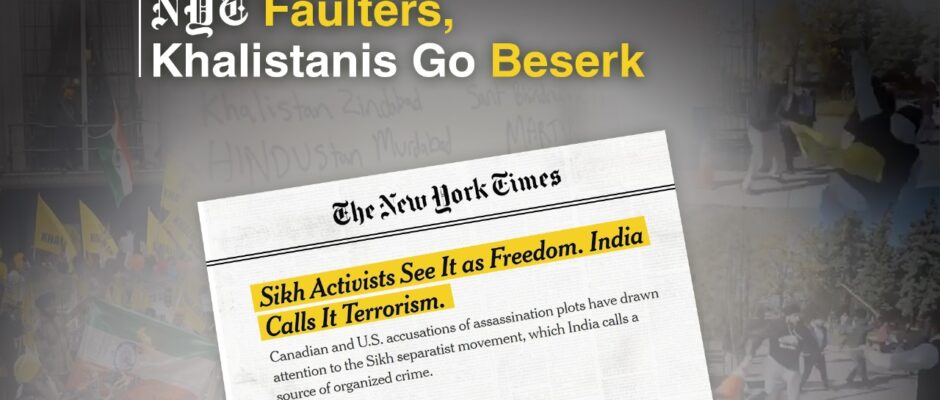
Indian security concerns cannot be reflected from Khalistani terror lens. Rohan Giri Is it reasonable for reputed media platforms like The New York Times to arrive at conclusion even before piece the facts? In her recent piece, “Sikh Activists See It as Freedom. India Calls It Terrorism,” Anupreeta Das paints the Indian response to Khalistani extremists’ movement as ‘overtly harsh and not based on genuine security concerns’. The writer avers that Indian position against Khalistanis was overtly influenced by Hindu nationalist motives rather than security concerns. A closer look at the article reveals limited scope of investigation, relying on selected sources that shaped public perception in a skewed way. By referring to select incidents, individuals, the write up risks simplifying a complex geopolitical issue, missing both historical and current context needed for a well-rounded understanding. Emphasis on Canadian, US Perspectives The article opens by focusing on Canadian and US claims of assassination plots against a terrorist thereby implying that India’s responses were excessive as “Khalistan movement” was regarded as a bygone issue. The New York Times or Anupreeta Das presented evidence to conclude that Indian government had any role in assassinations. The write up also seem to have ignored the nuanced and ongoing nature of Khalistan issue within and beyond India’s borders. Khalistan-linked activities have not disappeared into thin air and Indian officials are cautious about connections between separatist groups, criminal elements and terror networks—connections that merit thorough analysis rather than dismissal as nationalism-driven rhetoric. Findings from Indian and international intelligence agencies point to violent but fringe Khalistani elements receiving support, both material and ideological, from Pakistan, particularly through the Inter-Services Intelligence (ISI), known for its dirty tricks to destabilize India. This interlinked dynamic, often referred to as “bleed India with a thousand cuts” strategy is noted in several independent reports. Overlooking this context leaves out a significant geopolitical layer in the discussion. What about Khalistan-Linked Violence? One striking omission is the absence of data on violent history of Khalistan movement and its continued association with criminal activities. 1980s and 1990s saw that Punjab was virtually torn apart by extremist violence with thousands of civilians, law enforcement personnel and officials impacted by Khalistani terrorism. Ignoring these historical facts reduces the weight of ongoing vigilance against terrorist movements. By leaving out the history of violence and its effect on Punjab’s socio-economic landscape, the article doesn’t fully address why the Indian government views the Khalistan issue as a legitimate security concern. Indian law enforcement including National Investigation Agency (NIA), reports that recent crimes tied to Khalistan include drug trafficking, gang violence and extortion contributing to Punjab’s drug crisis. A 2023 NIA report estimated that drug-related crimes in Punjab make up nearly 60 per cent of all drug cases nationwide, underscoring seriousness of the issue and suspected role of Khalistani networks. The absence of such statistics paint an incomplete picture of the government’s concerns. Cherry Picking of Experts The NYT article relies heavily on selective quotes from experts and analysts who cast India’s approach as extreme or unjust. For instance, statements from Gunisha Kaur on purported targeting of Sikhs under national security are included without broader context of the debate. By emphasizing voices critical of India’s measures against separatism, the article overlooks other scholars, counterterrorism experts, and analysts who have recognized valid security challenges India faces with Khalistan-linked extremism. Certain Khalistani groups exploited Sikh religious sentiment to justify violent actions and criminal enterprises. Multiple forums have highlighted ties between these factions, drug and arms smuggling networks, often supported by ISI. Leaving out such perspectives raises questions about balance and intent to inform versus sway readers. Impact of Biased Reporting on Public Understanding When impactful media like The New York Times publish such pieces with biased slant, they risk cementing stereotypes and shaping public opinion misleadingly. For readers less familiar with Khalistan issue, India’s actions might appear authoritarian rather than responses to real and documented threats. Reporting with an apparent “predetermined” conclusion reinforces narratives that misrepresent India’s security concerns as mere authoritarian impulses. This approach can erode trust in international relations. For instance, framing Canada’s reluctance to act against pro-Khalistan activists as a free speech issue disregards that many Western nations actively counter extremist ideologies promoting violence, from neo-Nazism to Islamist extremism. Yet when addressing Khalistani extremism, Canada’s stance is portrayed as liberal tolerance rather than a political decision. This selective framing risks distorting public understanding of global security policies, potentially engendering sympathy for extremist movements. Conflating Sikh Identity with Khalistan Das’ article could be read as equating India’s vigilance over Khalistani separatism with attack on Sikh identity, an oversimplification that overlooks the fact that most Sikhs globally do not support Khalistan. For instance, San Jose California Gurudwara chief Bhupinder Singh Dhillon gave only five-minutes ultimatum to Khalistani supporters and drove them out of Nagar Kirtan. Similarly, Ujjal Dosanjh, former premier of British Columbia and federal cabinet minister under Liberal prime minister Paul Martin told Canadian newspaper ‘National Post’ that “a silent majority of Sikhs does not want to have anything to do with Khalistan, adding that less than five percent of the total Canadian Sikhs support Khalistani movement.” India is home to one of the largest Sikh populations, with significant representation in the military, government, and business. Articles like Das’ risk alienating this community by implying Sikh identity aligns with separatism, which could strain relationships within the Sikh diaspora and between Sikhs and the Indian state of Punjab. India’s Broader Counter-Terrorism Efforts India’s response to separatism is not limited to Khalistan issue but spans various secessionist and insurgent movements from left-wing extremist naxalites to Islamist terrorism. In each instance, India’s approach has been complex, encompassing political dialogue, social programmes and security measures. For example, reducing violence in Kashmir through de-radicalization and security efforts shows a strategy aimed at balancing security with stability. Ignoring broader policies and isolating Khalistan issue risks misrepresenting India’s comprehensive security approach. Importance of Balanced Journalism Responsible media coverage should present readers with a complete view, allowing them to

Read More
NYT Does it Again!

NYT Does it Again!

Painting Umar Khalid as suppressed activist is far from truth. Prejudice, agenda-based biased reporting, an attempt to destabilize India Rohan Giri The big question: Why do we tell stories? This is title of a series published by The New York Times dated December 8, 2022, identified as turning point in 2022. Why or when the title was chosen doesn’t matter. The title propels us to understand whether we are playing with facts to sell the story or a particular view point? Are we not becoming a party to make the story attractive? Narrating the story in full, objectively based on facts without taking sides is sacrosanct for any media house or journalist worth his salt. In “Four Years in Jail Without Trial: The Price of Dissent in Modi’s India” The New York Times has created a masterpiece using well-known clichés that frequently get employed by propaganda writers to influence public opinion. The piece makes extensive efforts to arouse empathy for people like Umar Khalid, portraying him as representation of suppressed resistance. Image of the accused as a disillusioned young voice ‘testing’ the system, victimhood, the minority position of Muslims, the protracted wait for justice and the emotional toll on family members are all well-worn themes that are touched upon in this story. Together, these elements create a story that is meant to evoke empathy while delicately rephrasing dissent to fit the ideological preferences of the writers, editors and the editorial board. Former student and fundamentalist Umar Khalid was charged with being mastermind in 2020 Delhi riots that resulted in extensive loss of life and damage to property in the communal violence in India’s capital city. The Unlawful Activities (Prevention) Act (UAPA), which was passed in order to combat terrorism and stop actions that threatened India’s integrity, sovereignty and internal security led to his detention. UAPA provisions which permit arrest of those involved in acts that provoke communal strife and endanger national security correspond with Khalid’s imprisonment. Although UAPA is constitutionally approved for protecting national interests, particularly in cases like the Delhi riots, which intensified communal tensions and societal polarization, critics of his arrest frequently claim that it restricts freedom. Moot question however is what kind of freedom? Presenting facts-based story impartially is basic responsibility of media and in particular respected forums like ‘The New York Times’ while covering intricate sociopolitical issues. With its global reach, the NYT has considerable narrative-building ability. However, NYT has frequently come under criticism over the years for selective framing of stories and cherry-picking topics to support specific narratives often misleading readers. The coverage of Umar Khalid, who has been detained on charges that according to Indian law are serious crimes against peace and national integrity, is one notable instance. A recurring pattern of selective reporting is evident while analyzing NYT’s coverage, particularly on Indian issues. As NYT frequently exaggerates specific incidents while ignoring larger circumstances or opposing viewpoints, its readers’ opinions are frequently distorted. Their coverage of Khalid’s case has primarily presented him as a victim of an authoritarian crackdown with no reference to the judicial system or the strong evidence supporting his imprisonment. This selective reporting misleads readers by giving an altered, frequently exaggerated account of Indian events without taking into account the intricate details of the system. Khalid’s case is not exceptional; the farmers’ year-long demonstrations’ against agricultural reforms is another example of how NYT’s reportage remained biased and motivated. Rather than presenting the rationale, NYT focused on demonstrations and portrayed it as a “fight against government,” whereas, assessments show that the reforms were aimed to increase farmers’ economic sovereignty by expanding the sector. Nevertheless, NYT stuck at the resistance mode and constantly fabricated the gauzy stories. Another notable example is a September 2014 cartoon titled “Elite Space Club,” which mocked and served as stark example of its repeated prejudice in depicting India’s achievements. Rather than recognizing India’s unprecedented success as first Asian nation to set foot on Mars — a feat completed at an astonishing cost efficiency — the cartoon cast a negative shade, turning a scientific milestone into a matter of financial derision. Such portrayals, not only denigrate India’s progress in space exploration, but also highlight the New York Times’ desire to promote prejudices rather than report achievements of non-Western nations. In an era where global successes transcend national borders, can a media house legitimately claim journalistic integrity if it promotes cultural bias and racism to overwhelm true advancement? Plenty of instances indicate NYT’s ingrained bias and inappropriate reporting on Indian issues, whether it is the discussion over the Citizenship Amendment Act or abrogation of Article 370 of the Indian constitution. NYT repeatedly skewed portrayal, framing these issues from preset prism that casts the Indian government and other socio-cultural organizations as “Hindu hardliners” or “fascists” hell bent on oppressing a specific segment of society. This deliberation reflects an attempt to create a contentious narrative rather than providing a balanced perspective on India’s legislative and constitutional achievements. These are not isolated instances; rather, part of a troubling trend that attempts to undermine India’s social dynamics, weaken its democratic foundation and misrepresent its policies globally. A disturbing objective is revealed by NYT’s unwillingness to understand India’s landscape, which includes the CAA, farmers’ demonstrations, and the Kashmir issues. Such reporting is the result of selective blindness, which threatens the fundamental values of responsible journalism, rather than journalistic integrity. The publication’s ideological objective is more evident in its dependence on fringe voices and skewed portrayals than in any sincere interest in the facts. It’s time to hold entities responsible for influencing perceptions of nations like India. The way NYT has portrayed Umar Khalid serves as a warning, a reminder that, as important as press freedom is, the universal duty to preserve integrity and truth. To retain credibility, NYT must abandon its selective approach, embrace balanced reporting and acknowledge its own biases. Anything less falls short of objectivity and tantamount to wrapping propaganda wrapped in the guise of journalism. For India and its global readers,

Read More

Who’s Responsible for Leicester Violence?

Jailing Majid Freeman may not suffice. How about scrutinizing role of Sky News, The Guardian, BBC and social media forums? Rohan Giri Anti-Hindu violence in Leicester two years back serve as stark reminder on use of disinformation as weapon to ignite conflict, encourage inter-communal trouble and inciting violence. On September 9, 2023, Majid Freeman, the Islamist who was instrumental in igniting violence against Hindus by disseminating false information by design was sentenced to 22 weeks in prison. He was charged for attempt to incite “immediate unlawful violence” during anti-Hindu riots.  District Judge Amar Mehtaat of Northampton Magistrates Court found him guilty which was a substantial but long overdue response to the surge in turmoil . Through his manipulation of mainstream media and social media platforms such as BBC, The Guardian and Sky News, Freeman disseminated false information leading to targeted attacks against Hindus, their properties and at least two Hindu temples. Violence incited by Freeman is a sobering reminder of dangers of using fake news as a weapon to sow discord among communities. Spread of violence in Leicester was due to rumours by Islamist fractions which included likes of Freeman. Tensions grew high on August 28, 2022, after an India-Pakistan cricket match. There was confrontation over desecration of the Indian flag, subsequently, things seemed to have eased out and Hindus were instrumental in pacifying the altercation. However, Freeman manipulated this incident by using his social media networks. Without providing any proof, he asserted that Hindus had chanted “death to Muslims.” Later, law enforcement and investigation teams refuted this assertion, but not before causing further harm. Given the rapidity of present-day communication, a lie has the potential to spread like wildfire immediately after it is first spoken or written. Freeman’s unfounded accusations against Hindus led to hate and violence against Hindus. His exploitation of social media as a means of instigation demonstrated the potency and dissemination of false information. Baseless accusations made by Freeman on August 30 that Hindus in Leicester had desecrated the Quran heightened tensions between Hindu and Muslim communities instantly. Even when investigative reports refuted this claim, damage had already been done because of social media. Freeman’s malicious act to disseminate false information was not confined to small number of exceptional instances. His unrelenting propagation of false information persisted creating a hazardous environment that caused Hindu community members to suffer direct physical harm. The height of violence against Hindus occurred on September 4, 2022 when their homes, temples and individuals were attacked by a frenzied Islamist mob. Freeman’s made up accusations that Hindus were pursuing a Muslim adolescent which made the situation all the more worse. This act of dangerous mis-information and mis-communication instilled fear, suspicion and violence. The dissemination of this disinformation had tangible consequences, as evidenced by disturbing incidents of Islamist attacks targeting Hindus in their homes and on streets of Leicester that occurred between September 4 and 7. Acts of violence like vicious stabbing of a Hindu man and vandalism of a temple were directly linked to adverse atmosphere that Freeman’s lies fostered. His persistent use of social media to encourage more acts of violence exposed a calculated plan to sow discord and hatred. Freeman’s activities extended beyond Leicester. The effect was extensive, reached other areas. His unsettling trend of radicalisation is evident from frequent endorsement of terrorist groups and individuals, such as Hamas and Al-Qaeda terrorist Anwar Al-Awlaki. Freeman’s affiliations with these outfits were not coincidental; rather, they were a component of larger religious perspective that he has long supported. His promotion of violence against non-Muslims and jihad are consistent with terrorism that still threatens international peace and security. Accusations against Freeman for inciting terrorism and providing support to Hamas, a proscribed terrorist group, were brought against him in July 2023. These accusations demonstrated the more subtle aspects of Freeman’s terrorist agenda and his influence outside the realm of neighbourhood activity. Freeman, in his statement in the court, has acknowledged his frequent verbal support for Hamas between December 2022 and June 2023. His open backing of this terrorist organisation revealed his intent which goes beyond resolving neighbour disputes to include violent propagation of larger radical objectives. Freeman case reflects terrible real-world effects of a hate speech if allowed to spread. His sentencing to 22 weeks in prison for trying to incite ‘immediate unlawful violence’ is a welcome step toward justice. However, the term sentenced to him is not a sufficient measure for the harm committed by him. His lies directly led to the destruction of property, attack on Hindu people and damage to their places of worship. Communities that had experienced comparatively peaceful existence have been permanently altered by the animosity, distrust and violence that Freeman fostered by manipulating mainstream media and social media. This leads us to the mainstream media’s cooperation including Sky News, The Guardian and BBC which gave Freeman a forum to disseminate his misinformation. Whether through carelessness or intentional bias, these media outlets were instrumental in giving Freeman’s falsehoods legitimacy. Knowingly or unknowingly, these media outlets played an active part in intensifying violence against Hindu community. In this instance, the media bears a large portion of the blame since they failed to evaluate Freeman’s story carefully which led to spread of violence. Will Sky News, The Guardian, and BBC be held accountable by the British courts? It is critical to acknowledge that reporting by media without diligence and accountability may be as damaging as the misinformation spread by extremists. By giving Freeman an opportunity, these media outlets amplified his nasty rhetoric. They contributed to transformation of a local issue into national and global spectacle while fuelling communal discontent. Consequences of their negligence are visible as innocent lives were lost, houses ruined, families disenchanted and temples desecrated. Their role in inciting violence against Hindus cannot be overlooked. Core principle of democratic society is freedom of speech which should never be exploited to defend individuals like Freeman who deliberately incited hatred and violence, used social media to propagate terrorist agenda and encouraged violence against Hindu community. For victims of Leicester riots, Freeman’s sentence may offer some respite. However,

Read More

Hindus are Safe in Bangladesh, Really?

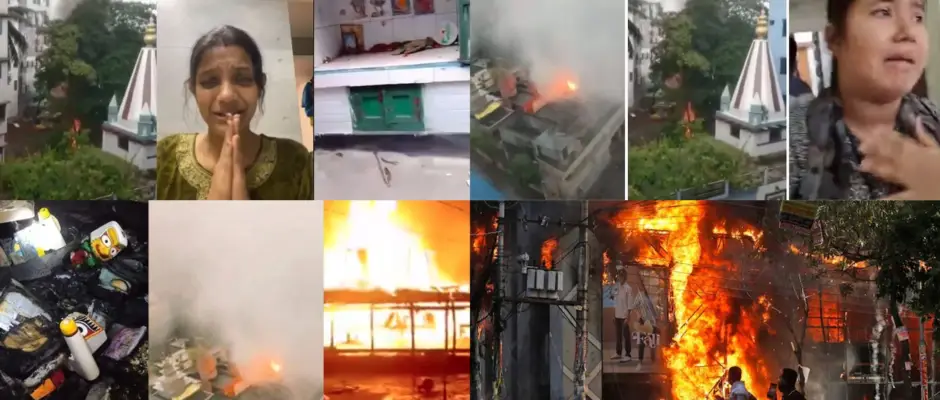
Zafar Sobhan, ���The Print’ made false, tall claims about fair treatment to Hindus. Bangladesh President Yunus came close to stating the truth, Are Hindus really not under threat from jihadists in Bangladesh? Are they safer than Muslims and other minorities in India? Well, Zafar Sobhan in a write up has made vague but determined attempt to whitewash continued atrocities against Hindus with no letup in the genocidal campaign. But, Sobhan falsely claimed that Hindus were safe in turbulent, unsettling and violence ridden Bangladesh ignoring the publicly available data, case studies and unhindered persecution. ‘The Print’ provided its columns to Zafar Sobhan for spreading these falsehoods like agenda-based international media organizations like Al Jazeera etc.   This response will methodically debunk Zafar’s fallacies and provide a true picture of minority conditions in Bangladesh. From rapes, violent attacks, forced resignation of Hindu officials to loot and occupation of their properties has become the norm while the likes of Zafar look the other way. As per Bangladesh Bureau of Statistics, Hindu population in the country has dropped drastically to 8.5 per cent in 2011and down further in last 13 years from 13.5 per cent in 1974. This demographic shift is not merely result of migration for economic opportunities but deeply intertwined with systemic discrimination, land dispossession through Vested Property Act and constant incidents of targeted attacks on Hindu society. By design and intent, Zafar seems to have downplayed incidences of violence against minorities in Bangladesh, implying that such incidents were isolated and do not reflect greater societal issues. Centre for Integrated and Holistic Studies investigations uncover that Hindu temples, businesses and houses are frequently and widely attacked particularly during times of recent political turmoil. These occurrences are not random acts of violence; they are frequently coordinated by extremist groups aiming to impose control or exploit political instability. Data for June – August 2024 indicate an organized attempt to intimidate, harm and ultimately wipe out Hindu population in Bangladesh. The attacks were carried out in several areas, targeting vulnerable individuals and religious sites. Temples in Moulvi bazar, Chittagong and Sitakunda are a few known cases of desecration that highlighted coordinated campaign of genocide and eradication. Zafar offered to paint the violent political movement that resulted in Sheikh Hasina’s departure as ‘democratic uprising free of Islamist influence’. This portrayal is inaccurate and ignores the complex realities of Bangladesh’s political scene. Islamist Influence and Extremism Emergence of extreme Islamist outfits such as Jamaat-e-Islami and Hefazat-e-Islam in Bangladesh’s political setting cannot be ignored. These organizations have documented history of campaigning for policies that oppress minorities and undermine the concept of secularism. Zafar’s denial of Islamist involvement in contemporary political movements is not supported by facts which demonstrates that these outfits have used political turmoil to promote their interests at the cost of minority oppression. Political Transitions’ Impact on Minorities In Bangladesh, it is a trend for minorities to become the targets of violent attacks during any political movements. An example of the kind of widespread violence that can result in deaths, serious injuries, significant property destruction, and vandalism of temples, was in 2021 during Durga Puja. These events demonstrate how vulnerable minorities are during times of political instability, contradicting Zafar’s assertion that minorities are safer in Bangladesh. Over years, persecution and intentional attacks against the Hindu community in Bangladesh have had a profound and long-lasting effect. For instance, massive violence against Hindus erupted in 2013 when Jamaat-e-Islami leader Delwar Hossain Sayeedi was found convicted. Around 50 temples were attacked and more than 1,500 Hindu homes were demolished. This incident fits into a larger pattern in which elections and political upheaval are followed by violent attacks against Hindus. Numerous instances occurred between 2013 and 2020, one of which was looting and demolition of 500 Hindu homes in Gopalpur village alone during the 2014 post-election riots. These acts demonstrate how this religious minority in Bangladesh is subjected to systematic and ongoing persecution. Historical Background, Persecution and Displacement It is critical to comprehend the historical background in order to evaluate current state of minority affairs in Bangladesh. The long-term patterns that have influenced lives of minorities in Bangladesh have not been sufficiently taken into account by Zafar Sobhan. Periods of severe persecution are a defining feature of the history of minorities in Bangladesh, especially during and after the 1971 Bangladesh Liberation War. Deliberate persecution of Hindus throughout the conflict and ensuing appropriation of land under the Vested Property Act have left a lasting impact on the community, leading to their uprooting and economic marginalization. During the time of struggle for Bangladesh Liberation, on March 25, 1971, the Pakistani military launched a horrific operation of genocide against Bengalis, notably on the Hindu community. Around three million individuals were killed in systematic atrocities during this genocide, which lasted until Bangladesh gained independence on December 16, 1971. At least 200,000 women were raped, and some estimates put the figure as high as 400,000. Brutality such as the Burunga massacre of May 26, 1971, when 94 Hindus were brutally killed by the Pakistani military at Burunga High School, marked the darkest height of the genocide. Over 10 million Bengalis, mostly Hindus, were forced to flee to India as a result of extensive atrocities committed by the Pakistani army, which saw no distinction between Hindu, Bengali, and Indian identities. In the blunt repercussions of the Babri structure demolition in India, Islamist groups in Bangladesh began a violent massacre against Bengali Hindus on December 7, 1992. The earliest target was the Dhakeshwari Temple in Dhaka, which was attacked and set on fire. Further targets were the Bholanath Giri Ashram, which was robbed, and the Hindu-owned jewelry stores in old Dhaka, which were destroyed. The following days saw more bloodshed when Islamist attackers in Cox’s Bazar District set fire to fourteen Hindu temples and demolished 51 Hindu houses in Ali Akbar Dale. Five temples suffered significant damage, and villages in Chittagong District such as Fatikchari and Mireswari were nearly completely destroyed by fire. By the time the

Read More