
CIHS – Centre for Integrated and Holistic Studies

Date/Time:

Blog Post

CIHS – Centre for Integrated and Holistic Studies > Articles by: Shailendra Pathak
Pahalgam Attack - A Wake-Up Call on Global Islamist Terror

Pahalgam Attack: A Wake-Up Call on Global Islamist Terror

Dr. Shailendra Kumar Pathak On April 22, 2025, the tranquil hills of Baisaran near Pahalgam, Jammu and Kashmir, were torn apart by a chilling act of Islamist terrorism. In what stands as the deadliest civilian attack in the region in nearly two decades, four terrorists opened fire on a group of tourists, killing 26 people, including one Nepali citizen, and injuring over three dozen others. Eyewitnesses and digital evidence confirm this was no random shooting. Victims were asked to state their religion. Those unable to recite the Islamic Kalma were shot at close range. Among the slain was a Hindu tourist from Jaipur, whose zipline camera intended to capture his joyful ride instead recorded his last moments, and something more damning: a zipline operator shouting “Allahu Akbar” during the attack. That operator, now under interrogation, has become a critical link in the case. In another video circulating widely, a ponywala is seen asking a tourist intrusive Islamic religious questions; his face has since been matched with a suspect sketch. Investigators have identified at least 15 locals suspected of assisting the terrorists—guides, ponywalas, and support staff, allegedly feeding information on tourist movements, faith identities, and schedules. The terrorist outfit that claimed responsibility, The Resistance Front (TRF), is not an obscure entity. It is a front for Lashkar-e-Taiba (LeT), the same Pakistani group behind 2008 Mumbai attacks, 2006 train bombings, and 2001 Parliament assault. LeT is not just listed under the UN’s ISIL (Da’esh) & Al-Qaida Sanctions List as Entity QDe.118—its leader Hafiz Saeed is individually sanctioned (QDi.263) and subject to a global asset freeze and travel ban. Yet the UN Security Council’s April 25 statement on the Pahalgam attack offered nothing more than a sterilized platitude, condemning terrorism in vague terms while refusing to name the perpetrators. This is no clerical error; it is a calculated omission, an act of diplomatic cowardice. The targeting of civilians based on identity is not new. 2008 Mumbai attacks saw Jewish hostages at the Chabad House tortured before being executed. In 2015, ISIS attackers at the Paris Bataclan theatre separated Muslims from non-Muslims before slaughtering the latter. In Sri Lanka (2019), ISIS-aligned suicide bombers killed over 250 Christians during Easter Sunday services. The Normandy church attack (2016) involved a priest being murdered at the altar by Islamic extremists. In Pakistan, churches, Ahmadiyya mosques, and Hindu temples have been bombed, often with tacit state approval or outright inaction. October 7, 2023 massacre in Israel adds a stark, contemporary comparison. On that day, Hamas militants infiltrated Israeli border communities, murdering over 1,200 civilians, including women, children, and the elderly, in homes, at a music festival, and on the streets. Entire families were executed. Many victims were burned alive or taken hostage, including infants and Holocaust survivors. These attacks were not acts of war against military targets; they were ethnic-religious pogroms, carried out with ideological hatred against Jews. Multiple reports, including intercepted communications, revealed that fighters were explicitly told to “kill Jews,” not just Israelis. This ideology-driven massacre mirrors the Pahalgam killings in its intended religious cleansing, its brutality, and its celebration by supporters afterward. Back in Pahalgam, grief has turned to fury. Families of victims, especially those who lost children and spouses, have spoken out about their sense of abandonment, not just by the security failure, but by the international community’s refusal to name the attackers. Their anger is amplified by reports of local betrayal. The suspicion that those who once served tea or led treks may have helped identify targets adds a deep psychological wound to an already devastating tragedy. Investigative agencies believe this network of collaborators may have fed attackers real-time location data, ensuring maximum carnage with minimal resistance. The hypocrisy of Kashmir’s local response adds to the cynicism. While candlelight vigils were held to project an image of peace, journalists who arrived to report on the massacre were heckled, assaulted, and chased away. This duplicity, mourning in public, silencing in private—echoes the broader playbook used by Pakistan: deny, distract, deflect. For decades, Pakistan’s military intelligence (ISI) has funded, trained, and protected groups like LeT and Jaish-e-Mohammed. In case of Pahalgam, the role of Musa, a former Pakistani army commando, is of growing interest. Intelligence sources suggest Musa may have crossed over to direct operations or provide tactical training. Yet, his name is barely mentioned in international reports, a telling sign of selective attention. The UN’s refusal to name TRF or Lashkar-e-Taiba, despite overwhelming evidence and the group’s own admission, underscores a deeper rot. If the world’s premier multilateral body cannot call out named terrorists already on their own sanctions list, it sends a message: Islamist terror enjoys immunity when it wears the right diplomatic camouflage. This soft-pedaling emboldens not only the perpetrators but their state sponsors. It reduces global counterterrorism to a performative charade. And this is not an Indian problem alone. It is a global crisis. Boko Haram in Nigeria, Al-Shabaab in Kenya, ISIS in Iraq and Syria, Taliban in Afghanistan, and Pakistani-backed groups in South Asia have all deployed religious tests as tools of mass murder. Victims are asked to recite the Quran or Kalma. If they can’t, they are executed. From Christians in Sri Lanka to Yazidis in Sinjar, from Jews in Israel to Hindus in Bangladesh and Bharat, Islamist terror follows a consistent playbook: identify the non-believer, isolate them, and eliminate them. The deeper tragedy is that much of the world still treats Islamist terror as a regional irritant rather than a global ideological threat. When white supremacists commit attacks, global condemnation is swift and names are named. When Islamist terrorists do the same, often with greater frequency and casualties, responses are diluted, obfuscated, or simply censored. The idea that naming the ideology behind terror would offend communities is both condescending and dangerous. It equates faith with fanaticism, and worse, it gives cover to ideological murderers. We must confront a hard truth: the silence of global institutions, the equivocation of Western governments, and the duplicity of UN bodies like

Read More
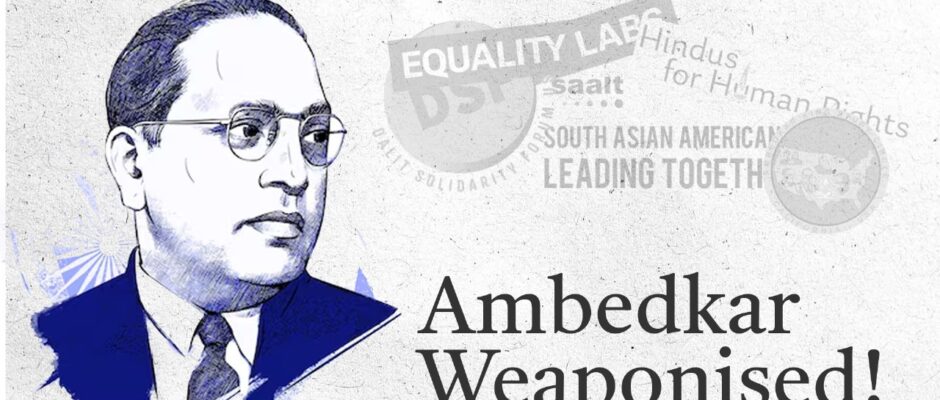
Ambedkar Weaponised!

Ambedkar Weaponised!

Neo-Ambedkarite groups in US, Europe invoke him to promote the very causes he opposed: religious dogma, separatism and ideological violence. This isn’t social justice; it’s soft warfare against Bharatiya unity in the guise of activism. Dr. Shailendra Kumar Pathak Dr. B.R. Ambedkar remains one of Bharat’s most influential and tallest intellectuals, a fierce advocate for rights of the downtrodden and architect of Bharat’s Constitution. His political, religious and philosophical views were grounded in rationalism, human dignity, national integrity, and democratic values. In recent times, however, self-proclaimed Ambedkarite groups operating from UK and US have fundamentally deviated from his original principles. These organizations that actively engage with global radical Islamist networks and evangelical Christian lobbies promote agendas that are anti-Hindu, anti-Bharat and in many cases subversive. A detailed examination of Dr Ambedkar’s original works including “Pakistan or the Partition of India,” “Buddha or Karl Marx,” the “Constituent Assembly Debates” and speeches such as “Annihilation of Caste,” reveals a clear misappropriation of his legacy by the present day outfits. To begin with, Ambedkar was never a critic of Hinduness. His sharp critique was specifically aimed at caste system and its dehumanizing effects but he never spared Islam, Christianity, or communism from scrutiny either. In “Pakistan or the Partition of India,” Ambedkar expressed grave concern about Islamic worldview. He argued that Islam fostered a brotherhood limited only to Muslims and viewed others with contempt. He wrote, “The brotherhood of Islam is not the universal brotherhood of man. It is brotherhood of Muslims for Muslims only.” Furthermore, he warned that Islamic law, which prioritizes religious allegiance over national loyalty, posed a significant challenge to Bharatiya nationalism. As per Ambedkar, Islam’s insistence on Sharia supremacy over civil laws, integration into a secular and democratic Bharat was difficult. He highlighted historical destruction of Hindu temples by Islamic rulers as proof of Islam’s violent legacy in Bharat. Ambedkar’s views on Christianity were equally candid. He noted that Christianity, while preaching equality, had historically supported slavery and racial segregation. In his view, both Islam and Christianity were unsuitable for addressing Bharat’s social issues. Their ‘universalist’ rhetoric notwithstanding, both religions, according to Ambedkar, were more interested in expanding their spheres of influence than genuinely uplifting the oppressed. This led to him embracing Buddhism and not these two faiths. Buddhism, on the other hand, he considered an indigenous, ethical, and rational path grounded in compassion and equality. In his essay “Buddha or Karl Marx,” Ambedkar contrasts moral, non-violent methods of Buddha with violent revolutionary approach of Marx. He praises Buddha for seeking to transform through inner change, rather than coercion or armed struggle. Ambedkar was also a consistent critic of communism. He saw its violent methods and contempt for individual liberty as deeply flawed. He argued that communism’s promise of a withering state and classless society masked the reality of permanent dictatorship and suppression of dissent. In his writings, he asked pointedly whether any economic end justified mass killing and loss of human values seen in communist regimes. He blamed communist labour leaders for exploiting workers to nourish their political gains and general failure of Bharat’s labour unions. Ambedkar’s political positions were deeply nationalist. He emphasized Bharat’s territorial integrity and democratic unity above sectarian or ideological interests. He criticized the Indian National Congress not because he was against the idea of Bharatiya self-rule but because Congress exploited caste and communal identities for electoral gain. He accused Congress of selecting candidates from dominant castes, thereby marginalizing truly oppressed communities. He flagged the  issue with Congress’s approach to Hindu-Muslim unity, accusing them of appeasement rather than principled negotiation. He found the Hindu Mahasabha more forthright in its communal positions than the Congress, which he believed played double games. Regarding Gandhi, Ambedkar was blunt. He criticized Gandhi’s role at the Round Table Conference, calling him petty-minded and poorly equipped to deal with complexities of communal negotiations. He accused Gandhi of widening social rifts rather than healing them. While he acknowledged Gandhi’s early concern for untouchability, he ultimately found Congress efforts tokenistic and ineffective. Funds meant for Dalit upliftment, according to Ambedkar, were misused or wasted with little real impact on the ground. Against this backdrop of rational critique and democratic commitment, neo-Ambedkarite movements emerging in West appear not only disconnected from his philosophy but actively working against it. In United States, outfits such as Equality Labs, Ambedkar International Center (AIC), Ambedkar King Study Circle (AKSC), South Asian Americans Leading Together (SAALT) and Dalit Solidarity Forum have established close working ties with global Islamist fronts and Christian evangelical networks. Their participation in “Dismantling Global Hindutva” campaign a platform notorious for anti-Hindu, anti-Bharat propaganda—exposes their alignment with ideological forces that Ambedkar explicitly rejected. Similarly, in United Kingdom, organizations like Caste Watch UK, Anti-Caste Discrimination Alliance (ACDA), Voice of Dalit International (VODI) and Europe-based International Dalit Solidarity Network (IDSN) have increasingly become vehicles for lobbying against Bharat on international forums. Rather than focusing on constructive social change or building solidarity through inclusive reforms, many of these groups engage in litigation-driven activism and diplomatic lobbying, often backed by church-linked NGOs and hardline Islamist organizations. Their rhetoric disproportionately targets Hindu identity and Bharatiya sovereignty, mirroring talking points of those who have long sought to destabilize Bharat’s national unity. Their agenda is not centered on social upliftment through moral and constitutional reform as Ambedkar envisioned but on creating a permanent atmosphere of victimhood and communal division. These groups exploit caste-based grievances to create unrest within Hindu society and push vulnerable sections toward religious conversion and even radicalization. They also romanticize violent ideologies like Naxalism which Ambedkar would have unequivocally opposed given his commitment to constitutional democracy. Ambedkar’s shift from forming Scheduled Castes Federation to proposing Republican Party of India reflects his political evolution he moved from a caste-specific platform to a more inclusive political identity aimed at uniting all marginalized groups. His emphasis was always on national unity, moral reform and social harmony. In fact, there are strong philosophical parallels between his vision and RSS concept of “Samrasta”

Read More
Keir Starmer Botches by Design

Keir Starmer Botches by Design

United Kingdom’s counter-extremism policy botches up by intent. It’s a political weapon against Hindus and offers shield for islamists. Dr. Shailendra Kumar Pathak United Kingdom’s government’s proposed new counter-extremism policy may not be well intentioned. It’s being perhaps calculative and an ideological weapon designed to shield Islamists while turning Hindus scapegoats. UK’s Home Ministry document, ‘Extremely Confused: The government’s new counter-extremism review revealed’, authored by Andrew Gilligan and Dr. Paul Stott for Policy Exchange think tank throws insights into anti-Hindu thinking of Keir Starmer government in London. This policy manipulates language, distorts extremism definitions and provide protective shield to most dangerous groups while targeting those who seek to challenge Islamist and leftist orthodoxy. The report is in itself a response to UK Home Ministry counter-extremism document prepared under the influence of left-wing and Islamist-aligned bureaucrats. Figures such as Sara Khan, Iman Atta and Robin Simcox, known for their self-proclaimed progressive and Islamist-leaning advocacy, have had significant impact on shaping this policy direction. These figures have past associations with organizations that downplay role of Islamist ideology in terrorism and instead push for a “decolonial” or “grievance-based” framework that excuses extremist behaviour. By shifting from an ideology-based to a behaviour-based approach, UK government has removed Islamism from scrutiny, despite its overwhelming role in extremism while falsely constructing a “Hindu nationalist threat” to create moral equivalence where none exists. The report highlights how Islamist terror has been responsible for 94 per cent of terrorism-related deaths in UK since 1999. Yet, the policy assigns vague, neutral labels like “grievance-based extremism” or “online radicalization” to Islamist violence. Instead of acknowledging well-documented role of Islamist ideology in grooming gangs, blasphemy violence and jihadist attacks, the policy frames these acts as “problematic behaviours” detached from ideology. “The Sprint de-centres and downplays ideology in general and Islamism in particular,” the report states, making it clear that the government is deliberately avoiding naming the most pressing extremist threat. This ensures that counter-terror resources are wasted monitoring low-level social grievances while radical mosques and Islamist networks continue operating freely. At the same time, Hindutva and Hindu nationalism are explicitly named as threats—despite no Hindu terror cases in UK. This is a deliberate effort to demonize Hindus, forcing them into a defensive position where any resistance to Islamist aggression is framed as extremism. This distortion is not accidental; it is a product of Left-Islamist alliance. The leftist establishment sees Islamist groups as allies against nationalism, traditional values, and Western identity. By falsely portraying Hindus as aggressors, they create a justification to police and silence Hindu voices. The Leicester riots of 2022 epitomized this dynamic—Islamist mobs attacked Hindu homes, temples and businesses, yet the media and government falsely framed Hindus as the perpetrators. The Policy Exchange report specifically identifies Islamist groups such as Muslim Engagement and Development (MEND) and CAGE as key influencers in shaping this policy direction. Both organizations have a history of defending Islamist extremism, with MEND previously accused of enabling hate speech and CAGE notorious for its support of jihadist figures, including defending ISIS executioner Mohammed Emwazi (“Jihadi John”). CAGE’s leadership has been linked to figures such as Moazzam Begg, who has defended convicted terrorists and consistently opposed counter-terrorism measures aimed at dismantling jihadist networks. New counter-extremism policy ensures that future anti-Hindu violence will be ignored or worse, justified under guise of fighting “Hindutva extremism.” The Policy Exchange report warns, “Expansionary definitions also risk triggering even greater and more distracting political controversy than now, from both right and left,” demonstrating that this shift will not only harm Hindus but weaken counter-extremism efforts altogether. Similarly, Khalistani separatist figures like Avtar Singh Khanda—who played a significant role in radicalizing Sikh youth—are downplayed as mere “diaspora activists.” The policy’s refusal to acknowledge Khalistani terror confirms its politically motivated agenda. How UK’s Counter-Extremism Policy Manipulates Language to Protect Islamists and Target Hindus Group Government Label Real-World Impact Islamists and Jihadists “Grievance-based extremism,” “youth violence,” “online radicalization,” “extreme views” De-ideologizes Islamist violence, making it appear as personal problem rather than a systemic movement Islamic Grooming Gangs “Organized exploitation,” “group-based sexual abuse” Avoids acknowledging religious, ethnic patterns behind these crimes Islamic Blasphemy Extremists (e.g., Batley Grammar incident) “Marginalized voices reacting to offense” Shields Islamic radicalism from accountability, while punishing those who ‘provoke’ them Hindus who defend themselves “Hindu nationalist extremism,” “Hindutva radicalization” Creates false equivalence between Hindu self-defense and Islamist violence Khalistani Extremists “Sikh activism,” “diaspora advocacy” Downplays their links to terrorism, separatist violence Broader objective behind this policy seems to create a permanent mechanism for ideological suppression. By expanding extremism to include vague categories like “misogyny,” “conspiracy theories,” and “online subcultures,” the government has provided itself with a sweeping tool to criminalize dissent. The Policy Exchange report specifically criticizes this shift, saying that “including a range of other crimes and social ills in the remit risks swamping already stretched interveners and counter-terror police with tens, if not hundreds, or thousands of new cases.” This ensures that anyone critical of Islamism, mass immigration or leftist policies can be surveilled and targeted. The reversal of protections against recording “non-crime hate incidents” further exacerbates this problem, allowing police to build unofficial records against individuals who express politically inconvenient views. Meanwhile, Islamists benefit immensely from this shift. By removing ideology from counter-extremism, the government ensures that radical preachers, jihadist recruiters and extremist organizations are treated as victims of social grievances rather than as threats to national security. This will make it even harder for law enforcement to track and dismantle jihadist networks. The rebranding of Islamist extremism as “behavioural concerns” allows Islamists to operate with near impunity while those who challenge them face legal persecution. “The Sprint may have been influenced by the events of Southport,” the report notes, warning that using lone incidents of violence as justification for broad policy shifts risks erasing the real threats posed by ideological extremism. This is not counter-extremism—it is state-sponsored assault on Hindus and a deliberate act of political repression. Instead of drawing comparison to Jewish experience, it is more

Read More
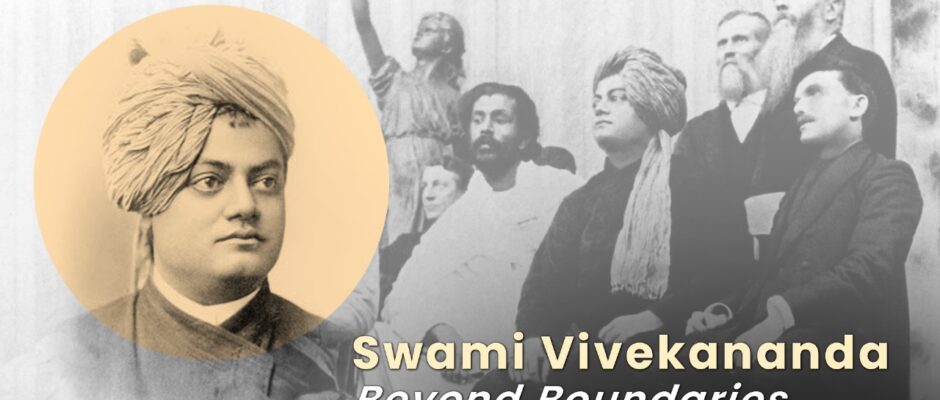
Vivekananda, Beyond Boundaries

Vivekananda, Beyond Boundaries

Swami Vivekananda’s holistic vision—where reason, faith, science, and philosophy converge—guides us today. His belief in the unity of existence inspires us to seek deeper truths beyond boundaries. Dr. Shailendra Kumar Pathak Swami Vivekananda, a luminary whose wisdom bridged epochs and disciplines, stands as a timeless exemplar of how ancient Bharatiya philosophy can illuminate the most advanced scientific inquiries. His epochal address at the 1893 World’s Parliament of Religions introduced Vedantic thought to the global stage, but this was merely a fraction of his intellectual legacy. Vivekananda’s profound grasp of Vedantic principles, combined with his reverence for scientific inquiry, inspired a generation of thinkers and continues to resonate in domains ranging from quantum physics to biotechnology. His vision was not a mere reconciliation of two seemingly divergent streams—spirituality and science—but a revelation of their shared foundation as pathways to universal truth. Vivekananda’s insights on the nature of reality anticipated many aspects of modern scientific discourse. His interpretation of Vedantic concepts such as Akasha (space or ether) and Prana (energy) aligns remarkably with contemporary explorations in quantum physics. During his conversations with Nikola Tesla, he explained how the Vedas described the fundamental unity of matter and energy. This dialogue inspired Tesla to explore these ideas in his experiments on energy transmission and wireless communication, underscoring the universality of Vivekananda’s thought. The Vedantic assertion that the universe is a manifestation of one underlying reality resonates with the principles of quantum mechanics, particularly the idea of quantum entanglement, which reveals the interconnectedness of particles regardless of spatial separation. The relevance of Vivekananda’s ideas extends beyond theoretical physics to the burgeoning field of biotechnology. His emphasis on the sanctity of life and the interconnectedness of all beings provides a philosophical framework for addressing the ethical dilemmas posed by advancements in genetic engineering, cloning, and artificial intelligence. Biotechnology, which often grapples with questions of purpose and responsibility, can draw inspiration from Vivekananda’s vision of a science guided by spiritual values. He believed that scientific progress should serve the greater good, aligning with the Vedantic principle of Lokasangraha—the welfare of the world. His call for integrating morality and science offers a crucial counterbalance to the unbridled pursuit of technological power. In the realm of neuroscience, Vivekananda’s insights into the nature of consciousness have found an uncanny echo in contemporary research. His assertion that the mind and body are interconnected systems aligns with modern understandings of neuroplasticity and the mind-body connection. The Vedantic idea of Chitta (consciousness) as a continuum that transcends individual experience mirrors the quest in neuroscience to comprehend the origins of consciousness and its universal aspects. As scientists explore meditation and mindfulness as tools for mental health and cognitive enhancement, Vivekananda’s teachings on the transformative power of concentrated thought and inner discipline gain renewed significance. Swami Vivekananda’s vision also anticipated the global shift toward interdisciplinary collaboration in research and innovation. He recognized that no single discipline could adequately address the complexities of human existence. His advocacy for blending the rigor of Western science with the depth of Bharatiya spirituality prefigured the integrative approaches now prevalent in fields such as bioethics, environmental science, and systems biology. His belief in the complementarity of external and internal exploration reflects the ethos of holistic science, which seeks to harmonize the empirical and the experiential. Moreover, Vivekananda’s philosophy has practical implications for contemporary education systems, particularly in fostering innovation and critical thinking. His call for self-reliance, Shraddha (faith in oneself), and the pursuit of knowledge as a sacred endeavor offers a compelling model for nurturing creativity and ethical responsibility in the next generation of scientists and technologists. In a world increasingly driven by artificial intelligence and machine learning, Vivekananda’s emphasis on the primacy of human values and the cultivation of wisdom over mere information remains profoundly relevant. The advancements in cosmology and astrophysics, too, bear an intriguing alignment with Vivekananda’s vision. The Vedantic view that the universe emerges from and dissolves into an infinite consciousness parallels theories of the cyclical nature of the cosmos, such as the Big Bang and the Big Crunch. Scientists probing the origins of the universe are increasingly acknowledging the limits of purely materialistic paradigms, opening the door to perspectives that transcend conventional boundaries. Vivekananda’s assertion that the universe is a dynamic interplay of energy and consciousness offers a metaphysical lens through which to interpret these discoveries. The impact of Vivekananda’s ideas is not confined to philosophical musings or theoretical sciences. It extends to applied sciences, such as renewable energy and sustainable development. His emphasis on simplicity, self-discipline, and respect for nature aligns with the principles of sustainable living, providing a moral compass for addressing the environmental crises of our time. In a world grappling with climate change and resource depletion, his teachings encourage the pursuit of technologies that harmonize with nature rather than exploit it. Vivekananda’s ability to see science and spirituality as mutually enriching pathways to understanding underscores his enduring relevance in a world increasingly shaped by technological advancements. His life and work serve as a reminder that the highest purpose of knowledge is not domination over nature but harmony with its deeper truths. As the boundaries of science expand into realms once deemed metaphysical—whether in exploring the multiverse or decoding the nature of consciousness—Vivekananda’s vision stands as a guiding light, urging humanity to balance the pursuit of knowledge with the cultivation of wisdom. In reflecting on Swami Vivekananda’s contributions, it becomes evident that his ideas transcend the limitations of time and place. He did not merely harmonize the East and the West or religion and science; he revealed their underlying unity. His vision of a science imbued with spiritual depth and a spirituality informed by scientific rigor offers a transformative paradigm for addressing the challenges of the modern age. As humanity stands on the cusp of unprecedented advancements in quantum computing, genetic engineering, and space exploration, the need for a moral and philosophical grounding becomes ever more critical. Vivekananda’s teachings provide that grounding, reminding us that true progress lies not in the

Read More
Dangerous Global Bias Goes Unchecked

Dangerous Global Bias Goes Unchecked

Hindu Temples, places of worship, communities in Western democracies and Islamic nations face grave threat and metamorphosed into a huge crisis. Dr Shailendra Kumar Pathak There’s a pattern to it. Hate and violence against Hindu communities has gone global. From Hindu temples, individuals and organizations have experienced extreme violence, vandalism and intolerance. These acts and incidents of violence have been reported in continuum with no respite to Hindus that seek to practice their faith in peace or live the Dharmic way propagating peace, tranquility and provide hope to humanity that’s under stress. From Brampton and Mississauga in Canada to Bangladesh where scores of temples have either been vandalized or closed down ‘by force’, Hindu minorities have been at the receiving end.  Khalistani terrorists, jihadists to Christian evangelists have targeted temples and places of worship even in Bharat that’s home to over a billion Hindus.  Most disturbing is that these violent incidents that totaled to over 300 in last few months went largely unnoticed or unreported. Intolerance is something that’s common to most of the violent incidents. For instance, on November 3 in Brampton, Canada, aggressive Khalistani terrorists attacked Hindu mandir in Brampton as practicing Hindus lined up for peaceful worship and Indian government representatives were busy verifying documents of elderly Sikhs and Hindus to ensure continuity in payment of pension back home. Devotees were beaten up, harassed, roughed up and pushed around violently while the Canadian police played dumb and deaf. It’s not an isolated incident. Mississauga Hindu temple was also vandalized with anti-Hindu graffiti and intimidation of extreme variety.  On November 12, 2024, Vishwa Hindu Parishad (VHP) released a comprehensive report documenting a series of attacks on Hindu communities around the world underscoring the need for attention to what many see as an escalating crisis. VHP report for 2024 documented hate crimes and attacks on temples in several nations like Canada, United States, United Kingdom, and Australia. Sharp rise in hate crimes targeting temples, cultural centers, and individuals has sent shock waves globally among 1.4 billion strong hindus spread across about 100 countries. In Canada, multiple Hindu temples faced attacks over the year including desecration of Gauri Shankar Mandir in Brampton and BAPS Swaminarayan temple in Windsor, which were both defaced with anti-Hindu slurs. United States temples in New Jersey, California and Texas vandalized and practicing Hindus harassed and defacement that included hateful messages specifically targeting Hindu beliefs and symbols were reported. This disturbing pattern suggests that these incidents are not random but part of a broader anti-Hindu agenda that is spreading in Western democracies. In United Kingdom, similar wave of anti-Hindu violence has been reported. Just last year, Leicester, a city with large South Asian population, witnessed intense anti-Hindu violence. Hindu homes, businesses and temples were attacked as mobs chanted slogans against the community, forcing Hindu families to stay indoors in fear. VHP’s report underscore that incidents like these signal an emboldened campaign against Hindu communities in societies that have long prided themselves on tolerance and inclusivity. Australia, too, has not been immune to this wave of hostility. The VHP’s November 2024 report documents attacks on Hindu temples in Melbourne where Hindu symbols were defaced with graffiti linking Hinduism to unrelated political disputes. This graffiti, filled with hateful rhetoric, was intended to shame and intimidate the Hindu community. Such acts reflect a deepening Hinduphobia that is no longer limited to casual prejudice but has manifested into violent, organized attacks on religious and cultural symbols. For Hindus living in these Western democracies, these incidents are betrayal of the promise of freedom and equality. VHP’s comprehensive report also highlights a dire situation for Hindus in neighboring Islamic countries including Pakistan, Bangladesh and Afghanistan where the situation is far more severe. In Pakistan, targeting Hindus has reached what some activists call protracted genocide. Hindu temples are routinely desecrated or destroyed, often with little to no response from authorities. Hindu girls, particularly in Sindh, face an alarming risk of abduction, forced conversion and marriage to much older Muslim men. VHP’s report included recent cases of Hindu girls being forcibly converted, torn from their families and left without any recourse for justice. Such violence and intimidation have become daily reality for Hindus in Pakistan where systemic discrimination allows these crimes to go largely unchecked. In Bangladesh, Hindus are staring at total erasure. VHP report notes that in early August 2024 in a span of five hours more than 50 attacks were recorded on Hindu homes, temples and businesses across various districts in Bangladesh. In places like Feni and Dinajpur, Hindu temples were desecrated and homes looted. Reports indicate that mobs of hundreds gathered to burn Hindu homes and assault community leaders as witnessed in multiple Bangladeshi districts such as Khulna, Satkhira and Bogura. This wave of violence has drawn international attention, as videos of the attacks went viral on social media showing mobs surrounding Hindu households, desecrating temples and forcing residents to flee their homes. VHP’s extensive list of incidents in its November 2024 report illustrates alarming scale and frequency of these attacks. It emphasizes that this violence against Hindus often has ideological backing, particularly from radical Islamic factions or Khalistani extremists which justify hostility toward Hindus under religious pretexts. VHP draws attention to anti-Hindu sentiment driven by certain missionary groups which promote aggressive conversion agendas in South Asia. This dynamic, the VHP argues, reveals that anti-Hindu prejudice is not only pervasive but systemic, fueled by a mix of religious and cultural biases. Equally concerning is general lack of accountability or response. When Hindu temples are attacked in Canada or Australia, political leaders and media outlets often remain mute spectators contrasting sharply with the swift response seen for crimes against other communities. This discrepancy has led many within the Hindu diaspora to question double standard practiced in international houses in reporting hate crimes. VHP has noted that Hinduphobia remains underreported and misunderstood, even as acts of Hindumisia (hatred for Hindu beliefs and practices) rise steadily. Unlike Islamophobia or anti-Semitism which are widely

Read More

RSS Initiative To Revive Family Bonding, Values

Dr.  Shailendra Kumar Pathak In a rapidly evolving world, family structures and values are undergoing significant transformations. The Rashtriya Swayamsevak Sangh (RSS), a prominent socio-cultural organization in Bharat, has recognized the importance of preserving and revitalizing family values amidst the encroaching influences of Western lifestyles, consumerism, and woke culture. Through its Family Awakening Programme, the RSS aims to reconnect Bharatiya families with their cultural roots, drawing inspiration from ancient Hindu scriptures and multi millennia long civilizational experiences. In Bharatiya culture, the family has always been the cornerstone of societal structure. This belief is deeply rooted in Bharatiya spiritual worldview, where the family represents the initial step in the journey from “Me to We.” The traditional Bharatiya family, often extended and inclusive of multiple generations living under one roof, is rooted in values such as respect for elders, filial piety, communal harmony, and moral integrity. These values are not merely social constructs but are deeply embedded in the cultural and spiritual fabric of the nation. Family and its values are the key architects of shaping individuals’ personalities and moral compasses. They provide a framework for personal development, ethical behavior, and emotional stability. On a broader scale, strong family values contribute to societal cohesion, reducing crime rates and promoting social harmony and National progress . Studies have shown that children raised in families with strong value systems tend to exhibit higher levels of academic achievement, emotional intelligence, and resilience. The foreign invasions, intruder’s rule and the globalization wave have brought Western lifestyles into Bharatiya homes, often clashing with traditional values. While modernization and technological advancements have their merits, the uncritical adoption of Western lifestyles leads to a dilution of family bonds. Individualism, a hallmark of Western culture, often prioritizes personal goals over collective family interests, leading to fragmented family units. Consumerism, an integral element of western life style which is characterized by the relentless pursuit of material possessions, has significantly impacted family dynamics. The pressure to acquire and consume often diverts attention from familial relationships. Parents, engrossed in their careers to meet consumer demands, may inadvertently neglect their children’s emotional needs, leading to a lack of familial cohesion and support. The rising wave of Woke culture in pretext of social justice and political correctness, inclusiveness and equality has led to generational rifts within families. It is developing a common perception among new generations that Traditional values are outdated or regressive. This cultural shift is leading not only to conflicts between older and younger generations but blocking the intergenerational transmission of values and wisdom. Restoring family values and strong bonds is crucial in maintaining social stability and preventing the erosion of cultural and moral foundations. Families serve as the primary unit of socialization, instilling values, traditions, and a sense of belonging that strengthens individual identity and community cohesion. When family bonds are strong, individuals are less likely to seek meaning or identity in external influences such as religious conversion or the often polarizing narratives of woke culture. A solid family foundation provides emotional support, moral guidance, and a sense of purpose, which are essential in resisting trends that can lead to social fragmentation, individual isolation, and even national decline. By reinforcing these values, society can foster a more resilient and unified nation, capable of withstanding divisive influences. The RSS’s ‘Kutumb Prabodhan’ Initiative The RSS, inspired by Bharat’s glorious cultural heritage and ancient Hindu scriptures, has launched the Family Awakening Programme popularly known as ‘Kutumb Probodhan’ to revitalize the traditional Bharatiya family structure by reconnecting individuals with their cultural and spiritual roots. The ‘initiative was conceived by the RSS as part of its broader mission to strengthen the social fabric of Bharat. The RSS has always placed a strong emphasis on cultural nationalism and societal cohesion. The family is considered the most fundamental and important unit of Bharatiya society, and the RSS launched ‘Kutumb Prabodhan’ to reinforce family bonds and instill traditional values. The philosophy of ‘Kutumb Prabodhan’ is deeply rooted in Bharatiya cultural and spiritual traditions. It draws inspiration from ancient texts, teachings, and practices that emphasize the importance of family as the cornerstone of society. The concept of “Kutumb” (family) holds a significant place in Hindu culture and scriptures. It is seen not just as a social unit but as a foundation for spiritual and moral values. The RSS initiatives draw its inspirations from these scriptures and adopts a holistic approach to well-being, recognizing that family health is not just physical but also emotional, psychological, and spiritual. Key Initiatives and Activities The RSS Kutumb Prabodhan (Family Awakening) programme has seen notable success in fostering family values and unity across India. In Pune, a middle-class family, struggling with generational communication gaps, found renewed harmony after participating in the programme’s workshops. The sessions emphasized mutual respect and understanding, leading to improved relationships between the younger and older members. Similarly, in Lucknow, a family dealing with the pressures of modern life used the principles taught by Kutumb Prabodhan to prioritize quality time together, resulting in strengthened bonds and a more supportive home environment. In a rural village in Madhya Pradesh, the programme’s emphasis on cultural and moral values helped a family overcome internal conflicts, promoting peace and collaboration in their household. There several thousand similar family betterment success stories by the RSS’s initiatives. The RSS family awakening program’s holistic approach, combining education, community service, and spiritual guidance, has made a tangible impact on numerous families across Bharat. In a world where family structures and values are increasingly challenged by external forces, the RSS’s Family Awakening Programme stands as a beacon of hope. By reconnecting families with their cultural and spiritual heritage, the RSS aims to restore the sanctity of the family unit and promote a more harmonious and fulfilling human existence. The teachings of ancient Bharatiya Hindu scriptures offer timeless wisdom that can guide families in nurturing values, fostering unity, and achieving collective well-being. As families across Bharat embrace these initiatives, the vision of a society rooted in strong family values and cultural pride

Read More

Balancing Tradition and Modernity: Explore RSS’s Swa Philosophy for Future Bharat

Rashtriya Swayamsevak Sangh (RSS), a prominent Hindu centric movement in Bharat, has consistently championed the concept of “Swa” or self-reliance. This principle is a cornerstone of the RSS’s five-fold transformation agenda, emphasizing a self-sufficient and sovereign nation. The roots of this idea are deeply embedded in ancient Bharatiya wisdom and philosophy, which played a significant role during the Indian freedom struggle. Dr. Shailendra Kumar Pathak The concept of Swa, or self-reliance, is not new to Bharatiya thought. It finds its origins in ancient Hindu scriptures and philosophies, which emphasize the importance of self-sufficiency and inner strength. Vedas, Upanishads, and Bhagavad Gita all advocate for self-dependence and personal growth as a means to achieve higher state of being. In the realm of education, Swa emphasizes the importance of indigenous knowledge and learning systems that are rooted in Bharat’s rich cultural heritage. Traditionally, Bharatiya education was imparted through Gurukuls, where students received holistic education including Vedic scriptures, mathematics, science, philosophy, and arts. This system fostered self-discipline, ethical values, and a deep connection with nature and society. Reviving this model, modern initiatives have focused on integrating traditional knowledge with contemporary education. For instance, Gurukul system is being adapted to contemporary contexts, promoting a balanced education that nurtures intellectual, emotional, and spiritual growth. Philosophy of Swa in healthcare is reflected in the prominence on Ayurveda and other traditional healing practices. Ayurveda, an ancient Indian system of medicine, focuses on the balance between body, mind, and spirit. It advocates self-care and preventive measures through natural remedies, diet, and lifestyle adjustments. This approach aligns with the global shift towards holistic health and wellness. Institutions like All India Institute of Ayurveda are working towards integration of traditional practices with modern medical science, highlighting the relevance of Swa in promoting a comprehensive healthcare system. Agriculture in Bharat also embodies the principle of Swa, particularly through sustainable farming practices. Traditional Bharatiya agriculture emphasized harmony with nature, using techniques like crop rotation, organic farming, and water conservation. These practices are being revived to address modern challenges viz., soil degradation, water scarcity, and climate change. Movements like organic farming and natural farming, inspired by traditional knowledge, are gaining momentum, promoting food security, environmental sustainability, and farmer self-reliance. Idea of Swa is reflected in a large treasury of arts, crafts, and literature that are part of the Bharatiya knowledge system. Classical dance, music, and painting are examples of traditional art forms that represent the cultural identity and spiritual ethos of Bharat. These artistic endeavours are essential to the social and cultural fabric and go beyond simple modes of amusement. In order to keep these customs alive and relevant, organisations and cultural institutions are actively working to promote and maintain them. The significance of self-governance and community-driven development is implied by Swa in the context of governance and social organisation. Decentralised government, like the Panchayati Raj system, gives local groups the authority to manage resources and make decisions. This system promotes local accountability and participatory democracy by mirroring the age-old Bharatiya practice of village self-governance. Moreover, the principle of Swa in Bharatiya knowledge system extends to spiritual and philosophical realms. Bharatiya philosophy, particularly Vedanta, emphasizes self-realization and self-awareness as paths to ultimate truth. Teachings of sages like Adi Shankaracharya, Ramana Maharshi, and Swami Vivekananda focus on understanding the self and achieving inner peace and enlightenment. These teachings have universal appeal and continue to influence global thought on spirituality and human consciousness. RSS’s conception of Swa is largely based on these archaic writings and customs, which see self-reliance as a complex idea with elements of the social, cultural, spiritual, and economic spheres. It advances the notion that real independence and prosperity can only be attained by a country, just like by an individual. Swa and Bharatiya Freedom Struggle Concept of “Swa” (स्व), was crucial to India’s freedom movement emphasising self-determination, and self-governance. Deeply ingrained in Indian philosophy, the idea of “Swa” impacted numerous leaders and movements working to free India from British colonial rule. Mahatma Gandhi and Swaraj Swaraj: Literally meaning “self-rule,” this was one of Gandhi’s main points of contention. Gandhi saw Swaraj to be self-governance and self-sufficiency on a personal and communal level in addition to political independence. Swadeshi Movement: Gandhi used the word “Swa” directly when he called for an Indian industrial boycott and a boycott of British goods. He promoted the use of hand-spun khadi as a symbol of independence.Khadi & Village Industries: Traditional crafts and small-scale industries were to be revived as part of Gandhi’s vision of self-sufficient villages. This was viewed as a means of empowering nearby communities and achieving economic independence. Non-Cooperation Movement: This movement, which took place between 1920 and 1922, encouraged Indians to adopt self-reliance and disengage from British institutions in order to reject British control peacefully.Gangadhar Bal Tilak: “Swaraj is my birthright, and I shall have it.” This well-known statement of Tilak emphasised Indians’ entitlement to self-governance. He was a fervent supporter of gaining independence by self-help and education. RSS’s Five-Fold Transformation Agenda RSS’s five-fold transformation agenda, known as Panchamukhi Vikas, aims at holistic national development. Swa, or self-reliance, is a key component of this agenda, which also includes the revitalization of education, health, economy, and spiritual and cultural values. Components of Panchamukhi Vikas (Five Faceted Development) Implementation of Swa The concept of “Swa” by the Rashtriya Swayamsevak Sangh (RSS) emphasizes self-reliance, self-respect, and a commitment to cultural and social development rooted in indigenous values. This philosophy has been implemented through extensive work across various sectors in Bharat, leveraging statistics, examples, and case studies to illustrate its impact. In the realm of education, the RSS has promoted self-reliance by establishing numerous educational institutions through its inspired organizations like Vidya Bharati, which runs around 13,000 schools with over 3 million students enrolled. These schools focus on holistic development, integrating modern education with traditional Bharatiya values. A case study of Saraswati Shishu Mandir schools reveals a significant improvement in student performance and community involvement. These institutions not only emphasize academic excellence but also instill a

Read More

Bharat’s Democratic Credentials Celebrated

Reviving spirit of civic duties and responsibilities is RSS way of contribution through transformative agenda for future Dr Shailendra Kumar Pathak Bharat’s democratic ethos is deeply embedded in its history, a legacy that stretches back thousands of years, marked by principles of inclusive governance, participatory decision-making, and the power of dialogue. Hindu centric Rashtriya Swayamsevak Sangh has taken upon itself to promote civic consciousness and participation of citizenry in civic affairs as part of its five-fold transformative agenda. Bharat’s democratic traditions predate many celebrated milestones in global governance. One such remarkable example is the Uttiramerur inscription dating back to tenth century. This inscription details an advanced electoral system implemented in the village of Uttiramerur predating Magna Carta (Royal Charter of Rights agreed to by King John of England in 1215) by over 800 years. This system involved detailed rules for election of local council members with eligibility criteria based on moral integrity and knowledge, ensuring that leadership was capable and trustworthy—a testament to Bharat’s early embrace of democratic principles. Ancient Bharatiya texts like Mahabharata and Ashtadhyayi provide insights into concepts of ‘Gana’ and ‘Sangha’, Republic and assembly, functioning through collective decision-making, emphasizing dialogue and consensus. Vedic period further enriched this tradition with institutions like ‘Samiti’ and ‘Sabha’, councils responsible for discussing and deciding on issues of public importance, fostering a sense of participation and ownership among the people. In twelfth century, the Anubhava Mandapa of Basavanna, a popular Scholar and a Hindu sage in Karnataka served on a forum where mystics, saints and scholars discussed issues encompassing society, economy, culture, spirituality, and well-being of the entire kingdom, embodying inclusive governance and collective dialogue. RSS and Civic Awareness RSS, founded in 1925, has consistently emphasized civic duty and national service as central to its objective of a vibrant society, Rich democratic credentials of Bharat became the basis for RSS belief that civic engagement was key to building a strong, disciplined nation with character. Programmes aimed at spreading awareness on national issues, encouraging responsibility for the nation’s wellbeing and evolving a cohesive and culturally rooted Rashtra (nation) became part of the five-fold objective of RSS. Philosophical basis for RSS to extensively undertake civic consciousness drive was Pandit Deendayal Upadhyay’s concept of ‘Lokmat Parishkar’ or Public Opinion Refinement. Deendayal Upadhyay, a prominent thinker, advocated refinement of public opinion through education, dialogue and active citizen participation in governance. This also forms the basis for RSS campaign on promoting civic duties for encouraging active democratic participation. RSS has been at forefront of highlighting Bharat’s cultural, economic, and scientific achievements with the belief that strong sense of national pride was essential for a cohesive society and robust democracy.  Its educational initiatives emphasize Bharat’s rich heritage, from contributions of ancient scholars like Aryabhata and Sushruta to achievements of modern scientists and technologists. RSS has been instrumental in recognizing and honouring individuals who contributed significantly to Bharatiya society. By promoting role models and celebrating their achievements, RSS has championed to foster a culture of excellence and national pride. Advanced Approach for Civic Awareness RSS’s civic awareness programmes are not just an extension of duties outlined in Article 51A of the Bharatiya Constitution. RSS outlook towards civic duties and responsibilities are much more advanced, robust, genuine and comprehensive. Article 51A of Indian Constitution emphasizes fundamental duties such as respecting Constitution, promoting harmony and protecting public property. While these are important, they represent a minimal baseline for civic responsibility. RSS’s educational initiatives strengthen this by offering a deeper understanding of Bharat’s cultural, historical and scientific heritage. These programs are designed not just to inform but to inspire active participation in the nation’s development. For instance,  RSS doesn’t just promote constitutional literacy but delves into philosophical underpinnings of Bharatiya democracy, drawing from ancient texts and historical precedents. This educational depth fosters a more profound sense of civic duty, encouraging citizens to engage in governance and contribute to society’s progress. Article 51A calls for promotion of harmony and spirit of brotherhood. RSS approach to social cohesion is far more proactive and works to bridge social divide, alleviate conflicts and foster unity among Bharat’s diverse population.  Inspired initiatives fostering dialogue and mutual understanding, ensuring that the spirit of brotherhood is not just a legal obligation but a lived reality. Moreover, while Article 51A mentions the promotion of harmony, it does not address mechanisms for achieving it.  RSS fills this gap by engaging directly with communities, fostering relationships, and building trust across social divides, thereby creating a more cohesive and resilient society. Article 51A emphasizes participation in governance as a fundamental duty.  For this, RSS approach is more dynamic and continuous. It doesn’t just encourage voting but advocates for all along civic participation that includes involvement in local governance, community decision-making and holding government accountable. RSS ensures that democracy is not just a periodic activity but an ongoing process where citizens are actively involved in shaping their communities and the nation. One of the standout initiatives in  RSS civic duty mission is its campaign for 100 per cent voter turnout. While Article 51A emphasizes the importance of voting as civic duty, RSS campaign takes this a step further by striving for complete voter participation in every election. The organization believes that democracy can only be truly representative when every eligible citizen exercises their right to vote. RSS launched extensive awareness drives particularly in rural and underserved areas. These campaigns involved door-to-door outreach, community meetings, and use of local media to educate people. By these efforts, RSS ensured that every voice is heard, making the democratic process more inclusive and representative. This commitment to engagement at grassroots highlights RSS belief in the power of democracy and its determination to make Bharat’s democracy as robust as possible. The focus on achieving full voter participation goes beyond the fundamental duties outlined in Article 51A, reflecting RSS more comprehensive and proactive approach to civic responsibility. Framework for National Development Civic duties outlined in Bharat’s Constitution are broad and general, providing a framework for responsible citizenship. RSS approach,

Read More

Sustainable Environment, A Way to Growth & Life

RSS works towards bridging ancient Hindu environment wisdom and modern ecological practices through its campaigns. Dr Shailendra Kumar Pathak Hindu and Bharat centric, Rashtriya Swayamsevak Sangh (RSS) has embarked on a massive mission to campaign on environmental issues and make economic development inclusive and sustainable. As part of this campaign for preserving environment and ‘mother’ earth’s environment and re-build the ecosystem, RSS has drawn up significant plans drawing heavily from ancient Hindu scriptures and folk cultures. As part of its five-fold transformative programmes, RSS has placed emphasis on environmental awareness, seeking to harmonize traditional wisdom with contemporary ecological practices and contribute to advancing environmental protection ideas rooted in Hindu teachings and folk traditions. RSS and Environment Rashtriya Swayamsevak Sangh (RSS) is a Bharatiya Hindu nationalist volunteer driven socio-economic movement that was founded in 1925 by a staunch nationalist and freedom fighter Dr Keshav Baliram Hedgewar. Known for its disciplined structure and commitment to societal transformation, RSS has evolved its strategies to address various socio-cultural and environmental issues. In recent years, RSS has initiated several programmes under five-fold transformation agenda, one of which focuses on environmental awareness and protection. Conventional wisdom and geo-culture centric environment related campaigns run by RSS are part of its fivefold transformative agenda that also has social harmony, self-reliance, family awakening and civic duties. Environmental awareness, sensitization and family-based campaigns seek to integrate age-old environmental philosophies from Hindu scriptures and folk cultures into modern environmental protection strategies. Hindu scriptures are replete with teachings that emphasize on sanctity and protection of nature. These texts offer profound insights into maintaining ecological balance and promoting sustainable living. RSS has tapped into these resources to shape its environmental initiatives. Vedas, among the oldest and most revered Hindu scriptures, contain numerous references to natural world and its elements. The Rigveda, for instance, includes hymns that praise various aspects of nature such as rivers, trees and animals. These hymns reflect deep respect for nature and an understanding of its critical role in sustaining life. The hymn, Prithvi Sukta – Hymn to Earth — from Atharva Veda venerates Earth as ‘mother’ and underscores the interdependence between humans and nature. It promotes the idea of living in harmony with environment and calls for protection of natural resources. Bhagavad Gita, the 700-verse Hindu scripture that is part of Indian epic Mahabharata also contains significant environmental wisdom. Lord Krishna, in his discourse to Arjuna, speaks about interconnectedness of life and importance of performing one’s duty without exploiting nature. Concept of Yajna in Bhagawad Gita emphasizes selfless actions for greater good which includes environmental conservation, protection and sustainability. The practice of Yajna is seen as a way to honour and sustain natural world. Puranas, a genre of ancient Indian literature, consist of narratives about history and evolution of universe, creation and genealogies of Gods, heroes, and sages. Many stories within the Puranas advocate protection of environment. Matsya Purana includes guidelines for afforestation and preservation of water bodies highlighting the importance of ecological balance and sustainable resource management. Bharat’s rich tapestry of folk cultures and traditions also holds a treasure trove of ecological wisdom. These practices passed down through generations offer practical insights into sustainable living and environmental stewardship. Sacred groves that are patches of forest or natural vegetation continue to be conserved on religious or faith-based practices. These groves are protected by local communities due to their spiritual significance and often associated with deities and ancestral spirits. Sacred groves act as reservoirs of biodiversity, preserving various plant and animal species. RSS has been actively involved in identifying and preserving these groves, recognizing their ecological and cultural importance. Environment & Traditional Agriculture Traditional agricultural practices in Bharat are inherently sustainable, focusing on crop diversity, organic farming and natural pest control methods. Vrikhsa Ayurveda, an ancient Bharatiya practice involves the science governing plant life. It includes detailed descriptions of soil types, plant diseases and organic remedies. RSS has promoted such practices to encourage organic farming and reduce dependency on chemical fertilizers and pesticides. RSS has effectively utilized the wisdom from ancient scriptures and folk traditions to design and implement various environmental protection initiatives. These initiatives aim to address contemporary ecological challenges while staying rooted in traditional values. One key element in environmental activities undertaken by RSS is afforestation and large-scale tree plantation drives. Inspired by reverence for trees found in Hindu scriptures, these drives aim to combat deforestation and promote greenery. RSS organizes Vriksha Bandhan, an initiative where people tie sacred thread around trees, symbolizing their commitment to protect and nurture them. This practice draws from ancient Indian custom of Raksha Bandhan and emphasizes the bond between humans and nature. Water Conservation Projects Water conservation is another critical area where RSS has made significant contributions. Drawing from traditional water management practices mentioned in texts like Artha-shastra and Manusmriti, RSS has implemented projects to preserve and manage water resources. Similarly, Jal Sanchar Abhiyan focuses on construction and restoration of traditional water bodies such as step wells, ponds and lakes. RSS volunteers have established partnership with local communities to revive these structures, ensuring sustainable water management. RSS advocates organic farming practices that are deeply rooted in ancient agricultural traditions. By promoting use of natural fertilizers and pest control practices, RSS aims to create a more sustainable agricultural system. Under Krishi Bhushan Yojana, RSS provides training and resources to farmers to adopt organic farming techniques. This initiative not only helps in preserving soil health but reduces environmental impact of conventional farming practices. In addition to on-ground initiatives, RSS places a strong emphasis on environmental education and awareness. By educating the masses about environmental teachings found in Hindu scriptures and folk traditions, RSS aims to foster a culture of environmental responsibility. Periodically, RSS shakhas or swayamsevaks / volunteers conduct various campaigns in schools and colleges to educate young minds about the importance of environmental conservation. These programmes often include lessons on ecological wisdom of ancient Hindu texts and practical activities like tree planting and waste management. RSS also supports formation of Eco- clubs

Read More