CIHS – Centre for Integrated and Holistic Studies

Date/Time:

India Stopped an ISIS-K Bio-Terror Plot the World Needs to Talk About

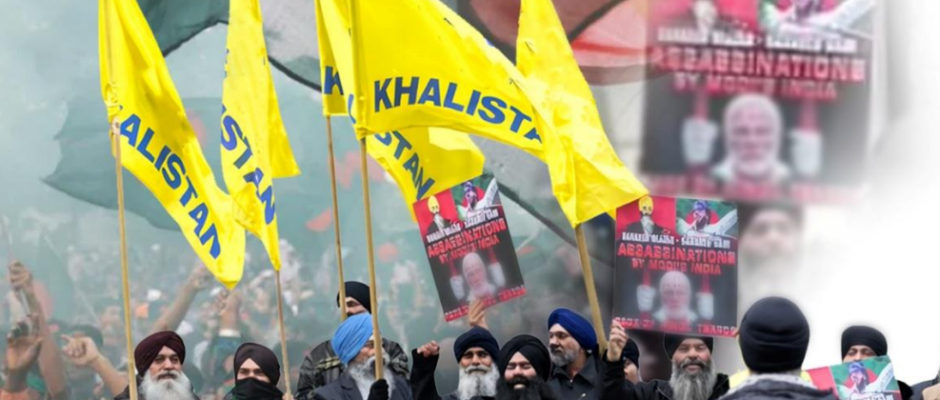
An ISIS-K bio-terror attack that could have killed over a hundred thousand people was just stopped in India. Why isn’t the world talking about it? Rahul PAWA In a world saturated with headlines of conflict and calamity, an extraordinary victory against terrorism has gone almost unnoticed beyond specialist circles. Indian authorities quietly dismantled a bio-terror plot so chilling in ambition that its success would have rewritten the story of global security. Just days ago, India’s Gujarat Anti-Terrorism Squad (ATS) dismantled an Islamic State Khorasan Province (ISIS-K) cell, the South Asian affiliate of the Islamic State preparing to unleash a mass biological terrorist attack. At its core lay ricin, a toxin so lethally efficient, one of the deadliest known toxins, derived from something as ordinary as the castor bean. It was a scheme as simple as it was monstrous, poisoning the essentials of life itself, and it was stopped just in time. Its story came to light with an arrest that barely drew notice. Acting on specific intelligence, Gujarat ATS arrested Dr Ahmed Mohiyuddin Saiyed, a China-educated MBBS graduate, in Ahmedabad for his links to ISIS-K. Investigators say he had been extracting ricin from castor oil, four litres of which were recovered from his possession and had already procured laboratory equipment and begun initial chemical processing when officers arrested him.  According to police sources, his plan was as insidious as it was horrific: to poison public drinking water supplies and even food (prasad) at Hindu temples, thereby silently killing masses of civilians. Officials estimate the plotters intended to kill “scores of people” and were aiming for catastrophic casualties. In worst-case scenarios, analysts have speculated that hundreds of thousands of lives might have been at risk, had a major water reservoir or a large temple gathering been successfully poisoned. The ambitious reach of this foiled plot underlines why it deserves far more international attention. This was not a lone wolf or a fringe fanatic acting in isolation; it appears to have been coordinated by ISIS-K, working through educated operatives. Dr. Saiyed’s handler, Abu Khadija, was an Afghanistan-based terrorist associated with ISIS-Khorasan, and he potentially arranged arms deliveries for the cell via drones crossing the Pakistan border. Saiyed did not act alone. Two other accomplices, 20-year-old Azad Suleman Sheikh and 23-year-old Mohammad Suhail from Uttar Pradesh, India’s northern state were arrested alongside him. These men had spent the last year conducting reconnaissance on potential targets across India, scoping out crowded public places where a poison attack could yield maximum chaos. Among the locations they surveilled were Asia’s largest wholesale produce market in Delhi (Azadpur Mandi), a bustling fruit market in Ahmedabad, and even the headquarters of RSS, a prominent social organisation in Lucknow. The chosen targets, places of food, water, community life, speak volumes about the terrorist’s cruel intent to strike at the very heart of ordinary society. By targeting temple prasad (food offered to Hindu devotees) and municipal water, they aimed to turn sustenance into a weapon. The depravity is chilling. Ricin itself is a nightmare agent. Tasteless and deadly, it is classified as a Category B bioterrorism agent under the Chemical Weapons Convention. A dose of a few milligrams can kill an adult if delivered effectively, and there is no antidote. Notably, ricin is not a typical weapon in the terrorist arsenal. it has surfaced mostly in fringe plots and isolated incidents (such as poisoned letters addressed to U.S. Presidents Barack Obama and Donald Trump in past years), but never before at this scale. The rarity of ricin attacks is partly why this plot is so alarming: intelligence agencies warn that ISIS and its affiliates have been actively discussing bio-terror tactics in encrypted chats, marking a strategic shift towards unconventional methods. In other words, the very fact that jihadist groups are exploring bioweapons is a worrisome evolution of terror. Unlike bombs or guns, a biological or chemical attack can sow panic far beyond the immediate victims. It contaminates the basic trust we place in our communal resources. As one counter-terror official noted, poisoning a city’s water or food supply would not only kill people but “wreak havoc in the minds of the people”, inflicting psychological trauma on society at large. Had the ricin plot succeeded, it could have easily been one of the deadliest terror attacks in modern history, a silent mass murder stretching over days or weeks as poisoning victims fell ill, and an entire populace plunged into fear. Thankfully, that nightmare never came to pass. Indian security forces acted on a tip and caught the plotters red-handed, seizing their cache of castor oil, weapons (including imported semi-automatic pistols), and digital evidence of their plans. The swift operation, coordinated by Gujarat ATS with central intelligence support, likely saved countless lives. It was, in effect, a major victory in the global fight against terrorism. Yet outside of India, this triumph registered barely a blip. Global media outlets that routinely headline terror incidents offered only cursory reports, if any, on India’s ricin plot bust. Why? One reason may be that success stories simply garner less attention, when disaster is prevented, there are no dramatic visuals of carnage to propel 24/7 news coverage. A bomb that didn’t go off is often a footnote, while a bomb that explodes is breaking news. This asymmetry in coverage creates a perverse situation where we pay more heed to terrorist violence than to vigilance that averts violence. There is also an uncomfortable truth about geographic bias. Had a quarter-million people in a Western city been in danger from a foiled bio-attack, one suspects it would dominate international headlines and talk shows. But when such a plot is foiled in India, it struggles to capture the world’s imagination. This is despite the fact that ISIS’s operations in South Asia are very much a global concern, the ISIS-K module behind the ricin plot has ties spanning Afghanistan and Pakistan, and reflects the same menace that threatens cities from London to New York. Indeed, an Indian investigation report recently

Read More

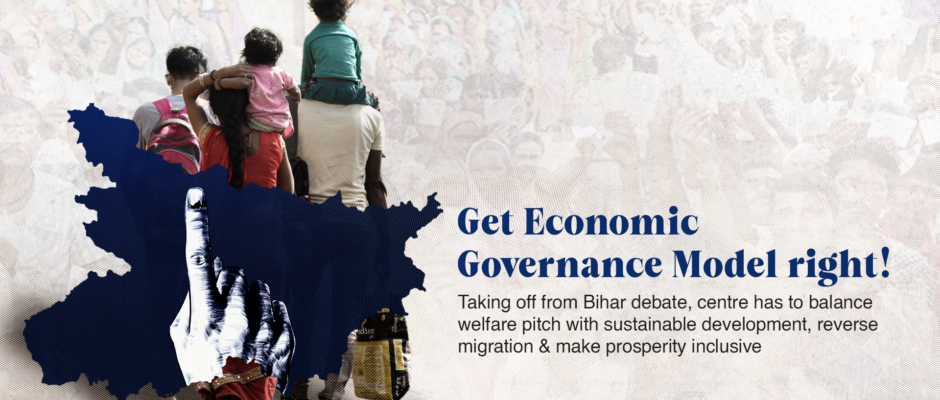
Get Economic Governance Model right!

Taking off from Bihar debate, centre has to balance welfare pitch with sustainable development, reverse migration & make prosperity inclusive K.A. Badarinath Two simultaneous developments have had happened. Both these, though unconnected, have a linkage of sorts. Our most vibrant state, Bihar has gone to polls and a new government will be in place few days from now. On the other end, finance minister Nirmala Sitharaman has begun a mammoth exercise to present her next federal budget on February 1, 2026. One could be wondering as to what’s the linkage between the two albeit even indirectly. This budget will have to put together a new model for socio-economic development taking on board political freebies that are promised in state legislative assembly elections or Lok Sabha polls. Freebies, Revdies & Social welfare Not many socio-economic analysts or thinkers would support the idea of a welfare state in a globally inter-connected world of markets, investments and trade that’s fiercely competitive. Ahead of state elections, Nitish Kumar led BJP – JDU alliance with splinter parties in tow announced two big projects. Through Mukhya Mantri Mahila Rojgar Yojana (MMRY), Rs 10,000 was given to each of 1.5 crore women through direct benefits transfer (DBT). About 1.1 crore elderly women, widows and disabled were given enhanced pension of Rs 1100 from earlier Rs 400 per month. The two schemes alone added an extra outgo of Rs 14240 crore that constitute about six per cent of total revenue expenses of Rs 252,000 crore for 2025-26. Over and above, BJP – JDU led National Democratic Alliance has promised free power, water supply, one crore jobs, higher support to farmers etc in its bid to return with a thumping mandate. Some bracket these freebies as tools for socio-economic empowerment while others call them ‘Revdis’ or vote doles’, the sweet snack made out of sesame seeds and jiggery. Well, the debate is not about direct benefit transfers which have been refined by Narendra Modi government as surest way of reaching benefits to the needy, eliminate inefficiency and pilferage of funds. Larger question is what’s the sustainable model of economic governance that Bharat should adopt to expand, deepen her growth story and spread prosperity? Cash doles can at best act as booster dose for economic empowerment on temporary basis but unsustainable in the long run as experienced in several states including Karnataka, Himachal Pradesh and now Madhya Pradesh and Maharastra. Skilling and competencies, creating work opportunities for goods and services, low-cost credit support to making large chunk capital investments that create jobs may be sustainable. No two economists agree on either of the models for development. A blend of these two approaches may be workable in the medium to long term. Taking Bihar as latest to join the bandwagon of states on the cusp of economic development, Finance Minister Nirmala Sitharaman would do well in providing clarity on approach to economic development. For several years, NDA, BJP and Prime Minister Narendra Modi resisted temptation of going populist through their campaigns in states and centre. But, competitive populism practiced by its political rivals has pushed NDA to rethink on ‘freebies’ or cash doles as a ‘winning formula’ and ‘economic empowerment’ tool. Both, Karnataka and Himachal Pradesh states have been pushed into economic chaos or deep debt burden by respective Congress governments that promised the moon in their political campaigns drawing inspiration from Aam Admi Party’s manifestos in Punjab and Delhi. Therefore, big question to be addressed by finance minister Sitharaman was salience of freebies. Mirgration & Economic Empowerment Both NDA and opposition parties led Maha ghatbandan have made huge promises on jobs to win votes in Bihar. One crore jobs have been promised by NDA and one government job in each Bihar family is what Rashtriya Janata Dal has promised. Jobs creation, investments and migration have direct and intricate linkages in Bihar and elsewhere. As per New Delhi based Institute for Human Development, over 65 per cent households in Bihar cutting across caste lines have at least one migrant each. Their remittances constitute at least 50 per cent of a household’s income. Outward migration from Bihar tripled rural wages centred in construction and agriculture sectors. The data suggests manufacturing employs a measly five per cent people. It’s near impossible to provide jobs to growing youth population. As per the institute, in 2025, 12.8 lakh youngsters completed secondary school education and over 27 per cent of state’s population was aged below 15 years. For different states, these numbers may differ. But still, youngsters below 15-years age would constitute a whopping 15.6 per cent of total population in Bharat. Creating opportunities in manufacturing, services and agriculture apart from exports from rural India is relatively more sustainable to tackle migration. A comprehensive survey on opportunities, jobs, industry, agriculture and exports in each state should dictate our policy priorities. Sridhar Vembu of Zoho Corporation has demonstrated that he could lead a global corporation even while being in a remote Tamil Nadu village. Remote working by professionals across sectors has allowed them to move out of cities while they discharged job related tasks. Huge network of roads, rail, ports, airports infrastructure, data and telecom connectivity in semi-urban and rural areas should come handy in formulating a policy against migration. First step will be to stop this migration out of villages. Secondly, reversing the migration back to villages and finally reversing brain drain from the country should be an economic priority. Re-modelling our economic development paradigm with migration at centrality of policy making should be attempted. Ultimately, economic growth should be sustainable in long run, translate into prosperity for last man standing in the spirit of Antyodaya, make welfare and opportunities inclusive while expanding global linkages. Getting the economic governance model right is the challenge. (Author is Director & Chief Executive of New Delhi based non-partisan think tank, Centre for Integrated and Holistic Studies)

Read More

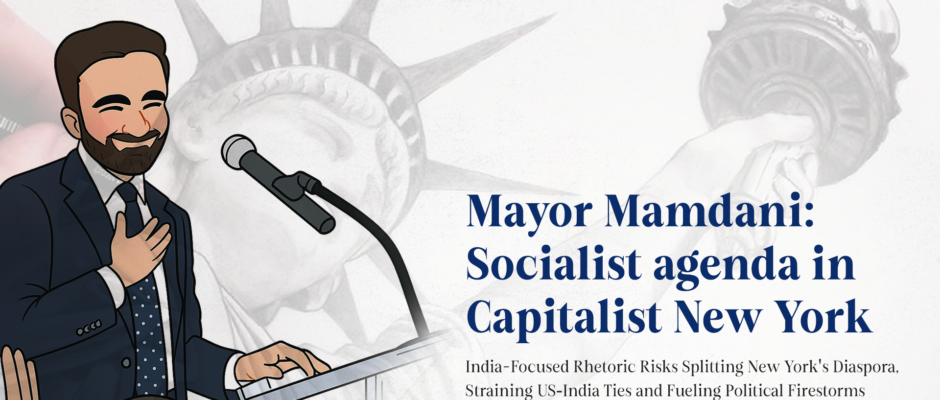
Mayor Mamdani: Socialist agenda in Capitalist New York

India-Focused Rhetoric Risks Splitting New York’s Diaspora, Straining US-India Ties and Fueling Political Firestorms N. C. Bipindra Zohran Mamdani’s victory marks a striking moment in New York politics: a young, Muslim, democratic socialist, son of filmmaker Mira Nair and Mahmood Mamdani, will lead US largest city at a time of heightened identity politics and global polarization. His biography helps explain ferocity of the debate around him. It’s his stance on India-related issues, Kashmir, Palestine, criticism of Prime Minister Narendra Modi and pointed public comments about Gujarat that has transformed what might otherwise be a municipal governance story into a transnational political flashpoint. This is not just about ideology; it is about how rhetoric issued from City Hall can fracture diaspora coalitions, complicate diplomatic ties and provide political fodder for opponents at home and abroad. Mamdani’s critics, ranging from conservative commentators to influential diaspora organizations argue that some of his statements are one-sided, factually shaky and politically inflammatory. Misinformation on Gujarat Row over his remarks about Muslims in Gujarat is instructive. Opponents in India and beyond called out a claim he made suggesting a dramatic demographic or social shift in Gujarat’s Muslim population; fact-checkers and Indian commentators quickly disputed that account, saying it mis-states census data and on-ground socio-economic diversity of Muslims in the state. Whether these were careless rhetorical flourishes or substantive errors, they gave immediate ammunition to critics who charge Mamdani with repeating misleading narratives about India. No Sympathy for Israelis, Kashmiri Pandits On Palestine and Kashmir, Mamdani’s record reflects unmistakable activism. His vocal support for Palestinian rights, his positions on settlement funding and public statements criticising Modi government’s purported human rights record have resonated with some New Yorkers particularly youngsters and left leaning advocacy networks. But these positions have alarmed others. Jewish social groups and centrist constituencies have warned that his rhetoric can blur lines between legitimate criticism of Israeli policy and statements that some interpret as insufficiently condemnatory of extremist violence; that perception has hardened a political fault line in a city with world’s largest Jewish population outside Israel. Jewish Reactions to Mamdani Several mainstream Jewish organizations issued cautious, measured statements after the election, underscoring their vigilance about anti-semitism while also acknowledging internal divisions over Israel policy – a reflection of broader tension Mamdani now inherits. Importantly, most stinging critiques do not simply target Mamdani’s policy preferences; they attack his credibility. Opponents say his India-related assertions sometimes rely on sweeping narratives rather than granular, verifiable evidence. In public fora and on social media, detractors frame those statements as kind of moralising shorthand that, in a globalised information environment, can be magnified into misinformation or selective history-telling. Indian Americans Call Him Biased For New York’s diverse South Asian community that encompasses people with attachment to India, Pakistan, Bangladesh and beyond: such simplifications risk alienating those who do not see their lived realities reflected in Mamdani’s public claims. The result is a fractured coalition: socialist base that propelled him to victory and diaspora groups who feel caricatured or dismissed. Another dimension is geopolitical optics. Mayors generally have limited formal capacity to change US foreign policy, but New York’s Mayor remains a global figure whose words carry diplomatic weight. Misinformation as a Weapon Critics warn that incendiary or ill-substantiated claims about India could complicate US–India municipal and cultural ties, from sister-city arrangements to trade and philanthropy, and could be seized upon by political actors in New Delhi eager to paint American democrats as biased or hostile. That risk is magnified because India has a politically active and often transnational diaspora that reacts swiftly to public statements by prominent figures; controversy can therefore ripple back to New Delhi and become a bilateral talking point. Indian American community in New York has sharply criticised his comments on India, as “bigotry and bias” against Indian communities, and called him “divisive, discriminatory, and unbecoming.” Fanning Domestic Polarisation Domestically, Mamdani’s India-focused controversies also feed a very immediate vulnerability: nationalised political polarisation. President Donald Trump and conservative pundits have already shaped a narrative casting Mamdani as dangerously radical, a framing Trump used in the campaign to argue that federal funds should be withheld should Mamdani assume office. That nationalisation of a municipal election transforms local disputes over housing and transit into existential fights over patriotism, security and cultural loyalty. In a hyper-partisan media environment, claims about “misinformation” on issues like Gujarat riots or about Pakistan/India politics can be weaponised to de-legitimize policy initiatives, no matter how pragmatic their intent. Keeping Governance Promises Policy implications matter. If Mamdani wants to deliver on his agenda, rent stabilisation, transit relief, childcare expansion, he must secure broad administrative cooperation, funding and buy-in from constituencies that feel threatened by his rhetoric. That requires the kind of political translation that sanctified rhetoric rarely achieves: careful, evidence-based communication; clear sourcing for claims about international events; and consistent, unequivocal condemnations of violence and extremism coupled with nuanced critiques of state policies. Failing that, even feasible policies will be cast through the prism of identity and foreign-policy controversy, making compromise harder and governance costlier. Gujarati Muslim Father, Punjabi Hindu Mother There is, however, an opening: Mamdani’s background and family story provide him with a platform to reframe the debate. His parents’ Indian origins, public intellectualism, and filmmaking sensibility give him rhetorical gifts that could be used to de-escalate rather than inflame. By commissioning independent fact-finding on contested claims, clarifying past statements and engaging directly with South Asian and Jewish community leaders not as adversaries but as partners in city governance, he could shift the narrative from cultural combat to municipal competence. That won’t please hardliners on either side, but it could blunt attacks that center on his credibility rather than his policies. Fueling Identity Politics Finally, case of Zohran Mamdani is a cautionary tale about modern urban leadership: global identity politics are now inseparable from municipal governance. Mayors must navigate local service delivery while managing transnational reputations and diaspora sensibilities. For Mamdani, pragmatic path is clear even if politically costly: root his public statements

Read More

Hindus are Safe in Bangladesh, Really?

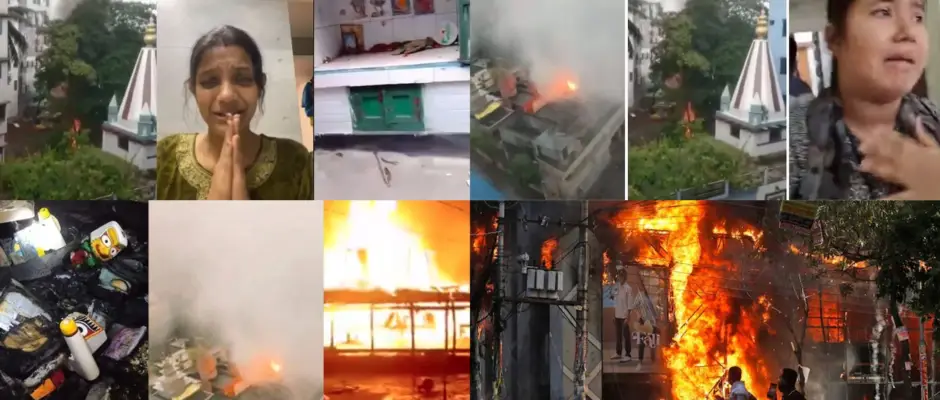
Zafar Sobhan, ���The Print’ made false, tall claims about fair treatment to Hindus. Bangladesh President Yunus came close to stating the truth, Are Hindus really not under threat from jihadists in Bangladesh? Are they safer than Muslims and other minorities in India? Well, Zafar Sobhan in a write up has made vague but determined attempt to whitewash continued atrocities against Hindus with no letup in the genocidal campaign. But, Sobhan falsely claimed that Hindus were safe in turbulent, unsettling and violence ridden Bangladesh ignoring the publicly available data, case studies and unhindered persecution. ‘The Print’ provided its columns to Zafar Sobhan for spreading these falsehoods like agenda-based international media organizations like Al Jazeera etc.   This response will methodically debunk Zafar’s fallacies and provide a true picture of minority conditions in Bangladesh. From rapes, violent attacks, forced resignation of Hindu officials to loot and occupation of their properties has become the norm while the likes of Zafar look the other way. As per Bangladesh Bureau of Statistics, Hindu population in the country has dropped drastically to 8.5 per cent in 2011and down further in last 13 years from 13.5 per cent in 1974. This demographic shift is not merely result of migration for economic opportunities but deeply intertwined with systemic discrimination, land dispossession through Vested Property Act and constant incidents of targeted attacks on Hindu society. By design and intent, Zafar seems to have downplayed incidences of violence against minorities in Bangladesh, implying that such incidents were isolated and do not reflect greater societal issues. Centre for Integrated and Holistic Studies investigations uncover that Hindu temples, businesses and houses are frequently and widely attacked particularly during times of recent political turmoil. These occurrences are not random acts of violence; they are frequently coordinated by extremist groups aiming to impose control or exploit political instability. Data for June – August 2024 indicate an organized attempt to intimidate, harm and ultimately wipe out Hindu population in Bangladesh. The attacks were carried out in several areas, targeting vulnerable individuals and religious sites. Temples in Moulvi bazar, Chittagong and Sitakunda are a few known cases of desecration that highlighted coordinated campaign of genocide and eradication. Zafar offered to paint the violent political movement that resulted in Sheikh Hasina’s departure as ‘democratic uprising free of Islamist influence’. This portrayal is inaccurate and ignores the complex realities of Bangladesh’s political scene. Islamist Influence and Extremism Emergence of extreme Islamist outfits such as Jamaat-e-Islami and Hefazat-e-Islam in Bangladesh’s political setting cannot be ignored. These organizations have documented history of campaigning for policies that oppress minorities and undermine the concept of secularism. Zafar’s denial of Islamist involvement in contemporary political movements is not supported by facts which demonstrates that these outfits have used political turmoil to promote their interests at the cost of minority oppression. Political Transitions’ Impact on Minorities In Bangladesh, it is a trend for minorities to become the targets of violent attacks during any political movements. An example of the kind of widespread violence that can result in deaths, serious injuries, significant property destruction, and vandalism of temples, was in 2021 during Durga Puja. These events demonstrate how vulnerable minorities are during times of political instability, contradicting Zafar’s assertion that minorities are safer in Bangladesh. Over years, persecution and intentional attacks against the Hindu community in Bangladesh have had a profound and long-lasting effect. For instance, massive violence against Hindus erupted in 2013 when Jamaat-e-Islami leader Delwar Hossain Sayeedi was found convicted. Around 50 temples were attacked and more than 1,500 Hindu homes were demolished. This incident fits into a larger pattern in which elections and political upheaval are followed by violent attacks against Hindus. Numerous instances occurred between 2013 and 2020, one of which was looting and demolition of 500 Hindu homes in Gopalpur village alone during the 2014 post-election riots. These acts demonstrate how this religious minority in Bangladesh is subjected to systematic and ongoing persecution. Historical Background, Persecution and Displacement It is critical to comprehend the historical background in order to evaluate current state of minority affairs in Bangladesh. The long-term patterns that have influenced lives of minorities in Bangladesh have not been sufficiently taken into account by Zafar Sobhan. Periods of severe persecution are a defining feature of the history of minorities in Bangladesh, especially during and after the 1971 Bangladesh Liberation War. Deliberate persecution of Hindus throughout the conflict and ensuing appropriation of land under the Vested Property Act have left a lasting impact on the community, leading to their uprooting and economic marginalization. During the time of struggle for Bangladesh Liberation, on March 25, 1971, the Pakistani military launched a horrific operation of genocide against Bengalis, notably on the Hindu community. Around three million individuals were killed in systematic atrocities during this genocide, which lasted until Bangladesh gained independence on December 16, 1971. At least 200,000 women were raped, and some estimates put the figure as high as 400,000. Brutality such as the Burunga massacre of May 26, 1971, when 94 Hindus were brutally killed by the Pakistani military at Burunga High School, marked the darkest height of the genocide. Over 10 million Bengalis, mostly Hindus, were forced to flee to India as a result of extensive atrocities committed by the Pakistani army, which saw no distinction between Hindu, Bengali, and Indian identities. In the blunt repercussions of the Babri structure demolition in India, Islamist groups in Bangladesh began a violent massacre against Bengali Hindus on December 7, 1992. The earliest target was the Dhakeshwari Temple in Dhaka, which was attacked and set on fire. Further targets were the Bholanath Giri Ashram, which was robbed, and the Hindu-owned jewelry stores in old Dhaka, which were destroyed. The following days saw more bloodshed when Islamist attackers in Cox’s Bazar District set fire to fourteen Hindu temples and demolished 51 Hindu houses in Ali Akbar Dale. Five temples suffered significant damage, and villages in Chittagong District such as Fatikchari and Mireswari were nearly completely destroyed by fire. By the time the

Read More

Swami Vivekananda Unpacked Dharma for Global Communities

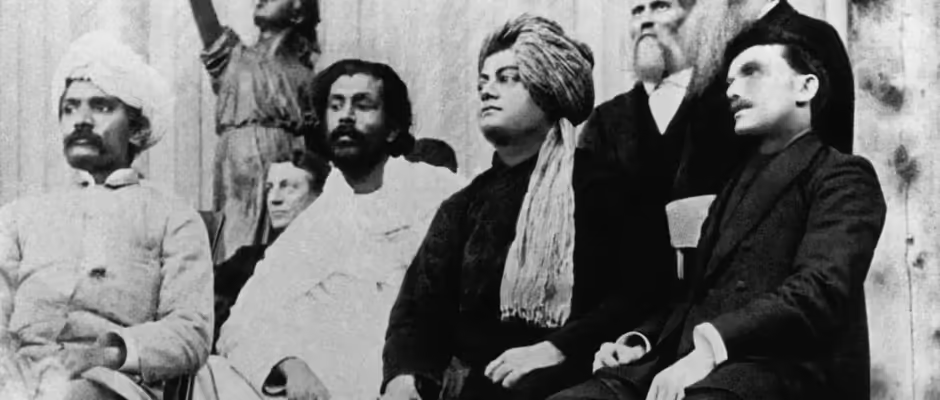
‘Us’ versus ‘them’ is passé. The great Bharatiya sage unveiled vedic vision of entire humanity being part of the wholesome ‘Supreme’. Dr Aniruddh Subhedar Very few people know that “Juggernaut” is derived from Sanskrit word “Jagannath,” most revered Hindu god literally meaning “Lord of the world”. In early 19th century, Christian missionaries spread malicious propaganda that during popular Rath Yatra of Bhagwan Jagannath, a huge chariot crushed devotees under its wheels. Many influential people in England including William Wilberforce who is admired in Western world for his advocacy to abolish slave trade demanded an end to the so-called devilish practices. Over the years, western world got enlightened about Jagannath Rath Yatra. But, even today, English word “Juggernaut” is seen as a destructive, unstoppable force serving as living testimony to the smear campaign against Bharat’s culture and Hindu dharma. Truth behind this one word illustrates the hostile world in which Swami Vivekananda had to work at a time when Hindus were considered savages, their philosophy and traditions viewed as devilish. Amidst these hostile forces, Swami Vivekananda hoisted the banner of Bharat’s spiritualism to Western world and emerged victorious. Throughout her history, Bharat produced great sages and scholars, each one greater than the other. But, in modern times, Swami Vivekananda is seen as harbinger of sanskritik (cultural) and adhyatmik (spiritual) revolution in India. He was the pioneering monk who understood the need to spread sublime and profound philosophy of Advaita Vedanta throughout the world. Global awakening to Yoga and Vedanta is fruition of Swamiji’s pioneering efforts. World’s Parliament of Religions World Parliament of Religions held in Chicago in September 1893 can be termed the first organized interfaith gathering internationally. Swami Vivekananda participated in this parliament which was held during September 11 – 27, 1893. From his first rendition on September 11 which opened with touching lines “Brothers and Sisters of America,” up to his address at the final session on September 27, Swamiji addressed the parliament six times. Each of these speeches focused on Bharatiya philosophy, universal brotherhood and need for global unity. Swamiji not only expounded on the philosophy of Vedanta but amplified teachings of Lord Buddha and their intricate relationship to Sanatan Dharma. While he criticized evangelical activities of Christian missionaries, he stressed the need for every individual to walk the path of self-realization. Quoting Lord Krishna’s words from Bhagavad Gita: “ये यथा मां प्रपद्यन्ते तांस्तथैव भजाम्यहम्। मम वर्त्मानुवर्तन्ते मनुष्या: पार्थ सर्वश:।।” (O Arjuna! In whatsoever form one seeks Me, I reach him in that form, for all mankind is but following the paths I laid down for them.) Swami Vivekananda told the world that the path to reach Supreme Being is not and cannot be monopolized by one religion. It is open to every honest seeker. Bharat’s Soul Unveiled Swamiji’s words were not just verbose discourse on philosophy for armchair intellectuals, nor were they a recounting of Bharat’s long-lost past. Rather, what Swamiji presented to the world was Bharat’s very soul. When Swamiji said, “I am proud to tell you that we have gathered in our bosom the purest remnant of the Israelites… I am proud to belong to the religion which has sheltered and is still fostering the remnant of the grand Zoroastrian nation,” he was not merely recounting Bharat’s glorious past but presenting reality of Bharat that was rooted in spirituality even during most testing times of colonial oppression. This legacy continues today when Iran, the original land of Zoroastrians is suffering religious fanaticism, riots and theocracy. Zoroastrianism continues to flourish in India. It is this soul of Bharat that prompted Indian Government to offer citizenship to persecuted religious minorities in its neighbouring countries through Citizenship (Amendment) Act, 2019. Arguments and conspiracy theories floated against the all-inclusive act was from those that did not realize Bharat’s Soul. Swami Vivekananda and World Peace Swami Vivekananda’s work had lasting impact not only on people of Bharat but global communities. His teachings led to setting up Vedanta societies across United States that continue to thrive even today. Vedanta Society of New York and that of Northern California, San Francisco were centres established by Swami Vivekananda. Today, the world going through conflicts and wars may have missed an enlightened soul like Vivekananda. We see racial crimes, bigotry, wars and persecution. Religious fanaticism is raising its head in the form of Khalistani terrorism. The land of Bengal (both Bangladesh and West Bengal) has descended into religious persecution and chaos as it has strayed from the path shown by Swami Vivekananda. At the World’s Parliament of Religions, Swami Vivekananda said: “Sectarianism, bigotry and its horrible descendant fanaticism, have long possessed this beautiful earth. They have filled the earth with violence, drenched it often and often with human blood, destroyed civilization and sent whole nations to despair. Had it not been for these horrible demons, human society would be far more advanced than it is now”. These words of Swamiji are more relevant today than ever. For long, organizations like United Nations have attempted at maintaining global peace. But, the world tends to lapse into chaos and violence periodically. Limited success is seen by UN as its efforts are mainly aimed at political level. What Swamiji preached was the path of emancipation of every soul where every individual strives for self-realization. September 11, when Swami Vivekananda delivered his speech at World’s Parliament of Religions, is commemorated by his disciples and admirers as ‘Vishwa Vijay Diwas’ (the day when he conquered the world). But this conquering is not a dystopian dream of military victory and subjugation; it is a victory through message of peace. For those harbouring malice, the “Lord of the World” (Jagannath) becomes a “destructive force.” But for noble minds nurtured by Swamiji, even “conquering” loses its bloodshed and becomes an exercise in love and mutual respect. To a world that knew only the logic of “us vs. them,” Swami Vivekananda introduced the idea of “आत्मवत् सर्वभूतेषु”. It signifies all living entities as part of one’s self. It’s time the world revisits

Read More

Growing Clout, Footprint

Bharat’s businesses have come off age, taken over several global brands, top line corporates lock, stock, barrel or partnered in US, UK & Europe K.A.Badarinath Two large deals sealed in just one week speak volumes about Indian corporates verve, gut and appetite for going global. Reliance Industries Ltd (RIL) and Walt Disney tango in Bharat’s media, television and entertainment industry is not limited to creation of US $ 8.5 billion behemoth. It opens up a zillion opportunities for Indian companies, vendors and challenges competition to surpass this milestone. This joint venture also marks Bharat’s film-makers, entertainment and media firms going global hand in hand with best in the industry. Asia’s richest businessman Mukesh Ambani and his wife Nita Ambani being hands on RIL – Walt Disney gives a spicy twist to the deal. Going forward, the joint venture model can work well and logically in global territories and it throws up an opportunity for Reliance – Disney – Century Fox to become a formidable player in media and entertainment sectors internationally. Another home grown billionaire from The Punjab, Sunil Bharti Mittal sent tongues wagging when Bharti Airtel group heralded by him emerged biggest stakeholder in the British iconic telecom services provider, British Telecom. Buying out the Israeli magnate Patrick Drahi led Altice group’s entire stake and cornering 24.5 per cent in British Telecom for US $ 4 billion is the icing on cake for Sunil Bharti Mittal whose Bharti group provides telecom services in 17 countries. In the process, Mittal has emerged largest stakeholder in British Telecom, hitherto the public telecom services provider. What would have been more satisfying for Sunil Bharti Mittal is that life has come full circle. Before 2010, British Telecom held over 21.5 per cent stake in Mittal’s then fledgling Bharti Airtel. This deal not only provides high-stakes branding push but allows Bharti Airtel access to United Kingdom’s 5G technologies, artificial intelligence networks and cutting edge technologies. Deutsche Telecom and T-Mobile Holdings with 12 per cent each are the two other large owners of British Telecom. Strategic insights in telecom, media and corporate markets in United Kingdom and Europe are something Sunil Bharti Mittal should look forward to being at head table of British Telecom. Bharti is not the first Indian company to go shopping in United Kingdom, US or Europe for iconic companies and brands that were seen as value enhancing prepositions. Most talked British brand and company acquired was Jaguar Land Rover by Tata group that was once mocked at for having produced the smallest and modest ‘Nano’ car. Uptight United Kingdom honchos could hardly come to terms with being led by a coloured team of Tata professionals to turn around the JLR that was once seen as a drain on the company and Britain was struggling to save the automobile brand. When Ratan Tata, easily the most celebrated businessman walked into the boardroom of Ford on March 26, 2008 to acquire JLR business at US $ 2.3 billion, disbelief and disconnect confounded top leadership team of British company. In 15-years, the group has turned around JLR into a kicking Bharat – British brand that’s hard to compete with. Tata group was labelled audacious when it took Corus Steel in $ 12 billion bid around the same time to emerge UK – Europe’s one of the largest players in steel market. While this was happening, Reliance bought out one of the oldest and most recognized British toy company Hamleys with 259-years corporate history and British battery technology company, Faradion made global industry sit up to the onset of Indian buyers. Reliance acquisitions were relatively more modest, around the same time, Kumarmangalam Birla, yet another Indian billionaire had set eyes on Atlanta-based Aluminium major Novelis and acquired it in 2007 for a whopping US $ six billion. This catapulted the Aditya Birla group into fortune 500 companies list. After initial rush of half a dozen big ticket takeovers about 15-years back, scores of global brands and businesses came the Indian way or partnered to stay afloat. The list seems quite a long one and this phenomenon is across sectors. Several of them were risky investments and the familial story of turnaround for many Western companies was scripted by Indian businesses that stayed nimble footed for quite some time. For instance, none would have imagined that fourth Indian billionaire Anand Mahindra owned diversified group, Mahindra and Mahindra pumped life into BSA Motorcycles that stopped production about five decades ago. Birmingham Small Arms Company founded way back in 1861 known for producing motorcycles after Mahindra and Mahindra took over this defunct brand in 2022. As per Grant Thornton research, Indians own about 964 companies in UK alone as of last year if one were to go by a Reuters despatch earlier this month. It may not be an overstatement, to say that Bharat’s businesses have arrived. (Author is Director & Chief Executive of Centre for Integrated and Holistic Research based in New Delhi)

Read More

Bharat, force for Strength & Stability

In 78-years post-British imperialistic occupation, Bharat is on way to become ‘Vishwa Guru’ and pursuer of ‘Vishwa Maitri’ in right earnest. K.A.Badarinath Bharat is celebrating her seventy eighth independence day after having fought imperialist British occupation and monarchy. Before the ignominious exit of 1947, Britain has had for decades looted Bharat’s wealth, resources and hit at her backbone by Anglicizing the country’s millennial education system. The indomitable spirit, valour and strong civilizational connect based on ‘Sanatan Dharma’ could not be dented even after decades of inhuman rule that pushed Bharat into poverty owing to continued laundering and misrule of British imperialists. Post-1947, Bharat moved on its own with twists and turns in its socio-economic paradigm. What kept the Hindustan together last 78 years was the determination of this 1.4 billion people to regain its place as ‘guiding light’ in the comity of nations. Most Indians – be it Hindus, Buddhists, Jains, Muslims or Christians – get nostalgic and wee-bit emotional while celebrating the Independence Day. It was a struggle that none globally would easily forget as British rule was marked by White supremacist mindset laced with monarchial expansionism and human subordination and slavery of inhuman variety. Then on, Bharat re-discovered herself on all fronts. It’s her day today and centuries to follow as it moves methodically to become a developed country by 2047 that also marks 100 years of independence from British tyranny. Bharat’s rise as an economic powerhouse and her march to become third largest economy in two – three years with $ 5 trillion spread is something that did not come easily given the hard work of her farmers, services professionals, industry and exporters. It’s only a matter of time when Bharat would challenge US and China from their coveted positions. None can be scared or distraught with Bharat’s rise given her standing that strives continuously for peace, tranquility and harmonious living sans conflict, violence and expansionism of any hue or shade. Going by Bharat’s Prime Minister Narendra Modi speech on Independence Day from ramparts of the historic Red Fort, New Delhi will play a stabilizing role in the world marred by conflicts between Russia – Ukraine, Israel – Hamas and the coup of sorts in Bangladesh. Strength and determination is what Prime Minister Modi emphasized upon to tackle global challenges. Bharat being at the ‘High Table’ in international affairs would only bring sanity to deliberations and negotiations at strategic level or economic management. Even in tackling new challenges, Bharat has shown the way. After having been party to Paris agreement on cutting carbon footprint and shifting to environment friendly economic structures, Bharat is the only country that has met all climate targets among G-20. Notwithstanding her energy consumption demands, shift to green options rapidly towards ‘net zero’ voluntarily and leading by example is something Prime Minister Modi referred to in his speech on Thursday. His call for end to end chip designing for the world is an extension of Bharat’s huge strides made in industrial manufacturing including defence products, services across sectors and deft management of her economy. This will push up Bharat in global pecking order for modernizing her economy to meet international demand. Bharat’s list of ‘to do’ things seem endless if one were to look at reversing brain drain especially in key sectors like medical education. Adding 75,000 new medical colleges’ seats to 100,000 plus existing capacity is something that will help Indian youth and talent pursue their education here and cater to the world as professionals. Prime Minister Modi had clearly hinted that ‘overseas students should come to India for top class education’ and reverse prevailing outflow to foreign shores. Becoming global educational hub in five years may be a tough target to meet. But, its doable. These are transitioning times for Bharat to become ‘vishwa guru’ and pursuer of ‘vishwa maitri’. (Author is Director & Chief Executive of Centre for Integrated and Holistic Studies based in New Delhi)

Read More

Boys Play Big in Muddied Waters!

US, China with diverse agendas coupled with religious extremist forces in Islam and evangelists may shrink open space to operate for Bharat that has big stakes in Bangladesh K.A.Badarinath The big boys are at play. Bangladesh government under Nobel laureate Muhammad Yunus is bound to be pulled apart by both United States of America seeking to establish a military base in South Asia and Chinese Communist Party led by President Xi Jingping that’s seeking unquestioned dominance in Asia. Jamaat-e-Islami and Bangladesh National Party (BNP) led by Khalid Zia would play willing tools in the big boys power play with Pakistan reduced to a lackey of minor variety. There’s denying that Muslim Brotherhood that’s globally dreaded would complicate the equation with its Islamist – Jihadist agenda on Bharat’s Eastern frontiers. ‘Razakars’ would become handy frontline private army in the hands of jihadist Muslim leadership internationally. There have been reports that already these Razakars have taken over civic policing as an occupational army of zealots. Well, tasks for Bharat are cut out after Sheikh Hasina’s government fell last week, Awami League purged, safe exit to her provided in a swift deal and Army took reins in a coup. Though interim government headed by Yunus and a battery of over dozen advisors have taken charge, nothing seems to have changed on the ground while Army calls the shots. Bangladesh’s under-belly has several layers that must be understood before Bharat gets to the drawing board to establish a working relationship with the new Army controlled, Yunus fronted regime given that Chinese, US and Pakistan deep state haggling for their pound of flesh. The ‘transitional’ Yunus regime got legitimacy as Democratic White House was first to recognise the government. Secretary of State’s spokesperson was drafted to convey that US was ‘ready and looked forward’ to working with Dhaka under Yunus. St Martin Island also known as ‘Narikel Jinjira’ (Coconut Island) or ‘Daruchini Dweep’ (Cinnamon Island) off-the-Chittagong coast may be eyed by US to set up a military base to lord over both Bharat and her expansionist neighbour China. Direct US presence in the region may not be encouraged or welcomed by Bharat given the strategic implications. Also, Bharat would get cut off virtually from entire South East Asia in terms of trade, investment and services. Church driven ‘Project K’ to carve out an artificial autonomous region christened as ‘Kukiland’ will come to the forefront. Church’s fancy idea of a separate Christian state encompasses parts of Bangladesh, Burma and Bharat’s Manipur and Mizoram. This Christian agenda is expected to get complete backing of White House under President Joe Biden or his possible successor Kamala Harris. Even if Donald Trump upstages the democrats and gets elected in November 2024 elections, this agenda may get going. Even if general elections in Bangladesh were to be held anytime now, a pliable government in Dhaka is what Washington DC may expect to see in the saddle given that Awami League is virtually out of power play. On the other hand, China would try and get Teesta River Project and other infrastructure ventures that provide Beijing proximity to India’s ‘chicken neck’ area. Weeks before Hasina government fell, US $ two billion worth interest free, concessional, commercial loans apart from grants were reportedly promised by China after a meeting that Bangladesh Prime Minister had with President Xi. On face of it, funding infrastructure projects either directly or through Asian Infrastructure Investment Bank (AIIB) may not just be limited to investment push. Instead, it will result in strategic issues for Bharat giving China advantage at her doorstep. Third dimension to Bangladesh story is the Jamaat-e-Islami backed by Pakistan and part of larger Muslim Brotherhood going berserk would pose serious challenges to Bharat. Jamaat pursuing genocide of Hindus in Bangladesh has been widely reported. CIHS has meticulously documented these grave crimes. Jamaat is popular as ‘congregation of Muslims’. Known as the largest Muslim formation founded in 1975, Jamaat was banned from political participation by Bangladesh Supreme Court in 2013 citing its opposition to religious freedom or practice of faith. Within its ambit were other organizations like Al – Badr, Al – Shams and self-styled peace committee that formed the jihadist network. All these are pronouncedly anti-Hindu, Buddhists and Christians in Bangladesh. Evangelists and Islamist forces are expected to be on collusion course given their extremely divergent agendas for Bangladesh. Bid to carve out an autonomous Christian area by extreme evangelists with backing from US may be at odds with ‘theocratic’ ‘Islamist’ state that Jamaat may like to evolve Bangladesh into. Conflict between evangelists and Muslims may turn rough reported from several cities in European countries. Contrarian geo-political forces in China, US and religious extremism donned by evangelists and Jamaat leaves very little space for open, flexible and forward thinking democratic agenda in Bangladesh. This is a heady mix in which India will have to tread carefully to safeguard her geo-political and strategic interests apart from that of Hindus and Indian origin people living in Bangladesh. Rightly, Prime Minister Narendra Modi has emphasised that Yunus government in Bangladesh must take steps to protect Hindus lives, properties, businesses especially women that have been targeted by Jihadists. For Bharat, dealing with influx of Bangladeshis fleeing the violence torn country may be a big priority apart from safeguarding her people in Bangladesh. Secondly, New Delhi may have to swerve through muddy waters that have become playground for both US and China apart from minions like Pakistan. Thirdly, recalibrating equations with Dhaka given an array of forces from far-left extremists, religious jihadists to military establishment may pose a big challenge. Fourthly, pursuing her agenda of peace, tranquillity and prosperity in South Asia may not be easy for Bharat. Fifthly, smoothening relations with Bangladesh may turn tricky while former Prime Minister and senior Awami League leader Sheikh Hasina continue to be respected state guest in Delhi. Sixthly, working with likeminded stakeholders to ring in democracy with all forces in tact may be a tall order. Seventhly, relatively tension free

Read More

Balancing Tradition and Modernity: Explore RSS’s Swa Philosophy for Future Bharat

Rashtriya Swayamsevak Sangh (RSS), a prominent Hindu centric movement in Bharat, has consistently championed the concept of “Swa” or self-reliance. This principle is a cornerstone of the RSS’s five-fold transformation agenda, emphasizing a self-sufficient and sovereign nation. The roots of this idea are deeply embedded in ancient Bharatiya wisdom and philosophy, which played a significant role during the Indian freedom struggle. Dr. Shailendra Kumar Pathak The concept of Swa, or self-reliance, is not new to Bharatiya thought. It finds its origins in ancient Hindu scriptures and philosophies, which emphasize the importance of self-sufficiency and inner strength. Vedas, Upanishads, and Bhagavad Gita all advocate for self-dependence and personal growth as a means to achieve higher state of being. In the realm of education, Swa emphasizes the importance of indigenous knowledge and learning systems that are rooted in Bharat’s rich cultural heritage. Traditionally, Bharatiya education was imparted through Gurukuls, where students received holistic education including Vedic scriptures, mathematics, science, philosophy, and arts. This system fostered self-discipline, ethical values, and a deep connection with nature and society. Reviving this model, modern initiatives have focused on integrating traditional knowledge with contemporary education. For instance, Gurukul system is being adapted to contemporary contexts, promoting a balanced education that nurtures intellectual, emotional, and spiritual growth. Philosophy of Swa in healthcare is reflected in the prominence on Ayurveda and other traditional healing practices. Ayurveda, an ancient Indian system of medicine, focuses on the balance between body, mind, and spirit. It advocates self-care and preventive measures through natural remedies, diet, and lifestyle adjustments. This approach aligns with the global shift towards holistic health and wellness. Institutions like All India Institute of Ayurveda are working towards integration of traditional practices with modern medical science, highlighting the relevance of Swa in promoting a comprehensive healthcare system. Agriculture in Bharat also embodies the principle of Swa, particularly through sustainable farming practices. Traditional Bharatiya agriculture emphasized harmony with nature, using techniques like crop rotation, organic farming, and water conservation. These practices are being revived to address modern challenges viz., soil degradation, water scarcity, and climate change. Movements like organic farming and natural farming, inspired by traditional knowledge, are gaining momentum, promoting food security, environmental sustainability, and farmer self-reliance. Idea of Swa is reflected in a large treasury of arts, crafts, and literature that are part of the Bharatiya knowledge system. Classical dance, music, and painting are examples of traditional art forms that represent the cultural identity and spiritual ethos of Bharat. These artistic endeavours are essential to the social and cultural fabric and go beyond simple modes of amusement. In order to keep these customs alive and relevant, organisations and cultural institutions are actively working to promote and maintain them. The significance of self-governance and community-driven development is implied by Swa in the context of governance and social organisation. Decentralised government, like the Panchayati Raj system, gives local groups the authority to manage resources and make decisions. This system promotes local accountability and participatory democracy by mirroring the age-old Bharatiya practice of village self-governance. Moreover, the principle of Swa in Bharatiya knowledge system extends to spiritual and philosophical realms. Bharatiya philosophy, particularly Vedanta, emphasizes self-realization and self-awareness as paths to ultimate truth. Teachings of sages like Adi Shankaracharya, Ramana Maharshi, and Swami Vivekananda focus on understanding the self and achieving inner peace and enlightenment. These teachings have universal appeal and continue to influence global thought on spirituality and human consciousness. RSS’s conception of Swa is largely based on these archaic writings and customs, which see self-reliance as a complex idea with elements of the social, cultural, spiritual, and economic spheres. It advances the notion that real independence and prosperity can only be attained by a country, just like by an individual. Swa and Bharatiya Freedom Struggle Concept of “Swa” (स्व), was crucial to India’s freedom movement emphasising self-determination, and self-governance. Deeply ingrained in Indian philosophy, the idea of “Swa” impacted numerous leaders and movements working to free India from British colonial rule. Mahatma Gandhi and Swaraj Swaraj: Literally meaning “self-rule,” this was one of Gandhi’s main points of contention. Gandhi saw Swaraj to be self-governance and self-sufficiency on a personal and communal level in addition to political independence. Swadeshi Movement: Gandhi used the word “Swa” directly when he called for an Indian industrial boycott and a boycott of British goods. He promoted the use of hand-spun khadi as a symbol of independence.Khadi & Village Industries: Traditional crafts and small-scale industries were to be revived as part of Gandhi’s vision of self-sufficient villages. This was viewed as a means of empowering nearby communities and achieving economic independence. Non-Cooperation Movement: This movement, which took place between 1920 and 1922, encouraged Indians to adopt self-reliance and disengage from British institutions in order to reject British control peacefully.Gangadhar Bal Tilak: “Swaraj is my birthright, and I shall have it.” This well-known statement of Tilak emphasised Indians’ entitlement to self-governance. He was a fervent supporter of gaining independence by self-help and education. RSS’s Five-Fold Transformation Agenda RSS’s five-fold transformation agenda, known as Panchamukhi Vikas, aims at holistic national development. Swa, or self-reliance, is a key component of this agenda, which also includes the revitalization of education, health, economy, and spiritual and cultural values. Components of Panchamukhi Vikas (Five Faceted Development) Implementation of Swa The concept of “Swa” by the Rashtriya Swayamsevak Sangh (RSS) emphasizes self-reliance, self-respect, and a commitment to cultural and social development rooted in indigenous values. This philosophy has been implemented through extensive work across various sectors in Bharat, leveraging statistics, examples, and case studies to illustrate its impact. In the realm of education, the RSS has promoted self-reliance by establishing numerous educational institutions through its inspired organizations like Vidya Bharati, which runs around 13,000 schools with over 3 million students enrolled. These schools focus on holistic development, integrating modern education with traditional Bharatiya values. A case study of Saraswati Shishu Mandir schools reveals a significant improvement in student performance and community involvement. These institutions not only emphasize academic excellence but also instill a

Read More

Bharat’s Democratic Credentials Celebrated

Reviving spirit of civic duties and responsibilities is RSS way of contribution through transformative agenda for future Dr Shailendra Kumar Pathak Bharat’s democratic ethos is deeply embedded in its history, a legacy that stretches back thousands of years, marked by principles of inclusive governance, participatory decision-making, and the power of dialogue. Hindu centric Rashtriya Swayamsevak Sangh has taken upon itself to promote civic consciousness and participation of citizenry in civic affairs as part of its five-fold transformative agenda. Bharat’s democratic traditions predate many celebrated milestones in global governance. One such remarkable example is the Uttiramerur inscription dating back to tenth century. This inscription details an advanced electoral system implemented in the village of Uttiramerur predating Magna Carta (Royal Charter of Rights agreed to by King John of England in 1215) by over 800 years. This system involved detailed rules for election of local council members with eligibility criteria based on moral integrity and knowledge, ensuring that leadership was capable and trustworthy—a testament to Bharat’s early embrace of democratic principles. Ancient Bharatiya texts like Mahabharata and Ashtadhyayi provide insights into concepts of ‘Gana’ and ‘Sangha’, Republic and assembly, functioning through collective decision-making, emphasizing dialogue and consensus. Vedic period further enriched this tradition with institutions like ‘Samiti’ and ‘Sabha’, councils responsible for discussing and deciding on issues of public importance, fostering a sense of participation and ownership among the people. In twelfth century, the Anubhava Mandapa of Basavanna, a popular Scholar and a Hindu sage in Karnataka served on a forum where mystics, saints and scholars discussed issues encompassing society, economy, culture, spirituality, and well-being of the entire kingdom, embodying inclusive governance and collective dialogue. RSS and Civic Awareness RSS, founded in 1925, has consistently emphasized civic duty and national service as central to its objective of a vibrant society, Rich democratic credentials of Bharat became the basis for RSS belief that civic engagement was key to building a strong, disciplined nation with character. Programmes aimed at spreading awareness on national issues, encouraging responsibility for the nation’s wellbeing and evolving a cohesive and culturally rooted Rashtra (nation) became part of the five-fold objective of RSS. Philosophical basis for RSS to extensively undertake civic consciousness drive was Pandit Deendayal Upadhyay’s concept of ‘Lokmat Parishkar’ or Public Opinion Refinement. Deendayal Upadhyay, a prominent thinker, advocated refinement of public opinion through education, dialogue and active citizen participation in governance. This also forms the basis for RSS campaign on promoting civic duties for encouraging active democratic participation. RSS has been at forefront of highlighting Bharat’s cultural, economic, and scientific achievements with the belief that strong sense of national pride was essential for a cohesive society and robust democracy.  Its educational initiatives emphasize Bharat’s rich heritage, from contributions of ancient scholars like Aryabhata and Sushruta to achievements of modern scientists and technologists. RSS has been instrumental in recognizing and honouring individuals who contributed significantly to Bharatiya society. By promoting role models and celebrating their achievements, RSS has championed to foster a culture of excellence and national pride. Advanced Approach for Civic Awareness RSS’s civic awareness programmes are not just an extension of duties outlined in Article 51A of the Bharatiya Constitution. RSS outlook towards civic duties and responsibilities are much more advanced, robust, genuine and comprehensive. Article 51A of Indian Constitution emphasizes fundamental duties such as respecting Constitution, promoting harmony and protecting public property. While these are important, they represent a minimal baseline for civic responsibility. RSS’s educational initiatives strengthen this by offering a deeper understanding of Bharat’s cultural, historical and scientific heritage. These programs are designed not just to inform but to inspire active participation in the nation’s development. For instance,  RSS doesn’t just promote constitutional literacy but delves into philosophical underpinnings of Bharatiya democracy, drawing from ancient texts and historical precedents. This educational depth fosters a more profound sense of civic duty, encouraging citizens to engage in governance and contribute to society’s progress. Article 51A calls for promotion of harmony and spirit of brotherhood. RSS approach to social cohesion is far more proactive and works to bridge social divide, alleviate conflicts and foster unity among Bharat’s diverse population.  Inspired initiatives fostering dialogue and mutual understanding, ensuring that the spirit of brotherhood is not just a legal obligation but a lived reality. Moreover, while Article 51A mentions the promotion of harmony, it does not address mechanisms for achieving it.  RSS fills this gap by engaging directly with communities, fostering relationships, and building trust across social divides, thereby creating a more cohesive and resilient society. Article 51A emphasizes participation in governance as a fundamental duty.  For this, RSS approach is more dynamic and continuous. It doesn’t just encourage voting but advocates for all along civic participation that includes involvement in local governance, community decision-making and holding government accountable. RSS ensures that democracy is not just a periodic activity but an ongoing process where citizens are actively involved in shaping their communities and the nation. One of the standout initiatives in  RSS civic duty mission is its campaign for 100 per cent voter turnout. While Article 51A emphasizes the importance of voting as civic duty, RSS campaign takes this a step further by striving for complete voter participation in every election. The organization believes that democracy can only be truly representative when every eligible citizen exercises their right to vote. RSS launched extensive awareness drives particularly in rural and underserved areas. These campaigns involved door-to-door outreach, community meetings, and use of local media to educate people. By these efforts, RSS ensured that every voice is heard, making the democratic process more inclusive and representative. This commitment to engagement at grassroots highlights RSS belief in the power of democracy and its determination to make Bharat’s democracy as robust as possible. The focus on achieving full voter participation goes beyond the fundamental duties outlined in Article 51A, reflecting RSS more comprehensive and proactive approach to civic responsibility. Framework for National Development Civic duties outlined in Bharat’s Constitution are broad and general, providing a framework for responsible citizenship. RSS approach,

Read More