
CIHS – Centre for Integrated and Holistic Studies

Date/Time:

Economic Divergence Unfolds

India has emerged as fastest growing economy with 8.7 per cent surge while China struggled to stay afloat with $ 5.5 trillion package  K.A.Badarinath It’s a tale in contrast. The two countries have always been viewed as competitors to gain global footprint, acceptability and reach. Presently, the two nations in question are going through a differential economic curve that depicts a picture in contrast. Without second guess, one would easily make out that it’s the economic story of China and India that are unfolding differently in the backdrop of a huge crisis in Eastern Europe and Baltic region, rise in commodity prices leading to huge inflationary pressures and thereby tightening of money policy by central banks. The humungous fiscal stimulus package announced by President Xi Jinping’s administration indicates that not everything is going right for China’s economy that’s in complete control of the Communist Party of China, its minions and the oligarchs. Protracted lockdowns in various cities of China owing to Covid 19 pandemic has pushed the dragon country’s economy into an abyss. While it struggles to stay afloat with positive growth, China has lost its exalted position as the fastest growing country. President Xi, cabinet, state council and CPC decision to pump prime the economy speaks volumes on the crisis that has rattled the world’s second largest economy. Ukraine war, disruption in its supply chains and resultant slide in manufacturing growth has led to rampant pink slips and loss of livelihoods. Bloomberg’s back of the envelope calculation put the fiscal stimulus at $ 5.3 trillion that President Xi’s communist administration has announced. From deep tax rebates, cheap loans, withdrawal of restrictions on automobiles buying to booster dose for e-platform companies, China seems to be trying every trick to get back the growth mojo. Already, Chinese monetary authorities and its central bank seem to have reconciled to the challenge faced in achieving downwardly revised growth of 5.5 per cent in 2022. Investment bank UBS forecast of 4.2 – 3 per cent growth in China has not only unnerved President Xi who’s preparing for third term coronation in September. Earlier this week, J.P.Morgan had also cut the China growth forecast to 3.7 per cent from earlier 4.2 per cent. There seems to be no easy way out of economic bind in which China has landed itself especially after the Communist regime went on a war path against the growth drivers like the big home grown technology companies and platform enterprises. David Qu, Bloomberg’s China economist may be right when he says that Chinese central bank has now only played a supportive role. And, the government’s fiscal measures had more space to support growth in the $ 17 trillion Chinese economy. Implementing the fiscal package may also pose a big problem as there’s reported resistance from states and local governments whose finances are already fragile, borrowings touching the roof and very little elbow room to undertake development projects. Otherwise, there’s no plausible reason for Xi’s administration to send dedicated task forces to 12 provinces to realize the actual economic package. In contrast, Indian that’s celebrating eight years of BJP government in office is on a virtual high. Prime Minister Modi’s decisive leadership to deliver on economic and development front has worked. India has emerged as the fastest growing economy globally displacing China with 8.7 per cent GDP uptick in fiscal year ending April 2022.  Incidentally, this is the highest growth posted by India in 22 years after 8.8 per cent reported in 2000. India with its $ 3 trillion economy is making waves globally with new partnerships and markets thereby creating new work opportunities for the aspiring youth. Having navigated the two difficult waves of Covid 19 pandemic relatively unscathed, India’s reading along with its partners like Australia, Japan and US to displace China with alternative and sustainable supply Chains. If one were to go by chief economic advisor V. Anantha Nageswaran, even in current fiscal, India’s economic growth has been estimated at 7.5 – 8 per cent. At this juncture, these projections may look daunting due to slide reported in January – March 2022 at 4.1 per cent. Economic resilience back home and deft management is what one can bank upon to realize this expansion. Core sector performance of 8.6 per cent spread over eight infrastructure areas during April 2022 provides enough optimism for maintaining the growth momentum in the Indian context. Given the government’s continued commitment to invest over Rs 750,000 crore across infrastructure areas, India will continue to be the brightest spot in the global growth sweepstakes. Given the hard work put in by Prime Minister Narendra Modi and his government in last eight years, retaining the tag of fastest growing economy should be celebrated as a big leap forward. This does not mean that Indian leadership should be carried away by the euphoria and not recognize the challenges like crude prices touching $ 120 as against budgeted $ 75 per barrel apart from surge in other commodities prices. If data available with credible agencies like International Monetary Fund (IMF) and World Bank are anything to go by, then India may be the only large economy that would post GDP growth beyond 7 per cent till 2025. Creating jobs for millions of unskilled, semi-skilled and low-end earners in rural hinterlands may have to be the focus while Prime Minister Modi’s government goes about methodically in economic integration to evolve India as a unified behemoth.  (Author is Director & Chief Executive of Centre for Integrated and Holistic Studies based in New Delhi.)

Read More

Foreign Contribution Regulation (Amendment) Act, 2020 And Examining The Role Of NGOs.

“There are NGOs, often funded from USA & the Scandinavian Countries, which are not fully appreciative of the development challenges that our country faces. But we are a democracy. We are not like China. You know for example, what’s happening in Kundakulum [In Southern India, where local NGO-led protest have stalled commissioning of two 1000-Megawatt nuclear reactors]. The atomic energy programme has got into difficulty, because these NGOs, mostly I think based in United States, don’t appreciate the need for country to increase the energy supply.” [The Then PM, Shri Manmohan Singh in an interview in February 2012.] The Background To FCRA (Amendment) Act, 2020. The Foreign Contribution Regulation Act (FCRA) is a piece of legislation having a long and chequered history. It was first enacted in the year 1976, and the Statement & Object of Reasons of the original Act read as follows: “An Act to regulate the acceptance and utilisation of foreign contribution or foreign hospitality by certain persons or associations, with a view to ensuring that parliamentary institutions, political associations and academic and other voluntary organisations as well as individuals working in the important areas of national life may function in a manner consistent with the values of a sovereign democratic republic, and for matters connected therewith or incidental thereto.” One of the original intents of the 1976 Act, brought in by the Indira Gandhi Government at the peak of emergency, was to stop political funding of its rivals, who were starved of funds within the country. The Act was enacted to insulate the sensitive areas of national life like- Journalism, judiciary and politics from extraneous influence from outside the country. Unwarranted Criticism Of The FCRA (Amendment) Act, 2020. Since 1976, much ink has been spilled on paper, and the original Act has undergone several Amendments, including the recent Amendments of 2020, FCRA (Amendment) Act, 2020. The aforesaid Amendment has met with criticism from several quarters on the premises that the foreign aid is not a new concept. Even the mighty US had been a beneficiary. Without appreciating the correct intention behind the Amendments, it was said that the Amendments are meant to crush dissent and concentrate powers in the hands of this Government. Surprisingly, even the United Nations criticised the new Amendments on the premise that access to resources, including foreign funding, is a fundamental part of the Right to Freedom of Association under International Law, standards, and principles, and more particularly part of forming an association. Therefore, any restriction on access to foreign funding must meet the stringent test for allowable restrictions for the right to association developed by the International Human Rights bodies. Given this narrow test, restricting access to foreign funding for associations based on notions such as “political nature”, “economic interest of the State” or “public interest” violates the right because these terms or definitions are overly broad, do not conform to a prescribed aim, and are not a proportionate response to the purported goal of the restriction. Such stipulations create an unacceptable risk that the law could be used to silence any association involved in advocating political, economic, social, environmental or cultural priorities which differ from those espoused by the government of the day. The Formal Response of The Government Of India On The New Amendments.  There is absolutely no justification in the allegations or understanding that these Amendments in any way prevent or impede the inflow of foreign contributions in India. Shri Nityanand Rai, Minister of State for Home Affairs, Govt. of India has stated in the Parliament, that; “FCRA is a national and internal security law with the main objective of ensuring that foreign money does not dominate India’s public life, politics, and social discourse. Internal security, cultural security, national security and protection of Democracy are the utmost priority and specialty of this Government. This amendment is also necessary for Atma Nirbhar India. This government wants NGOs to make their sincere contribution to meet the specific needs of society. They should bring transparency in the expenditure of foreign contributions and ensure that it is spent on the right objectives and the work for which foreign contributions is received. There is a provision of foreign contributions for social education, cultural, religious, and economic activities. These Amendments has not been brought to threaten any political opponents. The only aim behind the Amendment is to ensure that the funds are not misused to throttle Indian democracy and suppress Indian people”. Justification And Necessity Of The New Amendments. It has to be appreciated that India is a vibrant and pluralistic democracy with a robust domestic grievance redressal mechanism, overseen by an independent judiciary and a Category ‘A’ National Human Rights Commission, compliant with the Paris Principles. Framing of Laws is power & prerogative of the sovereign, so long as the new law or amendments in existing law are made for achieving legitimate aims & objective and, inter alia, is in national interest and public order. It is a misconceived notion that the aforesaid Amendments are against NGOs. Had that been the case, a large majority of the NGOs and individuals in this sector would not have already complied with the new requirements of the FCRA (Amendment) Act, 2020. The Indian Parliament, representing the will of the people, has enacted the Foreign Contribution (Regulation) Act thereby laying down a clear legislative policy of regulating foreign contributions for certain activities in the country. As a matter of principle, there exits no Right to receive any foreign contribution outside the framework designed by the Parliament and implemented by the executive. The existing regime in place, which enables receiving of foreign contribution, envisages certain regulations and procedural preconditions and compliances for accepting foreign contributions. No part of any purported Right to receive foreign contributions can be said to be a part of the Fundamental Rights granted to citizens. There is no question of Fundamental Rights being violated through controls of acceptance of foreign contribution by certain type of organisations as the said organisations or individuals are

Read More

Gone with the wind: The Curious Case of Foreign Minister Wang Yi

Amrit Pal Kaur / New Delhi Chinese State Councillor and Foreign Minister Wang Yi was on a diplomatic visit to South Asia from 21st March to 27th March 2022. His visit to the region is significant for many reasons, including but not limited to the Russia-Ukraine crisis. As the trip advanced, it became clearer that the State Counsellor was trying to drum up support for the Chinese position on the ongoing crisis and that China saw it as an opening to push forward its diplomatic agenda, which has been stalemated since the Galwan Valley days. That State Counsellor Wang Yi would talk in warm tones to his Pakistani audience was expected, but he would subscribe to the resolution of the Organisation of the Islamic Cooperation, which included remarks on India’s domestic policies and issues, right before coming to New Delhi, defies all reasons. His discussions with Indian National Security Advisor Ajit Doval and External Affairs Minister Dr S. Jaishankar came to a nought, and his request for an audience with Prime Minister Modi was declined were some of the signs of how his impromptu escapade to New Delhi ended. His visit to New Delhi was being speculated, but the Chinese Foreign Ministry kept the details shrouded. However, the bigger question is why China felt the need to send the State Counsellor to India, given the relations between the two countries in recent history? Part of the answer lies in India’s position on the Russia-Ukraine crisis. India has asked both sides to keep the diplomatic channels open and resist the violent path to resolve the issue. India’s Permanent Representative to the United Nations Tirumurti has abstained from voting on the resolutions in UNSC on the Ukraine crisis, coming from either side, keeping its diplomatic options open while walking on a tight rope. It can be speculated that China sees India’s autonomous diplomacy as a favourable opening stance to its position, especially since the Chinese have been increasingly facing the music on account of their support to Russia. Gaining India’s support would have been significant. However, India’s position is far more nuanced than what is meeting the eye. To begin with, the Indo-Russia relationship is indeed based on strategic cooperation, which goes back many decades. Russia is India’s largest armament partner, covering over 60% of its ammunition inventory. It is an essential consideration for India, especially considering the less than cordial environment on Indian borders. Indo-Soviet bonhomie of the cold war days is also frequently cited to be the high-water mark of the relationship, but the lesser-known fact is that Indira Gandhi did not agree to sign the Peace and Friendship Treaty for nearly two years, and it came into being against the backdrop of Pakistani aggression and refugee crisis in 1970-71. In order to hedge and balance its interest in the fast-evolving geo-strategic conditions in South Asia, non-aligned India signed the Treaty with the Soviet Union. Nevertheless, the treaty is not the only reason, and critical geostrategic concerns and calculations inform the Indian stance. Historically, as a major Eurasian country, Russia has always had a bearing on Indian foreign policy since the colonial era. Central Asia and Afghanistan were seen as the buffer between the Russian Empire and British India. In order to protect its Indian territory, British Raj always tried to keep Russian expansion towards the south in check. The Anglo-Afghan Wars of the 19th century were essentially fought with this purpose. Also, the north-western region has been a sensitive zone because in its history, most attacks on India happened from the northwest, where the famous ‘passes’ in the Himalayan ranges would allow the attacking armies to come through. As a powerful territorial empire in the north, Russia has held strategic significance for India. Its influence on Central Asia, Iran and Afghanistan has been an essential consideration in the Indian foreign policy calculations as these countries are critical strategic partners. In order to maintain peaceful relations in the neighbourhood and keep harmony in the larger Asian context, Russia has its niche in Indian geo-strategy.  Another reason for the cautious Indian stance on Russia is, of course, the Dragon and its South Asian partner. Since the Crimea war of 2014, as the western pressure on President Putin increased, Russia has been walking into the Chinese orbit. For India, Russian decision making influenced by any third country is a possibility rife with pitfalls. Indo-Chinese relations have been sub-par for some time, and getting its strategic partner close to China is undesirable. What India would seek from Russia is support for its position in case if Galwan Valley like situation repeats. Assertive and revisionist China has been a cause of concern for the Asian region. The South China Sea disputes, East China Sea dispute, the Galwan Valley, and the Doklam dispute have piqued the world. Given these circumstances, countries like India have their concerns concerning geo-political issues. In this context, when President Biden calls Indian stance on Ukraine’ Shaky’ and the number of world leaders come to India in the guise of ‘bilateral relations, it cuts a rather curious picture as to why these dignitaries, including State Councillor Wang Yi, are making their way to New Delhi. First, about State Councillor Wang Yi’s visit, it can be derived that Indian reticence to criticize Russia outrightly on the Ukraine issue is seen as an essential toe-hold to persuade India to join China in supporting President Putin. Secondly, China is hosting this year’s BRICS summit and whether India decides to join or does not join will leave a significant impression on the leadership of President Xi especially keeping in mind the impending once in a decade leadership change in China which President Xi, in all probability, seeks to reverse. It will also send a message to the world about China’s rising power. Finally, in the context of the ripples created by the QUAD grouping in recent years, this BRICS summit will, in all prospects, seek to re-establish itself as a potent global force. For

Read More

India’s Right to Pursue Lucrative Russian Oil Deals

NATO must revisit their unrealistic expectation for New Delhi to cut off ties with Moscow. Local currency oil deals should be the future K.A.Badarinath / New Delhi There’s raging debate over India’s crude purchase from Russia that has invaded Ukraine thereby pitching Moscow against combined might of European Union, UK, the US and other NATO allies. In last four weeks, lot has changed in terms of geo-political scenario especially in Eastern Europe and Baltic region thereby bringing oil trade into big focus. India that pursued a ‘balanced’, ‘independent’ policy puts her on equidistant terms vis-à-vis the sanctioned Russia and NATO allies in the Ukrainian conflict. India’s position has come under enhanced scrutiny of world community owing to this unwavering approach. While overwhelmingly, Indians internationally have hailed a ‘hands off’ policy towards the conflict, humanitarian intervention and ‘Operation Ganga’ have hogged global headlines. In the melee, oil purchases from Russia that may total to two per cent of Indian imports have been questioned by pro-western lobbies. Veteran parliamentarian Subramanian Swamy stopped short of calling India’s policy as nothing short of being ‘tragic’ and ‘unsustainable’. Hawks apart, India’s call to buy about 33 million barrels oil from Russia’s top-end exporter Roseneft is pragmatic and rooted in long term sustainability. On March 9, an internal note got circulated amongst top echelons of Modi government. And, as insiders divulge, March 11, Prime Minister Modi himself took a call to continue with the oil imports from Russia on Indian terms. Russian President Vladimir Putin who’s under increasing isolation seems to have more than accommodated India in the oil and other bilateral trade deals. Offering deep discounts, taking care of insurance costs, safe passage and delivery of crude at Indian ports were some terms that were tempting for India that was battling high oil import bill. Payment in rupee terms for oil or settlements against Russian Ruble at pre-designated rates provides a cushion for Finance Minister Nirmala Sitharaman whose budget maths would have otherwise gone awry with Brent crude prices touching $114 per barrel on Monday. Also, setting off oil payments against Russian exports especially the rough diamonds is not a bad idea in content and spirit of free trade. Hence, Indian Oil, Bharat Petroleum, Mangalore Refineries & Petroleum Ltd, and a host of oil importers jumped into the fray to conclude contracts that would translate to billions of dollars for India. It’s not just Russia, the entire middle-east line up has been tapped to conclude deals that could be showcased as to how geo-politics and oil trade were inseparable. With US and UK phasing out hydrocarbon imports from Russia and European Union seeking to fall suit, very handsome deals may still be possible in local currencies to get around the sanctions. For instance, Iran that was touted as the biggest oil supplier to India with unflinching ties, was the fall guy to Donald Trump’s sanctions owing to its nuclear programmes. Only two days back, taking cue from Russian deals, Iran had hinted at resuming rupee – rial designated oil supplies with bilateral trade potential at $30 billion this fiscal. From $17 billion in pre-sanctioned era of 2019, bilateral trade has plunged to a very modest $2 billion this fiscal. There’s no denial that both NATO and other western powers recognize India’s compulsions give its 85 percent crude requirements are met through imports. While the world is critiquing India’s sustained oil imports from Russia, India is all set to increase its share of oil import from the US by 11 percent. Moreover, both EU and the US have till now not considered India’s oil deals with Russia as violating war-related sanctions. But, western lobbyists and the rumour mill around this ecosystem has been working overtime to put India on defensive mode to justify its continued oil deals with Russia. India owes no explanation to anyone but herself. In fact, exploring local currency based oil and other trade deals would encourage multiplicity of such transactions lending variety to these transactions that are done away from referenced US dollar or the Euro. The four largest oil suppliers like US, UAE, Saudi Arabia and Nigeria should also explore more innovative deals for India that’s spoilt with varied options. Oil deals – both in spot and futures market—concluded by India cannot be subjected to sanctions that are being used as new neo-nuclear weapons by Western allies. India’s economic and political interests globally are diverse and each response from New Delhi is laced with nuances that cannot be set aside by the world community. It does not necessarily mean that India should not consider other energy options that limit hydrocarbons dependency. The earlier, it’s that much better. (Author is Director & Chief Executive of Centre for Integrated and Holistic Studies based in New Delhi. Views expressed are author’s own.) E-mail – [email protected]

Read More

Indian Students Evacuated Amidst War Torn Ukraine

Operation Ganga, largest evacuation exercise since world war two demonstrates the country’s strength, compassion and reach globally Rohan Giri / New Delhi Millions of students and professionals from different countries were stuck in Ukraine during special military operation launched by Russia two weeks back that included massive air raids, rolling out columns of tanks and firing of missiles. Most of these individuals and families were anxious to head back home to escape the Russian operations. But then, the Russian attack left them stranded with airspace is shut, trains suspended and borders sealed. Especially, students that form large chunk of foreign nationals in Ukraine were left with very few options to escape from the military action unleashed by Russia headed by President Vladimir Putin. Prior to the attack, several European, the US and Western countries embassies as well as High Commissions had issued advisories to their respective citizens to leave the conflict ridden country. On its part, Indian Embassy in Ukraine did the same. As the military conflict situation evolved, Indians mostly students studying medicine in several Ukrainian universities found it a daunting task to escape from their cities. While most countries left their citizens to fend for themselves, Indian government along with a host of voluntary and semi-government organizations launched ‘Operation Ganga’, code-named for the biggest evacuation campaign since World War II.  Apart from a small Indian Business community in Ukraine, more than 18000 Indian students study medicine and engineering in Ukrainian universities were to be pulled out of military conflict zones especially in Eastern region. Apart from issuing advisories from time to time, India asked its citizens whose stay was non-essential to move out to safe harbours. This was essentially viewed as a temporary measure as the conflict was expected to end in a couple of days. But, as the air raids intensified, bombing continued round the clock and tanks rolled into city after city, it became virtually impossible for Indians to stay back like other foreign nationals. This was the backdrop to launch ‘Operation Ganga’ with Prime Minister Narendra Modi leading from the front. Following the first advisory on February 15, Indian mission not only in Ukraine, but several other countries in Baltic region came in for coordinated efforts to get out the Indians.   Before the ‘Operation Ganga’ was launched, several measures were rolled out by Indian government as precursor to a difficult humanitarian operation that was conducted with dexterity and precision. Prime Minister Modi’s personal engagement with his counterparts in Russia and Ukraine worked wonders. A brief timeline of how events unfolded demonstrate the way things were planned to bring Indians back home with very little fuss. Here’s the Timeline: On February 16, Cap on passengers was removed under the Air bubble arrangement. On February 18, Air India flights were announced for evacuation on Feb 22, 24 and 26. On February 20, Air India was considering postponing flights due to no booking from Ukraine. The mission issued the second advisory strongly urging Indian Nationals to leave on the same day. On February 22, a third advisory was issued regarding additional flights. On February 24, the Airspace of Ukraine has been closed, and alternative arrangements are being made. On February 25, the Government of India and the Embassy of India are working to establish evacuation routes from Romania and Hungary. Advised to Print out the Indian flag and paste it prominently on vehicles and buses while travelling. On February 26, those staying in the Eastern area of Ukraine remain in their current places of residence until further instruction. On March 01, successfully facilitated the movement of more than 1400 students out of Zaporizhzhia, city in South-East Ukraine, westwards. On March 02, Urgent advisory to Indian students in Kharkiv for their safety and security must leave Kharkiv immediately. Operation Ganga As the crisis between Russia and Ukraine escalated, Ukraine closed its Airspace for civilian flights. More than 18,000 Indian expatriates, mostly students, were left stranded during the crisis. As students appealed for evacuation from the shelters, the Indian government launched a multi-pronged evacuation plan called ‘Operation Ganga’ to bring its citizens home. The Indian missions in Poland, Romania, Slovakia, and Hungary were made Arrangements under ‘Operation Ganga’ to bring back Indian citizens from Ukraine. Under ‘Operation Ganga’, Minister of Petroleum, Government of India, Hardeep Puri was sent to Hungary, Aviation Minister Jyotiraditya Scindia was sent to Romania and Moldova to bring back Indian citizens; Law Minister Kiren Rijiju in Slovakia and Minister of State for Civil Aviation in Poland VK Singh were sent. Major Evacuation Operations by Indian government The Indian diaspora is the most skilled in the world. In difficult times, the Government of India has started many operations to bring back its people. When the Covid-19 outbreak attacked the world, India’s government launched the “Vande Bharat Mission” to return Indian people who got stucked in foreign lands. As of April 30, 2021, around 60 lakh Indians had been returned through multiple phases of the operation. During the Covid-19 pandemic, Operation Samudra Setu was a naval operation that was part of a national attempt to bring back Indian citizens who had been abroad. It was able to return 3,992 Indian citizens to their motherland by sea. The Indian Naval ships Jalashwa (Landing Platform Dock) and Airavat, Shardul, and Magar (Landing Ship Tanks) took part in the 55-day operation, which covered more than 23,000 kilometers by sea. In March 2016, Terrorist attacks occurred at Brussels Airport in Zaventem and Maalbeek Metro station in central Brussels. A Jet Airways flight brought back 242 Indians, including 28 crew members. The Yemeni government and Houthi rebels were engaged in a conflict in 2015. Thousands of Indians were trapped, and Yemen was cut off from the rest of the world by Saudi Arabia’s declaration of a no-fly zone. India rescued almost 5,600 people from Yemen as part of Operation Raahat. In the wake of the 2015 Nepal earthquake, the Indian government and the Indian Armed Forces launched Operation Maitri, a cooperative relief

Read More

Human Cost Should Deter War!

India’s independent approach to Russian invasion on Ukraine balances its relations with NATO, European partners Amrit Pal Kaur / New Delhi Critics from either side of foreign policy matrix may have issues with India charting an independent and balanced course on Russia’s invasion of Ukraine as against NATO allies and European Union opposition to this intrusion. Pro-NATO and European think tanks have made out that India missed the bus in playing a decisive role in world affairs yet again by keeping off the conflict mostly unconcerned and untouched. Soviet era Russia’s backers have hailed India’s ‘sensible’ decision not to go whole hog with NATO alliance given her varied offensive and defensive interests. But then, Modi government hardly had many options in changing course of events leading to military aggression on Ukraine by Russia while both NATO and European Union went ahead with severely sanctioning Moscow. China that subtly supported Russian invasion chose to talk of winding down the violence though the two countries communist leadership has been led by oligarchs. Prime Minister Narendra Modi’s telephonic conversation with President Vladimir Putin is a milestone in long chain of events that led the present invasion. India’s appeals for peace and getting back to diplomatic dialogue on outstanding issues relating to Ukraine cannot be ignored by the world community. Russia’s ‘military operation’ in Ukraine has virtually sealed the possibility of rapprochement with Europe that continued to hang in balance during last 30 years.   India’s external affairs minister S. Jaishankar rightly mapped the genesis of Ukrainian issue that emanates from complexities of ‘Post Soviet Politics, expansion of NATO and relationship between Russia and Europe.’ In last three decades, Russia concluded numerous arms-reduction treaties with Western countries including 1997 Russia-NATO Act, Budapest Memorandum, Treaty on Conventional Armed Forces in Europe (1990), Intermediate Range Nuclear Forces Treaty (1987) and Open Skies Treaty that put an end to cold war in Europe and opened avenues for cooperation between Russia and Europe. Some genuinely believe that Russia did not reap benefit of the cooperation with Europe. Breaking point perhaps was granting NATO membership to Ukraine that brings Europe’s sphere of influence to Russia’s doorstep. President Putin’s statement that Russia wants demilitarization of Ukraine and it ‘does not intend to occupy’ the country implies that the conflict goes beyond their bilateral relations and points to involvement of greater Western powers. In this larger struggle for supremacy, one country which has been asked to pick sides is India. As an emerging market economy, credible and substantial international power, India has largely seen herself as a stabilizing factor that pushes seriously for peace and prosperity. Such is the case especially after India became an equivalent member of QUAD after shunning ‘hesitations of history’ that defined non-alignment. Indian position has come into greater focus due to its close relations with Russia, USA and European Union. Its membership and current chairmanship at UNSC has only accentuated India’s stake given that she been a longtime votary of independent foreign policy and pluri-lateral world order. Since India has had close civilizational links with both sides, it’s pragmatic and logical to abstain from voting on Ukraine issue at UNSC. India’s representative at UN Tirumurti spelt out India’s stand and asked countries to find peaceful, diplomatic solution through Minsk mechanism. It’s rather impractical to expect India to severe its relations with Russia that has been her single largest defense partner with 60 per cent share in defense inventory. On the other hand, India has also nursed progressive relations with US as well as Europe for over 20 years, since Vajpayee-Clinton era. India as a fast-developing country has its own pressing needs with over 1.4 billion to feed and enable spread of prosperity. Therefore, expectations on either side for India to align may not fit into the New Delhi’s scheme of things. Her compulsions to lift a vast majority out of poverty and put herself on growth mode are what drive India’s foreign policy. In fact, these very imperatives pushed India’s position striking a fine line between Russia and West at large. Instability on eastern flank of Europe brings home the acute need to develop in house inventory of defense mechanisms and systems without depending on imports. Self-reliance is the key to great power status. ‘Make in India’ initiative in the defense sector is a significant component of the policy choice made by the government. Russia’s invasion of Ukraine is bound to create ripple effects already being felt in India though New Delhi has stayed away from swinging either ways. Crude prices touching $ 105 per barrel in spot markets would translate to larger fuel import bill thereby upsetting budget numbers outlined by Finance Minister Nirmala Sitharaman. As Russia apart from OPEC has been large exporter of hydrocarbons in particular to Europe, the crisis will increase fuel prices and shortage in almost all of Europe. For instance, Finland imports most of its crude while Hungary gets 83 per cent, Austria – 62 per cent and Germany imports 46 per cent of its natural gas. Russia’s output had kept fuel prices competitive while curbing the Gulf dominance, its engagement otherwise will give space for the monopolies that’s bound to distort market prices, distribution as well as access. Precarious growth of world economy that’s bracing post-Covid will be badly hit. Most importantly, it will create crude induced inflationary pressures in countries like India where over 80 per cent fuel demand is met through imports. Recent World Bank report Global Economic Prospects argued that the world is walking towards global slowdown as the fiscal support in the wake of corona virus pandemic wanes, increase in debts and inequalities would kick in across the world. There is no denying that Europe and the world at large are treading choppy waters. Though the ongoing invasion may not go the cold war way, it will certainly wreak havoc on lives of innocent people caught in the crossfire. Human cost involved in the war should act as deterrence and the countries involved should

Read More

Ban Crypto Currencies, No Exceptions

Without ‘ifs or buts’, crypto-money fueling speculation, online frauds, financing drug trade and terror through dark web be shut K.A.Badarinath / New Delhi India is not one of those Baltic republics where economic governance structures are either weak or non-existent. Neither is India run on exotic market instruments as is the case with a few European economies and the US. Indian economic management is also distinctly different from ‘commanding heights’ oligarchs that control communist regime in China. Since, India has its own thinking on economic and development issues and a population of 1.4 billion, the country may have to chart its own course on key issues like crypto-currencies. Prime Minister Narendra Modi’s meeting with various stakeholders last week, finance minister Nirmala Sitharaman and Reserve Bank of India’s governor Shakti Kanta Das have outlined India’s policy towards crypto-currency mania that continues to sweep several geographies like a storm. In Indian context, it’s not desirable to introduce or legalize crypto-currencies. Block chain based technologies may have other financial sector applications that can definitely be pursued for digitizing Indian economy. No one has an issue with exploring full potential of block chain technologies. But, one cannot make crypto currencies, a legal tender. Neither can crypto-currencies be treated as an asset that can be held, transferred or traded on market platforms or on the dark web, legally or illegally. It does not matter as to what’s the intention of countries like El Salvador in creating exclusive crypto-currency city. India cannot afford to gamble on crypto-currencies on which even advanced market based economies like US are to come to terms with. Union cabinet’s decision after several rounds of stakeholders’ consultations is significant as it seeks to ban all private crypto currencies. Simultaneously, Narendra Modi government’s move to introduce digital rupee beginning next year is precursor to digitizing US $ 3.08 trillion strong Indian economy. Digital rupee to possibly be introduced by RBI will be backed by sovereign assets and guarantees like any other banking instrument or paper. Digital currencies as legal tender have been contemplated by several central banks around the world. Even as Parliament’s winter session began on Monday, lobbies continued to work behind the scenes to push government towards either status quo on crypto-currencies or their weak regulation. These lobbies must be shown their place. Modi government need not be either apologetic or apprehensive on its decision to slap a complete ban on private crypto-currencies. In the sense, holding cryptos, their transfer and trading becomes an illegal activity and punishable under statute.  This measure would also insulate Indian economy and markets from possible destabilization due to these speculative instruments. RBI governor Shakti Kanta Das has rightly pointed to ‘instability’ and economic gloom that crypto-currencies would ring in for India. The ban in itself cannot be viewed as Modi government being anti-reforms or new age technologies. For the youngsters that are high on block chain based trading of crypto money on unregulated exchanges or dark web, the decision may be a wee-bit unsettling. Retail investors in India that reportedly are over15 million with exposures up to US $ 6 billion on crypto speculations may be better off with protective cover of the state. Given that crypto-currency transactions cannot be brought under either banking regulator RBI or markets watchdog, Securities Exchange Board of India (SEBI), the best possible option exercised by government is to ban them. Hence, these crypto-currencies related transactions cannot be taxed as well. Apart from validity or valuation issues, crypto-currencies misuse leading to serious security issues is what Prime Minister Modi hinted while chairing a meeting of stakeholders, bankers and investors last week. For instance, Enforcement Directorate has pointed to about Rs 4000 crore worth funds routed through crypto-transactions to launder ill-gotten funds by economic offenders.  Can we open another channel for tax evaders, corrupt people and traders to legitimize their ill-gotten wealth? A recent study of Paris-based Financial Action Force (FATF) flagged 56 million illegal transactions on one crypto exchange named Liberty Reserve that was busted by US enforcement agencies. Liberty Reserve is just one of such exchanges whose numbers run into thousands and enable illegal transactions in billions. Crypto-currencies and exchanges by design do not allow for any regulation or enforcement and operate outside of banking channels in most geographies including India where banks wisely kept off from such operations. In the infamous Aryan Khan case last month, Narcotics Control Bureau had pointed to payments made using crypto-currencies to acquire drugs that were recovered from a ship owned by Cordelia Cruises. Drug pedlars were paid in bitcoins for the narcotic substances busted from the ship off the Mumbai coast in the aftermath of a rave party. World over the narcotics drug trade, laundered funds, credit card frauds, identity theft, investment frauds, computer hacking scandals were linked to crypto-currencies as per the FATF report. Terror financing by Pakistani outfits, Afghanistan’s Taliban and jihadists apart from Church using crypto-currencies were reportedly flagged by government officials in internal discussions. United Nations Centre for Counter Terrorism (UNCCT) had been pushing for a workable framework to prevent use of digital money including crypto-currencies to finance terrorist activities globally. Crypto-currency and Regulation of Official Digital Currency Bill 2021 to be piloted by Finance Minister Nirmala Sitharaman in the on-going winter session of parliament may have to take 360 degrees view and ban the crypto-currencies without exceptions. SEBI panel has rightly pointed out that since there are no underlying assets, crypto-currencies cannot be bracketed as a class of assets like stocks, debt paper, legal tender, real estate or commodities. Even in most advanced economies like US, the banking regulators are yet to make comprehensive plans on crypto-currency while some states have gone ahead with their set of rules. Federal Reserve in US, Federal Deposit Insurance Corporation and Comptroller of Currency may take the entire 2022 to chart a plan for crypto-currencies. While China has gone ahead to ban crypto-currencies beginning with issue of coins, all mining operations were shut down to safeguard its small investors.  In

Read More

Kashmiri Community in Fear and Insecurity

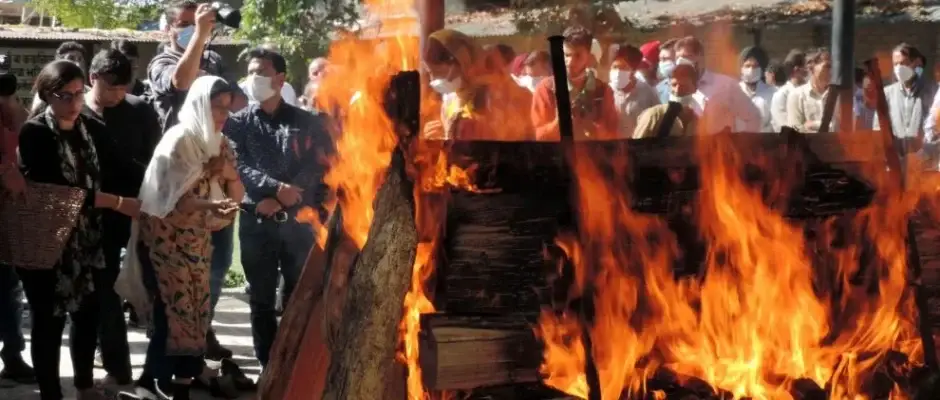
Decades ago, when terrorism engulfed the valley, Kashmiri Hindus, an indigenous ethnic-religious group in Kashmir-now a minority, were forced to leave their ancestral home. The growing Islamic extremism transformed rapidly into terrorism. Much of the weapons and trained terrorists poured in by neighbouring Islamic republic of Pakistan. They, along with other Kashmiri Muslims sympathisers called for murder, loot, rape, and abductions of native Kashmiri Hindus. Left with no choice but to save themselves, over 0.4 million Kashmiri Hindus migrated to different parts of the country. In such adversity and betrayal, Makhan Lal Bindroo, a Kashmiri Hindu pharmacist in Srinagar, chose to stay back and serve his homeland Kashmir. On Tuesday, however, he was paid for his service and trust by The Resistance Front (TRF). Terrorists of the Resistance Front (TRF) shot and murdered Makhan Lal Bindroo. TRF is a Lashkar-e-Taiba front organisation (LeT). LeT an international terrorist group designated by the United States and United nations which is backed and supported Pakistan. The trigger? He was a Hindu, a reminder of Kashmir’s indigenous non-Islamic history that the Islamists desperately want to erase. Seemingly inspired by the recent cleansing of Hindus and Sikhs in Afghanistan. TRF has began a gory repetition of the 90s massacre of Hindus in the valley. In sixteen days, eleven civilians, a majority of whom belong to the Hindu minority communities have been butchered in the Valley of Kashmir by Pakistan backed Islamic terrorists. In the recent spree of killings. Terrorists targeted Hindus, Sikhs and government employed muslims. In addition, non-locals workers a d wagers from the rest of the country, who have built and sustained Kashmir crisis after crisis were targeted. Evidence suggests that these organised killings are planned and organised by Pakistan backed terrorist groups, following the footprint of the 1990s genocide of Kashmiri Hindus. The revival of Kashmiriyat- Kashmir’s distinct pluralism- after recent sustainable development in Kashmir, has been a sore in the sight of Pakistan-sponsored Islamic terrorists in Kashmir. The roots of this planning lead to Pakistan as is evident from the series of events that replicate the 90s genocide. The day TRF’s Pakistan-sponsored terrorists killed Bindroo, two others were also killed, a poor Dalit street food hawker, Virender Paswan who was killed within an hour of Bindroo’s shooting for being a harmless non-Kashmiri, and a Muslim resident that terrorists killed because of suspected links to security forces. All these people were killed for not adhering to the terrorist ideology against Hindus. In fact, it did not stop there. Three days later, terrorists murdered two educationists: Supinder Kour- the Kashmiri Sikh principal at a school in Srinagar and Deepak Chand- the Kashmiri Hindu teacher at the same school. The terrorists singled them out from the staff, ordered the Muslims to go out and shot those two. If this isn’t ethnic cleansing and genocide, then what is, ask the minority communities in Kashmir. The terrorist attacks and killings have launched the minority community in Kashmir into a hysteria of fear and insecurity. Many have fled their homes overnight, in a horrifying repeat of events of the late 1990s. After the last great exodus of the Kashmiri Hindus in 1999, there are barely any Hindus left in the valley, many of whom were those who returned after government’s efforts to resettle them back in their homes. However, clearly, nothing has changed for Hindus and other minorities of Kashmir and it likely won’t as long as Pakistan-sponsored terrorism continues in the valley. There is no doubt that a large part of this renewed genocide of Hindus in the valley also stems from the international aid that is given to Pakistan that it pumps back into its terrorist operations in Kashmir. While India scrambles to take control of security in Kashmir, international community can step up and support by immediately sanctioning Pakistan so that another irreversible genocide of a minority doesn’t happen on our watch.

Read More