CIHS – Centre for Integrated and Holistic Studies

Date/Time:

Heritage, Ethos, Not Saffronisation

Heritage, Ethos, Not Saffronisation

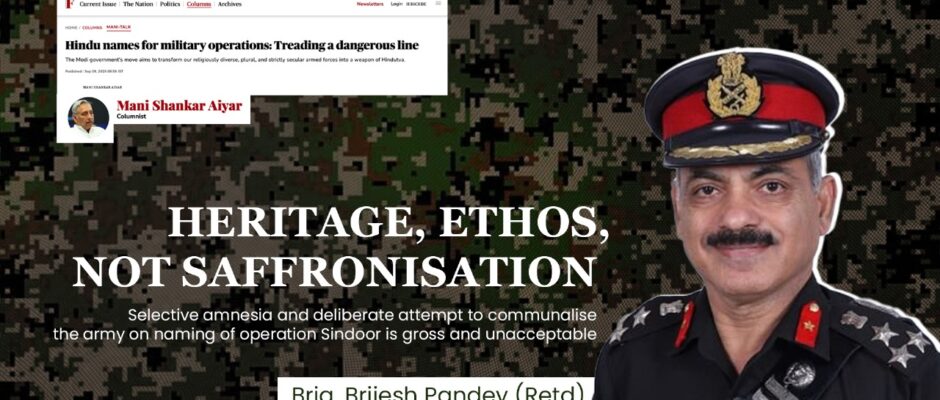
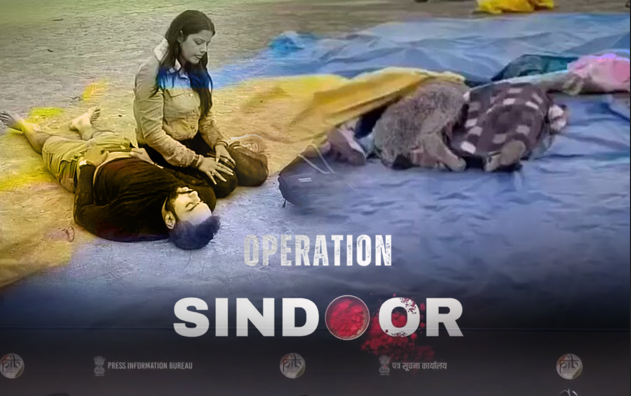
Selective amnesia and deliberate attempt to communalise the army on naming of operation Sindoor is gross and unacceptable. Brig Brijesh Pandey Frontline column “Hindu Names for Military Operations: Treading a Dangerous Line” by Mani Shankar Aiyar published on 09, September 2025 argues that naming of military operations by the present government – most recently Operation Sindoor reflects a deliberate “saffronisation of Indian Army.” The argument is provocative, selective and highly misleading. Having served for 35 years in Indian Army, I never felt that I’m a Hindu or so to say only a Hindu. Being from a pure Sikh Regiment, felt more like a SIKH, behaved like a Sikh and whenever there was a chance to name an institution, exercise or force, the first name that would come to the mind was one that related to Sikh traditions of valour. Yet no one, including my parents, questioned my secular or Hindu credentials. This is so, because anyone who understands armed forces – the history, military tradition and institutional structure – knows that operation or force names are cultural symbols, not ideological manifestos. The culture of naming operations and exercises is older than modern warfare and militaries across the globe use evocative names for operations and exercises – sometimes as a code for secrecy, motivation and more often for messaging deterrence to the adversary as much as public consumption. From earliest days of independent India, armed forces have drawn names from mythology, Sanskrit, geography and abstract concepts. This practice cuts across political regimes led by Congress, BJP or coalitions. In 1984, almost four decades prior to the debate, Indian Army launched Operation Meghdoot to secure Siachen Glacier. The name comes from Kalidasa’s Sanskrit classic Meghaduta (Cloud Messenger from Hindu Cosmology) where an exiled Yaksha asks a cloud to carry a message to his beloved in the Himalayas. Name was chosen, as it was apt reflection of the nature of operation wherein Indian troops were airlifted like clouds into Himalayan heights. It was nothing but a cultural resonance. The name of recently concluded operation Sindoor has been used as evidence to create a discourse that Army is getting communalized or saffronised. Rationale for the name is very clear. Terrorists in Pahalgam targeted married Hindu men, widowing women overnight.  Sindoor (vermilion) symbolizes marital bond in Indian culture. Naming the operation which was primarily a retaliatory action against such a heinous crime selectively inflicted on the majority community of the country was meant to be a tribute to victims and their families, not as a religious decree. Branding it as ideologically motivated reflects ignorance as well as crafty effort to question secular credentials of the armed forces. The act of symbolism and resolve when questioned post-operation Sindoor, a defense ministry official had said, “There is no single written policy on naming. Choices are pragmatic, contextual and meant to evoke resolve.” More often than not, the ideas get generated at very junior level and accepted as such to keep the initiative alive. The writer of “Hindu Names for Military Operations: Treading a Dangerous Line” has been selective about names in recent times, without considering full spectrum since evolution of Indian Armed Forces. When names like Operation Trident (1971), Operation Shakti (1998) or Exercise Ashvamedha (2007) were chosen, no one accused the government of the day – the Congress-led in each case – of religious indoctrination. In the name “Operation Trident”, famous naval strike on Karachi in 1971, “trident” is nothing else than “Trishul”, the weapon of Lord Shiva. Operation Shakti, India’s nuclear test in 1998 drew the name from Goddess power in the Hindu philosophy. But then, these names were accepted as civilizational, not sectarian. When no questions were Congress raised then, why do it now? To illustrate that there is neither any disruption in naming the operations nor is any correlation with appointment of CDS, it is important to analyze few names that relate to the pre and post-2014 era. Era Operation/Exercise Name Year Origin/Meaning Mythological/ Cultural link Pre-2014 Operation Meghdoot 1984 Kalidasa’s Meghadoota Yaksha sends clouds to Himalayas   Operation Trident 1971 Trident (Trishul) Weapon of Lord Shiva   Operation Pawan 1987 Pawan = Wind Vedic Deity   Operation Shakti 1998 Shakti = Power Goddess Power   Exercise Ashvamedha 2007 Royal Horse sacrifice Ancient Hindu Ritual   Exercise Sudarshan Shakti 2011 Sudarshan Chakra Vishnu’s discus   Missiles Prithvi, Agni, Akash, Nag Ongoing Fire, Earth, Sky, Serpent Vedic / Hindu roots   Exercise Indra Ongoing Indra = God of rain Vedic deity Post 2014 Operation Maitri 2015 Maitree = Friendship Sanskrit, Budhist ethos   Exercise Shatrujeet 2016 Shatrujeet = Enemy Conqueror Sanskrit motivational If Armed Forces were being transformed to suit a particular religion, their names and demography would also have started changing. Instead, the regimental system remains plural – Sikh Regiment, Rajputana Rifles, Maratha Light Infantry, Punjab Regiment, Assam Regiment, Madras regiment, Gorkha Regiment, Brigade of Guards, and so on – each maintaining regional, caste or faith-based traditions. The very regimentation of Indian Armed Forces is proof of pluralism. If the army was being saffronised as claimed by Aiyar, there would be a written directive mandating Hindu names. Whether it is regiments, exercises or operations, they would all start assuming names relating to Hindu religion only. Unlike compulsory recruitment of persons of religions based on which regiments exist only Hindus will get recruited. Likewise, promotion criteria will change. There would be no non-Hindu tenanting critical appointments such as Chief of Army / Navy / Air Force. Contrary to this, what we see is continuity: a mixture of neutral, mythological and cultural names chosen for operational and symbolic value. Seen through Cognitive Warfare lens, such narratives follow a familiar toolkit: disinformation (casting doubts on facts by portraying cultural symbolism as ideological capture), amplification (mainstreaming selective examples while ignoring historical continuity) and de-legitimization (eroding trust in one of the most patriotic institutions). We saw a similar pattern when opposition leaders questioned authenticity of 2016 Surgical Strikes and 2019 Balakot airstrike. In each case, rumour and
Read More
Pahalgam to Ops Sindoor: A Case Study in India’s Counter-Terror Doctrine

Pahalgam to Ops Sindoor: A Case Study of India’s Counter-Terror

On the morning of April 22, 2025, in the tranquil and scenic hills of Pahalgam, Jammu and Kashmir, a brutal and premeditated terrorist assault took place—one that fundamentally altered India’s national security posture. Twenty-six civilians, including women and children, were executed at point-blank range by Pakistan-backed terrorists after being identified based on their religious affiliation. Eyewitness accounts confirmed that the attackers interrogated the victims about their Dharma (faith) and segregated them before unleashing gunfire. This atrocity was not merely an act of terror—it was a calculated religious pogrom designed to fracture India’s communal harmony and provoke sectarian unrest. Indian government swiftly classified the attack as a gross violation of international humanitarian norms and an extension of Pakistan’s long-standing policy of proxy warfare with a deeply communal subtext.

Read More
India Needs Cognitive Warfare Plan

India Needs Cognitive Warfare Plan

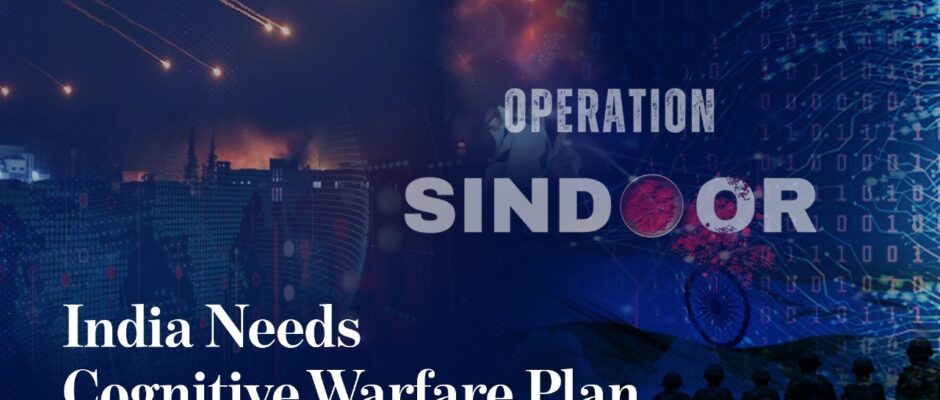
Fighting enemy on information highway as on ground emerges a big challenge and opportunity for Bharat that’s declared war on terror. Rohan Giri In the wake of Operation Sindoor, India’s precision strike against cross-border terrorist camps in Pakistan, a disturbing counteroffensive has emerged—not on the battlefield, but in the information domain. The recent statement by Communist Party of India (Marxist–Leninist)—disguised as a call for peace—reveals a deeper, coordinated attempt to delegitimize India’s national security concerns. On the parallel, certain social media influencers and public figures have echoed narratives that align more with Islamabad’s propaganda machinery than with India’s democratic discourse. Convergence of disinformation, ideological proxies and cognitive warfare by deftly manipulating freedom of speech calls for deep dive analysis. Cross-Border Strikes to Cognitive Warzones Operation Sindoor was launched in response to brutal killing of 26 Indian civilians by Pakistan-backed jihadi groups in Pahalgam. Indian Armed Forces counter-terror operation—based on actionable intelligence— neutralised multiple terror hideouts along Line of Control (LoC) and deep into Pakistan. Even before the word was out on the operation, a parallel battlefront opened in the digital sphere. Assorted Left extremists who have lost the plot and support of people re-grouped under CPI(ML) had the gumption to cynically talk about “war mongering,” “mock drills,” and “jingoism” instead of outright condemnation of terrorists, their backers and handlers. Deliberate attempt has been made by CPI-ML to shift focus away from campaign against terror, victims of terror to a narrative of false equivalence placing India’s defensive response and Pakistan’s terrorism on same plane. This is not an isolated political position. It is an ideological posture with global resonance—amplified by social media handlers, YouTubers, and creators whose content is now being routinely picked up by Pakistani media to discredit India’s war against terror. Cultural Expression as Cover for Subversion For instance, Neha Singh Rathore, a content creator and folk performer came under legal scrutiny for provocative posts that allegedly promote communal disharmony. Rathore’s content—strategically laced with satire and emotion—has been widely shared across borders, especially in Pakistani outlets eager to highlight India’s “internal repression.” While art and dissent is at core of democracies like Bharat, Rathore’s content is not organically critical, instead ideologically consistent with Pakistan’s strategic communication goals. The timing, targeting and terminology in such digital content reflect more than personal opinion—they indicate agenda-setting behaviour. CPI(ML) and figures like Rathore are not merely engaging in protest; they are building parallel narratives that erode legitimacy of India’s campaign against terror. When these narratives go viral, they serve the psychological warfare strategies of hostile powers. Beijing in 1962 to Islamabad Today Maoist and marxist gangs have a long history of siding with foreign adversaries. During 1962 Sino-Indian War, segments of CPI openly supported China dismissing Indian territorial claims and branding national mobilization as bourgeois nationalism. Today, the same ideological model has evolved, more sophisticated, digitally native and far more dangerous. By refusing to condemn cross-border terrorism and attacking India’s right to respond, CPI(ML)’s latest statement resurrects this playbook. It leverages democratic tolerance to inject disinformation, exploit communal sensitivities and erode confidence of Indian populace in its institutions. The party’s warning against “war preparations” and “state violence” is couched in humanitarian concern but functionally serves to paralyze India’s right to strategic deterrence. This is not peace activism—it is information sabotage. Legal and Civic Clarity India’s commitment to free speech under Article 19 of Constitution remains robust. This freedom is not absolute. The new Bharatiya Nyaya Sanhita (BNS) Section 152 replacing the colonial-era sedition law, rightly targets acts that threaten unity and integrity of nation including narrative warfare. In the digital era, narrative disruptors have become as strategically valuable to the enemy as traditional insurgents. Unlike overt enemies, these actors often present themselves as poets, comedians, journalists or social reformers. Their strength lies in ambiguity, their power in virality. Perception Wars and Legitimacy Battle International opinion is increasingly shaped by perception rather than policy. In this context, India’s counter-terror narratives must compete not only with traditional media but with decentralized content ecosystems that are vulnerable to infiltration, manipulation and illegal funding. When disinformation aligns with an adversary’s diplomatic strategy i.e., portraying India as an aggressor and the region as unstable, it not only undermines counterterrorism efforts but damages India’s geopolitical credibility in multilateral forums. Suspension of Indus Waters Treaty (IWT) following Pahalgam Terror attack was a bold diplomatic move, signaling a shift in India’s engagement with Pakistan. But without narrative control, such moves risk being framed globally as escalatory rather than defensive. Strategic Culture of Narrative Resilience India needs more than military readiness; it requires a strategic communication plan that integrates law, policy and narrative discipline. This includes: CPI(ML) statement and online activism that follows it are not expressions of dissent—they are symptoms of a deeper vulnerability: India’s tolerance for internal ideological actors who camouflage sedition as satire. As India rises on the world stage, its battles will increasingly be fought in the cognitive domain. Winning them will require legal, civic, and strategic clarity. (Author is a doctoral fellow at Amity University in Gwalior, content head at Centre for Integrated and Holistic Studies)

Read More
Global Terror Factories Targeted During Operation Sindoor by India

Global Terror Factories Targeted During Operation Sindoor by India 

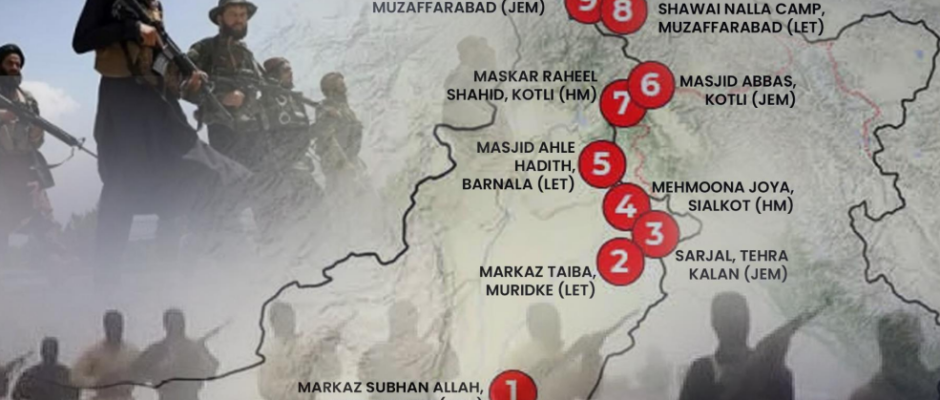
India’s ‘Operation Sindoor’ on May 7, 2025, involved missile strikes on nine locations in Pakistan and Pakistan occupied Kashmir. India’s stated aim was to target and dismantle terrorist infrastructure used for planning and carrying out attacks against India, specifically mentioning groups like Lashkar-e-Taiba (LeT), Jaish-e-Mohammed (JeM), and Hizbul Mujahideen (HM). India maintained that these strikes were “focused, measured, and non-escalatory,” intended to avoid Pakistani military facilities and civilian casualties. Pakistan fake claimed that India targeted civilian areas, including mosques, resulting in significant civilian deaths and injuries. Reports from Pakistan mentioned a mosque being hit in Muzaffarabad, and a mosque complex struck in Bahawalpur, leading to casualties. India’s perspective, based on the provided information, is that these sites, irrespective of containing any religious structures, were legitimate military targets because their primary function was facilitating terrorism. They argue that the presence of religious or civilian structures might be a deliberate tactic to shield terrorist activities or gain legitimacy. India emphasized that intelligence confirmed these locations were actively used as recruitment, training, indoctrination, and operational hubs for terror groups responsible for attacks on Indian soil.

Read More
Brief - Pakistan Targets Sikhs, Gurdwara

Brief: Pakistan Targets Sikh Gurdwara

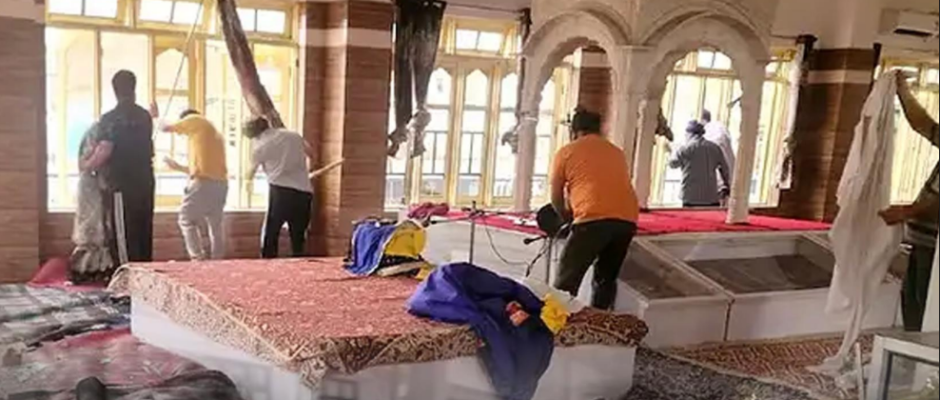
Pakistan’s army began an unprecedented campaign of cross-border small arms and artillery bombardments into Jammu & Kashmir almost immediately after April 22, 2025 Pakistan backed terrorist attack in Pahalgam (which killed 25 Tourists, after ascertaining their Hindu faith). By April 24, India had suspended the 1960 Indus Waters Treaty, and within hours Pakistan “resorted to unprovoked firing at various places along the LoC in J&K, starting from the Kashmir valley”.

Read More
Operation Sindoor: India’s justified calibrated kinetic strikes Against Terror

Operation Sindoor: India’s justified calibrated kinetic strikes Against Terror

An unbroken thread links India’s 21‑year struggle against cross‑border terrorism, from the 2001 Parliament attack to the 2016 “surgical strikes” and the 2019 Balakot air strikes, into the present moment. On  22  April  2025 five Lashkar‑e‑Taiba gunmen slaughtered twenty‑six mostly Hindu tourists at Baisaran meadow near Pahalgam, Anantnag district, after segregating the victims by religion.[1] Within twenty‑four hours New  Delhi’s Cabinet Committee on Security (CCS) validated   “cross‑border linkages,” suspended the Indus Waters Treaty and ordered a graduated response “to bring the perpetrators and their sponsors to justice.”[2] Economic and diplomatic screws turned first: a blanket ban on Pakistani imports (2  May)[3] and reciprocal port closures (4  May)[4] reduced bilateral trade to zero and shrank the two High Commissions to skeletal staffs. Yet Pakistan army mortar fire persisted across the Line of Control, and Indian intelligence traced the Pahalgam cell to Lashkar training clusters in Pakistan and Pakistan‑occupied Jammy and Kashmir (PoJK). With public outrage mounting, the government authorised a justified calibrated kinetic strike, Operation  Sindoor.

Read More

Brief on Baisaran Terrorist Attack – April 22, 2025

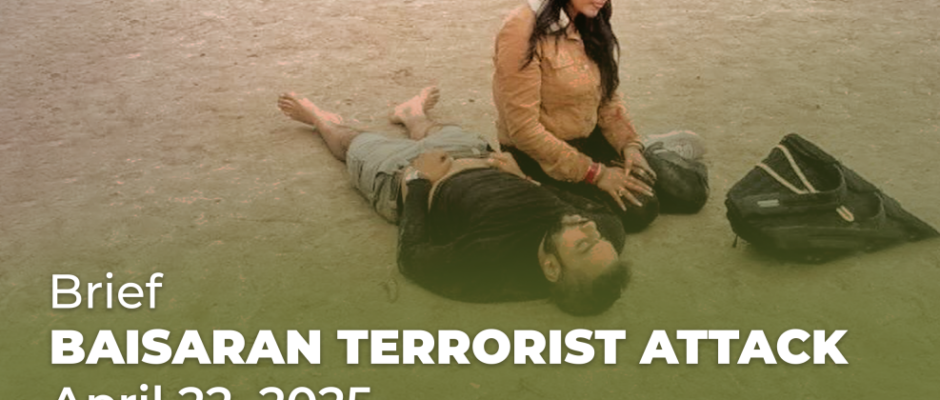
At approximately 2:30 PM on April 22, 2025, a group of terrorists opened indiscriminate fire on tourists at Baisaran meadow, some 6 km from the tourist town of Pahalgam in Anantnag district, Jammu & Kashmir. The Pakistan backed islamist terrorists exploited dense forest bordering the meadow to launch a deadly ambush on innocent tourists enjoying pony rides and foot tours of the so called ”Mini-Switzerland” claiming more than 26 lives and injuring 17 others. Our brief explains the deadly terrorist attack.

Read More

From Turmoil to Transformation: A Tale of J&K after 370

Dr. Preeti Sharma In a recent development, the United States issued a travel advisory, underscoring the grave security threats pervading select regions of India, including the Union Territory of Jammu and Kashmir, which was identified as a high-risk destination due to the specter of crime, civil unrest, and terrorism. India responded by characterizing this advisory as a routine practice among nations, thereby downplaying its significance. Notwithstanding this, the erstwhile state of Jammu and Kashmir has made remarkable strides in its post-2019 journey, marked by the abrogation of its special status and reorganization into Union territories. This transformative shift has accelerated the region’s progress towards restoring peace and developmental activities, as borne out by official data indicating a significant decline in infiltration attempts. After decades of turmoil, Jammu and Kashmir is now experiencing an unprecedented era of growth, marked by improved administration, a secure environment, and an influx of tourists and investors. The substantial developments in socio-economic security, stability, and growth measures have transformed the scenario in Jammu and Kashmir, which now boasts a decline in recruitment into militancy and terror activities. As per the official records, till July 2024, J&K has completely done away with organised stone pelting and strikes, and despite a few incidents happened in last few months, there is a decline in terrorist initiated incidents, encounters, killings of security forces and civilians. The region has witnessed a remarkable voter turnout of 58.46% in the 2024 Lok Sabha elections, the highest in 35 years, underscoring the public’s growing faith in the democratic process. The G20 meeting in Srinagar served as a testament to the UT’s gradual elevation in stability and global significance. Despite sporadic incidents of violence, the progress achieved in Jammu and Kashmir cannot be negated, as evidenced by the record tourist footfall of over one crore till June 2024. In consideration of the intermittent yet persistent reality of sporadic violence, it is imperative to acknowledge the transformative progress unfolding in the region, unobscured by the travel advisories issued by nations such as the United States, which serve as a standard precautionary measure. The remarkable strides made by Jammu and Kashmir are exemplified by the unprecedented tourist footfall of over one crore till June 2024, surpassing the previous year’s tally of two crores. This surge in tourism can be attributed to the significant improvements in law and order, coupled with the successful organization of various events, including the tourism conclave. Furthermore, Jammu and Kashmir has borne witness to a record number of scholars, academicians, journalists, and individuals from diverse backgrounds converging to engage in discourse on peace, nation-building, and institution-building, in addition to the myriad positive developments that have transpired in the aftermath of Article 370’s abrogation. These grand events, facilitated by the ‘South Asia Center for Peace and People’s Empowerment’ in collaboration with GDC Shopian, have been instrumental in revitalizing a locale that was once a hotbed of secessionist fervor and a bastion of intransigence, where the specter of anti-India sentiment once held sway, and constructive engagement was deemed anathema. In this erstwhile state, which was, until recently, a cauldron of insurrectionary zeal and a forbidden terrain for benevolent initiatives, a plethora of schemes and policies have been unveiled, inviting investments and promoting foreign investment in both small and large industrial sectors. The introduction of the new industrial policy in 2021 has been instrumental in catalyzing investments in Jammu and Kashmir, as evidenced by the record investment proposal of Rs 84,544 crores received in the industrial sector. The forward-looking investment policy of the UT has attracted large business groups, including Dubai’s Emaar Group, which has invested USD 60 million, thereby removing roadblocks and redefining politico-economic developments in the region. The burgeoning interest of domestic and foreign investors in vital sectors such as agriculture, tourism, and manufacturing can be attributed to the lifting of restrictions, improved security conditions, and liberalized land policies, which have collectively shaped the state’s investment policy by attracting Foreign Direct Investment, a crucial catalyst in developing the state’s economic potential. The abrogation of Article 370 and afterwards lifting of restrictions marked a watershed moment for Jammu and Kashmir, heralding the dawn of a new era of economic liberation. The confluence of improved security conditions and liberalized land policies has precipitated a remarkable influx of Foreign Direct Investment, unshackling the region’s latent potential in agriculture, manufacturing, and tourism. Through a series of visionary initiatives and policy reforms, the government is painstakingly transforming Jammu and Kashmir into an investor-friendly haven. The judicious regulation of FDI will serve as a catalyst, elevating the state’s business environment, generating employment opportunities, and enticing further investment. As the region strives for unprecedented economic growth and development, FDI will assume a pivotal role. The possibilities are endless, and the future holds boundless promise, provided that forthcoming opportunities for growth are seized with alacrity and executed with unwavering efficiency. The horizon beckons, and the sky’s the limit, as Jammu and Kashmir embarks on an odyssey of unbridled progress and prosperity. These momentous developments serve as a testament to the remarkable headway achieved in cultivating an atmosphere of enduring peace, stability, and security for the citizens of Jammu and Kashmir. Furthermore, this auspicious trajectory shall persist in charting a course of unbridled progress, kindling a radiant beacon of democratic principles, and thereby ushering in an epoch of unparalleled advancement and felicity. Notwithstanding the remarkable socio-economic advancements witnessed in the region, the recent terrorist attacks constitute an incontrovertible reality, having surfaced in novel areas of Jammu, hitherto unscathed by the decades-long terrorist insurgency that has plagued Kashmir. These attacks possess far-reaching implications and underlying motivations, including the strategic recalibration of Pakistan-based terrorist groups in the aftermath of the revocation of Article 370. These groups have redirected their focus from the heavily fortified Kashmir Valley to the relatively vulnerable Jammu region, exploiting its vast and rugged terrain to infiltrate armed militants across the International Border (IB) and the Line of Control (LoC). These militants often assume the guise of civilians, procuring weapons from

Read More

Reviving Bharat’s Ancient Heritage: Martand Sun Temple of Jammu and Kashmir

Introduction : Placed amidst the lush landscapes of Jammu Kashmir, Martand Sun Temple[i] stands as a flare of Bharat’s rich cultural heritage and architectural brilliance. Dating back to the 8th century, this ancient temple, originally much larger than other prominent Sun temples like Modhera in Gujarat, Multan in Sindh, and Konark in Orissa, represents a diverse cultural influences and architectural styles. Martand, the Sanskrit word for Surya, the Sun God. The temple is located at an altitude of approximately 5400 feet above sea level and five miles from Anantnag town in the Jammu Kashmir division of the union territory of Jammu and Jammu Kashmir. In this article, we delve into the intricate details of the Martand Sun Temple, exploring its historical significance, architectural features, cultural context, and the ongoing efforts towards its preservation and restoration. Historical Significance: The 1200- years old Martand Sun Temple dedicated to Surya, holds a significant place in Bharat’s architectural and religious history. Constructed under the patronage of Samrat Lalitaditya Muktapida,[ii] the third ruler of the Karkota Dynasty. Situated atop a plateau, the Martand temple offers an expansive vista of the entire Jammu Kashmir Valley. The temple complex spans over 32,000[iii] square feet. Its construction reflects the cultural exchange in ancient Jammu Kashmir, highlighting the region’s rich heritage. The temple’s historical significance is further underscored by its association with Samrat Lalitaditya Muktapida, a revered figure in Jammu Kashmir’s history. Lalitaditya’s contributions to the temple’s construction signify the flourishing of art, culture, and spirituality during his reign. The temple served as a centre of worship and pilgrimage, attracting devotees from far and wide. Architectural Features: The Martand Sun temple is famous for its excellent carvings, the trefoil doors and the elaborate stone columns, which reflect the architectural genius of the ancient Jammu Kashmiri craftsmen. The temple is constructed of Devri stones which may have been transported using elephants. It is believed that elephants were widely used in the region of Jammu Kashmir by the eleventh century. According to several collected works by Kalhana, the layout of the temple includes a central courtyard which houses the main shrine. The main shrine is surrounded by 84 minor temples[iv]. Among the 84 minor temples, 81 temples housed the idols of the Sun God. Three temples had the Shivalingas as well. The total length of the temple is 220 feet and the width is 142 feet. The height of the temple does not exceed 40 feet. The outlined border walls and the pillars around this abode explain the magnificence of the martand sun temple. The central region of the temple is slightly raised. There are distinct wings on each side of the entrance. The outer walls are around 90 yards in length and the front wall is about 56 yards in length. The entire arcade consists of 84 pillars. The number is considered as auspicious by Hindus. The temple is rectangular in shape and made of limestone in the traditional Aryan style. They are 6 to 8 feet in length and are being cemented with grout. The center section of the temple is 36 feet wide and 63 feet long. The sanctuary along with the choir and the nave are 18 sq ft in size[v]. The entrance of the temple is decorated with beautiful carvings of various Hindu Gods and goddesses. It looks as if every element has been carefully arranged and proportioned to create harmony and unity. The vimana, or main shrine, is around 60 feet high and is adorned with many intricately carved and sculpted carvings and statues. The outer walls of the temple are adorned with more than 400 columns which support an intricate roof structure. The strategic orientation of the temple ensures that the Sun’s rays light up the central shrine during the daytime. This architectural innovation highlights the temple’s symbolic significance as a homage to the Sun God Surya and the heavenly order. Cultural Context: The Martand Sun Temple holds immense cultural significance, serving as a site of religious worship, pilgrimage, and artistic expression. It reflects the amalgamated traditions of Jammu Kashmir, where diverse cultural influences combine to create a unique architectural heritage. The temple’s enduring legacy resonates with the spiritual and cultural ethos of the region, transcending chronological boundaries. Despite facing attempts of destruction, notably under the orders of Sikandar Butshikan [vi]to the turmoil of Jammu Kashmir’s terrorism in 1988, the temple’s traces stand as a testament to Jammu Kashmir’s resilience and cultural heritage. The temple complex continues to inspire surprise and appreciation, drawing visitors from across the globe to witness its historical significance. Preservation and Restoration Efforts: In recent years, there has been a rigorous effort to preserve and restore the glory of the Martand Sun Temple, recognising its importance as a cultural and historical landmark. The government of the Union Territory of Jammu and Jammu Kashmir[vii], in collaboration with heritage conservation organizations, has initiated various measures to safeguard the temple complex and ensure its long-term preservation. Alongside this monumental endeavour, a statue honouring Samrat Lalitaditya Muktapida, who oversaw the temple’s construction, is set to grace the premises. These efforts include documentation, structural stabilisation, and conservation of the temple’s architectural elements. Additionally, plans are underway to enhance visitor amenities and promote tourism, thereby nurturing greater appreciation for Jammu Kashmir’s cultural heritage. Conclusion: The Martand Sun Temple is a symbol of Bharat’s rich heritage and architectural excellence, symbolising the spiritual and artistic ambitions of ancient Jammu Kashmir. Established in the eighth century, this architectural wonder is a combination of different cultural influences and styles, representing the diverse tradition of the region. The elaborate carvings of the temple, the trefoil doors, and the elaborate stone pillars all reflect the skill and craftsmanship of the ancient Jammu Kashmiri craftsmen. The temple’s strategic orientation, designed to catch the Sun’s rays, emphasises its symbolic importance as a homage to the Sun God Surya and the cosmic order, even though it has faced many challenges and attempts to destroy it, especially under the orders of  Sikandar Butshikan. Government of

Read More

Wins Hearts, Pitches for Prosperity in Kashmir

Kashmir people resoundingly dismissed notions of a divided stance; unequivocal support for Modi’s vision of a ‘Naya Kashmir’. Rahul Pawa During his maiden visit to Srinagar after having ended an era of discrimination by landmark amendment of Article 370, Prime Minister Narendra Modi encountered a reception that left critics and skeptics astounded. Anticipation for his visit had been building for several days with throngs of Kashmiris flocking to Srinagar, the summer capital of Jammu and Kashmir. Driven by a desire to glimpse Modi, a leader whose popularity has surged across what was once known as a turbulent state. This fervent public display signifies a pivotal shift in socio-political landscape of Jammu and Kashmir. It marks beginning of a period that could redefine its history ushering in significant changes and reimagining Jammu and Kashmir’s future. This visit not only punctuates Modi’s magnetic appeal with people of Jammu and Kashmir but also signals potential evolution of a territory poised to embark on path to peace and prosperity. At today’s ‘Viksit Bharat Viksit Jammu Kashmir’ programme in Srinagar, people of Kashmir resoundingly dismissed any notion of a divided stance on Jammu and Kashmir sending a clear message to global community their unequivocal support for Modi’s vision of a ‘Naya Kashmir.’ In the event at Srinagar’s Bakshi Stadium, Lieutenant Governor Manoj Sinha extended warm welcome to Prime Minister Narendra Modi who was  cheered by thousands of followers and supporters joining online from all districts of Union Territory and around the world. Modi, engaging in dialogue with Viksit Bharat beneficiaries from several J&K districts including Shopian, Jammu, Kupwara, Srinagar, Ganderbal, Bandipura, Kathua, and Kishtwar, showcased inclusive reach of the initiative. Amid scenic backdrop of Bakshi Stadium, Modi then unveiled an ambitious slate of 53 projects, cumulatively valued at Rs 64 billion. These ventures go beyond just infrastructure projects; they are beacons of hope and engines of progress for Jammu and Kashmir. PM emphasised the transformative impact these projects are poised to have on the UT’s development trajectory. Modi’s visit was not only about projects, it was genuine urge to outreach to Kashmiris whom he addressed as his parivar or larger family. Echoing sentiments of Syama Prasad Mukherjee whose sacrifices laid the groundwork for this new vision of Jammu and Kashmir, Modi reiterated the symbiotic relationship between development in the valley and broader pillar of India’s progress. Modi also empathized on evolving travel trade making Srinagar, as a focal point in India’s burgeoning tourism industry pivotal to Bharat’s development story by launching ‘Dekho Apna Desh People’s Choice Tourist Destination Poll’ and  ‘Chalo India Global Diaspora’ campaign. Reflecting on his visits post-2014, Modi shared, “Whenever I came here after 2014, I have always said that I am making all these efforts to win your hearts and I am seeing that I have been able to win your hearts. I will keep trying hard. This is Modi’s guarantee…” It was a moment of reassurance, emphasise his commitment to winning over people of Jammu and Kashmir through sincere efforts and dedication. Prime Minister Narendra Modi didn’t shy away from addressing the political landscape taking aim at Congress party and its allies, along with regional opposition parties for misleading people regarding Article 370. Striking a stern note, Modi highlighted how Article 370 had disproportionately benefited certain families in the Valley challenging the earlier prevailing narratives surrounding its amendment. Furthermore, PM announced the Valmiki community now qualifies for Scheduled Caste (SC) benefits with the Vidhan Sabha reserving seats specifically for SCs. Additionally, the Pattari tribes, Pahadi groups, Gadda Brahmin and Koli communities have been newly included in the ST list. Modi turned the spotlight on tangible progress emphasizing historic milestone of railways reaching the Kashmir Valley. This infrastructure development is not just about laying tracks; it symbolizes connectivity, economic growth and prosperity for the region. In a moment of optimism, Modi expressed his unwavering faith in the youth of Jammu and Kashmir. Their potential, he asserted, is the bedrock upon which the future prosperity and vitality of the region will be built.   In a striking demonstration of political acumen and visionary leadership, PM Modi’s first visit to Srinagar has marked a turning point for J&K, signaling radical departure from its tumultuous past. The overwhelming reception that he got reflects a watershed moment in the region’s history, illuminating a collective desire among the people of J&K to embark on a journey of peace, prosperity and closer integration with the country’s developmental story. Modi’s initiatives, skillfully intertwining development agenda with efforts to connect on a personal level, have laid the foundation for a comprehensive socio-economic revival. Modi’s ability to draw unprecedented crowds in a region once beset by strife speaks volumes about his popularity and the shifting sentiments among its people. By directly addressing longstanding grievances and proposing a vision of progress and inclusivity, Modi has not only reinforced his political dominance but charted a bold path towards the realisation of a ‘Naya Kashmir’. This journey, underpinned by aspirations for stability and growth, could redefine the future of Jammu and Kashmir, setting a precedent for inclusive and development-driven governance. (Author is Research Director at New Delhi based non-partisan think tank, Centre for Integrated and Holistic Sudies)

Read More
  • 1
  • 2