
CIHS – Centre for Integrated and Holistic Studies

Date/Time:

Unleash India spirit!

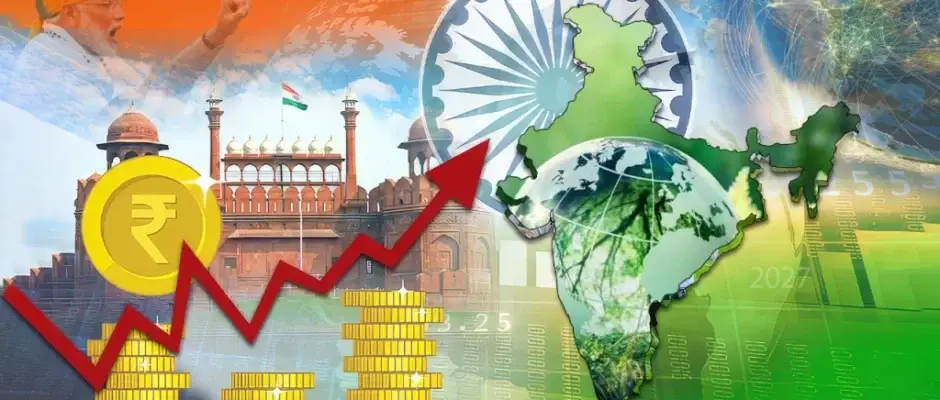
Changing geo-political equations & global order has etched a key role for India as Vishwa Guru & Mitra, the most dependable ally K.A.Badarinath Prime Minister Narendra Modi put up a comprehensive socio-economic development plan before 1.4 billion Indians while delivering his tenth address from ramparts of iconic Red Fort. Given the grand plan that encapsulates his over 90-minutes address on Tuesday, political interpretations are bound to be made given that elections to four state legislatures followed by Lok Sabha polls were scheduled before June 2024. While the messenger in Modi arguably did a fantastic job of presenting broad contours of 25- year work plan, the leader in him hit the right note on three evils that the country faced. Presenting a case for ‘developed India’ by 2047, the year country celebrates her centennial post-independence from imperialistic British forces, Modi did not mince words. In the process, he has served an early notice to four large global economies that also consider themselves as invincible. A vision document being readied by ruling BJP and the central government would roll out specifics in this plan. This document has been in the works last one year when 75-years commemoration campaign was kicked off by Modi. Given that 2023 is first of 25-years ‘amrit kaal’, emphasis on grand ‘long viewfinder’ works well and timely. The resolve to build on substantive achievements last ten years got reflected amply on socio-economic front to upend India to third position as largest growing economy with a wide diverse market for goods and services.   Fight against corruption, dynastic politics and appeasement line he pushed very hard is in continuation of BJP and NDA closing ranks to not cede even an inch of political space for 26-parties opposition. These three evils found mention prominently even in his reply to a no-confidence motion that was moved by some opposition parties earlier this month. Targeting a few families that run their political parties as personal fiefdoms or family enterprises, Prime Minister seems to have taken the fight across fence. Guarantees on political stability would be a big factor given resounding victory that Modi got in 2014 and 2019 Lok Sabha. And, continuation of the ten-year work done is one clinching issue politically as well as on economic front. Political instability is one big risk that goes against the very grain of investments, buoyancy in markets and economic expansion. From the opposition perspective, political stability is one thing that cannot be taken for granted given inherent contradictions within fragile political formations that form part of anti-Modi rainbow network Recent successes for Congress in Karnataka and Aam Aadmi Party winning big in Punjab may have enthused opposition ranks leading to Patna and Bengaluru conclaves. But the socio-economic model of ‘freebies in Punjab and guarantees in Karnataka’ are unsustainable. Already, Karnataka has made more than clear that it would hardly be able to mobilize funds for even taking forward development projects erstwhile BJP government has begun. Internecine power struggle within the Congress and inter-party rivalry with the 26-party conglomeration is bound to take investors dizzy. Yet another commitment made by Narendra Modi was to guarantee against corruption that’s eating into vitals of the Indian polity. By and large, the ten year Modi rule at centre was corruption free notwithstanding charges of ‘suit boot sarkar’ made by Congress to pull down the BJP and tarnish with its own black brush. In states, public sector companies, banks and award of contracts, most players across spectrum have still been susceptible and amenable to personal gratification. Through the guarantee, Modi may have to extend his fight against corruption to states and then down below as districts administration continue to be marred by shady deals that need closer scrutiny. Trust in his leadership and BJP-led NDA model of governance is something that he has earned in last ten years. This trust needs to get extended downwards under his close watch to ensure that Hindu-centric voters will continue to be with Modi-led alliance. Mistrust with Congress regimes was what made ten years rule of Manmohan Singh unsustainable.  Trust factor with the voters, partners, investors and all stakeholders in the next government may have to be worked on faster by Modi’s strategists. Narendra Modi seems to have banked heavily on spirit of India that has stood test of times. When he invoked ‘unstoppable’, tireless and does not give up’ spirit of hoi polloi, he made an instant ‘emotive connect’ with those tired of being ‘held up or pulled back’ in realizing their aspirations. BJP, NDA and Modi’s commitment to the concept of ‘vishwa guru’ or attaining numero uno status for India globally is fairly well established. Extending this further, Prime Minister Modi portrayed India as a ‘vishwa mitra’, a bankable friend, dependable partner and stakeholder in human development. His talk of a new ‘global order’ and ‘geo-political’ alignments is rather real given sea changes experienced in aftermath of cold war. Post-Covid 19, the much anticipated re-working of global order is expected to roll out in near future. And, this provides perfect opportunity for India to play a key responsible role internationally moving away from reticence of the past by ‘minding its own business’. This futuristic articulation to position India on global matrix both on geo-political issues and socio-economic plane would go well. (Author is Director& Chief Executive, Centre for Integrated and Holistic Studies, a non-partisan think tank based in New Delhi)

Read More

‘Mother India’ Noise for Votes May Not Work

Congress will have to rejig its strategy to take on Prime Minister Narendra Modi. No confidence motion was lost opportunity for grand old party. K.A.Badarinath Who killed ‘Mother India? Was it the Narendra Modi government as alleged by Congress leader Rahul Gandhi or the grand old party that held the country’s reins for over five decades? Well the answer is quite obvious and straight. Feigning ignorance on ignominious and corrupt 50-odd years Congress rule post-independence may not help make out a case for the party with diminishing returns. A party that virtually turned ‘pigmy’ due to its own making and misrule has launched a desperate bid to resurrect itself in conjunction with 13-other splinter political groups run by ‘dynasties’ like the one that Rahul inherits. It was rather valiant for Rahul Gandhi to make a sweeping charge against Narendra Modi government holding it squarely responsible for turmoil in Manipur or communal flare up in Haryana. To deduce that Modi government was responsible for killing ‘Mother India’ or ‘Bharat Mata’ was chivalrous for a leader whose party oversaw the partition of India, conceded Aksai Chin to China and its leaders sought referendum on Kashmir like Brexit vote that was held in United Kingdom.  Congress ecosystem seems to get a high by referring to ‘Bharat Mata’ or mother India often used by right wing forces with reference to this millennia old Hindu centric society that absorbed people from all faiths, modes of worship, denominations, religion. Reference to ‘Bharat Mata’ may be Congress way of staking claim on this very wholesome conceptualization of Hindus that the country and its people have a soul, spirit and distinct way of living. The claim also reflects the rudderless Congress political formation’s machinations to pursue a soft Hindutva line to negate the BJP-led National Democratic Alliance (NDA) influence among vast Hindus that believe in cultural nationalism. Now that Congress has made its move,will majority Hindus buy Rahul Gandhi’s schizophrenia and vote for the party in legislative assembly elections in Mizoram, Madhya Pradesh, Rajasthan and Chhattisgarh followed by Lok Sabha polls in 2024? Alienation of majority Hindus due to unabated appeasement of Muslims and Christians is something Rahul Gandhi seems to be working on. Will this ploy work is something Congress strategists have to think? Weaning away nationalist ideological base and ardent Hindus from right wingers may not happen like heaping charges of corruption and corporate dealing on Modi government did not work. But, Rahul Gandhi seems to take on NDA, BJP and Narendra Modi on this plank. It may be a grave mistake that Rahul committed even before campaign for the 2024 elections began. Grand vision of ‘Bharat Mata’, ‘Virat Bharat’ or ‘Akhand Bharat’ of Hindus may be beyond comprehension of Congress and its leader Rahul Gandhi who may be looking to poach into BJP-led alliance votes. A thriving society that’s unique in its way of life and spread virtually across South Asia with cultural ethos as one common thread may not be an easy fact to accept by left-leaning Congress that lost its moorings of pre-independence days and fell into the trap of sectarian politics of divisive variety. Rahul or Priyanka Gandhi Vadra showing up for ‘aarti’ at temples to garner a few votes cannot be Hindu way of life or what Hindus believe this country as a ‘living entity with spirit and soul’. Otherwise, Congress has till date not offered plausible explanation for its government’s decision to pull back the Indian Army in 1971 war after the forces had Pakistan territory till Lahore. Was it not that Congress then Prime Minister Indira Gandhi hailed as leader of 1971 war with iron fists, who did not pursue India’s West Pakistan agenda finalized in consultation with the Indian armed forces? Does Rahul Gandhi even have an inkling of how this played out? Did Rahul Gandhi suffer temporary memory lapse on how his own party government forgot Pakistan Occupied Jammu Kashmir and now his party people have the cheek to seek referendum on Article 370 of Indian Constitution?  A part of this Indian Territory was usurped by China in a 1963 deal with Pakistan, but did Congress remember ‘Bharat Mata’ then? When Aksai Chin was occupied by China and Congress twiddled its thumb in New Delhi, can it now claim that ‘mother India’ was sliced into pieces in Manipur and elsewhere by Modi government? Chinese People’s Liberation Army (PLA) was given a free pass in 1950s and 1962 war to takeover Aksai Chin almost the size of Bhutan and was hitherto part of India’s Ladakh and never reflected in Chinese maps. Giving a staged outrageous twist to Manipur issue by claiming that the state has been divided will not work for Congress given that recent violence was handiwork of a combination of forces including the Church, drug mafia, insurgents from across Myanmar border apart from divisive tukde tukde gangs. Like corruption and corporate deals charges did not stick to BJP, separating ‘Bharat Mata’ from Hindutva forces may not happen in a jiffy. Rahul Gandhi has to think rejigging substantive Congress strategy to take on Modi, BJP that emerged as largest political party globally and NDA. (Author is Director & Chief Executive, Centre for Integrated and Holistic Studies, a non-partisan think based out of New Delhi)

Read More

Academic Research or Hit Job?

Ashoka University paper deviously questions Indian electoral outcomes in the guise of research with very little basis or evidence Vinod Kumar Shukla It took over four years for Ashoka University to come up with 50-page research paper ‘Democratic Backsliding in the World’s Largest Democracy’ by Sabyasachi Das which terms 2019 Lok Sabha polls outcome as electoral fraud. The paper lacks objectivity when it outlines that polls were manipulated in closely contested constituencies. Manipulations at the time of voter registration, voting and counting are other findings that this paper boasts of. Insinuations that Muslims were deliberately de-franchised by removing their names from voter lists too figured in the report as one of the tools of manipulation. The research paper suggests that manipulation has its impact on nine to 18 seats with victory margin of three to seven per cent. Even if one were to believe that the data and findings were on dot, the outcomes would not have been tilted or would have remained unaffected as BJP had won 303 seats out of 543. BJP would have still formed the government even if it had lost all 18 seats as the paper claims. Another twisted argument claims that BJP won a disproportionately higher number of closely contested seats where it was in power. State cadre officers’ credentials have also been questioned in the report, They have been squarely held responsible for votes manipulation by charging that observers from state services of BJP-ruled states were in large numbers. Now, the interpretation that all state level officers resorted to manipulating outcomes to ensure a BJP victory was neither backed with evidence nor data or facts. This conclusion is more imaginary rather than being a fact. It’s libellous too. Let’s do a fact check on closely contested 98 seats with less than five per cent victory margins of which BJP had won 43 seats (roughly 44 per cent). Out of these seats, the BJP won 22 in states that it was in power. The paper in guise of research ignores the fact that BJP won equal number of seats from opposition parties ruled states. Ashoka University paper does not have any plausible explanation to insidious job in the name academic research.   Contrary to what Ashoka University academic claims, 2019 elections were not at all closely contested as BJP led by its mascot Narendra Modi had secured over 50 per cent votes share in 224 seats. This constitutes about 75 per cent seats that BJP garnered. Why does Ashoka University paper set aside a glaring fact that BJP bagged more seats in Uttar Pradesh in 2014 Lok Sabha polls at 71 when SP was in power. This is against 62 seats won in 2019 when it was in the saddle. In 2019, there was a Congress government in Madhya Pradesh but BJP had won 28 seats out of 29; it had won all seats in Rajasthan while nine out of 11 in Chhattisgarh. Karnataka too was ruled by the opposition when BJP and its ally had won 26 seats out of 28 seats. West Bengal, Odisha and Telangana were such states where BJP did well despite opposition governments. The Quint was quoted in the Ashoka University paper to point out variance in votes polled through Electronic Voting Machines (EVMs) and votes counted. The paper claims that there was variance in 373 seats but was able to provide examples of 11 seats where it purportedly found discrepancies. Of these, five were won by the BJP and six by others. Actually the author needs basic lessons in politics and election dynamics as closely contested seats won by any political party by no means suggest manipulation. They have won with organisational strength, social engineering, compatibility of alliance partners, campaign strategy, strength of economic and development agenda, star campaigners and benefits provided to people by the government. In closely contested elections, taking voters to booths on polling day matters the most and BJP is good at it. Election management in BJP is done with such precision that it goes for person to person, door to door contact with volunteers or party people marked to each voter or the family. So, BJP predictions on victory or outcomes made periodically is based on its extensive campaign machinery inputs and not conjecture, predictions made by media outlets or hear say. Asoka University paper also talks about deletion of Muslim votes from electoral lists thereby questioning the very basic electoral credential in India that has been hailed as ‘biggest festival of democracy’ by international agencies as well. The report commits another big blunder by completely ignoring notices given to parties like Samajwadi Party of Akhilesh Yadav to provide proof in support of his allegations on deletion of muslims names from the electoral lists. Actually, the case of Muslim vote banks is the other way round as Bangladeshi and Rohingya infiltrators are illegally getting inducted into voter lists not only changing demographies but are a threat to democracy. So, Ashoka University report is not academic work but a hit job done on behalf of certain political parties.  Report findings or observations in such cases are predetermined and arguments, data points or methodology is designed to such false narratives. Such reports are later amplified by leaders like Arvind Kejriwal and Mamata Banerjee to drive their own nefarious agenda. They have always been questioning Election Commission of India, Electronic Voting Machines and voter verified paper audit trail (VV PAT) whenever they lost elections or people rejected them. If non-BJP parties were to be elected, then these very parties hail such ‘electoral outcomes’ as ‘victory to democracy’.  As if in second thought, Ashoka University meanwhile distanced itself from findings in the paper commission by the institution. But question remains, who assigned the project? Who funded it? The university must come clean as it puts a big question mark on credibility of constitutional bodies of the country like Election Commission of India. Ashoka University in any case is known in academic circles for debunking alternative socio-economic

Read More

Factsheet : Manipur’s Recent Incident

Putting an end to violence, abuse is prerequisite to finding lasting solution to multi-tribe diverse Manipur state On recent undignified assault on Manipuri women and unrelenting ethnic clashes, Indian Prime Minister, Narendra Modi stated that perpetrators of these crimes will not be spared or forgiven. An incident, where two Manipuri women of the Kuki tribe were paraded naked in broad daylight, went viral on social media, exacerbating the on-going turbulence in the region. While there have been significant on-going efforts from the government and civil society to stop these ethnic clashes in last few months, the event triggered widening gap between Hindus and Christians in the region. Historical background Continued violence in Manipur, a north-eastern state in India, has resulted in significant loss of life and property in over two months. This situation has highlighted the delicate social fabric and presence of non-state actors with divisive agendas. For several decades, ethnic clashes among various tribes and religious differences between Hindus, Christians, and Muslims have contributed to the state’s instability. This instability has been exacerbated by factors like infiltration and spread of drug mafias, illegal crossings from across the Myanmar border, circulation of fake currencies and activities of Islamist groups and Church proselytisers. It is important to note that Manipur became a state in India on September 21, 1949 following the signing of Manipur Merger Agreement between the Governor General of India and Maharaja of Manipur. In subsequent years, Indian Government granted Scheduled Tribe status to the Kukis, a large number of converted Christians, while the indigenous Naga tribe also saw significant conversions to Christianity through proselytization efforts. As a result, more than 90 per cent of Nagas are now Christians. On the other hand, Meitei tribe who practise Hinduism was not awarded Scheduled Tribe status and has since struggled to preserve its culture, traditions, customs and beliefs amidst rapid pace of religious conversions. Religious demography of Manipur over the years has been shown in Fig. 1. Fig.1. Religious demography of Manipur, Source: Census 1951-2011; CIHS Analytics. Christian population in Manipur consisting mainly of the Kukis, Nagas, and Meiteis (who are predominantly Hindus) is roughly equal in numbers across the state. The Meiteis have been protesting against their exclusion from Scheduled Tribe status, but these efforts have often faced violence and opposition from Christians affiliated with various denominations. In March this year, Manipur High Court ordered the state government to include Meiteis in the list of Scheduled Tribes within four weeks. This directive of the High Court was fiercely opposed by several tribal organisations including the All India Tribal Students Union of Manipur (ATSUM). These bodies argued that inclusion of Meiteis would be unfair to other tribes, disrupt the state’s social fabric and their own economic and cultural systems. Conversely, the Meiteis firmly believe that without obtaining Scheduled Tribe status and other constitutional protections, they might face ethnic cleansing within a few decades. Inclusion in the scheduled list of tribes would grant the Meiteis access to educational institutions such as schools, colleges, and universities, as well as provide them with socio-economic benefits available to tribal populations from both state and central governments. The Meiteis, also known as Manipuris, reside in resource-rich and fertile valley situated in the heart of Manipur, as depicted in Fig. 2. Towards north of the valley, the Nagas are predominantly concentrated, while the Kukis inhabit the hills in both the northern and southern parts of the state. According to recorded history, the Nagas and Meiteis have been inhabitants of the region for a longer period compared to the Kukis, who are considered migrants and share close connections with the Chins of Myanmar and the Mizos of Mizoram. Timeline May 4th: The incident took place in Manipur’s Kangpokpi district. May 18th: Zero FIR registered at Kangpokpi police station which was later transferred to Thoubal police station where the incident exactly took place. As per the police statement, the FIR was registered against unknown miscreants regarding abduction and gang rape, leading to subsequent investigation. May 27th and May 28th: Chief of Army Staff General Manoj Pande visited Manipur to assess on-ground situation in the state (and region). He interacted with Governor Anusuiya Uikey, Chief Minister N. Biren Singh to discuss internal security situation in the state. May 30th: Home Minister Amit Shah visited Manipur and interacted with civil society organisations, defence personnel, civil servants, and prominent personalities to discuss and address the many ethnic issues in the region. First week of July: As per Manipur Police, a total of 129 nakas / checkpoints were installed in different regions of the state to ensure law and order is maintained. Over 650 people have been detained in relation to the case till now. July 19th: The video clip of these two women paraded naked in the Manipur district of Kangpokpi went viral on social media. July 22nd: Six persons (05 main accused and 01 juvenile) were arrested so far. Over 60,000 security personnel have been deployed in various regions of the state to ensure law and order is maintained. This includes armed forces, paramilitary forces, and police. Aftermath of the incident While most of the media coverage highlighted ethnic conflicts between the Meiteis and the Kukis to be the root cause of the incident, it is also crucial to look into other factors as well.

Read More

De-risking to defanging currency, trade deals

Rupee, UPI, desi currency trade has taken world by storm. Prime Minister Modi thrust in France, UAE paying handsome dividends K.A. Badarinath Defanging to de-risking global trade and currency deals for India is what Prime Minister Narendra Modi achieved in his visit to France and United Arab Emirates (UAE) last week. Agreements concluded during Prime Minister Modi’s visit not only make trade and currency deals more advantageous from Indian perspective but also reflect the country’s growing confidence in shaping commercial partnerships across geographies. Otherwise, how would one explain taking United Payments Interface (UPI) and RuPay to France or for that matter, UAE?  In his West Asia sojourn, UAE and India’s decision to denominate bilateral trade in Rupees and Dirhams is again a big departure from dollar or Euro centric transactions. This is over and above bringing the UPI and RuPay to Abu Dhabi. Currency transactions at retail level on Indian digital platforms to large rupee denominated trade deals have been described by some analysts as ‘de-dollarization’ of Indian economy. But, India’s latest thrust on currency and trade front are more to do with her growing economic and investment muscle and acceptability rather than moving away from the US greenback or euro. Indians visit to the Eiffel Tower in France by purchasing tickets in Rupees may be simpler way of presenting the implications of latest agreements for hoi polloi. The deal involving Lyra of France and National Payments Corporation of India to become operative in September this year would mean much more than paying for tickets at tourist spots in rupees. Wider and willing acceptance of Indian Rupee in Europe is due to financial innovation making Indian digital payments platform UPI secure and affordable across continents. The decision to link United Payments Interface with UAE’s Instant Payment Platform (IPP) makes the country’s digital payments foray wider and deeper in West Asia. In fact, the deal between RBI and UAE’s Central Bank allows for RuPay and UAE Switch interoperable. India’s structured financial messaging system (SFMS) will go to UAE thereby instantly recognizing Indian debit and credit cards. Larger implication is that holding Indian Rupee by central banks and dealers globally by value and quantity will go up many-fold in few years from now. Also, internationalization of Indian rupee is on the verge of becoming a hard reality. Rupee denominated export and import of goods and services internationally will make the Indian currency more tradable given the large ticket size of these transactions. France and UAE are not isolated cases in accepting Rupee denominated trade deals, UPI, RuPay or Rupee Switch. Singapore’s PayNow had done a deal with NPCI to embark on UPI platform. It moved Indian digital payments platform to South East Asian one step further. In May this year, India and Russia had announced making payments easier through RuPay and Mir cards in both countries. UPI of India and Bank of Russia’s Faster Payments System are being linked to make seamless real time transactions in Rupees and Roubles a reality apart from deal on financial messaging systems.  Non Resident Indians (NRIs), businessmen, tourists and students in ten countries including Australia, Canada, US, Oman, Qatar, Saudi Arabia and United Kingdom apart from others could either receive or send money once their domestic bank accounts were linked to their international phone numbers. As per independent consultancy Price Waterhouse Coopers (PwC), one billion rupee denominated transactions per day is estimated to happen in next two years through United Payments Interface and RuPay network. Already, over 73 per cent non-cash transactions in India have gone digital on UPI. Over 18 countries have either opened or in the process of opening Vostro accounts to settle trade deals in rupees or their respective local currencies moving away from US dollar, euro, UK pound or any major international currency. Latest to join this jamboree is Indonesia whose finance minister Sri Mulyani Indrawati firmly stated in Gandhinagar indicated that bilateral trade will happen in Rupees and Rupiah. Bangladesh went one step further and began trade settlements in Indian rupees. This was limited to US dollar till last week. India’s trade valued at US $ 1.6 trillion in last one year seem to have shaped the country’s strategy on cross border currency deals and rupee transactions. And, Indian strategy of gaining acceptability for rupee is however distinctly different from China’s ‘wolf worrier’ investment and loans strategy to gain dominance. Significant progress made by India on rupee’s acceptability and trade transactions cannot however sidestep the challenges in making it part of the reserve currency basket. Current strategy adopted by Reserve Bank of India (RBI) and Indian government has the potential to deliver notwithstanding its limitations. Unless rupee is increasingly used in current account transactions like investments and capital flows, internationalizing the currency may hit a wall. Secondly, as the RBI working group recommended, Rupee must get included in Special Drawing Rights basket of currencies maintained by International Monetary Fund (IMF) to hold its assets. Recalibration of Foreign Portfolio Investments (FPI) may have to be considered for hastening the path to internationalizing rupee. There has been serious discussion amongst BRICS countries to settle trade related transactions within the group in local currencies. A conscious decision on use of member countries’ currencies to square off trade deals would translate to democratization of economic world order. For the stakeholders, reduction in transactions costs, limiting the foreign exchange risks and more safeguards to the trade deals will be accrued apart from huge optimization in capital costs. India accounting for a modest two per cent of global trade in value terms limits internationalization of rupee. Similarly, there may be little to modest enthusiasm to denominate Indian debt globally in rupee terms instead of dollar. Internationalizing rupee and turning it to a currency in reserve is a long haul project for which a firm foundation has been laid by the Modi government. (Author is Director & Chief Executive of non-partisan think tank, Centre for Integrated and Holistic Studies based in New Delhi)

Read More

U.S.-India Relations Forge New Frontiers with Technology and Defense Deals

Prachi Mishra The recent visit of Indian Prime Minister Modi to the United States resulted in several key technology deals, MoUs, and collaborations. With growing penetration of emerging technologies in the socio-economic-political and security fabric of nation states, it is imperative for global leaders to come together and work on challenges that impact everyone. The bilateral ties between the United States and India have taken a significant leap forward with Prime Minister Narendra Modi and President Joe Biden unveiling a series of groundbreaking technology and defense agreements. During his address to the joint session of the U.S. Congress, PM Modi emphasised the global benefits of collaboration on semiconductors and critical minerals, highlighting the role it plays in enhancing the resilience and diversity of supply chains. With defense cooperation blossoming over the years, the United States has emerged as one of India’s key defense partners. Former diplomats and analysts are optimistic about the future of this relationship, foreseeing strengthened ties and more lucrative deals on the horizon. Atul Keshap, President of the U.S.-India Business Council and former charge d’affaires at the U.S. Embassy in New Delhi, expects the expansion to extend to military agreements, heralding positive outcomes for both nations, democracy, and the Indo-Pacific region as a whole. The remarkable scope of the announced deliverables has impressed observers and sparked confidence in the trajectory of U.S.-India relations. Some key highlights are showcased below; Institution building – Both President Biden and Prime Minister Modi agree that as their collaboration grows, technology will become increasingly important.  The founding of the Initiative on Critical and Emerging Technology (iCET) in January 2023 was welcomed by the leaders as a significant turning point for relations between the United States and India.  They urged institutions of higher learning, corporations, and governments to carry out their common goal for the strategic technological partnership.  The leaders reaffirmed their commitment for the United States and India to support an open, approachable, safe, and trust-based digital ecosystem that upholds their shared ideals and democratic institutions. Space – By the end of 2023, NASA and ISRO will have created a strategic plan for working together on human spaceflight. Indian astronauts will receive advanced training at NASA’s Johnson Space Center in Houston, Texas, with the intention of staging a cooperative mission to the International Space Station in 2024. This news was applauded by both the US and India. The NASA-ISRO Synthetic Aperture Radar (NISAR) satellite was sent to the U.R. Rao Satellite Center in Bengaluru, India, and NISAR’s launch from India in 2024 was anticipated.  The leaders praised India’s Space Policy – 2023 and urged greater commercial cooperation between the American and Indian corporate sectors along the full value chain of the space economy, as well as to resolve export restrictions and promote knowledge transfer. The Artemis Accords, which establish a shared vision of space exploration for the benefit of all humanity, were signed by India, and President Biden was very grateful for this.  Tech trade – Both India and the US applauded the interagency-led Strategic Trade Dialogue’s commencement in June 2023 and instructed both parties to make ongoing efforts to resolve export restrictions, look for measures to boost high technology trade, and ease technology transfer between the two nations. Semiconductors and supply chains – A Memorandum of Understanding (MoU) on Semiconductor Supply Chain and Innovation Partnership as a significant milestone in coordinating the semiconductor incentive programs of India and the US was highly talked about. This will support the growth of commercial possibilities, research, talent, and skills. The decision of Micron Technology, Inc. to work with the Indian government to invest up to $825 million in the construction of a new semiconductor assembly and testing plant in India was applauded by the leaders. Up to 5,000 new direct jobs and 15,000 community work possibilities might be created over the course of the next five years thanks to the joint investment, estimated at $2.75 billion. The leaders also praised Lam Research’s proposal to expedite India’s aspirations for semiconductor education and workforce development by training 60,000 Indian engineers through its Semiverse Solution virtual manufacturing platform, as well as a statement from Applied Materials. Telecom – Two Joint Task Forces on Advanced Telecommunications were established by the leaders, with a focus on Open RAN (O-RAN) and research and development in 5G/6G technologies. The Bharat 6G Alliance in India and the Next G Alliance in the United States will be in charge of the public-private collaboration between vendors and operators. With the support of funding from the U.S. International Development Finance Corporation (DFC), both India and the US are collaborating on Open RAN field trials and rollouts, including scaled deployments, with operators and vendors from both markets. The leaders praised Indian businesses’ involvement in the American “rip and replace” program. They supported an ambitious plan for 6G networks that called for collaboration on standards, easier access to chipsets for system development, and the creation of cooperative R&D initiatives. Quantum tech – The creation of a joint Indo-U.S. Quantum Coordination Mechanism to promote cooperation between business, academia, and government, as well as their efforts to reach a comprehensive Quantum Information Science and Technology agreement, was hailed by President Biden and Prime Minister Modi. The Quantum Economic Development Consortium and the Quantum Entanglement Exchange both warmly welcome India’s involvement in order to promote professional and business interactions with other prominent, quantum-minded countries. Programs for quantum training and exchange will be maintained and expanded, and the US and India will endeavour to remove obstacles to cross-border scientific cooperation. The leaders hailed the start of a $2 million grant program under the U.S.-India Science and Technology Endowment fund for the combined research and commercialisation of quantum technologies and artificial intelligence (AI), and they urged public-private partnerships to develop these technologies. Science collaborations – The leaders welcomed 35 creative joint research initiatives in emerging technologies that were supported by the Indian Department of Science and Technology (DST) and the American National Science Foundation (NSF). Together, the NSF and DST will

Read More

Americans Roll Out the Red Carpet for PM Modi

Rahul Pawa | @imrahulpawa Prime Minister Modi’s visit is expected to reinforce the Indo-US ties, which are firmly anchored in the shared values of democracy, diversity, and freedom. As both nations confront common global challenges, their collaboration continues to strengthen, fostering a promising future.Indian Prime Minister Narendra Modi’s ongoing four day state visit to the United States has ignited a palpable sense of anticipation and excitement. Since the Prime Minister Modi’s arrival in New York yesterday to a resplendent reception accorded by a vibrant Indian American  community in New York has amplified the fervour surrounding the visit, infusing it with an electric atmosphere, captivated people’s attention and setting the stage for a series of remarkable moments that have captured imaginations. One such moment that has sparked global enthusiasm was when the worlds richest man, Elon Musk expressed “I am a fan of Modi,” adding to the allure of this momentous occasion. Furthermore, the resplendent reception bestowed upon the Prime Minister Modi by the Indian community in New York has only served to intensify the fervent atmosphere surrounding this momentous occasion. During this sojourn, Prime Minister Modi engage in meaningful discussions with luminous figures, such as Ray Dalio, Neil deGrasse Tyson, Robert Thurman, and Paul Romer, thereby augmenting the already heightened sense of excitement enveloping the visit. The convergence of these extraordinary minds has served to heighten the anticipation surrounding the visit, augmenting its significance and stimulating intellectual discourse. During these interactions, Prime Minister Modi also engaged in comprehensive discussions encompassing policy-making, emerging trends, and accentuated the positive transformations transpiring within India with think-tanks, experts, and leaders in their fields. He emphasised the nation’s progress and sought to explore avenues for further advancements, deliberated on augmenting healthcare capacities within India, delved into strategies to fortify the education sector. Such focused dialogues reflect the Indian Prime Minister Modi’s commitment to enhancing key areas of societal development. In his maiden state visit to the US, Prime Minister Modi’s gracious reception by the American people and the invitation extended by President Joe Biden and First Lady Jill Biden testify to the deepening significance of the India-US partnership within today’s dynamic global landscape. As geopolitical shifts, emerging threats, and shared concerns shape this era, this historic visit places a strong emphasis on fostering cooperation across critical domains. At the same time, showcases India’s rising global stature under Prime Minister Modi and  his positive transformative role in world affairs. Despite having visited the US on six occasions since assuming office in 2014 and engaging with three US presidents—Barack Obama, Donald Trump, and Joe Biden—this state visit holds a special place for Prime Minister Modi. State visits are typically reserved for heads of state, not heads of government, making this invitation by the Biden’s an extraordinary honour that highlights the charisma and allure the Prime Minister  Modi commands. The visit will commence with PM Modi leading the International Day of Yoga celebration at the United Nations Headquarters in New York on June 21. Yoga, an ancient Indian tradition that has become a global phenomenon, serves as a unifying force, fostering compassion and well-being. Its holistic approach, benefiting billions worldwide, brings people together and promotes a balanced mind, body, and soul. This celebration will highlight India’s rich cultural heritage and its profound contributions to the world. In addition to the UN event, PM Modi will engage with business leaders in New York to explore opportunities for enhancing the Indo-US trade and investment relationship while fortifying global supply chains. Recognising the pivotal role played by the Indian-American community in fostering bilateral ties, PM Modi will also meet with the vibrant diaspora at the Ronald Reagan Centre. This interaction will showcase the Indian diaspora’s achievements and contributions to both Indian and American societies, further strengthening people-to-people linkages. The visit’s agenda includes crucial bilateral discussions, delegation-level talks, and press statements, paving the way for significant announcements. On June 22, President Joe Biden and First Lady Jill Biden will host PM Modi at a grand state dinner, an exquisite display of American hospitality. The state dinner, meticulously planned by the White House, marks the pinnacle of the state visit and offers an opportunity for the leaders to deepen their personal bonding and understanding. PM Modi’s itinerary also encompasses a momentous address to the Joint Session of the U.S. Congress on June 22. With a history of bipartisan support for India-US relations, the US Congress serves as a significant platform for PM Modi to share his vision for the future of the partnership. Notably, he will become the first Indian leader to address the US Congress twice, an esteemed recognition that places him alongside revered global leaders like Nelson Mandela. With Prime Minister Narendra Modi’s momentous state visit to the United States on the horizon, the invitation extended by President Joe Biden and First Lady Jill Biden serves as a powerful testament to the growing significance of the India-US partnership in our ever-evolving global landscape. This visit represents a wide-ranging collaboration, from strengthening defense ties to fostering advancements in healthcare, technology, and environmental sustainability. Anchored in the shared values of democracy, diversity, and freedom, the Indo-US ties are poised to be reinforced as both nations confront common global challenges. Through high-level engagements, strategic dialogues, and enthusiastic participation from various sectors, Prime Minister Modi’s state visit promises to leave a lasting impact on the bilateral relationship, opening new avenues for cooperation which  would shape global order. (author is an international criminal lawyer and director of research at New Delhi based think tank Centre for Integrated and Holistic Studies)

Read More

‘India deserves a much higher, deeper, wider profile & global role’

Prime Minister Narendra Modi harps on ‘unprecedented trust’ as he emplanes to US for showcasing India’s smart and soft power prowess. By Rajesh Roy, Brendan Moran and Gordon Fairclough NEW DELHI—Indian Prime Minister Narendra Modi said ties between New Delhi and Washington are stronger and deeper than ever as India moves to secure what he sees as its rightful place on the world stage at a moment of geopolitical turmoil. “There is an unprecedented trust” between the leaders of the U.S. and India, Modi said in an interview ahead of his first official state visit to Washington after nine years in office. He hailed growing defense cooperation between the two countries as “an important pillar of our partnership,” which he said extends to trade, technology and energy. In Washington this week, Modi is expected to complete deals to manufacture jet-fighter engines in India to power advanced light combat aircraft, and to purchase high-altitude armed Predator drones from the U.S. in a multibillion-dollar agreement to boost surveillance efforts over the Indian Ocean and near its disputed border with China in the Himalayas. As the West squares off against Moscow and, increasingly, China, New Delhi stands to gain. Washington has courted India hoping that it will be a strategic counterweight to Beijing. The U.S. has moved to deepen defense ties even as New Delhi makes large purchases of Russian oil at discounted prices, providing financial support for Moscow as it wages war in Ukraine. Modi—who gives many speeches but fewer news conferences and interviews—spoke with The Wall Street Journal about India’s foreign policy, its efforts to build a more modern and sustainable economy and a range of other topics in a nearly hourlong interview in his office at his sprawling official residence in the heart of New Delhi. Overall, Modi’s message was that—from India’s role in global politics to its contributions to the world economy—the country’s time has come. He sought to portray New Delhi as the natural leader of the global South, in sync with and able to give voice to developing countries’ long-neglected aspirations. “India deserves a much higher, deeper and wider profile and a role,” said Modi, wearing a yellow kurta and light-brown jacket. Peacocks squawked in the garden outside. The 72-year-old leader called for changes to the United Nations and other international organizations to adapt them for an increasingly multipolar world order and to make them more broadly representative of the world’s less-affluent nations and their priorities, from the consequences of climate change to debt reduction. Unlike the vision of nonalignment advanced by Indian leader Jawaharlal Nehru in the early years of the Cold War, Modi’s foreign policy is one of multiple alignments, seeking to advance India’s interests in partnership with a range of global powers, including those in conflict with each other. Modi is one of India’s most popular prime ministers. He and his Bharatiya Janata Party won nationwide elections in 2014 and 2019 by comfortable margins. With national elections due next year, Modi’s approval rating is high. Political opponents and human-rights advocates have accused Modi’s party, which has roots in Hindu nationalism, of fostering religious polarization and democratic backsliding, pointing to issues such as restrictions on the press and removal of the special status of Indian-administered Kashmir to more closely integrate the Muslim-majority region into the country. Modi said that India not only tolerates but celebrates its diversity. “For thousands of years, India has been the land where people of all faiths and beliefs have found the freedom to coexist peacefully and prosper,” he said in a statement. “You will find people of every faith in the world living in harmony in India.” On the economic front, Modi has won praise for eliminating bureaucracy, relaxing rules and opening the way for more foreign direct investment. The country has surpassed China as the world’s most populous. What’s more, its population is young, promising a significant demographic dividend. The government has invested enormously in education and infrastructure, and it is poised to gain as multinationals look to diversify manufacturing and supply chains in an era of geopolitical tension. A new Apple store drew a crowd in Mumbai in April as the company expanded its investment in India. PHOTO: DHIRAJ SINGH/BLOOMBERG NEWS Apple is among the companies making significant new investments in southern India, with supplier Foxconn Technology Group planning new facilities in the states of Karnataka and Telangana and expanding iPhone production in the state of Tamil Nadu. “Let me be clear that we do not see India as supplanting any country. We see this process as India gaining its rightful position in the world,” Modi said. “The world today is more interconnected and interdependent than ever before. To create resilience, there should be more diversification in supply chains.” One thing India and the U.S. share are relationships with China that have grown increasingly fraught in recent years, marked by deepening military and economic rivalries. For India, that challenge is at its doorstep, with rising tensions centering around its decadeslong dispute with Beijing over the 2,000-mile border separating the two countries, known as the Line of Actual Control. The countries have been building infrastructure and deploying more troops in the region since a deadly 2020 clash in the Himalayas. Indian officials have blamed China for violating border agreements, and the two countries have held 18 rounds of military talks since 2020 aimed at preventing the dispute from spiraling into wider conflict. “For normal bilateral ties with China, peace and tranquility in the border areas is essential,” Modi said. “We have a core belief in respecting sovereignty and territorial integrity, observing the rule of law and peaceful resolution of differences and disputes. At the same time, India is fully prepared and committed to protect its sovereignty and dignity.” China’s Defense Ministry didn’t respond to a request for comment sent via the State Council Information Office. In drawing closer to Washington, the Indian government has had to overcome deep skepticism about the U.S. that dates back to the Cold War, when New Delhi became more closely aligned with Moscow after Washington declined to supply arms to India in 1965. The U.S. instead became a military backer

Read More

India, smart power in the making!

G-2 – US and India – super power grouping may not work for either side. Emerging and critical tech at fulcrum of bilateral engagement K.A.Badarinath The very talk of stitching up G-2 super power group between US and India during Prime Minister Narendra Modi’s state visit is rather an unforgettable moment. In a fluid global situation, whether G-2 would finally be reality or not is something for geo-strategic experts to analyse, separate grain from chaff and derive the implications. US press has been abuzz with possibility of President Joe Biden ably assisted by secretary of state Jake Sullivan to bring focus to the idea of G-2 – US and India – forming a super power group. This is akin to what was talked about in early ‘80s by the US security establishment that attempted such a grand grouping with the then reluctant and recalcitrant China. Later, there were reports that President Barack Obama had revived this G-2 grouping with China when Hu Jintao was the powerful general secretary of Chinese Communist Party and country’s President. This grand idea of US – China group gained popularity after two major think tanks, Center for Strategic and International Studies and the Peterson Institute for International Economics had revived the conversation in 2011. Pomp and show that surrounds Prime Minister Modi’s visit as globally most popular leader, forming a G-2 – US and India – is something that needs deeper understanding and analysis. US, world’s largest economic power and strategic powerhouse thinking of India as a G-2 ally is elating. Jack Sullivan is reported to be harbinger of this idea, if at all it works for both sides. As G-2, identifying common rivals, partners and competitors, may not after all be a good idea for both US and India in an ever evolving world order. From US perspective, depending heavily on its allies like Japan, Australia and India to checkmate China in Asia theatre and elsewhere including Asia Pacific is a calculative move. At the same time, complete breakdown of relations between China and US is not a feasible preposition. In fact, this complex security matrix explains why democratic white house under President Joe Biden is interfacing with all the three – Japan, India and China – this week to finalize its Asia strategy. US being a great ‘strategic ally’, the first to go to, may continue to work for India. That does not allow Indian foreign affairs establishment under Subrahmanyam Jaishankar to shed the ‘independent policy’ stance that has come to smart focus in recent past. India’s independent policy stance gained credence for New Delhi’s stand on Russia – Ukraine conflict, Covid-19 management, multi-faceted engagement as G-20 President. Not becoming part of a military alliance has been stated policy of India and there’s little or no scope for a change in this stance. It’s in this backdrop that India not joining NATO forces should be viewed notwithstanding the standing invitation from US. In the Russia – European Union standoff, India refused to side with one group or the other unlike China and US taking respective sides. As G-20 President, batting for African Union’s full membership speaks volumes. At the same time, engaging with Shanghai Cooperation Organization and Quad with equanimity brought was recognized by world powers as a responsible way for the 1.4 billion strong India as the largest growing economy for two consecutive years and hat trick to be hit. In this backdrop, emerging and critical technologies, removing export controls on transfer of this knowhow by US to its most trusted partner India could be the starting point to taking bilateral relations one notch above. Artificial intelligence, quantum computing, space, semi-conductors, dedicated telecom infrastructure for strategic heft, biotechnology, aerospace are among areas where export controls may have to be lifted and shared with India. For instance, buying ‘predator’ drones to enhance surveillance and ‘jet engines’ must make technology transfer integral to the two governments level defence deal. Refurbishing and servicing the US Naval ships in India should become more of a common practice rather than one off events. Areas like education, affordable healthcare, vaccines, medicines; solar energy and green hydrogen as well as joint defence production deals can be the next big step for the two large democracies that are open, flexible and transparent in their relations. Independence in foreign policy engagement at bilateral level and multi-lateral issues is something that India takes pride in. And, this independence in policy will have to be assiduously protected, cherished and propagated for India to play a larger, responsible and compassionate power to reckon with. Smartness with soft power image of India goes well to realize her dreams of ‘Vasudaiva Kutumbakam’, world as ‘one big happy family’ that’s humane. (Author is Director and Chief Executive, Centre for Integrated and Holistic Studies, non-partisan think tank based in New Delhi)

Read More

Sceptre symbolizes cultural & civilizational unity

Dharmic rule is what Sengol signifies in New Parliament, its many notches above petty political bickering to score brownie points C.R.Kesavan On January 18, 1927, when the current Parliament building was inaugurated by Viceroy Lord Irwin, the ceremony was bereft of any vestige of Indian culture or “parampara”. In a stark but welcome contrast, when Prime Minister Narendra Modi inauguration of the new Parliament building it was a festive occasion where our timeless traditions and civilisational heritage will be honoured and celebrated. During this historic occasion of the inauguration of the new building, the sceptre, or “sengol” as it is termed in Tamil, will be installed in the sacred edifice of our democracy by PM Modi. The sceptre has a history. As the dawn of Independence neared, then Viceroy Louis Mountbatten asked Jawaharlal Nehru how he wished to signify Britain’s transfer of power to India. When Nehru turned to C Rajagopalachari for advice, the latter advised that the historic Indic civilisational tradition in southern kingdoms, where the high priest of the state hands over the ceremonial sengol to the new king signifying transfer of power, could be followed. Rajaji’s suggestion that the power transfer could be denoted by the British viceroy handing over the sceptre to the incoming Prime Minister was welcomed and agreed upon. Rajaji then requested Sri Ambalavana Desika Swamigal, the then pontiff of Thiruvaduthurai Adheenam (a Shaivite monastery in Tamil Nadu) to take up the responsibility of designing the sceptre. The seer commissioned a lapidary in Madras to make the sceptre. It was made of silver with gold coating adorned by the Nandi on top, symbolising strength and truth. On August 14, 1947, a delegation comprising Sri Kumaraswamy Thambiran (representative of the seer), Manickam Odhuvaar (the priest who would recite the prayer) and the nadaswaram vidwan, T N Rajarathinam Pillai, went to Delhi. A few minutes before midnight on the eve of Independence, alongside the dulcet sound of the nadaswaram, the priest chanted “Kolaru pathigam” from “Thevaram”, devotional hymns composed in praise of Lord Shiva about 1,300 years ago by Shaivite saint Thirugnana Sambandar. When the final verses, “Adiyargal vaanil arasalvar aanai namathe” (“We command that His Humbleness shall rule the heavens”) were recited, Sri Kumaraswamy Thambiran received the sceptre from Lord Mountbatten and sprinkled it with ganga jal (holy water) and handed over the sceptre to Nehru, symbolising transfer of power. While most Indians are familiar with the Tryst with Destiny speech, the momentous occurrence of handing over the sengol has largely gone unnoticed in the annals of our glorious history. After the transfer of power in 1947, this sacred sengol was relegated to sheer oblivion in a museum in Allahabad labelled as “Golden Walking Stick Gifted to Pt Jawaharlal Nehru”. The “Azadi ka Amrit Mahotsav”, ushered in by the government to mark 75 years of Independence, has ensured that unsung heroes and heroines and untold milestones get the respect that they deserve. The Kashi Tamil Sangamam clearly invoked the unity between the north and the south while the Madhavpur Mela demonstrated the concord between Gujarat in the west to the Mishmi tribes of Arunachal Pradesh in the east. Similarly, this tale of the sengol lucidly illustrates the innate civilisational connect and commonality of our great country from time immemorial. The Prime Minister has always been an ebullient votary of harnessing technology and modernity while being firmly rooted in drawing inspiration from our rich spiritual and cultural heritage. The new Parliament, equipped with cutting-edge technology along with this sacred sceptre, will bear testimony to the Prime Minister’s inclusive vision of India. The word sengol in Tamil is derived from the word semmai denoting righteousness. The recipient of the sengol is supposed to have the command to rule fairly and justly. The timeless treasure trove of wisdom, the Thirukkural has an entire chapter — The Right Sceptre — comprising 10 couplets. Couplet 546 says, “Not lance gives kings the victory/ But sceptre swayed with equity”. It is indeed fitting that our Prime Minister will be installing this sacred sceptre in its rightful place behind the Speaker’s chair in the Lok Sabha. From this position, in the temple of our democracy, this sengol will eternally symbolise the rule of dharma, the civilisational core by which our great nation is governed. (Author was a former member of Prasar Bharati Board. This article was first published in Indian Express)

Read More