CIHS – Centre for Integrated and Holistic Studies

Date/Time:

Testing Times in Canada

Trudeau regime will have to address core issue of terrorism to keep its relations with Bharat intact or face consequences. Pummy Pandita Eyebrows were raised when Canadian Parliament paid homage to Hardeep Singh Nijjar, a hardcore Pakistan-backed Khalistan terrorist and named in several anti-Bharat campaigns globally. One minute’s silence by Canadian Parliament members to Nijjar, a wanted criminal in Bharat, does not augur well either for bilateral relations or global campaign against terrorism of all shades and hues. Prime Minister Justin Trudeau seems to be playing with ‘Khalistani fire’ to stay in office and even sacrifice the strong and sound footed relations with India at the altar of preserving his political fiefdom with support from the extremist group. It’s not just one minute’s silence that matters! Trudeau hailing Nijjar ‘for his persistent efforts in advancing the diversity and inclusion ideals that Canada cherishes’ is something that’s gross and unpalatable. By buying peace with Khalistanis that campaign for a separate sovereign state which most Sikhs do not support, Trudeau exposed his political opportunism. He seems to have conveniently banked on anti-Bharat forces to portray himself as someone who genuinely cares about his country. In the process, Trudeau has succeeded in appeasing his political crutch group in Khalistanis and diverted attention from Canada’s burning issues. In fact, Indian-descent Member of Parliament Chandan Arya exposed the extremist role of Canadian Khalistani elements when Air India flight 182 was bombed midday 39-years back on June 23. Incidentally, this very day is remembered in Canada as National Day of Remembrance for victims of terrorism. In the mid-air bombing of Kanishka aircraft carrier 329 innocent lives including crew members was lost to terrorists that made Canada their home. Rightly so, Arya pointed to the ideology responsible for Kanishka attack that’s alive and kicking with a small chunk of Canadians. Recent celebration of Indian Prime Minister Smt Indira Gandhi is yet another incident where terrorism is glorified, violence mainstreamed, hate and violence eulogized. It also indicates that dark forces responsible for these terror events are getting regrouped and portends terrible events to come. Khalistan movement’s past is rife with murder and bloodshed. Tens of thousands of Hindus and Sikhs have been slaughtered by terrorists not just in India but in US, Australia, the UK, and Germany among others. People in Canada seem to have forgotten that tend to forget that 39 years ago when terrorists [Talwinder Singh Parmar (Canadian citizen), Inderjit Singh Reyat (held both British & Canadian citizenship), Ajaib Singh Bagri (US citizen), Ripudaman Singh Malik, Surjan Singh Gill, Hardial Singh Johal, Daljit Sandhu and Lakhbir Singh Rode (all Canadian citizens) bombed Air India flight. Regretfully, there are still locations in Canada where people who pray to these very terrorists as ‘demi-gods’. Gurpatwant Singh Pannun of Sikhs for Justice open threat to Hindu Canadians life is nothing but “glorification of terrorism” and acceptance of hate crimes under the pretext of “freedom of expression”. Canada has fallen under Trudeau’s gross mismanagement making it an extreme version of Pakistan. Canadian economy that was in shambles has not yet fully recovered. Meagre income that ordinary Canadians are able to earn is negated by inflation overhang that continues to roil the economy. Cost of living in Canada has about tripled in three years. Steep spike in housing rents left many individuals without a place to live. Over 40,000 people died in eight years due to drug overdose and the country is fast emerging as narco-terrorism hub. As Pakistan is falling Islamic terrorism, Canada has gone the Khalistani way.[1] Since his minority government depends on the backing of New Democratic Party led by Khalistani Jagmeet Singh, Justin Trudeau has gone his way. Trudeau, much like his alliance partner Jagmeet finds nothing wrong with pro-Khalistan operations being carried out on Canadian soil. Justin Trudeau’s open support to a terrorist such as Nijjar has given legitimacy to violence committed by the Khalistani groups in Canada. In addition to endangering security of Hindus residing in Canada, Trudeau has snatched rights of common Canadian citizens to profit from shifting geopolitical conditions. Trudeau, who claims Indian involvement in Nijjar’s murder, remained silent on Karima Baloch, an activist who fled persecution by Pakistani government and settled in Canada. Trudeau twiddled his thumb when opposition leader Michael Chong charged that he was being targeted by a Chinese diplomat. Canada’s evolution as a safe sanctuary for Pakistan-backed Khalistani terrorism is the result of Trudeau’s silence on legitimate interests of Canadian residents that he breaks only when one terrorist is killed as part of his vote-bank politics. Canada as a nation will now pay the price for appeasement of Khalistanis by its Prime Minister who is responsible from harbouring organised crime, help terrorists and criminals. Trudeau has isolated Canada from Western world. What a catastrophe! Indian is upset with Canadian theatrics. “India stands at the forefront of countering menace of terrorism and works closely with all nations to tackle this global threat. 23 June 2024 marks 39th Anniversary of cowardly terrorist bombing of Air India flight 182 (Kanishka) in which 329 innocent victims including 86 children lost their lives in one of the most heinous terror-related air disasters in history of civil aviation,” it said in a statement.[2] Canada’s unflinching support to anti-India forces may disturb the delicate applecart. Bracing up to fight terrorists of Khalistani or Islamist shades is in global interest. (Author is head of operations at Centre for Integrated and Holistic Studies, a non-partisan think tank based in New Delhi) References: [1] https://www.news18.com/opinion/opinion-canada-has-become-new-pakistan-thanks-to-trudeaus-soft-spot-for-khalistan-8585898.html [2] https://economictimes.indiatimes.com/news/india/india-marks-kanishka-flight-anniversary-as-canadian-parliament-honors-khalistan-terrorist-hardeep-singh-nijjar/articleshow/111110391.cms?from=mdr

Read More

Bharat Goes Whole Hog in Neighbourhood

Stability, progress and growth is what Bharat seeks to achieve in South Asia through its ‘neighbourhood first’ policy Dr Divya Gupta Post-independence in 1947, Bharat pursued a regional policy based on the principle that neighbours are important to national security and a market that can contribute to India’s economic development. Given the bipolar world order that prevailed during Cold War, Bharat pursued non-alignment based on its stated global role as the third-world leader. India built her policy on the basis of “The Five Principles of Peaceful Co-existence” (Panchsheel) which was first signed on April 28, 1954 between then Prime Minister Jawaharlal Nehru and his Chinese counterpart Zhou Enlai. Panchsheel covered issues like sovereignty and integrity, territorial integrity, no mutual aggression, non-interference in each other’s internal affairs, equality, mutual benefit and peaceful coexistence. Panchsheel agreement was considered one of the significant bases for building foreign policy with immediate neighbouring countries that India pursued after independence. But, Prime Minister Nehru was particularly interested in building and strengthening international cooperation especially among developing countries. Indian foreign policy during that period had focused more on international relations than neighbourhood relations. After end of Cold War, India made significant adjustments in her foreign policy framework owing to international, regional changes and internal challenges. Over the years, India has gradually come to occupy a significant role on strategic chessboard within the region and the world. A person who thought ahead about close relationship with neighbouring countries was former Prime Minister Inder Kumar Gujral, known for his Gujral doctrine, a policy orienting the relationship between India and its neighbours. Gujral doctrine was a policy that sought friendship based on sovereign equality and non-interference with “non-reciprocal magnanimity” towards smaller countries such as Bangladesh, Nepal, and Sri Lanka. The incumbent Prime Minister Narender Modi has formulated, followed and executed “neighbourhood first policy” in letter and spirit with respect to our immediate neighbours including Afghanistan. Essence of this policy is the desire to effectively contribute to the construction and architecture to establish a stable foundation of peace and cooperation in South Asia in particular and Asia in general as a responsible, stable and large country. Narendra Modi expanded the matrix of his foreign policy framework, took new line showing distinct imprint in his policies. He formulated his foreign policy doctrine (Modi doctrine) and introduced new pillars of India’s foreign policy (Panchamrit) including five pillars: dignity, dialogue, shared prosperity, regional and global security, cultural and civilization linkages aimed at affirming India’s position as a rising power in the world. During high-level discussion at 69th session of United Nations General Assembly in September 2014, Prime Minister Modi said, “The destiny of a country is linked to its neighbourhood. That is why my government has placed the highest priority on advancing friendship and cooperation with neighbours” (Modi 2014). He argued that “neighbours are the number one priority” which is considered a bright spot in India’s foreign policy. India’s ‘Neighbourhood First policy’ guides its approach towards management of relations with countries in its immediate neighbourhood, i.e. Afghanistan, Bangladesh, Bhutan, Maldives, Myanmar, Nepal, Pakistan and Sri Lanka. The policy is based on the idea that a stable and prosperous neighbourhood is essential for Bharat’s economic and security interests. The Neighbourhood First Policy is also part of Bharat’s larger vision of becoming a leading power in the region and world. India’s Neighbourhood First policy can also be seen as a manifestation of Modi government’s vision of building ‘Vasudhaiva Kutumbakam (the world as one family). Vaccine diplomacy and development assistance based on mutual respect and equal partnership are two most important pillars to catapult India’s Neighbourhood First policy[i]. Vaccine diplomacy has been seen as pragmatic response to a global pandemic and way to strengthen its image as a responsible leader at both regional and global levels. Noteworthy, Indian diplomacy, particularly during the Covid-19[ii] pandemic, resulted in India being recognised ​​on the world stage as a harbinger of hope providing necessary help to needy nations and their people globally. As part of India’s Neighbourhood First policy, India, through its vaccine diplomacy (Vaccine Maitri)[iii], extended help to many countries of the world and neighbouring countries during the Covid-19 pandemic. Also, and notwithstanding that India was affected very badly, particularly during the second wave, India handled the situation very well to overcome the worst effects of the pandemic relatively, and at the same time, help other countries to address the challenge. Primary beneficiaries of Vaccine Maitri in South Asian region are Bangladesh (Rs 22.5928 million in total supplies in the form of commercial and grant assistance, followed by Nepal (Rs 9.499 million); Sri Lanka (Rs 1.2640 million); Afghanistan (Rs 1.4680 million); Bhutan (Rs 0.55 million) and Maldives (Rs 0.312 million). India committed $10 million to South Asian Association for Regional Cooperation (SAARC) Fund to address the global pandemic. Keeping with the spirit of Vasudhaiva Kutumbakam, India is providing support to Afghanistan and Sri Lanka to address their myriad challenges through its development assistance initiative. Since the Taliban assumed charge in Afghanistan, India supplied wheat and other essential food items and Covid-19 vaccines as humanitarian aid to Afghanistan. In its budget for 2022-23, India allocated Rs 2,000 million as development assistance to Afghanistan. Apart from this India also provides financial assistance to neighbouring countries through Lines of Credit (LoCs), Grant-in-aid, Credit Facility, Currency Swap Facility and others. India has extended four Lines of Credit worth US $ 7.862 billion to Bangladesh under Indian Development and Economic Assistance Scheme (IDEAS). India also supports Bangladesh in several developmental and infrastructure projects across sectors such as roads, highways, railways, ports, power transmission, waste management, economic zones, information and communication technology, solar power generation etc. India has also provided Rs. 45,000 million as development assistance for 12th Five Year Plan (November 2018-October 2023) to Bhutan. India has extended five LoCs totalling to US $ 1.33 billion[iv] to Maldives including assistance to Greater Male Connectivity Project. India has provided budgetary support to Maldives. In September 2020, India offered US $ 250 million in financial assistance to Maldives to mitigate the impact

Read More

Bharat’s Security Prowess Unsettles West-Centric Global Security Dynamics

Unsubstantiated allegations and politicised narratives not only strain diplomatic ties but also detract from the collaborative efforts needed to combat global terrorism effectively. Rahul PAWA / @imrahulpawa Over the past year, Bharat has found itself at the epicentre of Western allegations, coupled with old friend camaraderie with Pakistani generals accusing Indian officials of undermining the sovereignties of nations by purportedly engaging in the termination of terrorists in Canada, the United States, and Pakistan. This intimidating interest in alleged Indian clandestine security operations, raises pivotal questions about the underlying motives and the broader global dynamics at play. Concurrently, it signals Bharat’s ascendance in the realm of global security as a revitalised and influential force, unsettling the traditional West-centric world order. In an era where the global threat landscape is increasingly complex, global and interconnected, Bharat’s extraordinary criminal justice measures to neutralize terrorists over the past decade—such as the 29 September 2016 surgical strike on terrorist launchpads across the Line of Control in Pakistan Occupied Indian territory of Jammu Kashmir, and the 2019 airstrike on the Jaish-e-Mohammed training camp in Balakot, Pakistan—are particularly significant. Under the leadership of Indian Prime Minister Modi, these operations had shed the ‘outdated and reluctant’ image of Indian security agencies of the past, showcasing new Bharat’s capability and resolve. The operations were conducted with a notable degree of professionalism, responsibility and transparency, as the Indian PM informed Pakistani counterparts prior to disclosing them to the world. These actions not only announced Bharat’s arrival as a formidable security force, but also challenged the traditional West-centric world order. Recent Western allegations, devoid of substantive evidence as seen in opinion heavy reporting of ‘The Guardian’ claiming Bharat’s role in tens of terrorist terminations in Pakistan, a covert unseen Five Eyes network intelligence report regarding the killing of Canadian terrorist Hardeep Singh Nijjar and subsequent local vote-bank influence as evidenced in Canada, along with the case involving alleged attempted assassination of Gurpatwant Singh Pannun, the US-based face of the proscribed terrorist entity SFJ, appear to be part of a broader strategy aimed at exerting collective pressure and undermining Bharat’s assertive stance against terrorism. Bharat which has long been a victim of cross-border terrorism orchestrated by Pakistan and its extensive global terror network, which includes Canadian and American terrorists. Canadian terrorists like  Talwinder Singh Parmar of Babbar Khalsa masterminded the 1985 bombing of Air India Flight 182, claiming 329 innocent lives. Similarly, American terrorists like David Coleman Headley and his Canadian accomplice Tahawwur Rana played pivotal roles in the dastardly 2008 Mumbai attacks by Lashkar-e-Taiba, resulting in 175 deaths and over 300 injuries. More recent attacks, such as the 2016 Uri assault by Pakistan-backed Jaish-e-Mohammed, which killed 19 Indian soldiers and injured 30, and the 2019 Pulwama suicide bombing by Jaish-e-Mohammed and Lashkar-e-Taiba, which took the lives of over 40 Indian police personnel, underscore the persistent threat Bharat faces. In this context, Bharat’s measures acknowledged criminal justice measures like listed above to protect itself are not only moral and lawful but also a national security imperative. However, the coordinated western and Pakistani allegations involving unravellings like Nijjar’s assassination in Canada, an attempted assassination of Pannun, and tens of terrorist assassinations in Pakistan appear more fixed at challenging the newfound capabilities of Bharat’s security apparatus under Prime Minister Modi. This stance appears discordant with traditional security superpowers that often perceive national security as their exclusive domain. Most importantly, Bharat’s strategic partnerships with various nations, including those in the West, are built on mutual respect and shared interests. These alliances are grounded in a mutual commitment to promoting global stability, economic development, and security. However, for these relationships to thrive and be truly effective, they must be free from unwarranted accusations and intimidation that can undermine trust and cooperation. Unsubstantiated allegations and politicised narratives not only strain diplomatic ties but also detract from the collaborative efforts needed to combat terrorism effectively. By fostering an environment of mutual trust and respect, Western nations and Bharat can work together to dismantle terrorist networks, prevent radicalisation, and enhance global security. In conclusion, it is imperative that Western nations avoid actions that could be perceived as coercive or dismissive of Bharat’s security concerns. Instead, they should prioritize engagement that is based on equality, respect, and a shared commitment to eradicating terrorism. By doing so, they not only reinforce their alliances with Bharat but also bolster the collective ability to address and overcome the multifaceted challenges posed by terrorism in the 21st century. It is time for the international community to support Bharat’s efforts to create a secure and stable world, acknowledging that a strong and secure Bharat is beneficial for global peace and prosperity. (Author is Director – Research at New Delhi based think tank, Centre for Integrated and Holistic Studies) 

Read More

Human Rights Organizations Expose Pakistan Over Falak Noor Case in Gilgit Baltistan, Call for Justice and Accountability

Abduction of 13-year old minor girl Falak Noor from Sultanabad, Gilgit in Pakistan Occupied Jammu & Kashmir (POJK) has ignited global distress after her father sought both media and police help in her rescue. Though Noor’s father filed an FIR reporting her disappearance, precious little was done by the Pakistani police in 50 days forcing the distressed family to run from pillar to post. Human rights organizations came down heavily on Pakistan for infringing upon peoples’ fundamental rights. Her case attracted global criticism and sparked concerns about Pakistan’s ability to defend minority and kids rights, especially in areas such as Gilgit Baltistan, where sectarian strife is common. Pakistan government’s handling of Falak Noor’s case even in the face of massive demonstrations and demands for justice has come under fire for being inadequate and lacking urgency. Human rights abuses have continued to be a worrying global issue in recent years and Pakistan has frequently come under fire for its dismal track record in this area. Gilgit – Baltistan, illegally occupied territory by Pakistan has been focus of public outcry and rallies in response to Falak Noor’s case throwing light on the plight & challenges faced by the region’s marginalised community and stresses on Pakistan’s responsibility to respect justice, safeguard human rights. This incident casts serious doubt on the nation’s commitment to preserving core human rights values. Noor’s case is not off the block. Rather, it serves as a grim reminder of larger difficulties that marginalised populations in Gilgit Baltistan confront each day. For past 70 years, indigenous tribes in the area have fought for recognition and autonomy, subject to marginalisation and discrimination at the hands of government. Referencing Falak Noor’s case at the protest march, local leader and Deputy General Secretary of National Trade Union Federation Masir Mansoor emphasised that only the administration is accountable for kidnapping of these defenseless girls and civilians. The grave situation prevailing in Gilgit-Baltistan has also amplified sorry state of affairs in Balochistan and Sindh.  Pakistan administration is falling short of its responsibilities everywhere[1]. Human rights organisations, both domestically and internationally, have lambasted the Pakistani government on how indifferent handling of Falak Noor case. The authorities’ tardiness in looking into the claims and making sure that people in danger, such as Falak Noor, are secure is indicative of a larger trend of disregarding rights of minorities and maintaining freedom. Frequent kidnappings, abuses and inhuman treatment of minorities have also sparked worries about the legal gaps and societal prejudices that make it difficult to prosecute those responsible for forced conversions and kidnappings of youngsters. Blasphemy laws are frequently used as an instrument to target minorities in Pakistan, who are subject to systemic discrimination and persecution. Given the global uproar around Falak Noor’s case, Pakistan must act quickly to address the structural problems that trigger human rights violations in Gilgit Baltistan. This entails prosecuting those who target abductions, protecting the safety and security of underprivileged populations, and defending the rule of law and justice. Ironically the so called advocates of peace, who otherwise would leave no stone unturned in case of such an incident happening anywhere else, are silent!  Is it because they fear the threat from the Islamist fundamentalists? Or is it a conscious decision to raise issues of certain geography(s)?  Abduction of Falak Noor highlights how urgently Pakistan must rectify its violations of human rights and honour its international obligations to defend the rights of minorities. Pakistan Human Rights Commission (HRC) claims that in cases of kidnapping, forced conversions, or sexual abuse of young girls and women, police usually do little and allow the perpetrators to escape, as was the case with Falak Noor, whose father is pressurized to reach a compromise involving land and 1.5 million PKR from the abductors[2]. Pakistan’s human rights record has reached an all-time low as a result of numerous media reports and international organisations exposing the appalling circumstances there. Unfortunately, despite the fact that kidnapping and forced conversion have been important issues in Pakistan for a very long time, no significant political party has yet to implement legislation to address them. Pakistan has demonstrated once more how little regard it has for the lives of its oppressed minorities! Abduction, forced marriages, rape, and conversions against their will of minority girls and women are happening persistently. Falak Noor’s case in Gilgit Baltistan is a stark reminder of the difficulties human rights advocates in Pakistan face as well as the pressing need for justice and accountability. There is increasing pressure on Pakistan to resolve these issues and show that it is committed to upholding fundamental human rights as calls for justice and accountability become stronger. In addition, it is imperative to reinforce accountability procedures to guarantee that individuals who violate human rights, such as those implicated in forced conversions and kidnapping incidents, face consequences and are prosecuted. Pakistan, a nation whose inhumanity has progressed to the point of no return, lacks humanism. A paedophilia emergency exists, primarily affecting young girls from underrepresented areas. From 4253 incidences of child abuse—including cases of kidnapping, missing children, and child marriages—recorded in 86 newspapers, according to Sahil, an NGO study titled “Cruel Numbers 2022” to 2227 cases of child abuse from January-June 2023, shows that 12 children on average everyday were subjected to abuse[3]. Police, judiciary and administration all are accomplices in criminal activity and highlights Pakistan government’s failure to put in place appropriate safeguards or prosecute offenders, attacks against women, particularly young girls, have increased. As a UN Human Rights Council member, Pakistan should clean house before lecturing the rest of the world about upholding human rights and treating its citizens with dignity. (Author Pummy Pandita is head of operations at Centre for Integrated and Holistic Studies, a non-partisan think tank based in New Delhi) [1] Protesters issue ‘ultimatum’ to authorities, demand safe return of abducted minor girl in Gilgit Baltistan (msn.com) [2] Falak Noor Abduction Case: A Continuation of Forced Child Marriages in Pakistan – Youlin Magazine [3] https://sahil.org/cruel-numbers/

Read More

Hindus in Pakistan Face Elimination

Pakistan’s Supreme Court is in denial mode while girls from minority groups face inhuman torture, rape, forced farce marriages & murders Rohan Giri Priya Kumari, a minor Hindu girl was abducted from Sukkur in Pakistan’s Sindh state. The administration’s deficient response to her kidnapping compelled endangered Hindu minority of Balochistan to take to streets in protest. In the wake of these public demonstrations particularly by Hindu community in Dera Murad Jamali, Balochistan, Zia Ul Hasan Lanjar, Home Minister of Sindh State Government announced a Joint Investigation Team (JIT). But, this measure barely addresses root of the problem: the frequent abductions have alarmingly become a regular ordeal of minority Hindu community underscoring a deep-seated systemic issue that continues to afflict their daily lives. Sindh known for its rich cultural fabric and a cradle of ancient civilizations of united India may have relinquished its uniqueness. Present day Sindh under Pakistan occupation has hogged headlines for relentless persecution of Hindu minorities. Incidents of rape, abduction, murder and coerced religious conversion have grown distressingly frequent thereby illustrating a community that’s under siege and repression. The frequent targeting of Hindu girls and women often abducted from their families, forcibly converted to Islam and married against their will wells up fears owing to systematic campaign of terror and oppression. Faith linked violence has been widespread in Pakistan since its separation from India. The consistent failure of local authorities and broader Pakistani state apparatus to protect Hindu minorities or prosecute their aggressors points to a grim reality of state complicity. Such inaction not only emboldens perpetrators but signifies a deeper, institutionalized form of faith related discrimination. The impact of this neglect extends beyond immediate victims and their families, creating a climate of fear that permeates the entire Hindu community in Pakistan. Human Rights Focus Pakistan (HRFP) has issued a vehement denunciation of the ongoing religious persecution faced by minority communities in Pakistan. It called for enacting of a legislation that ensures equal rights for all citizens. It’s an incontrovertible reality that minorities in Pakistan live under constant shadow of fear, vulnerable to attacks and persecution at the hands of Islamist extremists. Islamic clerics are at forefront of this oppression, playing pivotal roles in forced conversions of minority girls by sanctioning and facilitating these acts within mosques and madrassas. Numerous case studies[1] reveal the systematic abuse perpetrated by Islamists, a grim scenario made possible by Pakistan’s lenient judicial system, the tacit approval of local imams, and financial backing of influential political figures and elites. This complex web of complicity underscores the profound societal implications of these practices. How Pakistan’s judiciary is also involved in the cleansing of minority religious groups can be understood by Pakistan’s Supreme Court statement of June 2014, which says, “So far as the allegation of forcible conversion of Hindu girls is concerned, although criminal cases were registered in Punjab, Sindh, and Balochistan, yet generally it was found that most of girls had eloped with persons of their choice and married at their own free will.” This may not be true in several cases. For instance, Mahnoor Ashraf, a 14-year-old Pentecostal Christian girl was abducted by her 40-year-old Muslim neighbor Muhammad Ali Khan Ghauri. Ghauri coerced her to convert or get killed. Is this free will of a minor girl? Parsha Kumari, a Hindu teenager was abducted by Abdul Saboor in Sindh province. Abdul Saboor tortured her, raped her, forced her to convert to Islam and then forcibly married her. On March 14, 2022, a 13-year-old minor Hindu girl Bindiya Meghwar was abducted in Khairpur District of Sindh. Bindiya and her family were assaulted after they resisted the kidnapping by five radicalised Islamist men, Ijaz Pathan, Ijaz Ahmed, and their three companions. She was taken by car to one of Mirpur Mathelo’s madrasas. There, she was brutally beaten, and gang raped by the men. The brutality did not stop there, the Muslim men went on to film her while raping her and threatened that they would make her rape tape go viral if she retaliated. The little girl was then forcibly converted to Islam and married to Ijaz Ahmed, the man who had abducted her. There are several cases that are crying for justice, but if the judiciary is biased and fundamentalist, then how can these forcible acts be remedied? Throughout leadership of Muhammad Ali Jinnah, Zia-Ul-Haq, and present day Shehbaz Sharif’s administration, Islamic Republic of Pakistan has constantly demonstrated failure to protect rights and interests of its religious minorities. This grave situation is not only getting worse but rapidly deteriorating further even as Supreme Court in Pakistan continues to be on denial mode. Ways of co-existence with people practicing other faiths seems contradictory to Pakistani Muslims. Sectarian warfare, specifically by Islamic extremists, is severely dividing the country, actively pursuing eradication of minority groups like Hindus, Christians, Sikhs and others who dare to exist within their territory. These factions have succeeded to an extent in expanding their ideology of hatred and terrorism globally, adopting extremist ways to perpetrate attacks and cause deaths of innocent people. This is not merely a state failure; it is a very severe and uncontrolled human calamity that ridicules fundamental idea of peace and coexistence. Chilling reality of abductions, persecution, forced conversions, forced marriages, and murders in Pakistan exposes a concerted effort to eradicate religious minority communities. These instances of violence and persecution are not isolated occurrences but a systematic campaign to wipe out religious plurality from society. In today’s multifaceted global landscape, the outdated fallacies of Jinnah hold no relevance, nor do the policies enacted by Zia ul Haq. Their activities and thoughts can only build a fundamentalist nation and society that’s anti-human. (Author: Rohan Giri is a journalism graduate from Indian Institute of Mass Communication (IIMC) New Delhi, and Manager Operations at CIHS.) [1] Persecution of minority Hindu, Sikh and Christian Women and Girls in the Islamic Republic of Pakistan – CIHS – Centre for Integrated and Holistic Studies

Read More

Bangladeshi Hindus Face Religious Persecution

The book brings to fore sexual assault, rapes, extreme inhuman discrimination perpetuated by Muslim vandals on minority Hindus. Prakhar Sharma “Being Hindu In Bangladesh” is documentation of a narrative often sidelined in mainstream discourse. Authored by Deep Halder, an esteemed editor and Avishek Biswas, a seasoned professor, this publication offers first-hand account of the lives of Hindus in Bangladesh, transcending mere secondary research to provide a grassroots perspective. The book cover serves as a powerful prelude to the content within. Adorned with stark red blood sign, it commands attention and sets tone for the narrative. This imagery resonates deeply evoking visceral responses and hinting at harsh realities faced by Hindus in Bangladesh. It captures author’s experiences in Dhaka. Within the pages of this tome lie two prevailing sentiments that encapsulate plight of Hindus in Bangladesh. Firstly, there is the pervasive fear that under the rule of opposition Bangladesh Nationalist Party (BNP), the already precarious situation of Hindus would deteriorate further with murderous mobs threatening their very existence. Secondly, even under governance of the Awami League, Hindus continue to harbour concerns about their future, uncertain about what awaits them beyond the tenure of Sheikh Hasina. Halder and Biswas meticulously unravel these beliefs, presenting a harrowing portrait of challenges faced by Hindus in a predominantly Muslim nation. They delve into grim reality of unprovoked violence, where Hindus routinely lose not only their land and livelihoods but their homes and daughters to marauding mobs. These incidents, occurring year-round and predominantly in rural areas, remain obscured from journalistic scrutiny, compelling the authors to undertake a journalistic odyssey akin to war reporting. In “Being Hindu In Bangladesh,” Halder and Biswas have not only shed light on a marginalized narrative but have provided a platform for voices that often go unheard. Their work stands as a testament to resilience of a community grappling with adversity, urging readers to confront uncomfortable truths and advocate for change. “Dalit – Muslim Unity is a false Narrative” Yes, you have read it correctly. Deep Halder, the book’s author, ventured to Mandal’s house in Bangladesh, gathering evidence and first-hand information for his narrative. The book meticulously unravels the story behind “Jai Bhim – Jai Mem,” a narrative that has been romanticized over decades. Halder skilfully captures life of Jogendranath Mandal, Pakistan’s first Law Minister and a towering figure in pre-partition dalit leadership. Mandal, who opted for Pakistan over India, envisioned harmonious coexistence between dalits and muslims in newly-formed nation. However, as communal tensions escalated, Hindus began fleeing East Pakistan for India in large numbers with Mandal eventually following suit. Few in Mandal’s lower-middle-class neighbourhood now recall that this very house was host to the eminent leader during his twilight years. Mandal, disillusioned and broken, spent his final years here, perhaps reflecting on his shattered dream of Hindu-Muslim unity in East Pakistan. He passed away in obscurity in Bongaon, North 24 Parganas, West Bengal, in 1968. The house, adorned with blue windows and nondescript outer walls, is owned by Bharat Chandra Adhikary. Adhikary extended refuge to Mandal upon his return to India in 1950, offering solace to a man who had resigned from the Pakistani cabinet in despair. In his resignation letter to Pakistan’s Prime Minister Liaquat Ali Khan, dated October 8, 1950, Mandal expressed his belief that economic interests of Muslims and Scheduled Castes in Bengal were aligned. However, disillusionment with Muslim League and scepticism towards Indian National Congress and Hindu Mahasabha eventually led him to accept unpopularity of his decision to support Pakistan. Halder’s exploration of Mandal’s life and choices offers readers a nuanced understanding of complexities surrounding identity, politics, and communalism in tumultuous era of partition. Through meticulous research and poignant storytelling, Halder brings to light the untold story of a man whose ideals and aspirations were ultimately overshadowed by harsh realities of history. “Noakhali Horror” In a poignant interview reminiscent of haunting tales depicted in “Pather Panchali,” Deep Halder met with Smritikana Biswas, a 90-year-old witness to horrors of Hindu – Muslim riots in Noakhali in 1946 and subsequent atrocities in 2021 which included attacks on Hindu temples and homes. Biswas recounted a chilling memory of her father’s desperate attempt to save her sister during the 1946 pogrom, where violence threatened their village located hours away from Dhaka. It was a haunting decision but the only means to safeguard the girl. Even now, the trauma of witnessing mutilated bodies and stench of blood still lingers, as Biswas confessed to Halder, reflecting on tragic events that have left an indelible mark on her life. Each time I revisited this chapter, I found myself recoiling in horror. Through first-hand account of Purnima Rani Shil, detailed in “Horror In The Countryside,” the grim reality of plight faced by Bangladesh’s Hindu population came into stark focus. Shil’s harrowing experience on the night of October 8, 2001 where she was brutally assaulted and violated until losing consciousness, serves as a reminder of unfathomable brutality endured by countless individuals. Even worse, the perpetrators and their associates continue to torment her with incessant harassment. Why This Book is ‘Different’? What sets “Being Hindu In Bangladesh” apart from other contemporary literature is its distinctive focus on a narrative often overlooked in discussions of war and history. While numerous books delve into broader themes of conflict and violence, this publication stands out by addressing a significant gap in partition literature which has predominantly been shaped by a selective narrative favoured by left historians. Moreover, Partition of Bengal and its aftermath remain underexplored topics, lacking the attention it rightfully deserves. Authors Deep Halder and Abhishek Biswas seize the opportunity to rectify this oversight. They embark on a unique journey into lives of Hindus in Bangladesh, traversing the country to document their experiences, challenges, and broader socio-political landscape. By shining a spotlight on this overlooked aspect of history, the authors offer readers a more comprehensive understanding of complexities inherent in post-partition societies. Hindu American Foundation’s report revealing that 11.3 million Hindus have fled Bangladesh due to religious persecution

Read More

Pakistan, China Rob Balochs Freedom to Live

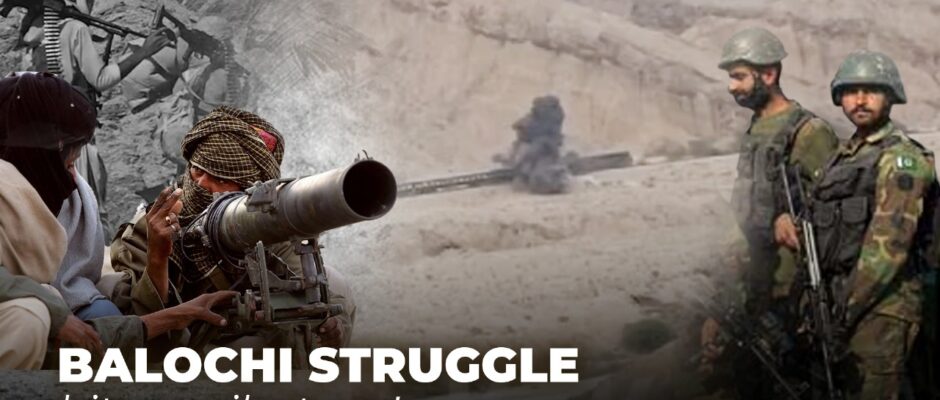
Protests in Amsterdam, Berlin on ‘black day’ against forced occupation and annexation of Balochi land marks 76 years struggle for liberation Rahul Pawa Seventy-six years ago, on March 27, 1948, Pakistan’s occupation and forceful annexation of Balochistan ignited a bloody conflict that has simmered since decades and claimed innumerable lives. This annexation, far from being a justifiable integration, signalled start of a prolonged struggle for Baloch people, who have since endured relentless torment and despair. Despite passage of time, the spirit of resistance within Balochistan remains undiminished, as its people continue to assert their rejection of Pakistani illegal occupation. This struggle is not just a tale of contested territory but a profound testament to resilience of Baloch peoples’ steadfast in their pursuit of self-determination.  Baloch account for roughly 15 million of Pakistan’s 240 million people, however, their province, largest in current day Pakistan, stands as the country’s most backward region despite its immense wealth in natural resources. This stark contrast is highlighted by its vast reserves of oil, coal, gold, copper, and gas which significantly contribute to Pakistan’s revenue. Result of, Balochistan has experienced a prolonged period of neglect and exploitation by the Pakistani state, which has primarily focused on exploiting its rich mineral resources without consideration for the people of Balochistan. This exploitation came to a head following Pakistan’s nuclear tests on May 28, 1998, at the Ras Koh mountains in Balochistan, which had devastating environmental and health impacts on the local population. The tests resulted in significant livestock losses and led to increased cancer rates among the Baloch people due to nuclear radiation exposure. These actions have fueled discontent and resistance against the state authorities. In addition to environmental degradation and a public health crisis, the region has been subjected to severe human rights abuses, including enforced disappearances and a notorious “kill and dump” policy of the Pakistan Army. This inhumane treatment has further exacerbated tensions in the occupied territory and fueled discontent leading to resistance against the Pakistani state and highlighted the urgent need for addressing severe human rights concerns in Balochistan. The dire situation in Balochistan, as unveiled in a 2016 United Nations Working Group’s assessment and corroborated by activist accounts, illustrates a severe human rights crisis that has not been adequately reported or acknowledged by the Pakistani state. The discrepancy between the provincial government’s admission of fewer than 100 missing persons and data from local sources of over 14,000 individuals missing underscores a profound transparency and accountability issue. Furthermore, while the Pakistan Commission of Inquiry on Enforced Disappearances documented 2,708 missing persons since 2011, activists report a staggering 504 extrajudicial killings within the province in just the previous year alone. These numbers, vastly divergent from official state reports, highlight a critical gap in the state’s acknowledgment and documentation of human rights abuses pointing to state complicity in the violations against the people of Balochistan. In addition, banking on occupied territories, the province hosts Pakistan’s only deep-sea port at Gwadar. This port, pivotal to the US $65 billion China-Pakistan Economic Corridor (CPEC), a project designed to connect southwestern China with the Arabian Sea via Pakistan, has added another layer of occupation of Baloch lands by the Communist Party of China (CPC) and its People’s Liberation Army (PLA). The strategic significance of Gwadar Port extends beyond economic interests, serving as a key maritime node in China’s Belt and Road Initiative (BRI). This development aims to expand China’s influence through a vast network of trade routes and infrastructure projects across Asia, Africa, and Europe. However, the expansion of Gwadar Port and the broader CPEC initiative have raised concerns among the Baloch population regarding sovereignty and the fair distribution of resources. These massive infrastructure projects serve the interests of CPC and Pakistani federal stakeholders, compounding environmental impacts, the displacement of local populations, and the alteration of traditional livelihoods. The influx of foreign workers, particularly from China, and the prioritisation of their needs and security have created an environment where the rights and welfare of the local population are sidelined. Reports of forced marriages have sparked outrage, highlighting the exploitation and vulnerability of local communities amidst the sweeping changes brought by these Chinese projects. This scenario is further complicated by extreme instances of human rights violations, including the suppression of dissent, censorship, and the curtailing of freedoms. The Baloch population’s grievances are not limited to economic marginalisation but extend to a profound sense of cultural and societal invasion. The presence of PLA and Pakistani security forces, under the guise of protecting investments, has led to a militarisation of the region, contributing to a climate of occupation, fear and repression. In the face of persistent human rights abuses and the forceful occupation of their homeland, the Baloch community worldwide observes March 27th as a ‘black day’, symbolising resistance against their land’s forced annexation. Spearheaded by the Baloch National Movement (BNM), significant protests across cities like Amsterdam and Berlin highlight Baloch struggle for freedom, denouncing Pakistan’s oppressive control, amplified by the complicating presence of China’s CPC and PLA through projects like the CPEC. This international outcry, marked by rallies and informative campaigns, not only exposes the dire situation in Balochistan but also calls for global intervention. The Baloch people’s defiance is a plea for recognition of their sovereignty and an end to external exploitations—a clear demand for justice and respect for human rights in the shadow of occupation and exploitation.  (Author is Director – Research at Centre for Integrated and Holistic Studies, a non-partisan think tank based in New Delhi)

Read More

Jinnah’s Fallacy Commemorated as Pakistan’s National Day!

The Lahore Resolution, aka Pakistan Resolution, written by Sher-e-Bangla A.K. Fazlul Huq, said that Muslims in India were a separate country with their own social, religious, and cultural identities. It called for the creation of independent states in areas where Muslims predominated. Despite the resolution’s own lack of mention of the term “Pakistan,” it planted the seeds for its ultimate establishment. Millions of Muslims’ hopes for their political future were brought to life and given a tangible vision by the Lahore Resolution. Intellectuals like Allama Iqbal, who emphasised the political, social, and cultural distinctions between Muslims and Hindus, were instrumental in developing the idea of a distinct Muslim state. The concept gained more popularity after Choudhary Rahmat Ali’s 1933 pamphlet “Now or Never”, which suggested calling the hypothetical state “Pakistan”, was published. Pakistan is an odd outlier in the vast fabric of geopolitical history, a nation that appeared out of thin air and lacks a tangible locus. Its establishment in 1947, during the mayhem of British decolonization in the Indian subcontinent, was not a product of historical or cultural evolution, but rather of political expediency. Ever since its establishment, Pakistan has faced difficulties in defining its identity and navigating issues related to legitimacy, governance, and identity beyond its arbitrary borders. Pakistan was created by political plotting motivated by the demands of sectarian politics and colonial legacies, not by a natural process based on nationalism. Pakistan was created by the division of British India. Pakistan’s ideological foundation came from the Two-Nation Theory, which maintained that Muslims and Hindus were two distinct nations that could not cohabit in a single state. Nevertheless, this notion oversimplified the complex sociocultural context of the Indian subcontinent and ignored the diversity within Muslim communities. Pakistan’s identity gets more complex by its large geographical region. Divided by over a thousand miles of Indian territory, East and West Pakistan (now Bangladesh and Pakistan, respectively) had little in common except their shared religious beliefs. This physical separation further undermined the legitimacy of the Pakistani state, escalating racial tensions and ultimately leading to the bloody battle and Bangladesh’s secession in 1971. Two-Nation Theory of Muhammad Ali Jinnah was weak and unimpressive. It was hollow on an intellectual level and disconnected from reality. Muslims were everywhere throughout India and all of them would not have been able to have had their own homeland without a massive population swap. Although Ambedkar and Jinnah discussed it in passing but both must have understood how unrealistic it was. Yet, Jinnah was able to stir up fleeting feelings and sway Muslim sentiment in his favour. The day India was divided proved its falsehood. Just slightly more than half of the 100 million Muslims migrated to Pakistan. The remainder chose to remain in India.[1] Jinnah, leader of the All-India Muslim League, fiercely advocated Muslims’ rights in British India. He believed that the Muslims of the subcontinent were a distinct people and that they ought to have their own nation where they could openly practice their religion and have their rights to politics and culture protected. This idea served as the cornerstone of his political campaign to establish Pakistan. A fundamental element of Jinnah’s scheme and subsequent partition of the Indian subcontinent was the Two-Nation Theory. The argument that Muslims and Hindus in British India were two different nations with irreconcilable differences was used by Jinnah and his Muslim League to support the demand for a separate Muslim state.[2] With support from Muslim League, Jinnah formulated the Two-Nation Theory for the purpose of defending their political, cultural, and religious rights, contented that Muslims needed their own state.  This increased tensions between communities and prepared the ground for the terrible violence and uprooting that precipitated division in 1947. In fact, the split itself continues to rank among the most horrific events in the history of the region, causing extensive killings, large-scale migrations, and lingering hostilities. There is no denying that Jinnah’s Two-Nation Theory still has an impact on South Asia’s political climate today. The contentious relations between India and Pakistan and the continuous discussions in the region about nationalism, identity, and religious plurality are all affected by the legacy of partition. Dismissing the Myth That Hindus and Muslims Cannot Coexist With a population of over a billion, India is home to both one of the biggest Muslim populations in the world and a majority Hindu population, dispelling the idea that the two religions cannot live in harmony. Most Muslims and Hindus in India live in harmony, sharing homes, workplaces, and cultural activities.  This coexistence is a result of centuries of shared history and respect for one another, not just an oddity. Rhetoric that asserts Muslims and Hindus cannot live in harmony has reappeared in recent years. The long history of tranquilly and cohabitation between these two cultures in the Indian subcontinent is undermined by this dividing narrative, which is frequently supported by political agendas and sectarian interests. The belief that Muslims and Hindus cannot live together exaggerates complex social realities and ignores millennia of shared cultural history and respect. Many religious sects have historically called India home, contributing to the country’s rich cultural diversity. First of all, these claims are contradicted by India’s own history. For centuries, Muslims and Hindus have coexisted in the same social and cultural context, sometimes amicably and other times tensely. The blending of these two major religions is attested to by the nation’s syncretic traditions, which are seen in its literature, festivals, and architectural design. From ancient times India has been a melting pot of several religions, where mutual respect and understanding have often prevailed. During the Indian Independence movement, Muslims and Hindus fought side by side against British colonial rule. Visionaries like Mahatma Gandhi and Maulana Abul Kalam Azad, who highlighted that all Indians, regardless of their creed, share a common destiny, advocated religious harmony and cooperation. There are countless examples of Hindus and Muslims living side by side in harmony and peace throughout India. The reality on the ground belies the

Read More

‘Army Out’ Mandate By The Pakistani People

The adage, ‘Pakistan Army is the only army in the world that has never won a war but has never lost an election’ seems poised to manifest yet again. Yet the people’s mandate is unequivocally clear: Army Out. Rahul Pawa Pakistan stands at a critical juncture in its political history, marked by rapid developments and significant electoral ambivalence. On February 8, the country held elections for its 16th National Assembly amidst large-scale allegations of pre-poll rigging and widespread electoral fraud. Despite these challenges, independent candidates backed by the Pakistan Tehreek-e-Insaf (PTI), founded by Imran Khan, emerged as the leading force, securing nearly 33 million votes despite its jailed founder facing corruption convictions and an ten year ban on holding public office. As the elections unfolded in Pakistan, PTI-backed candidates faced severe repression of political activities, criminalisation of affiliations with PTI, systemic hindrances, and efforts to sideline the party. Nonetheless, it secured 101 seats in the 266-member national legislature and more than 85 percent of the seats in the Khyber Pakhtunkhwa province, signalling a clear, long held mandate against the Pakistan Army’s involvement in politics. However, the adage “The Pakistan Army is the only army in the world that has never won a war but has never lost an election” seems poised to manifest yet again. Despite trailing in the electoral polls, the Pakistan Army-backed Pakistan Muslim League-Nawaz (PML-N), founded by Nawaz Sharif, and the Pakistan Peoples Party (PPP), founded by Zulfikar Ali Bhutto and currently led by his grandson Bilawal Bhutto Zardari, are well on their way to forming the governing coalition, deepening the challenges for Pakistan’s 241 million people more than ever before. Recent elections in Pakistan have created a stir shaping broader discussion on democracy, governance, and the role of the military in the political sphere. The PML-N—PPP coalition being formulated in the wake of a hung Parliament, highlights the overbearing influence of the Pakistan Army in  in political affairs. The revelation by Rawalpindi Commissioner Liaquat Ali Chattha, asserting the manipulation of election results to favour certain candidates, is not merely an indictment of the electoral process but a clarion call for introspection and reform within Pakistan’s political and judicial systems. The resignation of Commissioner Chattha, coupled with his allegations implicating high-ranking officials in the electoral fraud, paints a grim picture of the challenges facing Pakistani democracy. This apprehension furthered by Pakistan’s Supreme Court’s, as it deliberates on a petition for the annulment of the elections and the court’s decision to proceed with the case, even after the withdrawal of the petition, underscores the gravity of the situation and the imperative for judicial independence and political transparency. Internationally, the response to Pakistan’s electoral controversy has been significant, with lawmakers from the United States expressing concern over the allegations of interference and fraud. The bipartisan calls for investigation into these allegations, along with statements from the US State Department, reflect global implications of Pakistan’s political crisis. Pre-election remarks made by Ajay Bisaria, the Former High Commissioner of India to Pakistan, inject an additional layer of regional concern and scrutiny over the electoral process in Pakistan. His assertion that elections were more akin to a “selection than an election,” with pre-election engineering by Pakistan army to install a preferred government, underscores the apprehension regarding the integrity of Pakistan’s democracy and the pervasive influence of its military in political matters. This critique from a senators and a seasoned diplomat not only reinforces the global and regional voices of dissent and calls for reform but also amplifies the international call for a transparent, free, and fair electoral process in Pakistan is in benefit of the global peace and stability. This recent electoral turmoil in Pakistan transcends mere domestic concerns. It highlights a growing opposition to the long-standing and deep-seated interference of the military in politics, reflecting a worldwide demand for governance that genuinely aligns with the aspirations of the Pakistani people. The establishment of a coalition government, despite PTI’s substantial seat victories, along with global concerns about electoral integrity, marks a significant shift in the consciousness of the Pakistani populace. This shift is towards a mindset that values the nation’s true needs—transparency, accountability, and democratic governance—above the traditional dominance of military power. This movement represents the most forceful ‘Army Out’ sentiment witnessed since the creation of Pakistan following the partition of Earstwhile British India. At this pivotal moment, Pakistan’s choice will not only carve its democratic path but also shape its international persona and influence. The nation is caught between a fervent call for democracy, unencumbered by military influence, and the entrenched power of the Army within its political sphere. This clash presents a formidable obstacle to progress in democracy, diplomacy, and development, spotlighting the military’s indisputable impact on governance. Pakistan’s journey ahead is fraught with complexity, demanding a steadfast commitment to forging a genuinely democratic governance structure. The imperative for Pakistan is clear: to bridge the chasm between current realities and the democratic ideals of its citizens, paving the way for a future where governance reflects the true will of the people. (Author is Research Director at Centre for Integrated and Holistic Studies, a New Delhi based non-partisan think tank)

Read More

77 Years Later: Women, Religion, and Gender Biases in Pakistan

Pakistan’s commemoration of its 76th year of independence ironically highlights the dire situation of its women to the world. Even after seven long decades post-independence, women in Pakistan are still deprived of basic rights like education, freedom of expression, and opportunities for employment. Interactions with these women reveal a bleak landscape of their relentless battles and diminishing hopes, questioning the essence of what independence and empowerment should signify in contemporary Pakistan. The Global Gender Gap Index Report 2022 starkly showcases Pakistan’s lamentable gender disparities. Globally, Pakistan regrettably ranks near the bottom in areas such as economic participation, education, health, and survival. These glaring figures bring to light the deep-seated gender biases corroding Pakistani society. Heartbreakingly, interviews depict that many women, from diverse backgrounds, feel oppressed and frequently persecuted. The glaring lack of women in political leadership roles further accentuates the overpowering grasp of patriarchal norms. As Pakistan grapples with increasing vulnerabilities to climate change, it is the women who suffer most. The evident link between environmental concerns and gender inequities is undeniable, more so when environmental calamities intensify the hardships for women. Disappointingly, Pakistan’s leadership and related agencies seem to disregard the urgent need for gender-sensitive climate policies. Women are forced to grapple with the adverse effects of polluted air, dwindling water resources, and other ecological hazards. Karachi, often hailed as the crown jewel of Pakistan, sadly reflects the country’s deep-seated gender prejudice. Interviews conducted there consistently highlight the harrowing challenges women face daily in their pursuit of fundamental rights. The pervasive issue of harassment looms over many working women, indicating a stark absence of safety and respect in society. Their stories resonate with the perpetual tension between aspiring for basic liberties and the grim reality of a society that denies them. While there are sporadic glimpses of progress in isolated pockets of Pakistan, they are largely eclipsed by overwhelming challenges. Although a section of women is experiencing improved access to education and a shift in societal attitudes, such changes only underline the inconsistent strides Pakistan is making towards gender equality. The societal chasm and economic divides paint a grim narrative: a handful of the educated find better opportunities abroad, while many remain entrapped in their homeland. Regions like Khyber Pakhtunkhwa serve as stark reminders of areas where opportunities for women’s education and employment are scarcely available. For a select few, empowerment is perceived as a state of mind. Yet, such an uplifting perspective is frequently overshadowed by societal constraints. While acknowledging one’s self-worth can be liberating, the overwhelming societal barriers often appear insurmountable. A disheartening reality permeating Pakistani society is that even though education is regarded as a catalyst for change, women’s aspirations are recurrently thwarted. While both genders emphasise the significance of education, it’s clear that education in isolation cannot reform the prevailing norms. A comprehensive transformation is essential. Families, communities, and policymakers must move beyond mere words and take decisive actions to ensure women are accorded their rightful stature in society. Tragically, when evaluating Pakistan’s intricate web of gender inequality, the plights of religious minority women further exacerbate the situation. Hindu, Sikh, and Christian women, already marginalised due to their gender, are subjected to heightened persecution based on their religious affiliations. Reports and personal accounts underscore distressing instances of kidnappings, forced religious conversions, and coerced marriages. These young girls are often brutally separated from their families and pressured into renouncing their faith, further alienating them within their communities. Such heinous acts are not just a violation of religious freedom and human rights but also emphasise Pakistan’s pressing need to address the dual challenges of gender and religious persecution. The commitment to ensuring every woman’s safety and freedom, regardless of her religious beliefs, must be unwavering. Amid these narratives of despair, the question that emerges is – where does Pakistan envision its future in terms of gender justice and religious freedom? With the rest of the world progressing towards more inclusive societies, Pakistan seems to be caught in a time warp, clinging to outdated norms and practices. Yet, it is essential to remember that the situation isn’t bereft of hope entirely. Grassroots movements, led by resilient Pakistani women and their allies, are sprouting across the country. These women, armed with education, determination, and a vision of a brighter future, are challenging the deeply entrenched norms. They are building networks, using both traditional methods and technology, to reach out, educate, and uplift their peers. Furthermore, international attention and pressure could play a pivotal role. Global agencies, human rights organisations, and foreign governments can leverage their influence to urge the Pakistani administration to enforce stronger laws that protect the rights of all its citizens, irrespective of gender or religion. Sanctions, trade agreements, and international treaties can all serve as tools to nudge the nation towards the path of genuine reform. On the cultural front, artists, writers, and filmmakers within Pakistan are pushing boundaries, creating works that challenge societal norms and provide a platform for the oppressed voices to be heard. The role of art and media as a force for change cannot be underestimated, especially in a digital age where content can transcend borders and inspire solidarity and action globally. Pakistan stands at a crucial juncture. The choices it makes in the upcoming years will determine whether it continues its descent into a quagmire of regressive practices or rises, phoenix-like, to create a society that is just, inclusive, and forward-thinking. As the world watches, it remains to be seen if Pakistan will heed the cries of its women, recognise the strength in their resilience, and move towards a brighter, more equitable future.

Read More