CIHS – Centre for Integrated and Holistic Studies

Date/Time:

Bharat Championing Global Humanitarian Leadership

Citizenship Amendment Act unequivocally embodies Bharat’s commitment to provide sanctuary to persecuted minorities from Afghanistan, Bangladesh and Pakistan Rahul Pawa In a historic move that ignited a firestorm of debate both within and internationally, Bharat’s Parliament took a decisive step on December 11, 2019 by passing Citizenship (Amendment) Act (CAA). This landmark legislation marked a momentous shift in the nation’s approach to citizenship, amending the Citizenship Act of 1955 to offer an expedited pathway to Bharat’s nationality for certain persecuted religious minorities originating from Afghanistan, Bangladesh, and Pakistan who had arrived in Bharat by the end of 2014. The Act specifically extends olive branch to Hindus, Sikhs, Buddhists, Jains, Parsis, and Christians delineating a clear classification based on religious affiliation.  In alignment with Prime Minister Narendra Modi’s administration’s pledge to enact CAA prior to 2024 national elections, Ministry of Home Affairs delivered a crucial update on March 11, 2024 by notifying related rules. This announcement, which detailed regulatory framework supporting CAA represents a significant move towards making the Act operative. It also echos the government’s commitment in sync the manifesto and reflect the mandate given by people of Bharat. Critically, CAA represents first instance in current day Bharat’s legal history where religion has been explicitly utilised as a criterion for citizenship. This aspect of the law has spurred a plethora of opinions and interpretations sparking an intense discussion about its implications and underlying motivations. While critics argue it undermines Bharat’s constitution by excluding Muslims sparking accusations of discrimination, proponents view the CAA as a humanitarian gesture extended to protect and provide citizenship to persecuted religious minorities. In the heart of this historic decision to enact CAA, lies a complex mosaic of historical events, demographic and ideological shifts that shaped its creation. The genesis of CAA can be traced to tumultuous Partition of imperialist British-occupied Bharat in 1947. An era was marked by fallacious stance of Muslim League led by Muhammad Ali Jinnah that propagated the notion that Hindus and Muslims could not coexist. This was put to rest as millions of Muslims chose to remain in what became Bharat despite formation of East and West Pakistan exclusively for Muslims. The violent emergence of Bangladesh from Pakistan obliterated Jinnah’s claim that a singular Muslim state was the panacea for communal harmony and coexistence. Their path to a harmonious or rights respecting states has been fraught with challenges. The aspiration to uphold and foster Islamic tenets often translated into systemic and legislatively endorsed persecution of minorities—Hindus, Sikhs, Buddhists, Jains, Parsis, and Christians—who found their historical roots in the erstwhile cultural landscape of Bharat. These communities have faced and continue to confront relentless religious persecution and systematic violence. Their ordeals have been marked by forced conversions, marriages, massacres, extreme violence against women and desecration and destruction of sacred sites and educational institutions. Despite1950 Liaquat–Nehru Pact and Bangladesh Constitution of 1972 espousing minority rights and secularism, the reality remains fraught with contradictions, particularly as these nations declared Islam as their state religion. This was also echoed in Afghanistan’s constitutional journey, from the 1931 endorsement of Hanafi Shariah to the 2004 Constitution that sought to balance Shia and Sunni Islam yet declared that no law could contradict Islamic tenets, laying the groundwork for state-endorsed discrimination against minorities. The Taliban years starkly exemplified this, as their strict interpretation of Sharia law further marginalised religious and ethnic minorities evidenced by the tragic destruction of the giant Buddha statues of Bamiyan, and extreme persecution leading to almost no Christians, Hindus, Jains, Buddhists or Skilhs in Afghanistan , underscoring a history of entrenched discrimination, intolerance and violence against minorities in Afghanistan. These historical nuances highlight the backdrop against which Bharat’s CAA was conceived and implemented, setting the stage for a law aimed at providing refuge to persecuted minorities from these countries, whose cultural footprints emanate from Bharat, positioning it as a beacon of human rights and humanitarian leadership in the region and beyond. The CAA, thus, is not merely a legislative act but a response to a historical legacy of division, persecution, violence and discrimination, offering a new path towards inclusivity and protection for those fleeing persecution. In the intricate mosaic of global legislation addressing the plight of persecuted minorities, Bharat’s CAA emerges with a distinct humanitarian ethos, paralleled yet contrasted by international counterparts. Notably, the United States’ Lautenberg Amendment, introduced in 1990, similarly targets religiously persecuted minorities, facilitating their resettlement from the Soviet Union and, following a 2004 extension, from Iran. Like the CAA, it identifies specific religious communities as historically persecuted, excluding Muslims from the Soviet Union and Iran, thereby hastening the path to citizenship for these selected groups. In stark contrast, the United Kingdom’s Nationality and Borders Act of 2022 embodies a markedly different approach, empowering the government to revoke citizenship without notification under Clause 9—a provision that has sparked controversy for its potential to disproportionately affect British Muslims, highlighting ethnic and religious divides. The case of Shamima Begum, often cited in debates, underscores the law’s focus on revocation rather than protection, raising ethical and human rights concerns. While the Lautenberg and Specter Amendments in the United States echo the CAA’s intent to shelter historically persecuted groups, the UK’s Nationality and Borders Act diverges, prioritising national security over humanitarian considerations. This juxtaposition illuminates the CAA’s unique position in the international legal landscape as a beacon of refuge, distinguishing Bharat’s legislative approach to addressing religious persecution without resorting to the revocation of citizenship To conclude, the CAA unequivocally embodies Bharat’s commitment to providing sanctuary to persecuted minorities, standing out as a beacon of humanitarian leadership on the global stage. It is crucial to reiterate that the CAA is not an act designed to revoke citizenship nor is it anti-Muslim or discriminatory in nature. Instead, it represents a unique and targeted legislative effort aimed at extending a hand of protection to those with historical and cultural ties to Bharat who have and continue to suffer from injustices in Afghanistan, Pakistan and Bangladesh. By enacting this legislation, Bharat

Read More

Explainer: Jammu and Kashmir Sankalp Diwas

In aftermath of India’s independence and subsequent Partition of earstwhile British occupied India, Princely States were vested with the prerogative to decide their accession to either the dominion of India or Pakistan, contingent upon geographical coherence as per Indian Independence Act of 1947. This foundational principle was disrupted on the night of October 22/23, 1947, when Pakistani army along with its rallied tribal raiders initiated a forceful assault on the Princely State of Jammu & Kashmir. Subsequently, Maharaja Hari Singh formally acceded to the dominion of India on October 26, 1947, prompting deployment of the Indian army. Read More….

Read More

Sabarmati Express Carnage Brushed Under Rug by Fanatics

It has been 22 years since Islamic fanatics attacked Sabarmati Express train and burnt down 58 Hindu pilgrims within the train’s S-6 and S-7 coach. After recent pran pratishtha of Ram Lalla recently, it’s imperative to debunk misleading narratives surrounding the attack on Ram devotees. Rohan Giri On the morning of February 27, 2002, Sabarmati Express, on its way to Ahmedabad, came to an abrupt halt at the Phalia signal that is located within a Muslim slum covering both sides of the railway track. A person on board the train applied the emergency brake, bringing the train to a halt. Upon the train’s stoppage, shouts of “Maro, Kapo (kato), Badhane Jalavi Do (Burn them all)” resonated sounded from all sides. While the passengers were in deep sleep, they were abruptly awakened upon hearing uproar. To their horror, they discovered that a multitude of thousands had encircled the train with explicit intention of causing harm to them. Who comprised the individuals in this assemblage? What was the motivation behind these individuals’ determination to commit murder? What discourse did the foreign media attempt to generate? These questions should arise in minds of every individual, as this incident was not merely a train fire. It resulted in tragic death of 58 innocent Hindus leading to an unforgettable event in the history of western Indian state, Gujarat. (Rohan is a journalism graduate from Indian Institute of Mass Communication (IIMC) New Delhi, and Manager Operations at CIHS.)

Read More

‘Familial Story of Violence Perpetrators Masquerading as Victims’

Over the years, Banbhoolpura in Haldwani has shot to fame as a centre for Islamist extremism. Recent history of extremist activities came to fore with violence unleashed on a police station and public transport in 2019, attacks on COVID19 healthcare personnel in 2020 and assaults on Hindus in 2022. The islamist gangs’ ties with drugs and crime apart from violence is a heady mix remenescent of Hollywood thrillers.

Read More

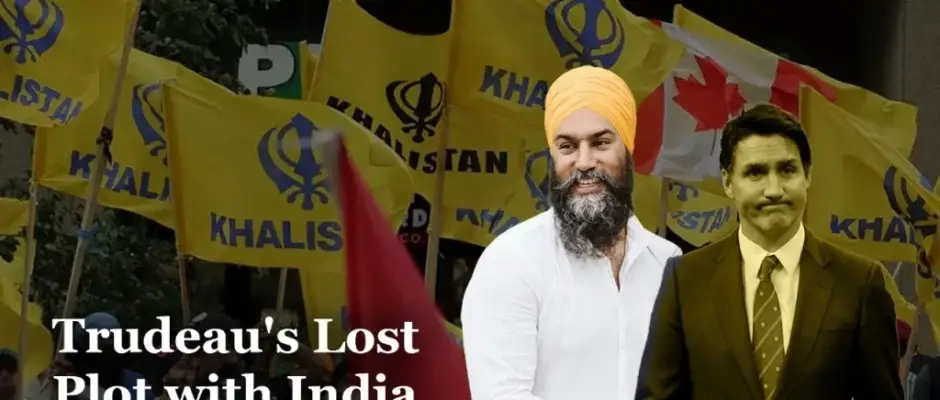
Trudeau’s Lost Plot with India

Trudeau’s political gambits with Canada-based extremists threaten to undermine the fabric of Canada’s national interests, casting a long shadow over its democratic values and international relations, especially with India. Rahul PAWA  In a development that could further complicate the already strained ties between Ottawa and New Delhi, a commission established by the Trudeau administration to probe foreign interference allegations has officially called on the government to release information about India’s possible role in meddling with Canada’s electoral processes. This request unfolds against a backdrop of concerns raised by the Canadian Security Intelligence Service, which has pointed to covert efforts by China to influence the outcomes of Canada’s recent federal elections. A top-secret briefing report, later obtained by various news organizations, highlights the urgent need for Canada to strengthen its defences against such covert activities. The document sheds light on the sophisticated and wide-ranging campaign led by the People’s Republic of China, leveraging everything from diplomatic channels to grassroots community organizations to influence every stratum of society and governance. Adding a new layer to the narrative, the agency has expanded its scrutiny to include India, expressing its apprehensions in a detailed three-page memo that categorises India alongside China as a formidable threat to the democratic integrity of Canada. The report expressly singles out India, anticipating an uptick in interference efforts and strongly advising on the critical importance of bolstering Canada’s democratic systems and institutions to guard against external meddling. In an unfolding scenario that seems straight out of the saying ‘the pot calling the kettle black’, Prime Minister Justin Trudeau, recently labeled as the worst Canadian Prime Minister in the last fifty years, is fervently aiming for a fourth term in office—a milestone last reached in 1908. Despite facing significant hurdles, including trailing behind the opposition Conservatives in polls throughout 2023, Trudeau is unwavering in his quest for re-election, seeking to surpass the achievements of his father, Pierre Trudeau, who narrowly missed winning a fourth electoral term in 1979. Yet, Trudeau’s relentless pursuit of power bears a hefty price for the Canadian people, especially against the backdrop of deteriorating ties with India, the world’s fifth-largest economy, which is seemingly distancing itself from Trudeau’s politics. This growing estrangement is largely credited to Trudeau and his close confidant, Jagmeet Singh Dhaliwal of the New Democratic Party. Since ascending to office in 2015, Prime Minister Justin Trudeau, in alliance with Jagmeet Singh, has navigated the complex waters of Canadian politics with a strategy that leans heavily on the support of Pakistan backed and homegrown Khalistani separatist factions in Canada. This reliance is not merely a reflection of contemporary political strategy but also echoes a longstanding tradition within Canadian politics of providing sanctuary to individuals and organizations known for their dissent against Indian sovereignty. Throughout his tenure, Canada’s political landscape has seen Trudeau’s open endorsement of factions with a history of terrorism and violence within the Khalistani context, a stance that became more marked in the face of competition for the same voter base from Jagmeet Singh. This tactical courtship of Khalistani supporters and sympathisers by Trudeau has significantly influenced his administration’s policies towards India and its substantial diaspora in Canada evidenced by stands taken during India’s farmers protests and during illegitimate referendum dramas in Canada. This demographic, consisting of individuals from both India and Pakistan represents a critical vote bank, ostensibly enabling Trudeau to maintain his grip on power. However, this approach has raised concerns over the compromise of the broader interests of the Canadian people, highlighting a scenario where Trudeau’s political gain is seemingly placed above national welfare. Further demonstrating how their own Prime Minister has placed political gain above all, disrupting the delicate balance between fulfilling national interests and chasing personal political ambitions, especially by jeopardising the economic, moral, and internationally friendly relations with India and her citizens.  In a resolute and unified rebuttal to the latest misadventure to the accusations raised by the commission under the Trudeau government, the Indian Foreign Ministry vehemently dismissed the accusations as “baseless,” “absurd,” and “motivated.” The Ministry highlighted that similar claims had been brought up during Trudeau’s discussions with the Indian Prime Minister, only to be “completely rejected.” Furthermore, the statement from the Indian Foreign Ministry emphasised, “It is not the policy of the Government of India to meddle in the democratic processes of other countries. Contrary to these allegations, it is, in fact, Canada that has been found interfering in India’s internal matters.” The statement also reiterated India’s longstanding concern regarding Canada’s approach towards separatists, terrorists, and anti-India groups. This sharp rebuttal does more than just dismiss the claims; it redirects the focus onto the underlying diplomatic friction between the two nations, emphasizing India’s strongest objections to Canada’s treatment of elements opposed to Indian interests. The intensifying diplomatic standoff between Ottawa and New Delhi marks a pivotal moment, casting a spotlight on Prime Minister Justin Trudeau’s approach of political appeasement toward Canada-based Khalistani extremist factions. This strategy, aimed at securing votes and maintaining power, appears to have jeopardised the broader interests of Canada in favour of Trudeau’s personal political ambitions. The engagement with Khalistani elements by the Trudeau administration has not only soured relations with India but also underscored the fragile interplay between domestic political tactics and the responsibilities of international diplomacy. The firm rejection by the Indian government of the allegations put forth by a commission established under Trudeau’s government deepens the diplomatic divide, signalling a dramatic shift away from a foundation of mutual respect and shared democratic ideals. This situation has led to a moment of reckoning, with India responding with decisive words that challenge the veracity of the Canadian Prime Minister’s stance, thereby reshaping the contours of an intricate bilateral relationship. (Rahul Pawa is director of research at the Centre for Integrated and Holistic Studies in Delhi, India, specialising in international law, crime, security, future-tech & futuristic warfare.)

Read More

Situational Analysis: Persecution of Bangladesh’s Hindus Intensifies

At the time of India’s independence from British colonialism in 1947, the predominantly Muslim eastern portion of Bengal province because East Pakistan, which declared independence as Bangladesh in 1971. The circumstances facing the Hindu population in Bangladesh are alarming. Being a minority in a largely Muslim nation, they are subjected to various forms of persecution, including theft, physical aggression, sexual violence, coerced conversions to Islam, desecration of religious sanctuaries, illegal confiscation of properties, and forced displacement. This analysis underscores the adversities encountered by Hindus in Bangladesh. The Hindu population has significantly dwindled over the last seventy years.

Read More

Expose on glaring bias against Hindus: Georgetown University’s Bridge Initiative

In a report dated November 24, 2023, titled ‘Hindutva in Britain,’ a collaborative effort between US based Bridge Initiative at Georgetown University and UK’s Community Policy Forum – an entity claiming to protect Muslim interests in the UK – was published. The report aspired to falsely implicate  Hindus and Hindu-centric organisations for anti-India, anti-Hindu unrest in Leicester, the UK. A narrative previously dismantled by several leading UK based independent think tanks including Henry Jackson Societ] and US based National Contagion Research Institute (NCRI), a prominent cyber threat intelligence organisation.

Read More

Bharat’s G-20 Presidency for World

Roadmap for human centric, inclusive & green development with climate justice; re-designing multilateral banks, leadership for global south big takeaways Narendra Modi During its time, India achieved the extraordinary: It revitalised multilateralism, amplified the voice of the Global South, championed development, and fought for the empowerment of women. Today marks 365 days since India assumed the G20 presidency. It is a moment to reflect, recommit, and rejuvenate the spirit of Vasudhaiva Kutumbakam — “One Earth, One Family, One Future”. As we undertook this responsibility last year, the global landscape grappled with multifaceted challenges: Recovery from the Covid-19 pandemic, looming climate threats, financial instability, and debt distress in developing nations — all amid declining multilateralism. In the midst of conflicts and competition, development cooperation suffered, impeding progress. Assuming the G20 chair, India sought to offer the world an alternative to the status quo, a shift from a GDP-centric to human-centric progress. India aimed to remind the world of what unites us, rather than what divides us. Finally, the global conversation had to evolve — the interests of the few had to give way to the aspirations of the many. This required a fundamental reform of multilateralism as we knew it. Inclusive, ambitious, action-oriented, and decisive — these four words defined our approach as G20 president, and the New Delhi Leaders’ Declaration (NDLD), unanimously adopted by all G20 members, is testimony to our commitment to deliver on these principles. Inclusivity has been at the heart of our presidency. The inclusion of African Union (AU) as a permanent member of G20 integrated 55 African nations into the forum, expanding it to encompass 80 per cent of the global population. This proactive stance has fostered a more comprehensive dialogue on global challenges and opportunities. The first-of-its-kind ‘Voice of the Global South Summit’, convened by India in two editions heralded a new dawn for multilateralism. India mainstreamed the Global South’s concerns in the international discourse and has ushered in an era where developing countries take their rightful place in shaping the global narrative. Inclusivity also infused India’s domestic approach to G20, making it a People’s Presidency that befits the world’s largest democracy. Through “Jan Bhagidari” (people’s participation) events, the G20 reached 1.4 billion citizens, involving all states and Union Territories (UTs) as partners. And on substantive elements, India ensured that international attention was directed to broader developmental aims, aligning with the G20’s mandate. At the critical midpoint of the 2030 agenda, India delivered the G20 2023 Action Plan to Accelerate Progress on the Sustainable Development Goals (SDGs), taking a cross-cutting, action-oriented approach to interconnected issues, including health, education, gender equality and environmental sustainability. A key area driving this progress is the robust Digital Public Infrastructure (DPI). Here, India was decisive in its recommendations, having witnessed the revolutionary impact of digital innovations like Aadhaar, UPI, and Digilocker first-hand. Through the G20, we successfully completed the Digital Public Infrastructure Repository, a significant stride in global technological collaboration. This repository, featuring over 50 DPIs from 16 countries, will help the Global South build, adopt, and scale DPI to unlock the power of inclusive growth. For our One Earth, we introduced ambitious and inclusive aims to create urgent, lasting, and equitable change. The Declaration’s Green Development Pact addresses the challenges of choosing between combating hunger and protecting the planet, by outlining a comprehensive roadmap where employment and ecosystems are complimentary, consumption is climate-conscious, and production is planet-friendly. In tandem, the G20 Declaration calls for an ambitious tripling of global renewable energy capacity by 2030. Coupled with the establishment of the Global Biofuels Alliance and a concerted push for Green Hydrogen, the G20’s ambitions to build a cleaner, greener world are undeniable. This has always been India’s ethos, and through Lifestyles for Sustainable Development (LiFE), the world can benefit from our age-old sustainable traditions. Further, the Declaration underscores our commitment to climate justice and equity, urging substantial financial and technological support from the Global North. For the first time, there was a recognition of the quantum jump needed in the magnitude of development financing, moving from billions to trillions of dollars. The G20 acknowledged that developing countries require $5.9 trillion to fulfil their Nationally Determined Contributions (NDCs) by 2030. Given the monumental resources required, the G20 emphasised the importance of better, larger, and more effective Multilateral Development Banks. Concurrently, India is taking a leading role in UN reforms, especially in the restructuring of principal organs like the UN Security Council that will ensure a more equitable global order. Gender equality took centre stage in the Declaration, culminating in the formation of a dedicated Working Group on the Empowerment of Women next year. India’s Women’s Reservation Bill 2023, reserving one-third of India’s Parliament and state legislative assembly seats for women, epitomises our commitment to women-led development. The New Delhi Declaration embodies a renewed spirit of collaboration across these key priorities, focusing on policy coherence, reliable trade, and ambitious climate action. It is a matter of pride that during our presidency, G20 achieved 87 outcomes and 118 adopted documents, a marked rise from the past. During our G20 presidency, India led deliberations on geopolitical issues and their impact on economic growth and development. Terrorism and the senseless killing of civilians are unacceptable, and we must address them with a policy of zero tolerance. We must embody humanitarianism over hostility and reiterate that this is not an era of war. I am delighted that during our presidency, India achieved the extraordinary: It revitalised multilateralism, amplified the voice of the Global South, championed development, and fought for the empowerment of women everywhere. As we hand over the G20 presidency to Brazil, we do so with the conviction that our collective steps for people, planet, peace, and prosperity, will resonate for years to come. (Author is Prime Minister of India)

Read More

Maldivian turn in the Tide: India’s safety net to China’s debt web

Shift in island nation’s strategic relations to curry favour with Chinese Communist Party bosses is fraught with danger of instability Rahul Pawa Maldives that has historically been a significant beneficiary of Bharat’s Neighbourhood First policy and a proximate maritime neighbour in the Indian Ocean Region, is re-positioning itself from the perspective of defense and security ties with Bharat. This reassessment is direct consequence of actions taken by newly anointed Maldivian President Mohamed Muizzu, who rose to power advocating an ‘India Out’ campaign. Influenced by the pro-Chinese Communist Party (CCP) stance of former President Abdulla Yameen, President Muizzu has made a decisive move away from the cooperative relationship his predecessor, Ibrahim Mohamed Solih, maintained with Bharat. This shift became particularly evident with a statement issued on November 18, in which President Muizzu’s office formally requested withdrawal of Indian military personnel from Maldives. This request, signifying a departure from longstanding military cooperation between the two nations was earlier  presented during a meeting with India’s Earth Sciences Minister Kiren Rijiju, who was in attendance at Muizzu’s swearing-in ceremony.  Escalating the situation further, Maldives is now scrutinizing over 100 agreements signed with India during Solih’s tenure, covering areas of defense and security. Mohamed Firuzul Abdul Khaleel, the undersecretary for Public Policy in Presidential Office, disclosed the stationing of 77 Bharatiya military personnel in Maldives, spanning various military assets covered this scrutiny. This reevaluation of ties and November 18 announcement underscore a significant geopolitical shift in the region, marking a potential realignment of Maldives’ foreign policy away from Bharat and marks a tilt towards China. Maldives’ strategic pivot towards China, away from its traditional alignment with Bharat, brings a multitude of vulnerabilities and challenges for the island nation as well. This shift not only strengthens China’s influence in a region historically under Indian sway but also risks exposing the Maldives to economic and political instability. The alignment with China poses significant risk of ensnaring Maldives in a debt trap, akin to Sri Lanka as in the case of Hambantota Port and other infrastructure projects. Considering the Maldivian economy’s heavy reliance on tourism, financial burden of Chinese investments could be unsustainable. Moreover, this shift in foreign policy may lead to internal political strife. Opposition to the ‘China-triggered’ policies and concerns over national sovereignty could ignite domestic unrest, potentially resulting in a divided and unstable political landscape. On international front, moving away from India might strain the Maldives’ relationships with other regional powers and Western allies, who view China’s expanding influence with apprehension. This could lead to lesser foreign aid and support from these nations. The strategic shift under influence of Chinese Communist Party (CCP) represents significant departure from Maldives’ historical relationship with India, a partnership that has been a bedrock of stability and support, instrumental in the nation’s development and security. India’s role has been particularly pivotal during times of crisis, such as the 1988 coup attempt, 2014 water crisis and 2004 tsunami, offering a balance of economic assistance, defense cooperation, and diplomatic support.  However, the new trajectory in favour of China opens Maldives to a host of risks that could have far-reaching consequences for its stability and wellbeing. Possible economic dependency on China, with looming threat of a debt trap, poses a significant danger to the Maldivian economy. This shift might not only leads to internal political instability but also exacerbate the nation’s environmental challenges. Maldives, already grappling with adverse impact of climate change and rising sea levels, may face further environmental degradation due to large-scale Chinese construction projects.  In essence, moving away from India could isolate the Maldives from a historically reliable and benevolent partner, steering it away from the sources of strength and stability that have been crucial for its growth and prosperity. As President Muizzu seeks to establish new geopolitical alignments, the Maldives navigates towards a precarious future. The allure of Chinese economic support, while tempting, carries substantial risks, including the potential loss of traditional allies and internal political turmoil. This strategic pivot could leave the Maldives in a vulnerable position, both economically and geopolitically, with limited room to manoeuvre in an increasingly complex and competitive international arena. The future, as it unfolds, is fraught with uncertainty and potential instability for the Maldives as it navigates these significant geopolitical shifts. (Author is Director – research at New Delhi based non-partisan think tank, Centre for Integrated and Holistic Studies)

Read More

India’s Firm Message to Canada: Tackle Khalistani Extremism, Preserve Bilateral Ties

Rohan Giri Diplomatic relations between India and Canada have been thrown into a state of disarray after insinuations on possible  Indian involvement in murder of Hardeep Singh Nijjar, a proscribed terrorist identified as a member of Khalistan Tiger Force. These claims by Canadian Prime Minister Justin Trudeau have ignited tensions, prompting a sharp rebuke from India’s Ambassador to Canada, Sanjay Kumar Verma that criticised Canada for damaging bilateral relations. Verma asserted that the accusations lack substantial evidence and may have been influenced by high-level directions. Allegations of India’s involvement in reported murder of Hardeep Singh Nijjar, a Khalistani terrorist who had obtained Canadian citizenship, emerged after Canadian Prime Minister Justin Trudeau’s address in the country’s Parliament on September 18. He had claimed to have “credible evidence that the Indian government assassinated a Canadian citizen on Canadian soil.” This serious assertion put a strain on bilateral relations. However, India recognised as a robust and healthy democracy, has no historical record of engaging in such clandestine activities and consistently championed the path of peace both regionally and globally. In an interview to ‘The Globe and Mail’, Indian envoy Sanjay Kumar Verma offered a forceful rebuttal to these allegations chastising Canada for failing to furnish any concrete or pertinent details that would substantiate their accusations. He expressed apprehension regarding the investigation’s integrity, hinting at possibility of high-level interference in investigative proceedings. The accusations triggered significant diplomatic fallout and unilaterally Canada escalated further by suspending an Indian diplomat. Retaliating, India declared a Canadian senior diplomat persona non grata and requested the Canadian government to withdraw a substantial number of its diplomatic staff from India. This diplomatic spat loomed as a potential threat to the broader bilateral engagement between the two countries. Verma scrutinised validity and admissibility of the purported evidence underpinning Canada’s claims, pointing out that diplomatic exchanges were safeguarded by international law and not admissible in a legal context or for public revelation. He called on Canada to explain the methods used to obtain these conversations and raised the possibility that the alleged wiretaps could have involved impersonated voices. India has on multiple occasions drawn attention to its pending extradition requests, which it alleges Canada has consistently overlooked. Following the accusations against India, the Ministry of External Affairs labeled Canada as a “safe haven for terrorists, gangsters, and criminals.” This characterisation is not made lightly; it mirrors the perception of contemporary Canada and has added further tension to the already strained diplomatic relations. The fabric of India-Canada relations has been further frayed by a deeply troubling series of events in Canada. There is a growing wave of hostility, as sacred Hindu sites and the assets of the Indian community have come under repeated attack. This disturbing trend has escalated to a point where the safety of Indian diplomats in Canada is now in jeopardy.  The aftermath of the killing of Hardeep Singh Nijjar has unleashed a torrent of direct threats and vitriolic hate speech aimed at the Indian diplomatic corps. The atmosphere of intimidation has been starkly illustrated by the appearance of menacing posters throughout Canada. These posters not only advocate for the assassination of Indian officials but audaciously depict them as adversaries of the Canadian state, ratcheting up the diplomatic tension to an alarming degree. This volatile situation casts a shadow over the Indian community in Canada and puts the diplomatic ties between the two nations on a knife-edge. In a comprehensive analysis, as an international think tank, Centre for Integrated and Holistic Studies, raised alarm in its latest report about the escalating threat of Khalistani extremism in Canada, particularly during Prime Minister Trudeau’s administration. The report stressed that this radical movement, bolstered by Pakistani support, has intensified, putting a strain on Canada’s social fabric and its long-standing multicultural values. Ties between Canada and India have deteriorated, attributed in part to Trudeau’s interactions with Khalistani proponents and his unsubstantiated accusations against India. These actions have not only marred Trudeau’s leadership but reflect political influence of Jagmeet Singh, the NDP leader known for his Khalistani linkages and frequent anti-India commentary.  CIHS report warned that the Canadian government’s perceived indifference towards growing Khalistani presence could incentivise separatist sentiments, potentially triggering a secessionist referendum. Such developments threaten Canadian unity and sovereignty.  The think tank underlined the urgency for Canada to repair its diplomatic relations with India. Moreover, it called on Western nations to tackle Khalistani extremism with an unwavering adherence to the rule of law and a commitment to security, human rights, and democratic principles. The response to this issue is critical, the report concludes, as it will significantly shape the future of international relations and the global order. Trudeau has seemingly overlooked these critical issues. The unchecked growth of separatist movements poses a real and significant threat to the security of Canada. It seems he fails to acknowledge the true character of terrorism, which knows no religious or ideological limits. No amount of diplomatic veneer can mask this reality. Historical patterns suggest that the consequences of neglecting such threats often have a way of returning to their origin with compounded force Addressing these challenges with substantive dialogue and addressing the influence of Khalistani factions in Canada is crucial for restoring confidence and strengthening the bilateral relationship. The current diplomatic impasse highlights the importance of adhering to diplomatic norms, international law, and the protection of envoys abroad. Prime Minister Justin Trudeau’s approach, which seems to prioritise internal political advantages over international protocol, reflects a departure from statesmanlike conduct. Such a strategy may jeopardise the diplomatic bond with India and other law-abiding democracies worldwide. (author is manager – operations at New Delhi based non-partisan think tank, Centre for Integrated and Holistic Studies)

Read More