
CIHS – Centre for Integrated and Holistic Studies

Date/Time:

Strategic Autonomy: Time Tested Doctrine

Strategic Autonomy: Time Tested Doctrine

Bharat’s allies and foes may have to reconcile to freedom of choice exercised by New Delhi for global good and humanitarian push K.A.Badarinath ‘Strategic autonomy’ has been at the core of foreign policy doctrine pursued assiduously by Bharat’s government with both friends and foes alike. India’s foreign minister Subramanyam Jaishankar described this as ‘freedom of choice’ which Bharat exercised time and again to signal that it was above narrow partisan political blocks. These blocks only led to destabilization and restlessness globally. Some analysts viewed this as polite rebuff to US Ambassador to India Eric Micharel Garcetti who trashed ‘strategic autonomy’ stance of Bharat following Prime Minister Narendra Modi’s visit to Moscow and meetings he held with Russian President Vladmir Putin. Eric Garcetti erroneously claimed that had there was nothing like strategic autonomy during a war in obvious reference to conflict between Russia and Ukraine. Garcetti, a democratic politician, considered close to President Joe Biden and former Los Angeles Mayor, has not been known as an all-weather friend that India looked for. Garcetti’s nomination to the key position was delayed as confirmations did not come by from the Senate Selections Committee. Garcetti was finally confirmed to India in a split verdict of 52 – 42 votes on March 15, 2023. India’s foreign office rebuff was important given that Garcetti was personal choice of President Biden for the posting in New Delhi notwithstanding the host’s reservations. Bharat also pushed back US Under Secretary of State for South and Central Asia Donald Lu who aired his disappointments and purported ‘tough conversations’ that Washington DC had with New Delhi on Prime Minister Modi’s engagements in Moscow. These ‘blips’ or ‘aberrations’ between two strategic partners could have been easily avoided only if Washington DC appreciated the logic, reasoning and rationale in New Delhi engaging with President Putin at bilateral and personal level. Subramanyam Jaishankar thoughtfully used his visits to Japan and Laos to drive home the point on ‘strategic autonomy’ that Bharat has carefully crafted in a multi-polar world balancing out compulsions of energy resources management and strategic positioning by India. For last two-odd years, Bharat had exercised utmost caution while taking her stand on Russia – Ukraine conflict or Hamas invasion of Israel last October 7 forcing the latter to reportedly assassinate Hamas political chief Ismail Hanieh in Tehran. While West Asia and Eastern Europe is simmering in a crucible with US and European allies taking a unilateral, Bharat continued to be the only major power that pursued a saner line.  Bharat has had rejected all forms of terrorism and violation of basic rights for people in each of these countries. Significant message that Bharat has for global leaders and communities through her independence doctrine is that there was space for dialogue, reconciliation and living together sans bloody conflicts that continue to linger. Bharat’s allies in US across Democrats and Republican parties will have to appreciate, respect and allow for soft manoeuvring by New Delhi treading her own path. White House under Democratic Presidential nominee Kamala Harris or Republican supremo Donald J Trump will have recognize that views of strategic allies like Bharat will have to be respected rather than sparring in public with imbecile or immature public display of ‘one-upman-ship’. Multilateral powerful groups like Quad or BRICS should serve as forums for respectful and equitable engagement between equitable partners rather than expecting subservience that’s symptomatic manifestation of a unipolar supremacist mind-set that doesn’t fit into present day matrix. Bharat’s strategic autonomy exercised with responsibility to protect her interests is known to leaders in Washington DC, newly elected Labour leader Keir Starmer in UK or freshly anointed Heads in European capitals. Bharat’s allies should not underestimate the long swift swirl of Red dragon in Beijing that may attempt an iron grip for China and Communist Party of China in global affairs. (Author is Director & Chief Executive at CIHS)
Read More

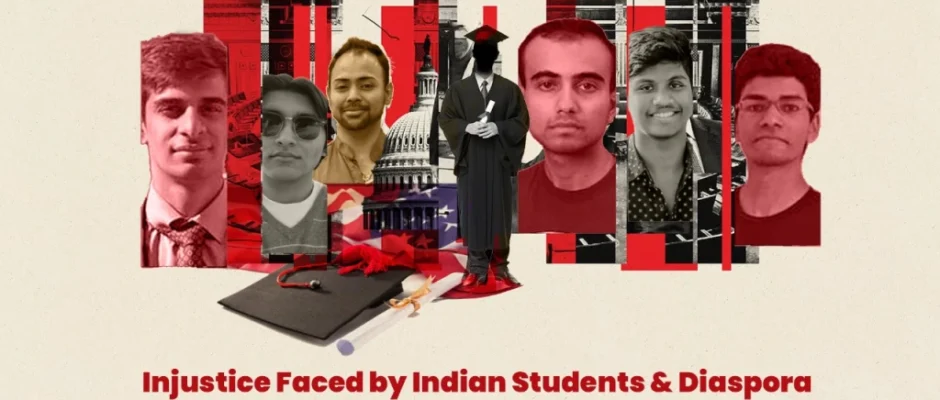
Injustice Faced by Indian Students & Diaspora in the United States: Neglected Safety and Crimes

Triveni Kaul United States was/is a dream destination for quality education and better futuristic opportunities amongst the international students for several years. The most significant number of students are made up of Indian community. Even though Indian students have made substantial contribution to the academic and financial growth of the US, however they constantly encounter a wide range of threats and difficulties, from safety concerns to racial prejudices. It is an alarming situation for Indian student diaspora as the US government allegedly disregards the safety and well-being of the larger international community. With their unbeatable skills, Indian community is leading the multi-trillion-dollars technology, medicine, and academic industries. In federal taxes they pay more than $12 billion annually and represent about one percent of the country’s population. Indian community accounting nearly eight percent of all doctors, ten percent professionals in technology business and in the sector of startup Indian founders accounts approximately twenty five percent. In venture capital Indian American entrepreneurs have raised over $30 billion. With over 400,000 Indian-owned businesses making almost $100 billion in revenue, the community is vibrant to economic progress. To enrich America’s social fabric, community contributes over $1.5 billion annually to philanthropic causes. This strong presence fosters innovation and cultural diversity across the nation. Notwithstanding these outstanding contributions, hate crimes and racial prejudice continue to target the Indian student community. The worry has grown in light of the xenophobic rhetoric and targeted attacks in recent years. It appears that verbal, physical, and violent attacks are intended against Indian students. The tragic case of Srinivas Kuchibhotla, an Indian engineer who was shot and killed in Kansas in 2017 while a man yelled, “Get out of my country,” serves as a grievous reminder of the risks this population faces. These instances are often covered by media, yet they are just a tip of the iceberg. Because of disdain for the legal system or fear of repercussions, many hate crimes remain overlooked. The lack of strong punishment to offenders and frequently mild sentences further encourage others to carry out similar crimes. Systemic failure in effective dealing of hate crimes has created an atmosphere of insecurity and fear amongst Indian students.  Recent incidents of suspicious attacks and police response underscore the severity of the situation. In the beginning of this year (January-February 2024) more than nine Indian students were killed. On January 23, Kevin Dave’s police car reportedly struck Jaahnavi Kandula, a 23-year-old Indian student in Seattle, USA. Officer Dave was reportedly driving at a speed of around 120 km/h when the incident occurred while responding to a drug overdose call. Further to the grief, bodycam footage from Seattle Police Department shows Officer Daniel Auderer making a flippant remark about terrible accident, saying, “Just write a cheque.” The amount is USD 11,000. Most astonishing is that The King County Prosecutor’s Office decided not to file criminal charges against Seattle Police Officer Kevin Dave. In November 2021, the tragic murder of Pravin Varughese, a 19-year-old Indian American student at Southern Illinois University. Varughese was found dead in a wooded area, and police preliminarily reported hypothermia as the cause of death. However, an independent autopsy discovered that he had suffered blunt force trauma in the head, raising worries of foul play. The investigation was marred by holdups and speculative mismanagement of proofs, leading to extensive condemnation of local law enforcement’s response. Similarly, the case of Sharath Koppu, a 25-year-old Indian student at the University of Missouri-Kansas City, emphasized the vulnerabilities confronted by Indian students. Koppu was shot and killed in July 2018 during an attempted robbery at a restaurant where he worked part-time. The occurrence sparked outrage and prompted attention to the larger concern of safety for international students, predominantly those who work in unquestionably unsafe environments to support their education. Another troubling incident occurred in 2019 when Vamshi Reddy Mamidala, a 27-year-old computer science master’s student, was found dead in his California residence. Although the exact cause of his death is still unknown, the case has highlighted the need for improved safety precautions for off-campus students. Indian students repeatedly feel their concerns are not taken seriously and these crime reports are overlooked by law enforcement and government authorities. This negligence stems from cultural misunderstandings, racial biases, and administrative inadequacies. At the time of assistance, a lot of students claim to be patronized or ignored, and police may neglect to file complaints or carry out in-depth investigations. In addition to sustaining a cycle of injustice and neglect, this lack of responsiveness erodes confidence in law enforcement. For Indian students, added difficulties are aggravated by US immigration and visa laws. Getting an H-1B visa, which is essential to work and live in US, is becoming more and more challenging. Ambiguity over visa approval and concerns about deportation increase tension and anxiety. Stability is brought about by restrictive immigration laws and regular adjustments to regulations. Even though it was later reversed, the Trump administration’s attempt to deny visas to foreign students enrolled in online programs during the COVID-19 outbreak exposed their vulnerability and caused concern for many of them regarding their future in the US. The psychological well-being of students is significantly impacted by the persistent fear of violence, prejudice, and uncertainty pertaining to immigration. Due to the stigma and the dearth of counselling facilities that are sensitive to cultural differences. (Incomplete sentence) Even though institutions offer mental health services, they frequently aren’t enough to meet the requirements of international students. The inability to communicate, cultural differences, and the fear of misunderstandings prevent them from asking for assistance, which exacerbates their sense of injustice and loneliness. In order to guarantee the security and well-being of students, educational institutions can play a crucial role. To combat discrimination, universities must be proactive in offering counselling that is culturally sensitive, providing diverse education, and establishing clear procedures for reporting hate crimes. It’s also critical to support overseas students in developing a sense of community. The biases and indifferences that Indian Americans and students experience have to be seriously

Read More

Bharat’s Security Prowess Unsettles West-Centric Global Security Dynamics

Unsubstantiated allegations and politicised narratives not only strain diplomatic ties but also detract from the collaborative efforts needed to combat global terrorism effectively. Rahul PAWA / @imrahulpawa Over the past year, Bharat has found itself at the epicentre of Western allegations, coupled with old friend camaraderie with Pakistani generals accusing Indian officials of undermining the sovereignties of nations by purportedly engaging in the termination of terrorists in Canada, the United States, and Pakistan. This intimidating interest in alleged Indian clandestine security operations, raises pivotal questions about the underlying motives and the broader global dynamics at play. Concurrently, it signals Bharat’s ascendance in the realm of global security as a revitalised and influential force, unsettling the traditional West-centric world order. In an era where the global threat landscape is increasingly complex, global and interconnected, Bharat’s extraordinary criminal justice measures to neutralize terrorists over the past decade—such as the 29 September 2016 surgical strike on terrorist launchpads across the Line of Control in Pakistan Occupied Indian territory of Jammu Kashmir, and the 2019 airstrike on the Jaish-e-Mohammed training camp in Balakot, Pakistan—are particularly significant. Under the leadership of Indian Prime Minister Modi, these operations had shed the ‘outdated and reluctant’ image of Indian security agencies of the past, showcasing new Bharat’s capability and resolve. The operations were conducted with a notable degree of professionalism, responsibility and transparency, as the Indian PM informed Pakistani counterparts prior to disclosing them to the world. These actions not only announced Bharat’s arrival as a formidable security force, but also challenged the traditional West-centric world order. Recent Western allegations, devoid of substantive evidence as seen in opinion heavy reporting of ‘The Guardian’ claiming Bharat’s role in tens of terrorist terminations in Pakistan, a covert unseen Five Eyes network intelligence report regarding the killing of Canadian terrorist Hardeep Singh Nijjar and subsequent local vote-bank influence as evidenced in Canada, along with the case involving alleged attempted assassination of Gurpatwant Singh Pannun, the US-based face of the proscribed terrorist entity SFJ, appear to be part of a broader strategy aimed at exerting collective pressure and undermining Bharat’s assertive stance against terrorism. Bharat which has long been a victim of cross-border terrorism orchestrated by Pakistan and its extensive global terror network, which includes Canadian and American terrorists. Canadian terrorists like  Talwinder Singh Parmar of Babbar Khalsa masterminded the 1985 bombing of Air India Flight 182, claiming 329 innocent lives. Similarly, American terrorists like David Coleman Headley and his Canadian accomplice Tahawwur Rana played pivotal roles in the dastardly 2008 Mumbai attacks by Lashkar-e-Taiba, resulting in 175 deaths and over 300 injuries. More recent attacks, such as the 2016 Uri assault by Pakistan-backed Jaish-e-Mohammed, which killed 19 Indian soldiers and injured 30, and the 2019 Pulwama suicide bombing by Jaish-e-Mohammed and Lashkar-e-Taiba, which took the lives of over 40 Indian police personnel, underscore the persistent threat Bharat faces. In this context, Bharat’s measures acknowledged criminal justice measures like listed above to protect itself are not only moral and lawful but also a national security imperative. However, the coordinated western and Pakistani allegations involving unravellings like Nijjar’s assassination in Canada, an attempted assassination of Pannun, and tens of terrorist assassinations in Pakistan appear more fixed at challenging the newfound capabilities of Bharat’s security apparatus under Prime Minister Modi. This stance appears discordant with traditional security superpowers that often perceive national security as their exclusive domain. Most importantly, Bharat’s strategic partnerships with various nations, including those in the West, are built on mutual respect and shared interests. These alliances are grounded in a mutual commitment to promoting global stability, economic development, and security. However, for these relationships to thrive and be truly effective, they must be free from unwarranted accusations and intimidation that can undermine trust and cooperation. Unsubstantiated allegations and politicised narratives not only strain diplomatic ties but also detract from the collaborative efforts needed to combat terrorism effectively. By fostering an environment of mutual trust and respect, Western nations and Bharat can work together to dismantle terrorist networks, prevent radicalisation, and enhance global security. In conclusion, it is imperative that Western nations avoid actions that could be perceived as coercive or dismissive of Bharat’s security concerns. Instead, they should prioritize engagement that is based on equality, respect, and a shared commitment to eradicating terrorism. By doing so, they not only reinforce their alliances with Bharat but also bolster the collective ability to address and overcome the multifaceted challenges posed by terrorism in the 21st century. It is time for the international community to support Bharat’s efforts to create a secure and stable world, acknowledging that a strong and secure Bharat is beneficial for global peace and prosperity. (Author is Director – Research at New Delhi based think tank, Centre for Integrated and Holistic Studies) 

Read More

American Paradox: Campus Protests in U.S. Universities

This unfolding scenario in U.S. campuses, casts a sobering light on the United States, a nation that brands itself as a global proponent of human rights and freedom of expression, underscoring the imperative for the U.S. to embody the principles it espouses, lest its credibility, be called into question.  Rahul Pawa             Nearly seven months have passed since Operation Al-Aqsa Storm—a military-grade terrorist attack carried out by sunni Islamist terror outfit Hamas and supported by four other Palestinian terrorist groups. This dreaded terrorist attack resulted in tragic deaths of approximately 1,200 Israelis and foreign nationals, and more than 240 people were taken hostage into Gaza from Israel, marking it as Israel’s deadliest day since its founding in 1948. In response to the terrorist attacks, Israel vowed to annihilate Hamas, launching a series of airstrikes and subsequent ground operations inside Gaza. According to the latest reports from the Hamas-controlled health ministry in Gaza, at least 34,596 individuals have been killed in Gaza since then. Fast forward to today, in the aftermath of the attack and Israel’s subsequent response, universities across the United States have become epicentres of heated debate, discord, and violence characterised by anti-Semitic and anti-Israel rhetoric. In the past month alone, escalating contentions at US universities have led to the arrest of over 1500 protesters across 30 U.S. campuses. This unfolding scenario casts a sobering light on the United States, a nation that brands itself as a global proponent of human rights and freedom of expression, underscoring the imperative for the U.S. to embody the principles it espouses, lest its credibility, be called into question.  (Author is Director – Research at New Delhi based think tank, Centre for Integrated and Holistic Studies) 

Read More

Exposing Inaccuracies: A Sharp Critique of the US State Department’s Human Rights Report

Rohan Giri US State Department’s annual human rights report for 2023 on Bharat (India)[1] appears to have lost credibility in its assessment of human rights incidents. It’s latest edition brings forth numerous significant issues that necessitate a response. Unfortunately, the report’s depiction of Bharat’s human rights landscape suffers from a noticeable agenda, undermining its own integrity as an self appointed, global evaluative agency. The report draws on sources that are both unreliable and ambiguous, including media reports and statements from NGOs, which fail to comprehensively represent the human rights situation in Bharat. Such sources lack the depth required to understand the nuances and recognise progress in these areas. Moreover, numerous instances of factually incorrect or misleading data undermine the report’s credibility and distract from addressing legitimate human rights issues that demand serious consideration. Furthermore, the report’s methodology of aggregating data over extended periods, sometimes spanning more than five years, distorts the current state of affairs. It is perplexing why the report does not focus on the human rights conditions of a specific year, rather than a cumulative period. This approach to data aggregation skews perceptions and hinders a true understanding of the present conditions and the improvements made. These significant flaws necessitate a rigorous review and response to ensure that discussions about human rights in Bharat are based on accurate, timely, and contextual information. This rebuttal aims to correct these misconceptions, provide relevant data, and offer a nuanced perspective that accurately reflects both the ongoing challenges and the significant advancements of Bharat. While the report contains several misrepresentations. However, for the purpose of this rebuttal, we are highlighting a select few to assist the US state department in re-reflecting on its sources, information, and overall presentation. Section on Arbitrary Deprivation of Life and Other Unlawful or Politically Motivated Killings reported, “On July 31, media reports stated security official Chetan Singh killed his senior officer and three men who identified as Muslims on a train near Mumbai, targeting them based on their appearance.” The family members of the three men called the incident “a hate crime” and “an act of terror” based on the hate speech Singh used against the three men before he shot them. Police arrested Singh on the same day.” Report frames the incident in a way that suggests two Muslims, who unexpectedly died in this accident, were targeted because of their faith. However, conversations with those close to the situation narrate a different story. Ghanshyam Acharya, who was on duty with Chetan, provided further context in his statement to the Railway Police, recounted that shortly after their duty started, he observed ASI Meena mention that Chetan was running a fever and still had two hours of duty ahead.[2] However, the manner in which the US Human Rights Report represents the incident raises serious concerns about the accuracy of its sources and the integrity of its presentation. The same section asserts that the deaths in regions like Jammu and Kashmir and those affected by Maoist terrorism are fault of Indian security forces. Nevertheless, it is a fact that Pakistan backed terrorists and Naxal Maoist terrorists pose the most substantial threat to both the development, peace and security of the region. It is also a fact that the Indian Security forces have carried out several operations against terrorists, often suffering heavy casualties in their pursuit of protecting their motherland and its habitants. To put things into perspective, website of the Office of the UN High Commissioner for Human Rights was updated on March 24, 2023, with the headline “India: UN expert demands immediate end to crackdown on Kashmiri human rights defenders,”[3] in which UN Special Rapporteur Mary Lawlor talks about those who illegally concealed their original identity, supported terrorist activities, and furthered their cause. Mary Lawlor should understand that her job is to defend rights, not crimes. Lawlor previously directed the Irish chapter of Amnesty International from 1988 to 2000.[4] In several instances , Lawlor has violated the UN code of conduct by agenda driven narrative building, especially about India, a sovereign and respectable UN member state.   Furthermore, the U.S. State Human Rights Report details that ‘on October 31, the Supreme Court announced it would hear the bail plea of student and human rights activist Umar Khalid on November 22, which was then adjourned to January 2024. Khalid has been repeatedly denied bail since his 2020 arrest under the Unlawful Activities (Prevention) Act (UAPA).’ Despite international and local activists demanding Khalid’s release, citing his arbitrary detention without trial since 2020, the report fails to mention significant details. For instance, Khalid’s counsel requested seven of the fourteen adjournments during his Supreme Court hearings. Furthermore, the public prosecutor pointed out during the bail hearings that Khalid often creates narratives in the media and online. It is also noteworthy that Khalid, described in the report as a ‘student and human rights activist,’ is the son of Syed Qasim Rasool Ilyas, a former member of the banned terrorist group Students Islamic Movement of India (SIMI). Khalid is accused of being a primary conspirator in the 2020 anti-Hindu Delhi riots, which resulted in significant legal charges against him. The U.S. State Department’s report, perhaps naively, seems to undermine the judiciary of a sovereign state and a key U.S. partner. Such an approach is safely viewed as a misuse of state department resources to further specific agendas, particularly concerning India. The Human Rights Report inaccurately used the killing of Canadian Terrorist Hardeep Singh Nijjar to propagate the notion that the Indian government is engaged in global repression. It notes, ‘On September 18, Canadian Prime Minister Justin Trudeau announced that his government was investigating allegations linking Indian government agents to the killing of Sikh Canadian citizen Hardeep Singh Nijjar, who had been designated as a terrorist by India and advocated for the creation of an independent Sikh state, Khalistan. The Indian government has denied any involvement. However, this portrayal overlooks significant details. Canadian Prime Minister Justin Trudeau’s allegations of Indian agency involvement were made

Read More

U.S.-India Relations Forge New Frontiers with Technology and Defense Deals

Prachi Mishra The recent visit of Indian Prime Minister Modi to the United States resulted in several key technology deals, MoUs, and collaborations. With growing penetration of emerging technologies in the socio-economic-political and security fabric of nation states, it is imperative for global leaders to come together and work on challenges that impact everyone. The bilateral ties between the United States and India have taken a significant leap forward with Prime Minister Narendra Modi and President Joe Biden unveiling a series of groundbreaking technology and defense agreements. During his address to the joint session of the U.S. Congress, PM Modi emphasised the global benefits of collaboration on semiconductors and critical minerals, highlighting the role it plays in enhancing the resilience and diversity of supply chains. With defense cooperation blossoming over the years, the United States has emerged as one of India’s key defense partners. Former diplomats and analysts are optimistic about the future of this relationship, foreseeing strengthened ties and more lucrative deals on the horizon. Atul Keshap, President of the U.S.-India Business Council and former charge d’affaires at the U.S. Embassy in New Delhi, expects the expansion to extend to military agreements, heralding positive outcomes for both nations, democracy, and the Indo-Pacific region as a whole. The remarkable scope of the announced deliverables has impressed observers and sparked confidence in the trajectory of U.S.-India relations. Some key highlights are showcased below; Institution building – Both President Biden and Prime Minister Modi agree that as their collaboration grows, technology will become increasingly important.  The founding of the Initiative on Critical and Emerging Technology (iCET) in January 2023 was welcomed by the leaders as a significant turning point for relations between the United States and India.  They urged institutions of higher learning, corporations, and governments to carry out their common goal for the strategic technological partnership.  The leaders reaffirmed their commitment for the United States and India to support an open, approachable, safe, and trust-based digital ecosystem that upholds their shared ideals and democratic institutions. Space – By the end of 2023, NASA and ISRO will have created a strategic plan for working together on human spaceflight. Indian astronauts will receive advanced training at NASA’s Johnson Space Center in Houston, Texas, with the intention of staging a cooperative mission to the International Space Station in 2024. This news was applauded by both the US and India. The NASA-ISRO Synthetic Aperture Radar (NISAR) satellite was sent to the U.R. Rao Satellite Center in Bengaluru, India, and NISAR’s launch from India in 2024 was anticipated.  The leaders praised India’s Space Policy – 2023 and urged greater commercial cooperation between the American and Indian corporate sectors along the full value chain of the space economy, as well as to resolve export restrictions and promote knowledge transfer. The Artemis Accords, which establish a shared vision of space exploration for the benefit of all humanity, were signed by India, and President Biden was very grateful for this.  Tech trade – Both India and the US applauded the interagency-led Strategic Trade Dialogue’s commencement in June 2023 and instructed both parties to make ongoing efforts to resolve export restrictions, look for measures to boost high technology trade, and ease technology transfer between the two nations. Semiconductors and supply chains – A Memorandum of Understanding (MoU) on Semiconductor Supply Chain and Innovation Partnership as a significant milestone in coordinating the semiconductor incentive programs of India and the US was highly talked about. This will support the growth of commercial possibilities, research, talent, and skills. The decision of Micron Technology, Inc. to work with the Indian government to invest up to $825 million in the construction of a new semiconductor assembly and testing plant in India was applauded by the leaders. Up to 5,000 new direct jobs and 15,000 community work possibilities might be created over the course of the next five years thanks to the joint investment, estimated at $2.75 billion. The leaders also praised Lam Research’s proposal to expedite India’s aspirations for semiconductor education and workforce development by training 60,000 Indian engineers through its Semiverse Solution virtual manufacturing platform, as well as a statement from Applied Materials. Telecom – Two Joint Task Forces on Advanced Telecommunications were established by the leaders, with a focus on Open RAN (O-RAN) and research and development in 5G/6G technologies. The Bharat 6G Alliance in India and the Next G Alliance in the United States will be in charge of the public-private collaboration between vendors and operators. With the support of funding from the U.S. International Development Finance Corporation (DFC), both India and the US are collaborating on Open RAN field trials and rollouts, including scaled deployments, with operators and vendors from both markets. The leaders praised Indian businesses’ involvement in the American “rip and replace” program. They supported an ambitious plan for 6G networks that called for collaboration on standards, easier access to chipsets for system development, and the creation of cooperative R&D initiatives. Quantum tech – The creation of a joint Indo-U.S. Quantum Coordination Mechanism to promote cooperation between business, academia, and government, as well as their efforts to reach a comprehensive Quantum Information Science and Technology agreement, was hailed by President Biden and Prime Minister Modi. The Quantum Economic Development Consortium and the Quantum Entanglement Exchange both warmly welcome India’s involvement in order to promote professional and business interactions with other prominent, quantum-minded countries. Programs for quantum training and exchange will be maintained and expanded, and the US and India will endeavour to remove obstacles to cross-border scientific cooperation. The leaders hailed the start of a $2 million grant program under the U.S.-India Science and Technology Endowment fund for the combined research and commercialisation of quantum technologies and artificial intelligence (AI), and they urged public-private partnerships to develop these technologies. Science collaborations – The leaders welcomed 35 creative joint research initiatives in emerging technologies that were supported by the Indian Department of Science and Technology (DST) and the American National Science Foundation (NSF). Together, the NSF and DST will

Read More

‘India deserves a much higher, deeper, wider profile & global role’

Prime Minister Narendra Modi harps on ‘unprecedented trust’ as he emplanes to US for showcasing India’s smart and soft power prowess. By Rajesh Roy, Brendan Moran and Gordon Fairclough NEW DELHI—Indian Prime Minister Narendra Modi said ties between New Delhi and Washington are stronger and deeper than ever as India moves to secure what he sees as its rightful place on the world stage at a moment of geopolitical turmoil. “There is an unprecedented trust” between the leaders of the U.S. and India, Modi said in an interview ahead of his first official state visit to Washington after nine years in office. He hailed growing defense cooperation between the two countries as “an important pillar of our partnership,” which he said extends to trade, technology and energy. In Washington this week, Modi is expected to complete deals to manufacture jet-fighter engines in India to power advanced light combat aircraft, and to purchase high-altitude armed Predator drones from the U.S. in a multibillion-dollar agreement to boost surveillance efforts over the Indian Ocean and near its disputed border with China in the Himalayas. As the West squares off against Moscow and, increasingly, China, New Delhi stands to gain. Washington has courted India hoping that it will be a strategic counterweight to Beijing. The U.S. has moved to deepen defense ties even as New Delhi makes large purchases of Russian oil at discounted prices, providing financial support for Moscow as it wages war in Ukraine. Modi—who gives many speeches but fewer news conferences and interviews—spoke with The Wall Street Journal about India’s foreign policy, its efforts to build a more modern and sustainable economy and a range of other topics in a nearly hourlong interview in his office at his sprawling official residence in the heart of New Delhi. Overall, Modi’s message was that—from India’s role in global politics to its contributions to the world economy—the country’s time has come. He sought to portray New Delhi as the natural leader of the global South, in sync with and able to give voice to developing countries’ long-neglected aspirations. “India deserves a much higher, deeper and wider profile and a role,” said Modi, wearing a yellow kurta and light-brown jacket. Peacocks squawked in the garden outside. The 72-year-old leader called for changes to the United Nations and other international organizations to adapt them for an increasingly multipolar world order and to make them more broadly representative of the world’s less-affluent nations and their priorities, from the consequences of climate change to debt reduction. Unlike the vision of nonalignment advanced by Indian leader Jawaharlal Nehru in the early years of the Cold War, Modi’s foreign policy is one of multiple alignments, seeking to advance India’s interests in partnership with a range of global powers, including those in conflict with each other. Modi is one of India’s most popular prime ministers. He and his Bharatiya Janata Party won nationwide elections in 2014 and 2019 by comfortable margins. With national elections due next year, Modi’s approval rating is high. Political opponents and human-rights advocates have accused Modi’s party, which has roots in Hindu nationalism, of fostering religious polarization and democratic backsliding, pointing to issues such as restrictions on the press and removal of the special status of Indian-administered Kashmir to more closely integrate the Muslim-majority region into the country. Modi said that India not only tolerates but celebrates its diversity. “For thousands of years, India has been the land where people of all faiths and beliefs have found the freedom to coexist peacefully and prosper,” he said in a statement. “You will find people of every faith in the world living in harmony in India.” On the economic front, Modi has won praise for eliminating bureaucracy, relaxing rules and opening the way for more foreign direct investment. The country has surpassed China as the world’s most populous. What’s more, its population is young, promising a significant demographic dividend. The government has invested enormously in education and infrastructure, and it is poised to gain as multinationals look to diversify manufacturing and supply chains in an era of geopolitical tension. A new Apple store drew a crowd in Mumbai in April as the company expanded its investment in India. PHOTO: DHIRAJ SINGH/BLOOMBERG NEWS Apple is among the companies making significant new investments in southern India, with supplier Foxconn Technology Group planning new facilities in the states of Karnataka and Telangana and expanding iPhone production in the state of Tamil Nadu. “Let me be clear that we do not see India as supplanting any country. We see this process as India gaining its rightful position in the world,” Modi said. “The world today is more interconnected and interdependent than ever before. To create resilience, there should be more diversification in supply chains.” One thing India and the U.S. share are relationships with China that have grown increasingly fraught in recent years, marked by deepening military and economic rivalries. For India, that challenge is at its doorstep, with rising tensions centering around its decadeslong dispute with Beijing over the 2,000-mile border separating the two countries, known as the Line of Actual Control. The countries have been building infrastructure and deploying more troops in the region since a deadly 2020 clash in the Himalayas. Indian officials have blamed China for violating border agreements, and the two countries have held 18 rounds of military talks since 2020 aimed at preventing the dispute from spiraling into wider conflict. “For normal bilateral ties with China, peace and tranquility in the border areas is essential,” Modi said. “We have a core belief in respecting sovereignty and territorial integrity, observing the rule of law and peaceful resolution of differences and disputes. At the same time, India is fully prepared and committed to protect its sovereignty and dignity.” China’s Defense Ministry didn’t respond to a request for comment sent via the State Council Information Office. In drawing closer to Washington, the Indian government has had to overcome deep skepticism about the U.S. that dates back to the Cold War, when New Delhi became more closely aligned with Moscow after Washington declined to supply arms to India in 1965. The U.S. instead became a military backer

Read More