

Indian Prime Minister’s visit to Israel goes beyond symbolism. Substantive outcomes may lead to redrawing alliances in West Asia.
Paushali Lass
For decades, India and Israel were close yet cautious partners, working behind the scenes. This week, that changed. Prime Minister Modi’s visit did more than make history. It marked dawn of “Special Strategic Partnership,” a status Israel reserves for select nations.
Historic Embrace: Modi at Knesset
During his address to Knesset, Modi spoke with clarity and warmth, praising shared democratic values and civilizational bonds between India and Israel. Members of parliament took selfies, posted on social media, visibly enthusiastic. Modi was not merely welcomed; he was embraced. In recognition of his leadership in deepening India–Israel ties, he was bestowed Speaker of the Knesset Medal, a historic first. The award was not just a personal accolade but public affirmation of renewed strategic friendship, reflecting trust, shared values and civilizational bonds that his visit celebrated[1].
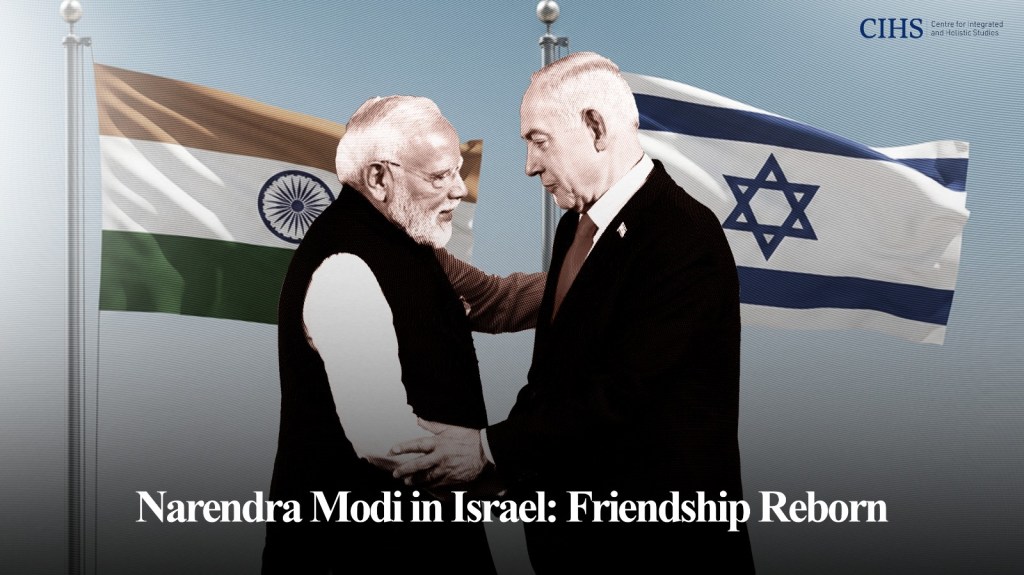
For many Israelis, this was the moment India stepped out from behind diplomatic caution and said simply: we are friends. Modi invoked deep historical ties, highlighting that India has been part of Jewish story for millennia. He reminded the Knesset that Jews found refuge in India long before modern states existed, citing the story of Queen Esther in Bible and mentions of India in Talmudic texts[2].
Modi made a powerful, unequivocal statement condemning barbaric acts of Hamas, supporting Israel without ifs or buts. For many Israelis, this clarity of friendship was unprecedented. Sharp criticism at home from certain quarters questioned how an Indian Prime Minister could visit Israel at a time when allegations of genocide in Gaza loomed large. But, Modi proceeded and made a bold declaration of solidarity. He not only condemned the atrocities committed by Hamas as acts of ‘terror’ but also expressed profound grief over loss of innocent lives on October 7, 2023.
Interestingly, Modi highlighted a deeper point that may help explain the particular affinity between India and Israel from perspective of ancient civilization and culture. Although India, a majority-Hindu nation and Israel, a majority-Jewish state, may appear to have fundamentally different faith systems, there exists a philosophical thread that binds the two peoples more closely than one might assume.
Modi drew parallels between Jewish concept of Tikkun Olam (repairing and healing the world) and Vasudhaiva Kutumbakam, the ancient Sanskrit declaration that world is one family. These deep-rooted philosophical traditions of both nations should not be underestimated. They offer precisely the kind of moral and spiritual foundation the world needs today as it seeks to promote global security and combat terrorism. After all, the world cannot be made a better place through political and economic deals alone; spiritual dimensions of these ancient civilizations must also be recognized and strengthened.
The two-day visit was especially meaningful for Indian Jewish community. Prime Minister Modi met Indian Jewish community, creating a historic and emotional connect. Revital Moses[3], who dedicated herself to strengthening India–Israel cultural ties described the experience as “surreal”, meeting a leader she had grown up watching on television, whose vision she had admired for decades.
The visit carried deep symbolic weight. Modi took out time to be at Yad Vashem and paid tributes to Holocaust victims, highlighting shared commitment to humanity. What many may not be aware of is that India gave refuge to Jewish refugees fleeing the Holocaust during World War II.
Modi also held a private meeting with President Herzog who thanked him for India’s unwavering support and friendship towards Israel.
Something that surprised many and instantly went viral was Modi’s meeting with immensely popular stars of Israeli TV series Fauda, celebrating creative talent that has become one of Israel’s global cultural exports. He engaged with Israel’s innovation leaders in a special tech forum, reflecting the cutting-edge technological landscape of the country.
And then there were visuals that linger: Indian flags waving on Jerusalem streets. This is a profoundly moving sight.
Agreements to Action: Strategic Partnership
Modi’s visit translated goodwill into action. Together with Prime Minister Benjamin Netanyahu, he oversaw signing of sixteen major agreements (Memorandum of Understanding) covering defence, technology, trade, agriculture, finance and people-to-people engagement. Highlights include:
- Technology & Innovation: Cooperation in AI, Critical and Emerging Technologies, industrial R&D and space exploration, supported by initiatives like India-Israel Innovation Fund and Tech Gateway to link academia, startups and industry.
- Defence & Security: Expanded defence cooperation, joint technology development and strengthened cyber-security collaboration through a dedicated India-Israel Cyber Centre of Excellence.
- Trade & Investment: Progress on Free Trade Agreement negotiations, linking India’s UPI with Israel’s payment systems and frameworks to boost bilateral investment. This public embrace of the two nations is already energising private sector companies to invest, innovate and collaborate, and will hopefully spur more people-to-people engagement, with citizens exploring and appreciating each other’s cultures.
- Agriculture, Water & Environment: The India-Israel Innovation Centre for Agriculture, capacity-building programmes for Indian farmers and collaboration on water management, aquaculture and environmental protection.
- Education & People-to-People Ties: MoUs on AI in education, academic exchanges, joint fellowship programmes and cultural collaborations, including cinema and arts. The Indian diaspora in Israel is formally recognised as a pillar of the partnership, reinforcing the people-to-people dimension that sustains any strategic alliance.
- Labour & Mobility: Agreements enabling up to 50,000 Indian workers in Israel over next five years ensuring safe mobility, legal protection and professional opportunities in high-skill sectors.
In short, it was more than a diplomatic exercise. It was roadmap for peace, innovation and prosperity, built on mutual trust, democratic values and complementary capabilities. Beyond MoUs and agreements, the visit signals a strong social and economic agreement: businesses, innovators, cultural leaders and citizens on both sides are invited into the partnership, encouraged to collaborate and recognised as part of the strategic equation.
This public acknowledgement of friendship between the two nations also gives fresh momentum for private sector businesses to collaborate more actively, while also encouraging deeper people-to-people engagement, allowing citizens to explore and appreciate each other’s cultures.
Geopolitical Implications: New Alignment
Indian Prime Minister’s open friendship with Israel, warm reception he received across political spectrum, his huge popularity among Israelis and unequivocal condemnation of Hamas terror, not only deepens strategic and civilisational ties with Israel but invoked anger among adversaries. This partnership indicated a potential broader regional alignment with Greece, Cyprus, Ethiopia, Somaliland as counterweight to Turkey, Pakistan and Iran line up.The latter countries havea proven record of destabilizing Middle East and Indian subcontinent that are now sharpening their capabilities to challenge this emerging alliance. Consolidation of these partnerships is a significant shift in regional geopolitics, reflecting shared security priorities, mutual economic interests and concerted effort to safeguard stability and counter terrorism.
Beyond defence and technology deals, what strikes the most is subtle but profound shift in how Israeli society is responding to relationship with India. Modi’s unequivocal acknowledgment of October 7 massacre has touched hearts of Israelis like few other world leaders’ speeches ever have.
What truly sets this visit apart is that Modi has won hearts, from top leadership to regular Israelis on the street.
(Paushali Lass is an India-born intercultural educator, writer and international speaker based in Germany. She authored Tasting Faith: Jews of India and works to build cultural and business bridges between Israel, Germany and India)
[1] https://m.knesset.gov.il/EN/News/PressReleases/Pages/press25226a.aspx