

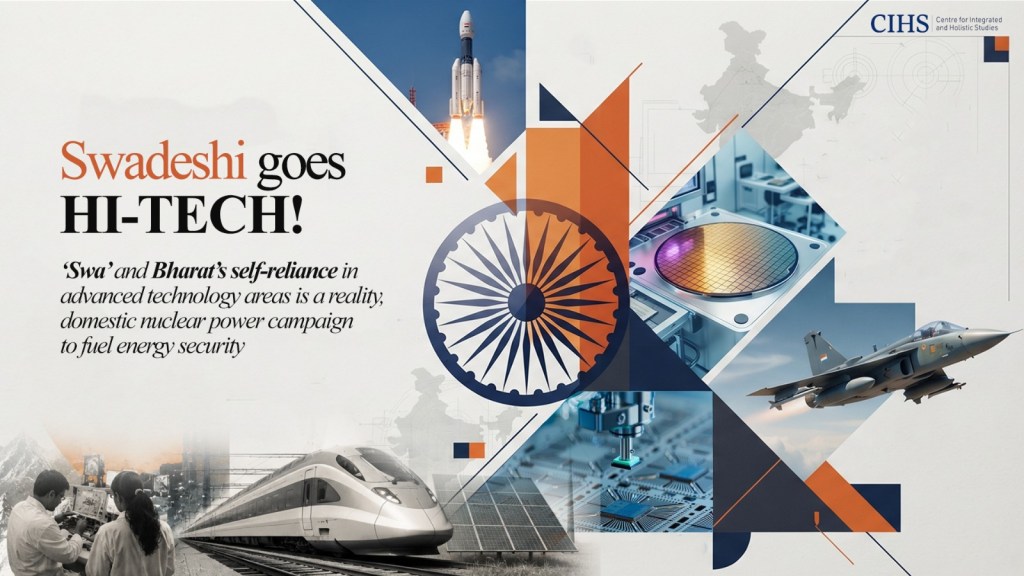
‘Swa’ and Bharat’s self-reliance in advanced technology areas is a reality, domestic nuclear power campaign to fuel energy security.
Dr Upender Krishen Saroop
Swadeshi way of life carries a very deep and broader meaning. One must first understand Self (Swa) inherent in the word “Swadeshi.” ‘Swa’ has three foundational dimensions that have given Bharat a distinct identity and personality.
When these three dimensions find natural expression in our personal, familial, professional, social and national life, only then can that way of living be truly called Swadeshi way of life in fullest sense.
Bharat’s first and most fundamental concept of ‘Swa’ is spirituality. As Bharatiya worldview is rooted in spirituality, it is integral (Ekatma) and holistic (Sarvangeen). Bharat perceives the entire creation as interconnected, and it is from this that idea of “world is one family” (Vasudhaiva Kutumbakam) emanates.
Rashtriya Swayamsevak Sangh (RSS) advocates Swadeshi (economic and cultural self-reliance) as outward manifestation of this unique concept, ‘Swa’ and a core pillar of national reconstruction. Championed through its socio-political affiliates, this philosophy shapes domestic policies, promotes indigenous industries and re-centres Bharat’s cultural identity.
Rooted in the philosophy propounded by RSS ideologue Deendayal Upadhyaya, Swadeshi goes beyond economics to encompass cultural and spiritual self-reliance that ingrains holistic human development over unchecked consumerist globalisation.
RSS promotes a native economic model that avoids both hyper-capitalism and state-controlled socialism, emphasizing on sustainable development, small-scale industries and maintaining environmental balance. The organization advocates protection of traditional familial structures, local community bonds and promotion of mother tongues and indigenous lifestyles.
The Swadeshi concept forms ideological bedrock for major national campaigns. It heavily aligns with Bharat government’s Atmanirbhar Bharat (Self-Reliant India) and “Vocal for Local” initiatives which aim to empower domestic manufacturers and boost locally made products.
India’s successful Swadeshi designed Nuclear reactor:
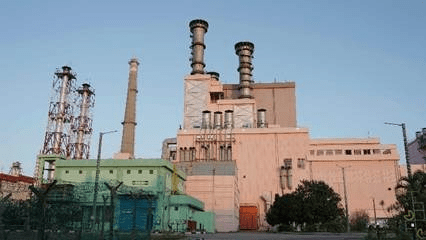
India has marked a major milestone in its nuclear energy programme. The indigenously designed and built Prototype Fast Breeder Reactor (PFBR) at Kalpakkam in Tamil Nadu successfully attained first criticality on April 6, 2026, marking initiation of a sustained nuclear chain reaction. This PFBR is 500 MW reactor built by Bharatiya Nabhikiya Vidyut Nigam Limited (BHAVINI) at the Kalpakkam Nuclear Complex.
With this feat, Bharat has entered second stage of its three-stage nuclear power campaign, first conceived by Dr. Homi Jehangir Bhabha, the architect of domestic nuclear programme. The milestone carries substantial global significance. Once fully operational, India will become only the second country in the world after Russia to operate a commercial fast breeder reactor.
This milestone is testament to decades of scientific effort led by Department of Atomic Energy. It also marks a significant step in India’s clean energy journey, reinforcing the country’s commitment to reliable, low-carbon power. Additionally, it brings Bharat closer to realizing net zero emissions by 2070, a target set by Prime Minister Narendra Modi.
Three-stage nuclear power campaign
India holds limited uranium reserves but one of the largest thorium deposits globally. To make the most of these resources, Department of Atomic Energy designed a three-stage nuclear power campaign built on a closed nuclear fuel cycle. The goal is to progressively multiply domestic fissile resources and secure long-term energy independence.
Natural uranium is used as fuel in PHWRs to generate power. The spent fuel from these reactors produces plutonium which becomes primary input for the next stage.
The plutonium obtained from Stage 1 is used as fuel in Fast Breeder Reactors which generate more fuel than they consume. PFBR at Kalpakkam marks Bharat’s entry into this stage. These reactors will be used to breed Uranium-233 from thorium, laying the groundwork for Stage 3.
This stage will harness India’s vast thorium reserves at scale using Uranium-233 bred in Stage 2 as fuel. Thorium is considered a practically vast energy source and this stage holds the key to India’s long-term energy security.
Each stage feeds into the next, making India’s nuclear programme one of the most forward-looking energy strategies in the world.
PFBR: An Overview
PFBR represents decades of indigenous research, design and engineering. Its technology was developed by Indira Gandhi Centre for Atomic Research (IGCAR), an R&D centre under Department of Atomic Energy.
- Fuel and Design: Unlike conventional thermal reactors, PFBR uses Uranium-Plutonium Mixed Oxide (MOX) fuel. The fissile material used is recovered from reprocessing of spent fuel from Pressurised Heavy Water Reactors, closing loop on Stage 1.
- Breeds More Than It Burns: Core of PFBR is surrounded by a blanket of Uranium-238. Fast neutrons convert this fertile material into fissile Plutonium-239, enabling the reactor to produce more fuel than it consumes.
- Bridge to Stage 3: The reactor is designed to eventually use Thorium-232 in the blanket. Through trans-mutation, Thorium-232 will be converted into Uranium-233, the fuel that will power India’s third stage of nuclear energy based on thorium.
- Closed Fuel Cycle: Spent fuel generated by PFBR will be reprocessed and recycled back into the reactor. This closes the second-stage fuel cycle and paves the way for large-scale use of India’s abundant thorium reserves in Stage 3.
Nuclear Power Landscape in India
Bharat’s nuclear energy campaign has maintained steady presence in the country’s electricity mix. It now stands at a pivotal moment with significant expansion planned over coming years.
- Installed Capacity: Bharat’s current nuclear capacity is 8.78 Gigawatt (GW). In 2024–25, nuclear power plants generated 56,681 Million Units of electricity.
- Stable Contribution: Nuclear power has consistently accounted for a modest three per cent of India’s total electricity generation. In 2024–25, its share stood at 3.1 per cent.
- Planned Expansion: India’s nuclear capacity is set to grow nearly three times in coming years. With indigenous 700 Megawatt (MW) reactors and 1,000 MW reactors being developed via international cooperation, the installed capacity is projected to reach 22.38 GW in five years from now.
- International Cooperation: India has signed Inter-Governmental Agreements (IGAs) on Civil Nuclear Cooperation for peaceful purposes with 18 countries reflecting the growing global confidence in the nation’s nuclear programme.
Taken together, these numbers tell a clear story. Nuclear energy is no longer just a supplementary source of power in India. It is fast becoming cornerstone of the country’s clean energy future.
Long-Term Mission
Bharat has set sights on a significantly larger role for nuclear energy in its power mix. Government has announced Nuclear Energy Mission, outlined in Union Budget 2025–26, with the aim of achieving 100 GW nuclear power generation capacity by 2047. The mission also supports India’s broader goal of achieving net zero carbon emissions by 2070. The sector is under regulatory oversight, opening new avenues for collaboration and investment.
India’s long-term nuclear vision is ambitious by design. With policy backing, dedicated funding and indigenous research at its core, country is building a nuclear future that is both self-reliant and globally significant.
Conclusion
Concept of Self Reliance or Atma nirbharta has its roots and inspiration from the concept of Swa and Swadeshi, an important paradigm for RSS. This is one of the five transformative ideas put forth in centenary year of RSS. Realm of Swadeshi has gone into high technology areas like Nuclear and solar energy to ensure energy security of our nation, space missions, defence equipment production, Semiconductors to name a few.
The emergence of Bharat as an economic superpower based on ennobling values of peace and Vasudhaiva Kutumbakam is not only inevitable but desirable for the world which is torn apart in wars and violence. Bharat will provide the lead in this endeavour.
(Author holds a doctorate in polymer technology from Indian Institute of Technology Delhi. He was a scientist in Shriram Institute for Industrial Research and formerly Vice President with Reliance Industries. Currently, he’s advisor to several packaging and polymer companies)