India’s Home Grown Defence Ascent
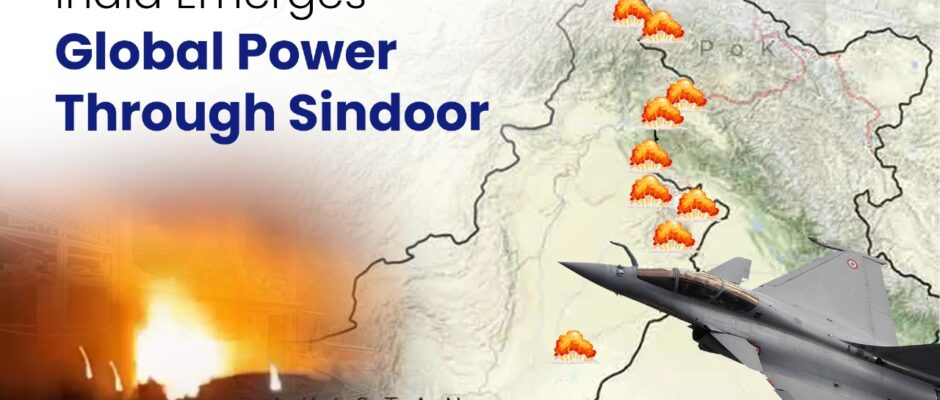
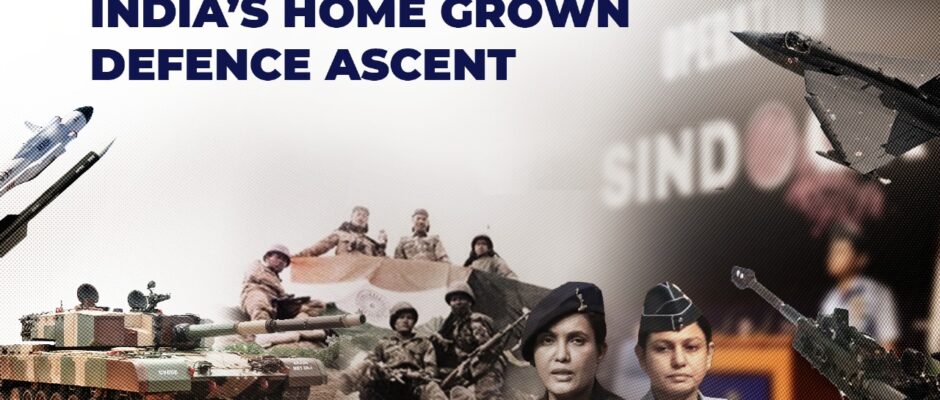
From Kargil war to Operation Sindoor, Indian forces have undergone transformational changes in capabilities, capacities & outlook. Brig Brijesh Pandey Twenty-six years ago, in May 1999, just as global accolades for Lahore Declaration echoed, Pakistani forces crossed Line of Control (LoC) in Kargil sector of Jammu and Kashmir, masked as “freedom fighters.” By occupying winter-vacated heights of Dras, Kaksar, Batalik, and Mushkoh, Pakistan’s Northern Light Infantry flagrantly violated international norms, bilateral accords and established military conventions. This covert infiltration was aimed at enlarging the arc of terrorism and reigniting global attention on Kashmir through deceitful aggression. India responded with Operation VIJAY under self-imposed constraints that precluded crossing Line of Control or deploying air power in Pakistani airspace. These limitations notwithstanding, Indian Armed Forces reclaimed the heights after a gruelling 54-day campaign suffering 527 fatalities and 1,363 injuries. Kargil conflict exposed glaring weaknesses in India’s military preparedness, particularly in surveillance, logistics, indigenous weapons systems and joint command structures. The post-war Kargil Review Committee catalysed vital structural reforms and laid groundwork for a transformation that would take shape over next two decades. Catalyst for Defence Modernisation Lessons of Kargil underscored that bravery alone did not compensate for systemic gaps. The government responded with sweeping institutional and strategic changes: Despite initial inertia and bureaucratic roadblocks, the foundations laid after Kargil began to take effect post 2014, when the government designed a vision for New India and exhibited the political will for a full-fledged indigenous defence ecosystem. Structural and Policy-Level Overhauls R&D and Innovation Ecosystem India has taken commendable step by establishing Anusandhan National Research Foundation with a proposed ₹ 1 Lakh Crore Research & Innovation Fund and steps such as: Indigenous Force Multipliers India’s self-reliant defence strategy is exemplified by an expanding portfolio of homegrown systems: Operation Sindoor: A Defining Moment in Indigenous Warfare On 07 May 2025, following a terror attack in Pahalgam, India launched Operation Sindoor a precision, tech-enabled retaliation that lasted just 22 minutes but left a lasting impact. Unlike the fragmented Kargil campaign, this was a demonstration of a fully integrated and indigenous warfighting ecosystem: A comparative snapshot of capabilities of Indian Armed Forces during Kargil vis-à-vis Operation Sindoor can be summed up as: Category Kargil (1999) Operation Sindoor (2025) Surveillance Foreign satellites Indigenous ISR networks, drones Artillery Swedish Bofors ATAGS, Dhanush, Vajra K9 Air Power Mirage 2000, MiG-21 Tejas Mk1A, drones, PGMs Intelligence Fragmented Real-time networked Cyber & EW Minimal Advanced indigenous capabilities Import Dependency 70%+ Majority of systems Indian-made Strategic Implications India’s growing strength in indigenous defence production carries significant strategic implications. It positions the country as a credible two-front deterrent, prepared to respond to potential threats along both its western and northern borders. Regionally, India is emerging as a power capable of projecting military influence from the Andaman Sea to the African coastline. On the global stage, India is carving out a role as a defence exporter, expanding its presence across Southeast Asia, Africa, and Latin America. Furthermore, it is asserting itself as a leader of the Global South by presenting a scalable, technology-driven model of self-reliance that other developing nations may aspire to emulate. Persistent Challenges Despite India’s impressive strides in indigenous defence capability, several structural and operational challenges persist. Bureaucratic inertia continues to impede the pace of procurement, often causing critical delays in the acquisition of essential equipment. In the realm of research and development, with stagnant R&D at 0.3% of GDP and Gross Expenditure on R&D (GERD) at 0.64% as against 2.64% of GERD of China Israel’s 5.6% R&D-to-GDP ratio supported by dense web of university-industry linkages, military R&D, and start up ecosystem. Innovation is not a by-product of industrial growth, it is pre-condition and modest levels of R&D funding levels limit the scope and speed of innovation. Additionally, India’s defence testing infrastructure has yet to scale proportionally with the growing production capacity, creating bottlenecks in quality assurance and deployment timelines. On the export front, while Indian defence products are gaining international attention, there is a pressing need for stronger global marketing mechanisms and streamlined certification processes to effectively compete in international markets. Dawn of Strategic Sovereignty From frozen heights of Kargil to precision battlefields of Operation Sindoor, India has undergone profound military metamorphosis. This evolution reflects not just technological innovation, but a strategic vision rooted in resilience, sovereignty, and civil-military synergy. As India approaches its centenary of independence in 2047, the foundation laid by these two watershed moments will continue to shape its trajectory as a confident, capable, and autonomous power in the global order. (Author is a defence analyst, former military advisor and commanded an artillery brigade)