
CIHS – Centre for Integrated and Holistic Studies

Date/Time:

Kashmiri Community in Fear and Insecurity

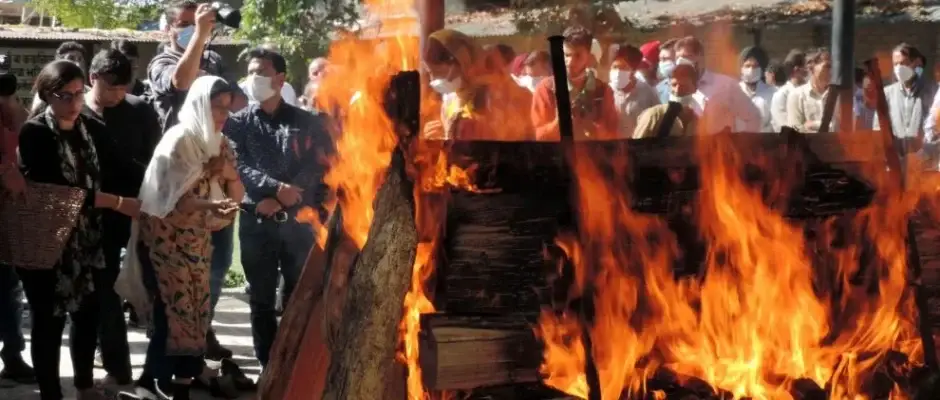
Decades ago, when terrorism engulfed the valley, Kashmiri Hindus, an indigenous ethnic-religious group in Kashmir-now a minority, were forced to leave their ancestral home. The growing Islamic extremism transformed rapidly into terrorism. Much of the weapons and trained terrorists poured in by neighbouring Islamic republic of Pakistan. They, along with other Kashmiri Muslims sympathisers called for murder, loot, rape, and abductions of native Kashmiri Hindus. Left with no choice but to save themselves, over 0.4 million Kashmiri Hindus migrated to different parts of the country. In such adversity and betrayal, Makhan Lal Bindroo, a Kashmiri Hindu pharmacist in Srinagar, chose to stay back and serve his homeland Kashmir. On Tuesday, however, he was paid for his service and trust by The Resistance Front (TRF). Terrorists of the Resistance Front (TRF) shot and murdered Makhan Lal Bindroo. TRF is a Lashkar-e-Taiba front organisation (LeT). LeT an international terrorist group designated by the United States and United nations which is backed and supported Pakistan. The trigger? He was a Hindu, a reminder of Kashmir’s indigenous non-Islamic history that the Islamists desperately want to erase. Seemingly inspired by the recent cleansing of Hindus and Sikhs in Afghanistan. TRF has began a gory repetition of the 90s massacre of Hindus in the valley. In sixteen days, eleven civilians, a majority of whom belong to the Hindu minority communities have been butchered in the Valley of Kashmir by Pakistan backed Islamic terrorists. In the recent spree of killings. Terrorists targeted Hindus, Sikhs and government employed muslims. In addition, non-locals workers a d wagers from the rest of the country, who have built and sustained Kashmir crisis after crisis were targeted. Evidence suggests that these organised killings are planned and organised by Pakistan backed terrorist groups, following the footprint of the 1990s genocide of Kashmiri Hindus. The revival of Kashmiriyat- Kashmir’s distinct pluralism- after recent sustainable development in Kashmir, has been a sore in the sight of Pakistan-sponsored Islamic terrorists in Kashmir. The roots of this planning lead to Pakistan as is evident from the series of events that replicate the 90s genocide. The day TRF’s Pakistan-sponsored terrorists killed Bindroo, two others were also killed, a poor Dalit street food hawker, Virender Paswan who was killed within an hour of Bindroo’s shooting for being a harmless non-Kashmiri, and a Muslim resident that terrorists killed because of suspected links to security forces. All these people were killed for not adhering to the terrorist ideology against Hindus. In fact, it did not stop there. Three days later, terrorists murdered two educationists: Supinder Kour- the Kashmiri Sikh principal at a school in Srinagar and Deepak Chand- the Kashmiri Hindu teacher at the same school. The terrorists singled them out from the staff, ordered the Muslims to go out and shot those two. If this isn’t ethnic cleansing and genocide, then what is, ask the minority communities in Kashmir. The terrorist attacks and killings have launched the minority community in Kashmir into a hysteria of fear and insecurity. Many have fled their homes overnight, in a horrifying repeat of events of the late 1990s. After the last great exodus of the Kashmiri Hindus in 1999, there are barely any Hindus left in the valley, many of whom were those who returned after government’s efforts to resettle them back in their homes. However, clearly, nothing has changed for Hindus and other minorities of Kashmir and it likely won’t as long as Pakistan-sponsored terrorism continues in the valley. There is no doubt that a large part of this renewed genocide of Hindus in the valley also stems from the international aid that is given to Pakistan that it pumps back into its terrorist operations in Kashmir. While India scrambles to take control of security in Kashmir, international community can step up and support by immediately sanctioning Pakistan so that another irreversible genocide of a minority doesn’t happen on our watch.
Read More

Unravelling NYT Journalistic Ethos

Prachi Mishra / New Delhi Introduction   Famed American daily, The New York Times (NYT), has been gripped in controversy once again. On July 3rd, 2021, the newspaper posted a job opening for their South Asia Correspondent to be located in New Delhi. The advertisement states, “India’s future now stands at a crossroads. Mr. Modi is advocating a self-sufficient, muscular nationalism centered on the country’s Hindu majority. That vision puts him at odds with the interfaith, multicultural goals of modern India’s founders. The government’s growing efforts to police online speech and media discourse have raised difficult questions about balancing issues of security and privacy with free speech.”   The Times, which claims to adhere to their mission of making the lives of their readers richer and fulfilling, and making the society just, has now stooped to a new low of launching ad hominem attacks on Indian Prime Minister Narendra Modi. The LinkedIn post which slams Modi for propelling Hindu nationalism and creating cultural, social, and religious divides, makes it clear that the newspaper has dropped all pretense of catering to audiences on a diverse political spectrum.   A quick analysis of hundred latest articles of the New York Times on India provide evidence about their propagandist content and intent. All of these articles are laden with anti-India, anti-Modi, and anti-Hindu themes.  It is time readers and followers of the much-cherished newspaper of independent America become cognizant of their toxic journalism.   The death of unbiased journalism   In an attempt to unravel NYT’s pretentious journalism, we analyzed its publications on India for the duration of June 1st, 2020 to June 30th, 2021. The total corpus of our study comprised of one hundred unique opinion pieces, videos, and articles. From our analysis, we could garner the following insights: Three themes are ubiquitous in the sample. These are anti-India, anti-Modi, and anti-Hindu. Whether the coverage is of India’s COVID-19 caseload surge, farmers’ protests, vaccination, state elections, judicial activism, or economy, one or more of themes are prevalent. The percentage split of these themes in our corpus can be found in Fig.1. Fig.1. Percentage split of themes found in the NYT corpus. Each item in the corpus has been counted only once for the analysis. Source: The New York Times; Centre for Integrated and Holistic Studies (CIHS), 2021. NYT’s smear campaign against India and Modi is based on just a handful issues. Interestingly, most of them are India’s internal matters that have been used to spread misinformation and manipulate global masses. These are depicted in Fig.2. Fig.2. Issues covered in the NYT corpus. Over the span of one year, these issues made up the dominant coverage focus. Source: The New York Times; Centre for Integrated and Holistic Studies (CIHS), 2021. The frequency of coverage of these issues greatly varies. Of the 47 publications in the year 2020, 72% of them were in the months of September to December, with dominant issues of farmers’ protests, COVID-19 caseload, suppression of freedom of expression, and anti-India propaganda. In 2021, a total of 53 publications were analyzed. In January 2021, 6 out of 9 articles were about farmers’ protests. The trend carried on for February as well, with more than 50% publications centered on Indian farm laws. When the second wave of COVID-19 struck India in April – May, nearly all publications were targeted towards generating anti-India sentiment against the leadership and the state to manage the crisis and inoculate its citizens. The Bengal elections also got a little airtime. For the month of June 2021, all of the publications were focused on the pandemic and its associated facets. There are many publications which falsely portray facts, like the Union Territory of Jammu and Kashmir has been noted as India controlled Kashmir, or the Citizenship Amendment Act, 2019 has been shown as an escape mechanism for Sikhs and Hindus in Afghanistan to avoid persecution, or protests by Hindus against Amazon web drama, Tandav, to be fascist Hindu agenda and killing of freedom of expression. A holistic and global view of the issues covered was found lacking. Just a handful authors, who are not subject matter experts have covered everything from India’s vaccination policy to Indo-China conflict, to the Ramajanmabhoomi verdict, to abrogation of Article 370. Indeed, a lot of throat clearing, propaganda, and misleading content has been observed. What can be said about NYT’s journalistic ethos?   NYT readers from global religious communities, including Hindus, have started to fear that India is not safe for Muslims. The NYT makes tall claims that religious persecution, unwarranted arrests, and fabricated narratives are the modus operandi of Modi and his government. There is no scope for unbiased journalism left in the NYT newsrooms. The US daily has successfully managed to leverage the unrecognized prevalent psychological biases of the common masses. This has not only afflicted their ability to pause, reflect, and think rationally, but has also created massive socio-cultural and ethno-religious divides among the readership. No wonder their mission and vision has no mention of honesty, the supreme-most of all journalistic ethos. Note: The advertisement has been taken down from LinkedIn by the news agency. (Prachi is a research consultant at CIHS, focusing on technology, national security, and society.) References Prasar Bharti News Service, “Anti-India sentiment: A Prerequisite at NYT?”, July 3, 2021, News on Air, https://newsonair.com/2021/07/03/anti-india-sentiment-a-pre-requisite-at-nyt/, accessed on July 3, 2021. Mission and Values of The New York Times, https://www.nytco.com/company/mission-and-values/, accessed on July 4, 2021. A Handbook of Values and Practices for the News and Editorial Departments, https://www.nytimes.com/editorial-standards/ethical-journalism.html#, accessed July 6, 2021.

Read More