CIHS – Centre for Integrated and Holistic Studies

Date/Time:

Hindu Pogrom Under a Nobel Laureate’s Watch in Bangladesh

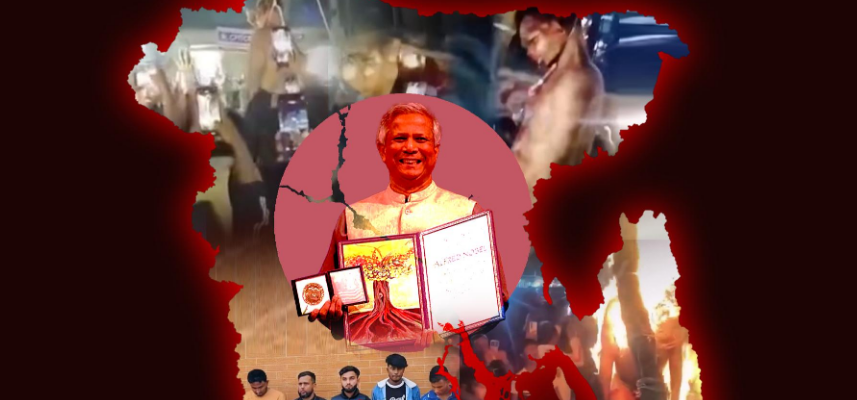
Ethnic Cleansing of Bangladeshi Hindus A Nobel Peace Prize is not a shield against scrutiny. Bangladesh’s post-August 2024 reality demands a hard, evidence-led assessment: violence against Hindus has escalated into a pattern that aligns with internationally recognised elements of ethnic cleansing. This is not a claim made lightly, nor is it built on rhetoric. It is grounded in documented indicators that appear repeatedly across historical cases, from the Balkans to Rwanda and the forced flight of Kashmiri Hindus. Our report, “Hindu Pogrom Under a Nobel Laureate’s Watch in Bangladesh,” examines what changed after the extra-constitutional transition that installed Muhammad Yunus as head of the interim administration. In the immediate aftermath of Sheikh Hasina’s ouster, Hindu homes and temples were specifically targeted, and minority families attempted to flee toward India. This is the first stage seen in many ethnic cleansing trajectories: a sudden collapse of security, followed by identity-targeted attacks that signal “you are not safe here.” Reuters reporting captured these early markers, including vandalism of Hindu temples and homes and attempted flight by minorities. Ethnic cleansing is defined less by slogans and more by method. The method in Bangladesh is visible through six elements. Forced displacement is the predictable output when a minority is subjected to sustained terror and sees no credible protection from the state. When families attempt to flee, when communities retreat into guarded enclaves, when daily life becomes a risk calculation, the displacement is no longer voluntary. It is coerced Violence and terror form the second element. The pattern includes killings by shooting, hacking, abduction, lynching, and arson. The purpose is not only to kill, but to send a message to all remaining members of the community. Dipu Chandra Das’s lynching and burning is an emblematic example of violence designed to intimidate, not merely to harm. Deliberate attacks on civilians are the third element. The victims are not combatants. They are teachers, traders, community leaders, elderly couples, workers, and youth. They are targeted in homes, workplaces, and transit routes, consistent with identity-based selection rather than incidental crime. In the first post-ouster phase, minority groups documented attacks on Hindu homes and temples across multiple districts, underscoring organised targeting rather than isolated incidents. Destruction of property is the fourth element, and it is a strategic tool. Burning homes, looting businesses, and desecrating temples do more than punish. They make return difficult, erase cultural presence, and collapse economic survival. These are classic “remove the population by destroying the conditions of life” tactics. Reuters recorded that hundreds of Hindu homes and businesses were vandalised and multiple temples damaged during the initial post-ouster violence. Confinement is the fifth element. Even without formal camps, a minority can be confined by fear. When communities self-restrict movement, rely on volunteer night-guards, and avoid public visibility, they are being functionally contained. This is how pressure accumulates until exit becomes the only perceived option. Systematic policy is the sixth element. Ethnic cleansing does not require a written decree. In many cases, it proceeds through the combination of organised extremist violence and state failure: weak protection, delayed response, denial of communal targeting, and persistent impunity. Here, the core accountability question is state responsibility. Minority groups have accused the interim government of failing to protect Hindus, and the Yunus administration has denied those allegations. Denial, in the presence of repeated identity-targeted attacks, is not neutrality. It is an enabling posture. This is where the Yunus interim administration becomes central. The issue is not whether Yunus personally directs each assault. The issue is whether the state under his leadership has fulfilled its duty to prevent, protect, investigate, prosecute, and deter identity-based violence. When the outcome is repeated killings, recurring temple attacks, widespread property destruction, and the steady tightening of fear around a minority community, responsibility does not stop at the street-level perpetrator. It rises to the governing authority. The report also examines the role of Islamist forces operating in the current environment. Independent reporting notes that hardline Islamist actors have become more visible and influential since the fall of Hasina. This matters because ethnic cleansing campaigns typically require both ideological mobilisation and operational impunity: a narrative that dehumanises the target, and a system that fails to punish the perpetrators. Bangladesh is at a decision point. It can either reassert protection for all citizens and rebuild the rule of law, or drift toward a majoritarian model where minorities survive only as tolerated remnants. The world has seen this script before. The lesson from Rwanda and the Balkans is that early warning indicators are not “political noise.” They are the architecture of atrocity. What is required now is not performative condemnation. It is measurable action: robust protection for minority localities, transparent investigations, prosecutions that reach organisers and inciters, disruption of extremist mobilisation networks, and independent monitoring that makes denial impossible. Without these steps, the pattern described in our report will continue to harden. The Nobel label does not change the facts on the ground. The responsibility of the interim government is to stop the trajectory. If it cannot, it must be treated internationally as enabling an ethnic cleansing process by omission, denial, and impunity.

Read More
Khalistani-Jamaat Joint Operations amid Minority Killings in Bangladesh

Situational Analysis: Khalistani-Jamaat Joint Operations amid Minority Killings in Bangladesh

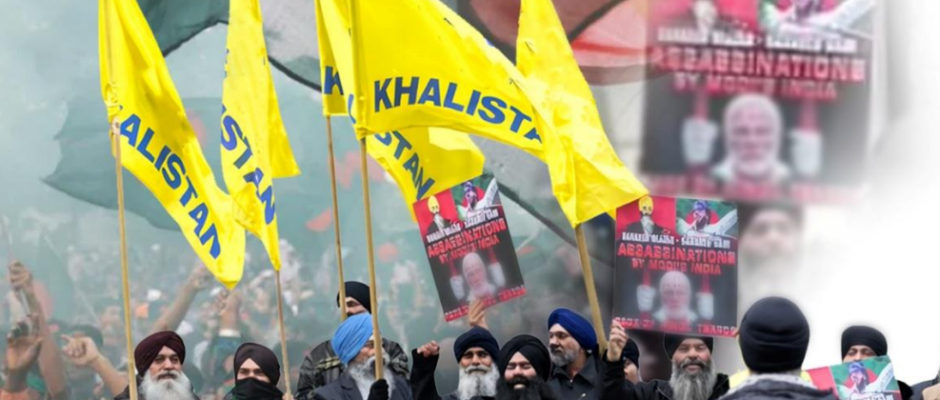
Khalistani support for Islamist-linked violence and minority killings in Bangladesh, and the appearance of anti-Hindu and anti-India sloganeering outside the Bangladesh High Commission in London, reiterate that this is not simply a local Western “public order” problem. It is foreign territory being utilised as an outward-facing theatre for a Pakistan-rooted, anti-India orientation, where street spectacle and digital amplification do the work of deniable pressure.

Read More
A Civilisational Reawakening in 1943

A Civilisational Reawakening in 1943

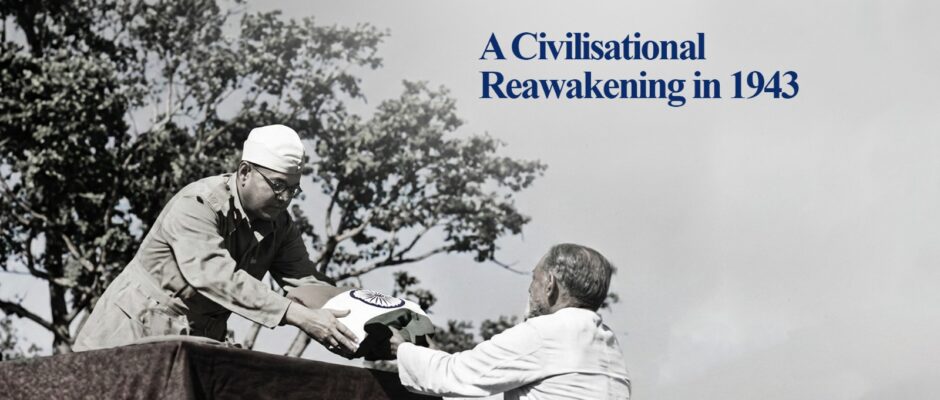
CIHS Desk On the morning of 30 December 1943, Netaji Subhas Chandra Bose fulfilled his vow, he hoisted the tricolour at Port Blair. This was no ritual gesture but a declaration that the soul of Bharat had arisen. Under Bose’s leadership of the Azad Hind Fauj, the Andaman and Nicobar Islands were liberated from British colonial occupation. The solemn Cellular Jail, long the symbol of British cruelty, now looked on as its jailors empire began to crumble. The flag fluttering at Netaji Stadium (then the Gymkhana Ground) proclaimed that India’s freedom was no longer a distant dream, it was being claimed here and now. In mid-1943, Bose had already proclaimed the Azad Hind Sarkar, India’s first provisional government in Singapore. He made clear that this was not a symbolic cabinet-in-exile, but a strategic, ideological and military assertion of India’s right to self-rule. The INA raised its own treasury and even issued stamps and currency under Bose’s tricolour, signaling real statehood. India’s freedom struggle had transformed into a true war of liberation. Bose explicitly rejected petitions and half-measures: “India would fight for her freedom not through pleas or petitions, but through armed struggle and sacrifice,” he declared. In his words, the Azad Hind Government was “the Government of the free Indians… representing the will of the entire Indian people”. This fiery claim of sovereignty stunned the colonial occupiers. By late 1943, even a Japanese handover made Port Blair and nearby islands the first piece of Indian soil “freed from British rule.” On 30 December itself, Bose stood before a crowd of freedom-loving Andamanis. With pride and resolve he unfurled the tricolour at the very spot where countless patriots like Vinayak Damodar Savarkar had once been tortured. The effect was electric. In a speech charged with the fervor of Bharat Mata, Bose invoked the martyrs of the Cellular Jail, comparing its gates opening to the fall of the Bastille in France, and consecrated the day as one of liberation. He renamed the Andaman’s as  Shaheed Dweep (Martyr’s Island) and the Nicobar’s as Swaraj Dweep (Self-Rule Island), dedicating them to the memory of India’s sacrificed heroes. This was more than pageantry, the tricolour rising there “symbolised not just the freedom of the islands but the resurgence of India’s spirit”. The colonial empire understood the message: Indians had moved from petitions to power, and Britain’s colonial story was broken. Bose’s act proclaimed that India would seize its destiny “through determination, sacrifice, disciplined action and uncompromising courage,” not through British concession. 30 December 1943 therefore must be remembered not as a footnote, but as a defining assertion of Bharat’s civilizational will. On that day, Netaji, born of a family steeped in patriotism,  rekindled the ancient flame of Bharat’s freedom. The raising of the tricolour at Port Blair stands as a witness that India’s independence was not granted but earned, seized by heroes who embodied the country’s spiritual resilience. This is the legacy of that day, a story of national awakening that resonates with the soul of Bharat.

Read More

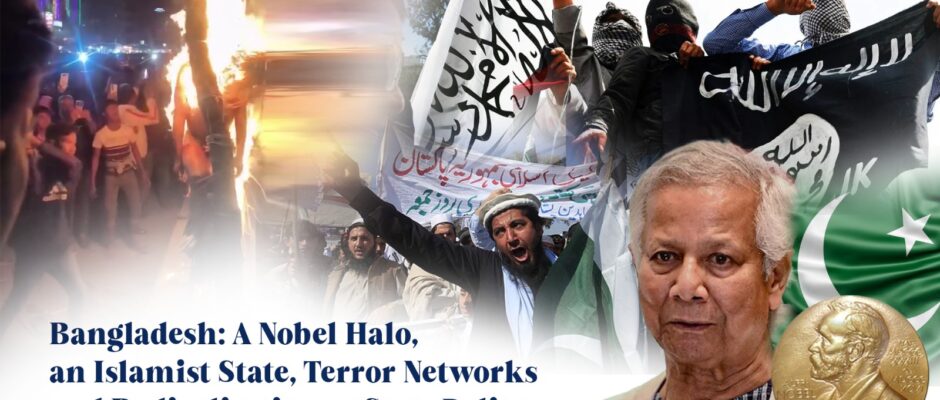
Bangladesh: A Nobel Halo, an Islamist State,Terror Networks and Radicalisation as State Policy

Rahul PAWA | @imrahulpawa (X) Global jihadists see an opening: a chance to reconnect their Pakistani networks with Bangladeshi extremists, reversing years of counterterrorism and counter-radicalisation gains. On a mid-December night in Bangladesh, 25-year-old Dipu Chandra Das, a Hindu garment factory worker was beaten by a frenzy of Islamists, hung from a tree, and set ablaze on a highway. His alleged “crime”? A rumor that he insulted Islam. Yet investigators have since confirmed there is zero evidence that Dipu ever blasphemed at all. Not one can point to a single derogatory remark he made; “no one saw or heard” anything offensive, a Rapid Action Battalion officer admitted. In other words, an innocent Hindu man was lynched and immolated over a lie. One would expect such a medieval atrocity, captured on video and circulated worldwide, to provoke an outpouring of shock from international human rights watchdogs. Imagine if the roles were reversed: a Muslim man lynched and burned by a mob in a Hindu-majority country. The global indignation would be instantaneous and deafening. But in Dipu’s case, the outrage has been oddly muted. Major human rights organizations and Western governments that normally champion minority rights barely mustered a whisper of protest. The deafening silence of these supposed watchdogs is as harrowing as the crime itself, and it exposes a disturbing double standard. Bangladesh’s own minority rights groups vehemently condemned the lynching, the Bangladesh Hindu-Buddhist-Christian Unity Council decried the “so-called blasphemy” killing as an assault on communal harmony. But where were the urgent press releases from Geneva, the high-profile tweets from Human Rights Watch, the emergency sessions at the UN? Their voices have been either absent or astonishingly subdued. Such restraint stands in stark contrast to their usual activism when religious persecution occurs elsewhere. The message implicit in this silence is chilling: that the lynching of a poor Hindu man in Bangladesh is somehow a lesser transgression on the global human rights ledger. The hypocrisy extends to Bangladesh’s interim rulers. The current government, led by Nobel Peace laureate Muhammad Yunus, swept to power in August 2024 after a Islamist-led “Monsoon Revolution” toppled Sheikh Hasina’s democratically elected administration. Internationally, Yunus is venerated for championing human rights and equality. Domestically, his regime’s actions tell a darker story. Chief Adviser Yunus was quick to issue a condemnation of Dipu’s lynching, vowing the perpetrators “will not be spared”. However, such words ring hollow against the regime’s track record: while it denounces one mob killing, it has concurrently overseen the release or escape of hundreds of criminals and Islamist extremists since taking power. At Hadi’s funeral, Yunus himself delivered a eulogy that should have set off international alarm bells. In front of tens of thousands, Yunus heaped praise on Hadi’s “mantra” and vowed to fulfill Hadi’s vision “generation after generation”. Let’s be clear: Hadi was explicitly known for his anti-India and anti-Hindu rhetoric and polarising, Islamist-tinged politics. By publicly sanctifying Hadi’s ideals, Yunus sent a dangerous signal that anti-India and anti-Hindu dictate is now quasi-official ideology in Dhaka. Unsurprisingly, the fallout was swift. Days after Hadi’s death, Bangladesh erupted in fury, not just against alleged conspirators in his killing, but against perceived Indian influence. Mobs attacked the Indian Assistant High Commission in Chittagong, and hundreds of protesters marched on the Indian High Commission in Dhaka, chanting anti-India slogans and even hurling stones at diplomatic compounds. Bangladesh’s police hinted (without evidence) that Hadi’s assassins might have fled to India – where ex-PM Hasina has taken refuge – a claim that only inflamed public paranoia. In the frenzy, fact and fiction mattered little: ‘anti-India and anti-Hindu agenda’ was the rallying cry. Caught in the crossfire were Bangladesh’s Hindu minorities, now doubly scapegoated as both “blasphemers” at home and perceived fifth-columnists for India. Attacks on Hindu homes, temples and community leaders have spiked over the past year and a half. Even before Dipu Das’s lynching, minority groups warned that the post-Hasina political climate had emboldened extremists to settle scores with Hindus, Buddhists and Christians. Tragically, those warnings proved prescient in Bhaluka, Mymensingh, when Dipu’s killers exploited a religious rumor to unleash lethal mob “justice.” Police and RAB have detained ten suspects, Mohammad Limon Sarkar, Mohammad Tarek Hossain, Mohammad Manik Mia, Ershad Ali, Nijum Uddin, Alomgir Hossain, Mohammad Miraj Hossain Akon, Mohammad Azmol Hasan Sagir, Mohammad Shahin Mia, and Mohammad Nazmul, aged 19 to 46. The interim regime’s, especially Mohammad Yunis’s own actions, from baiting an anti-Indian agitator to allowing Islamist hardliners back into public life, have fertilised the soil in which Islamist extremism and radicalisation grows. Perhaps most cynical of all has been the Bangladesh Foreign Ministry’s complicity and the atrocious attempt to downplay these horrors. When India officially protested the mob killing of a Hindu Bangladeshi (and even a small peoples demonstration in New Delhi decrying it), Dhaka’s response was dismissive. Foreign Affairs Adviser Mohammad Touhid Hossain bristled at the notion that Dipu Das’s lynching had anything to do with minority targeting. He then lectured that “such incidents occur across the region” and every country has a responsibility to address themas if mob lynching and immolation of religious minorities is just business as usual in South Asia, nothing special. This whataboutist shrug is nothing short of an attempt to normalise hate crimes. By equating a communal lynching with generic law-and-order problems everywhere, Bangladesh’s officials signal that the brutal murder of a Hindu for an unproven slur is not a national emergency but a routine matter that merits no extra soul-searching. This attitude is profoundly dangerous. Bangladesh was founded on principles of secularism and communal harmony in 1971, a legacy now under siege. To shrug off anti-Hindu violence as “common in the region” is to abandon the very idea of a pluralistic Bangladesh. It emboldens extremists and tells persecuted minorities that they are essentially on their own. Indeed, Islamist radicals have heard the message loud and clear. With the new regime’s indulgence, dormant terrorist networks are roaring back to life. Key jihadist leaders have re-entered the fray, for example,

Read More
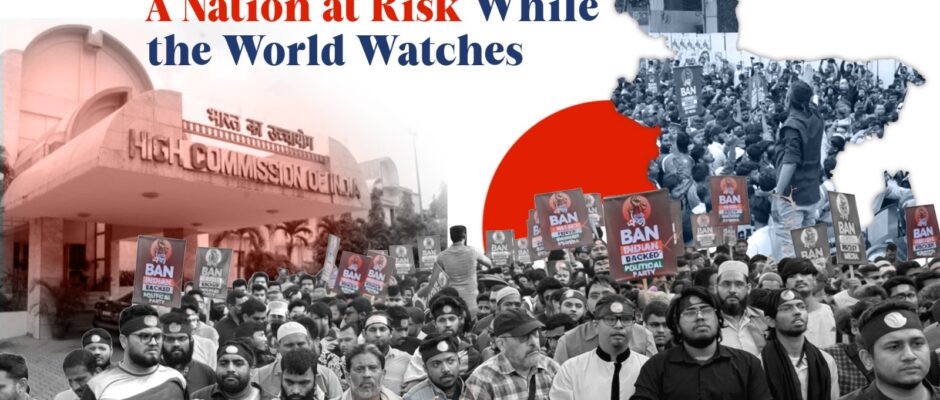
A Nation at Risk While the World Watches

A Nation at Risk While the World Watches

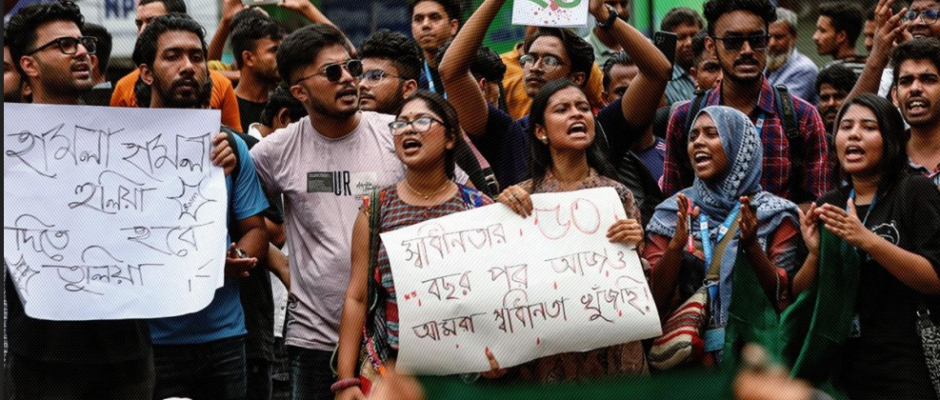
By R K Raina The events that unfolded in Dhaka this week should end any remaining illusion that Bangladesh’s current political drift is a contained or internal matter. On Wednesday afternoon, hundreds of protesters marched towards the Indian High Commission under the banner of July Oikya, raising anti-India slogans and issuing open threats against a diplomatic mission. Police restraint prevented immediate escalation, but the message was unmistakable: radical forces now feel emboldened enough to challenge diplomatic norms in broad daylight. The protest was not spontaneous. July Oikya, a front comprising several groups linked to the July mass uprising, had announced its “March to Indian High Commission” in advance. Its leaders warned that they would forcibly enter the High Commission if their demands were not met. These included the return of individuals convicted in the so-called July massacre case, including former Prime Minister Sheikh Hasina, and an end to what they described as “Indian conspiracies” against Bangladesh. Such rhetoric mirrors the familiar language of Islamist mobilisation across the region, where external enemies are invoked to justify internal radicalisation. What makes this incident especially alarming is not merely the hostility directed at India, but the broader political context in which it occurred. Several fundamentalist and extremist figures, previously detained on terrorism-related charges, have been released in recent months under the current interim administration. Many of these elements are now active on the streets, shaping protest narratives and openly threatening foreign missions. This is not accidental. It is the predictable outcome of legitimising radical actors under the pretext of political transition. Threatening a foreign high commission violates the most basic norms of the diplomatic community. When such acts are tolerated, or downplayed as expressions of popular anger, the consequences extend far beyond bilateral relations. They signal a breakdown of state authority and a willingness to allow extremist mobilisation to dictate political space. This moment must be understood within Bangladesh’s longer historical arc. The country was born in 1971 as a rejection of Pakistan’s ideological model. Bengali nationalism asserted that language, culture and democratic choice mattered more than religious uniformity imposed by the state. Sheikh Mujibur Rahman articulated this vision decades earlier, insisting that Bengal’s history and identity could not be erased. That vision guided Bangladesh through its most successful periods of economic growth and social stability. The forces now gaining ground stand in direct opposition to that legacy. Pakistan’s role in this trajectory is being conspicuously ignored. Since 1971, Islamabad has never reconciled itself to the idea of a secular, culturally confident Bangladesh. Its historical hostility to Bengali identity culminated in genocide, and its ideological influence has since flowed through organisations that opposed Bangladesh’s independence. Jamaat-e-Islami, banned for its collaboration with Pakistan during the liberation war and now politically rehabilitated, remains the clearest example. Its ideological alignment with Pakistan is neither incidental nor historical trivia; it is central to the current moment. Yet while these forces resurface, much of the  world has chosen silence. Worse, some have framed recent developments as a domestic political correction, urging restraint while avoiding any serious engagement with the ideological direction Bangladesh is being pushed towards. Treating the rise of radical street power, the intimidation of diplomatic missions and the release of extremist figures as internal matters is not neutrality. It is abdication. This selective blindness sets a dangerous precedent. Terrorism, it appears, is being judged differently depending on the target and the geography. Threats against Indian diplomatic property are brushed aside, while the same actors would be condemned instantly if they appeared near other embassies. Such double standards undermine the very international norms. The regional consequences are serious. South Asia is already burdened by fragile borders, unresolved conflicts and ideological fault lines. Allowing Bangladesh to slide towards Pakistan-style politics, marked by street radicalism, ideological hostility and economic uncertainty, risks destabilising an entire neighbourhood. The early economic signals are already troubling. Political instability and radical mobilisation have begun to erode confidence in what was once one of Asia’s most promising growth stories. Equally at stake is Bangladesh’s cultural future. The sustained assault on symbols of the liberation movement, and the replacement of Bengali nationalism with political Islam represent an attempt to rewrite the country’s founding narrative. History shows that such projects do not end with symbolism. They reshape education, law and social norms, often irreversibly. World policymakers should be under no illusion. Pakistan itself is a case study in how tolerating or enabling radical forces for short-term stability leads to long-term dysfunction. Decades of engagement have failed to undo the damage caused by ideological capture of the state. To allow Bangladesh to move down the same path is not a policy error; it is a strategic failure. The warning signs today are far clearer. Threats to diplomatic missions, the release of extremists and the open mobilisation of radical fronts are not normal features of democratic transition. They are indicators of state erosion. If the world continues to look away, it will share responsibility for what follows. The erosion of peace in this region, the empowerment of extremist networks and the slow destruction of Bengali cultural identity will not remain confined within Bangladesh’s borders. Silence, in this case, is not caution. It is complicity. (Author is a former diplomat and policy commentator focused on South Asian geopolitics, Tibet and India’s neighbourhood. He contributes to leading think tanks and policy platforms on regional and civilisational issues.)

Read More
1971 Genocide and the Unhealed Scars of Bangladesh

1971 Genocide and the Unhealed Scars of Bangladesh

Bangladesh may paper over its wounds one by one, but the scars of systematic genocide during 1971 Bangladesh Liberation War will remain permanent.  Pummy M. Pandita The 1971 Bangladesh Liberation War was marked by a systematic campaign of genocide carried out by the Pakistan Army and its supporting forces, Razakars, against the Bengali population, pro-independence activists, intellectuals and civilians. The Razakar Force, officially established by the Pakistan Army under the command of General Tikka Khan and acknowledged as a proxy paramilitary entity, was pivotal in the perpetration of these offenses at the direct command from Pakistan. More than fifty years post-independence, Bangladesh persistently pursued international acknowledgment and a formal apology from Pakistan; however, these requests remain unmet. The enduring impact of violence and denial has resulted in lasting sociopolitical wounds that continue to manifest in both domestic and diplomatic contexts. Established pursuant to the East Pakistan Razakars Ordinance issued in August 1971, this militia group was intentionally created to serve as a local support mechanism for Pakistan’s counter-insurgency efforts against the Bengalis of erstwhile East Pakistan. The establishment and functioning of this militia group were crucial to the genocidal tactics employed by the military leadership of Pakistan in order to stifle the aspirations for independence from Pakistan. The contingent comprised roughly 50,000 volunteers, primarily sourced from Islamist groupings in Pakistan political groups including Jamaat-e-Islami, Al Badr, Al Shams and others that resisted Bengali autonomy. In stark contrast to purported accounts, the Razakars were not merely engaged in “internal security” operations; they were complicit in heinous acts of mass murder, sexual violence, torture and terror directed at civilians, with a particular focus on Hindu communities, political dissidents, scholars and advocates for independence from Pakistan. After the Bangladesh Liberation War of 1971, approximately 200,000 women and girls, predominantly Hindus, were raped by the Pakistani Army and its allied proxies (Razakars). These heinous acts were part of an effort to create a “pure” Muslim race in Bangladesh. The targeting of Hindu women has continued, with sexual violence being used to intimidate and displace Hindu families.  Multiple thoroughly recorded massacres during 1971 by Razakars alongside the Pakistan Army, encompassing extensive killings in Jathibhanga (approximately 3,000–3,500 victims), Gabha Narerkathi (95–100 Hindu victims), Akhira and Char Bhadrasan, among others, each exemplifying methodical assaults on defenseless populations. In December 2019, almost fifty years post Bangladeshi independence, the Government of Bangladesh released an official enumeration of 10,789 individuals recognized as Razakars, a clear initiative to identify and document those who supported the Pakistan Army’s operations against the Bengali population. The aim was to guarantee that future generations retain awareness of the genuine perpetrators of violence and treason, opposing any efforts to obscure or sanitise this historical narrative. Notwithstanding these actions, the pursuit of justice remains unfulfilled and the scars of history endure. The lack of an official apology transcends mere diplomatic obstruction; it signifies a refusal to acknowledge historical responsibility, thereby exacerbating the anguish of survivors, the families of victims and the broader communities deeply affected by the events of 1971. For a significant segment of Bangladeshi society, especially among Hindu communities that were disproportionately targeted, the ongoing lack of recognition constitutes not merely an omission but a deliberate erasure. It denies victims and survivors both justice and historical recognition, making their suffering invisible and original crimes even worse. This silence reinforces impunity, invalidates experienced trauma and indicates a systemic reluctance to address the violence perpetrated by Razakars and Pakistan Army against these communities. The Razakar legacy stands as a profound and enduring mark in the collective consciousness of Bangladesh, serving as a proof to the genocidal tactics employed by the Pakistan Army and its accomplices. It highlights the necessity for healing from mass atrocities, which hinges on the pursuit of truth and formal accountability, elements that cannot be fully achieved without clear recognition and apology from those who hold historical responsibility. The plight of Hindu communities in present-day Bangladesh finds its roots in the tragic events of the 1971 Liberation War and this suffering has persisted in a sporadic manner throughout the subsequent decades. In the year 1971, the Pakistan Army, in conjunction with the Razakars, engaged in state-sanctioned violence that resulted in widespread atrocities, including mass killings, sexual violence and the deliberate persecution of the Hindu community as a distinct religious group. The immediate consequences resulted in significant refugee movements and a sustained demographic reduction of Hindus in Bangladesh. Since the attainment of independence from Pakistan, there has been a recurring pattern of communal violence, biased governance practices, assaults on property and places of worship and a prevailing sense of impunity for those who commit such acts. This troubling trend has notably escalated during periods of political instability in 2024–25, resulting in cycles characterised by fear, displacement and the erosion of rights. Historical context: targeted violence in 1971 “Operation Searchlight” on March 25, 1971, started the Bangladesh Liberation War, which lasted from March to December 1971. The campaign conducted by the Pakistan military specifically aimed at Bengali freedom fighters, scholars, students and, with notable intensity, Hindu civilians. Recent and ongoing research show that there were coordinated mass executions, gang rapes used as weapons against women (especially Hindu women) and communal cleansing in towns and rural areas where Hindus lived. Independent scholarly reviews, government compilations of incident reports and survivor testimonies delineate massacres nationwide, enumerating particular incidents with substantial civilian casualties. Scholars and post-war accounts emphasise that although Bengalis were the primary targets, Hindus were subjected to extreme brutality due to their perceived political and cultural alignment with India and the Bengali freedom struggle. The ongoing vulnerability of Hindu communities in Bangladesh from 1972 to 2024 has been perpetuated by a combination of systemic impunity, inadequate legal accountability and politicised justice. Post 1971 period promised justice, but convictions for war crimes were few and far between, allowing many criminals and their networks to become part of local power structures again. Even when accountability mechanisms like the International Crimes Tribunal were used, the idea and practice of

Read More

An introduction to Rashtriya Swayamsevak Sangh (RSS)

As the Rashtriya Swayamsevak Sangh (RSS) enters its centennial year, we present “An introduction to Rashtriya Swayamsevak Sangh (RSS)” a primer on RSS’s origins, ethos, and impact. From daily shakhas and disciplined selfless volunteerism to nationwide seva initiatives in education, social harmony, environment, and disaster relief, this primer shows how character-building and community leadership translate into nation-building. Explore the milestones, the organisational cadence, and the living culture that has impacted social life across Bharat for a hundred years and continues to do so with purpose.

Read More
100 Years’ Journey of RSS: New Horizons

100 Years’ Journey of RSS: New Horizons

As the Rashtriya Swayamsevak Sangh enters its Centenary Year, a special 3-day lecture and interaction series of “100 Years’ Journey of RSS: New Horizons” was organised at Vigyan Bhawan, New Delhi, from 26–28 August 2025. The event, marked by thoughtful deliberations and inspiring addresses, brought together swayamsevaks, intellectuals, foreign dignitaries from more than 20 countries viz., US, UK, Russia, China, Germany, Japan, Australia, Nepal, Sri Lanka, Argentina, Malaysia, Indonesia, New Zealand, Uzbekistan, ⁠Kazakistan, Denmark, ⁠ Isreal, (to name a few), foreign media viz., BBC, AFP, DW, Sputnik, Reuters, NYT, WSJ, Kyodo News and many others, to look back and see the future. Sarsanghchalak, Dr. Mohan Bhagwat Ji, in his keynote address presented a deep insight into the Sangh’s journey since 1925. He brought before the gathering the fact that the Sangh had not been born due to some passing cause, but due to a timeless civilisational requirement, to cultivate character, cohesion, and service in society. He noted that whereas Sangh’s first one hundred years have been committed to establishing a robust infrastructure and national consciousness, the coming century will require newer models of involvement in the areas of education, technology, nature, culture, and international discoursed. During the three days, there were thematic sessions discussing crucial aspects of the Sangh’s contribution: Nation First and Social Harmony, Civilisational Continuity in a Changing World, and Empowering Communities for Self-Reliant Bharat. Representatives from various walks of life deliberated on how the Sangh’s quiet and consistent efforts in villages, towns, and cities have brought up a generation with sanskars and with the confidence to tackle contemporary issues. The exchanges brought out one shared spirit: that the 100-year RSS pilgrimage is not so much a history of expansion, but a living witness to the dynamism of selfless service and cultural consciousness. As Sangh embarks on its second century, the challenge is to widen horizons, adopting inclusiveness, innovativeness, and greater social connect, yet staying rooted in the fundamental vision of ekatmata, sewa, aur rashtra-nirman (unity, service, and nation-building). Three day event at Vigyan Bhawan ended with a fresh commitment, that the Centenary of RSS will not only marks a glorious past but also plant the seeds of a brighter, harmonious, and self-assured Bharat for the future generations. “Sanghachhadhwam, Samvadadhwam, Sam Vo Manamsi Janatam” (Let us move together, let us speak together, let our minds be in harmony.) — Rig Veda

Read More
Open-source intelligence (OSINT) reveals that the Savera coalition and the groups that countersigned its 10 July 2025 letter are not a loose assortment of concerned New Yorkers; they constitute a disciplined advocacy network that fuses three streams of ideologies: 1. U.S.–based Muslim-Brotherhood-adjacent infrastructure led by CAIR-NY and the Indian American Muslim Council (IAMC); 2. A newly-minted “progressive-Hindu” and anti-caste façade (Hindus for Human Rights, Ambedkar King Study Circle, Dalit Solidarity Forum) that supplies anti-Hindu normalisation; 3. Legacy left-wing, church and labour partners (e.g. The Riverside Church, Rabbis for Ceasefire, ASAAL, DRUM) that amplify messaging inside “legacy left wing circles” circles. These entities repeatedly collaborate under banners such as Reclaiming India and the Alliance for Justice & Accountability, run coordinated social-media campaigns, and target three policy nodes in Washington: Congress, USCIRF and the State Department. Their operational goal is to brand Indian government positions, and increasingly mainstream Hindu events in America, as “supremacist”, thereby normalising an equivalence between Hindutva and violent extremism. While most are registered 501(c) organisations, multiple red-flag indicators emerge: historic Hamas-related designations (CAIR), documented Jamaat-e-Islami overlaps (IAMC), Soros-funded BDS-style campaigning now redirected from Israel to India (HfHR), opaque fiscal disclosures, and revolving-door leadership across the network. The pattern warrants Treasury, DOJ and IRS scrutiny for potential FARA non-compliance, foreign in-kind support and grant-making that masquerades as purely humanitarian work.

Understanding Savera, 31 co-signatories that petitioned Mayor Eric Adams

Open-source intelligence (OSINT) reveals that the Savera coalition and the groups that countersigned its 10 July 2025 letter are not a loose assortment of concerned New Yorkers; they constitute a disciplined advocacy network that fuses three streams of ideologies: These entities repeatedly collaborate under banners such as Reclaiming India and the Alliance for Justice & Accountability, run coordinated social-media campaigns, and target three policy nodes in Washington: Congress, USCIRF and the State Department. Their operational goal is to brand Indian government positions, and increasingly mainstream Hindu events in America, as “supremacist”, thereby normalising an equivalence between Hindutva and violent extremism. While most are registered 501(c) organisations, multiple red-flag indicators emerge: historic Hamas-related designations (CAIR), documented Jamaat-e-Islami overlaps (IAMC), Soros-funded BDS-style campaigning now redirected from Israel to India (HfHR), opaque fiscal disclosures, and revolving-door leadership across the network. The pattern warrants Treasury, DOJ and IRS scrutiny for potential FARA non-compliance, foreign in-kind support and grant-making that masquerades as purely humanitarian work.

Read More