CIHS – Centre for Integrated and Holistic Studies

Date/Time:

Situational Analysis - Geopolitics, Hindu Hate, Islamisation and Decay of Democracy in Bangladesh

Situational Analysis – Geopolitics, Hindu Hate, Islamisation and Decay of Democracy in Bangladesh

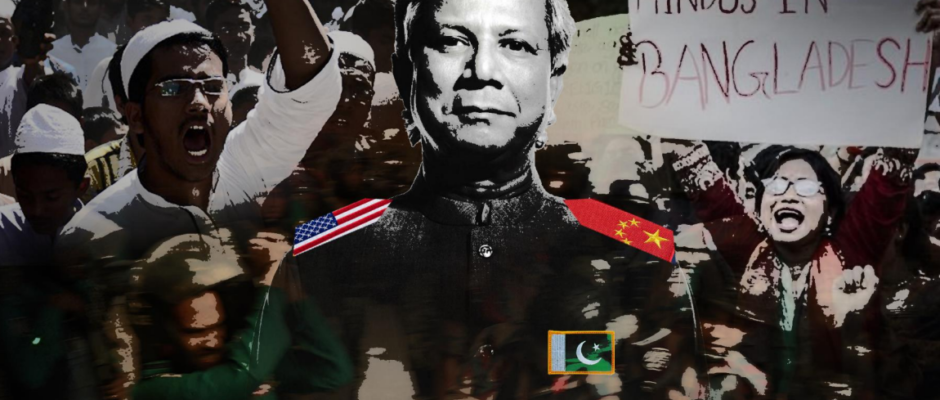
Decay of Democracy in Bangladesh Bangladesh faces a dangerous convergence of Islamic resurgence, targeted minority persecution, and democratic regression. This situational analysis explores convergence of internal unrest and external influence, especially through narrative warfare and strategic alignments, which has accelerated the deterioration of democratic governance and encouraged radical elements in the post-2024 scenario. For more details…….

Read More
Indian Nationalism is Not What the West Thinks

Indian Nationalism is Not What the West Thinks

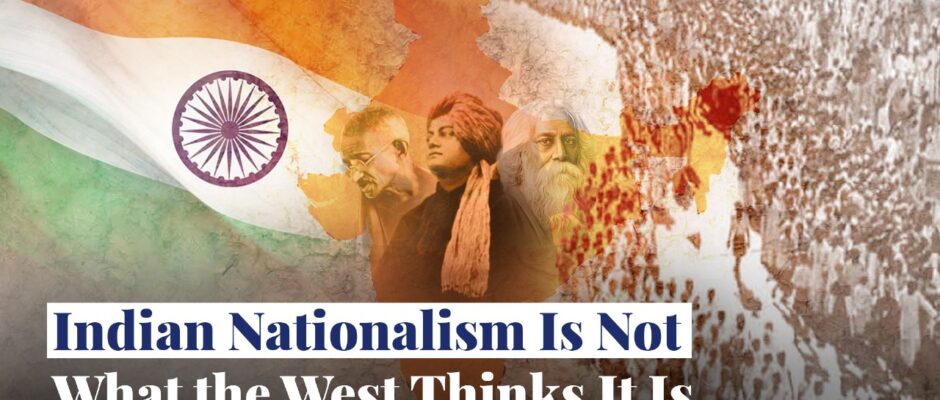
S Gurumurthy In a world fractured by power-hungry nationalism, often conjures images of military marches, border skirmishes, and ideological superiority, Indian idea of nationalism offers something radically different; a quiet, profound alternative rooted not in might but in meaning. It is not a nationalism that thunders from podiums; it is one that whispers from the soul. To truly understand India is to move beyond the tired paradigms of statehood and territory and to encounter a living, breathing civilisational rhythm; a spiritual consciousness that predates borders, flags, and constitutions. While Europe’s idea of nationalism was born through the ambitions of kings, forged in the crucible of wars, territorial conquests, royal marriages, and political unions which anchored in bloodshed and violence, gave nationalism itself a bad name, an order that civilised societies eventually began to distrust. It was nationalism by force. Whereas India’s nationalism is fundamentally different. It is not manufactured by power but nurtured by spirit. It is not imposed from above but arises from below, from saints, seers, philosophers, and common people who lived and preached peace, harmony, and unity across vast diversity. It is not territorial or military nationalism; it is civilisational nationalism. Hawaii University’s Professor Rammal R.J. conducted a study tracing 2,500 years of global violence, estimating that human beings have slaughtered between 680 million and 1.2 billion of their own kind. His maps and data revealed that the only geography untouched by large-scale violence until the 13th century was Bharat (India). While empires rose and fell in blood across continents, what preserved peace in India? It wasn’t statecraft or the sword. It was the silent, persistent work of sages and saints who cultivated a culture of coexistence, despite caste, creed, region, or religion. This is the only land where 33 crore Gods could exist in a single civilisation, where multiple ways of worship never fractured the social fabric. In contrast, the belief in one God elsewhere often created more divisions and violence than unity; wars were fought, lands were colonised, and people were exterminated in the name of “my god vs. your god.” This ethos, this capacity to live with contradiction and diversity, is the core of Indian nationalism. As one Swiss professor observed, India uniquely teaches how to live with differences of gods, languages, customs, and philosophies. This acceptance is the core of Indian nationalism. Ashoka’s war, the only major violent conflict considered “adharmic” in Indian history, was not celebrated but condemned. Indian consciousness was never at ease with conquest. It is this spiritual depth that Swami Vivekananda called the foundation of India’s unity. He proclaimed that India was a “union of hearts” beating to a shared spiritual rhythm, not a mechanical union imposed by administration or army. Maharishi Aurobindo, in his 1909 Uttarpara Speech, went further: “Sanatana Dharma is nationalism… With it, the Hindu nation was born. With it, it grows. If Sanatana Dharma declines, the nation declines. If it perishes, the nation perishes.” Even Mahatma Gandhi, often secularised in public memory, grounded his freedom struggle in this deeper idea of India. In his 1909 dialogue, Hind Swaraj captures his deep faith in India’s pre-colonial unity. When asked whether British railways, posts, and courts made India one nation, he responded: “We were one nation before they came… One thought inspired us; our mode of life was the same… What do you think our ancestors intended when they established Rameshwaram in the south, Jagannath in the east, and Haridwar in the north as places of pilgrimage?” This network of pilgrimages was India’s grassroots federation, uniting diverse peoples in a sacred geography: Punya Bhoomi, Karma Bhoomi, and Moksha Bhoomi. Unknown to most, Gandhi also invited Naga Sadhus to the 1920 Nagpur Congress session. The British were alarmed. Secret colonial documents noted that if saints and farmers united, the British Raj would collapse. That is why Gandhi dressed like a fakir because Indian nationalism was not bureaucratic but spiritual. Where European nations had to be artificially forged, with national languages and bureaucratic unity imposed after unification, India never needed that. It was always a living civilisation, not broken statues or forgotten scripts, but a lived experience. As Vivekananda famously said, unlike Greek or Roman ruins, Indian civilisation breathes even today in the lives of its people. This continuity was not preserved by emperors or parliaments but by the spiritual consciousness sustained by saints, temple traditions, and village dharma. That is why even someone arriving without preparation at the Kumbh Mela finds food, shelter, and welcome. India still lives that spirit without contracts, without government. In contrast, look at modern America. In 2020, five former U.S. Army Chiefs and six Defence Secretaries warned of a deep national fracture where Democrats and Republicans were unwilling to marry or even speak to each other. There was no shared sacredness. A Pew study revealed the stark truth: America has no sacred mountain, no sacred river, and no common sacred person. Only government institutions hold it together. In Italy, there are 30,000 canonised saints. In the U.S., just three. India, on the other hand, is a land where everything is sacred: the Ganga, the Himalayas, cows, trees, temples, sages, songs. The very soil is imbued with spiritual meaning. Even Pandit Jawaharlal Nehru also acknowledged this reality. In Glimpses of World History (1935), he wrote: “Vivekananda’s nationalism was Hindu nationalism. It had its roots in Hindu religion and culture. This was not in any way anti-Muslim or anti-anyone else.” He added, “It is not easy to draw a line between Hindu nationalism and Indian nationalism, for the two overlap.” This is not about majority vs. minority. It is about a shared civilisational memory. A memory that connects temples, tirthas, festivals, and philosophies across thousands of years and millions of hearts. In conclusion, Indian nationalism cannot be understood through Western lenses of political theory or colonial historiography. It is not “nation-state nationalism” but “civilisational dharma,” the living, breathing spiritual ethos of people who could house a thousand gods and a billion humans without losing

Read More
Pahalgam Attack - A Wake-Up Call on Global Islamist Terror

Pahalgam Attack: A Wake-Up Call on Global Islamist Terror

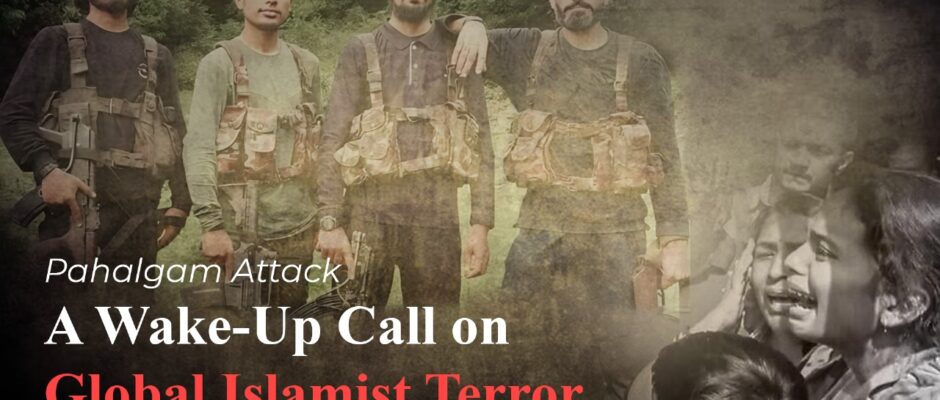
Dr. Shailendra Kumar Pathak On April 22, 2025, the tranquil hills of Baisaran near Pahalgam, Jammu and Kashmir, were torn apart by a chilling act of Islamist terrorism. In what stands as the deadliest civilian attack in the region in nearly two decades, four terrorists opened fire on a group of tourists, killing 26 people, including one Nepali citizen, and injuring over three dozen others. Eyewitnesses and digital evidence confirm this was no random shooting. Victims were asked to state their religion. Those unable to recite the Islamic Kalma were shot at close range. Among the slain was a Hindu tourist from Jaipur, whose zipline camera intended to capture his joyful ride instead recorded his last moments, and something more damning: a zipline operator shouting “Allahu Akbar” during the attack. That operator, now under interrogation, has become a critical link in the case. In another video circulating widely, a ponywala is seen asking a tourist intrusive Islamic religious questions; his face has since been matched with a suspect sketch. Investigators have identified at least 15 locals suspected of assisting the terrorists—guides, ponywalas, and support staff, allegedly feeding information on tourist movements, faith identities, and schedules. The terrorist outfit that claimed responsibility, The Resistance Front (TRF), is not an obscure entity. It is a front for Lashkar-e-Taiba (LeT), the same Pakistani group behind 2008 Mumbai attacks, 2006 train bombings, and 2001 Parliament assault. LeT is not just listed under the UN’s ISIL (Da’esh) & Al-Qaida Sanctions List as Entity QDe.118—its leader Hafiz Saeed is individually sanctioned (QDi.263) and subject to a global asset freeze and travel ban. Yet the UN Security Council’s April 25 statement on the Pahalgam attack offered nothing more than a sterilized platitude, condemning terrorism in vague terms while refusing to name the perpetrators. This is no clerical error; it is a calculated omission, an act of diplomatic cowardice. The targeting of civilians based on identity is not new. 2008 Mumbai attacks saw Jewish hostages at the Chabad House tortured before being executed. In 2015, ISIS attackers at the Paris Bataclan theatre separated Muslims from non-Muslims before slaughtering the latter. In Sri Lanka (2019), ISIS-aligned suicide bombers killed over 250 Christians during Easter Sunday services. The Normandy church attack (2016) involved a priest being murdered at the altar by Islamic extremists. In Pakistan, churches, Ahmadiyya mosques, and Hindu temples have been bombed, often with tacit state approval or outright inaction. October 7, 2023 massacre in Israel adds a stark, contemporary comparison. On that day, Hamas militants infiltrated Israeli border communities, murdering over 1,200 civilians, including women, children, and the elderly, in homes, at a music festival, and on the streets. Entire families were executed. Many victims were burned alive or taken hostage, including infants and Holocaust survivors. These attacks were not acts of war against military targets; they were ethnic-religious pogroms, carried out with ideological hatred against Jews. Multiple reports, including intercepted communications, revealed that fighters were explicitly told to “kill Jews,” not just Israelis. This ideology-driven massacre mirrors the Pahalgam killings in its intended religious cleansing, its brutality, and its celebration by supporters afterward. Back in Pahalgam, grief has turned to fury. Families of victims, especially those who lost children and spouses, have spoken out about their sense of abandonment, not just by the security failure, but by the international community’s refusal to name the attackers. Their anger is amplified by reports of local betrayal. The suspicion that those who once served tea or led treks may have helped identify targets adds a deep psychological wound to an already devastating tragedy. Investigative agencies believe this network of collaborators may have fed attackers real-time location data, ensuring maximum carnage with minimal resistance. The hypocrisy of Kashmir’s local response adds to the cynicism. While candlelight vigils were held to project an image of peace, journalists who arrived to report on the massacre were heckled, assaulted, and chased away. This duplicity, mourning in public, silencing in private—echoes the broader playbook used by Pakistan: deny, distract, deflect. For decades, Pakistan’s military intelligence (ISI) has funded, trained, and protected groups like LeT and Jaish-e-Mohammed. In case of Pahalgam, the role of Musa, a former Pakistani army commando, is of growing interest. Intelligence sources suggest Musa may have crossed over to direct operations or provide tactical training. Yet, his name is barely mentioned in international reports, a telling sign of selective attention. The UN’s refusal to name TRF or Lashkar-e-Taiba, despite overwhelming evidence and the group’s own admission, underscores a deeper rot. If the world’s premier multilateral body cannot call out named terrorists already on their own sanctions list, it sends a message: Islamist terror enjoys immunity when it wears the right diplomatic camouflage. This soft-pedaling emboldens not only the perpetrators but their state sponsors. It reduces global counterterrorism to a performative charade. And this is not an Indian problem alone. It is a global crisis. Boko Haram in Nigeria, Al-Shabaab in Kenya, ISIS in Iraq and Syria, Taliban in Afghanistan, and Pakistani-backed groups in South Asia have all deployed religious tests as tools of mass murder. Victims are asked to recite the Quran or Kalma. If they can’t, they are executed. From Christians in Sri Lanka to Yazidis in Sinjar, from Jews in Israel to Hindus in Bangladesh and Bharat, Islamist terror follows a consistent playbook: identify the non-believer, isolate them, and eliminate them. The deeper tragedy is that much of the world still treats Islamist terror as a regional irritant rather than a global ideological threat. When white supremacists commit attacks, global condemnation is swift and names are named. When Islamist terrorists do the same, often with greater frequency and casualties, responses are diluted, obfuscated, or simply censored. The idea that naming the ideology behind terror would offend communities is both condescending and dangerous. It equates faith with fanaticism, and worse, it gives cover to ideological murderers. We must confront a hard truth: the silence of global institutions, the equivocation of Western governments, and the duplicity of UN bodies like

Read More
Report: Conversion Cartels, Silent War on Bharat’s Soul

Report: Conversion Cartels, Silent War on Bharat’s Soul

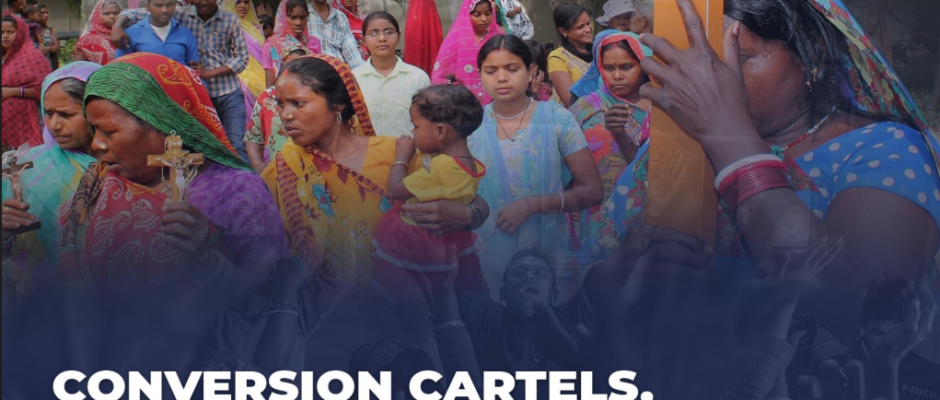
India’s dharmic landscape is witnessing significant alteration with patterns emerging that raise concerns about national security, social cohesion and sovereignty. These patterns include proliferation of churches, legal actions related to religious conversions, children rescued from missionary organizations and increased scrutiny of missionary bodies under Foreign Contribution Regulation Act (FCRA).​

Read More

Brief on Baisaran Terrorist Attack – April 22, 2025

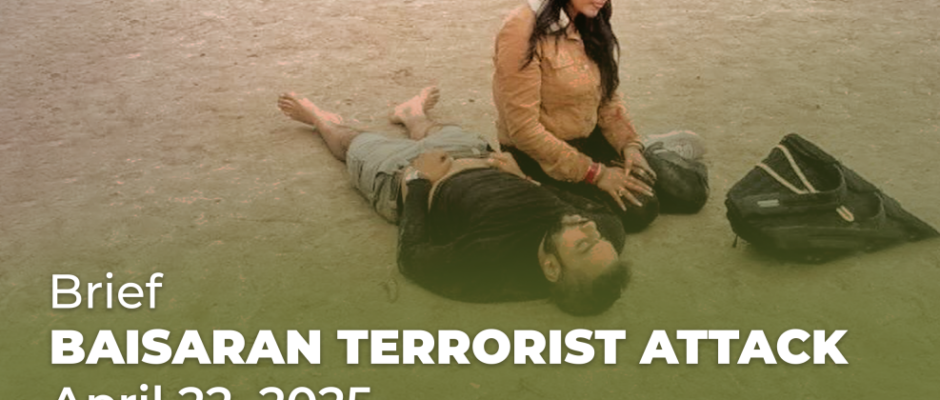
At approximately 2:30 PM on April 22, 2025, a group of terrorists opened indiscriminate fire on tourists at Baisaran meadow, some 6 km from the tourist town of Pahalgam in Anantnag district, Jammu & Kashmir. The Pakistan backed islamist terrorists exploited dense forest bordering the meadow to launch a deadly ambush on innocent tourists enjoying pony rides and foot tours of the so called ”Mini-Switzerland” claiming more than 26 lives and injuring 17 others. Our brief explains the deadly terrorist attack.

Read More
Hindus in Bangladesh Face Existential Threat

Hindus in Bangladesh Face Existential Threat

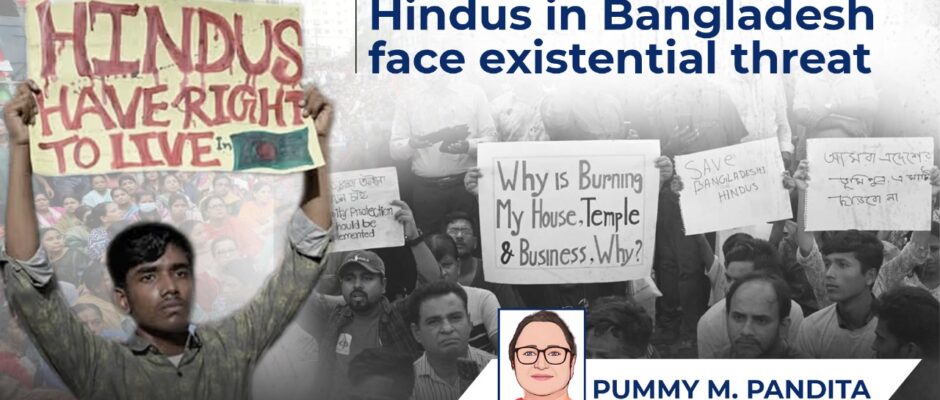
CIHS, UN reports meticulously documented atrocities against minorities while Yunus government is on denial mode. Pummy M Pandita Centre for Integrated and Holistic Studies (CIHS) had in August 2024 released a report titled “Hindu Genocide Unfolding in Bangladesh,” detailing systematic persecution of Hindus in that country. The report highlighted how minorities and in particular Hindus suffered oppression, forced conversions and violent attacks since partition of India in 1947. With the Hindu population dwindling from nearly 30 per cent in 1947 to less than 8 per cent today, the report documented the ” … ongoing ethnic cleansing.” CIHS report findings are further corroborated by United Nations Human Rights (UNHR) Office which released its own scathing report on the persecution of Hindus in Bangladesh. UN report reinforces the notion of targeted violence, displacement and systemic discrimination against Hindus, echoing concerns previously voiced by CIHS. The two reports underscore severity of crisis and the urgent need for international action. US Director of National Intelligence Tulsi Gabbard, in an interview, stated, “The long-time unfortunate persecution, killing, and abuse of religious minorities—Hindus, Buddhists, Christians, Catholics, and others—have been a major area of concern for the United States government and, of course, President Trump and his administration”. Bangladeshi however was unmoved and went on a denial mode. As per media reports, Chief Adviser’s press wing of Bangladesh’s interim government stated, “Bangladesh as a nation traditionally practices Islam that is famously inclusive and peaceful and it has made remarkable strides in its fight against extremism and terrorism.” Such response starkly contrasts the reality documented in both CIHS and UNHR reports. UNHR observations highlight a harsh reality: a systematic record of violence, displacement and persecution against a religious minority group in a state that takes pride in pluralism. This report is presented against the backdrop when rising extremism in South Asia is drawing international attention to the region and makes it acutely necessary that the situation must be evaluated factually with recourse to historical reality. Some specific incidents highlighted in the report are torching of three temples and the looting of about 20 houses in Burashardubi, Hatibandha and Lalmonirhat. UN report identifies these attacks to factors like religious and ethnic discrimination, targeted attacks on supposed supporters of former Awami League government among minorities, local communal land disputes, and personal conflicts. It also mentions involvement of some members and supporters of Jamaat-e-Islami and Bangladesh Nationalist Party (BNP) in perpetuating violence. Even after initial denials, Bangladesh’s interim caretaker government admitted at least 88 incidents of violence against minorities, predominantly Hindus, after August 2024. These happenings have raised significant concerns both within the country and globally, emphasizing urgent need for effective measures to protect minority communities in Bangladesh. Bangladesh has witnessed a considerable increase in widespread violence erupted following the ousting of former Prime Minister Sheikh Hasina in August 2024, disproportionately affecting Hindu minorities.  UN report documents that Hindu homes, businesses and temples were targeted on a systematic basis particularly in rural and historically tense areas. Some of the notable incidents include: Violence was not limited to these districts only. Other districts viz., Feni, Patuakhali, and Moulvibazar, also reported heinous crimes such as arson attacks on temples and brutal murder of Hindu individuals. These assaults, involving property destruction, arson and direct physical threats often exacerbated by inadequate police response suggest institutional impunity and perhaps political motivations.  UN Report states that there are several Bangladeshi localities which have emerged as hotspots of anti-Hindu attacks. The incidents recorded in report: The report documents these attacks with descriptions of victims, as verified by independent human rights groups. It is disturbing to record that police responses have been tardy or ineffective, permitting perpetrators to operate with impunity. The magnitude of the atrocities is appalling. UN report puts the number of deaths during the protests and violence that followed between July 1 and August 15, 2024, at an estimated 1,400. The overwhelming majority of these were caused by actions of Bangladesh’s security forces, who were accused of gross human rights abuses, including summary killings and shooting unarmed protesters. Children comprised around 12 – 13 per cent of these victims. Violence in Bangladesh mid-last year (2024) is not a lone phenomenon. The Hindu population in Bangladesh has been progressively dwindling due to amalgamation of targeted violence, legal discrimination and systemic exclusion. According to census 2022 data, Bangladesh’s population was 165,191,648 with percentage breakup detailed below: Religion Population Per cent breakdown Muslims 150,360,406 91.04 Hindus    13,130,109 07.95 Buddhists      1,007,468 0.61 Christians          495,475 0.30 Others          198,190  0.12 The reason for this decline is threefold—state indifference, mob violence and land grabs through Vested Property Act which has traditionally allowed seizure of Hindu-held property on various pretexts. Sheikh Hasina-led Awami League government in Bangladesh had presented itself as secular. The state’s inability to intervene strongly against perpetrators of violence against Hindus creates disquieting doubts about its commitment to protecting minorities. Though there have been some arrests after occurrence of violence, conviction is an exception and political convenience becomes the rule. The growing power of Islamist parties such as Hefazat-e-Islam has further intensified the issue as political parties are reluctant to act decisively against extremists for fear of electoral retribution. One of the worrying features brought out by UNHR report is the failure of law enforcement agencies to act. In spite of large-scale nature of the attacks, there was an overwhelming failure to intervene to save Hindu communities. This institutionalized impunity has encouraged perpetrators to continue perpetrating violence against minorities in a cycle of repetition. UN report also incriminates the former government and its security establishment for planning a calculated and well-coordinated effort to quell dissent. This included hundreds of extrajudicial executions, arbitrary arrests, detentions and cases of torture. These acts were said to have been committed with awareness and coordination of political leadership and top security officials, possibly constituting crimes against humanity. Global community has raised severe concerns regarding the developments. UN High Commissioner for Human Rights, Volker Türk, has demanded serious probes into all deaths

Read More
Godhra Massacre: A Dark Reminder of Terror and Brutality

Godhra Massacre: A Dark Reminder of Terror and Brutality

Pummy Pandita There are wounds that never go away, and some scars that don’t fade. One such terrible incident was the Godhra Massacre on February 27, 2002, when 59 defenceless Karsevaks, including women and children, were burned alive inside a locked train compartment in a planned, heartless attack. It was not a riot nor an accident but a calculated act of horror, carefully planned to convey a terrifying message. The attack, far from impromptu, was a carefully thought-out act of terror. Hundreds of Karsevaks, who had gone to pray at the Ram Janmabhoomi site in Ayodhya, were returning by Sabarmati Express. The train, which was forcibly stopped using emergency brakes, came to a halt at Phalia signal, located inside a Muslim slum that covered both sides of the railway track, was attacked by a crowd of more than a thousand people, armed with gasoline, acid bulbs, and iron rods, launched a coordinated attack shouting “Maro, Kapo (kato), Badhane Jalavi Do (Burn them all)”. They doused the coaches with flammable liquid and set them on fire, transforming the train into a death chamber. Heart chilling cries of children, mothers clinging desperately to their newborns, and old pilgrims made fruitless attempts to flee within that flaming compartment, but were all engulfed by the flames. In the most horrifying manner conceivable, bodies were mashed together and burned beyond recognition. A deliberate attempt was made to skew the facts even before the fire had subsided. For years, radicals and vested interests tried to push this atrocity under the carpet by claiming it was a “spontaneous reaction” or a “accident.” It was, however, clear from forensic evidence, eyewitness reports, and judicial investigations that the fire was set on purpose from outside. The attack was confirmed to have been meticulously planned and carried out after the Nanavati Commission and judicial processes rejected the accident argument. However, the burned remains of those defenceless Karsevaks—including small children who were burnt to ashes—tell a different tale, one of hate-fueled violence that is frequently attempted to be distorted by mainstream narratives. It was only after years of legal fight that 31 persons were found guilty by a special court, making them accountable for the devastation. The verdict recognised that the massacre was not an unplanned outburst but rather a deliberate act of communal violence. Many important masterminds and instigators, meanwhile, have not been held accountable. However, some fundamental questions remain: The Godhra Massacre is not just a chapter in history but a warning too. A cautionary tale on the perils of narrative manipulation, organised violence, and radicalisation. Society as a whole is put in danger when innocent individuals are killed for their convictions, truth is censored for political reasons, or justice is postponed or refused. There are people even today who still want to change history to hide the terrible events of that tragic morning. In the hearts of the families who lost loved ones, in the burned remnants of Coaches S-6 and S-7, and in the conscience of a country that will never forget, however, the truth endures. After 23 years of the massacre, cries for justice, remembrance, and the preservation of the truth can be heard from the ashes of those 59 souls.  It is a national wound that must never be forgotten! (Author is head of operations at Centre for Integrated and Holistic Studies, a non-partisan think tank based in New Delhi)

Read More
Keir Starmer Botches by Design

Keir Starmer Botches by Design

United Kingdom’s counter-extremism policy botches up by intent. It’s a political weapon against Hindus and offers shield for islamists. Dr. Shailendra Kumar Pathak United Kingdom’s government’s proposed new counter-extremism policy may not be well intentioned. It’s being perhaps calculative and an ideological weapon designed to shield Islamists while turning Hindus scapegoats. UK’s Home Ministry document, ‘Extremely Confused: The government’s new counter-extremism review revealed’, authored by Andrew Gilligan and Dr. Paul Stott for Policy Exchange think tank throws insights into anti-Hindu thinking of Keir Starmer government in London. This policy manipulates language, distorts extremism definitions and provide protective shield to most dangerous groups while targeting those who seek to challenge Islamist and leftist orthodoxy. The report is in itself a response to UK Home Ministry counter-extremism document prepared under the influence of left-wing and Islamist-aligned bureaucrats. Figures such as Sara Khan, Iman Atta and Robin Simcox, known for their self-proclaimed progressive and Islamist-leaning advocacy, have had significant impact on shaping this policy direction. These figures have past associations with organizations that downplay role of Islamist ideology in terrorism and instead push for a “decolonial” or “grievance-based” framework that excuses extremist behaviour. By shifting from an ideology-based to a behaviour-based approach, UK government has removed Islamism from scrutiny, despite its overwhelming role in extremism while falsely constructing a “Hindu nationalist threat” to create moral equivalence where none exists. The report highlights how Islamist terror has been responsible for 94 per cent of terrorism-related deaths in UK since 1999. Yet, the policy assigns vague, neutral labels like “grievance-based extremism” or “online radicalization” to Islamist violence. Instead of acknowledging well-documented role of Islamist ideology in grooming gangs, blasphemy violence and jihadist attacks, the policy frames these acts as “problematic behaviours” detached from ideology. “The Sprint de-centres and downplays ideology in general and Islamism in particular,” the report states, making it clear that the government is deliberately avoiding naming the most pressing extremist threat. This ensures that counter-terror resources are wasted monitoring low-level social grievances while radical mosques and Islamist networks continue operating freely. At the same time, Hindutva and Hindu nationalism are explicitly named as threats—despite no Hindu terror cases in UK. This is a deliberate effort to demonize Hindus, forcing them into a defensive position where any resistance to Islamist aggression is framed as extremism. This distortion is not accidental; it is a product of Left-Islamist alliance. The leftist establishment sees Islamist groups as allies against nationalism, traditional values, and Western identity. By falsely portraying Hindus as aggressors, they create a justification to police and silence Hindu voices. The Leicester riots of 2022 epitomized this dynamic—Islamist mobs attacked Hindu homes, temples and businesses, yet the media and government falsely framed Hindus as the perpetrators. The Policy Exchange report specifically identifies Islamist groups such as Muslim Engagement and Development (MEND) and CAGE as key influencers in shaping this policy direction. Both organizations have a history of defending Islamist extremism, with MEND previously accused of enabling hate speech and CAGE notorious for its support of jihadist figures, including defending ISIS executioner Mohammed Emwazi (“Jihadi John”). CAGE’s leadership has been linked to figures such as Moazzam Begg, who has defended convicted terrorists and consistently opposed counter-terrorism measures aimed at dismantling jihadist networks. New counter-extremism policy ensures that future anti-Hindu violence will be ignored or worse, justified under guise of fighting “Hindutva extremism.” The Policy Exchange report warns, “Expansionary definitions also risk triggering even greater and more distracting political controversy than now, from both right and left,” demonstrating that this shift will not only harm Hindus but weaken counter-extremism efforts altogether. Similarly, Khalistani separatist figures like Avtar Singh Khanda—who played a significant role in radicalizing Sikh youth—are downplayed as mere “diaspora activists.” The policy’s refusal to acknowledge Khalistani terror confirms its politically motivated agenda. How UK’s Counter-Extremism Policy Manipulates Language to Protect Islamists and Target Hindus Group Government Label Real-World Impact Islamists and Jihadists “Grievance-based extremism,” “youth violence,” “online radicalization,” “extreme views” De-ideologizes Islamist violence, making it appear as personal problem rather than a systemic movement Islamic Grooming Gangs “Organized exploitation,” “group-based sexual abuse” Avoids acknowledging religious, ethnic patterns behind these crimes Islamic Blasphemy Extremists (e.g., Batley Grammar incident) “Marginalized voices reacting to offense” Shields Islamic radicalism from accountability, while punishing those who ‘provoke’ them Hindus who defend themselves “Hindu nationalist extremism,” “Hindutva radicalization” Creates false equivalence between Hindu self-defense and Islamist violence Khalistani Extremists “Sikh activism,” “diaspora advocacy” Downplays their links to terrorism, separatist violence Broader objective behind this policy seems to create a permanent mechanism for ideological suppression. By expanding extremism to include vague categories like “misogyny,” “conspiracy theories,” and “online subcultures,” the government has provided itself with a sweeping tool to criminalize dissent. The Policy Exchange report specifically criticizes this shift, saying that “including a range of other crimes and social ills in the remit risks swamping already stretched interveners and counter-terror police with tens, if not hundreds, or thousands of new cases.” This ensures that anyone critical of Islamism, mass immigration or leftist policies can be surveilled and targeted. The reversal of protections against recording “non-crime hate incidents” further exacerbates this problem, allowing police to build unofficial records against individuals who express politically inconvenient views. Meanwhile, Islamists benefit immensely from this shift. By removing ideology from counter-extremism, the government ensures that radical preachers, jihadist recruiters and extremist organizations are treated as victims of social grievances rather than as threats to national security. This will make it even harder for law enforcement to track and dismantle jihadist networks. The rebranding of Islamist extremism as “behavioural concerns” allows Islamists to operate with near impunity while those who challenge them face legal persecution. “The Sprint may have been influenced by the events of Southport,” the report notes, warning that using lone incidents of violence as justification for broad policy shifts risks erasing the real threats posed by ideological extremism. This is not counter-extremism—it is state-sponsored assault on Hindus and a deliberate act of political repression. Instead of drawing comparison to Jewish experience, it is more

Read More
Without Enmity, Let’s Work for Welfare of All

Without Enmity, Let’s Work for Welfare of All

Taking inspiration from Bhagwan Ram, let’s pursue path of harmony, unity, progress and peace; reconstruction of Bharat and entire world. Dr Mohan Bhagwat The history of our Bharat is one of continuous struggle against invaders for around last one and a half thousand years. The aim of early invasions was to plunder and sometimes (like Alexander’s invasion) was for colonisation. But, attacks from West in the name of Islam only brought complete destruction and alienation of the society. To demoralise the nation, society, it was necessary to destroy their religious places, hence foreign invaders destroyed temples in India. They did this not once but multiple times. Their aim was to demoralise Bharatiya society so that they could rule over Bharat unhindered with a weakened society. The demolition of Shri Ram temple in Ayodhya was also done with same intention and for same purpose. This policy of invaders was not limited to just Ayodhya or any one temple, but was a war strategy for the entire world. Indian rulers never attacked anyone, but invaders of the world have done such misdeeds by being aggressive for expansion of their kingdom. But in Bharat, it did not have the desired results, not at least as per their expectations. On the contrary, in Bharat, the faith, commitment and morale of the society never diminished, the society did not bow down, their struggle of resistance continued. Therefore, repeated attempts were made to take control of Shri Ram’s birthplace and build a temple there. There were many wars, struggles and sacrifices for him. And, the issue of Ram Janmabhoomi ingrained in the minds of Hindus. In 1857, when war plans started being made against the foreign i.e. British rule, Hindus and Muslims together expressed their readiness to fight against them and then there was a mutual exchange of ideas between them. And, at that time, a situation evolved where there would be a reconciliation on issue of banning cow slaughter and liberation of Shri Ram Janmabhoomi . Bahadur Shah Zafar also guaranteed a ban on cow slaughter. As a result, entire society fought together. Bharatiya people showed bravery in that war but unfortunately this war of Independence failed. Then, Bharat did not get independence, British rule remained uninterrupted, but the struggle for Ram Temple did not stop. According to British policy of “Divide and Rule” towards Hindu-Muslims which was already in practice, gained even more prominence after 1857. To break the unity, British hanged the heroes of the struggle in Ayodhya and question of liberation of Ram Janmabhoomi remained unresolved. The struggle for Ram temple continued. After Independence in 1947, when Somnath temple was unanimously renovated, the discussion about such temples started. Similar consensus could have been considered regarding liberation of Ram Janmabhoomi, but the direction of politics changed. The selfish forms of politics such as discrimination and appeasement became prevalent and hence the question remained as it is. On this issue, governments did not even consider the wishes and sentiments of Hindu society. On the contrary, they tried to destroy initiative taken by the society. The legal battle related to this, which had been going on since pre-independence, continuously carried on. The mass movement for the liberation of Ram Janmabhoomi began in the 1980s and continued for thirty years. In 1949, the Murty of Bhagwan Shri Ramchandra appeared at the Ram Janmabhoomi. In 1986, the mandir was unlocked as per court order. In the coming period, the continuous struggle of Hindu society continued through many campaigns and kar seva. In 2010, a clear judgement of Allahabad High Court clearly came before the society. The efforts had to be sustained for final resolution of the issue at the earliest. On November 9, 2019, after 134 years of legal struggle, the Supreme Court gave a balanced decision after examining the truth and facts. The feelings and facts of both parties were also considered in this decision. This decision has been given after hearing the arguments of all parties in the court. According to this decision, a board of trustees was constituted for constructing the temple. Bhoomi pujan of the temple took place on August 5, 2020 and now, Paush Shukla Dwadashi Yugabd 5125, accordingly on January 22, 2024, installation and Pran Pratishtha ceremony of the Murty of Shri Ramlala has been organised. From Dharmic point of view, Shri Ram is the most worshipped deity of majority society and the life of Shri Ramchandra is still accepted as an ideal code of conduct by entire society. Hence, now the conflict that has arisen as for and against over the dispute should be ended. The bitterness that has arisen in the meantime should also end. Enlightened people of the society must see that the dispute ends completely. Ayodhya means a city ‘where there is no war ‘, ‘a place free from conflict’. On this occasion, in the entire country, reconstruction of Ayodhya in our mind is the need of the hour and also the duty of all of us. The occasion of construction of Shri Ram mandir in Ayodhya marks reawakening of national pride. This also signifies acceptance of the vision of life behind the character of Shri Ram by modern Bharatiya society. Lord Shri Ram is to be worshiped in the temple with rituals of ‘Patram, Pushpam, Phalam, Toyam’ (leaves, flowers, fruits and water) and at the same time, by establishing image of Shri Ram in our minds, in the light of the same inculcating ideal conduct, we have to worship Shri Ram. As “Shivo Bhootva Shivam Bhajet, Ramo Bhootva Ramam Bhajet” (to worship Shiva, Be Shiva, to worship Ram, be Ram) is called true worship. If we consider from this point of view, then according to the social nature of Bharatiya culture, we need to imbibe “Matravat Pardareshu , Pardravyeshu Loshtvat. Atmavat sarvabhuteshu , yah pasyati sah panditah” (He is a wise man who sees the wives of others as his mother, the wealth of others like clod of earth and all beings as his own

Read More
Amalgamation of Spirituality, Faith, Culture, Unity

Maha Kumbh: Amalgamation of Spirituality, Faith, Culture, Unity

Kumbh Mela derives its name from ancient Sanskrit language. In Sanskrit, mela means fair while Kumbh signifies a pitcher with nectar of immortality. Kumbh Mela is the largest and most significant recurring Hindu pilgrimage event in Bharat. During Kumbh, people from world over converge at holy rivers for a sacred bath to atone for their sins and attain liberation or moksha from all worldly attachments. Kumbh Mela are held at Haridwar in northern hill state of Uttarakhand where the holiest of river Ganges flows from mighty Himalayan ranges; Prayagraj in Uttar Pradesh which sees coming together of Ganges, Yamuna, and Saraswati; Nasik in Maharashtra through which river  Godavari flows and Ujjain in Madhya Pradesh that hosts Shipra river. These locations alternate every twelve years for holding the Kumbh melas. Maha Kumbh denotes largest Hindu spiritual gathering globally and perfectly reflects a healthy mix of community, tradition and commitment. In 2025, Maha Kumbh will take place in Prayagraj, Uttar Pradesh during January 14 – February 26. It’s billed as a breathtaking event that will bring tens of millions people from all over world in their pursuit of spiritual enlightenment. One estimate put the gathering at 400 million people that equal almost the entire European Union’s 27-member countries Kumbh Mela transcends religious barriers, considering its historical and cultural significance, representing universal human desire for peace, purification, and unification.

Read More