CIHS – Centre for Integrated and Holistic Studies

Date/Time:

Chinese Puppetry on Show!

Probing charges of money laundering, peddling of Chinese propaganda by NewsClick is not suppression of press freedom  K.A.Badarinath Noise on suppression of press freedom and free speech has not yet reached a crescendo. This noise has just begun in India with Left parties, their frontal organizations and anti-Modi political alliance partners going for the kill. Few activists from these political formations hit the streets on Wednesday protesting a probe against alleged China funded portal ‘NewsClick’ that reportedly laundered  money to bankroll the dragon’s ‘propaganda’ vehicle. Portal’s founder Prabir Purkayastha and his human resources head were rounded up by special operations unit of Delhi Police after having questioned over a dozen journalists, consultants and later seized their devices for further investigation. Big question therefore is why all the noise on purported suppression of press freedom in India? Well, this is not the first time that such false narrative was peddled or reported in domestic and foreign media outlets in last ten-odd years. Two big charges against ‘NewsClick’ and its front-enders is that the organization worked as ‘propaganda vehicle’ for China. And, second serious charge is that foreign funds were routed through a millionaire businessman Neville Roy Singham to take forward nefarious Chinese Communist Party agenda in India. Well, only an in-depth investigation will bring out the facts and stick out separated from the organized noise of fringe Left parties that claim to protect, cherish and embellish Mao’s jinxed political thought. Firstly, is it a crime to investigate possible wrong doing by anyone concerned with ‘NewsClick’? The probe was launched by Delhi Police, Enforcement Directorate and other agencies only after having filed a detailed first information report against the accused on August 17 taking cognizance of ‘Chinese Propaganda machine’ related reports that appeared in The New York Times. These very political formations and self-styled proponents of ‘free press’ that hit the streets have had sworn by NYT on more than one occasion to hit out at the Modi government. Now, what’s wrong in investigating ‘NewsClick’ based on newspaper reports and Enforcement Directorate’s own research? The New York Times had pointed to a global web of Chinese propaganda that involved American non-profits which stretched from Chicago to Shanghai. This web as per NYT had NewsClick as an active participant.   Now, why can’t the law enforcement agencies do their job of enforcing probity in public life, negate possible China propaganda campaign and stem laundering of foreign funds that made their way into ‘NewsClick’ during 2018 – 21 and used ‘against the Indian state’?  Does this tantamount to suppressing press freedom? Or, is initiation of an inquiry anti-democratic by any stretch of imagination? It’s rather surprising that newspapers like ‘The Hindu’ and ‘Indian Express’ that were at forefront of investigating Bofors scam in early ‘80s and ‘90s editorialized the police action on ‘NewsClick’ as smacking of supressing press freedom. And, it is rather laughable. Crackdown against suspected crime by elements inimical to Bharat’s interests or exposing ‘NewsClick’ handlers in US and China cannot be equated with Smt Indira Gandhi’s decision to suspend basic citizens’ rights, impose internal emergency and curb press freedom in 1975 after an adversarial verdict of Allahabad High Court. Wouldn’t Ramnath Goenka, founder of Indian Express and Kasturi Ranga Iyengar of ‘The Hindu’ turn in their graves at the suggestion of curbing press freedom for investigating against ‘NewsClick’ management and their handlers? As in case of any individual or organization, don’t journalists have basic responsibility to submit before law enforcement agencies seeking to get at the truth? Making hue and cry of a probe may not drown the truth about irregularities at ‘NewsClick’. At best, NewsClick is a scrappy outlet that used invectives and propaganda to try and corner Narendra Modi government. And, it gained prominence only after The New York Times investigation linked it to a network that funded pro-China campaigns. Similar noise and public outrage was on show after BBC India operations were scrutinized for violation of Indian taxation laws. Tax sleuths assessment forced BBC to admit that it had under-reported revenues, profits and thereby evaded taxes. Reuters, The Hindustan Times and The Mint newspapers reported that BBC under-reported incomes worth Rs 40 crore to evade taxes. Well, income tax assessment of UK government funded BBC accounts was blown out of proportion and several of these very propagandists had jumped in to cite suppression of press freedom. There was no plausible explanation on how enforcement of domestic tax laws was same as suppression of press freedom. In the first place, big question was how did a foreign government funded media organization gather courage to evade taxes? Certainly, India is neither a banana republic nor subservient outpost of the erstwhile British imperialist rulers. When news laundry, yet another website were surveyed by Income Tax officials in 2021, similar charges of ‘intimidation and press freedom’ were heaped against the law enforcement agencies. Rule of law is what matters. Whether it is Bharat Samachaar or Dainik Bhaskar, media organizations need to be upfront given their distinct responsibility to readers, people that go by what appears in the media and the country. If thousands of websites, newspapers, TV Channels, social media handles owned by Indians, domestic corporates and foreign collaborations have been freely undertaking news operations, then where’s this suppression of press freedom? Seeking accountability is not equivalent to suppression of press freedom and rights. Newspapers, magazines and other media outlets in India like elsewhere have taken an independent editorial line in sync with their beliefs, understanding and assessment of a government, its policies and political ideologies. Editorial positioning of a media organization is distinctly different from resorting to irregularities, wrong doing, anti-India propaganda or joining flanks with the enemy. Let’s not equate press freedom with irregularities and anti-India tacit operations. Freedom comes with responsibility. (Author is Director& Chief Executive of New Delhi based non-partisan think tank, Centre for Integrated and Holistic Studies)
Read More

Unleash India spirit!

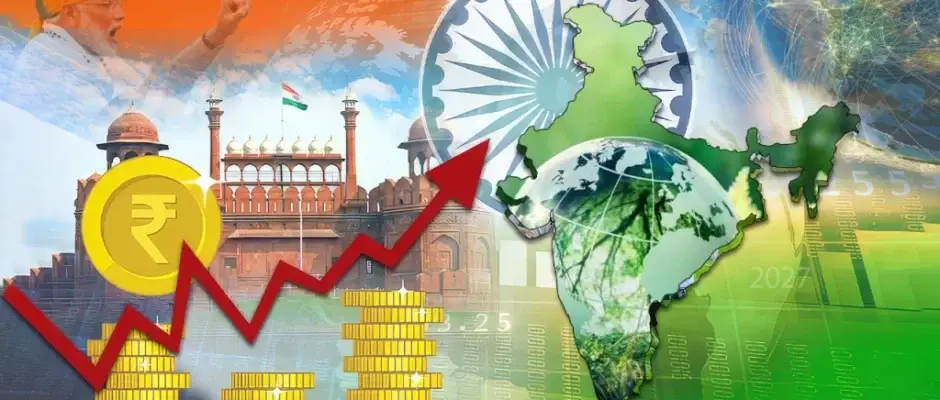
Changing geo-political equations & global order has etched a key role for India as Vishwa Guru & Mitra, the most dependable ally K.A.Badarinath Prime Minister Narendra Modi put up a comprehensive socio-economic development plan before 1.4 billion Indians while delivering his tenth address from ramparts of iconic Red Fort. Given the grand plan that encapsulates his over 90-minutes address on Tuesday, political interpretations are bound to be made given that elections to four state legislatures followed by Lok Sabha polls were scheduled before June 2024. While the messenger in Modi arguably did a fantastic job of presenting broad contours of 25- year work plan, the leader in him hit the right note on three evils that the country faced. Presenting a case for ‘developed India’ by 2047, the year country celebrates her centennial post-independence from imperialistic British forces, Modi did not mince words. In the process, he has served an early notice to four large global economies that also consider themselves as invincible. A vision document being readied by ruling BJP and the central government would roll out specifics in this plan. This document has been in the works last one year when 75-years commemoration campaign was kicked off by Modi. Given that 2023 is first of 25-years ‘amrit kaal’, emphasis on grand ‘long viewfinder’ works well and timely. The resolve to build on substantive achievements last ten years got reflected amply on socio-economic front to upend India to third position as largest growing economy with a wide diverse market for goods and services.   Fight against corruption, dynastic politics and appeasement line he pushed very hard is in continuation of BJP and NDA closing ranks to not cede even an inch of political space for 26-parties opposition. These three evils found mention prominently even in his reply to a no-confidence motion that was moved by some opposition parties earlier this month. Targeting a few families that run their political parties as personal fiefdoms or family enterprises, Prime Minister seems to have taken the fight across fence. Guarantees on political stability would be a big factor given resounding victory that Modi got in 2014 and 2019 Lok Sabha. And, continuation of the ten-year work done is one clinching issue politically as well as on economic front. Political instability is one big risk that goes against the very grain of investments, buoyancy in markets and economic expansion. From the opposition perspective, political stability is one thing that cannot be taken for granted given inherent contradictions within fragile political formations that form part of anti-Modi rainbow network Recent successes for Congress in Karnataka and Aam Aadmi Party winning big in Punjab may have enthused opposition ranks leading to Patna and Bengaluru conclaves. But the socio-economic model of ‘freebies in Punjab and guarantees in Karnataka’ are unsustainable. Already, Karnataka has made more than clear that it would hardly be able to mobilize funds for even taking forward development projects erstwhile BJP government has begun. Internecine power struggle within the Congress and inter-party rivalry with the 26-party conglomeration is bound to take investors dizzy. Yet another commitment made by Narendra Modi was to guarantee against corruption that’s eating into vitals of the Indian polity. By and large, the ten year Modi rule at centre was corruption free notwithstanding charges of ‘suit boot sarkar’ made by Congress to pull down the BJP and tarnish with its own black brush. In states, public sector companies, banks and award of contracts, most players across spectrum have still been susceptible and amenable to personal gratification. Through the guarantee, Modi may have to extend his fight against corruption to states and then down below as districts administration continue to be marred by shady deals that need closer scrutiny. Trust in his leadership and BJP-led NDA model of governance is something that he has earned in last ten years. This trust needs to get extended downwards under his close watch to ensure that Hindu-centric voters will continue to be with Modi-led alliance. Mistrust with Congress regimes was what made ten years rule of Manmohan Singh unsustainable.  Trust factor with the voters, partners, investors and all stakeholders in the next government may have to be worked on faster by Modi’s strategists. Narendra Modi seems to have banked heavily on spirit of India that has stood test of times. When he invoked ‘unstoppable’, tireless and does not give up’ spirit of hoi polloi, he made an instant ‘emotive connect’ with those tired of being ‘held up or pulled back’ in realizing their aspirations. BJP, NDA and Modi’s commitment to the concept of ‘vishwa guru’ or attaining numero uno status for India globally is fairly well established. Extending this further, Prime Minister Modi portrayed India as a ‘vishwa mitra’, a bankable friend, dependable partner and stakeholder in human development. His talk of a new ‘global order’ and ‘geo-political’ alignments is rather real given sea changes experienced in aftermath of cold war. Post-Covid 19, the much anticipated re-working of global order is expected to roll out in near future. And, this provides perfect opportunity for India to play a key responsible role internationally moving away from reticence of the past by ‘minding its own business’. This futuristic articulation to position India on global matrix both on geo-political issues and socio-economic plane would go well. (Author is Director& Chief Executive, Centre for Integrated and Holistic Studies, a non-partisan think tank based in New Delhi)

Read More