CIHS – Centre for Integrated and Holistic Studies

Date/Time:

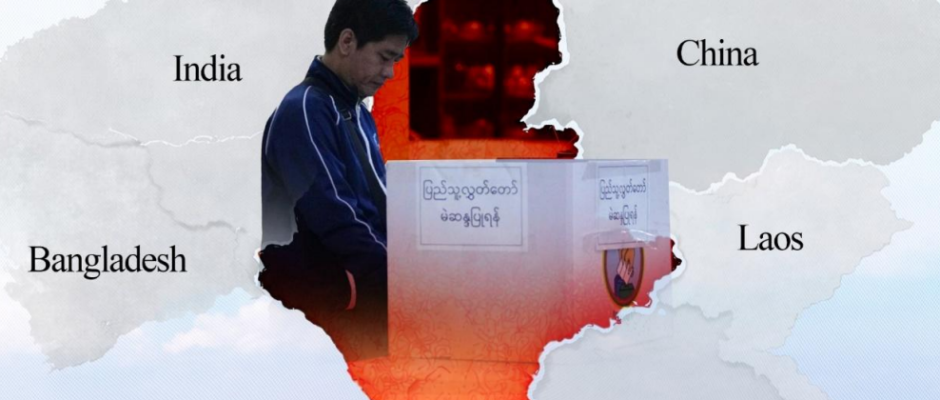
Myanmar’s Strategic Crossroads China’s Influence, Western Interests and a Turbulent Election

Arun Anand Myanmar (formerly Burma) sits at a critical crossroads in Asia, both geographically and geopolitically. The country’s location – bordering China, India, Bangladesh, Thailand, and Laos, with a long coastline on the Bay of Bengal and Andaman Sea – makes it a bridge between South Asia and Southeast Asia. In fact, Myanmar is often described as the “main connecting hub” linking East, South, and Southeast Asia. Its shores provide access to the Indian Ocean’s major shipping lanes, which has long attracted great power interest. In short, Myanmar’s geostrategic location grants it outsized importance: it is the only Southeast Asian nation sharing borders with both India and China, and it offers a land gateway from the Bay of Bengal into the heart of Asia.

Read More
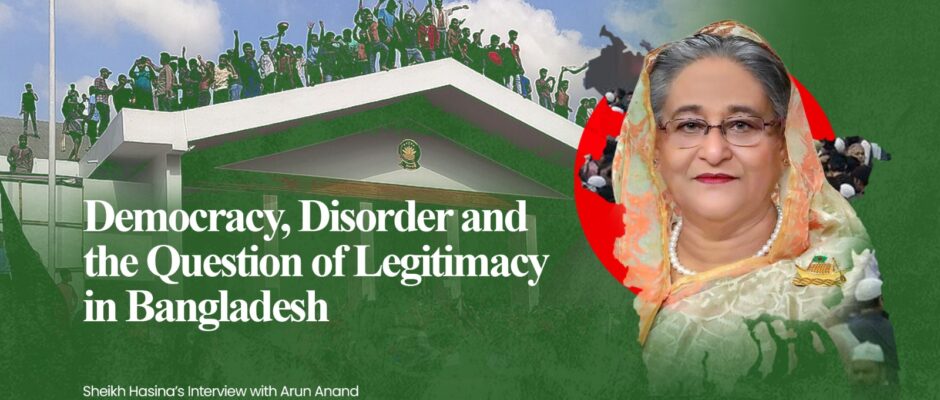
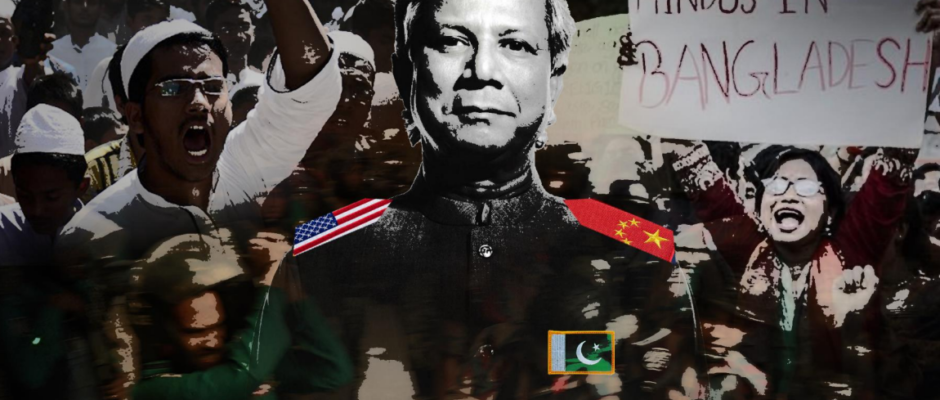
Democracy, Disorder and the Question of Legitimacy in Bangladesh - An Interview with Sheikh Hasina

Democracy, Disorder and the Question of Legitimacy in Bangladesh

Sheikh Hasina’s Interview With Arun Anand In an exclusive and wide-ranging conversation with author and columnist Arun Anand, former Bangladesh Prime Minister Sheikh Hasina breaks her silence on the dramatic events that led to her departure from Dhaka, the violent derailment of the 2024 student protests, and what she describes as the systematic dismantling of democratic institutions under the Yunus-led interim regime. Speaking with rare candour, Hasina addresses allegations against her government, warns of rising extremism and minority persecution, and outlines the constitutional and political conditions she believes are essential for Bangladesh’s democratic recovery. From regional geopolitics and relations with India to the future of the Awami League and the legitimacy of proposed elections, this interview offers an unfiltered account from a leader who governed Bangladesh for over a decade and continues to shape its political destiny.   Question: Could you share what factors influenced your decision to leave Bangladesh, and what assurances you would need to consider returning? Answer: What began as a genuine student movement was escalated by radicalists who led the crowds into violence, destroying state and communications infrastructure and burning down police stations. By then, this was no longer a peaceful civic movement, but a violent mob.  My instinct has always been to protect our country and our citizens, and it was not an easy decision to leave while my country erupted into lawlessness. I regret that I was compelled to leave, but it was a decision I took to minimize any further loss of life, and to ensure the safety of people around me. For me to return, Bangladesh must restore constitutional governance and the rule of law. This means lifting the unlawful ban on the Awami League, releasing political prisoners detained on fabricated charges, and holding genuinely free elections. You cannot claim democratic legitimacy while banning the party elected nine times by the people. Question: How do you reflect on your government’s handling of the 2024 protests, and how do you respond to the concerns raised about the use of force and the legal cases that followed? Answer: In the initial days, we allowed students to protest freely and accepted their demands. Then extremists transformed peaceful demonstrations into a violent insurrection. We responded as any government would when faced with burning police stations and attacks on state infrastructure; we acted to restore order and to prevent further bloodshed. I attempted to gain a full picture of the events in August 2024 by establishing a judicial inquiry commission to investigate every death. The conspiracy behind these attacks became clear only later when Yunus immediately dissolved this inquiry, released convicted terrorists, and granted blanket immunity to those he now glorifies as ‘July warriors.’ These same actors marched on the Indian embassy last week, no doubt emboldened by the protection of the interim government. If there were genuine concerns about excessive force or wrongful prosecutions, why destroy the very mechanism designed to investigate them? The truth is that Yunus has consistently thwarted attempts to establish what really happened in July and August 2024, because an impartial investigation would reveal the orchestrated nature of the violence. Question: What is your assessment of the current Yunus-led regime, and how do you view Bangladesh’s future—both with the proposed February 2026 elections and in the longer term? Answer: We cannot forget that Yunus governs without a single vote from the Bangladeshi people. He has placed extremists in cabinet positions, released convicted terrorists, and done little or nothing to stop attacks on religious minorities. The economy that quadrupled during my tenure is now stalling. Yunus came to power promising reform yet all he has sown division and banned the country’s oldest and most popular political party, thus disenfranchising millions. These elections can never be legitimate if the Awami League is banned. My concern is that extremists are using Yunus to project an acceptable international face while they radicalise our institutions domestically. But Bangladesh and its people have extraordinary resilience and an unwavering belief in the power of participatory democracy. I trust that democracy will prevail and that we will set our great country back on the path to recovery and growth. Question: Looking back, how do you view the debate over democratic space during your tenure, and what reforms or new approaches would you prioritize if given another opportunity to lead? Answer: I believe our greatest achievement as a party was the restoration of democracy in the 1990s. When I returned to Bangladesh following my father’s assassination, the biggest challenge facing our country was a lack of popular representation. Those years of military rule and unelected leadership taught us valuable lessons about the power of democracy that we never took for granted during our time in government. As a government, we encouraged political engagement and participation across the nation. Democracy thrives with healthy opposition, yet some of those parties chose to boycott previous elections, restricting the democratic choice of millions of ordinary citizens. It is interesting that those who accused us of restricting democratic space now rule without a single vote, have forced judges to resign, and have detained journalists brave enough to critique their increasingly authoritarian grip on our nation. The question isn’t what reforms I would implement, it’s whether Bangladesh will retain any democratic institutions to reform. We are proud of our record in government. During those 15 years, we helped to lift millions out of poverty, empowered women, and transformed Bangladesh into one of Asia’s fastest-growing economies. We consistently protected the rights of minorities and prevented radicalism from eroding our democracy. It takes a legitimate and strong government to forge our country’s place both domestically and internationally, and we did so by operating within constitutional boundaries. We were repeatedly mandated by voters at the ballot box. Question: How do you assess the country’s current political course under the interim government, particularly in terms of national stability and long-term strategic interests? Answer: The Yunus government took power with a wave of western support from those who confused economic success with political

Read More
Will Religion Limit Talent Hiring in US

Will Religion Limit Talent Hiring in US?

JD Vance prodding that businesses hiring personnel from other communities and countries were ‘anti-Christian’ is simply gross. CIHS Desk For first time in recent history of United States of America (USA), faith and religion have been introduced to run businesses, economy, make investments and hiring of personnel. Valuing diverse culture of America may not be against basic ethos or tenets of that country. But to suggest that as a ‘Christian nation,’ US companies and businesses have to rethink employing talented people at cost-effective wages from third world is gross.  US Vice President JD Vance described America as a “Christian nation” and said we need to protect American jobs from cheaper workers of other countries. Speaking at Turning Point’s America First conference 2025, Vance prodded that employing people of other origins at competitive terms was not part of ‘true Christian politics’. Well, Vance may have to be shown the mirror. Not many would complain about ‘America First’ policy of President Donald Trump or his Vice President. But to give a religious or faith related twist to hiring, employment, running businesses is seriously untenable. The Republican eager to launch his presidential campaign in 2028 may have overstepped ideologically and pursued a sectarian, politically volatile agenda. While Christians of different denominations form US majority polity today, US itself came into being on the graves of Red Indians. In a globalized economy, flexibility in running businesses and recruitment of personnel based on their education, training, talent, value-addition, deliverables and costs must be the basis. Businesses and industry in US may not like to take J D Vance too seriously and reject a large number of their personnel just because they are not Christian or do not subscribe to his political agenda of exclusivity. In case businesses do limit their choice in talent hunt to American Christians as suggested by Vance, what about the large mass of atheists, agnostics and other minorities? While pandering to 162 million Christians of Protestants, Catholics is rather tempting, but to reject others from within and outside irrespective of talent and their contribution in terms of economic value is unsustainable even in short term. Is J D Vance making out a case against those coming for jobs, valued contribution to American economy? Does Vance not understand as to how many universities and institutions run just due to students and professionals from different countries? Is Vance laying the roadmap for Christian and ‘others’ kind of political campaigns that’s pugnacious? American cultural and civilizational evolution has subscribed to making it the ‘land of high value workers’ irrespective of their origin or pay packets they take home. Does Vance not appreciate contribution of religious minorities that include Jews, Hindus, Buddhists, Jains or people of colour? From the days of George Washington, Church has had a big say in governing United States though there was huge resistance to religious interference in state’s affairs. Now, extending it to private sector is something that the Catholic turned Vance proposes to do. This will have serious implications for American businesses as liberal access to talent globally sustained them till now. And, non-availability or limited choice would translate into gaps in high value chains across industrial and services sectors of American economy. Big question therefore several analysts posed was governing America by the country’s constitution or Apostles? Will ‘Ten Commandments have upper hand over Bill of Rights? Several policymakers within Trump administration think that JD Vance postulation of a Christian nation may not allow for hiring the brightest and most talented human resources to compete with China. Exclusive or restrictive policies may not only restrict opportunities for other communities but force top technology giants to shift their investments to more competitive, flexible and open markets.

Read More
A Nation at Risk While the World Watches

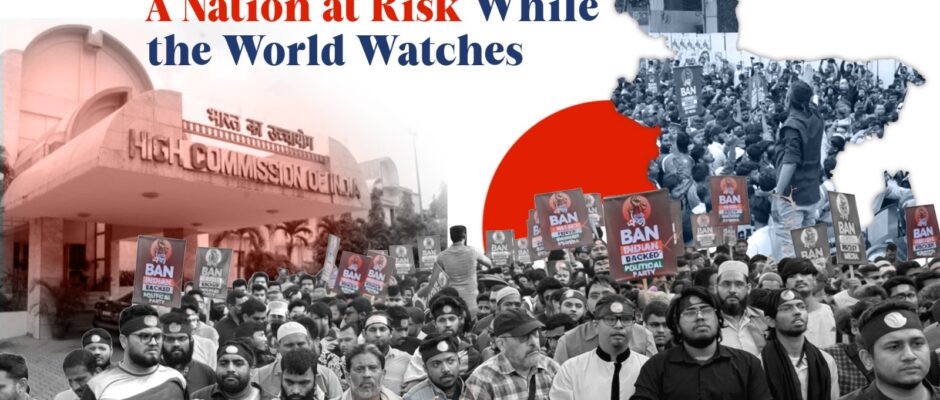
A Nation at Risk While the World Watches

By R K Raina The events that unfolded in Dhaka this week should end any remaining illusion that Bangladesh’s current political drift is a contained or internal matter. On Wednesday afternoon, hundreds of protesters marched towards the Indian High Commission under the banner of July Oikya, raising anti-India slogans and issuing open threats against a diplomatic mission. Police restraint prevented immediate escalation, but the message was unmistakable: radical forces now feel emboldened enough to challenge diplomatic norms in broad daylight. The protest was not spontaneous. July Oikya, a front comprising several groups linked to the July mass uprising, had announced its “March to Indian High Commission” in advance. Its leaders warned that they would forcibly enter the High Commission if their demands were not met. These included the return of individuals convicted in the so-called July massacre case, including former Prime Minister Sheikh Hasina, and an end to what they described as “Indian conspiracies” against Bangladesh. Such rhetoric mirrors the familiar language of Islamist mobilisation across the region, where external enemies are invoked to justify internal radicalisation. What makes this incident especially alarming is not merely the hostility directed at India, but the broader political context in which it occurred. Several fundamentalist and extremist figures, previously detained on terrorism-related charges, have been released in recent months under the current interim administration. Many of these elements are now active on the streets, shaping protest narratives and openly threatening foreign missions. This is not accidental. It is the predictable outcome of legitimising radical actors under the pretext of political transition. Threatening a foreign high commission violates the most basic norms of the diplomatic community. When such acts are tolerated, or downplayed as expressions of popular anger, the consequences extend far beyond bilateral relations. They signal a breakdown of state authority and a willingness to allow extremist mobilisation to dictate political space. This moment must be understood within Bangladesh’s longer historical arc. The country was born in 1971 as a rejection of Pakistan’s ideological model. Bengali nationalism asserted that language, culture and democratic choice mattered more than religious uniformity imposed by the state. Sheikh Mujibur Rahman articulated this vision decades earlier, insisting that Bengal’s history and identity could not be erased. That vision guided Bangladesh through its most successful periods of economic growth and social stability. The forces now gaining ground stand in direct opposition to that legacy. Pakistan’s role in this trajectory is being conspicuously ignored. Since 1971, Islamabad has never reconciled itself to the idea of a secular, culturally confident Bangladesh. Its historical hostility to Bengali identity culminated in genocide, and its ideological influence has since flowed through organisations that opposed Bangladesh’s independence. Jamaat-e-Islami, banned for its collaboration with Pakistan during the liberation war and now politically rehabilitated, remains the clearest example. Its ideological alignment with Pakistan is neither incidental nor historical trivia; it is central to the current moment. Yet while these forces resurface, much of the  world has chosen silence. Worse, some have framed recent developments as a domestic political correction, urging restraint while avoiding any serious engagement with the ideological direction Bangladesh is being pushed towards. Treating the rise of radical street power, the intimidation of diplomatic missions and the release of extremist figures as internal matters is not neutrality. It is abdication. This selective blindness sets a dangerous precedent. Terrorism, it appears, is being judged differently depending on the target and the geography. Threats against Indian diplomatic property are brushed aside, while the same actors would be condemned instantly if they appeared near other embassies. Such double standards undermine the very international norms. The regional consequences are serious. South Asia is already burdened by fragile borders, unresolved conflicts and ideological fault lines. Allowing Bangladesh to slide towards Pakistan-style politics, marked by street radicalism, ideological hostility and economic uncertainty, risks destabilising an entire neighbourhood. The early economic signals are already troubling. Political instability and radical mobilisation have begun to erode confidence in what was once one of Asia’s most promising growth stories. Equally at stake is Bangladesh’s cultural future. The sustained assault on symbols of the liberation movement, and the replacement of Bengali nationalism with political Islam represent an attempt to rewrite the country’s founding narrative. History shows that such projects do not end with symbolism. They reshape education, law and social norms, often irreversibly. World policymakers should be under no illusion. Pakistan itself is a case study in how tolerating or enabling radical forces for short-term stability leads to long-term dysfunction. Decades of engagement have failed to undo the damage caused by ideological capture of the state. To allow Bangladesh to move down the same path is not a policy error; it is a strategic failure. The warning signs today are far clearer. Threats to diplomatic missions, the release of extremists and the open mobilisation of radical fronts are not normal features of democratic transition. They are indicators of state erosion. If the world continues to look away, it will share responsibility for what follows. The erosion of peace in this region, the empowerment of extremist networks and the slow destruction of Bengali cultural identity will not remain confined within Bangladesh’s borders. Silence, in this case, is not caution. It is complicity. (Author is a former diplomat and policy commentator focused on South Asian geopolitics, Tibet and India’s neighbourhood. He contributes to leading think tanks and policy platforms on regional and civilisational issues.)

Read More
1971 Genocide and the Unhealed Scars of Bangladesh

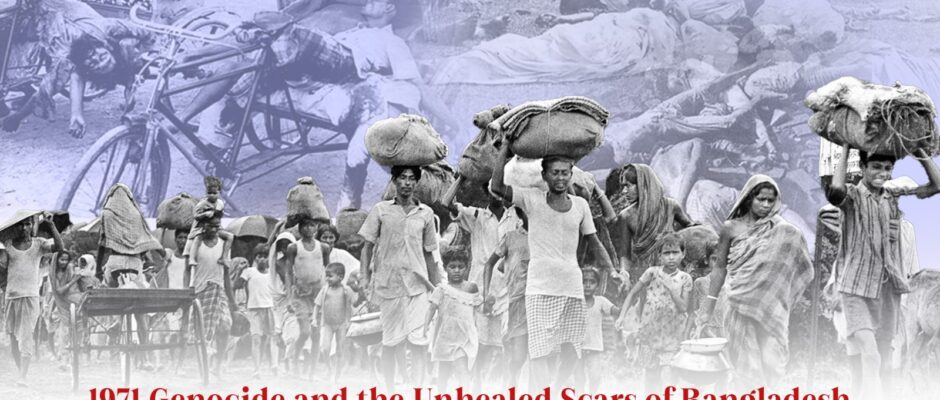
1971 Genocide and the Unhealed Scars of Bangladesh

Bangladesh may paper over its wounds one by one, but the scars of systematic genocide during 1971 Bangladesh Liberation War will remain permanent.  Pummy M. Pandita The 1971 Bangladesh Liberation War was marked by a systematic campaign of genocide carried out by the Pakistan Army and its supporting forces, Razakars, against the Bengali population, pro-independence activists, intellectuals and civilians. The Razakar Force, officially established by the Pakistan Army under the command of General Tikka Khan and acknowledged as a proxy paramilitary entity, was pivotal in the perpetration of these offenses at the direct command from Pakistan. More than fifty years post-independence, Bangladesh persistently pursued international acknowledgment and a formal apology from Pakistan; however, these requests remain unmet. The enduring impact of violence and denial has resulted in lasting sociopolitical wounds that continue to manifest in both domestic and diplomatic contexts. Established pursuant to the East Pakistan Razakars Ordinance issued in August 1971, this militia group was intentionally created to serve as a local support mechanism for Pakistan’s counter-insurgency efforts against the Bengalis of erstwhile East Pakistan. The establishment and functioning of this militia group were crucial to the genocidal tactics employed by the military leadership of Pakistan in order to stifle the aspirations for independence from Pakistan. The contingent comprised roughly 50,000 volunteers, primarily sourced from Islamist groupings in Pakistan political groups including Jamaat-e-Islami, Al Badr, Al Shams and others that resisted Bengali autonomy. In stark contrast to purported accounts, the Razakars were not merely engaged in “internal security” operations; they were complicit in heinous acts of mass murder, sexual violence, torture and terror directed at civilians, with a particular focus on Hindu communities, political dissidents, scholars and advocates for independence from Pakistan. After the Bangladesh Liberation War of 1971, approximately 200,000 women and girls, predominantly Hindus, were raped by the Pakistani Army and its allied proxies (Razakars). These heinous acts were part of an effort to create a “pure” Muslim race in Bangladesh. The targeting of Hindu women has continued, with sexual violence being used to intimidate and displace Hindu families.  Multiple thoroughly recorded massacres during 1971 by Razakars alongside the Pakistan Army, encompassing extensive killings in Jathibhanga (approximately 3,000–3,500 victims), Gabha Narerkathi (95–100 Hindu victims), Akhira and Char Bhadrasan, among others, each exemplifying methodical assaults on defenseless populations. In December 2019, almost fifty years post Bangladeshi independence, the Government of Bangladesh released an official enumeration of 10,789 individuals recognized as Razakars, a clear initiative to identify and document those who supported the Pakistan Army’s operations against the Bengali population. The aim was to guarantee that future generations retain awareness of the genuine perpetrators of violence and treason, opposing any efforts to obscure or sanitise this historical narrative. Notwithstanding these actions, the pursuit of justice remains unfulfilled and the scars of history endure. The lack of an official apology transcends mere diplomatic obstruction; it signifies a refusal to acknowledge historical responsibility, thereby exacerbating the anguish of survivors, the families of victims and the broader communities deeply affected by the events of 1971. For a significant segment of Bangladeshi society, especially among Hindu communities that were disproportionately targeted, the ongoing lack of recognition constitutes not merely an omission but a deliberate erasure. It denies victims and survivors both justice and historical recognition, making their suffering invisible and original crimes even worse. This silence reinforces impunity, invalidates experienced trauma and indicates a systemic reluctance to address the violence perpetrated by Razakars and Pakistan Army against these communities. The Razakar legacy stands as a profound and enduring mark in the collective consciousness of Bangladesh, serving as a proof to the genocidal tactics employed by the Pakistan Army and its accomplices. It highlights the necessity for healing from mass atrocities, which hinges on the pursuit of truth and formal accountability, elements that cannot be fully achieved without clear recognition and apology from those who hold historical responsibility. The plight of Hindu communities in present-day Bangladesh finds its roots in the tragic events of the 1971 Liberation War and this suffering has persisted in a sporadic manner throughout the subsequent decades. In the year 1971, the Pakistan Army, in conjunction with the Razakars, engaged in state-sanctioned violence that resulted in widespread atrocities, including mass killings, sexual violence and the deliberate persecution of the Hindu community as a distinct religious group. The immediate consequences resulted in significant refugee movements and a sustained demographic reduction of Hindus in Bangladesh. Since the attainment of independence from Pakistan, there has been a recurring pattern of communal violence, biased governance practices, assaults on property and places of worship and a prevailing sense of impunity for those who commit such acts. This troubling trend has notably escalated during periods of political instability in 2024–25, resulting in cycles characterised by fear, displacement and the erosion of rights. Historical context: targeted violence in 1971 “Operation Searchlight” on March 25, 1971, started the Bangladesh Liberation War, which lasted from March to December 1971. The campaign conducted by the Pakistan military specifically aimed at Bengali freedom fighters, scholars, students and, with notable intensity, Hindu civilians. Recent and ongoing research show that there were coordinated mass executions, gang rapes used as weapons against women (especially Hindu women) and communal cleansing in towns and rural areas where Hindus lived. Independent scholarly reviews, government compilations of incident reports and survivor testimonies delineate massacres nationwide, enumerating particular incidents with substantial civilian casualties. Scholars and post-war accounts emphasise that although Bengalis were the primary targets, Hindus were subjected to extreme brutality due to their perceived political and cultural alignment with India and the Bengali freedom struggle. The ongoing vulnerability of Hindu communities in Bangladesh from 1972 to 2024 has been perpetuated by a combination of systemic impunity, inadequate legal accountability and politicised justice. Post 1971 period promised justice, but convictions for war crimes were few and far between, allowing many criminals and their networks to become part of local power structures again. Even when accountability mechanisms like the International Crimes Tribunal were used, the idea and practice of

Read More

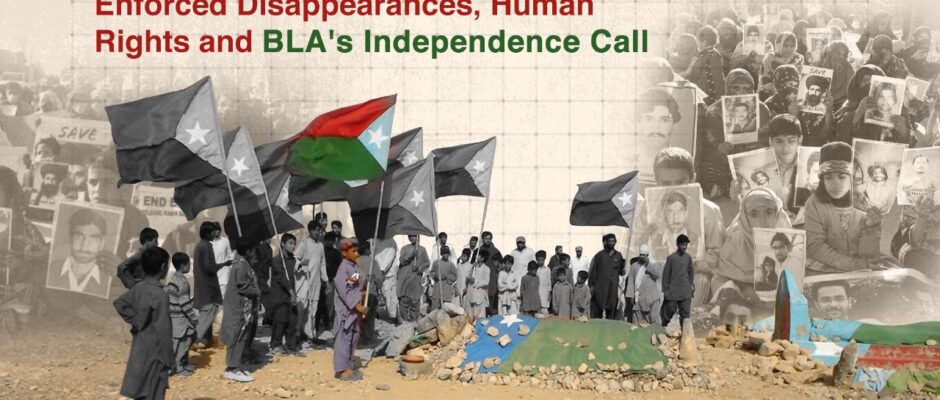
Enforced Disappearances, Human Rights and BLA’s Independence Call

By N. C. Bipindra Balochistan has yet again entered a dangerous phase of political and humanitarian uncertainty. Recent declaration by the Balochistan Liberation Army (BLA) to form an independent army and seek international recognition as a sovereign nation has brought decades-long freedom struggle against Pakistan’s reported occupation into sharp focus. While BLA’s statement marks a new and more assertive phase in the struggle to take governance into their own hands, it also threatens to worsen an already grim human rights landscape. For years, enforced disappearances, extrajudicial killings, and suppression of dissent have scarred the province. Now, with renewed calls for being recognized as a separate nation, Balochistan risks sliding deeper into vortex of violence and repression that shows little sign of abating. Pakistan’s army and security establishment has come down heavily on Baloch people seeking their basic rights to live peacefully and honourably. Islamabad’s new found friend in US President Donald Trump may be oblivious to this grim situation and only interested in excavating the high value rare earth metals and specialized molecules with high precision application across industries in America. A Province in Perpetual Conflict Balochistan, rich in natural resources but poor in development and representation has long been a theatre of conflict between Pakistani state and various Baloch nationalist groups. The grievances are old and deep, rooted in reported political marginalization, economic exploitation and cultural erasure. BLA’s recent announcement seeking international recognition and establishment of diplomatic missions represents a bold political escalation. It reframes the struggle from one of autonomy within Pakistan to outright independence. Predictably, such a declaration is being treated in Islamabad not as political dissent but as a direct challenge to national sovereignty, setting the stage for intensified military operations. Beneath the political grandstanding lies a darker humanitarian crisis that predates this declaration: persistent phenomenon of unexplained disappearances and human rights abuses that have come to define life in Balochistan. Missing People of Balochistan For families in Balochistan, the phrase “missing persons” has become an everyday horror. Thousands of Baloch men — students, teachers, activists, and ordinary civilians — have disappeared over the years, allegedly picked up by security forces or intelligence agencies. Many are never seen again; others turn up dead, often bearing signs of torture. According to the Human Rights Council of Balochistan (HRCB), 123 enforced disappearances and 26 killings were recorded in just August 2025. Earlier in March that year, the group documented 151 disappearances and 80 killings. Such numbers are staggering for a single province, and they are likely underestimates, given the difficulty of reporting in militarised areas. The Pakistan Commission of Inquiry on Enforced Disappearances (COIED) has received over 10,000 cases nationwide, with a disproportionate number from Balochistan. Yet, rights groups say that official mechanisms lack independence and transparency. Investigations rarely lead to prosecutions, and security agencies operate with near-total impunity. The HRCB and other local NGOs have documented a recurring pattern: night-time raids, arrests without warrants, and bodies discovered days or weeks later in desolate areas. Families often face intimidation when they speak out or join protests demanding the return of their loved ones. Many have spent years camped outside press clubs or government offices, holding faded photographs and placards that ask a simple question: “Where is my son?” Fear and Silence: A Society Under Siege The psychological toll on the province is immense. Entire communities live under a shadow of fear. In cities like Turbat, Kech, Awaran, and Gwadar, once bustling trade hubs, silence has replaced debate. Even student activism is seen as a potential act of rebellion. Students have been frequent victims of disappearances, especially those affiliated with Baloch student organisations. Human rights defender Dr. Mahrang Baloch, who spearheaded a peaceful movement for missing persons, was herself detained in 2024, a move widely condemned internationally as an attempt to crush dissent. Journalists, too, face censorship and threats. Many have been warned against reporting on disappearances or military operations. The result is a near-total blackout on independent information from much of Balochistan, leaving only official narratives and sporadic social media updates from activists who risk their lives to post them. Extrajudicial Killings and the “Kill-and-Dump” Policy One of the most disturbing aspects of the crisis is what local activists describe as the “kill-and-dump” policy. Individuals who disappear are later found dead, their bodies dumped on roadsides or in remote deserts. These victims are often presented by authorities as “terrorists” killed in encounters, but human rights groups say many of these encounters are staged. The state’s security establishment insists its operations target armed insurgents, not civilians. Yet the blurred line between militant and civilian in such operations has made accountability nearly impossible. In some cases, the victims had no political affiliation at all. Families are left with bodies to bury and no answers about why their loved ones were taken or killed. Legal and Institutional Failures Pakistan is a signatory to major international human rights treaties, including the International Covenant on Civil and Political Rights (ICCPR) and the UN Convention Against Enforced Disappearances. Yet, in practice, these obligations remain largely unfulfilled. The COIED, established to investigate missing persons cases, has been criticised as toothless. It lacks the authority to compel powerful agencies like the Inter-Services Intelligence (ISI) or the Frontier Corps (FC) to produce detainees or disclose information. Its reports are rarely made public, and few cases have led to convictions. In the absence of credible accountability, enforced disappearances have become normalised as a tool of control. Human rights lawyers describe it as a deliberate policy, a way to silence opposition without legal consequence. BLA’s Declaration and Its Fallout The BLA’s move to declare a separate “army” and seek global recognition adds a dangerous new layer to this human rights tragedy. The Pakistani state, already hypersensitive to any challenge in Balochistan, is likely to respond with harsher counter-insurgency measures, which could lead to more disappearances, arrests, and extrajudicial killings under the banner of fighting terrorism. Civilians will, as always, bear the brunt. In areas where the BLA has

Read More
Situational Analysis - Geopolitics, Hindu Hate, Islamisation and Decay of Democracy in Bangladesh

Situational Analysis – Geopolitics, Hindu Hate, Islamisation and Decay of Democracy in Bangladesh

Decay of Democracy in Bangladesh Bangladesh faces a dangerous convergence of Islamic resurgence, targeted minority persecution, and democratic regression. This situational analysis explores convergence of internal unrest and external influence, especially through narrative warfare and strategic alignments, which has accelerated the deterioration of democratic governance and encouraged radical elements in the post-2024 scenario. For more details…….

Read More
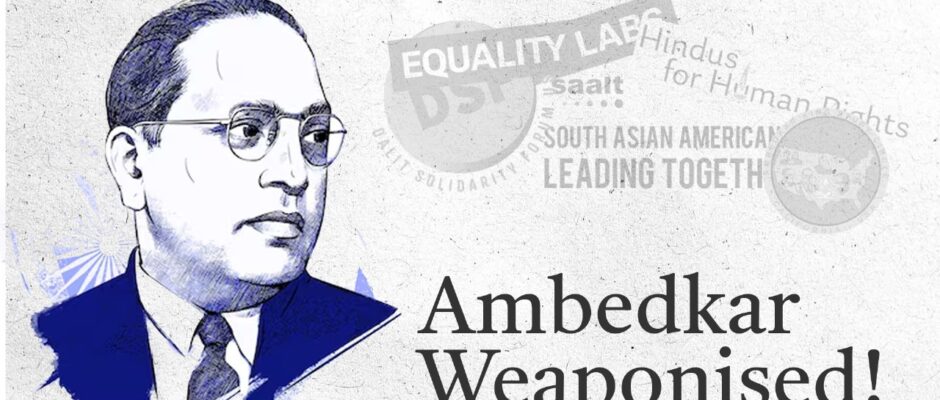
Ambedkar Weaponised!

Ambedkar Weaponised!

Neo-Ambedkarite groups in US, Europe invoke him to promote the very causes he opposed: religious dogma, separatism and ideological violence. This isn’t social justice; it’s soft warfare against Bharatiya unity in the guise of activism. Dr. Shailendra Kumar Pathak Dr. B.R. Ambedkar remains one of Bharat’s most influential and tallest intellectuals, a fierce advocate for rights of the downtrodden and architect of Bharat’s Constitution. His political, religious and philosophical views were grounded in rationalism, human dignity, national integrity, and democratic values. In recent times, however, self-proclaimed Ambedkarite groups operating from UK and US have fundamentally deviated from his original principles. These organizations that actively engage with global radical Islamist networks and evangelical Christian lobbies promote agendas that are anti-Hindu, anti-Bharat and in many cases subversive. A detailed examination of Dr Ambedkar’s original works including “Pakistan or the Partition of India,” “Buddha or Karl Marx,” the “Constituent Assembly Debates” and speeches such as “Annihilation of Caste,” reveals a clear misappropriation of his legacy by the present day outfits. To begin with, Ambedkar was never a critic of Hinduness. His sharp critique was specifically aimed at caste system and its dehumanizing effects but he never spared Islam, Christianity, or communism from scrutiny either. In “Pakistan or the Partition of India,” Ambedkar expressed grave concern about Islamic worldview. He argued that Islam fostered a brotherhood limited only to Muslims and viewed others with contempt. He wrote, “The brotherhood of Islam is not the universal brotherhood of man. It is brotherhood of Muslims for Muslims only.” Furthermore, he warned that Islamic law, which prioritizes religious allegiance over national loyalty, posed a significant challenge to Bharatiya nationalism. As per Ambedkar, Islam’s insistence on Sharia supremacy over civil laws, integration into a secular and democratic Bharat was difficult. He highlighted historical destruction of Hindu temples by Islamic rulers as proof of Islam’s violent legacy in Bharat. Ambedkar’s views on Christianity were equally candid. He noted that Christianity, while preaching equality, had historically supported slavery and racial segregation. In his view, both Islam and Christianity were unsuitable for addressing Bharat’s social issues. Their ‘universalist’ rhetoric notwithstanding, both religions, according to Ambedkar, were more interested in expanding their spheres of influence than genuinely uplifting the oppressed. This led to him embracing Buddhism and not these two faiths. Buddhism, on the other hand, he considered an indigenous, ethical, and rational path grounded in compassion and equality. In his essay “Buddha or Karl Marx,” Ambedkar contrasts moral, non-violent methods of Buddha with violent revolutionary approach of Marx. He praises Buddha for seeking to transform through inner change, rather than coercion or armed struggle. Ambedkar was also a consistent critic of communism. He saw its violent methods and contempt for individual liberty as deeply flawed. He argued that communism’s promise of a withering state and classless society masked the reality of permanent dictatorship and suppression of dissent. In his writings, he asked pointedly whether any economic end justified mass killing and loss of human values seen in communist regimes. He blamed communist labour leaders for exploiting workers to nourish their political gains and general failure of Bharat’s labour unions. Ambedkar’s political positions were deeply nationalist. He emphasized Bharat’s territorial integrity and democratic unity above sectarian or ideological interests. He criticized the Indian National Congress not because he was against the idea of Bharatiya self-rule but because Congress exploited caste and communal identities for electoral gain. He accused Congress of selecting candidates from dominant castes, thereby marginalizing truly oppressed communities. He flagged the  issue with Congress’s approach to Hindu-Muslim unity, accusing them of appeasement rather than principled negotiation. He found the Hindu Mahasabha more forthright in its communal positions than the Congress, which he believed played double games. Regarding Gandhi, Ambedkar was blunt. He criticized Gandhi’s role at the Round Table Conference, calling him petty-minded and poorly equipped to deal with complexities of communal negotiations. He accused Gandhi of widening social rifts rather than healing them. While he acknowledged Gandhi’s early concern for untouchability, he ultimately found Congress efforts tokenistic and ineffective. Funds meant for Dalit upliftment, according to Ambedkar, were misused or wasted with little real impact on the ground. Against this backdrop of rational critique and democratic commitment, neo-Ambedkarite movements emerging in West appear not only disconnected from his philosophy but actively working against it. In United States, outfits such as Equality Labs, Ambedkar International Center (AIC), Ambedkar King Study Circle (AKSC), South Asian Americans Leading Together (SAALT) and Dalit Solidarity Forum have established close working ties with global Islamist fronts and Christian evangelical networks. Their participation in “Dismantling Global Hindutva” campaign a platform notorious for anti-Hindu, anti-Bharat propaganda—exposes their alignment with ideological forces that Ambedkar explicitly rejected. Similarly, in United Kingdom, organizations like Caste Watch UK, Anti-Caste Discrimination Alliance (ACDA), Voice of Dalit International (VODI) and Europe-based International Dalit Solidarity Network (IDSN) have increasingly become vehicles for lobbying against Bharat on international forums. Rather than focusing on constructive social change or building solidarity through inclusive reforms, many of these groups engage in litigation-driven activism and diplomatic lobbying, often backed by church-linked NGOs and hardline Islamist organizations. Their rhetoric disproportionately targets Hindu identity and Bharatiya sovereignty, mirroring talking points of those who have long sought to destabilize Bharat’s national unity. Their agenda is not centered on social upliftment through moral and constitutional reform as Ambedkar envisioned but on creating a permanent atmosphere of victimhood and communal division. These groups exploit caste-based grievances to create unrest within Hindu society and push vulnerable sections toward religious conversion and even radicalization. They also romanticize violent ideologies like Naxalism which Ambedkar would have unequivocally opposed given his commitment to constitutional democracy. Ambedkar’s shift from forming Scheduled Castes Federation to proposing Republican Party of India reflects his political evolution he moved from a caste-specific platform to a more inclusive political identity aimed at uniting all marginalized groups. His emphasis was always on national unity, moral reform and social harmony. In fact, there are strong philosophical parallels between his vision and RSS concept of “Samrasta”

Read More
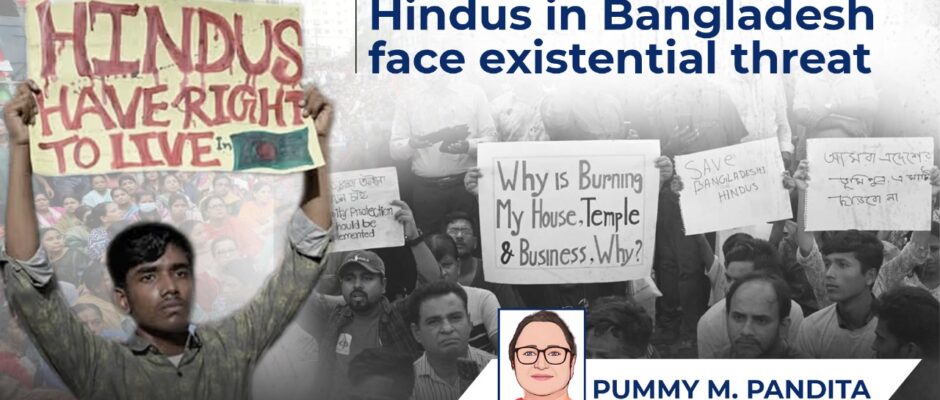
Hindus in Bangladesh Face Existential Threat

Hindus in Bangladesh Face Existential Threat

CIHS, UN reports meticulously documented atrocities against minorities while Yunus government is on denial mode. Pummy M Pandita Centre for Integrated and Holistic Studies (CIHS) had in August 2024 released a report titled “Hindu Genocide Unfolding in Bangladesh,” detailing systematic persecution of Hindus in that country. The report highlighted how minorities and in particular Hindus suffered oppression, forced conversions and violent attacks since partition of India in 1947. With the Hindu population dwindling from nearly 30 per cent in 1947 to less than 8 per cent today, the report documented the ” … ongoing ethnic cleansing.” CIHS report findings are further corroborated by United Nations Human Rights (UNHR) Office which released its own scathing report on the persecution of Hindus in Bangladesh. UN report reinforces the notion of targeted violence, displacement and systemic discrimination against Hindus, echoing concerns previously voiced by CIHS. The two reports underscore severity of crisis and the urgent need for international action. US Director of National Intelligence Tulsi Gabbard, in an interview, stated, “The long-time unfortunate persecution, killing, and abuse of religious minorities—Hindus, Buddhists, Christians, Catholics, and others—have been a major area of concern for the United States government and, of course, President Trump and his administration”. Bangladeshi however was unmoved and went on a denial mode. As per media reports, Chief Adviser’s press wing of Bangladesh’s interim government stated, “Bangladesh as a nation traditionally practices Islam that is famously inclusive and peaceful and it has made remarkable strides in its fight against extremism and terrorism.” Such response starkly contrasts the reality documented in both CIHS and UNHR reports. UNHR observations highlight a harsh reality: a systematic record of violence, displacement and persecution against a religious minority group in a state that takes pride in pluralism. This report is presented against the backdrop when rising extremism in South Asia is drawing international attention to the region and makes it acutely necessary that the situation must be evaluated factually with recourse to historical reality. Some specific incidents highlighted in the report are torching of three temples and the looting of about 20 houses in Burashardubi, Hatibandha and Lalmonirhat. UN report identifies these attacks to factors like religious and ethnic discrimination, targeted attacks on supposed supporters of former Awami League government among minorities, local communal land disputes, and personal conflicts. It also mentions involvement of some members and supporters of Jamaat-e-Islami and Bangladesh Nationalist Party (BNP) in perpetuating violence. Even after initial denials, Bangladesh’s interim caretaker government admitted at least 88 incidents of violence against minorities, predominantly Hindus, after August 2024. These happenings have raised significant concerns both within the country and globally, emphasizing urgent need for effective measures to protect minority communities in Bangladesh. Bangladesh has witnessed a considerable increase in widespread violence erupted following the ousting of former Prime Minister Sheikh Hasina in August 2024, disproportionately affecting Hindu minorities.  UN report documents that Hindu homes, businesses and temples were targeted on a systematic basis particularly in rural and historically tense areas. Some of the notable incidents include: Violence was not limited to these districts only. Other districts viz., Feni, Patuakhali, and Moulvibazar, also reported heinous crimes such as arson attacks on temples and brutal murder of Hindu individuals. These assaults, involving property destruction, arson and direct physical threats often exacerbated by inadequate police response suggest institutional impunity and perhaps political motivations.  UN Report states that there are several Bangladeshi localities which have emerged as hotspots of anti-Hindu attacks. The incidents recorded in report: The report documents these attacks with descriptions of victims, as verified by independent human rights groups. It is disturbing to record that police responses have been tardy or ineffective, permitting perpetrators to operate with impunity. The magnitude of the atrocities is appalling. UN report puts the number of deaths during the protests and violence that followed between July 1 and August 15, 2024, at an estimated 1,400. The overwhelming majority of these were caused by actions of Bangladesh’s security forces, who were accused of gross human rights abuses, including summary killings and shooting unarmed protesters. Children comprised around 12 – 13 per cent of these victims. Violence in Bangladesh mid-last year (2024) is not a lone phenomenon. The Hindu population in Bangladesh has been progressively dwindling due to amalgamation of targeted violence, legal discrimination and systemic exclusion. According to census 2022 data, Bangladesh’s population was 165,191,648 with percentage breakup detailed below: Religion Population Per cent breakdown Muslims 150,360,406 91.04 Hindus    13,130,109 07.95 Buddhists      1,007,468 0.61 Christians          495,475 0.30 Others          198,190  0.12 The reason for this decline is threefold—state indifference, mob violence and land grabs through Vested Property Act which has traditionally allowed seizure of Hindu-held property on various pretexts. Sheikh Hasina-led Awami League government in Bangladesh had presented itself as secular. The state’s inability to intervene strongly against perpetrators of violence against Hindus creates disquieting doubts about its commitment to protecting minorities. Though there have been some arrests after occurrence of violence, conviction is an exception and political convenience becomes the rule. The growing power of Islamist parties such as Hefazat-e-Islam has further intensified the issue as political parties are reluctant to act decisively against extremists for fear of electoral retribution. One of the worrying features brought out by UNHR report is the failure of law enforcement agencies to act. In spite of large-scale nature of the attacks, there was an overwhelming failure to intervene to save Hindu communities. This institutionalized impunity has encouraged perpetrators to continue perpetrating violence against minorities in a cycle of repetition. UN report also incriminates the former government and its security establishment for planning a calculated and well-coordinated effort to quell dissent. This included hundreds of extrajudicial executions, arbitrary arrests, detentions and cases of torture. These acts were said to have been committed with awareness and coordination of political leadership and top security officials, possibly constituting crimes against humanity. Global community has raised severe concerns regarding the developments. UN High Commissioner for Human Rights, Volker Türk, has demanded serious probes into all deaths

Read More