CIHS – Centre for Integrated and Holistic Studies

Date/Time:

Modi Magic for Middle Class Works Wonders

Modi Magic for Middle Class Works Wonders

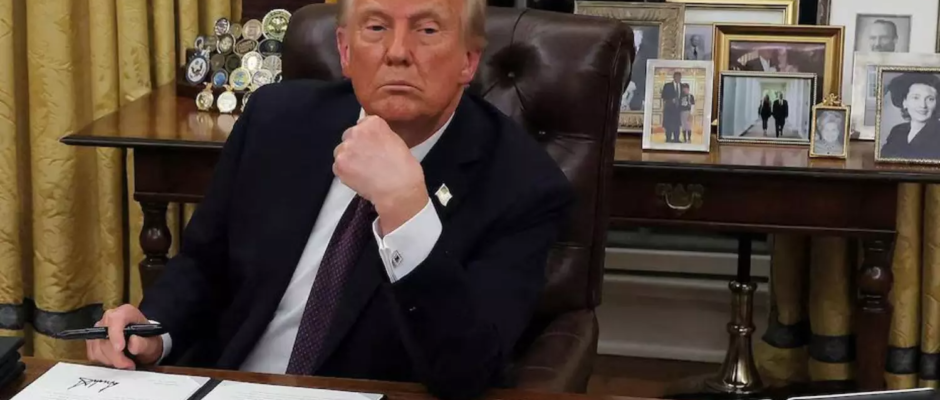
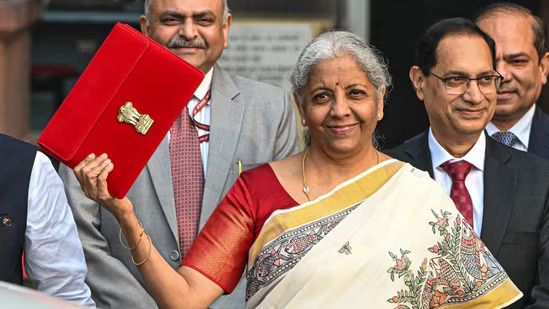
Consumption led growth, deregulation & reforms coupled with political and economic consolidation is what the budget attempts smartly! K.A.Badarinath Prime Minister Narendra Modi led government’s first full budget in its third term has deftly managed numbers, stuck to fiscal prudence & consolidation glide path, fiscal deficit reined in, borrowings manageable and put the economy on a consumption overdrive by providing huge tax relief of Rs 102660 crore. The vast middle class taxpayers who are also biggest consumers of goods and services will dance home with the goodies provided by finance minister Nirmala Sitharaman that presented her eighth consecutive budget for the Modi government on Saturday. Relief in personal income tax through rejig in both slabs and rates is the highest provided by any government in post-independence history of Bharat. And, there’s a big political message as well. Stick to the right of centre BJP-led National Democratic Alliance without drifting away. And, you will only be happy. This message is particularly important after Prime Minister Modi led alliance managed a wafer thin majority in Lok Sabha during last general elections. Also, Prime Minister Modi, BJP and NDA seem to be in no mood to let up the consolidation drive undertaken in assembly elections of Maharastra, Haryana and elsewhere post-Lok Sabha elections in June 2024. Also, in National Capital Region, Delhi’s assembly elections set for February 5, BJP has targeted the middle-class voters who are also taxpayers in a big way There may be naysayers that point fingers at huge tax exemptions and relief and Nirmala Sitharaman’s strategy to spend Rs 50.65 lakh crore to perk up growth in medium term beyond seven per cent in especially challenging conditions internationally. She has definitely not announced any ‘run away’ spending but put money where its seriously required to avoid the much feared ‘middle income trap’, keep the economy competitive, combative and at the same time expand smartly. Putting more than Rs 100,000 crore in hands of taxpayers, rewarding them handsomely for their contribution and thereby perk up consumption demand is to take economic growth way beyond 6.3 – 6.8 per cent projected in economic survey presented on Friday. Projected fiscal deficit at 4.4 per cent for 2025-26 over 4.8 per cent in current fiscal is achievable given buoyancy in tax receipts and reflects government’s steadfast commitment to consolidation, limit borrowings and shift big to infrastructure spending on capital account at Rs 15.48 lakh crore that translates to over 3.1 per cent of GDP. Borrowings would be limited at Rs 11,53,834 crore next fiscal to actual Rs 11,62,678 crore in the year ending March 31, 2025. Over next one year beginning April 1, 2025, the country’s gross domestic product in actual terms would expand to Rs 356,97,923 crore as against Rs 324,11,406 crore projected for 2024-25. Deregulation and fresh bout of reforms as an economic strategy – both policy side and taxation – recommended in Economic Survey have been accepted by Modi government. Taking stock of regulations and lifting controls has been corner stone of government’s liberalization programme when the economic liberalization was fine-tuned by Atal Bihari Vajpayee regime two decades back. Fresh overtures to reform, deregulate and thereby liberalize the economy is something Modi government would pursue to realize its full potential as it readies the journey to ‘developed nation’ status free from poverty by 2047. Focusing on agriculture, investments, micro, small & medium enterprises (MSMES) apart from exports as four growth engines is refreshing and a departure from traditional ways of looking at four economic pillars. At a time when assorted Left leaning farmers groups hit the ground seeking legal guarantee for minimum support prices (MSP) for their produce, Modi government has presented a different model to make farming a profitable enterprise, push up rural prosperity and take the famed Bharat growth story to hinterlands. Apart from sprucing up agricultural credit, mission for pulses, cotton, developing 100 agriculture-based districts, Makhana mission and initiative for vegetables and fruits is noteworthy.  Focusing on Micro, small and medium enterprises as growth engine is something that will gel well with the BJP’s core constituency of small businesses. And, it makes eminent sense to take these over 4.5 crore small enterprises up the value chain and align them to export markets to deliver both goods and services. Fund of Funds for start-ups, prioritizing footwear, leather and toys, extending first time entrepreneurship to five lakh scheduled caste and tribes women and ‘make in India’ for the world schemes would expand the landscape of these enterprises that have become hallmark of Bharat’s industry in last ten-odd years. Announcement on national manufacturing mission for MSMEs is something that will lead to consolidation of these tiny enterprises but also provide framework for nurturing and embellishing their operations in long term. The two growth engines that are significant are investments and exports given global uncertainties especially in Europe, return of Donald Trump as American President, China and Russia getting closer on geo-political front. Setting up an omnibus export mission, bringing the MSMEs to put them on export mode and involving banks, financial institutions is a pragmatic way of tiding over the global uncertainties especially in wake of ‘Make America Great Again’ and ‘Make Europe Great Again campaigns. Setting up global capability centres in different states and bharat trade net for easing documentation related issues for exporters would only add to ease of exporting Bharat’s goods and services to global consumers. Government led investments in infrastructure, mobilizing global resources for large signature projects would trigger private and foreign funds commitment to both green field and expansion projects. One big opportunity for both private and foreign players would be 100 Gw nuclear power projects that would eventually replace the heavily polluting coal-fired power plants. Nuclear mission will provide an opportunity for foreign players apart from putting together a regulatory framework given that the sector is being opened up for first time. For the first time in last few years, Bharat has opened the insurance sector wider for foreign investments with 100 per cent

Read More
Bharat – Islamic Confluence

Bharat – Islamic Confluence

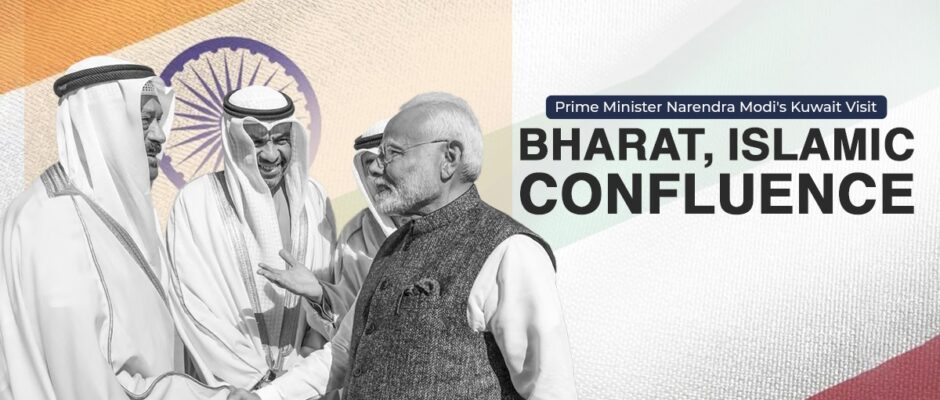
From Decades of Dormancy to Dynamic Diplomacy: How PM Modi’s Kuwait Visit Redefined Bharat’s Global Engagements. Vinod Kumar Shukla There is a misnomer that foreign policy of any country remains more or less the same while governments come and go. This is not true. Actually, it changes with the kind of government a country has from being submissive to assertive. Look at the case of Bharat where, ever since Prime Minister Narendra Modi took over, engagements with gulf countries have been of mutual interest by de-bracketing them from solely being Islamic nations, a great departure from the erstwhile Pakistan-centric foreign policy. Bharat has made its Western neighbour’s self-styled claim of being a stakeholder everywhere especially with Islamic nations meaningless. The engagement of Bharat with rest of the global communities are on equal footings. Ushering in a new era of global engagements, Prime Minister Narendra Modi expressed his concern during his Kuwait visit from December 21-22, 2024 stated that “it takes four hours to reach Kuwait from India but it took four decades for the Prime Minister.” This is despite the fact that over a million people of Bharat in Kuwait are the largest expatriate community which is regarded as the community of first preference among expatriates. The Gulf nation is a key source of investment for Bharat from the current president, Shaikh Mishal Al Ahmad Al Jaber Al Sabah, the Amir of Kuwait, of the Gulf Cooperation Council (GCC). Approximately 89 per cent of the total FDI from the GCC has been received in the last decade and bilateral trade between India and Kuwait in the last financial year was over $10 billion. The PM’s Kuwait visit is to further strengthen bilateral ties, operationalise security agreements that have been moving at a snail’s pace. Prime Minister Modi has been trying to make West Asia a trade gateway for the rest of Asia and Europe and create a business-friendly environment to invite and secure investments in the region. Bharat’s bilateral relations with most of the Gulf countries by de-bracketing Pakistan is no less than an achievement for any government. Now most of the countries are keen on deeper bilateral ties. But the way Kuwait facilitated PM’s interactions with diaspora and respected New Delhi’s sensitivities on cultural and religious matters, it clearly indicates Bharat’s growing diplomatic clout not only in the region but globally as well. West Asian countries are generally considered as oil supplying nations but Modi dispensation looks at them with mutual trust and opportunity in gamut of issues. Besides trade, regional security is another concern. The ongoing Israel-Hamas conflict and post-Assad instability in Syria are matters of concern. They are not only impacting regional security but also business prospects. Diplomatically cornering Pakistan, the two sides unequivocally condemned terrorism in all its forms and manifestations, including cross-border terrorism and called for disrupting of terrorism financing networks and safe havens, and dismantling of terror infrastructure during PM’s visit. They agreed to enhance cooperation in counter-terrorism operations, information and intelligence sharing, developing and exchanging experiences, best practices and technologies, capacity building and to strengthen cooperation in law enforcement, anti-money laundering, drug-trafficking and other transnational crimes. The two sides discussed ways and means to promote cooperation in cybersecurity, including prevention of use of cyberspace for terrorism, radicalisation and for disturbing social harmony. Defence cooperation is another area of mutual benefit and a Memorandum of Understanding (MoU) was signed between India and Kuwait to institutionalize bilateral cooperation in defence that included training, exchange of personnel and experts, joint exercises, cooperation in defence industry, supply of defence equipment, and collaboration in research and development, among others. India is gradually emerging as a defence exporting nation in a big way with its Make in India programme. The other issue that is very dear to the PM is solar energy (green energy) and making an oil exporting country like Kuwait the member of International Solar Alliance (ISA) is certainly a big deal. The world knows it well that solar energy is the future as fossil fuels are not forever. The ISA collectively covers the deployment of solar energy and addresses key common challenges to scale up its use to help member countries to develop low-carbon growth trajectories. Reducing carbon footprint is a global challenge and India has lived up to its global commitment. It wants others including developed nations to follow suit. Cultural linkages with West Asia are age-old and Bharat has always been wanting to continue which the PM has always been mentioning in his speeches. An understanding about Cultural Exchange Programme (CEP) between India and Kuwait for the years 2025-2029 has been reached about which would facilitate greater cultural exchanges in art, music, dance, literature and theatre, cooperation in preservation of cultural heritage, research and development in the area of culture and organizing of festivals. Sports is another area where India needs to do better and cooperation with friendly nations will help them to excel together. Executive Programme (EP) for Cooperation in the Field of Sports (2025-2028) is a similar measure that India and Kuwait have arrived at during PM’s recent visit which will strengthen bilateral cooperation in the field of sports by promoting exchange of visits of sports leaders for experience sharing, participation in programs and projects in the field of sports, exchange of expertise in sports medicine, sports management, sports media, sports science, among others. Most importantly, the persona and initiatives of Prime Minister Narendra Modi has been so overwhelming that Kuwait has bestowed upon him its highest knighthood order ‘The Order of Mubarak Al Kabeer’ which is the 20th international honour given to him. During his visit, the PM met with Crown Prince of Kuwait Sheikh Sabah Al-Khaled Al-Hamad Al-Mubarak Al-Sabah and discussed the importance to Bharat’s bilateral relations with Kuwait acknowledging that bilateral relations were progressing well and welcomed their elevation to a strategic partnership. They emphasized on close coordination between both sides in UN and other multilateral fora where India is not only seeking major reform and is emerging as an important player. In the context of the UN reforms, both leaders emphasized on the

Read More

Hindu Genocide Unfolding in Bangladesh

The situation in Bangladesh has reached a critical and alarming juncture, with a systematic and coordinated campaign targeting the Hindu community through acts of violence, destruction, and terror. This genocide, characterized by the deliberate annihilation of Hindu religious and cultural sites, as well as the targeted killings and displacement of individuals, poses an existential threat to the Hindu population in Bangladesh. The interim government must act with urgency and decisiveness: deploying security forces to protect vulnerable communities, ensuring justice through swift prosecution of those responsible, and initiating a comprehensive restoration of destroyed religious and cultural heritage. Moreover, the government must engage with international bodies to secure support and demonstrate a commitment to protecting all citizens, ensuring that such atrocities never occur again. Immediate action is not only a moral imperative but also crucial for the preservation of Bangladesh’s core fabric. Updated – Hindu Genocide Unfolding in Bangladesh

Read More

Hindu Genocide Unfolding in Bangladesh

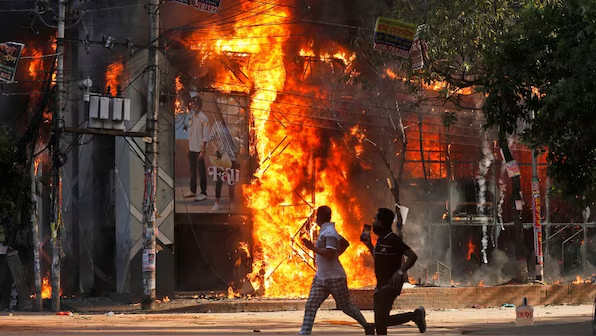
Hindus, Buddhists, Jains and Christian bear brunt of unprecedented violence unleashed by uncouth Islamists & their handlers. Rahul Pawa Today, Bangladesh faces critical juncture as Prime Minister Sheikh Hasina resigned amidst escalating unrest with an interim government now set to take charge under the military’s supervision. This comes as the country is engulfed in violence with the Hindus and other minority communities bearing brunt of what is rapidly becoming genocide of unimaginable proportions. As the world watched Bangladesh in horror, a systematic campaign of terror was fueled by Islamist extremists’ targeting Hindu homes, businesses, temples and lives. The unrest that began in June over a government job quota system has spiraled out of control. Initially seen as a movement for fairness, the protests quickly devolved into a pretext for Islamist factions including Jamaat-e-Islami, Hefazat-e-Islam and Jamaat Shibir to launch brutal attacks against Hindu and other minority community. The violence has been widespread and systematic: in Moulvibazar, the Notun Kali Temple was desecrated and Hindu homes were set ablaze displacing most families. In Chittagong’s Hajari Goli, Sri Krishna Temple was attacked and mobs attempted to break into Hindu homes specifically targeting families with young girls. These are not isolated incidents but part of a coordinated effort to annihilate Hindus in Bangladesh. Strikingly, the violence against Hindus in Bangladesh bore hallmark of genocide under international law. Genocide is defined as acts committed with the intent to destroy, in whole or in part, a national, ethnical, racial, or religious group. The targeted killings, such as the murder of Hindu police constable Suman Kumar and lynching of Hindu Awami League leader Haradhan Roy and his nephew are clear indicators of a calculated effort to eliminate this minority group. Furthermore, systematic attacks on religious sites including ISKCON and Kali temples and destruction of Hindu homes and businesses point to an organised campaign with genocidal intent. This is not random violence but sheer number of incidents reflects deliberate and coordinated effort to eradicate Hindus from Bangladesh. It is pertinent that the international community must recognize these signs and act before it is too late. For those closely monitoring events in Bangladesh, rapid spread of violence against Hindus following military takeover comes as no surprise. Bangladesh Army Chief held meetings with Jamaat-e-Islami and Hefazat-e-Islam leaders. But, there’s not a word on organised targeting of Hindus. The message is univocally clear, Hindus in Bangladesh are now under siege. In Feni Bash, Parsta Hindu Temple was attacked while riots have engulfed Hindu areas nationwide. In last two days, Islamists murdered two Hindus in Rangpur town and three more were killed by Jamaat Shibir protestors. Entire families have been wiped out, leaving survivors in fear and despair as Hindu temples, homes and businesses are systematically destroyed. The international community cannot remain passive while an entire population is being targeted for destruction. Moreover, Pakistan and China’s involvement in this crisis adds a dangerous dimension to the violence. Both nations have a vested interest in destabilising Bangladesh, and by backing Islamist factions like Jamaat-e-Islami, Hefazat-e-Islam, and Jamaat Shibir, they are advancing their geopolitical agendas while exacerbating the humanitarian crisis. Pakistan, known for supporting Islamist extremism and terrorism, has reportedly provided financial and logistical support to these extremist groups. China, leveraging its influence in the region, has further destabilised the situation, turning a blind eye to the atrocities committed against the Hindu population. This geopolitical strategy has made the situation far more complex, demanding global attention. The violence in Bangladesh is not merely an internal issue; it is part of a broader strategy that threatens the lives of millions of innocent people. The involvement of these two nations must be scrutinised and they should be investigated for their role in this unfolding genocide. The global community, including the United Nations, human rights organizations, and nations that believe in democracy, especially India, the regional super-power must take immediate action to prevent further atrocities. Diplomatic pressure should be applied to ensure the protection of Bangladeshi citizens, and an independent investigation into the crimes against Hindus must be initiated. The world has seen too many genocides in the past; one cannot afford to let history repeat itself. Immediate action is needed to halt the bloodshed and to ensure that justice is served for the victims of these heinous crimes. The time to act is now, before the situation escalates further and another dark chapter is written in the history of human rights violations. (Author is Director – Research at CIHS in New Delhi)

Read More

China-Pakistan Agenda in Bangladesh Protests

Violent protests by students against job quotas may have been conveniently used by Beijing & Islamabad to further their interests Rahul Pawa China, Pakistan, geo-political interest groups and international stakeholders may have muddied Bangladesh waters. They may have either directly or indirectly contributed to current wave of violent protests that resulted in 130 fatalities. These players may have conveniently used the anger against quotas for government jobs as a cover to stroke flames of dissent against Prime Minister Sheikh Hasina and her Awami League government. The current spate of violent incidents seems to have been triggered by Communist Party of China and Pakistan that have taken an adversarial position and spread discontent against Sheikh Hasina’s government. Protests erupted after Appellate Division of the Supreme Court decided on July 10, 2024 to maintain status quo on quota system intended for freedom fighters and their families for four weeks. This came after a High Court ruled on June 5, 2024 that declared 2018 government circular canceling 30 per cent quota for freedom fighter’s descendants in government jobs illegal. This sparked widespread anger among students and larger population, culminating in violent clashes and a death toll that continued to rise. Students from various universities in Dhaka united to demand quota reforms. After initial postponement owing to Eid and summer holidays, students movement resumed on July 1 with demonstrations. Students and teachers from public universities like University of Dhaka, Rajshahi University of Engineering and Technology and Jahangirnagar University, among others were soon joined by counterparts from private institutions such as North South University and BRAC University. Under the banner of Anti-discrimination Students Movement, they launched ‘Bangla Blockade’ (Bangladesh Shutdown) thereby disrupting domestic train and road transportation networks. Online activism surged with calls for “another 2018” in reference to previous quota reform movement. Subsequently, protestors call for a ‘Bangla Blockade’ intensified on July 7. As demonstrations spread nationwide, clashes with police on July 11 marked a significant escalation. Prime Minister Sheikh Hasina’s remarks on July 14, referring to Razakars (Bangladeshis who collaborated with Pakistan during 1971war) made during a press conference after her return from China coupled with the ruling Awami League’s hardened stance intensified the situation. This led to violent suppressions by Chhatra League and resulted in hundreds of injuries. The kindling for this unrest had been laid well before the court’s ruling as flames were fanned earlier this month during Prime Minister Sheikh Hasina’s visit to Beijing from July 8 to 10, 2024. The visit, intended to secure significant financial aid and strengthen bilateral ties ended abruptly, hinting at Hasina’s deep-seated dissatisfaction with the Communist Party of China (CPC). China offered only $100 million in financial assistance, a far cry from the initially promised $5 billion. Adding to the discord, Xi gave Hasina very little time as Beijing proposed a controversial ten-year re-education policy aimed at countering Islamic culture and promoting Chinese lifestyles, similar to measures implemented in Pakistan during 2010. This proposal, perceived as racist and a direct affront to Bangladesh’s cultural sovereignty, significantly strained Dhaka – Beijing relationship. The protests in Dhaka quickly escalated as protesting students and citizens voiced their dissatisfaction with reinstated job reservation quota. This policy initially abolished in 2018 reserved 30 percent government jobs for families of 1971 independence war veterans. The new quota system, viewed as unreasonable and discriminatory, exacerbated existing frustrations amid high unemployment and rampant inflation. Pakistan-backed Islamist groups such as Jamat-e-Islami, which have significantly undermined Bangladesh’s private sector, exacerbating economic challenges the country already faces.This influence, funded by the Middle East via Pakistan, has made government jobs even more sought after. The resulting volatility in the private sector has created a hostile environment, where economic grievances easily morph into political unrest. This destabilising influence was earlier evident during the violent response to the Bangladesh government’s attempt to modernise labor laws in 2018. The proposed changes aimed to attract more foreign investment by aligning local labour practices with international standards. However, Islamist groups, heavily funded by Pakistan vehemently opposed these changes arguing they would undermine Islamic values and worker rights. Jamat-e-Islami with its significant political clout mobilised large-scale protests and strikes which paralysed many sectors of the economy including the vital garment industry. This unrest discouraged foreign investment and highlighted the fragility of private sector in the face of Islamist political and religious extremism. Moreover, China’s involvement in Bangladesh’s student unions further escalates the situation. Reports indicate that CPC has infiltrated Bangladesh universities through education and student exchange programmes. Five Chinese universities in Yunnan province alone teach Bangla language and culture, sending students to Dhaka to create intelligence assets and funding channels for student wings. This strategy aims to mobilise Bangladeshi students against their own government’s policies thereby creating more space for CPC influence. Notably, student unions that staunchly defended Islam in Bangladesh remained conspicuously silent on CPC policies against Uyghur Muslims. The current situation reiterates CPC’s potential to influence and organise student protests in Bangladesh. Earlier, on April 13, 2021, students gathered at the Dhaka Press Club, demanding better arrangements from Hasina Administration for studying in China. The protest pressuring the Bangladeshi government nearly turned violent, demonstrating CPC’s influence and capability to mobilise students in Dhaka, highlighting its broader strategy of using education and cultural programs as tools of influence. Moreover, China-Pakistan nexus in Bangladesh adds another layer of complexity. Pakistani students often affiliated with Jamat-e-Islami collaborate with their Bangladeshi counterparts facilitating communication and coordination for protests. The human intelligence (HUMINT) capacity of Pakistan’s ISI has been instrumental in channeling Chinese funds to stage ongoing protests in Dhaka. Bangladeshi workers in Chinese companies are reported to have been trained to mobilise pro-China rallies as seen in 2019 when workers of Jingjiu Group in Bangladesh who were seen chanting Pro-China slogans in Mandarin. Intriguingly, CPC’s interest in Bangladesh extends beyond financial aid. Beijing aimed to establish strong foothold in South Asia leveraging its Belt and Road Initiative (BRI) aspiring to integrate Bangladesh into its economic sphere. Despite the disappointing loan offer, China has

Read More

Vienna Waltz for NSG

Modi’s visit to Austria signals global leaders to act decisively on nuclear governance, stability, innovation and facilitate India entry into NSG Rahul Pawa In a momentous visit that marks a significant milestone in India’s diplomatic history, Prime Minister Narendra Modi landed in Vienna on Wednesday after a successful tour of Russia. This visit, the first by an Indian Prime Minister to Austria in 40 years, underscores Modi’s strategic vision to elevate India’s global standing, particularly in the realm of nuclear technology and security. Austria, a key participating government of the Nuclear Suppliers Group (NSG), plays a pivotal role in shaping global nuclear policy. For India, securing NSG participating government status has been a long-held aspiration, one that Prime Minister Modi has tirelessly pursued. The NSG, a body of 48 participating governments that seeks to prevent nuclear proliferation by controlling the export of materials, equipment, and technology that can be used to manufacture nuclear weapons, represents a global group that India has sought entry into for over a decade. India’s quest for NSG entry began in earnest after its landmark civil nuclear agreement with the United States in 2008. This agreement, which allowed India access to civilian nuclear technology and fuel from other countries despite not being a signatory to the Nuclear Non-Proliferation Treaty (NPT), was a significant diplomatic achievement. However, for India to fully benefit from global nuclear commerce, NSG entry is crucial. It would provide India with greater access to nuclear materials and technology, enhancing its energy security but most importantly allowing India to contribute more significantly to global nuclear governance efforts. Modi’s visit to Vienna comes at a time when the global tech and security landscape is rapidly evolving. India’s potential inclusion in the NSG should be viewed not only as a recognition of its impeccable nuclear safety and clean usage record but also as a crucial step toward strengthening global nuclear technology and innovation. Austria’s influence within the NSG makes it a crucial ally for India in this pursuit for global good. India’s entry to the NSG has been a topic of discussion at multiple NSG plenaries over the past decade. Despite substantial support from several strong participating governments, Communist Party of China’s (CPC) opposition has been a significant obstacle. At the 2016 NSG plenary in Seoul, CPC insisted that India’s application could not be considered until the group agreed on criteria for non-NPT (Non-Proliferation Treaty) signatories, effectively blocking India’s bid despite strong backing from other major powers. CPC’s consistent stance against India’s entry, citing rules, procedural issues and the need for consensus, has frustrated many NSG members who view India’s inclusion as beneficial for global nuclear governance efforts and nuclear commerce. Meanwhile, India has made significant advancements in nuclear technology, particularly with its ambitious plans to develop thorium-based reactors. Thorium, a safer and more abundant alternative to uranium, promises to revolutionise nuclear energy. India’s expertise in thorium technology positions it as a leader in this field, with the potential to offer cleaner and safer nuclear energy solutions worldwide. The development of the Advanced Heavy Water Reactor (AHWR), designed to use thorium as its primary fuel, marks a significant stride in this direction. Several key NSG members, including the United States, France, Switzerland, and the United Kingdom, support India’s bid, arguing that India’s impeccable nuclear record, responsible nuclear behaviour, and potential contributions to global nuclear security make it a suitable candidate for the NSG. However, despite India’s commendable nuclear track record and significant advancements in nuclear technology, the Communist Party of China’s (CPC) objections to India’s entry into the NSG are perceived as a strategic maneuver to maintain its dominance in South Asia. CPC’s rationale appears to be rooted in a desire to prevent a regional competitor from accessing advanced nuclear technology and materials, thereby preserving its own strategic leverage. This stance is further complicated by CPC’s continued support for rogue nations like Pakistan and North Korea, which have contentious nuclear programs. By blocking India’s NSG entry, CPC not only undermines global efforts to foster responsible nuclear governance and energy security but also hampers broader international goals of enhancing nuclear safety, advancing technological progress in the nuclear sector and avoiding institutional scrutiny of its support to Pakistan and North Korea. As India continues its ascent as a major economic and technological power, its influence on the future of nuclear energy and security becomes increasingly crucial. PM Modi’s visit to Vienna transcends mere diplomacy; it is a powerful call for the world to acknowledge the evolving dynamics of global nuclear governance. The moment has arrived for the international community to move beyond regional politics and strategic rivalries, embracing a future where India’s contributions play a vital role in shaping global nuclear policies. During his visit, PM Modi is likely to engage in high-level discussions with Austrian leaders, emphasizing the mutual benefits of trade, business cooperation, collaborations, and significantly, India’s imminent NSG entry. This visit serves as a clear signal to the international community to recognise the significance of including India in the NSG and to act decisively in the interest of nuclear governance, stability and innovation. (Author is Director – Research, Centre for Integrated and Holistic Studies, a New Delhi based non-partisan think tank)

Read More

Identity in Flux: Understanding Complexities of Self-Perception

Balbir Punj While speaking in Lok Sabha on Monday (July 1), Rahul Gandhi issued a proclamation, “Aap Hindu Ho Hi Nahin” (You are not Hindu). The diatribe was undoubtedly directed against the Bharatiya Janata Party and the RSS, including Prime Minister Narendra Modi, his cabinet colleagues, fellow members of both houses and millions of voters and supporters of the saffron outfit. Rahul’s profane rant smacked of three things— his sense of entitlement, ignorance of Indian ethos and outright contempt for democratic norms. Can Rahul or anybody else decide who is a Hindu or not? During the just concluded Lok Sabha polls, 23.59 crore Indians had voted for the BJP. There would be millions more who support the BJP but couldn’t vote for their favourite party for various reasons. Without a doubt, overwhelmingly, they identify themselves as Hindus. In a jiffy, Rahul stripped them of their faith and identity! Who can dare make such a condescending statement? Only someone with an acute sense of entitlement. Unlike Abrahamic religions, Hinduism is timeless (hence also Sanatan), catholic and pluralistic. There is no centralised authority in Hinduism, and none has any right to pass such edicts regarding the faith. However, Abrahamic faiths are different. The Ahmadiyya sect in Pakistan has been shunned from Islam, and its followers are routinely persecuted because their belief system, differs a little from the mainline Shia-Sunni doctrine. These two sects are also perpetually locked in internecine wars because of their conflicting theological beliefs. Ironically, Ahmadiyyas were at the forefront, along with the Communists and Muslim League, in striving for an Islamic Pakistan. Doesn’t Rahul somewhat sound like a Pakistani establishment when he decrees in Lok Sabha who is a Hindu and who isn’t? During his one-hour 40-minute speech, Rahul also observed, “Those who call themselves Hindus indulge in hatred, violence and untruths 24×7.” Can anyone, including Rahul, make such an acerbic statement about Islam, or any other faith? Don’t miss the contradiction. After suspects are identified following a terror episode anywhere in the world, the usual comment is: a terrorist has no religion. The perpetrators of terror, however, insist that they caused the mayhem as a part of a divine mandate ordained by their faith. Rahul’s scalding allegations against Hinduism are without any basis whatsoever. He can get away with this charade because of the immunity members of Parliament enjoy. In their entire history, Hindus have resorted to violence only to defend themselves. Hinduism is inclusive and has in its fold numerous traditions, all equally valid – ranging from devout idol worshippers to outright heretic atheists. Anyone who cares to call oneself a Hindu is a Hindu. Rahul spoke about violence and hate. Given his track record in this respect, he sounds sanctimonious? While Rahul argues against the two evils, he happily promotes divisive narratives and conveniently allies with those very forces that seek to divide Indians based on caste, region and faith. Reducing Indians to sheer caste identity was central to his election campaign. Hate and divisiveness, the bane of India, have been introduced into its socio-economic-religio-cultural life by alien creeds. Use of violence and or deceit are a part of their playbook while dealing with non-believers or dissent within their ranks. Uniformity, particularly in matters relating to faith, is central to their existence. In contrast, Indian ethos indifferent to uniformity, focuses only on harmony. Who ceded one-fourth of India (August 1947) to the forces of Islamic fundamentalism, where only hate and intolerance rule? Pakistan is not just a country; it’s a bigoted idea that transcends borders. Recall 1980-90 when Pakistan trained, and funded terrorists, with local help, hounded Kashmiri Pandits, out of their ancestral homeland. In a recent interview, the newly elected National Conference Member of Parliament Aga Syed Ruhullah Mehdi threatened a repetition of the black decade in retaliation to the abrogation of Articles 370 and 35A. In the recent past, Kanhaiya Lal (28 June 2022) in Rajasthan and Umesh (21 June 2022) in Maharashtra, were beheaded by Islamic zealots. Last week (June 30, 2024), a young couple was publicly humiliated and battered in Taliban style by a muscleman affiliated with the local ruling party in West Bengal’s Uttar Dinajpur. On 27 June 2024, a Muslim woman was stripped, dragged by her hair and thrashed for over an hour by goons for supporting the BJP in West Bengal’s Cooch Behar. Berating and inhuman torture of victims such as Anees Mian-Parveen Jahan (Uttarakhand, 2022), Samina (Madhya Pradesh, 2023), and Tahira Bano (Rajasthan, 2023) don’t figure in public discourse. Killings of Hafizul Sheikh (West Bengal- 2024), Aijaz Ahmad Sheikh (J&K- 2024), Babar Ali (Uttar Pradesh- 2022), Sheikh Waseem Bari (J&K- 2020) etc. could get hardly any traction at home or abroad. They were all victims of hate and were guilty of a common ‘crime’: supporting the BJP. This list of hate crimes is indicative and not an exhaustive one. This loathsome itinerary of hate and violence, however, doesn’t concern Rahul. His public utterances are shaped by the compulsions of power politics and the requirements of the ideological ecosystem he is aligned with. His narrative, divorced from reality, is solely fashioned by political dividends he is aiming to reap. No wonder, with complete disregard to facts, he conveniently blames only those “who call themselves Hindus…” for these twin evils. There is a method to this madness. For decades, Congress has been on the decline. Rahul is in a hurry to resurrect it. His options are limited. It’s difficult to fault the incumbent Modi with his performance- his achievements are outstanding in most areas. As a shortcut to gather electoral support, Rahul is increasingly leaning on identity politics and aligning, knowingly or unknowingly, with the forces of neo-colonialism, that abhor a resurgent India. Rahul won Wayanad with the Indian Union Muslim League’s (IUML) support— a rabidly communal party, a post-independence reincarnation of the infamous Mohamed Ali Jinnah-led Muslim League. M. Muhammad Ismail fathered IUML after independence. Prior to 1947, he was the President of the Madras unit of the

Read More

Think Different, Do Differently

Modi 3.0 may have to extricate itself from incremental expansion of on-going projects, if it were to lead Bharat to exalted developed nation status K.A.Badarinath Prime Minister Narendra Modi is expected to form a government for record third term in a row with comfortable majority after a tumultuous eight-week long Lok Sabha elections campaign. While Modi 3.0 begins mid-June, there’s huge interest globally on the agenda for the new government. There’s already some spadework done by the present regime on what would perhaps be rolled out in first 100-days of freshly minted National Democratic Alliance government. Once the new government takes charge with a reconstituted team under Prime Minister Modi, political stability at centre and 20-odd states ruled by BJP or its coalition partners is assured.  Unlike several countries that are in the midst of wars, conflicts or political instability, Bharat would stand out as a nation of 1.4 billion people to emerge as the global economic powerhouse and a beacon of hope for global communities. The eight per cent plus growth coupled with stable interest rates and reined-in inflation levels at 4 per cent will serve as backdrop for Bharat to emerge as third largest economy globally surpassing Germany and Japan. After US and China, Bharat will emerge as third largest economy and a hub for agricultural produce, industrial manufacturing, providing services and export cost-effective quality goods and services. In first three years of Modi 3.0, Bharat will not only be valued as US$ five trillion economy, but would well be on way to move up market capitalisation in stocks sweepstakes. Already, both BSE and NSE have reported that market capitalization in Bharat have crossed a whopping US$ five trillion serving as a leading indicator on what’s in store for the economy. First big task for new finance minister to occupy the corner room in North Block would be to present a full regular budget in three months along with blueprint for making Bharat a developed economy by 2047. Opposition parties, especially the Congress, may have scoffed at the idea of ‘developed nation’ tag for Bharat, but putting in place nuts and bolts to go big is something inevitable. A commendable job done by Nirmala Sitharaman is what would come handy for Modi 3.0 while charting its course for attaining the exalted ‘vikasit bharat’ status which is both a commitment and conviction for Team Modi. Cash surpluses of over Rs. three lakh crore, RBI dividend of Rs 2.1 lakh crore and record foreign exchange reserves of US$ 648.7 billion as on May 25 serve as positives for new government to rollout short term measures in its long journey to becoming a developed nation. Even if interim budget expenditure projections of Rs 47.65 lakh crore and gross tax collections target of Rs 38.2 lakh crore are retained, borrowings through bonds and bills may be pruned by third edition of Modi government. Alternatively, retaining gross borrowings at Rs 14.13 lakh crore in 2024-25 will provide enough leeway for the new government to introduce new elements to economic expansion and put it on high growth trajectory of over 10 per cent growth on continuum for three years. A big push to capital spending to create assets across infrastructure areas at Rs 12 lakh crore may become focal point to further Modi government’s campaign to evolve New India along with new jobs, services and opportunities, cater to the aspirational youth that backed BJP-led NDA in the seven phase Lok Sabha elections that ended today. Sticking to fiscal prudence strategy that involves reduced fresh borrowings, lower accumulation of debt and interest payments outgo coupled with serious recalibration of food, fertilizer and oil subsidies may have to continue without any let up. On the parallel, deepening and broad-basing famed growth paradigm with focused development interventions in education, healthcare, housing, water and farm support is what the Narendra Modi government in its new avtar may have to continue. Real challenge will be to lay firm foundation for a ‘new developed’ Bharat. Out of box thinking may propel diversified economic expansion that’s inclusive and target oriented. For instance, can the new government think of 20 new growth centres to take Bharat’s economy to next level? What does that mean? Say for instance, can Sandeshkhali in West Bengal’s Sunderbans area where women faced violence and sexual abuse become new growth centre for women-centric development project? Three crore ‘lakhpati’ didis scheme be housed in Sandeshkhali and spread across Bharat as women’s economic empowerment project of Bharat. Local skills, opportunities and fresh ideas from different states apart from development of eco-sensitive Sundarbans waterfront can be weaved into this signature project of Prime Minister Modi. Comprehensive economic uplift project for tribal communities can be centred in Bastar or Narayanpur in Chattisgarh where both Left extremism and rampant religious conversion of vulnerable tribal communities happen routinely. Can a growth centre be planned and implemented for fisheries development with coastal Kerala or Andhra Pradesh being its headquarters? Should fisheries be managed and regulated from Delhi? A fresh economic growth model around fisheries and coastal areas development can be evolved to give thrust to these areas. If Hyderabad is developed as defence technologies and original manufacturing hub, can’t ports based economic development model be designed in Odisha? No new project, scheme or public sector company should be allowed registration in national capital region or the metropolis. Twenty-odd new thematic growth areas can be considered to spread development projects to nook and corner of Bharat. If required, some ministries, departments, state-run companies, autonomous bodies may have to be located away from Delhi. Modi 3.0 can even design twenty hubs with spokes and spines each for start-ups, different financial services etc as decentralized economic growth centres. Why not relocate agriculture ministry to say Amritsar or Ludhiana without making hue and cry about it? Should comprehensive hills development project not be run out of Uttarakhand or Himachal Pradesh? There’s very little utility in keeping environment and forests ministry housed in Paryavaran Bhavan located at posh Jor

Read More

American Paradox: Campus Protests in U.S. Universities

This unfolding scenario in U.S. campuses, casts a sobering light on the United States, a nation that brands itself as a global proponent of human rights and freedom of expression, underscoring the imperative for the U.S. to embody the principles it espouses, lest its credibility, be called into question.  Rahul Pawa             Nearly seven months have passed since Operation Al-Aqsa Storm—a military-grade terrorist attack carried out by sunni Islamist terror outfit Hamas and supported by four other Palestinian terrorist groups. This dreaded terrorist attack resulted in tragic deaths of approximately 1,200 Israelis and foreign nationals, and more than 240 people were taken hostage into Gaza from Israel, marking it as Israel’s deadliest day since its founding in 1948. In response to the terrorist attacks, Israel vowed to annihilate Hamas, launching a series of airstrikes and subsequent ground operations inside Gaza. According to the latest reports from the Hamas-controlled health ministry in Gaza, at least 34,596 individuals have been killed in Gaza since then. Fast forward to today, in the aftermath of the attack and Israel’s subsequent response, universities across the United States have become epicentres of heated debate, discord, and violence characterised by anti-Semitic and anti-Israel rhetoric. In the past month alone, escalating contentions at US universities have led to the arrest of over 1500 protesters across 30 U.S. campuses. This unfolding scenario casts a sobering light on the United States, a nation that brands itself as a global proponent of human rights and freedom of expression, underscoring the imperative for the U.S. to embody the principles it espouses, lest its credibility, be called into question.  (Author is Director – Research at New Delhi based think tank, Centre for Integrated and Holistic Studies) 

Read More

Pakistan, China Rob Balochs Freedom to Live

Protests in Amsterdam, Berlin on ‘black day’ against forced occupation and annexation of Balochi land marks 76 years struggle for liberation Rahul Pawa Seventy-six years ago, on March 27, 1948, Pakistan’s occupation and forceful annexation of Balochistan ignited a bloody conflict that has simmered since decades and claimed innumerable lives. This annexation, far from being a justifiable integration, signalled start of a prolonged struggle for Baloch people, who have since endured relentless torment and despair. Despite passage of time, the spirit of resistance within Balochistan remains undiminished, as its people continue to assert their rejection of Pakistani illegal occupation. This struggle is not just a tale of contested territory but a profound testament to resilience of Baloch peoples’ steadfast in their pursuit of self-determination.  Baloch account for roughly 15 million of Pakistan’s 240 million people, however, their province, largest in current day Pakistan, stands as the country’s most backward region despite its immense wealth in natural resources. This stark contrast is highlighted by its vast reserves of oil, coal, gold, copper, and gas which significantly contribute to Pakistan’s revenue. Result of, Balochistan has experienced a prolonged period of neglect and exploitation by the Pakistani state, which has primarily focused on exploiting its rich mineral resources without consideration for the people of Balochistan. This exploitation came to a head following Pakistan’s nuclear tests on May 28, 1998, at the Ras Koh mountains in Balochistan, which had devastating environmental and health impacts on the local population. The tests resulted in significant livestock losses and led to increased cancer rates among the Baloch people due to nuclear radiation exposure. These actions have fueled discontent and resistance against the state authorities. In addition to environmental degradation and a public health crisis, the region has been subjected to severe human rights abuses, including enforced disappearances and a notorious “kill and dump” policy of the Pakistan Army. This inhumane treatment has further exacerbated tensions in the occupied territory and fueled discontent leading to resistance against the Pakistani state and highlighted the urgent need for addressing severe human rights concerns in Balochistan. The dire situation in Balochistan, as unveiled in a 2016 United Nations Working Group’s assessment and corroborated by activist accounts, illustrates a severe human rights crisis that has not been adequately reported or acknowledged by the Pakistani state. The discrepancy between the provincial government’s admission of fewer than 100 missing persons and data from local sources of over 14,000 individuals missing underscores a profound transparency and accountability issue. Furthermore, while the Pakistan Commission of Inquiry on Enforced Disappearances documented 2,708 missing persons since 2011, activists report a staggering 504 extrajudicial killings within the province in just the previous year alone. These numbers, vastly divergent from official state reports, highlight a critical gap in the state’s acknowledgment and documentation of human rights abuses pointing to state complicity in the violations against the people of Balochistan. In addition, banking on occupied territories, the province hosts Pakistan’s only deep-sea port at Gwadar. This port, pivotal to the US $65 billion China-Pakistan Economic Corridor (CPEC), a project designed to connect southwestern China with the Arabian Sea via Pakistan, has added another layer of occupation of Baloch lands by the Communist Party of China (CPC) and its People’s Liberation Army (PLA). The strategic significance of Gwadar Port extends beyond economic interests, serving as a key maritime node in China’s Belt and Road Initiative (BRI). This development aims to expand China’s influence through a vast network of trade routes and infrastructure projects across Asia, Africa, and Europe. However, the expansion of Gwadar Port and the broader CPEC initiative have raised concerns among the Baloch population regarding sovereignty and the fair distribution of resources. These massive infrastructure projects serve the interests of CPC and Pakistani federal stakeholders, compounding environmental impacts, the displacement of local populations, and the alteration of traditional livelihoods. The influx of foreign workers, particularly from China, and the prioritisation of their needs and security have created an environment where the rights and welfare of the local population are sidelined. Reports of forced marriages have sparked outrage, highlighting the exploitation and vulnerability of local communities amidst the sweeping changes brought by these Chinese projects. This scenario is further complicated by extreme instances of human rights violations, including the suppression of dissent, censorship, and the curtailing of freedoms. The Baloch population’s grievances are not limited to economic marginalisation but extend to a profound sense of cultural and societal invasion. The presence of PLA and Pakistani security forces, under the guise of protecting investments, has led to a militarisation of the region, contributing to a climate of occupation, fear and repression. In the face of persistent human rights abuses and the forceful occupation of their homeland, the Baloch community worldwide observes March 27th as a ‘black day’, symbolising resistance against their land’s forced annexation. Spearheaded by the Baloch National Movement (BNM), significant protests across cities like Amsterdam and Berlin highlight Baloch struggle for freedom, denouncing Pakistan’s oppressive control, amplified by the complicating presence of China’s CPC and PLA through projects like the CPEC. This international outcry, marked by rallies and informative campaigns, not only exposes the dire situation in Balochistan but also calls for global intervention. The Baloch people’s defiance is a plea for recognition of their sovereignty and an end to external exploitations—a clear demand for justice and respect for human rights in the shadow of occupation and exploitation.  (Author is Director – Research at Centre for Integrated and Holistic Studies, a non-partisan think tank based in New Delhi)

Read More