CIHS – Centre for Integrated and Holistic Studies

Date/Time:

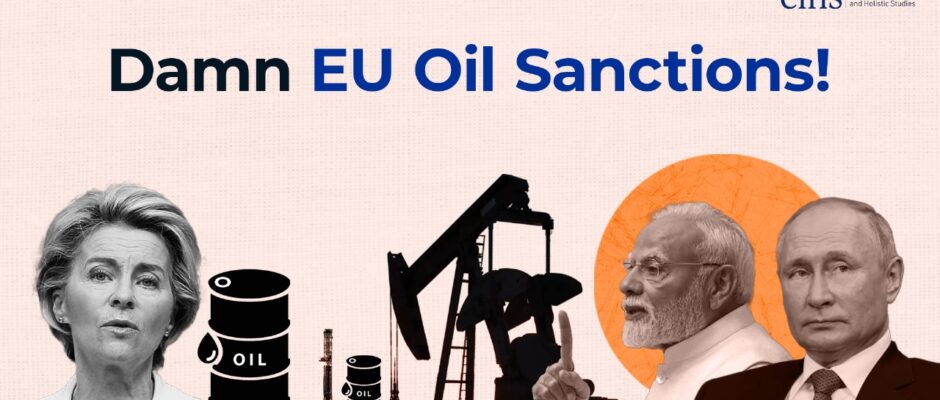
Damn EU Oil sanctions!

Damn EU Oil sanctions!

Strategic autonomy coupled with its right to source crude at affordable prices and quality is non-negotiable. Here’s New India… By NC Bipindra Latest round of sanctions announced by European Union on July 18, 2025, has opened a new chapter in the growing geopolitical standoff between Brussels and New Delhi. For the first time, EU has directly targeted Indian oil trade, specifically naming Nayara Energy’s Vadinar refinery which is majority-owned by Russia’s Rosneft. The EU sanctions, coming as it does within days of NATO Secretary General Mark Rutte’s warning about secondary sanctions on India, are part of these regional institutions’ crackdown on what it calls indirect financing of Kremlin’s war in Ukraine. At the heart of this issue lies India’s continued and unapologetic purchase of discounted Russian crude. India has been refining this oil and exporting resultant diesel and jet fuel, some of which flows back into Europe. While New Delhi views this as a perfectly legal and economically sound strategy, Brussels sees it as a dangerous workaround that weakens Western sanctions regime. What makes this clash more than a bureaucratic quarrel is its broader significance for global energy markets, economic diplomacy and tests limits of Western pressure in a multipolar world. Why Is the EU Escalating Pressure on India over Russian Oil Purchases? EU wants to isolate Russia economically. India, however, is determined not to compromise its energy security and strategic autonomy, the principles it considers non-negotiable. From European perspective, India’s growing role as a refinery hub for Russian crude threatens to undercut its sanctions framework. Eighteenth package of EU sanctions which includes lowering price cap on Russian crude to about $ 47.60 per barrel and sanctioning over 100 tankers in Russia’s so-called “shadow fleet,” is aimed at choking off alternative routes for Russian oil revenue. By focusing on Indian exports and targeting refineries like Vadinar, Europe is sending a clear message that it will go after any actor — state or private — that contributes to propping up Moscow’s war chest. What are Its Strategic Imperatives? But India isn’t taking this lightly. Ministry of External Affairs responded swiftly and sternly, calling the EU’s actions unilateral and unjust. Officials in New Delhi accused the bloc of practicing double standards, pointing to Europe’s own imports of Russian LNG and uranium even after war in Ukraine escalated. Energy security, Indian leaders assert, is not just a matter of policy but a constitutional duty, especially for a developing nation with over 1.4 billion people striving for economic growth and social stability. From New Delhi’s standpoint, its trade with Russia is both lawful and pragmatic. Indian officials frequently cite EU Regulation 833 / 2014, which states that once a good is substantially transformed in a third country, it is no longer considered to originate from the sanctioned country. India’s External Affairs Minister Dr. S. Jaishankar and Petroleum Minister Hardeep Singh Puri have made this argument repeatedly, maintaining that diesel refined in India is legally distinct from the Russian crude it was made from. The economic logic behind this policy is also compelling. Minister Puri has stated that importing discounted oil from Russia has saved India billions of dollars, helped stabilise inflation and shielded consumers from worst of global energy shock. In a world still reeling from economic aftershocks of the pandemic and the war, these savings have helped India remain on a steady growth trajectory while other economies faltered. India’s position is also shaped by deeper strategic calculations. The country has long prided itself on its foreign policy of non-alignment, now recast as “strategic autonomy.” This allows New Delhi to navigate complex relationships with both the West and traditional partners like Russia without being forced to pick sides. India’s close defence and energy ties with Moscow continue, even as it deepens cooperation with the United States and European Union in other areas like technology, trade, and counterterrorism. What are India’s Strategic Options? Rather than cave in to external pressure, India has quietly but effectively diversified its oil imports. Over past year, it has increased purchases from Middle Eastern countries, United States, Brazil and new suppliers in Africa and Latin America. This diversification has enabled India to demonstrate that it is not wholly dependent on Russian oil, even as it defends its right to continue buying it. At the same time, India has expanded its investment in natural gas, renewables and long-term energy security. A 15-year LNG deal with United Arab Emirates’ ADNOC, for example, will bring in one million tonnes of gas annually, supporting the country’s gradual shift toward cleaner fuels. India’s resilience is also built on its ability to conduct trade outside of Western financial and logistical systems. Russia has set up rupee-based trade settlements, used vostro accounts through Indian banks and relied on non-Western insurance and shipping firms. This alternative infrastructure insulates India-Russia energy trade from Western sanctions to a large extent and helps maintain stability despite external disruptions. Even as EU tightens restrictions and hints at possible secondary sanctions, India continues to find new export markets for its refined petroleum products. Africa, Southeast Asia and Latin America have emerged as key destinations where buyers are less concerned about the origins of crude and more focused on price and availability. These regions offer India a buffer against any loss of European markets, keeping its refineries running and export revenues intact. At the legal level, India has pushed back forcefully the very idea of violating sanctions. Indian legal experts argue that under international law, unilateral sanctions not backed by United Nations are not binding. New Delhi has taken this position consistently and has also pointed out hypocrisy of Europe’s own uneven implementation of sanctions where Russian LNG and enriched uranium remain untouched by embargoes. Behind all this lies a larger philosophical question. Should developing countries bear the brunt of economic disruptions caused by conflicts they did not start and do not control? India has answered this with a firm no. It argues that energy access at affordable prices is a matter of global

Read More
Deepening Crisis

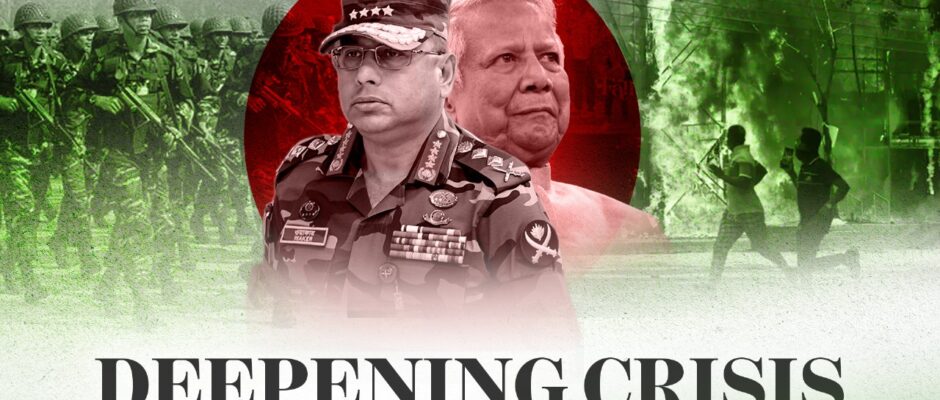
Deepening Crisis

Shrinking democratic space, Yunus going jihadist way and western powers weary of his idiosyncrasies has turned Bangladesh a hotspot.  Rohan Giri Bangladesh is in the midst of a major crisis given the political chessboard that exposes changing power dynamics, jihdist takeover, assertion of the military junta and people left to fend for them with the state giving up on governance. It’s not mere domestic political reconfiguration but a crisis in the making with both national and regional consequences. At the heart of this narrative lies decline of a figure once championed in Western capitals, Muhammad Yunus and subdued recalibration of power that tells extensively about where Bangladesh is headed and how the world must understand this transition. Muhammad Yunus, once hailed as a Nobel laureate and Grameen Bank microfinance model builder, was long seen as a link with Western liberal values.  But in today’s Dhaka, Yunus no longer commands the stature of a unifying reformist and an elderly statesman. His legal troubles, political marginalisation and increasing distance from the country’s current power centres suggest a systemic and perhaps irreversible break from liberal-democratic experiment that he once symbolised. His estrangement from the Bangladesh Nationalist Party (BNP), historically the principal opposition to erstwhile ruling Awami League, marks a decisive shift. Even Yunus lacks institutional support from security establishments, rendering such alliances practically ineffective. A recent massive rally titled “Rally for Establishing Youth Political Rights” was held in Dhaka by three BNP-affiliated groups, Jatiyatabadi Chhatra Dal, Jubo Dal, and Swechchhasebak Dal as Yunus left for a four-day visit to Japan. BNP Acting Chairman Tarique Rahman addressed the rally virtually, criticising the Yunus-led government. Days earlier, a BNP delegation demanded an election roadmap by December and urged the interim government to avoid long-term policy decisions especially on issues like the Rohingya corridor and Chattogram port. The political gap left after fall from the Awami League’s unquestionable supremacy has not resulted in democratic transition, realignment of democratic forces.  Once a prominent player in Bangladeshi politics, Awami League under Sheikh Hasina, has been accused of authoritarian drift, methodical repression of opposition and getting alienated from voters. The conditions are ripe for alternative centres of power to emerge not necessarily from existing political formations but actors whose influence is wielded from behind the veil of legitimacy. One such actor is Bangladeshi military that has distanced from Yunus. Historically, taking a cautious, if not aloof, approach to overt governance. The current climate indicates its willingness to fill the power vacuum. Notably, words and postures emanating from within the army reflect displeasure with both existing political leadership and personalities, like Yunus, who are frequently portrayed as associated with Western liberal objectives. The military’s reluctance to re-embrace Yunus reveals a deeper strategic concern: aligning too closely with an internationally admired but locally polarising individual risks alienating burgeoning nationalist sentiments and undermining internal cohesion. Compounding the uncertainty is reemergence of hardline Islamic factions, particularly the Jamaat-e-Islami, long banned but far from being irrelevant. In times of institutional fragility, such groups often find space to maneuver, projecting themselves as defenders of moral order and religious authenticity. Their attempt to “call the shots” politically, often through proxies and sympathetic networks, is no longer a fringe development but a potential axis of influence, especially in disenfranchised and conservative constituencies. Under the guise of populism and faith-based legitimacy, ideological extremists are bound to acquire traction due to the Awami League and BNP’s combined weakness or non-existence in political arena. In this calculus, pro-democracy actors, while vocal and active, remain largely performative in impact. The civil society fabric of Bangladesh, which once brimmed with journalistic bravery, legal advocacy, and grassroots mobilisation, now finds itself overpowered by a combination of state repression, media censorship and judicial intimidation. Though aligned ideologically with purported liberal reformists such as Yunus, these elements are neither organised nor empowered to counter the influence of either the security apparatus or resurgent Islamist formations. Individuals who are more concerned with maintaining institutional or ideological domination than with preserving democracy are increasingly filling the gap left by middle-ground political participation. From a geopolitical standpoint, these internal realignments have not escaped the attention of regional and global powers. United States, under shifting administrations, have shown signs of strategic disinterest in Yunus continued involvement in Bangladeshi politics. At the same time, US seems to be investing in other forms of influence projection, most notably through declaration of interest in Saint Martin’s Island, a location with increasing significance due to its naval and logistical potential. Although formally within Bangladeshi territory, US maneuvers signal a willingness to challenge regional hegemonies through presence rather than partnership. Interestingly, the Bangladeshi army’s own worldview appears increasingly decoupled from traditional alignments. While military engagement with China continues through defence procurements and limited logistical cooperation, the army remains skeptical of Pakistan, a country with which historical scars and ideological differences remain deeply etched. Since New Delhi is well aware of Pakistan’s ongoing attempts to retain influence in Dhaka through both ideological and illegal means, this suspicion may be a means of fostering understanding with India. India’s own perspective on these developments is complex and evolving. New Delhi has traditionally favoured stability over unrest in its eastern neighbourhood. Assam Chief Minister Himanta Biswa Sarma has however articulated concerns about Bangladesh’s vulnerability to becoming a chokepoint, a potential “chicken neck” in a broader strategic contest involving China, US and radical Islamic networks. The parallel highlights a concern about India’s own strategic bottleneck, the Siliguri Corridor and how instability in Bangladesh could lead to logistical and security issues in the northeast. Indian engagement, therefore, is not only about diplomatic alignment but about protecting crucial linkages and resisting China’s growing influence. The present course of Bangladesh raises uneasy concerns for democracies in the West. Common trends that are frequently disregarded in favour of short-term strategic collaboration or economic stability include the emergence of hardline forces, dwindling liberal voices and the assertion of military prerogative. If these trends are not addressed, they run the risk of combining to

Read More
Disruption In World Order Guaranteed!

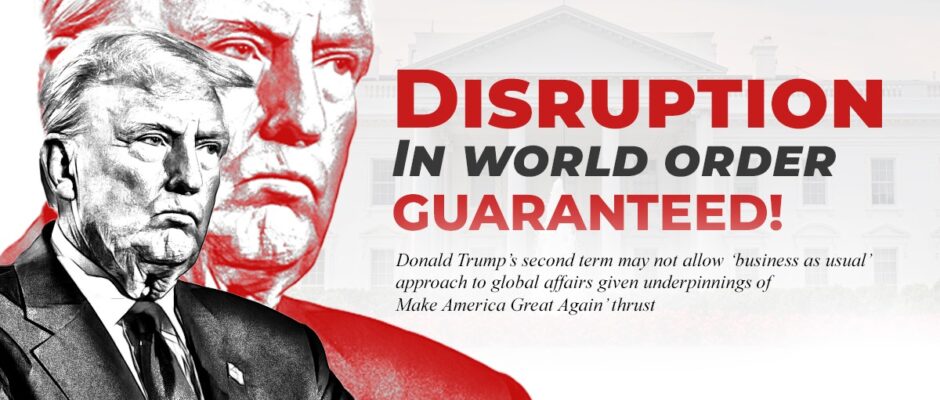
Disruption in World Order Guaranteed!

Donald Trump’s second term may not allow ‘business as usual’ approach to global affairs given underpinnings of ‘Make America Great Again’ thrust. K.A.Badarinath Across continents one big question that’s seriously debated and pored over is what’s in store during second term of President Donald Trump that would kick off in three weeks from now. Jokes, boardroom banter, hate, repulsion to cult following notwithstanding, Donald John Trump cannot be ignored as President United States of America (USA) given the landslide mandate that Americans have given him. One can rest be assured, he would make next four years very eventful at Oval Office after having gained serious insights into functioning of the Presidential role in his first term that ended in turbulence. Trump would not let the world forget in a hurry that he’s the only President who has been returned to White House after eviction from White House after Grover Cleveland several decades ago. Hence, it’s not surprising that from Africa, Asia, Europe to West Asia, tongues have begun to wag on state of play with staunch and determined Republican President at the hot seat in White House. But, what can easily be predicted is pursuit of aggressive ‘America First’ and ‘Make America Great Again’ that would dominate Trump Presidency on all fronts, be it economy, investment and trade, civilizational ties, diplomatic engagements, wars and conflicts in which US has direct or indirect linkages. Ultra nationalist sentiment of Western variety will have a sway during Trump regime within and beyond American borders. Expressive articulation of America First and Make America Great Again cannot be missed. A thorough review of all engagements including Israel, Ukraine and other conflict zones would become a priority for President Trump. And, rogue states like Pakistan are expected to face big time shove if Trump has his way. China may top Trump agenda with 50 per cent tariffs proposed on all exports to United States to rebalance bilateral trade. These levies would turn as many products non-competitive forcing Bejing to rethink its export strategy using third country labels to overcome the proposed tariff barriers. Bharat along with other BRICS member countries have already been put on alert as Trump has threatened with 100 per cent tariffs if the big developing countries went ahead with a common currency regime rivalling the American dollar. ‘De-dollarization’ move apart, Bharat may have to revisit its list of 30 US goods identified in 2018 and approached World Trade Organization for levying retaliatory tariffs on US. Also, sticky issues like Gautam Adani’s case in American courts and reported life bid on Khalistani terrorist Gurupatwant Singh Pannun will have to be dealt with deftly. Of late, growing anti-Bharat sentiment being belted out by American media outlets especially following Sriram Krishnan’s appointment as advisor on artificial intelligence to Trump may have to be addressed. Future of H1B work visas, US citizenship to children of such visas has turned absolutely uncertain. President Trump may have to take a call on this key issue. On two occasions in his first term, Trump had referred to 50 per cent restrictive duties on Harley Davidson motorcycles by Bharat. Even after his re-election in recent weeks, President-elect Trump described Bharat as ‘tariff king’. He conveniently chose to not refer to hiked tariffs on Indian steel and metallic products exports by him in his first term. Though the volume and value of defence exports to US are modest at US $ 1.5 billion, they may come under scanner of quixotic Trump. There are several such Indian export items that may be put to scrutiny by new regime. No wonder, Prime Minister Narendra Modi despatched his foreign minister Subramanyam Jaishankar to US in preparation for bilateral engagement with the ‘Don’. Modi who shares personal rapport with Donald Trump is expected to find a way out given that Indian investors are waiting in the wings to take larger positions – directly or indirectly — in US markets. President Trump would prioritize huge cuts in ‘federal spending’ of ‘non-essential’ and ‘non-strategic’ expenses by his government given the burgeoning long term deficits that US has piled up over years. Every dollar spent may be accounted for especially with technology czars like Elon Musk breathing down the neck pushing for ‘government efficiency’ on resources. Under President Trump, ‘radical left lunatics’ may get a big bashing on the butt that would eventually inflict damage on support structures for democrats. These Left hardliners have been peddling narratives that ‘liberal, open democratic character’ of US was under threat once the ‘Don’s’ second term began in 2025. Narrative battles in US between Left leaning ‘self-proclaimed’ liberals and Republicans under Donald Trump are expected to intensify further. Basically, ‘business as usual’ may not be possible with Donald Trump. Be it Canada, Panama, Greenland, Syria or elsewhere, there’s bound to be restlessness in Republican White House demanding a big changeover. Donald Trump seeking to turn Canada into 51st state of US sent shivers for Justin Trudeau who’s fighting with his back to the wall seeking re-election later next year. Here again, Trump demanded lowering of tariffs and in return offered US security cover to Canadians as fifty first state. Similarly, Panama was put on notice by Donald Trump who made two significant points from his perspective. One, the Panama Canal was being illegally controlled by Chinese people liberation army and the tariffs on movement of American goods were too huge that warranted a rollback. Thirdly, Donald Trump may have hit a raw nerve when he sought American pound of flesh in administration of resources-rich Greenland. Given that European Union has effective control on Greenland, Brussels may not take Trump’s comments rather lightly and forced to engage with him on the issue apart from legal migration and infiltration across US and EU member countries. Donald Trump may like to leave his imprint as a global leader in his four-year regime that’s bound to be eventful and has the potential to change face of global engagement. (Author is Director & Chief Executive at

Read More
Illicit Foreign Funding and Radical Islamist Agenda in UK Elections

Illicit Foreign Funding and Radical Islamist Agenda in UK Elections

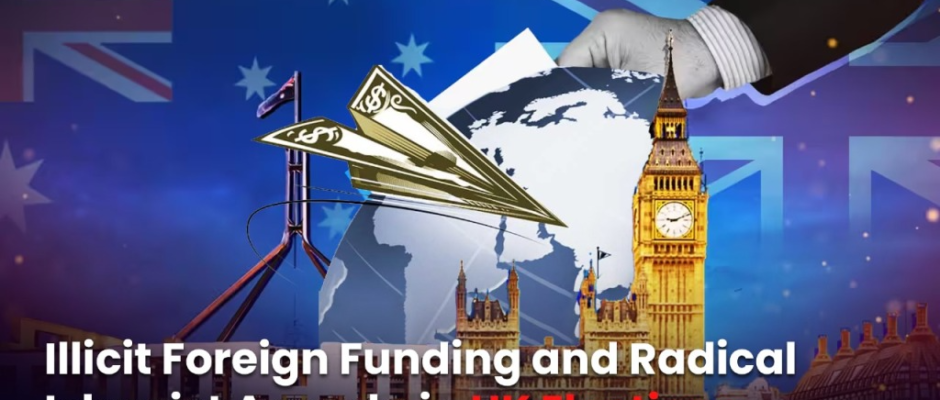
Rohan Giri Prior to the UK general elections, a media investigation revealed that five of the six major British political parties had taken illicit foreign funds. To minimise excessive foreign influence, British legislation compels parties to refund unlawful donations within 30 days and disclose any failures to the Electoral Commission. Only people on the electoral roll can make donations, with a minimum limit of £500. However, the Bureau of Investigative Journalism discovered that the Conservative Party, Reform UK, Liberal Democrats, Green Party, and Scottish National Party failed to prevent or identify these donations, which were made through an assortment of modest payments totalling more than £500 from a foreign source. As per the report, only the Labour Party successfully blocked such unlawful donations. Election law expert Gavin Millar criticised the self-policing method as ineffective and illogical because it relies on beneficiaries to enforce the law. Concerns had grown in the run-up to the 2024 UK general election about foreign players funding political non-governmental organizations (NGOs). Despite precise laws deliberate to prevent excessive foreign influence, some NGOs with significant influence in UK politics have evidently received large amounts of funding from international sources. These contributions, which are frequently routed through intricate channels to avoid detection, undermine the integrity of the democratic process and threaten to influence election results in favour of foreign interests. The current legal system, which relies mainly on self-policing, is deeply inadequate, allowing foreign funders to have hidden power over British politics. Several controversial groups in the British community receive funding from ambiguous sources, which they utilize to spread their propaganda and operations throughout the country. One prominent example is Muslim Council of Britain (MCB), an umbrella group that represents over 500 interconnected mosques and Muslim organizations. MCB has a notorious history of sponsoring and supporting extremist actions, prompting consecutive British administrations to adopt a “non-engagement” stance with the organization since 2009. Notably, the MCB backed a declaration in Istanbul calling for jihad in reaction to Israel’s activities in Gaza and backing Hamas attacks on foreign forces, possibly involving British troops. Another outfit of concern is Hizb ut-Tahrir, which is secretively operational in the UK despite being banned in many countries due to its disruptive ideology and links to terrorist acts. Hizb ut-Tahrir has been accused of radicalising young Muslims and pushing for the formation of a global caliphate through non-democratic means. Its financing roots are opaque, leading to suspicions of foreign financial aid intended to destabilise communities. Islamic Relief Worldwide, headquartered in the United Kingdom, has been accused of supporting terrorist entities, especially Hamas. However, the organization denies the accusations. Israel and the United Arab Emirates, have blacklisted for the concerns about the misuse of charitable donations to help terrorists. Furthermore, CAGE, a UK-based advocacy group, has made headlines for its provocative viewpoints and possible ties to terrorists. The entity openly advocated for the prominent figures such as Dr Aafia Siddiqui who is serving an 86-year jail term for the attempted murder of an FBI agent in disputed circumstances. She is an al-Qaeda sympathiser. Also, they advocated for Anwar al-Awlaki, an American-born cleric of Yemeni descent, who was a key figure in al-Qaeda in the Arabian Peninsula (AQAP). While CAGE professes to advocate for human rights, its support of high-profile terrorists and receipt of foreign financing have sparked investigation and criticism from a number of sources, including the British government. The Islamic community in the United Kingdom has considerable influence on the political mandate because of its large population and active involvement in societal and political concerns. British Muslims contribute to the electorate’s diversity of approaches, influencing policy discussions over immigration, foreign policy, and community welfare. The community’s participation in voting and political discourse ensures that the problems and demands of a sizeable portion of the people are addressed. This impact, however, can be destroyed by organizations and people that mislead or manipulate the community to advance their own objectives. Extremist organizations in the UK have not only attacked non-Islamic communities, as evidenced by the attacks on Hindus in Leicester, but are also actively influencing political circumstances ahead of the general elections. These organizations mobilise Muslim voters and lobby for certain political positions, such as supporting Palestinians and calling for a cease-fire in the Israel-Hamas conflict. According to studies, these organizations use societal tensions and global conflicts to acquire influence, which frequently results in heightened division and violence. The ubiquitous influence of these extremist groups emphasises the critical need for tougher measures to resist their activities and preserve the democratic process from being hijacked by radical ideology. In 2017, the Henry Jackson Society emphasised the importance of foreign money in spreading Islamist extremism in Britain. They noted that money, mostly from government-linked foundations in the Gulf and Iran, has supported the spread of extremist notions, particularly Saudi Arabia’s multimillion-dollar initiatives since the 1960s to promote Wahhabism. In the United Kingdom, the funds have taken the form of endowments for mosques and Islamic educational institutions that have hosted extremist preachers and distributed radical material. British Muslim religious leaders who have received training in Saudi Arabia, as well as the use of Saudi textbooks in Islamic schools in the United Kingdom, contribute to this effect. Many of Britain’s most infamous Islamist hate preachers are tied to foreign financing, which has contributed to the radicalisation of many who have joined jihadist groups in Iraq and Syria. Foreign funds pose a serious threat to the UK’s democratic values, as proven by recent exposes of illegal donations to major political parties and the influence of extremist organizations. Despite rules aimed at preventing undue foreign influence, the inability of a structured legal framework to ban illegal donations highlights the shortcomings of the current self-policing system. Furthermore, foreign funding by political NGOs and extremist groups undermines the legitimacy of the democratic process. These organizations use societal tensions and global crises to advance their objectives by propagating extreme beliefs and disrupting communities. (Author is a doctoral fellow at Amity University in Gwalior, content manager

Read More

Refusal to Reform

Self-defeating journey that Pakistan embarked upon with Jihadist mindset has rendered Shimla agreement ineffective & unworkable. Rohan Giri Fifty two years back, Shimla accord inked on July 2, 1972 by then Bharat’s Prime Minister Indira Gandhi and Pakistan’s President Zulfiqar Ali Bhutto, bears testimony to Islamabad’s refusal to learn its lessons. It’s also a missed timeframe for Pakistan for evolving as a well-meaning, affable and socio-economic development partner on western borders that Bharat was looking for. Partition of Bharat in 1947 by imperialist British forces on withdrawal mode inflicted a huge injury that cannot be easily forgotten. Instead of metamorphosing as a well-meaning society based on true Islamic values, it resorted to genocide of Bengali Hindus in East Pakistan in most inhuman way in 1971. Pakistan had to eat a humble pie after getting defeated at the hands of Indian army and consequent liberation of Bangladesh. Shimla agreement concluded in Barnes Court christened as Raj Bhavan today was intended at bringing about lasting peace in South Asia, especially Bharat and Pakistan. But, that did not happen as predicted even before ink on the Shimla agreement dried. Things did not work out as Sunni extreme leadership refused to acknowledge magnanimity of Bharat in returning their 93,000 war prisoners without a word. Questions were raised on intent of Smt Indira Gandhi who returned all major territories of Pakistan that came under Bharat fold in aftermath of the war. Intentions and goals articulated in Shimla Agreement were magnificent on paper but hollow in reality. Commitment to a direct, bilateral approach to problem solving, emphasis on face-to-face interactions, were laudable. Pakistan that had long history of deception and flopped promises saw the accord as a strategic pause rather than genuine peace initiative. Among Shimla Agreement’s six important clauses, pledge to observe Jammu and Kashmir’s Line of Control (LoC) was most significant. This was one commitment that Pakistan gravely breached very frequently. Disagreements were to be settled amicably and that no government would unilaterally change the status. This again was violated. The rogue state that it evolved to be, Pakistan, continued to fuel fires of turmoil, culminating in Kargil War in 1999. This blatant crossing of Line of Control served as vivid reminder that Pakistan had never genuinely embraced principles of the Shimla Agreement. The accord had highlighted mutual respect for one another’s geographical integrity and political independence. Pakistan, with its malicious intent and plan on Kashmir made attempts on several occasions to intervene in India’s domestic affairs, breaking the very foundation of the accord. The pledge to desist from hostile propaganda was a scam, as Pakistan’s official machinery continued to spew anti-India rhetoric, stoking hatred and division. Despite the Shimla Agreement, Pakistan’s conduct over the decades demonstrated its deceit. The Kargil conflict, in which Pakistani soldiers penetrated Indian territory along the LoC, was a clear act of aggression that shattered the already fragile agreement. This fight, which lasted for more than 60 days, exposed Pakistan’s true character, reinforcing its reputation as an untrustworthy neighbor. Indira Gandhi, acclaimed as a competent leader, was heavily criticized for signing the Shimla Agreement without achieving a resolution to the Kashmir conflict. The pact was viewed as a strategic failure, a concession that failed to capitalize on India’s resounding victory in the 1971 war. Pakistan’s claim to Kashmir, combined with its repeated efforts to internationalize the issue, have rendered the Shimla Agreement ineffective and meaningless. The Shimla Agreement’s history is one of unfulfilled promises and broken expectations. It underscored the futility of trusting a country that has repeatedly proven its propensity to destabilize peace for geographical advantage. Pakistan’s repeated betrayal, from the Kargil conflict to its current backing for cross-border terrorism, demonstrates that it never intended to comply with the Shimla Agreement. The agreement, while ostensibly a plan for peace, was a strategic failure that failed to address the two countries’ core challenges. It allowed Pakistan to recover and rearm, which eventually led to other instances of conflict. India’s generous gesture of returning POWs and territory was met with Pakistan’s unwavering enmity, demonstrating once more that Pakistan’s word could not be trusted. Finally, the Shimla Agreement, which was offered as a historic step toward peace and stability. Pakistan’s reluctance to respect its pledges, as well as its ongoing efforts to destabilize the region, have demonstrated that any agreement with such a nation is worthless. The Shimla Agreement serves as a clear reminder of the drawbacks of naive diplomacy as well as the importance of taking a hard stance when dealing with a fraudulent neighbor like Pakistan. (Author is a doctoral fellow at Amity University in Gwalior, content manager at Centre for Integrated and Holistic Studies)

Read More

‘Neighbourhood First’ Policy and Its Innovative ‘SAGAR’

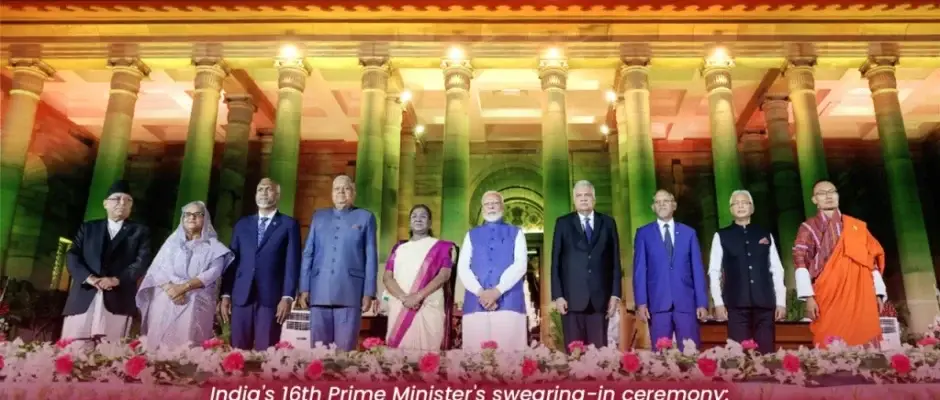
At the President house during swearing-in ceremony of India’s 16th Prime Minister, the country reaffirmed its unwavering commitment to its ‘Neighbourhood First’ policy and its innovative ‘SAGAR’ (Security and Growth for All in the Region) initiative. The invitation to neighbouring countries and those in the Indian Ocean Region (IOR), such as Sri Lanka, Bangladesh, Nepal, Bhutan, Maldives, Mauritius, and Seychelles, was extended amid the august assembly of dignitaries and demonstrated India’s unwavering commitment to developing strong ties with its maritime neighbours. Vision SAGAR started in 2015, to promote inclusion and adherence to international law while deepening economic and security cooperation, embodies India’s strategic vision for the IOR. Developing marine security capacities among neighbours is a key component of this goal, as it empowers them and ensures a cooperative approach to regional stability and prosperity. SAGAR is easily incorporated into the larger marine policy of India, working in concert with programs such as the Act East Policy, Project Mausam, and Project Sagarmala to advance the country’s approach towards regional providers of security. SAGAR highlights the significance of the Blue Economy and works to promote environmental stewardship and sustainable growth by utilizing the enormous potential of maritime resources. As India takes lead in IOR and is dedicated to creating an atmosphere of mutual respect, collaboration, and prosperity in order to fulfil the goals of all the nations in region. India aspires with SAGAR, the Indian Ocean would be a symbol of prosperity, peace, and advancement, demonstrating the strength of regional cooperation and strategic planning.

Read More

Hindu Manifesto 2024

On Saturday, June 8, the British Hindu community officially unveiled the Hindu Manifesto 2024. A long-overdue manifesto will emphasise a shared commitment to the advancement of not just British Hindus but the entire nation. Rohan GIRI             With the United Kingdom’s (UK) general election set for July 4, 2024. British Hindus are at a critical juncture. Due to its historical unwillingness to engage in political discourse, the community frequently regarded politics as a taboo subject. Many people do not vote, whereas some vote without thinking about the long-term consequences for themselves, their community, and the nation at large. According to the 2021 UK Census, British Hindus make up about 1.7% of the UK population, or approximately one million people. Despite their small numbers, their contributions to the British economy are unparalleled. As a community, they are among the top taxpayers, and their contributions to UK’s National Health Service (NHS) are imperative, with a large number of doctors, nurses, engineers, and other professionals. Additionally, Indians employ tens of thousands of individuals. British Hindus are a well-educated community that is self-sufficient, independent, and prosperous. Their commitment to prosperity and the rule of law reflects their extremely low numbers in British prisons, accounting for less than 0.3 percent of the total prisoners. Despite the community’s alignment with British values and society, it has minimal influence in British politics. This arena, where policies are formulated, laws enacted, and narratives established, demands a significant voice to shape the future. Unfortunately, British Hindus are often underrepresented or misrepresented in education, academia, media, and politics, both locally and nationally. They frequently face attacks, vilification, and maligning, with no substantial collective response to defend their interests and set the record straight. The next general election presents a crucial opportunity for the community to voice their thoughts. Parliamentary candidates must understand that British Hindu votes cannot be taken for granted. The community seeks fair representation and recognition of its contributions, highlighting Sanātan Hindu Dharma as an asset to Britain. The next general election presents a crucial opportunity for the community to voice their thoughts. Parliamentary candidates must understand that British Hindu votes cannot be taken for granted. The community seeks fair representation and recognition of its contributions, highlighting Sanātan Hindu Dharma as an asset to Britain. It is time for British Hindus to claim their seat at the table, shaping and influencing the country’s future. This involvement is not just a right but also a duty, or Dharma. The Hindu Manifesto 2024, launched by the British Hindu community, contains seven crucial pledges that the community expects from parliamentary candidates and future governments. These assurances are designed to ensure the protection, promotion, and progress of Hindu values and interests within the broader British society. The Seven Assurances of the Hindu Manifesto UK 2024: “Recognising Anti-Hindu Hate as a Religious Hate Crime: This expectation demands the identification and prosecution of groups and individuals that perpetrate anti-Hindu hatred. Recognising such acts as religious hate crimes will ensure that they are taken appropriately and addressed accordingly. Protecting Places of Hindu Worship: Ensuring the safety and purity of Hindu temples and places of worship is critical. This promise aims to preserve these precious areas from damage and attacks. Access to Fairer Education: This involves advocacy for an education system that accurately represents Hindu culture and contributions, as well as ensuring that textbooks are inclusive and unbiased. Equal Representation and Opportunities for Hindus: This protection aims to address Hindus’ underrepresentation in numerous sectors by struggling for equal opportunities in employment, politics, and other areas. Streamlining Immigration: The need for fair and efficient immigration laws that make it easier for people looking to join family in the UK or contribute to the British economy. Healthcare and Social Care: Encourage and enhance access to healthcare and social care services for Hindus while also addressing their special needs and concerns. Acknowledging and Protecting Dharmic Values: It aims to understand and respect the Hindu Dharmic way of life by consulting with the community while legislating on intra-community issues affecting the UK Hindu community, by facilitating infrastructure for religious ceremonies such as marriage and cremation, by commissioning a memorial for Hindu soldiers who served and died for the UK, and by understanding that the connection between UK Hindus and India (Bharat) is spiritual rather than political.” The Hindu Manifesto is a call to all parliamentary candidates and political parties to engage with and support the Hindu community in their respective areas. It has already received endorsements from various parliamentary candidates who have declared their support for the manifesto and its goals. As the general election approaches, the Hindu Manifesto will act as a guide for British Hindus, reminding them of their ability to shape the political landscape and ensure their community’s interests are reflected and safeguarded. This election is a critical opportunity for British Hindus to establish their presence, demand fair representation, and contribute to determining the future of the UK in a way that recognises and appreciates their substantial contributions. The election is an opportunity for British Hindus to turn their contributions, concerns, and expectations into legitimate political influence. The substantial participation and widespread support for the Hindu Manifesto 2024 can demonstrate to political leaders that the community is a force to be reckoned with, worthy of representation and consideration in policies. The ramifications of this participation will extend far beyond election day, potentially ushering in an era where British Hindus’ voices are fundamental to national conversations, their needs are met, and their values are upheld in the halls of government. (Author: Rohan Giri is a journalism graduate from Indian Institute of Mass Communication (IIMC) New Delhi, and Manager Operations at CIHS.)

Read More

Propagating ‘Truth’ That Never Existed!

Both, US and China used devious means to force a tilt, influence outcomes of recently concluded Lok Sabha elections in Bharat Vinod Kumar Shukla Cognitive warfare is the new tool deployed by a few global powers to ensure their continued dominance on others throwing ethics and internationally accepted practices to wind. These powers have attempted suppression of fair practices in election of a government especially in countries where there is a vibrant democracy. Among others, India too faced challenges where democratic process was allegedly tried to be influenced by creating false narratives with help of Artificial Intelligence (AI) and Social Media influencers. Most of these falsehoods were not only funded by foreign countries but ideas too were generated on foreign soil. Investigations revealed that STOIC, an Israeli company attempted to interfere in Lok Sabha elections by peddling anti-BJP agenda dubbed as ‘Zero Zeno.’ Efforts were made to manipulate public opinion even in Canada, US, Israel, and Ghana. With help of AI, web articles and social media, comments and content were generated and pushed across Instagram, Facebook, and X focusing on criticizing the BJP and praising the Congress. AI was used to create fictional characters and fake social media accounts with specific variables like age, gender and location. Bogus accounts were created to engage people with such posts that gave the impression of genuine audience interaction. China too was actively involved in this disinformation campaign and escalated its campaign for changing the government in India after People’s Liberation Army was humiliated both in Doklam and Galwan Valley. Artificial intelligence was craftily used to construct propaganda content, images and videos targeting parties and politicians opposed to Chinese hegemonic design. Microsoft had cautioned that China was poised to use generative AI to sway elections all across scheduled for this year. Chinese interference is deeply rooted in its expansive ‘influence operations’ (IO) targeting leaders of other countries with its disinformation campaign to undermine leaders by portraying them as weak and vulnerable. Spamouflage Dragon or Dragon Bridge or Storm 1376, a key Chinese disinformation propagator network has been functioning since 2017-18 on social media. Its activities came to notice when around 9,000 Facebook and Instagram accounts linked to this network were shut down by Meta in August 2023. In November 2023, approximately 4,800 fake Chinese social media accounts impersonating Americans were shut down for disseminating narratives designed to polarise public opinion through biased political content ahead of US elections. The same was done in Australia and the Philippines during 2022 elections. Beyond social media, Chinese IO strategies include both overt and covert tactics involving cultivation of assets like local and independent media, influential personalities, political parties, business figures and NGOs. Preference for particular candidates was subtly communicated not through direct diplomatic utterances but via Chinese state-affiliated media and United Front Work Department (UFWD) which is dedicated to exerting overseas influence. On the parallel, investigation on Chinese funding of NewsClick in Bharat is underway and the matter being heard in the court. Chinese objective of meddling in elections is to ensure that elected candidates or parties should adopt a pro-China stance. These disinformation campaigns aim to sway election outcomes by undermining voters’ confidence in candidates not favoured by China. Recent escalation in Chinese disinformation involves leveraging generative AI technology to prepare propaganda images and videos. These AI-generated materials target parties and politicians critical to China. Initially this technology was used during presidential elections of Taiwan to undermine Taiwan’s democratic framework, promoting a pro-unification narrative, and weakening Taiwan’s ties with the US. In fact, Chinese disinformation campaigns on the national security of various countries have prompted many to ban popular Chinese social media platform TikTok. But, reports indicate that China continues to meddle in foreign elections to emerge as a global power. Besides China and Israel, millions of dollars were spent to impact elections in India. Western interference from European Union and US too were in the game. Media outlets with tacit, explicit funding and a few funded by organizations with background in peddling agenda based narratives through stories on ‘random WhatsApp groups’ by creating heroes out of Pak-sponsored stooges. Recent elections in India witnessed the most intrusive foreign reporting with overwhelming negative and brazen reports about ruling dispensation. All this was done to have a Parliament with leaders who can help impose political agenda of countries which are instrumental in spreading these canards. The objective is to secure a favourable outcome aligning with its strategic interests. Western media was found indulging in mud-slinging to sully the image of select leaders and their party in a sinister attempt to impact voter’s minds. Dangerous narratives were peddled by a so-called Indologist Christophe Jaffrelot as the ‘caste census’ narrative allegedly came from France. Jaffrelot extensively writes on India. The French media had shown special interest in these elections with extensive reporting by Le Monde, Le Soir, France 24, La Croix (International), Le Temps, Reporterre, and Radio France Internationale (RFI) to shape up a particular narrative to impact Indian elections with Jaffrelot as an expert on almost everything in India. With the help of Trivedi Centre for Political Data (TCPD) at Ashoka University, Jaffrelot and his disciple Gilles Verniers aggressively peddled a narrative that ‘lower castes’ had lesser representation in politics, quoting profile of MPs in 2014 Lok Sabha. However, the expert duo immediately changed their stand when the 2019 Lok Sabha had a higher representation from lower castes. In fact, never before was he referred by so many outlets in such a short time. He wrote a paper on ‘need of caste census’, in September 2021. US and China attempted to play dirty in just concluded elections with startling discourse being Caste Census which certainly was not organic. Jaffrelot had allegedly received massive funding from the US-based ‘philanthropic’ organization Henry Luce Foundation (HLF) around the same time. HLF was founded by Henry Luce, the founder of TIME magazine. Lesser known fact about Luce is his alleged deep-state connections. He was born to Presbyterian Christian Missionaries and supported by

Read More

Fresh Set of Challenges for Modi 3.0

Khalistanis, Naxalites, Kashmiri subversives gaining legitimacy in Parliament demands fresh thinking and strategy K.A.Badarinath As Bharat’s Prime Minister Narendra Modi readies to take reins at centre for a third consecutive term, challenges, known and unknown may have to be dealt with on priority basis. Commentators of every hue and shade have written copiously on Prime Minister Modi’s tenacity or lack of it to run a coalition government with Telugu Desam and Janata Dal (United) and half a dozen others in tow. Challenges identified here are different and mostly new to tackle right away. For a year, Amritpal Singh, a Khalistani extremist who waged a war on Punjab Police has been put away in Dibrugarh jail of Assam. Waris Punjab De chief who hitherto owned a logistics company in Dubai is being tried for crimes including possible treason after having led a mob on Ajnala police station in Punjab. He’s being tried under National Security Act (NSA) from April 2023. His reported linkages with Pakistani spy agency, ISI to source weapons to spill violence on streets of Punjab are some of the allegations against Amritpal Singh. The 31-year old radical Khalistani separatist will have to be dealt with by Modi government when eighteenth Lok Sabha opens for newly elected members of Parliament to take oath. From Khadoor Sahib in the Punjab, Amritpal Singh was elected a member of Lok Sabha after having trounced his Congress rival. Security forces that laid trap in and around Punjab after the Ajnala incident will now have to provide security cover to the ‘Honourable Member of parliament’. Singh was successful in recent elections with highest majority of 1.97 lakh votes in Punjab. Member-elect from Khadoor Sahib will have to be respectfully escorted by the very security forces from jail to Parliament. Election Commission of India (ECI), Lok Sabha Speaker and the new government apart from courts will have to bear with his idiosyncrasies on Khalistan, the imaginary separate Sikh state. One big positive however is that the avowed Khalistani will have to take a pledge as per Bharat’s Constitution and work within the country’s governance system. Protocols to deal with him will change overnight. Second case will be Sarabjeet Singh Khalsa, son of Beant Singh who killed then Prime Minister Indira Gandhi following Operation Blue Star. Sarabjeet is the new Member of Parliament elected from Faridkot and a fundamentalist. Though an independent candidate, hitherto Sarabjeet Singh Khalsa was with Siromani Akali Dal – Amritsar. This party has had Simranjit Singh Mann as its member in Lok Sabha from Sangraur previously represented by Chief Minister Bhagwant Singh Mann. Sarabjeet Singh Khalsa’s plank as an independent in Faridkot was to seek justice for desecration of Guru Granth Sahib in October 2015. On October 12 that year, Sikhs’ holy book was desecrated in Behbal Kalan and a couple of days later two sikh youth were killed. This very is part of Faridkot constituency. Even after election, Khalsa and Mann along with several Khalistani separatists shouted slogans for a separate Sikh state at Golden Temple, the highest seat of Sikh Panth in Amritsar. While Sarabjeet is regarded a fundamentalist, his election and allegiance to Bharat’s Constitution as a Parliament Member may ring in some positivity. But, there’s denying that going forward Sikh panthic politics has come here to stay and traditional Sikh parties like Shiromani Akali Dal will have to make way for new alignments and forces especially aligned with extremist and terror elements globally. Modi government will have to redraw its Punjab strategy in sync with new realities. Third member who could turn tricky for Narendra Modi government is Sheikh Abdul Rashid who’s serving his term in Tihar jail. He’s been elected to lower house from Baramulla after trouncing former Chief Minister Omar Abdullah of National Conference. Popularly known as engineer Rashid, he’s been in high security Tihar jail for over five years in cases relating to money laundering and funding terror in the Kashmir valley from across the border and elsewhere. Oppression, revenge and jail term were emotionally put forth by his sons to garner votes for engineer Rashid. While Rashid’s swearing in as Lok Sabha member would turn an eyeball event, abrogation of Article 370, Jammu and Kashmir assembly elections may come back to focus. Courts have to take a call on his interim bail to facilitate his swearing in. After a gap of 25-years, Communist Party of India – Marxist Leninist (Liberation), Left extremist group will enter the parliament with two  of its members in Rajaram Singh from Karakat constituency. His comrade, Sudhama Prasad defeated BJP minister and high profile R K Singh from Arrah. Both these constituencies are in Bihar. The party that draws inspiration from one of left extremist movement, Charu Mazumdar, has moved into public space from arms struggle and is part of the opposition, Indi alliance. CPI-ML Liberation shifted gears and moved away from Kondapalli Seetaramaiah faction’s Peoples’ War group that still is in the midst of waging a war against the state.  Mainstreaming of naxalites with entry into Parliament and state legislatures is a tribute to Bharat’s democracy. But, spread of Left extremist political ideology overtly may demand a fresh strategy from Modi government. Chandrashekhar Azad alias Ravan is yet another figure from Uttar Pradesh that BJP-led alliance that needs to watch out for.  Chandrashekhar will represent Nagina Lok Sabha constituency in the lower house after having won the seat with a margin of over 1.51 lakh votes. He is regarded as a self-established Dalit leader after having setup the Bhim Army. His activism extends to a decade. On March 15, 2020, Chandrashekhar launched Azad Samaj Party (Kanshiram) to mainstream his political activism overtly. Initially, he looked at a tango deal with Akhilesh Yadav’s Samajwadi Party (SP). But, Chandrashekhar felt let down when his party was offered just two seats in the Lok Sabha elections by SP. Azad’s direct involvement in Saharanpur violence led to his arrest under National Security Act by the Uttar Pradesh government. Delhi Police denied him

Read More

Reforms Should Go Beyond Economy, Touch Every Facet of Life

Let’s leverage strengths for global good, meet aspirations of Bharat’s citizens as we progress to become a developed country by 2047 Narendra Modi The biggest festival of democracy, the 2024 Lok Sabha Elections, is concluding today in our nation, the Mother of Democracy. After a three-day spiritual journey in Kanniyakumari, I have just boarded the plane for Delhi. Through the day, Kashi and numerous other seats have been in the midst of voting. My mind is filled with so many experiences and emotions… I feel a boundless flow of energy within myself. The 2024 Lok Sabha elections are the first in the Amrit Kaal. I began my campaign a few months ago from Meerut, the land of the First War of Independence of 1857. Since then, I have traversed ac-ross the length and breadth of our great nation. The final rally of these elections took me to Hoshiarpur in Punjab, the land of the great Gurus and a land associated with Sant Ravidas Ji. After that, I came to Kanniyakumari, at the feet of Maa Bharti. It is natural that the fervour of the elections was echoing in my heart and mind. The multitude of faces seen in rallies and road shows came in front of my eyes. The blessings from our Nari Shakti… the trust, the affection, all of this was a very humbling experience. My eyes were getting moist… I entered into a ‘sadhana’ (meditative state). And then, the heated political debates, the attacks and counter-attacks, the voices and words of accusations which are so characteristic of an election… they all vanished into a void. A sense of detachment came to grow within me… my mind became completely detached from the external world. Meditation becomes challenging amidst such huge responsibilities, but the land of Kanniya Kumari and the inspiration of Swami Vivekananda made it effortless. As a candidate myself, I left my campaign in the hands of my beloved people of Kashi and came here. I am also grateful to God for instilling in me these values from birth, which I have cherished and tried to live up to. I was also thinking about what Swami Vivekananda must have experienced during his meditation at this very place in Kanniyakumari! A part of my meditation was spent in a similar stream of thoughts. Amidst this detachment, amidst the peace and silence, my mind was constantly thinking about the bright future of Bharat, the goals of Bharat. The rising sun at Kanniyakumari gave new heights to my thoughts, the vastness of the ocean expanded my ideas, and the expanse of the horizon continuously made me realise the unity, the Oneness, embedded in the depths of the universe. It seemed as if the observations and experiences undertaken in the lap of the Himalayas decades ago were being revived. Kanniyakumari has always been very close to my heart. The Vivekananda Rock Memorial in Kanniyakumari was built under the leadership of Shri Eknath Ranade ji. I had the opportunity to travel extensively with Eknath ji. During the construction of this memorial, I had the opportunity to spend some time in Kanniyakumari as well. From Kashmir to Kanniyakumari… this is a common identity that is deeply ingrained in the heart of every citizen of the country. This is the ‘Shakti Peeth’ (seat of Shakti) where Maa Shakti incarnated as Kanya Kumari. At this southern tip, Maa Shakti performed penance and waited for Bhagwan Shiva, who was residing in the Himalayas at the northernmost parts of Bharat. Kanniyakumari is the land of confluences. The sacred rivers of our country flow into different seas, and here, those very seas converge. And here, we witness another great confluence – the ideological confluence of Bharat! Here, we find the Vivekananda Rock Memorial, a grand statue of Saint Thiruvalluvar, Gandhi Mandapam, and Kamarajar Mani Mandapam. These streams of thought from these stalwarts converge here to form a confluence of national thought. This gives rise to great inspirations for nation-building. This land of Kanniyakumari gives an indelible message of unity, especially to any person who doubts Bharat’s nationhood and the sense of unity. The grand statue of Saint Thiruvalluvar in Kanniyakumari seems to be looking at the expanse of Maa Bharti from the sea. His work Thirukkural is one of the crown jewels of the beautiful Tamil language. It covers every aspect of life, inspiring us to give our best for ourselves and for the nation. It was my great fortune to pay my respects to such a great figure. Swami Vivekananda once said, “Every nation has a message to deliver, a mission to fulfil, a destiny to reach.” For thousands of years, Bharat has been moving forward with this sense of meaningful purpose. Bharat has been a cradle of ideas for thousands of years. We have never considered what we have acquired as our personal wealth or measured it purely by economic or material parameters. Therefore, ‘Idam-na-mama’ (this is not mine) has become an inherent and natural part of the character of Bharat. Bharat’s welfare benefits our planet’s journey to progress as well. Take the freedom movement as an example. Bharat gained independence on Aug 15, 1947. At that time, many countries around the world were under colonial rule. Bharat’s independence journey inspired and empowered many of those countries to achieve their own freedom. That same spirit was seen decades later when the world came face to face with the once in a century Covid-19 pandemic. When concerns were raised about the poor and developing countries, Bharat’s successful efforts provided courage and assistance to many nations. Today, Bharat’s governance model has become an example for many countries around the world. Empowering 25 crore people to rise above poverty in just 10 years is unprecedented. Innovative practices such as Pro-People Good Governance, aspirational districts, and aspirational blocks are being discussed globally today. Our efforts, from empowering the poor to last-mile delivery, have inspired the world by prioritising individuals standing at the last rung of society. Bharat’s Digital India campaign is now an example for the entire

Read More