CIHS – Centre for Integrated and Holistic Studies

Date/Time:

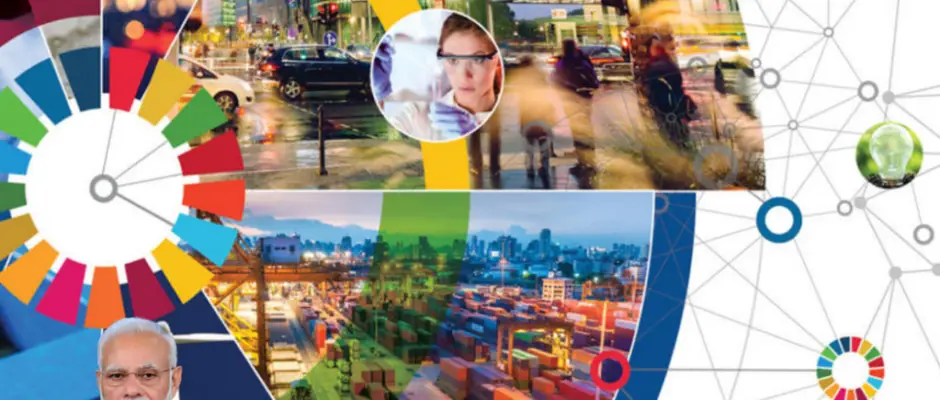
India to assume G-20 Presidency on Thursday

On Thursday, India will take formal charge of G-20 as President from Indonesia amidst several challenges faced internationally especially terrorism, radicalization and recession staring in the face across Europe, Covid 19 virus and challenge to President Xi Jingping’s leadership in China apart from unending war in Ukraine. India brings to table a lot of value to G-20 – the most influential global forum of developed and developing countries representing roughly 4.6 billion people – as President till November 30, 2023. Showcasing unity with diversity, India’s culture, products from each of the districts with over 200 events, stakeholders meetings across the country including Jammu & Kashmir as well as Arunachal Pradesh may be attempted by India gearing up to lead the world. If initial reports are to be believed, stakeholders, Presidents & Prime Ministers apart from negotiating groups and officials from these countries will be hosted in 50 cities in India. About 100 Indian monuments will be illuminated with G-20 logo that pushes for ‘Vasudaiva Kutumbakam’, world as one big family. Students and youth from colleges and universities in different states will get to be part of this largest international outreach during next one year. G-20 group accounts for 20 major economies of the world, more than 80 per cent of global GDP, 75 per cent international trade and 60 per cent of the population. The forum has met every year since 1999. Its leaders meet for an annual G20 Leaders’ Summit since 2008.

Read More

Why the tirade against ‘Hindus’?

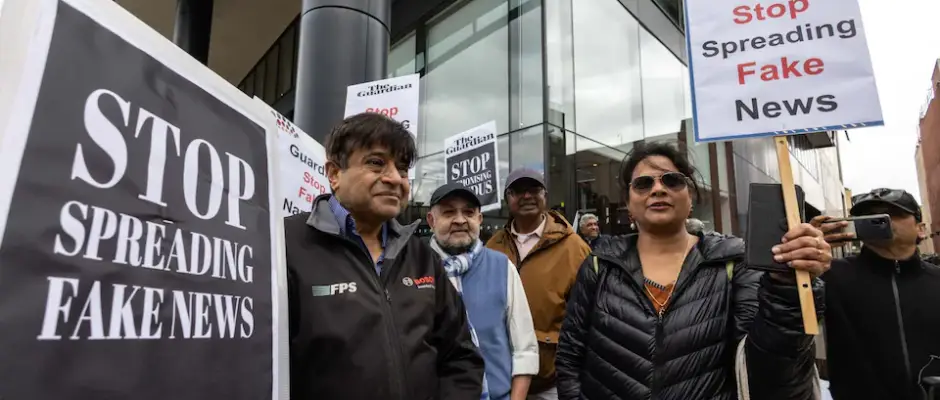
Does this point to intellectual bankruptcy of ‘The Guardian’ or part of an agenda driven journalistic pursuit that needs to be debunked Hindus neither spew hatred nor Chauvinism ever. By belief, Hindus are tolerant and all inclusive in nature, thought and practice. ‘Vasudaiva Kutumbakam’, entire humanity across world is a large family is the concept which Hindus in India and elsewhere have believed and are wedded to. In blatant diatribe, ‘The Guardian’ editorial “Modi’s India: the danger of exporting Hindu Chauvinism” (Sunday edition of November 27, 2022) is an unacceptable position on Hindus that have lived for ages peacefully and contributed socio-economically in about 100 countries including US, the UK and Europe. India and Hindus over the years has had been a victims of radicalization and imperialistic aggression of every shade and variety including that from United Kingdom for over two centuries. Plunder, abuse and destruction of the entire Hindu civilization was at the root of this anti-human invasion that happened all in the name of business. In fact, these historical facts were hidden from the younger generations in UK forcing a few British youngsters to recently take up a project to explore afresh the abuse that was heaped on Hindu civilization over centuries by Britain. Whether ‘The Guardian’ as a media house likes it or not, India’s leadership at G-20 and its lead in cleaning up the environmental mess created by industrialized western economies cannot be questioned. This ‘clean up’ act of India continued immediately after Paris accord was concluded by the then COP 26 though the much promised $ 100 billion funds and technology in support from the western polluters never happened. With regards to state of Muslims in India, ‘The Guardian’ editorial board and the management seems to be clueless on tremendous strides made by 200-odd million people (State of Religious Minorities in India) across sectors including political spectrum. Muslims are neither intimidated second class citizens as claimed by ‘The Guardian’ nor have they been targeted as suggested in the edit. Hindus have never ever supported hatred of any kind in stark contrast to what has been pushed as ‘agenda’ based writing through ‘The Guardian’ editorial that lacks basis, evidence or testimony. Blowing out of proportion, a few handful incidents to denigrate the entire Hindu civilization, India and its political leadership by extension is rather bankruptcy of worst kind seen in recent times. While BBC had pursued a similar ‘anti-Hindu’ and ‘anti-India’ editorial line, the British broadcaster had to face huge protests from otherwise peace loving Hindus living in United Kingdom. ‘The Guardian’ has built its reputation over decades and moving towards disrepute through such flippant commentary does not augur well for British media at large. Denying Prime Minister Narendra Modi visa while he was chief minister of Gujarat was an unpardonable mis-adventurism that US administration had resorted to. Realizing its mistake perhaps was understandable to say the least. ‘The Guardian’ did not care to recognize the sequence of Godhra riots of 2002 when peaceful Hindus that included women and children were burnt alive by a frenzy misled radicalized Muslim mob. US Commission on International Religious Freedom has been on an anti-India and anti-Hindu trip over the years. Why should Hindus become the whipping boys in managing larger political posturing by political parties in US? Hindus and India are well within their right to debunk biased and inaccurate observations made in the reports dished out periodically to suit the predominant US diatribe. Birmingham and Leicester attacks were clearly aimed at Hindus that were executed in a premeditated fashion by design. Whether ‘The Guardian’ acknowledges or not, harsh reality is that targeted attacks on Hindus and fermenting Hinduphobia is on the rise. Several media houses including ‘The Guardian’ have peddled half-truths and lies that masjids were attacked by Hindus. Henry Jackson Society’s centre on radicalization and terrorism in its detailed report has exposed this ‘false narrative’ on Hindus in the Leicester attacks by Muslims. Tolerance and forgiving the perpetrators of colonial rule and radicalization has been trademark of Hindus and not the other way.

Read More

Corrupt Pak Army General, rudderless security establishment

Qamar Bajwa turned billionaire in six years On November 29, 2016, General Qamar Bajwa took charge as Pakistan’s sixteenth chief of Army staff (COAS), succeeding General Raheel Sharif. Within six years of being Army chief, Bajwa’s family became a billionaire, with assets and businesses within Pakistan and outside accumulated of Pakistani rupees 12.7 billion translates to $56.5 million. Prior to his appointment as a COAS, his wife, Ayesha Amjad, was not even a taxpayer but owned three properties worth Pakistani rupees 70 lakhs. Currently, Ayesha Amjad is a multi-billionaire with large farmhouses in Gulberg Greens Islamabad and Karachi, multiple residential plots in Lahore, commercial plots and plazas under Defence Housing Authority schemes, with over half a million dollars in US accounts. his daughter-in-law Mahnoor Sabir was declared zero assets in October 2018, and just a week before her marriage on November 02, 2018, the assets touches one billion Pakistani rupees. Similarly, Bajwa’s close friend and other family members’ assets jumped to billions, but this is not shocking as Bajwa is Pakistan’s COAS, and Pakistan Army holds the country’s political, economic, social and criminal wealth.

Read More

FTAs, free for all?

Free trade agreements with Japan and South Korea have not worked in India’s favour. Will the deals with Australia and UAE deliver? K.A.Badarinath After Canberra ratified the India Australia Economic Cooperation and Trade Agreement (IndAus ECTA) on Tuesday there was huge sense of achievement that overtook the establishment and media outlets. While fine print was still hazy given that second phase of the deal was yet to be concluded, duty cuts and liberalized visa regimes was touted as a big deal for Indian side. There’s no denying that bilateral trade deals are here to stay given that multi-lateral negotiations at forums like World Trade Organization have come to a virtual standstill, limited trade and investment blocks take long time to get going. Taking bilateral trade to US $ 50 billion in five years from the prevailing $ 31 billion with Australia is laudable. Billion-dollar question however, would be which side will the trade balance tilt? The next deal that may get operative is the pact with United Arab Emirates which was also signed eight months ago. Comprehensive Economic Partnership Agreement (CEPA) between Abu Dhabi and New Delhi may be more comprehensive. UAE foreign minister Sheikh Abdullah bin Zayed Al Nahyan is in New Delhi to give a big push to CEPA. Here again, the trade balance is in favour of UAE as of now and it may only widen further after the CEPA.As per Indian commerce ministry figures, imports from UAE were US $ 28.4 billion as against $ 16 billion exports during April – September 2022. Widening trade imbalance may be a source of concern in free trade agreement with Australia or CEPA with UAE. After a hiatus during first three years, Narendra Modi government signed 13 trade deals or operationalized agreements with partners in last five years. Hastening bilateral agreements became a necessity given the $ 5 trillion economic target that India set for itself in its economic expansion game plan. But then, have these agreements done well for Indian industry, exporters, service providers, farmers and consumers is a valid question that needs to be answered. There’s no verifiable data to back any claims of a big benefit to Indian side. Data available with Commerce Ministry, RBI and Finance Ministry also needs to be collated and reconciled. In the past, industry and trading community in India have complained that deals with Japan and South Korea never worked in India’s favour as the trade balance and investment gap only widened with several desi companies, services losing out. Sri Lanka, Nepal, Bhutan, Mauritius, Thailand, Malaysia bracketed as neighbourhood countries or South East Asian neighbours were others with whom free trade deals were operative. Even if trade balance was in their favour, India has the potential to play ‘big brother’ role. But with biggies like Japan, South Korea, UAE and Australia, terms of engagement may be a clinching factor. Two regional deals with ASEAN and SAFTA were also scrutinized on cost benefit issues. In addition, six preferential trade agreements with limited scope became operative between India and its partners like Afghanistan, Chile etc. In this category also falls the agreement India has with Mercosur (South American block) and Asia Pacific nations through APTA. Free trade negotiations will be kicked off with United Kingdom, Canada, European Union and Gulf nations later this week. Here again, the big question is what are India’s gains? While bilateral and limited blocks trade is an imperative, Indian negotiators must be sensitive enough to ensure that FTAs do not turn out to be free for all and nothing much for India. Free trade as a concept has undergone serious makeover especially after Western developed economies including US has shunned the hitherto flexible economic, investment and trade partnerships. There’s no alternative to engaging the world on multiple fronts. But, big question is on what’s in it for India? (The writer is Director and Chief Executive of New Delhi based think tank, Centre for Integrated and Holistic Studies)

Read More

Population Conundrum: Policy options

Population Prospects 2022 of United Nations has estimated that on November 15, 2022 there will be eight billion people on the planet that would move up to 8.5 billion in 2030, 9.7 billion in 2050 and 10.4 billion in 2100. Since 1990, the global average lifespan has increased by over nine years and in 2019 it was 72.8 years.[1] As of now, India is the world’s second-most populous country after China. In 2023, India is projected to surpass China as most populous country. As per the 2011 census, population of India was 1,210,569,573.[2] Statistical errors notwithstanding, private consultancies have projected India’s population to have already surpassed that of China. UN report cited vulnerabilities to infrastructure, jobs, economy, governance, social cohesion and other factors that emerged owing to growing population. Various countries faced social issues such as child or early marriages, migration, lack of family planning, etc., as well as imbalance in population that resulted in concerns like religious conversions, inequality, social violence, etc. All of these strongly correlated with population’s growth. In the past, population imbalance has brought about division in numerous nations including India. Afghanistan, Bangladesh, Bhutan, China, Maldives, Myanmar, Nepal, Pakistan, and Sri Lanka are immediate neighbours to India. Infiltration has been seen in border regions as no uniform population policy was pursued by the Indian Government. In response to a query in the Parliament, Indian Ministry of Home Affairs has stated that the border between India and Bangladesh has seen greatest documented incidences of cross-border infiltration into India. In a written reply, Minister of State in the Ministry of Home Affairs, Nisith Pramanik said, “128 infiltrations reported along Pakistan border, 1787 along Bangladesh border, 25 along Nepal border, 133 along Myanmar border while nil at China and Bhutan border.”[3] Five Indian states of West Bengal, Assam, Meghalaya, Mizoram, and Tripura surround Bangladesh whose people made most attempts to infiltrate into India. The invasion drives illegal immigrants and alteration of geographical boundaries resulting in serious national security concerns. The imbalance and population growth can be addressed through public education and stricter regulatory enforcement. To produce a uniform population policy, the government and policymakers must adopt significant and pervasive actions. In addition, it’s essential to make sure that the laws that are already in place are being adhered to. In a recent national meeting held in Prayagraj, Uttar Pradesh in India, Rashtriya Swayamsevak Sangh (RSS) – a Hindu centric organization –Sarkaryavah (General Secretary) Dattatreya Hosabale expressed concern about India’s population imbalance and emphasized the importance of strict enforcement of anti-conversion laws and formulation of a uniform population policy.[4] CHALLENGES DUE TO POPULATION IMBALANCE One of the top risks is the enormous population expansion apart from infiltration, illegal entry of people from neighbouring countries in search of livelihoods, work opportunities and permanent settlement. The threat has increased owing to political and social instability that fuelled imbalanced and unregulated population growth. Figure: It shows the growth rate and imbalance in population. The percentage of population increase for major religions has decreased over the past ten years (2001–2011). Hindu population decreased from 19.92% to 16.76% over the previous decade while Muslim population decreased from 29.52% to 24.60% (Even after this, the Muslim population is growing at the fastest rate) over the same period. Sikh population growth was 8.4 percent compared to 15.5% for Christians. Jainism is at 5.4 percent and Buddhism is at 6.1 percent.[5]  Though overall population growth slowed down, uneven expansion of population from some religions remains problematic. Governments and society must therefore confront the issue of demographic imbalance in unison. Religious Conversions After independence, the Indian Parliament proposed a variety of anti-conversion laws, but none of them were adopted. The Indian Conversion (Regulation and Registration) Bill was initially submitted in 1954 with the intention of ensuring “the licence of missionaries and the registration of conversion with government officials,” but the bill was unsuccessful in gaining the support of majority members. After that, in 1960, the Backward Communities (Religious Protection) Bill was presented with the intention of prohibiting Hindus from converting to “non-Indian religions,” which the bill defines as include Islam, Christianity, Judaism, and Zoroastrianism. The Freedom of Religion Bill was introduced in Parliament in 1979. Lack of political support prevented Parliament from passing these measures which called for “formal limitations on inter-religious conversions.”[6] According to Indian Union Law Minister in 2015, a law against coerced and fraudulent conversions could not be passed at the national level. It is also claimed that the Constitution gives state the authority to uphold law and order. Such legislation may, however, be passed by state governments.[7] S. No State Implemented (as on) 1 Odisha 1967 2 Madhya Pradesh 1968 3 Arunachal Pradesh 1978 4 Gujarat 2003 5 Chhattisgarh 2006 6 Himachal Pradesh 2006 7 Jharkhand 2017 8 Uttarakhand 2018 Source: Library of Congress[8] Several states established “Freedom of Religion” legislation to ban religious conversions carried out through coercion, fraud, or inducements. These laws prohibit conversions to other religions. Migration The fundamental purpose of human life is survival and not rivalry. The same is true of migration; it involves more than just human movement from one place to another. People move for a variety of reasons, including work, psychological pressure, safety and security concerns, identity issues, etc. The imbalance in religious population makes their lives and existence insecure. In the concept of migration, employment comes second; everyone wants to exist. The minority population in the area is seriously threatened by population imbalance. According to migration statistics (Census), India had 5.1 million migrants out of the total population in 2001who had crossed international borders with or without valid papers.  They came from the eight nearby nations in almost 97% cases (including Afghanistan). Of these, nine lakh were from Pakistan and 30 lakh were from Bangladesh.[9]  Main motivation for migration from Afghanistan, Pakistan, and Bangladesh was security worries brought on by religious practices, not work. The “vagueness” of social identity, inability to make decisions about life goals, morals, standards and lack of socially acceptable positive patterns

Read More

Sovereign Green Bonds for India’s Green Goals

Background In the budget speech of 2022, India’s Finance Minister, Nirmala Sitharaman had announced issuance of sovereign green bonds (SGBs) to achieve the country’s objective of carbon neutrality by 2070[1]. In October this year, the Finance Ministry approved the SGB framework which is designed to gather funds for supporting state-run projects which will reduce carbon emissions in the years to come. Explained What are sovereign green bonds (SGBs)? Sovereign green bonds are issued by the Indian government to assist those organisations and projects which will focus on climate change mitigation, reduction in greenhouse gas emissions, climate adaptation, and reduce environmental risks. These are debt instruments and are a crucial part of ESG (environmental, social, and governance) investing[2]. In India, green bonds have been issued since 2015. During 2018 – 2022, $8 billion worth green bonds were issued which accounts for about 0.7 percent of bonds[3] issued in the financial market. In a report, titled, “Green Finance in India: Progress and Challenges” compiled by the Reserve Bank of India in 2021, till February 2020, India accounted for an outstanding debt of $16.3 billion in green bonds[4]. This has made India the second largest emerging green bonds market in the world after China. Indian banks and other financial institutions (like NBFCs and Indian Railway Finance Corporation which issued bonds which raised $500 million[5]) have rolled out their instruments for public sector organisations and firms to catalyse them for green initiatives. For instance, in 2018, State Bank of India (SBI) raised $650 million by the issuance of the first tranche of green bonds[6]. These are sovereign debt and reflect the Government of India liabilities. These instruments are fully backed by the government.   How are green bonds issued in India? For the purpose of listing and trading in sovereign green bonds, the government designated India International Exchange (India INX) situated in Gandhinagar, Gujarat as the forum[7]. This allows global investors and high-networth individuals to purchase green bonds in multiple currencies. For instance, the green bonds that were issued by SBI in 2018 were listed on India INX, Luxembourg Stock Exchange, and Singapore Stock Exchange. Table 1 lists recent issuances of green bonds by Indian firms in 2021 and 2022. Apart from these, Rural Electrification Corporation listed their bonds in 2017 and Yes Bank in 2015. Table. 1. A few examples of recent green bonds issued by Indian firms Issuer Amount (in $ million) Tenure Issued in ReNew Energy Global [8] 400 <5 years January 2022 State Bank of India 650 5 years November 2021 Adani Green Energy Limited[9] 750 3 years September 2021 ACME Solar[10] 334 5 years July 2021 Adani Electricity Mumbai Limited[11] 300 10+ years July 2021 Most green energy companies or those into new and renewable energy resources have seriously taken these bonds as a sustainable route to raise debt funds for expansion of their greenfield projects. Fig. 1. Volume of Sovereign Green Bonds issued in India during 2017-21[12]. Source: Statista; Climate Bonds Initiative; CIHS Analytics. Most of these have been issued for a period of over five years, with an exception of Adani Electricity Mumbai Limited which issued them for a period over 10 years. At present, green bonds are not open for all investors but for those individuals and investors which have focused projects for the green economy. Global status Ever since nations pledged the Sustainable Development Goals (SDGs), there has been an increase in issuance of green bonds all over the world. Fig. 2 shows the cumulative amount of green bonds issued across the world during 2014 to 2021. Fig. 2. Amount of green bonds issued globally. Source: Climate Bonds Initiative; CIHS Analytics. Key insights from global issuance of green bonds during 2021-22[13]: Table. 2. Top 10 issuers of SGBs across the world (2021-22) Institution No. of debt instruments Bond value (in $billion) Société du Grand Paris 4 7.62 China Development Bank 3 6.17 India (cumulative) NA 6.11 ICBC Limited (London branch) 1 3.23 Queensland Treasury Corporation 1 2.21 DNB Boligkreditt AS 1 1.67 Geysers Geothermal 1 1.5 Republic of Chile 1 1.24 Westpac 1 1.21 Japan Rail Construction Transportation and Technology 5 1.21 Ferroive dello Stalo 1 1.18 Certified sectors for investment across the globe SGBs are certified by institutions across the world and are classified into five broad categories. These sectors have been certified by nations internationally. These have been shown in Fig. 3. Fig. 3. Certified sectors for issuance of SGBs. Source: Climate Bonds Initiative; CIHS Analytics. A gist of India’s SGBs Framework At the core of India’s framework for sovereign green bonds[14] is the need to create a mechanism which will ensure that only green projects are financed. For this, the framework has the following provisions: Concluding observations India’s newly launched framework for sovereign green bonds can aid in achieving India’s climate goals and its pledge towards the SDGs. The net value of these bonds has increased multifold in the last few years which is indicative of India’s seriousness in achieving net-zero carbon emissions by 2070. The framework will work in tandem with norms laid down by SEBI which requires companies to publish reports on their environment and climate related activities. With the framework in place, companies and high-net-worth individuals now have a plethora of options to choose from compared to earlier years where green bonds were largely limited to the private sector. This will also help India emerge as a key market in the green debt instruments. [1] Budget2022 is a step towards innovative & Sustainable Development in New India to strengthen our energy transition journey and fight climate change: Power minister (no date) Press Information Bureau. Available at: https://pib.gov.in/PressReleaseIframePage.aspx?PRID=1794473 (Accessed: November 16, 2022). [2] ESG investing and analysis (no date) CFA Institute. Available at: https://www.cfainstitute.org/en/research/esg-investing (Accessed: November 16, 2022). [3] Green Finance in India: Progress and Challenges (no date) Reserve Bank of India – RBI Bulletin. Available at: https://www.rbi.org.in/Scripts/BS_ViewBulletin.aspx?Id=20022 (Accessed: November 16, 2022). [4] Green Finance in India: Progress and challenges* – reserve bank of India (no date). Available at:

Read More

New India’s Rupee Goes Global & Dematerialized!

Oil and gas deals, gold imports, small & medium ticket trade payments must be settled in rupees. Russia jumping on to the rupee bandwagon is a big breakthrough even as India readies to overtake Germany as third largest economy.   K.A.Badarinath Two significant developments this week have made the trajectory on Indian rupee very clear. One, Indian government’s fancy idea of taking the modest rupee global has taken wings. And, there’s definitive movement forward on digitizing the rupee after having rejected calls for legalizing private crypto currencies. Both these movements point to the ambition and forward looking policy stance of the Indian government and Reserve Bank of India if one were to gauge the implications. First things first, how does one make Indian rupee a global currency to reckon with after Chinese Yuan or Renminbi that has emerged as the fifth largest trading currency in last few years? Some baby steps seem to have been taken with regards to the rupee though naysayers think that it’s more of positioning the Indian currency by ultra-patriotic Narendra Modi government and Hindutva forces. Using Special Rupee Vostro (SRV) and bespoke accounts to expand international trade and settle export import deals on rupee terms is good beginning to internationalize the Indian currency. By-passing the dollar, euro, yuan or pound sterling denominated trades is no doubt the first step. The advantage in settling trade deals against rupee is many folds. Apart from internationalizing the rupee, Indian payment systems and gateways get popularized across trading and currency community. Secondly, volatility in global currencies that hitherto rummaged our trading community and foreign exchange traders catering to a large community of Indian students and travellers may now have limited impact once the deals are squared in rupees. Russia, a large energy and strategic partner for India, became the first large economy to open a special rupee vostro account to settle trade deals in rupees. Gazprombank of Russia has already opened a rupee denominated account with UCO Bank. Two largest banks, Sberbank and VTB Bank from Russia are also in the process of opening such accounts through their branches in Delhi. This will give a big push to non-dollar, euro or Yuan designated trade between India and Russia that’s facing issues as it has been cut off from the Swift payment system globally after its attack on Ukraine. Sri Lanka, Maldives, several South East Asian, African and Latin American countries may also follow suit given their inclination to pursue non-dollar trade deals concluded in Rupees.   Countries like Zimbabwe, Malawi, Djibouti, Ethiopia, Sudan, Madagascar, Kenya, Namibia and Bangladesh may also be willing to do rupee denominated trade deals. Current volumes and value of trade with these countries may be very insignificant. But, with big players like Russia joining the bandwagon, Indian rupee is bound to get the foothold it’s looking for in the global currency and trade markets. With over $ 800 billion merchandise trade clocked annually, there may be no reason why India should not have a say in determining payment terms. An equivalent value in services trade or more should add muscle to Indian negotiators seeking to make rupee settlements. While non-oil trade products and services deals may take a while to settle in rupees, oil and natural gas deals should be done in rupees. Given that Russia has emerged biggest supplier of oil after Iraq, Saudi Arabia, UAE and USA in that order, negotiation with Moscow on rupee denominated payment terms seems to have been concluded. Moreover, both India and Russia have long history of clinching oil deals in rupee – roubles during protracted cold war era. With Iraq, UAE and Saudi Arabia as well, there’s no limitation on India to settle oil and gas deals bypassing the US dollar or the euro. In the non-oil trade, small and medium ticket deals with a dozen countries can still be targeted.   Chinese President Xi Jingping may be more than willing to do a Yuan – rupee designated deals thereby disrupting virtual monopoly of US dollar and euro denominated deals. Given that India continued to be a big customer for China, non-dollar deals should be okay irrespective of the geo-political tensions and border disputes between the two countries. Gold imports are something that should move to rupee denominated settlements. With India being largest consumer of gold at about 1050 – 1200 tonnes annually valued at about $ 55 – 60 billion, New Delhi should begin rupee pitch on the bullion market. Gold is the second largest import item after oil and natural gas imports that range between $ 100 – 120 billion yearly. Second big development is modest rupee going digital on pilot basis that kicked off last few days beginning with Government securities. This is a definitive milestone in India’s banking history that goes beyond the British imperialist era. Rejection of cryptos as decentralized, speculative and block chain based currency in India was a difficult step but the right one. Having rejected private crypto currencies for commercial transactions, recognition as an asset and banks’ collateral, India’s foray into digital space through the rupee monitored and regulated by RBI marks a new beginning for the world’s fourth largest economy. As India prepares to surpass Germany and emerge third big economy internationally, phased roll out of e-rupee was the most desirable and sustainable option that Modi government and RBI has taken recourse to. This is in contrast with countries like Hong Kong that legalised crypto-currencies and El Salvador that set up a dedicated cryto-currency city. Central Bank Digital Currency (CBDC) or e-rupee has nothing to do or common with the private crypto-currencies. E-rupee is equivalent in value and acceptable to Indian government as much as the rupee in physical notes and coins. Even most advanced economies like US, UK and European geographies are grappling with the havoc unleashed by private crypto currencies that are speculative in values, not backed by an asset and mostly used for narcotic drug deals and laundering by terror groups internationally. It would

Read More

Brief: Cybersecurity, Meta and The Wire Fiasco

In October 2022, a media outlet called the Wire, which presents itself as a critical dissenting voice and champion of free speech, published a three-story series alleging that Meta, the big tech and social media giant, had given unchecked authority to Amit Malviya, the head of the Indian ruling Bharatiya Janata Party’s (BJP) Information Technology (IT) Cell. It claimed that by using Meta’s XCheck Program, Malviya and his staff could censor content on Facebook and Instagram that they did not agree with. Meta rejected the dubious assertions made by the Wire. Read more…

Read More

Canada Turns Breeding Ground for Khalistani Subversives!

Hindus were attacked in Mississauga during Diwali celebrations. Slogan mongering & sword wielding Khalistanis led these attacks. Canada seems to be going bonkers on tackling the malice of a distinct minority as well as vocal Sikhs that profess Khalistan. While peace-loving large community of Sikhs living in  Canada have contributed to its prosperity and progress, the minority Khalistani faction seems to be the ones that are on rampage. And, Prime Minister Justin Trudeau’s government seems bending backwards to support this miniscule number that made hue and cry of a Khalistani referendum staged farcically. In India and elsewhere, overwhelmingly Sikh community has found peace with their inclusion in the larger Hindu society. But, in last few years, the extremist elements that supported and fuelled terror in the Indian border state have been pushing the Khalistani envelope. What’s more worrying is the diabolical stance taken by successive Canadian Prime Ministers on tackling this vociferous and aggressive minority sikh fringe elements. Calls for putting a stop to the farce of Khalistan referendum have gone on deaf ears. Instead, the Canadian government has taken the line that it cannot stop Sikhs from expressing their views as long as the process was peaceful, democratic and within parameters of Canadian laws. Under no circumstance would the ordinary Canadians support a separatist movement of any kind. While India has already banned Khalistani propagating outfits, Canada should follow suit rather than looking the other way. Frequent attacks on Hindu population, their property and places of worship by these subversives are symptomatic of the malice brewing in Canadian society. By no stretch of imagination would such acts be endorsed in the guise of free speech. Global community will have to join hands in debunking both the Khalistanis and their handlers in the Canadian government. If the Trudeau government is committed to rule of law, peace and tranquility in Canada and India, strong bilateral relations across gamut of issues, then it should come forward with a complete ban on scheduled November 6 farcical referendum on Khalistan. By same measure, can India allow its land to be used for a bogus referendum or vote on Ontario being part of Canadian Republic? Indian government’s recent demarche to the Justin Trudeau-led Canadian government to put a stop to the alleged Khalistan referendum is more than justified and as per international laws of jurisprudence. Ahead of the alleged Khalistani vote, Hindus were attacked in Mississauga city on October 24 evening during Diwali celebrations. Slogan mongering and sword wielding Khalistani supporters executed pre-mediated violent attacks periodically. For instance, the Shrimad Bhagavad Gita Park in Brampton was vandalized with local government twiddling its thumb. Majority sikh population in India and Canada have never supported the Pakistan-backed Khalistani separatist elements. On September 18, banned outfit Sikh for Justice (SFJ) staged yet another farcical vote on Khalistan. In apparent solidarity with these subversive elements, Trudeau administration provided the government-run Gore Meadows Community Center in Brampton for the misdeed.  The small fringe group in Canada that supports Khalistan uses radical rhetoric to foment anti-India sentiment. It is deeply disturbing that the management of most Gurdwaras in Canada have not been with community that believes in its tenth guru, Gurunanak who himself was a great peacenik. Before the September 14 vote, Khalistani terrorists defaced the Bochasanwasi Akshar Purushottam Swaminarayan (BAPS) temple in Toronto with anti-India slogans, i.e., ‘Khalistan Zindabad, Hindustan Murdabad’. The temple walls were vandalized and protests from Indian High Commission in Ottawa went unheard or responded to. In recent past Khalistani extremists have had targeted Hindu temples repeatedly. Six Hindu temples were attacked in Toronto also in a bid to divide the Hindus and Sikhs that have co-existed and prospered peacefully in India and world over. Miscreants stole money from donation boxes, vandalized the idols of Gods and Goddesses, damaged temple property as well as ornaments from the stolen idols. Canadian Hindus were legitimately concerned and living under a cloud of fear while the federal government looked away. Time and again, Khalistani radicals and Pakistanis targeted non-Muslims and non-Sikhs. Attacks on properties and temples of Hindus are evidence that Hinduphobia is on the rise in Canada. Hindus are utterly appalled by the Trudeau government’s approach and police failure to take decisive action against the radical elements.  In November 2021, National Investigation Agency (NIA) in India had formally requested its Canadian counterparts to designate Sikhs for Justice as a terrorist outfit. Instead of banning the outfit, SFJ was given a free run and government assistance thrown in to help the separatists. In the process, Canada has openly shielded and protected anti-India propagandists and entities.  Unfortunately, Liberal Party of Canada of Justin Trudeau has long supported the extreme Khalistani elements. It is believed that some of his party’s politicians were close to Khalistani sympathizers and activists. It is reported that Sukh Dhaliwal and Andrew Kania, two Liberal MPs, presented a petition in the House of Commons in 2010 demanding that the government recognize 1984 Sikh riots in India as an act of genocide. In a private motion in Ontario assembly in 2017, Liberal Party member Harinder Malhi referred to 1984 riots as acts of genocide. In 2018, a couple of Canadian politicians happened to participate in the Khalsa Day Parade. Even Prime Minister Justin Trudeau attended this event in 2017. Canadian government seems to knowingly entertain the idea of Khalistan under the leadership of Trudeau. In the process, Canada has become a breeding ground for Pakistan-backed Khalistanis. Time and again, they challenged sovereignty of India while Canada ignored global call to refrain them. Prime Minister Justin Trudeau’s inaction showed that he has had explicitly or implicitly supported the attacks on the sovereignty of another nation.

Read More