CIHS – Centre for Integrated and Holistic Studies

Date/Time:

NYT Does it Again!

NYT Does it Again!

Painting Umar Khalid as suppressed activist is far from truth. Prejudice, agenda-based biased reporting, an attempt to destabilize India Rohan Giri The big question: Why do we tell stories? This is title of a series published by The New York Times dated December 8, 2022, identified as turning point in 2022. Why or when the title was chosen doesn’t matter. The title propels us to understand whether we are playing with facts to sell the story or a particular view point? Are we not becoming a party to make the story attractive? Narrating the story in full, objectively based on facts without taking sides is sacrosanct for any media house or journalist worth his salt. In “Four Years in Jail Without Trial: The Price of Dissent in Modi’s India” The New York Times has created a masterpiece using well-known clichés that frequently get employed by propaganda writers to influence public opinion. The piece makes extensive efforts to arouse empathy for people like Umar Khalid, portraying him as representation of suppressed resistance. Image of the accused as a disillusioned young voice ‘testing’ the system, victimhood, the minority position of Muslims, the protracted wait for justice and the emotional toll on family members are all well-worn themes that are touched upon in this story. Together, these elements create a story that is meant to evoke empathy while delicately rephrasing dissent to fit the ideological preferences of the writers, editors and the editorial board. Former student and fundamentalist Umar Khalid was charged with being mastermind in 2020 Delhi riots that resulted in extensive loss of life and damage to property in the communal violence in India’s capital city. The Unlawful Activities (Prevention) Act (UAPA), which was passed in order to combat terrorism and stop actions that threatened India’s integrity, sovereignty and internal security led to his detention. UAPA provisions which permit arrest of those involved in acts that provoke communal strife and endanger national security correspond with Khalid’s imprisonment. Although UAPA is constitutionally approved for protecting national interests, particularly in cases like the Delhi riots, which intensified communal tensions and societal polarization, critics of his arrest frequently claim that it restricts freedom. Moot question however is what kind of freedom? Presenting facts-based story impartially is basic responsibility of media and in particular respected forums like ‘The New York Times’ while covering intricate sociopolitical issues. With its global reach, the NYT has considerable narrative-building ability. However, NYT has frequently come under criticism over the years for selective framing of stories and cherry-picking topics to support specific narratives often misleading readers. The coverage of Umar Khalid, who has been detained on charges that according to Indian law are serious crimes against peace and national integrity, is one notable instance. A recurring pattern of selective reporting is evident while analyzing NYT’s coverage, particularly on Indian issues. As NYT frequently exaggerates specific incidents while ignoring larger circumstances or opposing viewpoints, its readers’ opinions are frequently distorted. Their coverage of Khalid’s case has primarily presented him as a victim of an authoritarian crackdown with no reference to the judicial system or the strong evidence supporting his imprisonment. This selective reporting misleads readers by giving an altered, frequently exaggerated account of Indian events without taking into account the intricate details of the system. Khalid’s case is not exceptional; the farmers’ year-long demonstrations’ against agricultural reforms is another example of how NYT’s reportage remained biased and motivated. Rather than presenting the rationale, NYT focused on demonstrations and portrayed it as a “fight against government,” whereas, assessments show that the reforms were aimed to increase farmers’ economic sovereignty by expanding the sector. Nevertheless, NYT stuck at the resistance mode and constantly fabricated the gauzy stories. Another notable example is a September 2014 cartoon titled “Elite Space Club,” which mocked and served as stark example of its repeated prejudice in depicting India’s achievements. Rather than recognizing India’s unprecedented success as first Asian nation to set foot on Mars — a feat completed at an astonishing cost efficiency — the cartoon cast a negative shade, turning a scientific milestone into a matter of financial derision. Such portrayals, not only denigrate India’s progress in space exploration, but also highlight the New York Times’ desire to promote prejudices rather than report achievements of non-Western nations. In an era where global successes transcend national borders, can a media house legitimately claim journalistic integrity if it promotes cultural bias and racism to overwhelm true advancement? Plenty of instances indicate NYT’s ingrained bias and inappropriate reporting on Indian issues, whether it is the discussion over the Citizenship Amendment Act or abrogation of Article 370 of the Indian constitution. NYT repeatedly skewed portrayal, framing these issues from preset prism that casts the Indian government and other socio-cultural organizations as “Hindu hardliners” or “fascists” hell bent on oppressing a specific segment of society. This deliberation reflects an attempt to create a contentious narrative rather than providing a balanced perspective on India’s legislative and constitutional achievements. These are not isolated instances; rather, part of a troubling trend that attempts to undermine India’s social dynamics, weaken its democratic foundation and misrepresent its policies globally. A disturbing objective is revealed by NYT’s unwillingness to understand India’s landscape, which includes the CAA, farmers’ demonstrations, and the Kashmir issues. Such reporting is the result of selective blindness, which threatens the fundamental values of responsible journalism, rather than journalistic integrity. The publication’s ideological objective is more evident in its dependence on fringe voices and skewed portrayals than in any sincere interest in the facts. It’s time to hold entities responsible for influencing perceptions of nations like India. The way NYT has portrayed Umar Khalid serves as a warning, a reminder that, as important as press freedom is, the universal duty to preserve integrity and truth. To retain credibility, NYT must abandon its selective approach, embrace balanced reporting and acknowledge its own biases. Anything less falls short of objectivity and tantamount to wrapping propaganda wrapped in the guise of journalism. For India and its global readers,

Read More

Ottawa Falls

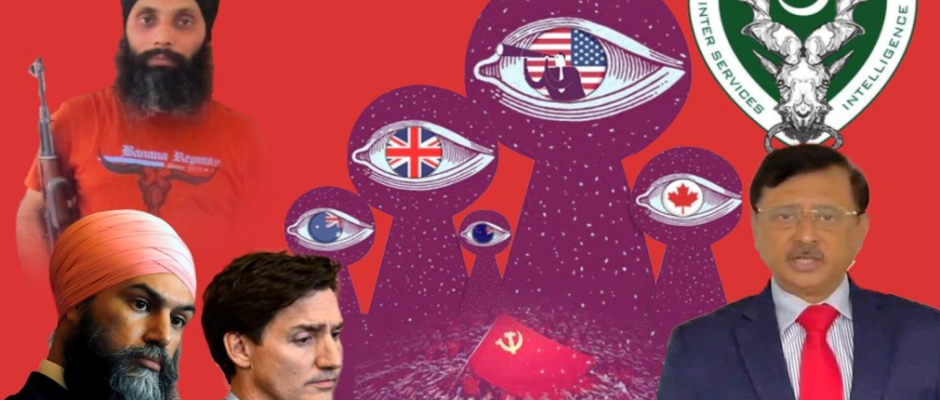
Justin Trudeau’s biggest blunder was to rely on ISI, CCP to tie up with anti-India Khalistani extremists; Five Eyes, US deep state purported inputs to make baseless accusations against India. “At that point it was primarily intelligence, not hard evidentiary proof,” Canadian Prime Minister Justin Trudeau stated during foreign interference inquiry, alluding to the claims he made against India, linking ‘Indian agents’ to Khalistani Canadian terrorist Hardeep Nijjar’s death in a gang war outside the gurdwara in Surrey, Canada.

Read More

Growing Clout, Footprint

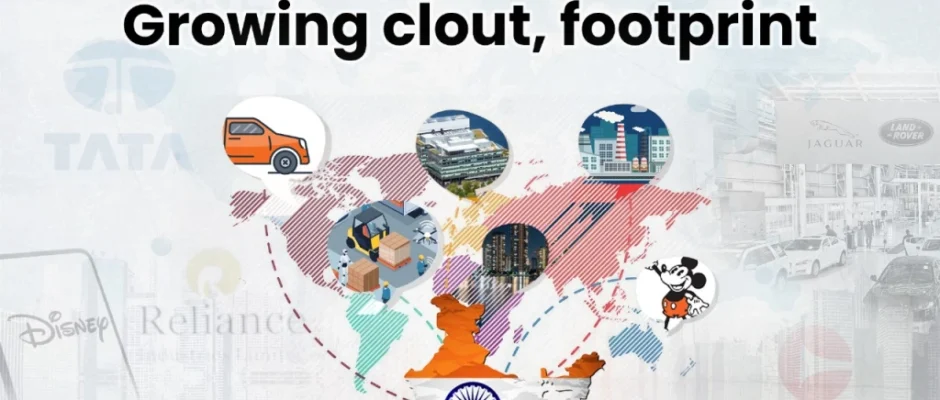
Bharat’s businesses have come off age, taken over several global brands, top line corporates lock, stock, barrel or partnered in US, UK & Europe K.A.Badarinath Two large deals sealed in just one week speak volumes about Indian corporates verve, gut and appetite for going global. Reliance Industries Ltd (RIL) and Walt Disney tango in Bharat’s media, television and entertainment industry is not limited to creation of US $ 8.5 billion behemoth. It opens up a zillion opportunities for Indian companies, vendors and challenges competition to surpass this milestone. This joint venture also marks Bharat’s film-makers, entertainment and media firms going global hand in hand with best in the industry. Asia’s richest businessman Mukesh Ambani and his wife Nita Ambani being hands on RIL – Walt Disney gives a spicy twist to the deal. Going forward, the joint venture model can work well and logically in global territories and it throws up an opportunity for Reliance – Disney – Century Fox to become a formidable player in media and entertainment sectors internationally. Another home grown billionaire from The Punjab, Sunil Bharti Mittal sent tongues wagging when Bharti Airtel group heralded by him emerged biggest stakeholder in the British iconic telecom services provider, British Telecom. Buying out the Israeli magnate Patrick Drahi led Altice group’s entire stake and cornering 24.5 per cent in British Telecom for US $ 4 billion is the icing on cake for Sunil Bharti Mittal whose Bharti group provides telecom services in 17 countries. In the process, Mittal has emerged largest stakeholder in British Telecom, hitherto the public telecom services provider. What would have been more satisfying for Sunil Bharti Mittal is that life has come full circle. Before 2010, British Telecom held over 21.5 per cent stake in Mittal’s then fledgling Bharti Airtel. This deal not only provides high-stakes branding push but allows Bharti Airtel access to United Kingdom’s 5G technologies, artificial intelligence networks and cutting edge technologies. Deutsche Telecom and T-Mobile Holdings with 12 per cent each are the two other large owners of British Telecom. Strategic insights in telecom, media and corporate markets in United Kingdom and Europe are something Sunil Bharti Mittal should look forward to being at head table of British Telecom. Bharti is not the first Indian company to go shopping in United Kingdom, US or Europe for iconic companies and brands that were seen as value enhancing prepositions. Most talked British brand and company acquired was Jaguar Land Rover by Tata group that was once mocked at for having produced the smallest and modest ‘Nano’ car. Uptight United Kingdom honchos could hardly come to terms with being led by a coloured team of Tata professionals to turn around the JLR that was once seen as a drain on the company and Britain was struggling to save the automobile brand. When Ratan Tata, easily the most celebrated businessman walked into the boardroom of Ford on March 26, 2008 to acquire JLR business at US $ 2.3 billion, disbelief and disconnect confounded top leadership team of British company. In 15-years, the group has turned around JLR into a kicking Bharat – British brand that’s hard to compete with. Tata group was labelled audacious when it took Corus Steel in $ 12 billion bid around the same time to emerge UK – Europe’s one of the largest players in steel market. While this was happening, Reliance bought out one of the oldest and most recognized British toy company Hamleys with 259-years corporate history and British battery technology company, Faradion made global industry sit up to the onset of Indian buyers. Reliance acquisitions were relatively more modest, around the same time, Kumarmangalam Birla, yet another Indian billionaire had set eyes on Atlanta-based Aluminium major Novelis and acquired it in 2007 for a whopping US $ six billion. This catapulted the Aditya Birla group into fortune 500 companies list. After initial rush of half a dozen big ticket takeovers about 15-years back, scores of global brands and businesses came the Indian way or partnered to stay afloat. The list seems quite a long one and this phenomenon is across sectors. Several of them were risky investments and the familial story of turnaround for many Western companies was scripted by Indian businesses that stayed nimble footed for quite some time. For instance, none would have imagined that fourth Indian billionaire Anand Mahindra owned diversified group, Mahindra and Mahindra pumped life into BSA Motorcycles that stopped production about five decades ago. Birmingham Small Arms Company founded way back in 1861 known for producing motorcycles after Mahindra and Mahindra took over this defunct brand in 2022. As per Grant Thornton research, Indians own about 964 companies in UK alone as of last year if one were to go by a Reuters despatch earlier this month. It may not be an overstatement, to say that Bharat’s businesses have arrived. (Author is Director & Chief Executive of Centre for Integrated and Holistic Research based in New Delhi)

Read More

Bharat, force for Strength & Stability

In 78-years post-British imperialistic occupation, Bharat is on way to become ‘Vishwa Guru’ and pursuer of ‘Vishwa Maitri’ in right earnest. K.A.Badarinath Bharat is celebrating her seventy eighth independence day after having fought imperialist British occupation and monarchy. Before the ignominious exit of 1947, Britain has had for decades looted Bharat’s wealth, resources and hit at her backbone by Anglicizing the country’s millennial education system. The indomitable spirit, valour and strong civilizational connect based on ‘Sanatan Dharma’ could not be dented even after decades of inhuman rule that pushed Bharat into poverty owing to continued laundering and misrule of British imperialists. Post-1947, Bharat moved on its own with twists and turns in its socio-economic paradigm. What kept the Hindustan together last 78 years was the determination of this 1.4 billion people to regain its place as ‘guiding light’ in the comity of nations. Most Indians – be it Hindus, Buddhists, Jains, Muslims or Christians – get nostalgic and wee-bit emotional while celebrating the Independence Day. It was a struggle that none globally would easily forget as British rule was marked by White supremacist mindset laced with monarchial expansionism and human subordination and slavery of inhuman variety. Then on, Bharat re-discovered herself on all fronts. It’s her day today and centuries to follow as it moves methodically to become a developed country by 2047 that also marks 100 years of independence from British tyranny. Bharat’s rise as an economic powerhouse and her march to become third largest economy in two – three years with $ 5 trillion spread is something that did not come easily given the hard work of her farmers, services professionals, industry and exporters. It’s only a matter of time when Bharat would challenge US and China from their coveted positions. None can be scared or distraught with Bharat’s rise given her standing that strives continuously for peace, tranquility and harmonious living sans conflict, violence and expansionism of any hue or shade. Going by Bharat’s Prime Minister Narendra Modi speech on Independence Day from ramparts of the historic Red Fort, New Delhi will play a stabilizing role in the world marred by conflicts between Russia – Ukraine, Israel – Hamas and the coup of sorts in Bangladesh. Strength and determination is what Prime Minister Modi emphasized upon to tackle global challenges. Bharat being at the ‘High Table’ in international affairs would only bring sanity to deliberations and negotiations at strategic level or economic management. Even in tackling new challenges, Bharat has shown the way. After having been party to Paris agreement on cutting carbon footprint and shifting to environment friendly economic structures, Bharat is the only country that has met all climate targets among G-20. Notwithstanding her energy consumption demands, shift to green options rapidly towards ‘net zero’ voluntarily and leading by example is something Prime Minister Modi referred to in his speech on Thursday. His call for end to end chip designing for the world is an extension of Bharat’s huge strides made in industrial manufacturing including defence products, services across sectors and deft management of her economy. This will push up Bharat in global pecking order for modernizing her economy to meet international demand. Bharat’s list of ‘to do’ things seem endless if one were to look at reversing brain drain especially in key sectors like medical education. Adding 75,000 new medical colleges’ seats to 100,000 plus existing capacity is something that will help Indian youth and talent pursue their education here and cater to the world as professionals. Prime Minister Modi had clearly hinted that ‘overseas students should come to India for top class education’ and reverse prevailing outflow to foreign shores. Becoming global educational hub in five years may be a tough target to meet. But, its doable. These are transitioning times for Bharat to become ‘vishwa guru’ and pursuer of ‘vishwa maitri’. (Author is Director & Chief Executive of Centre for Integrated and Holistic Studies based in New Delhi)

Read More

Boys Play Big in Muddied Waters!

US, China with diverse agendas coupled with religious extremist forces in Islam and evangelists may shrink open space to operate for Bharat that has big stakes in Bangladesh K.A.Badarinath The big boys are at play. Bangladesh government under Nobel laureate Muhammad Yunus is bound to be pulled apart by both United States of America seeking to establish a military base in South Asia and Chinese Communist Party led by President Xi Jingping that’s seeking unquestioned dominance in Asia. Jamaat-e-Islami and Bangladesh National Party (BNP) led by Khalid Zia would play willing tools in the big boys power play with Pakistan reduced to a lackey of minor variety. There’s denying that Muslim Brotherhood that’s globally dreaded would complicate the equation with its Islamist – Jihadist agenda on Bharat’s Eastern frontiers. ‘Razakars’ would become handy frontline private army in the hands of jihadist Muslim leadership internationally. There have been reports that already these Razakars have taken over civic policing as an occupational army of zealots. Well, tasks for Bharat are cut out after Sheikh Hasina’s government fell last week, Awami League purged, safe exit to her provided in a swift deal and Army took reins in a coup. Though interim government headed by Yunus and a battery of over dozen advisors have taken charge, nothing seems to have changed on the ground while Army calls the shots. Bangladesh’s under-belly has several layers that must be understood before Bharat gets to the drawing board to establish a working relationship with the new Army controlled, Yunus fronted regime given that Chinese, US and Pakistan deep state haggling for their pound of flesh. The ‘transitional’ Yunus regime got legitimacy as Democratic White House was first to recognise the government. Secretary of State’s spokesperson was drafted to convey that US was ‘ready and looked forward’ to working with Dhaka under Yunus. St Martin Island also known as ‘Narikel Jinjira’ (Coconut Island) or ‘Daruchini Dweep’ (Cinnamon Island) off-the-Chittagong coast may be eyed by US to set up a military base to lord over both Bharat and her expansionist neighbour China. Direct US presence in the region may not be encouraged or welcomed by Bharat given the strategic implications. Also, Bharat would get cut off virtually from entire South East Asia in terms of trade, investment and services. Church driven ‘Project K’ to carve out an artificial autonomous region christened as ‘Kukiland’ will come to the forefront. Church’s fancy idea of a separate Christian state encompasses parts of Bangladesh, Burma and Bharat’s Manipur and Mizoram. This Christian agenda is expected to get complete backing of White House under President Joe Biden or his possible successor Kamala Harris. Even if Donald Trump upstages the democrats and gets elected in November 2024 elections, this agenda may get going. Even if general elections in Bangladesh were to be held anytime now, a pliable government in Dhaka is what Washington DC may expect to see in the saddle given that Awami League is virtually out of power play. On the other hand, China would try and get Teesta River Project and other infrastructure ventures that provide Beijing proximity to India’s ‘chicken neck’ area. Weeks before Hasina government fell, US $ two billion worth interest free, concessional, commercial loans apart from grants were reportedly promised by China after a meeting that Bangladesh Prime Minister had with President Xi. On face of it, funding infrastructure projects either directly or through Asian Infrastructure Investment Bank (AIIB) may not just be limited to investment push. Instead, it will result in strategic issues for Bharat giving China advantage at her doorstep. Third dimension to Bangladesh story is the Jamaat-e-Islami backed by Pakistan and part of larger Muslim Brotherhood going berserk would pose serious challenges to Bharat. Jamaat pursuing genocide of Hindus in Bangladesh has been widely reported. CIHS has meticulously documented these grave crimes. Jamaat is popular as ‘congregation of Muslims’. Known as the largest Muslim formation founded in 1975, Jamaat was banned from political participation by Bangladesh Supreme Court in 2013 citing its opposition to religious freedom or practice of faith. Within its ambit were other organizations like Al – Badr, Al – Shams and self-styled peace committee that formed the jihadist network. All these are pronouncedly anti-Hindu, Buddhists and Christians in Bangladesh. Evangelists and Islamist forces are expected to be on collusion course given their extremely divergent agendas for Bangladesh. Bid to carve out an autonomous Christian area by extreme evangelists with backing from US may be at odds with ‘theocratic’ ‘Islamist’ state that Jamaat may like to evolve Bangladesh into. Conflict between evangelists and Muslims may turn rough reported from several cities in European countries. Contrarian geo-political forces in China, US and religious extremism donned by evangelists and Jamaat leaves very little space for open, flexible and forward thinking democratic agenda in Bangladesh. This is a heady mix in which India will have to tread carefully to safeguard her geo-political and strategic interests apart from that of Hindus and Indian origin people living in Bangladesh. Rightly, Prime Minister Narendra Modi has emphasised that Yunus government in Bangladesh must take steps to protect Hindus lives, properties, businesses especially women that have been targeted by Jihadists. For Bharat, dealing with influx of Bangladeshis fleeing the violence torn country may be a big priority apart from safeguarding her people in Bangladesh. Secondly, New Delhi may have to swerve through muddy waters that have become playground for both US and China apart from minions like Pakistan. Thirdly, recalibrating equations with Dhaka given an array of forces from far-left extremists, religious jihadists to military establishment may pose a big challenge. Fourthly, pursuing her agenda of peace, tranquillity and prosperity in South Asia may not be easy for Bharat. Fifthly, smoothening relations with Bangladesh may turn tricky while former Prime Minister and senior Awami League leader Sheikh Hasina continue to be respected state guest in Delhi. Sixthly, working with likeminded stakeholders to ring in democracy with all forces in tact may be a tall order. Seventhly, relatively tension free

Read More

Hindu Genocide Unfolding in Bangladesh

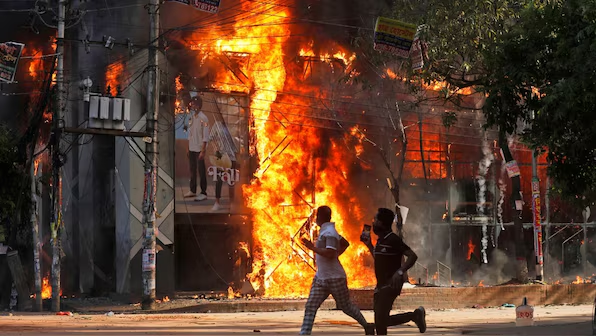
The situation in Bangladesh has reached a critical and alarming juncture, with a systematic and coordinated campaign targeting the Hindu community through acts of violence, destruction, and terror. This genocide, characterized by the deliberate annihilation of Hindu religious and cultural sites, as well as the targeted killings and displacement of individuals, poses an existential threat to the Hindu population in Bangladesh. The interim government must act with urgency and decisiveness: deploying security forces to protect vulnerable communities, ensuring justice through swift prosecution of those responsible, and initiating a comprehensive restoration of destroyed religious and cultural heritage. Moreover, the government must engage with international bodies to secure support and demonstrate a commitment to protecting all citizens, ensuring that such atrocities never occur again. Immediate action is not only a moral imperative but also crucial for the preservation of Bangladesh’s core fabric. Updated – Hindu Genocide Unfolding in Bangladesh

Read More

Bharat’s Democratic Credentials Celebrated

Reviving spirit of civic duties and responsibilities is RSS way of contribution through transformative agenda for future Dr Shailendra Kumar Pathak Bharat’s democratic ethos is deeply embedded in its history, a legacy that stretches back thousands of years, marked by principles of inclusive governance, participatory decision-making, and the power of dialogue. Hindu centric Rashtriya Swayamsevak Sangh has taken upon itself to promote civic consciousness and participation of citizenry in civic affairs as part of its five-fold transformative agenda. Bharat’s democratic traditions predate many celebrated milestones in global governance. One such remarkable example is the Uttiramerur inscription dating back to tenth century. This inscription details an advanced electoral system implemented in the village of Uttiramerur predating Magna Carta (Royal Charter of Rights agreed to by King John of England in 1215) by over 800 years. This system involved detailed rules for election of local council members with eligibility criteria based on moral integrity and knowledge, ensuring that leadership was capable and trustworthy—a testament to Bharat’s early embrace of democratic principles. Ancient Bharatiya texts like Mahabharata and Ashtadhyayi provide insights into concepts of ‘Gana’ and ‘Sangha’, Republic and assembly, functioning through collective decision-making, emphasizing dialogue and consensus. Vedic period further enriched this tradition with institutions like ‘Samiti’ and ‘Sabha’, councils responsible for discussing and deciding on issues of public importance, fostering a sense of participation and ownership among the people. In twelfth century, the Anubhava Mandapa of Basavanna, a popular Scholar and a Hindu sage in Karnataka served on a forum where mystics, saints and scholars discussed issues encompassing society, economy, culture, spirituality, and well-being of the entire kingdom, embodying inclusive governance and collective dialogue. RSS and Civic Awareness RSS, founded in 1925, has consistently emphasized civic duty and national service as central to its objective of a vibrant society, Rich democratic credentials of Bharat became the basis for RSS belief that civic engagement was key to building a strong, disciplined nation with character. Programmes aimed at spreading awareness on national issues, encouraging responsibility for the nation’s wellbeing and evolving a cohesive and culturally rooted Rashtra (nation) became part of the five-fold objective of RSS. Philosophical basis for RSS to extensively undertake civic consciousness drive was Pandit Deendayal Upadhyay’s concept of ‘Lokmat Parishkar’ or Public Opinion Refinement. Deendayal Upadhyay, a prominent thinker, advocated refinement of public opinion through education, dialogue and active citizen participation in governance. This also forms the basis for RSS campaign on promoting civic duties for encouraging active democratic participation. RSS has been at forefront of highlighting Bharat’s cultural, economic, and scientific achievements with the belief that strong sense of national pride was essential for a cohesive society and robust democracy.  Its educational initiatives emphasize Bharat’s rich heritage, from contributions of ancient scholars like Aryabhata and Sushruta to achievements of modern scientists and technologists. RSS has been instrumental in recognizing and honouring individuals who contributed significantly to Bharatiya society. By promoting role models and celebrating their achievements, RSS has championed to foster a culture of excellence and national pride. Advanced Approach for Civic Awareness RSS’s civic awareness programmes are not just an extension of duties outlined in Article 51A of the Bharatiya Constitution. RSS outlook towards civic duties and responsibilities are much more advanced, robust, genuine and comprehensive. Article 51A of Indian Constitution emphasizes fundamental duties such as respecting Constitution, promoting harmony and protecting public property. While these are important, they represent a minimal baseline for civic responsibility. RSS’s educational initiatives strengthen this by offering a deeper understanding of Bharat’s cultural, historical and scientific heritage. These programs are designed not just to inform but to inspire active participation in the nation’s development. For instance,  RSS doesn’t just promote constitutional literacy but delves into philosophical underpinnings of Bharatiya democracy, drawing from ancient texts and historical precedents. This educational depth fosters a more profound sense of civic duty, encouraging citizens to engage in governance and contribute to society’s progress. Article 51A calls for promotion of harmony and spirit of brotherhood. RSS approach to social cohesion is far more proactive and works to bridge social divide, alleviate conflicts and foster unity among Bharat’s diverse population.  Inspired initiatives fostering dialogue and mutual understanding, ensuring that the spirit of brotherhood is not just a legal obligation but a lived reality. Moreover, while Article 51A mentions the promotion of harmony, it does not address mechanisms for achieving it.  RSS fills this gap by engaging directly with communities, fostering relationships, and building trust across social divides, thereby creating a more cohesive and resilient society. Article 51A emphasizes participation in governance as a fundamental duty.  For this, RSS approach is more dynamic and continuous. It doesn’t just encourage voting but advocates for all along civic participation that includes involvement in local governance, community decision-making and holding government accountable. RSS ensures that democracy is not just a periodic activity but an ongoing process where citizens are actively involved in shaping their communities and the nation. One of the standout initiatives in  RSS civic duty mission is its campaign for 100 per cent voter turnout. While Article 51A emphasizes the importance of voting as civic duty, RSS campaign takes this a step further by striving for complete voter participation in every election. The organization believes that democracy can only be truly representative when every eligible citizen exercises their right to vote. RSS launched extensive awareness drives particularly in rural and underserved areas. These campaigns involved door-to-door outreach, community meetings, and use of local media to educate people. By these efforts, RSS ensured that every voice is heard, making the democratic process more inclusive and representative. This commitment to engagement at grassroots highlights RSS belief in the power of democracy and its determination to make Bharat’s democracy as robust as possible. The focus on achieving full voter participation goes beyond the fundamental duties outlined in Article 51A, reflecting RSS more comprehensive and proactive approach to civic responsibility. Framework for National Development Civic duties outlined in Bharat’s Constitution are broad and general, providing a framework for responsible citizenship. RSS approach,

Read More

China-Pakistan Agenda in Bangladesh Protests

Violent protests by students against job quotas may have been conveniently used by Beijing & Islamabad to further their interests Rahul Pawa China, Pakistan, geo-political interest groups and international stakeholders may have muddied Bangladesh waters. They may have either directly or indirectly contributed to current wave of violent protests that resulted in 130 fatalities. These players may have conveniently used the anger against quotas for government jobs as a cover to stroke flames of dissent against Prime Minister Sheikh Hasina and her Awami League government. The current spate of violent incidents seems to have been triggered by Communist Party of China and Pakistan that have taken an adversarial position and spread discontent against Sheikh Hasina’s government. Protests erupted after Appellate Division of the Supreme Court decided on July 10, 2024 to maintain status quo on quota system intended for freedom fighters and their families for four weeks. This came after a High Court ruled on June 5, 2024 that declared 2018 government circular canceling 30 per cent quota for freedom fighter’s descendants in government jobs illegal. This sparked widespread anger among students and larger population, culminating in violent clashes and a death toll that continued to rise. Students from various universities in Dhaka united to demand quota reforms. After initial postponement owing to Eid and summer holidays, students movement resumed on July 1 with demonstrations. Students and teachers from public universities like University of Dhaka, Rajshahi University of Engineering and Technology and Jahangirnagar University, among others were soon joined by counterparts from private institutions such as North South University and BRAC University. Under the banner of Anti-discrimination Students Movement, they launched ‘Bangla Blockade’ (Bangladesh Shutdown) thereby disrupting domestic train and road transportation networks. Online activism surged with calls for “another 2018” in reference to previous quota reform movement. Subsequently, protestors call for a ‘Bangla Blockade’ intensified on July 7. As demonstrations spread nationwide, clashes with police on July 11 marked a significant escalation. Prime Minister Sheikh Hasina’s remarks on July 14, referring to Razakars (Bangladeshis who collaborated with Pakistan during 1971war) made during a press conference after her return from China coupled with the ruling Awami League’s hardened stance intensified the situation. This led to violent suppressions by Chhatra League and resulted in hundreds of injuries. The kindling for this unrest had been laid well before the court’s ruling as flames were fanned earlier this month during Prime Minister Sheikh Hasina’s visit to Beijing from July 8 to 10, 2024. The visit, intended to secure significant financial aid and strengthen bilateral ties ended abruptly, hinting at Hasina’s deep-seated dissatisfaction with the Communist Party of China (CPC). China offered only $100 million in financial assistance, a far cry from the initially promised $5 billion. Adding to the discord, Xi gave Hasina very little time as Beijing proposed a controversial ten-year re-education policy aimed at countering Islamic culture and promoting Chinese lifestyles, similar to measures implemented in Pakistan during 2010. This proposal, perceived as racist and a direct affront to Bangladesh’s cultural sovereignty, significantly strained Dhaka – Beijing relationship. The protests in Dhaka quickly escalated as protesting students and citizens voiced their dissatisfaction with reinstated job reservation quota. This policy initially abolished in 2018 reserved 30 percent government jobs for families of 1971 independence war veterans. The new quota system, viewed as unreasonable and discriminatory, exacerbated existing frustrations amid high unemployment and rampant inflation. Pakistan-backed Islamist groups such as Jamat-e-Islami, which have significantly undermined Bangladesh’s private sector, exacerbating economic challenges the country already faces.This influence, funded by the Middle East via Pakistan, has made government jobs even more sought after. The resulting volatility in the private sector has created a hostile environment, where economic grievances easily morph into political unrest. This destabilising influence was earlier evident during the violent response to the Bangladesh government’s attempt to modernise labor laws in 2018. The proposed changes aimed to attract more foreign investment by aligning local labour practices with international standards. However, Islamist groups, heavily funded by Pakistan vehemently opposed these changes arguing they would undermine Islamic values and worker rights. Jamat-e-Islami with its significant political clout mobilised large-scale protests and strikes which paralysed many sectors of the economy including the vital garment industry. This unrest discouraged foreign investment and highlighted the fragility of private sector in the face of Islamist political and religious extremism. Moreover, China’s involvement in Bangladesh’s student unions further escalates the situation. Reports indicate that CPC has infiltrated Bangladesh universities through education and student exchange programmes. Five Chinese universities in Yunnan province alone teach Bangla language and culture, sending students to Dhaka to create intelligence assets and funding channels for student wings. This strategy aims to mobilise Bangladeshi students against their own government’s policies thereby creating more space for CPC influence. Notably, student unions that staunchly defended Islam in Bangladesh remained conspicuously silent on CPC policies against Uyghur Muslims. The current situation reiterates CPC’s potential to influence and organise student protests in Bangladesh. Earlier, on April 13, 2021, students gathered at the Dhaka Press Club, demanding better arrangements from Hasina Administration for studying in China. The protest pressuring the Bangladeshi government nearly turned violent, demonstrating CPC’s influence and capability to mobilise students in Dhaka, highlighting its broader strategy of using education and cultural programs as tools of influence. Moreover, China-Pakistan nexus in Bangladesh adds another layer of complexity. Pakistani students often affiliated with Jamat-e-Islami collaborate with their Bangladeshi counterparts facilitating communication and coordination for protests. The human intelligence (HUMINT) capacity of Pakistan’s ISI has been instrumental in channeling Chinese funds to stage ongoing protests in Dhaka. Bangladeshi workers in Chinese companies are reported to have been trained to mobilise pro-China rallies as seen in 2019 when workers of Jingjiu Group in Bangladesh who were seen chanting Pro-China slogans in Mandarin. Intriguingly, CPC’s interest in Bangladesh extends beyond financial aid. Beijing aimed to establish strong foothold in South Asia leveraging its Belt and Road Initiative (BRI) aspiring to integrate Bangladesh into its economic sphere. Despite the disappointing loan offer, China has

Read More

Foreign Funding Has No Place in Democratic Self-Governance!

Vinod Kumar Shukla In Abraham Lincoln’s words democracy is a government of the people, by the people and for the people which supposedly means free from any influence to protect the rights of citizens of democratic self-governance. But foreign intervention has become a big challenge for democratic countries around the world and the US is also not free from it. To facilitate all this, US federal law prohibits foreign citizens and governments from spending in any election in the US. But certain foreign players cocked a snook at law in 2016 and 2020 by spending huge money to influence US elections exposing vulnerabilities of campaign finance laws. Such elements are still at work in the 2024 elections. With the digital world being a reality, laws governing campaign finance systems failed to catch up. Inaction by Federal Election Commission (FEC) and inadequate Electoral Transparency Laws allow foreign players to influence US elections. Around $1 billion “dark money,” has been spent over the past one decade. National Counterintelligence And Security Center tells that foreign interference fall into five categories: Cyber operations targeting election infrastructure; Cyber operations targeting political parties, campaigns, and public officials; Covert influence operations to assist or harm political organizations, campaigns, or public officials; Covert influence operations to influence public opinion and sow division; and Covert efforts to influence policymakers and the public. Narrative of political image; internet communities created for specific electoral goals and extensive use of humour and satire to influence electorates were at play in the campaigns in the US. The US State Department recently alleged Russia for covertly spending over $300 million since 2014 to influence elections in more than two dozen countries which is just the tip of the iceberg. US Secretary of State Antony Blinken during his three-day visit to China in April 2024 said that there is evidence of Chinese attempts to “influence and arguably interfere” upcoming US elections, despite Chinese President Xi Jinping’s commitment not to do so. A Microsoft research report published in April 2024 suggests that Russian online campaigns to influence November 2024 US elections geared up over the past 45 days, but the pace is slower than the past elections. Russia-linked accounts are allegedly disseminating divisive content. The observation of Microsoft is that activities of Russia are not as intense as in previous elections but it may increase in the days to come. Online disinformation campaigns are unleashed with posts starting with a whistleblower or citizen journalist posting content on a video channel or social media. That content is mostly taken up by websites like DC Weekly, Miami Chronicle and The Intel Drop. However, the Kremlin has denied any such meddling in November 2024 elections and also in 2016 and 2020 elections. China too has been interfering in the democratic process of countries across the world for a long time which has now become a foreign policy trouble for the US administration especially for those managing the poll process. Both Joe Biden and Donald Trump are of the view that China has the intent and capabilities to challenge the US-led world order. But the Biden administration has outlined several reasons to remain engaged with China. This might make sense to US companies working in China and to political realists who don’t see much wrong in working out a way to coexist with another great power. But 81 per cent Republicans, 59 per cent Independents and 56 per cent Democrats see China as a threat giving Republicans a political stick to beat Biden with for going soft on China. As it gives green signal to foreign interests to spend money on elections despite the fact that there is a ban on foreign spending in Federal, State, and local elections. The FEC interprets the ban applicable on contesting elections and letting foreign players pour millions in elections. For the US, dealing with foreign interference in elections has been critical since Russia allegedly worked to influence the outcome of the 2016 presidential election. Investigations reveal that Russia targeted Black Americans on social media to disincentivize them from voting in the 2016 election — the tactics were aimed at magnifying race-based societal divisions. Since then, the US adopted a whole-of-government approach against election cyberthreats and foreign interference ensuring that all government agencies work in tandem to track and counter cyberthreats on election-related manipulations to protect voters’ objectivity and election infrastructure. China has been meddling elections in every corner of the globe and the US being the most apparent target for its geopolitical interests. In February 2024, the Office of the Director of National Intelligence stated: “Beijing is expanding its global covert influence posture to better support the CCP’s goals. The PRC aims to sow doubts about US leadership, undermine democracy, and extend Beijing’s influence.” The US media extensively reported that covert Chinese accounts were masquerading online as American supporters of former President Donald Trump, promoting conspiracy theories, stoking domestic divisions and attacking President Biden ahead of the November election. This ‘spamouflage’ prompted Meta to take down thousands of fake Facebook accounts operating in China. But Chinese interference in elections is a significant policy change. In 2021, the US intelligence departments concluded that China would not interfere in US elections. The Chinese decision was attributed to the fact that costs of being caught meddling harms the country of potential benefits as Russia’s efforts to interfere in the 2016 election significantly damaged Moscow’s position and relationship with the US. Still the US authorities were not off guard and were looking at every aspect of foreign intervention knowing well that if there is any gap in the US laws and they remained unaddressed, foreign players can and will exploit them. Plugging loopholes that permit foreign spending and making the source of campaign funds transparent can prevent foreign players influencing the US elections. A strong policy to prevent foreign interference in elections must include updating treatment of digital campaign advertisements and requiring disclosure of the true source of campaign funds. But also spending in elections by

Read More

Vienna Waltz for NSG

Modi’s visit to Austria signals global leaders to act decisively on nuclear governance, stability, innovation and facilitate India entry into NSG Rahul Pawa In a momentous visit that marks a significant milestone in India’s diplomatic history, Prime Minister Narendra Modi landed in Vienna on Wednesday after a successful tour of Russia. This visit, the first by an Indian Prime Minister to Austria in 40 years, underscores Modi’s strategic vision to elevate India’s global standing, particularly in the realm of nuclear technology and security. Austria, a key participating government of the Nuclear Suppliers Group (NSG), plays a pivotal role in shaping global nuclear policy. For India, securing NSG participating government status has been a long-held aspiration, one that Prime Minister Modi has tirelessly pursued. The NSG, a body of 48 participating governments that seeks to prevent nuclear proliferation by controlling the export of materials, equipment, and technology that can be used to manufacture nuclear weapons, represents a global group that India has sought entry into for over a decade. India’s quest for NSG entry began in earnest after its landmark civil nuclear agreement with the United States in 2008. This agreement, which allowed India access to civilian nuclear technology and fuel from other countries despite not being a signatory to the Nuclear Non-Proliferation Treaty (NPT), was a significant diplomatic achievement. However, for India to fully benefit from global nuclear commerce, NSG entry is crucial. It would provide India with greater access to nuclear materials and technology, enhancing its energy security but most importantly allowing India to contribute more significantly to global nuclear governance efforts. Modi’s visit to Vienna comes at a time when the global tech and security landscape is rapidly evolving. India’s potential inclusion in the NSG should be viewed not only as a recognition of its impeccable nuclear safety and clean usage record but also as a crucial step toward strengthening global nuclear technology and innovation. Austria’s influence within the NSG makes it a crucial ally for India in this pursuit for global good. India’s entry to the NSG has been a topic of discussion at multiple NSG plenaries over the past decade. Despite substantial support from several strong participating governments, Communist Party of China’s (CPC) opposition has been a significant obstacle. At the 2016 NSG plenary in Seoul, CPC insisted that India’s application could not be considered until the group agreed on criteria for non-NPT (Non-Proliferation Treaty) signatories, effectively blocking India’s bid despite strong backing from other major powers. CPC’s consistent stance against India’s entry, citing rules, procedural issues and the need for consensus, has frustrated many NSG members who view India’s inclusion as beneficial for global nuclear governance efforts and nuclear commerce. Meanwhile, India has made significant advancements in nuclear technology, particularly with its ambitious plans to develop thorium-based reactors. Thorium, a safer and more abundant alternative to uranium, promises to revolutionise nuclear energy. India’s expertise in thorium technology positions it as a leader in this field, with the potential to offer cleaner and safer nuclear energy solutions worldwide. The development of the Advanced Heavy Water Reactor (AHWR), designed to use thorium as its primary fuel, marks a significant stride in this direction. Several key NSG members, including the United States, France, Switzerland, and the United Kingdom, support India’s bid, arguing that India’s impeccable nuclear record, responsible nuclear behaviour, and potential contributions to global nuclear security make it a suitable candidate for the NSG. However, despite India’s commendable nuclear track record and significant advancements in nuclear technology, the Communist Party of China’s (CPC) objections to India’s entry into the NSG are perceived as a strategic maneuver to maintain its dominance in South Asia. CPC’s rationale appears to be rooted in a desire to prevent a regional competitor from accessing advanced nuclear technology and materials, thereby preserving its own strategic leverage. This stance is further complicated by CPC’s continued support for rogue nations like Pakistan and North Korea, which have contentious nuclear programs. By blocking India’s NSG entry, CPC not only undermines global efforts to foster responsible nuclear governance and energy security but also hampers broader international goals of enhancing nuclear safety, advancing technological progress in the nuclear sector and avoiding institutional scrutiny of its support to Pakistan and North Korea. As India continues its ascent as a major economic and technological power, its influence on the future of nuclear energy and security becomes increasingly crucial. PM Modi’s visit to Vienna transcends mere diplomacy; it is a powerful call for the world to acknowledge the evolving dynamics of global nuclear governance. The moment has arrived for the international community to move beyond regional politics and strategic rivalries, embracing a future where India’s contributions play a vital role in shaping global nuclear policies. During his visit, PM Modi is likely to engage in high-level discussions with Austrian leaders, emphasizing the mutual benefits of trade, business cooperation, collaborations, and significantly, India’s imminent NSG entry. This visit serves as a clear signal to the international community to recognise the significance of including India in the NSG and to act decisively in the interest of nuclear governance, stability and innovation. (Author is Director – Research, Centre for Integrated and Holistic Studies, a New Delhi based non-partisan think tank)

Read More