CIHS – Centre for Integrated and Holistic Studies

Date/Time:

Strategic Autonomy, Balancing Powers

Indo-Russian summit strengthened special & privileged strategic partnership. India offers to play role of a peacenik in Ukraine conflict Dr. Punit Gaur Indian Prime Minister Narendra Modi’s two day visit to Russia has been watched keenly across world capitals. Especially so, given that it is the first bilateral engagement of Modi in his third term and it coincided with North Atlantic Treaty Organization (NATO) summit in Washington DC. Modi’s Russia visit to participate in the twenty second annual summit of India and Russia invited sharp reactions from Indian allies and foes alike. From US, European Union to Ukraine, there were comments on what Prime Minister Modi should be doing in Moscow. The Moscow summit is a first after President Vladimir Putin’s visit to New Delhi in 2021 and this engagement has come in the backdrop of ongoing conflict on East European front with Ukraine. Perhaps, global leaders expected serious talks between Modi and Putin that paved for a swift and organic end to the bloody conflict in Ukraine. To their great comfort, Prime Minister Modi did not let them down, Modi made serious attempts to counsel and convince President Putin that peace in the region was not possible with blood on hands. At the same time, Modi played a balancing act not to annoy his host in Moscow who spent most of the two days with Indian Prime Minister. On its part, Keiv expressed its disappointment on Modi’s visit to Moscow though President Zelensky is fully aware of Bharat’s position vis-à-vis Russia. Resilience in relations between the two partners who have evolved relations despite challenges may not have missed Zelensky while stating the obvious on Modi’s Moscow visit. Even White House and European Union may have known the inseparable strategic relations between Bharat and Russia. Several firsts marked Prime Minister Modi’s visit to Moscow. The milestones crossed during the visit underscore profound significance attached to this bilateral engagement. Russia’s highest state decoration, the Order of St Andrew was bestowed on Modi that may not go well with India bashers. This award signifies PM Modi’s efforts to cultivate bilateral relations between India and Russia. In 2000, India took the initiative to commence the cycle of annual summits between two countries at highest level. The tradition of having structured high-level discussions has been easily recognized by both sides as a way to take the bilateral relations to next level each time. India-Russia trade has seen an unprecedented surge to more than US $ 65 billion in 2022 owing to diverse products and services and there’s no denying the fact that energy constitute a big chunk of this bilateral transactions. India’s continued oil and gas dealings with Moscow have not gone well with the Western powers. US $ 100 billion bilateral trade targeted in six years during Modi’s visit is yet again a milestone that can be easily achieved. In recent years, Russia’s Far East and Arctic have drawn India’s attention as possible strategic investment sites. Though national currencies account for 60 per cent trade between India and Russia, the urgency for quicker and more real-time settlement of transactions is growing, especially in backdrop of Russia that got delinked from SWIFT ecosystem. Ignoring the unilateral sanctions on Russia and threats from US, India has not only maintained but strengthened its diplomatic and commercial ties with Moscow. These ties fraught with challenges and underscores the need for more diversified trade. Additionally, India has increased military collaboration with Russia announcing plans to work together on weapon manufacture, joint deployment of troops, vessels and fighter jets and access to military installations. India and Russia call on visa-free travel would significantly boost tourism and people-to-people connectivity. The move to allow students and visitors to use national currency, clearances for MiR cards in India and RuPay cards in Russia is again a significant first. The proposal to open two more consulates in Russia underlines the importance of economic and cultural ties and holds the potential for further economic growth.   Bharat’s decision to go ahead with ‘strategic autonomy’ on multilateral issues is what most allies have been trying to come to terms with. When Modi and Putin spoke at Uzbekistan in 2022 during Shanghai Cooperation Organisation (SCO) conference, he reportedly told the Russian president, “This is not the time for war.” This stance was reiterated during Modi’s Moscow visit while amplifying Bharat’s policy framework. India adopted an autonomous neutral stance regarding Ukraine and did not sign a joint communiqué at the Switzerland Summit last insisting on conditions for participation of all parties including Russia for lasting peace. Upholding UN Charter’s tenets, especially concerning value of preserving national sovereignty and territorial integrity was also insisted upon in Switzerland as well as Russia now. India firmly rejected the idea of using force to settle disputes. Peaceful negotiation and diplomacy are the most critical approaches for all disputes and this position reflected in Modi’s engagement with Russia. One significant development is Bharat’s willingness and commitment to offer a platform and play the role of a mediator for the peace process has again come to fore. At the same time, Bharat has emphasized that Russia should guarantee safety and repatriation of its citizens who are employed by Russian military ever since the conflict between Russia and Ukraine began. President Putin’s ready agreement on this request is a significant take away from Moscow. Russia seeks to create a multipolar world order and India vying for for a key role among Global South countries regard one another as crucial political allies. Russia continues to be an essential supplier of weapons, energy and space technology, all of which India views as necessary for its transition to become a major developed country by 2047.  Modi’s trip to Russia not only demonstrates New Delhi’s intention to grow ties with Russia but underscores the potential for significant mutual benefits and the importance of India’s strategic autonomy. (Author is a Research Fellow at Indian Council of World Affairs with focus on Eurasia)

Read More
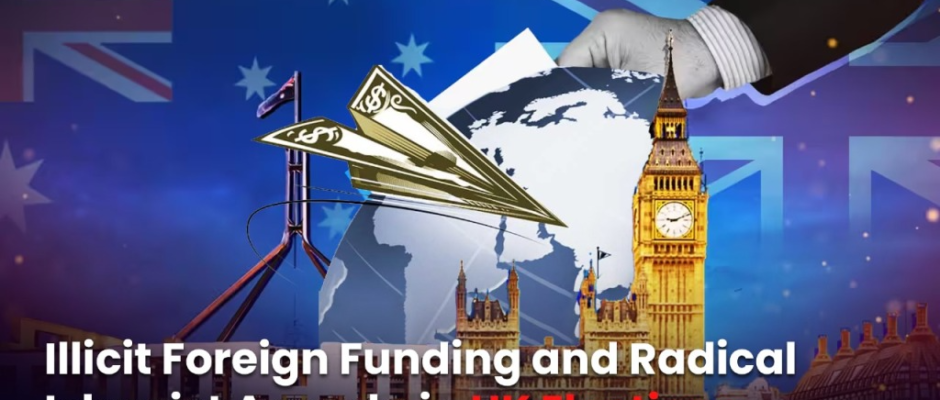
Illicit Foreign Funding and Radical Islamist Agenda in UK Elections

Illicit Foreign Funding and Radical Islamist Agenda in UK Elections

Rohan Giri Prior to the UK general elections, a media investigation revealed that five of the six major British political parties had taken illicit foreign funds. To minimise excessive foreign influence, British legislation compels parties to refund unlawful donations within 30 days and disclose any failures to the Electoral Commission. Only people on the electoral roll can make donations, with a minimum limit of £500. However, the Bureau of Investigative Journalism discovered that the Conservative Party, Reform UK, Liberal Democrats, Green Party, and Scottish National Party failed to prevent or identify these donations, which were made through an assortment of modest payments totalling more than £500 from a foreign source. As per the report, only the Labour Party successfully blocked such unlawful donations. Election law expert Gavin Millar criticised the self-policing method as ineffective and illogical because it relies on beneficiaries to enforce the law. Concerns had grown in the run-up to the 2024 UK general election about foreign players funding political non-governmental organizations (NGOs). Despite precise laws deliberate to prevent excessive foreign influence, some NGOs with significant influence in UK politics have evidently received large amounts of funding from international sources. These contributions, which are frequently routed through intricate channels to avoid detection, undermine the integrity of the democratic process and threaten to influence election results in favour of foreign interests. The current legal system, which relies mainly on self-policing, is deeply inadequate, allowing foreign funders to have hidden power over British politics. Several controversial groups in the British community receive funding from ambiguous sources, which they utilize to spread their propaganda and operations throughout the country. One prominent example is Muslim Council of Britain (MCB), an umbrella group that represents over 500 interconnected mosques and Muslim organizations. MCB has a notorious history of sponsoring and supporting extremist actions, prompting consecutive British administrations to adopt a “non-engagement” stance with the organization since 2009. Notably, the MCB backed a declaration in Istanbul calling for jihad in reaction to Israel’s activities in Gaza and backing Hamas attacks on foreign forces, possibly involving British troops. Another outfit of concern is Hizb ut-Tahrir, which is secretively operational in the UK despite being banned in many countries due to its disruptive ideology and links to terrorist acts. Hizb ut-Tahrir has been accused of radicalising young Muslims and pushing for the formation of a global caliphate through non-democratic means. Its financing roots are opaque, leading to suspicions of foreign financial aid intended to destabilise communities. Islamic Relief Worldwide, headquartered in the United Kingdom, has been accused of supporting terrorist entities, especially Hamas. However, the organization denies the accusations. Israel and the United Arab Emirates, have blacklisted for the concerns about the misuse of charitable donations to help terrorists. Furthermore, CAGE, a UK-based advocacy group, has made headlines for its provocative viewpoints and possible ties to terrorists. The entity openly advocated for the prominent figures such as Dr Aafia Siddiqui who is serving an 86-year jail term for the attempted murder of an FBI agent in disputed circumstances. She is an al-Qaeda sympathiser. Also, they advocated for Anwar al-Awlaki, an American-born cleric of Yemeni descent, who was a key figure in al-Qaeda in the Arabian Peninsula (AQAP). While CAGE professes to advocate for human rights, its support of high-profile terrorists and receipt of foreign financing have sparked investigation and criticism from a number of sources, including the British government. The Islamic community in the United Kingdom has considerable influence on the political mandate because of its large population and active involvement in societal and political concerns. British Muslims contribute to the electorate’s diversity of approaches, influencing policy discussions over immigration, foreign policy, and community welfare. The community’s participation in voting and political discourse ensures that the problems and demands of a sizeable portion of the people are addressed. This impact, however, can be destroyed by organizations and people that mislead or manipulate the community to advance their own objectives. Extremist organizations in the UK have not only attacked non-Islamic communities, as evidenced by the attacks on Hindus in Leicester, but are also actively influencing political circumstances ahead of the general elections. These organizations mobilise Muslim voters and lobby for certain political positions, such as supporting Palestinians and calling for a cease-fire in the Israel-Hamas conflict. According to studies, these organizations use societal tensions and global conflicts to acquire influence, which frequently results in heightened division and violence. The ubiquitous influence of these extremist groups emphasises the critical need for tougher measures to resist their activities and preserve the democratic process from being hijacked by radical ideology. In 2017, the Henry Jackson Society emphasised the importance of foreign money in spreading Islamist extremism in Britain. They noted that money, mostly from government-linked foundations in the Gulf and Iran, has supported the spread of extremist notions, particularly Saudi Arabia’s multimillion-dollar initiatives since the 1960s to promote Wahhabism. In the United Kingdom, the funds have taken the form of endowments for mosques and Islamic educational institutions that have hosted extremist preachers and distributed radical material. British Muslim religious leaders who have received training in Saudi Arabia, as well as the use of Saudi textbooks in Islamic schools in the United Kingdom, contribute to this effect. Many of Britain’s most infamous Islamist hate preachers are tied to foreign financing, which has contributed to the radicalisation of many who have joined jihadist groups in Iraq and Syria. Foreign funds pose a serious threat to the UK’s democratic values, as proven by recent exposes of illegal donations to major political parties and the influence of extremist organizations. Despite rules aimed at preventing undue foreign influence, the inability of a structured legal framework to ban illegal donations highlights the shortcomings of the current self-policing system. Furthermore, foreign funding by political NGOs and extremist groups undermines the legitimacy of the democratic process. These organizations use societal tensions and global crises to advance their objectives by propagating extreme beliefs and disrupting communities. (Author is a doctoral fellow at Amity University in Gwalior, content manager

Read More

Indian Independence Act: A legislation that unleashed human tragedy of epic proportions

Arun Anand The Indian Independence Act was passed in 1947 in British Parliament on July 5 and it got the royal assent on July 18 thus paving the way for partition of India into two independent and sovereign nations- India and Pakistan. This division was result of what is known in common parleys as the ‘Mountbatten Plan.’ According to the British Parliamentary archives1, “The act created two new independent dominions; India and Pakistan. Pakistan was split into Pakistan and East Pakistan which is now Bangladesh. The Bengal and Punjab provinces were partitioned between the two new countries. These dominions separated the Muslim, Hindu and Sikh population and caused the biggest forced migration which has ever happened that was not the result of war or famine.”  The Act repealed the use of ‘Emperor of India’ as a title for the British Crown. It also ended all existing treaties with the princely states. However, Lord Mountbatten continued as Governor-General of India while Jawaharlal Nehru was appointed India’s first Prime Minister. Meanwhile Muhammad Ali Jinnah became Pakistan’s Governor-General and Liaquat Ali Khan its Prime Minster.  The Indian Independence Act was subsequently repealed through Article 395 of the Constitution of India that was implemented on 26 January 1950. Pakistan repealed this Act through Article 221 of its Constitution in 1956, both constitutions being intended to bring about greater independence for the new states. Some of the key takeaways from the India Independence Act, 1947 were2– -It declared India an independent and sovereign state on August 15, 1947, ending British authority in India. -It called for the partition of India and the establishment of two sovereign, Indian and Pakistani dominions, each with the right to withdraw from the British Commonwealth. -It abolished the viceroyalty and established a governor-general for each dominion, who was to be nominated by the British King on the recommendation of the dominion government. His Majesty’s Government in the United Kingdom was not to be held responsible for the governments of India or Pakistan. -It gave the two dominions’ Constituent Assemblies the right to draft and approve any constitution for their separate countries, as well as annul any British Parliament legislation, including the Independence Act itself. -It gave both dominions’ Constituent Assemblies the right to legislate for their separate regions until new constitutions were created and implemented. After August 15, 1947, no Act of the British Parliament could be extended to either of the two dominions unless it was preceded by a statute of the dominion’s legislature. -The secretary of state for India was disbanded, and his responsibilities were moved to the secretary of state for Commonwealth Affairs. -From August 15, 1947, it declared the end of British supremacy over Indian princely kingdoms and treaty agreements with tribal lands. -It gave Indian princely states the option of joining the Dominion of India or the Dominion of Pakistan, or remaining independent. -The Government of India Act of 1935 was used to rule each of the dominions and provinces until the new Constitutions were drafted. The dominions, on the other hand, were given the authority to amend the Act. -It took away the British Monarch’s ability to reject measures or request that specific bills be reserved for his approval. This power, however, was reserved for the Governor-General. In the name of His Majesty, the Governor-General would have complete authority to consent to any measure. -It named the Governor-General of India and the provincial governors as the states’ constitutional (nominal) leaders. In all things, they were required to follow the advice of their individual councils of ministers. -It removed the title of Emperor of India from the king of England’s regal titles. -It stopped the secretary of state for India from appointing civil servants and reserving jobs. Civil servants who were hired before August 15, 1947, would continue to receive any perks that they were entitled to up to that period. Partition of India Indian Independence ACT, 1947 unleashed one of the biggest human tragedies in the history of mankind caused due to partition. The Partition of India was one of the most defining events in the history of the Indian subcontinent. With no accurate accounts of how many died or lost their homes, estimates suggest that perhaps up to 20 million people were affected by the Partition and somewhere between 200,000 – 1 million lost their lives.3 Organisations like Rashtriya Swayamsevak Sangh(RSS) played an important role in saving lives of millions of Hindus and Sikhs. The volunteers of the RSS, a socio-cultural organisation also played an important role in relief and rehabilitation efforts in various cities of India where the refugees from Pakistan were trying to settle down to begin their new lives. Though the RSS was a relatively young organisation at the time as it was only set up in 1925, it played a stellar role in bringing millions of Hindus and Sikhs safely to India as there was a communal carnage targeting them in the geographical regions which were supposed to go to Pakistan. Recalling the role of the RSS’ swayamsevaks during Partition, Professor A.N. Bali, in his book Now It Can Be Told, wrote that the RSS was ever-present in Punjab.  “Who came to the rescue in those difficult times to protect the people, except those young men known as RSS. They arranged for safe passage of women and children in each and every mohalla, in every city of the state,” he wrote. “They arranged for their food, medical help, and clothing and took care in every possible way. They organised fire-fighting teams in different cities and towns. They arranged for lorries and buses to carry the escaping Hindus and Sikhs and posted defence teams in railway trains.” Bali wrote that even Congress leaders took the help of the RSS. “They patrolled relentlessly in different Hindu and Sikh localities. They trained people in self-defence. They were the first ones to reach these terrified people, first to help them and were the last to come to secure places in east Punjab,” he wrote. “I

Read More

Games that China Plays

Psychological warfare, media propaganda, narratives coupled with operations beyond diplomatic relations is what China is known for. Is the world listening? Dr Amritpal Kaur Prima Facie, diplomacy is a well-rehearsed hard bargain negotiation among countries to achieve the best possible outcomes for a nation without resorting to crude force. What does not however meet the eye is that it is an incessant process to resolve outstanding issues lurking around the corners, brewing for years before the final settlement, if ever, is achieved. With core interests at the heart of diplomatic deliberations, the high stakes make this complicated dance on eggshells all more crucial. It is assumed that deliberations conducted by diplomats are a standard process with similar training in negotiation processes and the parlance used in discussions. In reality, diplomatic negotiation is a high-voltage tussle with deep and far-reaching consequences. Even more astounding is that it does not end on the negotiation table but runs like an undercurrent. In the era of Globalization or ‘Complex interdependence’ as much as the international community is reality of domestic national life, diplomacy and diplomatic signals become more significant for nations. If diplomatic engagement is mired in psychological games with the intention of one-upmanship, bilateral engagements become complex and if one of the parties is contemporary China, it raises its own share of issues. Conspicuous silence President Xi Jingping maintained when Prime Minister Modi assumed office for historic third consecutive term was marked by world leaders. This silence seems to have sent out an eloquent underlying message. Though Chinese Premier Li Qiang joined top world leaders in congratulating Prime Minister Modi ahead of swearing in on June 9, 2024, President Xi’s silence was ostensibly aimed at mounting psychological pressure on India. Post-second world war, China and its international relations give us glimpse into the country’s thinking on its relations with others including India. Beginning with Zhau Enlai, average Chinese have relentlessly pursued overt and covert ways to achieve its desired bilateral outcomes with an astonishing disregard for international treaties and modus operandi. Indo-Chinese agreement of 1993, intermittent border skirmishes and war (1962) since 1948 reiterates the point that it’s not over, until the last bell rang. Border dispute with India and People’s Liberation Army operations on Indo-Chinese border comes at crucial junctures. Former National Security Advisor Shiv Shankar Menon recounted in his book Choices (2016) that in 2014 when the first Modi government took office and President Xi came to India, PLA engaged in border skirmishes with India. Similarly, during Prime Minister Modi’s visit to China, a similar tactic unfolded. Probable explanation to such acts, according to Menon is to create psychological pressure on the newly elected Indian prime Minister as to who is the sheriff in town. Richard Solomon, former diplomat in US and former Foreign Secretary of India Vijay Gokhale have written respectively about the Chinese style of diplomacy which is remarkably different from diplomacy of democratic countries. Chinese engage in psychological warfare even in diplomacy at various levels. From setting agenda to building narratives, Chinese are adept at controlling the whole process and go beyond closed doors of diplomatic negotiations. One pattern is to engage in crude coercion and use of force while the other is to leverage media to create narratives. Two examples can be cited here, one is that of 1950s when Pt. Jawaharlal Nehru was called the ‘Bourgeoise Imperialist’ by Chinese media. Earlier this month, the state-sponsored Chinese media and related ecosystem described Prime Minister Modi as ‘weakened’ leader. These reports also suggested possible use of counter measures by China if India maintains policy status quo. Why is it that Chinese takes recourse to multi-pronged games in strategic and diplomatic relations with other countries eventually leading to disturbing regional peace and tranquility? Nature of Chinese state perhaps necessitates such behaviour. To begin with, Henry Kissinger in On China argued that since antiquity China has believed in ‘Middle Kingdom’ phenomenon which places the Chinese state over rest of the world and only beneath the heaven. This perceived middle Kingdom phenomenon has percolated to Communist China as well and hence they believe that other countries can only be vassals to the dragon power. There have been suggestions to the effect that Chinese communist expansionists harbor the idea that bilateral relations cannot be between equal sovereigns. These relations should centre on ‘superior’ China and ‘inferior’ other nations. With regards to Bharat, Chinese terminology includes ‘legalized hegemony’ and perceives India as an inferior state given that it does not have a permanent seat in United Nations Security Council. Chinese may have effortlessly used this aspect to tip balance of power in their favour, as former NSA Shiv Shankar Menon calls it.  Former foreign secretary Gokhale argued that Chinese engage in such tactics to keep power equation in their favour. Communist Party of China is the state itself and officials are appointed by the Party and not the state. Hence, their allegiance is with the Party and not the state per se. Menon sums the Chinese position succinctly when he argues that China is a lonely state rising in a crowded neighbourhood with an acute need for regime survival and internal harmony. Hence, its no wonder that being adventurous in foreign relations was to offset domestic attention from key issues. Since China is viewed as a formidable power, there is critical need to find a mutually beneficial bilateral mechanism. But, there’s no letup in tricky Chinese games loaded with psychological operations that have implications for outstanding bilateral issues. China experts, time and again, underscore that if we had to deal with China, understanding its game is more important. Only then can we find favourable outcomes in diplomatic negotiations. Jiang Zemin was famous for saying in English that it takes two to tango and it is true in this case well. For bilateral relations to succeed, it takes two to clap and a possible egalitarian approach in Chinese diplomacy. (Author is Assistant Professor in Political Sciences, Dayal Singh College, Delhi University, New Delhi)

Read More

Yoga Cleanses Minds of Ill Will, Conflicts & Envy

Happy soul, fresh mind and a healthy body – all three can be achieved with yoga! Dr Aniruddh Subhedar On June 21 last year when Prime Minister Narendra Modi led ninth International Yoga Day celebrations at United Nations headquarters in New York, it marked a significant shift in Bharat’s global image- from being seen as a “backward third world country of snake charmers” to a leader in philosophical and spiritual pursuits for the global communities. Bharat’s wisdom has contributed big to global order for millennia. And, today, it has so much more to offer through yoga, Ayurveda, alternative life styles in sync with environment. And, it’s only natural that Yoga has become its most popular and globally accepted brand ambassador. Yoga, by its very nature, has a universal appeal and application that puts individuals on path of spiritual self-realization as well as physical well-being. What is Yoga? Yoga is identified with various asanas (postures) and physical exercises which is just a small aspect of the entire scientific offer. Yogic philosophy is part of six orthodox Indian schools of thought, alongside Nyaya, Vaisheshika, Mimamsa, Samkhya, and Vedanta. These are called Astika darshanas as they all consider Vedas as the authority. Each offers a unique perspective to the world of spirituality and interpretation of the Vedas, the fountainhead of Indian civilization. What makes Yoga different and popular is its relevance to both the masses and elite. It’s in Mimamsa and Nyaya that we find deepest and intellectually rigorous philosophical musings. Yoga, on the other hand, reaches spiritual heights as any other darshan or vision while offering practical applications accessible to everyone and asanas are its most popular form. Worldwide, yoga is practised today is just a set of physical and breathing exercises. Those that delve deeper into practicing Yoga follow higher levels such as dhyana or meditation that can rightly be called India’s gift to the world. The word “Yoga” means “to add” or “to unify”. Yoga teaches union of individual consciousness thereby forging perfect harmony between mind and body, human being and nature. As Maharshi Patanjali propounded in his ‘Yoga Sutra’ योगश्चित्तवृत्तिनिरोधः (Yoga controls fluctuations / wanderings of the mind). Yoga trains a person to regulate one’s mind, thoughts and achieving spiritual heights that Bhakti saints describe as “unification with God.” Physical fitness is just first step in this noble endeavour, ultimate goal is unification. This higher goal is achieved through forms of meditation, guiding a person to self-realization. Meditation is not only significant to the Vedic lifestyle but central to non-Vedic Buddhist and Jain philosophies. Siddharth became “Buddha,” the enlightened one, through power of meditation. His disciples spread meditation far and distant places. Etymologically, “Zen” meditation of Japan originates from Sanskrit word “dhyana” (meditation). Thus, Bharat’s dhyana travelled across the world, becoming spiritual foundation for many nations. Roots of Yoga can be traced to Vedic texts and we find its mention in Katha Upanishad. Traditionally, Patanjali’s Yoga Sutras written in the early centuries of the CE, if not before, is considered most authoritative text discussing and throwing light on nuances of Yogic philosophy. It propounds the famous Ashtanga (eight limbs of Yoga): Yama (abstinence), Niyama (observances), Asana (posture), Pranayama (controlled breathing), Pratyahara (withdrawal), Dharana (concentration), Dhyana (meditation), and Samadhi (absorption, an advanced stage of meditation). These eight limbs of Yoga are not limited to ascetics but followed in varying degrees by laypeople. It makes Yoga an all-encompassing philosophy that one can follow in sync with their capabilities. Some stop at physical exercises while others become Yogis, lifelong devotees.. This intrinsic, all-encompassing nature of Yoga is evident from its presence in both orthodox texts and unorthodox sects. One of the most famous is “Nath Sampradaya” whose ascetics are called “Yogis.” Currently, its largest centre is in the city of Gorakhpur, India, though it had major presence at Tilla Jogian (Mound of Yogis) in Pakistan. The thriving centre could not survive onslaught of the Islamic Republic of Pakistan and it is now abandoned. Nath Yogis have significantly influenced life and culture of society. Nath Yogis consider Bhagwan Shiva as the Adi-Natha (the original/first Natha). Many Hindu texts discuss propound tnature of Yoga. In Bhagavad Gita, Bhagwan Krishna says: योगः कर्मसु कौशलम् (Yoga is a skill in action). Gita calls Bhagwan Shri Krishna as “Yogeshwar” (the Lord of Yoga). Kashmir Shaivism, Shakta sects and famous Brahma-Sutra Bhashya of Adi Shankaracharya contain deep discussions on Yoga. Recent attempts like “Christian Yoga” to de-Hinduize Yoga by separating it from Hindu spirituality are thus dishonest and futile exercises. Unification, Not Domination From times immemorial, world has seen conquerors, both noble and tyrannical, attempting to establish their own rule through domination. Some have succeeded and some did not. Yoga, meaning unification, brings the world together through spiritual upliftment of individuals. It focuses on cleansing minds of ill will, conflicts, and envy. Yoga has always been spread by Indian seers and ascetics. From India, the teachings of Yoga reached ancient China, Japan, and Southeast Asia. In medieval times, scholars like Al-Beruni translated Patanjali’s Yoga-Sutras into Arabic and Persian, though their spread was limited by hostile attitude of Islamic clergy. In modern times, gurus like Swami Vivekananda introduced Indian wisdom and Yoga to the West. Yogis like Paramahansa Yogananda and teachers like BKS Iyenger popularized Yoga in America and Western World. Slowly, Yoga and its concepts are reaching the world not by force or guile but by sheer positive influence. Today, around 300 million people around world practice Yoga in some form. Statistics show that in America alone, number of people practicing Yoga has increased by almost 50 per cent since 2012. Today, around 36 million people practice America has emerged as largest yoga-practicing nation after India. This impact is visible in popular culture too with references to Yogic concepts like Kundalini in the famous Marvel movie Dr. Strange. Positive effects of practicing Yoga are recognized worldwide. Acknowledging its universal appeal, on December 11, 2014, United Nations declared June 21 as the International Day of Yoga through resolution

Read More

Hindu Manifesto 2024

On Saturday, June 8, the British Hindu community officially unveiled the Hindu Manifesto 2024. A long-overdue manifesto will emphasise a shared commitment to the advancement of not just British Hindus but the entire nation. Rohan GIRI             With the United Kingdom’s (UK) general election set for July 4, 2024. British Hindus are at a critical juncture. Due to its historical unwillingness to engage in political discourse, the community frequently regarded politics as a taboo subject. Many people do not vote, whereas some vote without thinking about the long-term consequences for themselves, their community, and the nation at large. According to the 2021 UK Census, British Hindus make up about 1.7% of the UK population, or approximately one million people. Despite their small numbers, their contributions to the British economy are unparalleled. As a community, they are among the top taxpayers, and their contributions to UK’s National Health Service (NHS) are imperative, with a large number of doctors, nurses, engineers, and other professionals. Additionally, Indians employ tens of thousands of individuals. British Hindus are a well-educated community that is self-sufficient, independent, and prosperous. Their commitment to prosperity and the rule of law reflects their extremely low numbers in British prisons, accounting for less than 0.3 percent of the total prisoners. Despite the community’s alignment with British values and society, it has minimal influence in British politics. This arena, where policies are formulated, laws enacted, and narratives established, demands a significant voice to shape the future. Unfortunately, British Hindus are often underrepresented or misrepresented in education, academia, media, and politics, both locally and nationally. They frequently face attacks, vilification, and maligning, with no substantial collective response to defend their interests and set the record straight. The next general election presents a crucial opportunity for the community to voice their thoughts. Parliamentary candidates must understand that British Hindu votes cannot be taken for granted. The community seeks fair representation and recognition of its contributions, highlighting Sanātan Hindu Dharma as an asset to Britain. The next general election presents a crucial opportunity for the community to voice their thoughts. Parliamentary candidates must understand that British Hindu votes cannot be taken for granted. The community seeks fair representation and recognition of its contributions, highlighting Sanātan Hindu Dharma as an asset to Britain. It is time for British Hindus to claim their seat at the table, shaping and influencing the country’s future. This involvement is not just a right but also a duty, or Dharma. The Hindu Manifesto 2024, launched by the British Hindu community, contains seven crucial pledges that the community expects from parliamentary candidates and future governments. These assurances are designed to ensure the protection, promotion, and progress of Hindu values and interests within the broader British society. The Seven Assurances of the Hindu Manifesto UK 2024: “Recognising Anti-Hindu Hate as a Religious Hate Crime: This expectation demands the identification and prosecution of groups and individuals that perpetrate anti-Hindu hatred. Recognising such acts as religious hate crimes will ensure that they are taken appropriately and addressed accordingly. Protecting Places of Hindu Worship: Ensuring the safety and purity of Hindu temples and places of worship is critical. This promise aims to preserve these precious areas from damage and attacks. Access to Fairer Education: This involves advocacy for an education system that accurately represents Hindu culture and contributions, as well as ensuring that textbooks are inclusive and unbiased. Equal Representation and Opportunities for Hindus: This protection aims to address Hindus’ underrepresentation in numerous sectors by struggling for equal opportunities in employment, politics, and other areas. Streamlining Immigration: The need for fair and efficient immigration laws that make it easier for people looking to join family in the UK or contribute to the British economy. Healthcare and Social Care: Encourage and enhance access to healthcare and social care services for Hindus while also addressing their special needs and concerns. Acknowledging and Protecting Dharmic Values: It aims to understand and respect the Hindu Dharmic way of life by consulting with the community while legislating on intra-community issues affecting the UK Hindu community, by facilitating infrastructure for religious ceremonies such as marriage and cremation, by commissioning a memorial for Hindu soldiers who served and died for the UK, and by understanding that the connection between UK Hindus and India (Bharat) is spiritual rather than political.” The Hindu Manifesto is a call to all parliamentary candidates and political parties to engage with and support the Hindu community in their respective areas. It has already received endorsements from various parliamentary candidates who have declared their support for the manifesto and its goals. As the general election approaches, the Hindu Manifesto will act as a guide for British Hindus, reminding them of their ability to shape the political landscape and ensure their community’s interests are reflected and safeguarded. This election is a critical opportunity for British Hindus to establish their presence, demand fair representation, and contribute to determining the future of the UK in a way that recognises and appreciates their substantial contributions. The election is an opportunity for British Hindus to turn their contributions, concerns, and expectations into legitimate political influence. The substantial participation and widespread support for the Hindu Manifesto 2024 can demonstrate to political leaders that the community is a force to be reckoned with, worthy of representation and consideration in policies. The ramifications of this participation will extend far beyond election day, potentially ushering in an era where British Hindus’ voices are fundamental to national conversations, their needs are met, and their values are upheld in the halls of government. (Author: Rohan Giri is a journalism graduate from Indian Institute of Mass Communication (IIMC) New Delhi, and Manager Operations at CIHS.)

Read More

Propagating ‘Truth’ That Never Existed!

Both, US and China used devious means to force a tilt, influence outcomes of recently concluded Lok Sabha elections in Bharat Vinod Kumar Shukla Cognitive warfare is the new tool deployed by a few global powers to ensure their continued dominance on others throwing ethics and internationally accepted practices to wind. These powers have attempted suppression of fair practices in election of a government especially in countries where there is a vibrant democracy. Among others, India too faced challenges where democratic process was allegedly tried to be influenced by creating false narratives with help of Artificial Intelligence (AI) and Social Media influencers. Most of these falsehoods were not only funded by foreign countries but ideas too were generated on foreign soil. Investigations revealed that STOIC, an Israeli company attempted to interfere in Lok Sabha elections by peddling anti-BJP agenda dubbed as ‘Zero Zeno.’ Efforts were made to manipulate public opinion even in Canada, US, Israel, and Ghana. With help of AI, web articles and social media, comments and content were generated and pushed across Instagram, Facebook, and X focusing on criticizing the BJP and praising the Congress. AI was used to create fictional characters and fake social media accounts with specific variables like age, gender and location. Bogus accounts were created to engage people with such posts that gave the impression of genuine audience interaction. China too was actively involved in this disinformation campaign and escalated its campaign for changing the government in India after People’s Liberation Army was humiliated both in Doklam and Galwan Valley. Artificial intelligence was craftily used to construct propaganda content, images and videos targeting parties and politicians opposed to Chinese hegemonic design. Microsoft had cautioned that China was poised to use generative AI to sway elections all across scheduled for this year. Chinese interference is deeply rooted in its expansive ‘influence operations’ (IO) targeting leaders of other countries with its disinformation campaign to undermine leaders by portraying them as weak and vulnerable. Spamouflage Dragon or Dragon Bridge or Storm 1376, a key Chinese disinformation propagator network has been functioning since 2017-18 on social media. Its activities came to notice when around 9,000 Facebook and Instagram accounts linked to this network were shut down by Meta in August 2023. In November 2023, approximately 4,800 fake Chinese social media accounts impersonating Americans were shut down for disseminating narratives designed to polarise public opinion through biased political content ahead of US elections. The same was done in Australia and the Philippines during 2022 elections. Beyond social media, Chinese IO strategies include both overt and covert tactics involving cultivation of assets like local and independent media, influential personalities, political parties, business figures and NGOs. Preference for particular candidates was subtly communicated not through direct diplomatic utterances but via Chinese state-affiliated media and United Front Work Department (UFWD) which is dedicated to exerting overseas influence. On the parallel, investigation on Chinese funding of NewsClick in Bharat is underway and the matter being heard in the court. Chinese objective of meddling in elections is to ensure that elected candidates or parties should adopt a pro-China stance. These disinformation campaigns aim to sway election outcomes by undermining voters’ confidence in candidates not favoured by China. Recent escalation in Chinese disinformation involves leveraging generative AI technology to prepare propaganda images and videos. These AI-generated materials target parties and politicians critical to China. Initially this technology was used during presidential elections of Taiwan to undermine Taiwan’s democratic framework, promoting a pro-unification narrative, and weakening Taiwan’s ties with the US. In fact, Chinese disinformation campaigns on the national security of various countries have prompted many to ban popular Chinese social media platform TikTok. But, reports indicate that China continues to meddle in foreign elections to emerge as a global power. Besides China and Israel, millions of dollars were spent to impact elections in India. Western interference from European Union and US too were in the game. Media outlets with tacit, explicit funding and a few funded by organizations with background in peddling agenda based narratives through stories on ‘random WhatsApp groups’ by creating heroes out of Pak-sponsored stooges. Recent elections in India witnessed the most intrusive foreign reporting with overwhelming negative and brazen reports about ruling dispensation. All this was done to have a Parliament with leaders who can help impose political agenda of countries which are instrumental in spreading these canards. The objective is to secure a favourable outcome aligning with its strategic interests. Western media was found indulging in mud-slinging to sully the image of select leaders and their party in a sinister attempt to impact voter’s minds. Dangerous narratives were peddled by a so-called Indologist Christophe Jaffrelot as the ‘caste census’ narrative allegedly came from France. Jaffrelot extensively writes on India. The French media had shown special interest in these elections with extensive reporting by Le Monde, Le Soir, France 24, La Croix (International), Le Temps, Reporterre, and Radio France Internationale (RFI) to shape up a particular narrative to impact Indian elections with Jaffrelot as an expert on almost everything in India. With the help of Trivedi Centre for Political Data (TCPD) at Ashoka University, Jaffrelot and his disciple Gilles Verniers aggressively peddled a narrative that ‘lower castes’ had lesser representation in politics, quoting profile of MPs in 2014 Lok Sabha. However, the expert duo immediately changed their stand when the 2019 Lok Sabha had a higher representation from lower castes. In fact, never before was he referred by so many outlets in such a short time. He wrote a paper on ‘need of caste census’, in September 2021. US and China attempted to play dirty in just concluded elections with startling discourse being Caste Census which certainly was not organic. Jaffrelot had allegedly received massive funding from the US-based ‘philanthropic’ organization Henry Luce Foundation (HLF) around the same time. HLF was founded by Henry Luce, the founder of TIME magazine. Lesser known fact about Luce is his alleged deep-state connections. He was born to Presbyterian Christian Missionaries and supported by

Read More

California Civil Rights Report: Hinduphobia is real & kicking!

Civil Rights Department (CDR) of California recently put together a report outlining frequency in cases relating to religious hatred in the California state, USA. As per the report, incidences of anti-Hindu hate crimes accounted for 23.3 per cent of all religious hate crimes reported to Department’s Anti-Hate Hotline in one year. Almost one-quarter of all reported religious hate crimes were directed at Hindu community. The rise in such crimes is a serious concern and necessitates a closer look at the underlying reasons, ramifications and possible remedies to stop this worrying trend. Among the states with most diversity in terms of culture and religion in the US is California. Hindus make up a sizable chunk of the state’s population; they are mostly Indian Americans who enrich the social, cultural and economic fabric of the region. This diversity notwithstanding and the ideals of acceptance, reports of religious hatred and intolerance persist. Verbal abuse, physical assaults, vandalism of places of worship, harassment and other types of hate speech or discrimination against Hindu persons or groups are examples of anti-Hindu hate incidents. Substantive absolute number of incidents suggests that the larger problem of religious intolerance is anti-Hindu hostility.  (Author is head of operations at Centre for Integrated and Holistic Studies, a non-partisan think tank based in New Delhi)

Read More

Time for US to Take Extradition of Terrorists Rana and Headley to India Seriously

Washington and Ottawa have discarded Bharat’s national security concerns by not extraditing terrorists, David Coleman Headley & Tahawwur Rana Rahul Pawa Bharat has come under scrutiny of Western powers especially United States and Canada along with routine rhetorical accusations from Pakistani military officials on New Delhi’s involvement in elimination of terrorists on foreign shores. This leads us to a critical question. While both Washington and Ottawa take an aggressive stance on alleged Indian clandestine operations, are they committed to extraditing American and Canadian terrorists like David Coleman Headley and Tahawwur Rana? Or is there a deeper disregard for Bharat’s legitimate national security and criminal justice concerns? Fifteen years have passed since the devastating 26 / 11 Mumbai attacks, a series of coordinated terrorist assaults that shocked the world. Meticulously orchestrated by Pakistan, ten terrorists from Pakistan-based Lashkar-e-Taiba (LeT) crossed Arabian Sea to unleash terror on Mumbai, Bharat’s financial capital. The 60-hour siege that followed claimed 166 lives and injured over 300 civilians and security personnel leaving an indelible mark on the city’s history. Central to reconnaissance efforts leading to these vicious terrorist attacks were David Coleman Headley a.k.a Daood Sayed Gilani, an American citizen of Pakistani origin and Tahawwur Rana, a former Pakistan Army Captain and Canadian citizen. Headley, who conducted extensive surveillance and gathered crucial information on Mumbai targets, played a pivotal role in planning and execution of the attacks. He made multiple trips to Mumbai and provided detailed videos and sketches of the locations to attackers. Rana, an old friend of Headley from their days in Pakistani military school who also visited Mumbai facilitated these reconnaissance missions by providing Headley cover through his Chicago based immigration business.    Following the devastating attacks, Headley and Rana were both apprehended and prosecuted for their roles in planning and executing these terrorist activities, as well as for conducting reconnaissance of a Danish daily in Denmark. American terrorist Headley was arrested by Federal Bureau of Investigations (FBI) in Chicago on October 3, 2009. In March 2010, he pleaded guilty to being terror trained in Pakistan, 12 terrorism-related charges, including aiding and abetting the 26/11 attacks which included six American victims. Headley cooperated with U.S. authorities providing intelligence and testimony that significantly advanced the investigation including key tip offs regarding Rana. In January 2013, Headley was sentenced to 35 years in prison. Around the same time, Canadian terrorist Rana was arrested on October 18, 2009. He was charged with providing material support to terrorist plots, including the Mumbai terrorist attacks and a planned terror attack on Jyllands-Posten in Denmark. In June 2011, Rana was convicted of conspiracy to provide material support to Lashkar-e-Taiba, terrorist group responsible for Mumbai attacks and for supporting the plot against Danish newspaper. However, strikingly, he was acquitted of direct involvement in Mumbai attacks. Rana was sentenced to 14 years in prison in January 2013. For over 11 years, Bharat diligently pursued extradition of David Headley and Tahawwur Rana from US under India-U.S. Extradition Treaty of 1997seeking justice for their roles in 26 / 11 Mumbai terrorist attacks. The extradition request for Headley was sent on December 7, 2012. Headley’s cooperation with U.S. authorities and his plea agreement which precluded his extradition to India, Pakistan, or Denmark, Bharat remains steadfast in its efforts to hold him accountable under her own laws where the crime was abetted, planned and committed. The plea agreement spared Headley from death penalty and barred his extradition. It has been a point of contention with Indian authorities which feels that US soft-pedaled and did not cooperate in providing access to Headley. Although officials from India’s National Intelligence Agency (NIA) were able to interrogate Headley in Chicago in June 2010, they could do so only in the presence of FBI agents, leading to concerns that the information obtained was restricted. Importantly, while the plea agreement limits Headley’s extradition for the crimes he confessed to, the U.S. Secretary of State holds the authority to potentially extradite Headley for offenses other than those related to the 26/11 attacks or if he violates the plea agreement. Secretary of State seems to have been party to this plea agreement thereby denying extradition of Headley. Bharat has been pursuing extradition of Tahawwur Rana. Following his conviction in US, New Delhi requested his extradition along with evidence on August 13, 2020. On May 16, 2023, a US court concluded that Rana was extraditable for offenses related to Mumbai attacks and certified this finding to US Secretary of State. In May, Rana had filed a writ of habeas corpus, challenging the court order that agreed with US government’s request for his extradition to India. On August 2, 2023, Judge Dale S. Fischer of US District Court in California denied Rana’s petition for a writ of habeas corpus, paving the way for US Secretary of State to issue a certification for his extradition to India. However, Rana has filed an appeal against the order and sought a stay on his extradition to India until his appeal in the Ninth Circuit Court is heard, leading to his extradition being stayed on August 18, 2023. His extradition remains pending. US and Canada played hardball on both these key extraditions that were to be tried for waging a war against Bharat’s sovereignty. On the other hand, the two countries were working in tandem to corner Bharat on the killing of Hardeep Singh Nijjar.  Nijjar is a Khalistani terrorist trained by Pakistan’s notorious Inter-Services Intelligence (ISI) and funded to carry out terrorist activities in India and posed significant threats. Similarly, Gurpatwant Singh Pannun, face of proscribed entity, Sikhs for Justice (SFJ), is another example. SFJ has been declared an unlawful association under Sub-Section (1) and (3) of Section 3 of Unlawful Activities (Prevention) Act, 1967. Numerous scholars of terrorism and international relations, as well as the Indian government, recognise both Nijjar and Pannun as terrorists. They frequently expose the so-called “Khalistani Movement” as a front for Pakistan recently furthered by Communist Party of China (CPC) to engage in

Read More

Reforms Should Go Beyond Economy, Touch Every Facet of Life

Let’s leverage strengths for global good, meet aspirations of Bharat’s citizens as we progress to become a developed country by 2047 Narendra Modi The biggest festival of democracy, the 2024 Lok Sabha Elections, is concluding today in our nation, the Mother of Democracy. After a three-day spiritual journey in Kanniyakumari, I have just boarded the plane for Delhi. Through the day, Kashi and numerous other seats have been in the midst of voting. My mind is filled with so many experiences and emotions… I feel a boundless flow of energy within myself. The 2024 Lok Sabha elections are the first in the Amrit Kaal. I began my campaign a few months ago from Meerut, the land of the First War of Independence of 1857. Since then, I have traversed ac-ross the length and breadth of our great nation. The final rally of these elections took me to Hoshiarpur in Punjab, the land of the great Gurus and a land associated with Sant Ravidas Ji. After that, I came to Kanniyakumari, at the feet of Maa Bharti. It is natural that the fervour of the elections was echoing in my heart and mind. The multitude of faces seen in rallies and road shows came in front of my eyes. The blessings from our Nari Shakti… the trust, the affection, all of this was a very humbling experience. My eyes were getting moist… I entered into a ‘sadhana’ (meditative state). And then, the heated political debates, the attacks and counter-attacks, the voices and words of accusations which are so characteristic of an election… they all vanished into a void. A sense of detachment came to grow within me… my mind became completely detached from the external world. Meditation becomes challenging amidst such huge responsibilities, but the land of Kanniya Kumari and the inspiration of Swami Vivekananda made it effortless. As a candidate myself, I left my campaign in the hands of my beloved people of Kashi and came here. I am also grateful to God for instilling in me these values from birth, which I have cherished and tried to live up to. I was also thinking about what Swami Vivekananda must have experienced during his meditation at this very place in Kanniyakumari! A part of my meditation was spent in a similar stream of thoughts. Amidst this detachment, amidst the peace and silence, my mind was constantly thinking about the bright future of Bharat, the goals of Bharat. The rising sun at Kanniyakumari gave new heights to my thoughts, the vastness of the ocean expanded my ideas, and the expanse of the horizon continuously made me realise the unity, the Oneness, embedded in the depths of the universe. It seemed as if the observations and experiences undertaken in the lap of the Himalayas decades ago were being revived. Kanniyakumari has always been very close to my heart. The Vivekananda Rock Memorial in Kanniyakumari was built under the leadership of Shri Eknath Ranade ji. I had the opportunity to travel extensively with Eknath ji. During the construction of this memorial, I had the opportunity to spend some time in Kanniyakumari as well. From Kashmir to Kanniyakumari… this is a common identity that is deeply ingrained in the heart of every citizen of the country. This is the ‘Shakti Peeth’ (seat of Shakti) where Maa Shakti incarnated as Kanya Kumari. At this southern tip, Maa Shakti performed penance and waited for Bhagwan Shiva, who was residing in the Himalayas at the northernmost parts of Bharat. Kanniyakumari is the land of confluences. The sacred rivers of our country flow into different seas, and here, those very seas converge. And here, we witness another great confluence – the ideological confluence of Bharat! Here, we find the Vivekananda Rock Memorial, a grand statue of Saint Thiruvalluvar, Gandhi Mandapam, and Kamarajar Mani Mandapam. These streams of thought from these stalwarts converge here to form a confluence of national thought. This gives rise to great inspirations for nation-building. This land of Kanniyakumari gives an indelible message of unity, especially to any person who doubts Bharat’s nationhood and the sense of unity. The grand statue of Saint Thiruvalluvar in Kanniyakumari seems to be looking at the expanse of Maa Bharti from the sea. His work Thirukkural is one of the crown jewels of the beautiful Tamil language. It covers every aspect of life, inspiring us to give our best for ourselves and for the nation. It was my great fortune to pay my respects to such a great figure. Swami Vivekananda once said, “Every nation has a message to deliver, a mission to fulfil, a destiny to reach.” For thousands of years, Bharat has been moving forward with this sense of meaningful purpose. Bharat has been a cradle of ideas for thousands of years. We have never considered what we have acquired as our personal wealth or measured it purely by economic or material parameters. Therefore, ‘Idam-na-mama’ (this is not mine) has become an inherent and natural part of the character of Bharat. Bharat’s welfare benefits our planet’s journey to progress as well. Take the freedom movement as an example. Bharat gained independence on Aug 15, 1947. At that time, many countries around the world were under colonial rule. Bharat’s independence journey inspired and empowered many of those countries to achieve their own freedom. That same spirit was seen decades later when the world came face to face with the once in a century Covid-19 pandemic. When concerns were raised about the poor and developing countries, Bharat’s successful efforts provided courage and assistance to many nations. Today, Bharat’s governance model has become an example for many countries around the world. Empowering 25 crore people to rise above poverty in just 10 years is unprecedented. Innovative practices such as Pro-People Good Governance, aspirational districts, and aspirational blocks are being discussed globally today. Our efforts, from empowering the poor to last-mile delivery, have inspired the world by prioritising individuals standing at the last rung of society. Bharat’s Digital India campaign is now an example for the entire

Read More