CIHS – Centre for Integrated and Holistic Studies

Date/Time:

Explainer: Jammu and Kashmir Sankalp Diwas

In aftermath of India’s independence and subsequent Partition of earstwhile British occupied India, Princely States were vested with the prerogative to decide their accession to either the dominion of India or Pakistan, contingent upon geographical coherence as per Indian Independence Act of 1947. This foundational principle was disrupted on the night of October 22/23, 1947, when Pakistani army along with its rallied tribal raiders initiated a forceful assault on the Princely State of Jammu & Kashmir. Subsequently, Maharaja Hari Singh formally acceded to the dominion of India on October 26, 1947, prompting deployment of the Indian army. Read More….

Read More

Swami Dayanand Saraswati: Vedic Scholar, Spiritualist, Reformer & Hindu Protagonist!

Hindus and Bharat are celebrating Swami Dayanand Saraswati’s 200th birth anniversary. He’s a renowned vedic scholar, social reformer & founder of Arya Samaj.  He dedicated his life to reviving purity of Vedic teachings and challenging social injustices. Dayanand Saraswati was born as Mool Shankar on February12, 1824 in Tankara, Gujarat to Karshanji Lalji Tiwari and Yashodabai in wealthy and significant Brahmin family. A staunch devotee of Lord Shiva, the young Dayanand Saraswati would stay up all night on Shivratri for prayers. Given his family’s strong beliefs in Hindu faith, Mool Shankar as he was initially known, learnt immense value of fasting, piety, and traditions in his formative years itself. At the age of eight, Mool Shankar was initiated into Brahmanic universe through the (Upanayana Sanskar) Yajnopavita Sanskar, also known as the investiture of the “twice-born”. He would honestly practice these customs.

Read More

‘Familial Story of Violence Perpetrators Masquerading as Victims’

Over the years, Banbhoolpura in Haldwani has shot to fame as a centre for Islamist extremism. Recent history of extremist activities came to fore with violence unleashed on a police station and public transport in 2019, attacks on COVID19 healthcare personnel in 2020 and assaults on Hindus in 2022. The islamist gangs’ ties with drugs and crime apart from violence is a heady mix remenescent of Hollywood thrillers.

Read More

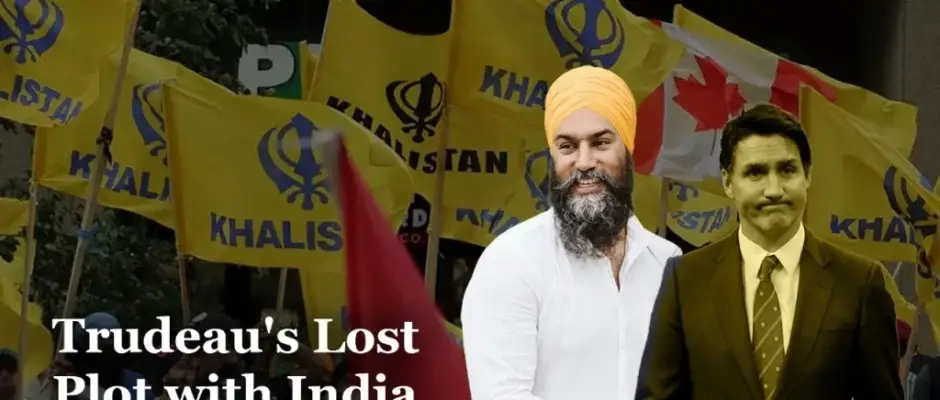
Trudeau’s Lost Plot with India

Trudeau’s political gambits with Canada-based extremists threaten to undermine the fabric of Canada’s national interests, casting a long shadow over its democratic values and international relations, especially with India. Rahul PAWA  In a development that could further complicate the already strained ties between Ottawa and New Delhi, a commission established by the Trudeau administration to probe foreign interference allegations has officially called on the government to release information about India’s possible role in meddling with Canada’s electoral processes. This request unfolds against a backdrop of concerns raised by the Canadian Security Intelligence Service, which has pointed to covert efforts by China to influence the outcomes of Canada’s recent federal elections. A top-secret briefing report, later obtained by various news organizations, highlights the urgent need for Canada to strengthen its defences against such covert activities. The document sheds light on the sophisticated and wide-ranging campaign led by the People’s Republic of China, leveraging everything from diplomatic channels to grassroots community organizations to influence every stratum of society and governance. Adding a new layer to the narrative, the agency has expanded its scrutiny to include India, expressing its apprehensions in a detailed three-page memo that categorises India alongside China as a formidable threat to the democratic integrity of Canada. The report expressly singles out India, anticipating an uptick in interference efforts and strongly advising on the critical importance of bolstering Canada’s democratic systems and institutions to guard against external meddling. In an unfolding scenario that seems straight out of the saying ‘the pot calling the kettle black’, Prime Minister Justin Trudeau, recently labeled as the worst Canadian Prime Minister in the last fifty years, is fervently aiming for a fourth term in office—a milestone last reached in 1908. Despite facing significant hurdles, including trailing behind the opposition Conservatives in polls throughout 2023, Trudeau is unwavering in his quest for re-election, seeking to surpass the achievements of his father, Pierre Trudeau, who narrowly missed winning a fourth electoral term in 1979. Yet, Trudeau’s relentless pursuit of power bears a hefty price for the Canadian people, especially against the backdrop of deteriorating ties with India, the world’s fifth-largest economy, which is seemingly distancing itself from Trudeau’s politics. This growing estrangement is largely credited to Trudeau and his close confidant, Jagmeet Singh Dhaliwal of the New Democratic Party. Since ascending to office in 2015, Prime Minister Justin Trudeau, in alliance with Jagmeet Singh, has navigated the complex waters of Canadian politics with a strategy that leans heavily on the support of Pakistan backed and homegrown Khalistani separatist factions in Canada. This reliance is not merely a reflection of contemporary political strategy but also echoes a longstanding tradition within Canadian politics of providing sanctuary to individuals and organizations known for their dissent against Indian sovereignty. Throughout his tenure, Canada’s political landscape has seen Trudeau’s open endorsement of factions with a history of terrorism and violence within the Khalistani context, a stance that became more marked in the face of competition for the same voter base from Jagmeet Singh. This tactical courtship of Khalistani supporters and sympathisers by Trudeau has significantly influenced his administration’s policies towards India and its substantial diaspora in Canada evidenced by stands taken during India’s farmers protests and during illegitimate referendum dramas in Canada. This demographic, consisting of individuals from both India and Pakistan represents a critical vote bank, ostensibly enabling Trudeau to maintain his grip on power. However, this approach has raised concerns over the compromise of the broader interests of the Canadian people, highlighting a scenario where Trudeau’s political gain is seemingly placed above national welfare. Further demonstrating how their own Prime Minister has placed political gain above all, disrupting the delicate balance between fulfilling national interests and chasing personal political ambitions, especially by jeopardising the economic, moral, and internationally friendly relations with India and her citizens.  In a resolute and unified rebuttal to the latest misadventure to the accusations raised by the commission under the Trudeau government, the Indian Foreign Ministry vehemently dismissed the accusations as “baseless,” “absurd,” and “motivated.” The Ministry highlighted that similar claims had been brought up during Trudeau’s discussions with the Indian Prime Minister, only to be “completely rejected.” Furthermore, the statement from the Indian Foreign Ministry emphasised, “It is not the policy of the Government of India to meddle in the democratic processes of other countries. Contrary to these allegations, it is, in fact, Canada that has been found interfering in India’s internal matters.” The statement also reiterated India’s longstanding concern regarding Canada’s approach towards separatists, terrorists, and anti-India groups. This sharp rebuttal does more than just dismiss the claims; it redirects the focus onto the underlying diplomatic friction between the two nations, emphasizing India’s strongest objections to Canada’s treatment of elements opposed to Indian interests. The intensifying diplomatic standoff between Ottawa and New Delhi marks a pivotal moment, casting a spotlight on Prime Minister Justin Trudeau’s approach of political appeasement toward Canada-based Khalistani extremist factions. This strategy, aimed at securing votes and maintaining power, appears to have jeopardised the broader interests of Canada in favour of Trudeau’s personal political ambitions. The engagement with Khalistani elements by the Trudeau administration has not only soured relations with India but also underscored the fragile interplay between domestic political tactics and the responsibilities of international diplomacy. The firm rejection by the Indian government of the allegations put forth by a commission established under Trudeau’s government deepens the diplomatic divide, signalling a dramatic shift away from a foundation of mutual respect and shared democratic ideals. This situation has led to a moment of reckoning, with India responding with decisive words that challenge the veracity of the Canadian Prime Minister’s stance, thereby reshaping the contours of an intricate bilateral relationship. (Rahul Pawa is director of research at the Centre for Integrated and Holistic Studies in Delhi, India, specialising in international law, crime, security, future-tech & futuristic warfare.)

Read More

Unique Art & Science That Awes!

Gone are the days of coalition politics where regional parties held the sway that led to protracted policy paralysis? It’s Prime Minister Modi’s leadership that stands out post-2014 Amritpal Kaur/New Delhi Prior to 2014, modus vivendi of Indian electoral politics centred in multiparty coalitions. No single party with all India presence had won a clear majority since 1989. There seemed to be a tacit agreement among political parties on respective regional and national electoral sphere with clear vote-banks and core cadre. India was said to be living in an era of ‘coalition politics’ with sway of regional parties to become ‘kingmakers’ in the national politics. On the one hand this led to increase in regional voices at national level and on the other, it led to what was touted as policy paralysis as then Prime Minister Dr Manmohan Singh had to become a prisoner to coalition dharma. The chaos that coalition politics created for governance and central administration was acutely visible at policy implementation level. A number of promising policies were held hostage at the hands of regional political leadership which lacked specialization and orientation to fathom national interests beyond petty political gains. This intransigence turned into a nightmare as national parties failed to bring forth accepted leaders in whom people across regions could reposit their faith. This tricky transient situation changed with 2014 general elections. Prime Minister Modi rose on the national horizon with a clear mandate and secured comfortable majority, a feat that had almost became subject matter of electoral lore of a bygone era. This feat was achieved mainly due to a fundamental difference between Prime Minister Modi and his competitors i.e. the conviction and perception of Modi in the minds of people. He has successfully put forth the image of an efficient and honest administrator and a reformer with the concern for public at heart. What is refreshing about Prime Minister Modi is the fact that he exuberate confidence and reinstates it in general masses about India’s future. At policy level, a few commentators put Modi’s politics to the left of right wing on political spectrum. This was reached derived due to his unequivocal clarity on policy reforms. After all being said and done, what matters is development and reforms done on the ground that directly impacts people’s lives and is not just ‘business as usual’. Prime Minister Modi has been able to achieve it. What has helped him is the clear majority in both houses of Parliament. Pressure of ‘coalition dharma’ is not on his shoulders and it has allowed him to streamline governance, its aims and goals far more clearly. This phenomenon coupled with his track record as an administrator has enabled Prime Minister Modi to build his own political capital which has stood in good stead for him in consecutive general elections. There is no pied piper effect here but a genuine belief of majority Indians that given the variety of leaders in the present generation Prime Minister Modi is primus inter pares. The faith reposited in the present government is unprecedented, probably to be matched only by the premiership of Pt. Nehru or Smt Indira Gandhi. However, the crucial difference between Nehru and Modi is that Nehru rode on latent political capital of Indian National Congress that came fresh out of British colonial rule. On the contrary,  Modi had generated his political capital in part from his days as a ground level political activist and three-term tenure as chief Minister of Gujarat and partly on the account of the severe anti-incumbency effect for the previous regime. Last ten years have been watershed era for Indian administration as much as Indian politics that revolves around regional parties and national coalitions. The Government under Prime Minister Modi has brought in a number of long-pending reforms in different facets of Indian political economy with far reaching impact. Goods and Services tax (GST) is a good example of success of Prime Minister Modi’s regime. Though the work for the unified and harmonized pan Indian tax system was in the pipeline for over two decades, yet this revolutionary tax regime could not see light of the day simply because there was no clear majority for any one party or likeminded parties in the Centre. From modified value added tax to GST has been a long and arduous journey because it directly addressed the issue of fiscal federalism, the Centre and the states needed to work in tandem. The GST also entailed a complex interplay of rules at various levels of governance, which in a frank assessment was a Himalayan task for any government in best of the circumstances. That central government under Prime Minister Modi was able to achieve it, speaks volumes about its acumen to overcome policy paralysis, a quality essential to ensure overall development of the country. It is said that proof of the pudding is in eating and in many ways Indian economy is reaping benefits of the GST system. As the latest data shows, in December 2023, GST collection rose year-on-year by 12 per cent with record monthly collection of Rs 1.66 Lakh crore.  Initial modest projection of achieving Rs 100,000 crore monthly was surpassed big time. The data makes a couple of irrefutable claims. One, the initial hiccups in indirect taxes system in India is now over and we are looking at a well-oiled machine. Secondly, the country realized one nation one tax system. The unified economic structure will enable Indian economy to escape the systemic velocity of a diffused and myriad tax structure. Another outstanding feature of Indian economic reforms in last decade is introduction of JAM trinity which became the conduit of digitization of Indian economy. In six years, JAM trinity which includes Jan Dhan Yojana, Aadhar Card and Mobile phone has changed the contours of India’s retail economy in the context of money transactions. The feats that it achieved includes financial inclusion of various segments of population especially women who hold 260 million accounts under Jan Dhan Yojana

Read More

France, Bharat’s Dependable Strategic European Ally

More than just a symbolic visit, French President Emmanuel Macron’s Republic Day visit to India as chief guest was significant. President Macron made a decisive step to fortify the strategic and deep affinity ties between France and India during his trip to Jaipur and New Delhi. President Macron’s visit was a turning point that demonstrated deepening diplomatic, economic, and cultural linkages between the two countries. Beyond the symbolic acts of solidarity that were observed during the Republic Day celebrations, the visit provided both countries with an opportunity to explore ways to improve cooperation in a range of fields, opening the door for a more robust and durable relationship. Enhancing Strategic Partnership: France and India have been actively working to strengthen their strategic alliance in a number of areas.  Historically, the two countries have cooperated in the fields of commerce, space exploration, defence, and cultural exchanges. In an extraordinary move, Hindustan Aeronautics Limited (HAL) has acquired all of the jet engine technology from French aerospace giant Safran that has greatly enhanced India’s capability for defence manufacture. Strengthening Defence Links: In order to increase domestic helicopter manufacturing and potentially open the door for future military cooperation, Indian private conglomerate Tatas has partnered with Airbus Helicopters to manufacture civilian helicopters in India. France and India work together on a number of defence initiatives and have a strong defence cooperation. One of the major turning points in their defence relationship was the purchase of the Rafale fighter plane. Space Cooperation: The French Space Agency (CNES) and the Indian Space Research Organisation (ISRO) have worked together on a number of space projects. There has been cooperation in areas such as satellite technology, Earth observation, and space research. Economic and Trade Ties: Economic and trade relations between India and France have been growing steadily. Both nations have been looking for ways to increase their economic cooperation, including investing in fields like technology, infrastructure, and renewable energy. Nuclear Energy: France has been a key partner in India’s civil nuclear programme. India-France has signed agreements pertaining to the peaceful use of nuclear energy. Cultural Exchanges: Cultural ties between India and France have been fostered through various initiatives including academic collaborations, language programmes and cultural events. International Issues: India and France frequently work together on international problems such as UN reforms, counterterrorism, and climate change. The two countries have a stake in upholding an international system based on laws. Educational and Cultural interaction: India actively participates in educational and cultural exchanges on a national and international scale because of its rich history, multiple cultures, and rapidly growing economy. By 2027, France hopes to have 30,000 Indian students enrolled in its universities, encouraging greater scholarly exchange and knowledge sharing. The coming year, i.e., 2025 will be proclaimed as the “India-France Year of Innovation,” exhibiting collaborative initiatives in cutting-edge fields including renewable energy, artificial intelligence, and space research. Educational Interaction: 1. Diversity in Education: India has an extensive selection of educational options, including modern schools, elite institutions, and traditional Gurukul systems. The educational landscape is a reflection of the fusion of contemporary knowledge and old wisdom. 2. International Cooperation: Indian educational establishments regularly participate in alliances and cooperative ventures with overseas colleges and establishments. This promotes a global learning environment by facilitating the exchange of faculty, students, and research. 3. Technology and Innovation: India is fast becoming as a hub for these two fields. Collaborations between international digital giants and academic institutions have resulted from the focus on STEM (Science, Technology, Engineering, and Mathematics) disciplines. 4. Study Abroad Opportunities: A large number of Indian students travel overseas to seek higher education, which promotes information sharing throughout the world. India’s high standard of education and wide range of cultural experiences have made it a popular choice for overseas students as well. Cultural Interaction: 1. Cultural Diversity: India is renowned for its wide range of customs, languages, dances, music genres, and artistic expressions. Through partnerships, festivals, and cultural events, this diversity is exhibited on a worldwide scale. 2. International events: To foster appreciation and knowledge of other cultures, India actively takes part in and organises international cultural events. Cross-cultural exchanges take place on stages such as music festivals, art shows, and film festivals. 3. Cultural diplomacy: To strengthen relations with foreign countries, the Indian government practices cultural diplomacy. This entails promoting appreciation and understanding between people by presenting Indian literature, music, dance, and art around the world. 4. Tourism: Travellers from all over the world are drawn to India by its rich cultural legacy. The historical sites, temples, and celebrations offer a direct glimpse into India’s rich cultural heritage. Beyond the Headlines: India and France have maintained diplomatic relations for decades, and their ties extend beyond just political and economic aspects. By highlighting their common strategic interests in the Indo-Pacific area, both nations reiterated their commitment to maritime security and counterterrorism.  Talks also centered on expanding commerce and investment, especially in digital technology, sustainable solutions, and infrastructure development. 1. Strategic Partnership: India and France declared a “Strategic Partnership” in 1998, signifying the growing importance of their relationship. This partnership covers various sectors, including defense, security, and space cooperation. 2. Defence and Security Cooperation: Defence ties between India and France have strengthened significantly. The procurement of Rafale fighter jets from France by India is a notable example of defence cooperation. The Rafale deal, signed in 2016 and finalized in 2019, is one of the largest defence deals between the two countries. 3. Space Cooperation: The Indian Space Research Organisation (ISRO) and the French space agency CNES (Centre National d’Études Spatiales) have collaborated on various space missions. Both countries have shown interest in joint satellite launches and other space-related projects. 4. Cultural and Educational Exchanges: Beyond politics and economics, India and France have also promoted cultural exchanges. Educational ties have been strengthened through student exchange programs and collaborations between universities. 5. Economic Cooperation: Economic cooperation between India and France has grown steadily. Both countries have shown interest in enhancing trade and investment. France has been supportive of India’s

Read More

Primer: Centuries of Perseverance; Ayodhya’s Ram Janmabhoomi Temple

The Pran Pratishtha, also known as the inauguration ceremony, of the Ram Janmabhoomi Temple in Ayodhya on January 22, 2024 will mark the end of a centuries-long wait. The wait began in 1528-29 CE with the construction of the Babri structure atop Shri Ram’s temple by the Mughal ruler Babur, and will finally culminate in the construction of the majestic temple. This journey has been filled with perseverance, resilience and maturity, demonstrating the enduring spirit of the Bharatiya people. It is a testament to the fact that the drive to build a brighter future for Bharat is rooted in the principles of peace, rule of law and mutual respect.

Read More

Situational Analysis: Persecution of Bangladesh’s Hindus Intensifies

At the time of India’s independence from British colonialism in 1947, the predominantly Muslim eastern portion of Bengal province because East Pakistan, which declared independence as Bangladesh in 1971. The circumstances facing the Hindu population in Bangladesh are alarming. Being a minority in a largely Muslim nation, they are subjected to various forms of persecution, including theft, physical aggression, sexual violence, coerced conversions to Islam, desecration of religious sanctuaries, illegal confiscation of properties, and forced displacement. This analysis underscores the adversities encountered by Hindus in Bangladesh. The Hindu population has significantly dwindled over the last seventy years.

Read More

Expose on glaring bias against Hindus: Georgetown University’s Bridge Initiative

In a report dated November 24, 2023, titled ‘Hindutva in Britain,’ a collaborative effort between US based Bridge Initiative at Georgetown University and UK’s Community Policy Forum – an entity claiming to protect Muslim interests in the UK – was published. The report aspired to falsely implicate  Hindus and Hindu-centric organisations for anti-India, anti-Hindu unrest in Leicester, the UK. A narrative previously dismantled by several leading UK based independent think tanks including Henry Jackson Societ] and US based National Contagion Research Institute (NCRI), a prominent cyber threat intelligence organisation.

Read More

Sanatan Dharma embraces unity, truth & non-violence

RSS chief calls for sinking differences, fostering unity among Hindus, reach out to people across to play a meaningful role in world affairs   Rohan Giri Hindu centric Rashtriya Swayamsevak Sangh (RSS) chief Mohan Bhagwat’s address at ‘World Hindu Congress 2023’ in Bangkok resonates with a message of hope and connectivity in a world grappling with unprecedented challenges. Bhagwat dwelt at length into historical experiments undertaken across millennia for happiness and peace. His emphasis on potential role of Bharat (India) as guiding force for the world offers a compelling perspective on the nation’s cultural and philosophical heritage. The third World Hindu Congress (WHC) three-day jamboree themed “Jayasya Aayatnam Dharmah” (Dharma, the Abode of Victory) made a historic decision to renounce the term ‘Hinduism’. Global Hindu leaders that converged at the Congress argued that it reflected oppressiveness and discrimination. Instead, Hindutva and Hindu-ness were embraced to characterize the eternal Dharmic way of life. WHC’s declaration emphasized that Hindutva was a more accurate term encompassing full spectrum of Hindu identity. At the same time, Hindu Dharma was chosen for its unbounded essence, signifying all that is Sanatan or Eternal. Limitations of Hinduism prompted this shift, suffixed with ‘ism,’ a term associated with oppressive and discriminatory attitudes. The declaration asserted that Hindutva, meaning Hindu-ness was not complicated and criticized its portrayal as anti-thesis of Hindu Dharma by some academicians and intellectuals. WHC condemned attacks on Hindu Dharma, calling for global unity to overcome bigotry and emerge victorious against those engaging in such criticism. RSS Chief Dr. Mohan Bhagwat fervently called upon Hindus worldwide to forge connections and unite with global community. Stressing the significance of outreach, he emphasized, “We must reach out and connect with every Hindu. As a cohesive Hindu community, we will connect with individuals worldwide. With a growing number of Hindus forming connections, the process of global connectivity has already commenced.” Bhagwat recounted World Muslim Council secretary general who acknowledged Bharat’s crucial role in fostering global harmony. The emphasis on connecting hearts through service emerged as a central theme, reflecting Bharat’s tradition of selfless service. ‘Vasudhaiva Kutumbakam’, one world – one family principle, was central to Bhagwat’s discourse. He pointed to shared responsibility of Hindu society to connect with the global community. Bhagwat argued that Bharat’s duty was to foster harmony worldwide. He contended that this duty propelled Hindu society’s existence, emphasizing the common starting point and shared goals among Sanatan traditions. On the quadrennial conference theme, “Jayasya Aayatnam Dharmah,” he said, ‘Jaya’ provided insight into its profound meaning, transcending mere conquests and victories over others. Illuminating this concept, he brought distinction between destructive ‘Rakshas Vijaya’ (demonic victory) and self-centred ‘Dhan Vijaya.’ (materialistic victory) on one side and Dharma Vijaya, on the other. Focal point becomes ‘Dharma Vijaya’ – a victory firmly rooted in righteousness and guided by the principles of Dharma. This nuanced perspective challenges prevailing narratives of aggression and domination, aligning Hindu aspirations with a higher moral purpose. The address acknowledged stumbling state of the contemporary world, having experimented with ideologies and religions for over two millennia yet finding no lasting satisfaction. Eyes have now turned to Bharat with hope, recognizing the potential for a path beyond material prosperity, a path rooted in Dharma. Articulating on destructive forces – anger, hatred, lust, foul speech, envy, and ego – as impediments to unity, Bhagwat underscored the importance of overcoming these negative emotions. The call for coming together to break societal and organizational barriers resonates as a clarion call for united harmonious global society. He argued that in a world fixated on material pursuits, Bharat’s national task was “not a materialistic victory.” He challenged the prevailing narrative of dominance for material happiness, asserting that the essence of Bharat’s contribution lies in a dharmic approach—a commitment to uplift everyone. He has argued that the material world has to be taken to the spiritual level; this is the key to achieving true satisfaction and global unity. As the world looks towards Bharat with hope, Hindu society duty was clearly to embody and propagate principles of Dharma, fostering a global perspective rooted in unity, truth, and non-violence. World Hindu Congress stood as a beacon, guiding the way towards a world where diverse cultures merge in the spirit of Dharmic Vijaya, RSS chief said. (Author is manager – operations at New Delhi based non-partisan think tank, Centre for Integrated and Holistic Studies)

Read More