
CIHS – Centre for Integrated and Holistic Studies

Date/Time:

Maldivian Mirage, China Political Tightrope!

Maldives stands at a crucial juncture with President-elect Muizzu’s apparent tilt towards China signalling potential tectonic shift in regional alignments. While the allure of Chinese investments is evident, past patterns suggest that such engagements often come with strings attached, risking economic independence with potential threats to sovereignty. The historical bond with India rooted in mutual respect and shared interests, has ensured stability and growth for the Maldives. As the Maldives navigates its diplomatic path, it’s imperative to recognise the long-term implications of these choices. Over-reliance on China, given its track record, might provide short-term gains but could lead to long-term vulnerabilities, threatening Maldives autonomy, regional harmony and its historically enriched and etched relationship with India.

Read More

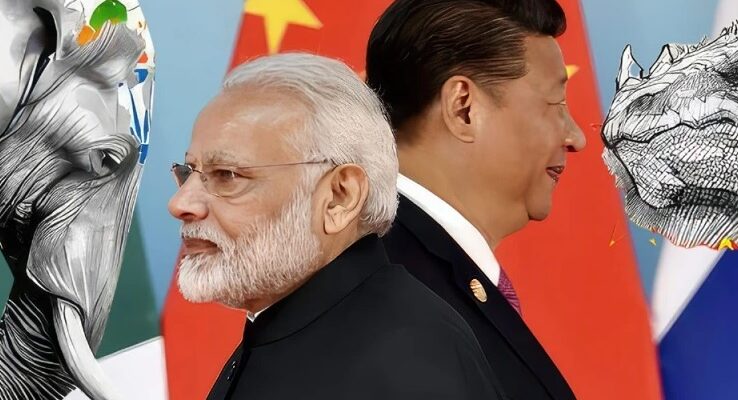
Indian elephant outpaces Chinese Dragon

Beijing’s ambivalence came to fore at BRICS and engagement with New Delhi while India showed promise, responsibility and capacity to lead Rahul Pawa In this reshaping of the BRICS landscape, India has assertively stamped its diplomatic and strategic acumen under Prime Minister Modi, outpacing the Chinese dragon with the calculated grace of an elephant—focused, powerful, and increasingly influential. In the years since its inception over a decade ago, BRICS — Brazil, Russia, India, China, and South Africa — has matured as an influential conglomeration for majority world. Engaging in dynamic interactions with the developed world, this ensemble stands on the cusp of potentially challenging G7’s dominance in global affairs. Yet, the trajectory it charts—be it one of constructive collaboration or divisive contention—will hinge heavily on the vision the forum holds. As Asian heavyweights, India and China have to jostle to sway BRICS their way as their strategic contest will shape 21st-century geopolitics. BRIC birthed on sidelines of the 2006 UN General Assembly as a grouping of large developing countries. Goldman Sachs economist Jim O’Neill has been credited for evolving the acronym in 2001 that captures zeitgeist of an era smitten with emerging markets. Those days, Brazil, Russia, India, and China were seen as newest frontiers of investment. By 2011, with South Africa coming on board, the acronym matured to BRICS. Today, the group no longer represents mere buoyant markets. It symbolises a collective intent to recalibrate the equitable global order historically skewed towards Western hegemony. Yet, for all its promise, BRICS stands at an inflection point. Skeptics question its cohesion, pointing to underlying rifts among member nations and ambiguity on its very purpose and membership. Yet, BRICS believes in the adage ‘strength in numbers’ as it quests towards a multipolar world order where developing countries have more influence, in line with their contributions to the global economy.  Even as BRICS nations represent an overwhelming 41 per cent of world’s population, the bloc accounts for 31.5 per cent of global GDP, eclipsing the G7’s 30.4 per cent. It also commands a combined economic output valued at an astonishing $ 26 trillion, around 60 per cent of what the seven most industrialized nations generate.  The staggering figures notwithstanding, a glaring inconsistency exists: the bloc’s modest voting power in the International Monetary Fund and limited decision-making in World Bank. It does not commensurate with the global influence BRICS commandes. Such disjunction magnifies a substantial source of apprehension among developing nations that have for long been seeking corrective measures to democratize these international financial and governing institutions. More than 40 heads of state gathered for the Johannesburg summit and the event marked a significant pivot in global affairs. Hosted by South Africa, the year’s rotating president following China, the theme—”BRICS and Africa: Partnership for Accelerated Growth and Inclusive Multilateralism”—spoke volumes. Notably, South African President Cyril Ramaphosa revealed that the forum had drawn intense global interest, with numerous nations seeking membership. However, amidst this diplomatic panorama, the magnetism of two Juggernauts stood out: India’s Prime Minister Modi and China’s President Xi, whose talks generated media frenzy. Correspondingly, the two leaders did have an “informal conversation” at the leaders lounge in backdrop of a pending request from the Chinese side for a bilateral meeting with India. India – China relations are etched in history of mutual reservations. Recently, tensions flared anew between the two Asian giants in 2020 when China ramped up its aggression along the Line of Actual Control (LAC), a move met with formidable resistance by India. The saga of China Pakistan Economic Corridor (CPEC) traversing through Pakistan occupied Indian regions of Gilgit-Baltistan and Jammu and Kashmir further complicates matters. These areas, occupied by Pakistan, are consistently contested by India as it persistently voices its objections on the International forums against the corridor.  But Beijing’s ambitions don’t stop at terrestrial borders. It aims to shape the BRICS bloc – as a cornerstone of its own global strategy. From pushing the Belt and Road Initiative (BRI), China seeks to recalibrate the world’s economic compass. On the contrary, steering clear of China’s political choreography, India zeroes in on bolstering regional economic collaborations and pushing for a recalibration of international monetary institutions to ensure the developing world isn’t left out. This nuanced strategy became increasingly transparent when India’s Foreign Minister, S. Jaishankar, dispelled notions of a nascent BRICS currency, electing instead to underline the importance of fortifying Indian Rupee in July this year. As BRICS itself stands at a crossroads and appears to positioned for a transformative global narrative, India navigates these waters with discerning caution. It remains vigilant to shifts that could potentially reconfigure this 16-year-old alliance in favour of a single, dominating power, effectively altering the multi-polar balance that has long characterised the consortium. As the gavel struck to signal close of the 15th BRICS Summit at Johannesburg’s Sandton Convention Centre, a renewed world order seemed to crystallize before the global community. The seismic pivot came courtesy South African President Cyril Ramaphosa, who announced the summit’s agreement to extend membership invitations to six emerging powers—Argentina, Ethiopia, Egypt, Iran, Saudi Arabia, and the United Arab Emirates. This dramatic enlargement, scheduled to take effect in January 2024, would make the bloc represent approximately 30 per cent of the global GDP, a financial heft rivaled by few. Amid this climate of heightened anticipation and future promise, India’s Prime Minister Narendra Modi emerged as the summit’s lodestar, charting the bloc’s course with a visionary range of proposals that struck a stark contrast to China’s mysterious reticence. Modi did not just navigate intricacies of the summit; he orchestrated them. India’s domestic and international roadmaps were laid out with compelling clarity. Whether articulating his ambitious aspiration for India to graduate to a developed nation by 2047 or laying bare his robust advocacy for key reforms in the United Nations Security Council and the World Trade Organization, Modi’s leadership radiated across multiple vectors. This was further illuminated by India’s pitch in the digital payments sphere, notably the Unified Payments Interface (UPI)

Read More

Quirky Chinese leadership undependable!

Retake ‘Aksai Chin’ under Chinese occupation, stop its draconian expansionist aggression and bring peace to Indian borders K.A.Badarinath China is at its old dark ways again. Otherwise, there’s no reason why three Indian Wushu sports persons from Arunachal Pradesh, Nyeman Wangsu, Onilu Tega and Mepung Lapgu, were given stapled visas. India’s Wushu team was to head for Chengdu to participate in the World University Games beginning Friday. The stapled visas issue is symptomatic of China’s war games and its claim on Arunachal Pradesh that’s integral to Bharat. The latest fracas seems to be scripted and directed by none other than the Chinese Oligarchs’ frontman and President, Xi Jingping who’s into his third term as head of Chinese Communist Party and also head of all powerful military commission. Most significant Chinese claim on Arunachal Pradesh ala indirectly through stapled visas comes on a day when three key developments were reported. Dichotomy in Chinese military checkers comes to fore on a day when Prime Minister Narendra Modi and Chinese President Xi Jingping spoke on phone to bring about stability on the borders. In fact, this was the first recorded conversation of the two leaders after their brief in person informal interaction at Bali as part of G-20 group at the invitation of Indonesian President. After the Galwan valley Chinese misadventure, there has been no engagement between heads of state and President Xi Jingping was busy ensuring third Presidential term for himself apart from ‘cleansing’ the party from his political rivals and policy antagonists. ‘Stapled visas’ hogged headlines also on a day when reports poured in about the two leaders’ discussion on military standoff during April – May 2020 in Eastern Ladakh. What has induced ‘stapled visas’ issue larger significance is the reports of Peoples Liberation Army (PLA) heightened build up from Eastern Ladakh to Arunachal Pradesh borders during last few weeks? Nineteen rounds of corps commander level talks between Indian and Chinese side have not yielded results nor have led to sensitizing PLA Generals or belligerent Communist leadership in China that rules its own people with an iron fist. Sense that one gets is China’s outright refusal to disengage from at the strategic Depsang plains and Charding Ninhlunh nallah track junction at the Demchock in Eastern Ladakh. On the other hand, reports suggest continued build-up of bunkers, posts, artillery positions, surface to air missile systems, radar sites and ammunition storages. Development of new helipads, roads, dual use villages development and last mile connectivity has also been on the rise across the border leading to beliefs that negotiations at political level may ‘not yield’ on the ground results but discussions have to happen. Stapled visas incident is seen more as one step further in China’s grand expansionist plan and communist vision to occupy others’ land disregarding international treaties, pacts and ‘gentlemen’ agreements to not change on-the-ground goal posts. Only way to put an end to this psycho-warfare like stapled visas is to firmly retake ‘Aksai Chin’ under its ‘illegal’ occupation since 1950s and held after the 1962 war. China’s claim on Aksai Chin was made a couple of years after Indian Constitution was adopted in 1950 that included whole of Jammu and Kashmir along with Ladakh. Aksai Chin was part of Ladakh till the Chinese claim leading to its occupation in ‘50s. In fact, no Chinese maps till 1920s even showed Aksai Chin as part of China. Even in 1930s map of Sinkiang or Xinjiang, Kunlun mountains were marked as Chinese boundary and not the Karakoram range. Chinese posturing and war games that were shaped in ‘wolf warrior’ diplomacy doctrine is essentially unsustainable in any bilateral relations. Beijing will have to realize that false claims, wolf warrior diplomacy combined with on-ground, air and water bound aggression may not help in positioning itself as a leader as well. In fact, Qin Gang who’s been closest aide to President Xi Jingping and later anointed a state councillor was considered architect of wolf warrior diplomacy doctrine adopted by Chinese Communist Party as one of its key principles in engaging with the world. While there’s no trace of ‘missing’ Qin Gang, bringing Wang Li back as top Chinese diplomat and foreign minister may not help clear the air. Openness, flexibility and clarity of thought and attitude make great world powers. China has a long way to go leaving its shady past, false claims and drudgery that the communist regime is known for.  (author is Director and Chief Executive, Centre for Integrated and Holistic Studies,  non-partisan think tank based in New Delhi)

Read More

Chinese Loan Apps: A Debt Trap to Death Trap

Rohan Chinese loan apps, which offer quick loans with minimal paperwork, have become increasingly popular among Indian borrowers. However, these apps have also been associated with incidents involving threats to borrowers and compromising their privacy. One distressing case occurred in Bangalore involving Tejas, a 22-year-old engineering student. Tejas faced severe torture from an agent due to his loan from a Chinese app named Slice and Kiss, which ultimately led to his tragic suicide. The questionable practices employed by these apps consistently undermine the privacy and security of citizens, while their excessively high-interest rates and lack of regulatory oversight present substantial challenges to the Indian economy. This analysis sheds light on the various aspects of this phenomenon, highlighting the challenges posed by Chinese lending apps in India and emphasizing their potential risks. Perilous for Indian Citizens Chinese lending apps expose borrowers’ personal and financial information to significant risks, potentially leading to severe breaches of privacy. These apps often impose exorbitant interest rates and concealed fees, trapping users in a cycle of debt. Many borrowers, often in urgent need of funds, remain unaware of the predatory lending practices employed, ultimately landing themselves in financial distress. Moreover, these apps are associated with unethical and aggressive debt-collection tactics. Borrowers who fail to make timely payments or encounter financial hardships often face harassment, intimidation, and public humiliation from collection agencies. Such practices can have profound psychological and emotional consequences, driving vulnerable individuals to despair and, tragically, even suicide. Furthermore, inadequate regulatory oversight and accountability for these apps amplify their risks. With inadequate scrutiny, these apps operate with impunity, exploiting the financial vulnerabilities of Indian citizens without facing appropriate consequences. Numerous reports have surfaced regarding representatives of these applications resorting to intimidation, harassment, and threats towards borrowers. Particularly during the Covid-19 lockdown, borrowers facing financial difficulties due to the pandemic have reported terrifying experiences, alleging they were subjected to coercive tactics regarding their debts. These threats often take the form of deceitful letters resembling official documents or the harassment of borrowers’ relatives. These networks facilitating fraudulent instant loans extend beyond Indian citizens, as Chinese youths and students have fallen victim to this practice. China witnessed a wave of incidents related to “loans for nudes,” where numerous cases emerged involving young female college students being coerced into providing explicit photos as collateral to ensure repayment to loan sharks. These instances shed light on China’s pervasive underground banking scandal, exposing the murky realm of loan sharks. The cases exemplify China’s growing consumerism, underdeveloped financial system, and lack of a comprehensive student loan program. The Chinese Underground Banking Scandal The Chinese Underground Banking Scandal sheds light on a disturbing reality that lies beneath the veneer of the financial system. This issue revolves around illicit financial operations conducted outside the purview of established banking institutions, operating clandestinely and evading regulatory oversight. An essential aspect of this scandal is the pervasive presence of underground banks operating as unlicensed and unregulated financial intermediaries. These clandestine institutions play a significant role in facilitating a wide range of illicit activities, such as money laundering, human trafficking, capital flight, tax evasion, and the financing of unlawful transactions. The scandal’s dark reality is characterized by exploiting economic loopholes and manipulating financial regulations. With inadequate regulation and enforcement, underground financial networks flourish, enabling criminals to clandestinely transfer substantial amounts of money across borders, obscuring these funds’ origins and actual purposes. Moreover, the Underground Banking Scandal carries global implications, involving transnational networks engaged in illicit financial transactions. These networks contribute to the challenges faced by international efforts to combat money laundering, terrorism financing, and other forms of transnational crimes. It is important to note that not all Chinese loan applications are directly involved with underground banking, and vice versa. However, an interconnectedness can occur when funds originating from loan applications enter the underground banking system. In such cases, underground banking networks may exploit or utilize loan application activities for illicit purposes, including money flows, money laundering, cross-border transactions, and regulatory challenges. Data Privacy and Security Concerns The rapid proliferation of Chinese loan applications in India has prompted severe data privacy and security concerns. These apps often demand extensive access to personal information, posing threats to users. The loan apps often necessitate comprehensive access to users’ personal information, such as complete names, addresses, phone numbers, social media profiles, bank account details, and even access to the user’s smartphone contacts. The sheer volume and sensitivity of the data collected endanger individuals’ privacy and raise the possibility of it being abused for unauthorised objectives. There have been reports and allegations that certain Chinese lending applications have been involved in misusing and manipulating user data. Data breaches and unlawful sharing of personal information with third parties have been reported. Such activities violate users’ privacy and raise the risk of identity theft, financial fraud, and other forms of cybercrime. As Chinese lending apps are international, cross-border data transfers are possible. User data acquired by these apps in India may be transferred and stored on servers outside India, often in China. This adds to the difficulties of data protection because different jurisdictions may have different data privacy laws and regulations. The Chinese government’s vast access and control over data raise concerns regarding the privacy and security of user data obtained by Chinese loan apps. Users could be subjected to unlawful access or surveillance by foreign entities. The data privacy and security concerns stemming from these loan apps in India are significant issue that demands immediate attention. The Indian government has been actively enhancing data protection and privacy laws to safeguard user information from unauthorized access or misuse. The Personal Data Protection Bill, currently under review, seeks to establish comprehensive regulations and mechanisms for protecting personal data, including stringent obligations on data handling, storage, and consent. Indian Government Actions Recognizing the potential risks involved with Chinese loan apps, authorities have taken steps to protect customers, maintain financial stability, and limit the illegal operations of these platforms. The Indian government has banned 138 betting applications

Read More

Sino-India Relations: Clashes and Dynamics

Rohan Giri The aggression by the Communist Party of China (CPC) through the People’s Liberation Army (PLA) along the Indian border has been a source of tension between India and China. The CPC’s activities encompass infrastructure development, PLA buildup, and territorial assertions. One particular area of contention in the ongoing border contentions between the China and India is the Pangong Tso glacial lake region, which stretches across eastern Ladakh and western Tibet. In the aftermath of the violent clash in the Galwan Valley in 2020, both nations have notably escalated their respective regional infrastructure development endeavours. In recent years, the CPC has actively pursued infrastructure projects along the Line of Actual Control (LAC), with a particular focus on the Pangong Tso glacial lake area. Notably, one significant development is the construction of a bridge that spans the glacial lake, linking the north and south banks. This bridge holds significant strategic value for the CPC, as it improves connectivity and enables the smooth movement of military assets. Moreover, the CPC has successfully completed the construction of a second bridge and is currently working on establishing road connectivity along the south bank leading to Shandong village. Moreover, the CPC is currently undertaking the construction of a 22 km-long tunnel along the G-0177 expressway in Yuli, which will serve as a crucial link to the G-216 highway in Tibet. These infrastructure projects clearly demonstrate the CPC’s unwavering commitment to strengthen its presence and enhance its military capabilities in the region. The aggressive development pursued by the CPC is consistent with its regional ambitions and the aim to extend its influence and control over strategically important areas along its boundaries with India. This approach enables the CPC to assert power and establish dominance in border regions, potentially curtailing India’s influence. Moreover, these developments reinforce China’s publicised  military capabilities and fortify border security, safeguarding its territorial claims and perceived national interests. However, India has also responded strongly to curtail China’s influence by actively engaging in infrastructure development initiatives in the Pangong Tso area. India has placed significant emphasis on enhancing road networks, establishing advanced landing grounds, and implementing other infrastructure projects. Construction work is currently underway to create an alternate axis to the crucial Darbuk-Skyok-Daulat Beg Oldie road, further improving connectivity and mobility in the region. The construction activities undertaken by the CPC have not only provoked India but have also necessitated the development of infrastructure in response. These infrastructure developments by both the China and India have resulted in a permanent alteration of the status quo in the Pangong Tso area. The construction of the bridge by the CPC and the black-topped road by India signify their respective efforts to consolidate their presence and enhance their military capabilities in the region. These infrastructure developments underscore the importance of constructive dialogue to prevent further escalation of tensions and uphold regional stability. The CPC is confronted with border tensions on multiple fronts as a result of its aggressive infrastructure development and encroachment policies. One notable area of contention is the South China Sea, where CPC’s territorial claims, represented by the nine-dash line, clash with the claims of neighbouring countries such as Vietnam, the Philippines, Malaysia, Brunei, and Taiwan. These conflicting claims have sparked maritime disputes, heightened tensions, and escalated military presence in the region. Furthermore, in the Taiwan Strait, CPC regards Taiwan as an integral part of its territory and has not ruled out the use of force to achieve assimilation. The Taiwan Strait remains a potential hotspot, with CPC intensifying military activities and conducting drills near the self-governing island. This situation has strained cross-strait relations and attracted the attention of regional and global powers. In the Himalayan region, the CPC has long-standing border disputes with neighbouring countries, including India, Bhutan, and Nepal. The Chinese shallow and illegal claims in border areas have been vehemently contested, leading to CPC’s frustration leading to standoffs in the region. In addition to the aforementioned disputes, the CPC and Japan have a territorial disagreement concerning the Senkaku/Diaoyu Islands in the East China Sea. Both nations assert sovereignty over these islands, which has resulted in frequent standoffs and heightened military presence in the region. The CPC’s claims and actions have raised substantial concerns among numerous countries. The construction of artificial islands, the militarisation of certain features, and assertive behaviour in disputed areas have prompted questions regarding the CPC’s intentions and its adherence to international norms. Thus, the CPC’s approach demonstrates a non-conformist mindset characterised by engaging in illegal infrastructure development, encroaching upon contested territories, and violating the sovereignty of other nations. An illustrative instance of this behaviour is observed in the South China Sea, which serves as a prominent example of a disputed territory. In this region, the CPC has undertaken the construction of artificial islands and the establishment of military installations in areas that are claimed by multiple countries. These actions have significantly heightened tensions and disputes with neighbouring nations, and have cast doubts on the CPC’s adherence to international laws and agreements, notably the United Nations Convention on the Law of the Sea (UNCLOS). Coming back to intricate dynamics of Sino-India relations, which are characterised by complexity and nuance. It is important to maintain realistic expectations regarding the stability of the relationship, considering the long-standing territorial disputes between the two nations. The CPC’s failure to adequately address these disputes contributes to the ongoing instability in their bilateral ties. Additionally, both the China and India hold significant regional power status, and their geopolitical and strategic interests often intersect, leading to competition and conflicting priorities. Both countries are experiencing rapid economic growth and play prominent roles in the global marketplace. This economic competition, particularly in sectors such as manufacturing and technology, can strain their bilateral relations. Issues such as trade imbalances, market access, and protection of intellectual property rights further contribute to the complexities and potential frictions between them. India’s impressive economic growth positions it as a potential future global powerhouse. With its dynamic and youthful workforce, expanding middle class,

Read More

‘India deserves a much higher, deeper, wider profile & global role’

Prime Minister Narendra Modi harps on ‘unprecedented trust’ as he emplanes to US for showcasing India’s smart and soft power prowess. By Rajesh Roy, Brendan Moran and Gordon Fairclough NEW DELHI—Indian Prime Minister Narendra Modi said ties between New Delhi and Washington are stronger and deeper than ever as India moves to secure what he sees as its rightful place on the world stage at a moment of geopolitical turmoil. “There is an unprecedented trust” between the leaders of the U.S. and India, Modi said in an interview ahead of his first official state visit to Washington after nine years in office. He hailed growing defense cooperation between the two countries as “an important pillar of our partnership,” which he said extends to trade, technology and energy. In Washington this week, Modi is expected to complete deals to manufacture jet-fighter engines in India to power advanced light combat aircraft, and to purchase high-altitude armed Predator drones from the U.S. in a multibillion-dollar agreement to boost surveillance efforts over the Indian Ocean and near its disputed border with China in the Himalayas. As the West squares off against Moscow and, increasingly, China, New Delhi stands to gain. Washington has courted India hoping that it will be a strategic counterweight to Beijing. The U.S. has moved to deepen defense ties even as New Delhi makes large purchases of Russian oil at discounted prices, providing financial support for Moscow as it wages war in Ukraine. Modi—who gives many speeches but fewer news conferences and interviews—spoke with The Wall Street Journal about India’s foreign policy, its efforts to build a more modern and sustainable economy and a range of other topics in a nearly hourlong interview in his office at his sprawling official residence in the heart of New Delhi. Overall, Modi’s message was that—from India’s role in global politics to its contributions to the world economy—the country’s time has come. He sought to portray New Delhi as the natural leader of the global South, in sync with and able to give voice to developing countries’ long-neglected aspirations. “India deserves a much higher, deeper and wider profile and a role,” said Modi, wearing a yellow kurta and light-brown jacket. Peacocks squawked in the garden outside. The 72-year-old leader called for changes to the United Nations and other international organizations to adapt them for an increasingly multipolar world order and to make them more broadly representative of the world’s less-affluent nations and their priorities, from the consequences of climate change to debt reduction. Unlike the vision of nonalignment advanced by Indian leader Jawaharlal Nehru in the early years of the Cold War, Modi’s foreign policy is one of multiple alignments, seeking to advance India’s interests in partnership with a range of global powers, including those in conflict with each other. Modi is one of India’s most popular prime ministers. He and his Bharatiya Janata Party won nationwide elections in 2014 and 2019 by comfortable margins. With national elections due next year, Modi’s approval rating is high. Political opponents and human-rights advocates have accused Modi’s party, which has roots in Hindu nationalism, of fostering religious polarization and democratic backsliding, pointing to issues such as restrictions on the press and removal of the special status of Indian-administered Kashmir to more closely integrate the Muslim-majority region into the country. Modi said that India not only tolerates but celebrates its diversity. “For thousands of years, India has been the land where people of all faiths and beliefs have found the freedom to coexist peacefully and prosper,” he said in a statement. “You will find people of every faith in the world living in harmony in India.” On the economic front, Modi has won praise for eliminating bureaucracy, relaxing rules and opening the way for more foreign direct investment. The country has surpassed China as the world’s most populous. What’s more, its population is young, promising a significant demographic dividend. The government has invested enormously in education and infrastructure, and it is poised to gain as multinationals look to diversify manufacturing and supply chains in an era of geopolitical tension. A new Apple store drew a crowd in Mumbai in April as the company expanded its investment in India. PHOTO: DHIRAJ SINGH/BLOOMBERG NEWS Apple is among the companies making significant new investments in southern India, with supplier Foxconn Technology Group planning new facilities in the states of Karnataka and Telangana and expanding iPhone production in the state of Tamil Nadu. “Let me be clear that we do not see India as supplanting any country. We see this process as India gaining its rightful position in the world,” Modi said. “The world today is more interconnected and interdependent than ever before. To create resilience, there should be more diversification in supply chains.” One thing India and the U.S. share are relationships with China that have grown increasingly fraught in recent years, marked by deepening military and economic rivalries. For India, that challenge is at its doorstep, with rising tensions centering around its decadeslong dispute with Beijing over the 2,000-mile border separating the two countries, known as the Line of Actual Control. The countries have been building infrastructure and deploying more troops in the region since a deadly 2020 clash in the Himalayas. Indian officials have blamed China for violating border agreements, and the two countries have held 18 rounds of military talks since 2020 aimed at preventing the dispute from spiraling into wider conflict. “For normal bilateral ties with China, peace and tranquility in the border areas is essential,” Modi said. “We have a core belief in respecting sovereignty and territorial integrity, observing the rule of law and peaceful resolution of differences and disputes. At the same time, India is fully prepared and committed to protect its sovereignty and dignity.” China’s Defense Ministry didn’t respond to a request for comment sent via the State Council Information Office. In drawing closer to Washington, the Indian government has had to overcome deep skepticism about the U.S. that dates back to the Cold War, when New Delhi became more closely aligned with Moscow after Washington declined to supply arms to India in 1965. The U.S. instead became a military backer

Read More

Is China’s paradigm on ‘mutual success’ real?

Beijing has to come clean on larger issues, shift in outlook welcome. India never lost its ‘eastern wisdom’ while engaging with Western partners. Rohan Giri In an editorial, Chinese Communist Party’s mouthpiece, Global Times on May 30 indicated a possible shift in its India outlook. For a change, it captioned the edit, “We morally, emotionally support India’s de-colonization”. This comment on inauguration of a new Parliament building getting rid of the British colonial re definitely reflects Chinese establishment’s intent to go a wee bit soft on India. It has also garnered the attention of leaders across the globe. This change of heart, if it bears out in reality, cannot be ignored. Pleasing gestures like this editorial as exhibited by China present an intriguing subject for examination. As per reports from Chinese embassy and consulates, over 60,000 visas have been issued to Indians visiting China in first five months of this year. Furthermore, Chinese missions globally have affirmed their readiness to grant more visas for purposes such as business, studies, tourism, work, and family reunions, should the need arise. Global Times editorial last week emphasized India’s commitment to de-colonization and self-reliance. It applauded India’s efforts to remove vestiges of colonial authority, such as renaming iconic buildings and limiting English usage. The article advised India to focus on its national strengths rather than seeking legitimacy through techniques and accolades from outside sources. Rational interpretation to ‘outside sources’ would be India’s multi-nodal foreign policy engagement with western powers. While congratulatory editorial in Global Times is in order, its caution against Western manipulation is old communist line seeking exclusive engagement with India. Global Times asking India to embrace the Eastern Wisdom is possibly a benign attempt to wean India away into its fold. Its emphasis on ‘mutual success’ of China and India is yet another line that many in India’s Left and centrist political discourse also subscribe to. The editorial does not mince words while warning India to stay away from US with the standard communist dogma that US was fueling enemity between India and China. In this context, there are big questions that Chinese communist leadership will have to come up with plausible and convincing answers. President Xi Jingping and his cronies may have to come straight on Galvan border mis-adventurism that led to troop’s deployment on either side of Indo-Chinese borders. China will have to offer an explanation on its collaboration with Pakistan on terrorism in the United Nations (UN) and mutual prosperity pitch with India which may not go hand in hand. Continued expansionist bids in Eastern Ladakh and Arunachal Pradesh, opposition to G20 conferences in Indian state Arunachal Pradesh, Jammu and Kashmir, providing Chinese names to Indian cities and towns is something that China will have to justify.  Can this be the template for China’s Paradigm of mutual success? Tsinghua University’s Center for International Security and Strategy in 2022 report on “Chinese Outlook on International Security” has toed a different line on India. The study has bracketed India on par with US vis-à-vis threat posed to Chinese interests.  India’s threat to China has also been compared what was perceived in Japan vis-à-vis China even today. China has come up openly on its stand towards India rather than sending out mixed signals that confuse its communist cadres and their counterparts in India.   Global Times editorial also said, “In Chinese society, few people believe that India’s economic and social development will become a threat to China. The vast majority of people believe that the two countries can succeed together. We hope India can demonstrate more clarity and confidence in its dealings with China and the West.” In last three years, India’s position on Chinese threat perception has been consistent. It has in no uncertain terms said on more than one occasion that threat from China has risen multifold. Global Times editorial exhorting India to stay away from Western manipulations has come ahead of Prime Minister Narendra Modi’s visit to Washington DC for a state visit later this month. China’s expectation that should not protect its defensive and offensive interests is rather unrealistic. India’s right to pursue an independent foreign and economic policy formulation, choice of friends in sync with its view seeking global peace needs to be respected. (author is operations manager at non-partisan think tank, Centre for Integrated and Holistic Studies based in New Delhi)

Read More

PLA ploy in Nepal may come a cropper

Nepalese maoist leadership move to stop enlisting Gurkhas in Indian Army point to China’s dragon net cast wide to tighten its stranglehold Rahul Pawa Earliest reference to Gurkhas can be found in Hindu epic treatise, the Mahabharata. This poem tells the tale of Bhima, one of the heroes, and his encounter with Kichaka, a fierce warrior who was the chief of Kiratas tribe. This tribe inhabited present-day Himalayan region of Nepal and Kichaka was known for his strength and ferocity in battle. Bhim found it challenging to defeat him but he eventually emerged victorious and spared Kichaka’s life, accepting him as his ally. This encounter is believed to be the first mention of the tribe that later became popular as ‘Gurkhas.’  Known for their bravery and martial prowess, the term ‘Gurkha’ is derived from Gorkha district, part of Gandaki province in western Nepal. The region was ancestral home to Shah dynasty that was founded in 1559 by King Dravya Shah, a descendant of Rajput warriors from northern India. Gurkhas as we know them today came to limelight late 18th and early 19th centuries when they were recruited in British East India Company and later the British Indian Army. It is unclear who precisely coined the term ‘Gurkha,’ but believed to have been popularised by the British during the Anglo-Nepalese War of 1814-16. The term was used to refer to soldiers from the Gorkha district and surrounding regions that were recruited into the British Indian Army. Since then, Gorkhas became synonymous with Nepalese soldiers known for their fighting skills and reputation for bravery, who continued to serve both British and Indian armies. Recently, rumours were rife on Chinese Communist Party’s (CPC) plans to recruit Gorkhas into People’s Liberation Army (PLA). This renewed concerns over CPC’s influence over Nepalese Prime Minister and maoist ideologue Pushpa Kamal Dahal a.k.a Prachanda and his Communist -dominated Nepalese government. In the elections held on November 20 last year, Prachanda ‘s Maoist Centre secured third largest number of seats with 32 in the 275- member House of Representatives. Prachanda was sworn in as Nepal’s Prime Minister on 130th birth anniversary of Mao Zedong, who was a significant ideological influence on Prachanda. As per a report by EPardafas, CPC activities in Nepal spread far and wide after Dahal-led government took reins of the Himalayan Kingdom. CPC’s attempts to influence Nepal’s politics through targeted information operation appear to be a page from Chinese communist’s larger strategy book to whip up anti-India sentiment in the country. CPC strategy seems to be consistent with Mao Zedong’s historical “Five Fingers of Tibet” policy that was first articulated in his speeches during 1940s. The clandestine formulation was to “liberate” Sikkim, Bhutan, Ladakh, and the NEFA from what Mao perceived as “Indian imperialism.” On the contrary, CPC’s expansionist agenda seem to have led to providing financial assistance in order to advance their neatly designed work programme among Nepal’s 30 million habitants. Over the years, CPC floated or supported several think-tanks in Nepal through Chinese Study Centre (CSC) at Katmandu established in 2009. Thirty two  such study centres came into being as part of larger design to set up one centre each in the country’s77 districts. These centres played a key role to provide ground research to push CPC aspirations in Nepal.  In addition to teaching Mandarin, these centres researched in different subjects with funding support from China. One subject study was aimed at assessing young Nepali – Gurkhas interest and motivation to joini Indian Army. The study was also to evaluate financial expectations of Nepali youngsters from their stints in Indian Army. This provides perfect backdrop to Nepalese communist leadership request to their Indian counterparts for putting on hold Gurkhas recruitment. This request not only flummoxed the Indian army recruiters but also Nepali youngsters that showed keen interest the new Agnipath scheme. The maoist government justified its stand with the contention that Nepalese lawmakers were yet to discuss the ‘Agnipath’ recruitment issue. This request from Nepal government also provides a window of opportunity to CPC for enlisting Gurkha warriors into PLA. Big question therefore is if the Maoist led Nepalese government turning its youth as “force on hire” for PLA. For most Gurkhas serving as soldiers in the Indian army, it is not just about money, schemes for Nepalese people or the decades-old tripartite agreement. It is about a shared unique closeness and oneness of tradition and faith. Shared history, mutual respect and an inalienable link unite Nepal and India.  This bond of combat brotherhood is maintained by the Gurkha troops who serve between the two nations.  Nepal and India have had shared more than just this idea for thousands of years. Soldiers of Nepalese and Indian ancestry have formed a common relationship as Gurkhas and brotherhood that bonds them. Nepal and India relations go beyond contemporary disputes and conflicts with both countries sharing a distinctive tradition of anointing each other’s Chiefs of Army Staff as Honorary Generals. The Gurkha hat and Khukuri are not just symbols of courage and bravery but represent the brotherly relationship and cultural affinities shared by both nations. They won several gallantry awards together including the Param Vir Chakra and Maha Vir Chakra for their bravery and sacrifice. Indian Army and CPC’s PLA contrast hence becomes significant. In particular, PLA’s differential treatment of their own people and that of neighbours come to the fore. CPC occupation of Nepali land, attempt to sow discord within Nepal and luring the country into a debt trap have become points of larger public discourse. CPC’s actions in Nepal and its disregard for universal human rights and freedoms make it an unlikely recruiter for the proud Gurkhas. Nepalese people and Gurkhas will have to remain vigilant against attempts by foreign powers to interfere in its internal affairs. Decisions on Gurkhas recruitment must be made in the best interests of the Nepalese people and not influenced by external pressures or agendas. Gurkhas have served both Nepal and India with distinction for many years and

Read More

China’s Camp David Moment?

Weaponizing economic prowess, military might and expansionist doctrines may limit China’s role notwithstanding Saudi Iran deal Dr Amritpal Kaur Camp David Accord of 1978 was a diplomatic coup for President Jimmy Carter. It was an Accord that brought open hostilities between Israel and Egypt to an end and peace in Sinai Peninsula. Though President Sadat of Egypt had to pay for the Accord with his life, it was an unprecedent moment in West Asia when a major Arab country concluded a pact with the Jewish State. It was also an exhibit of American diplomatic heft, a stroke of politics in optics where Muslim and Jewish states could be brought to the negotiation table. One assumption of world power is its belief that its mediation would be welcomed by parties engaged in disputes to break the stalemate as well as find a solution. Camp David is also an example to bring currency to the idea that a powerful mediator could possibly bring seemingly antagonist parties together and alter the tone of international relations. It also emphasizes psychological acceptance of the greater power by other nations. It is announcement of the superpower on global stage. Though US superiority could be contested even then, Egypt and Israel were forced into the accord. What perhaps could not have been denied is USA’ ability to project itself as an accepted world power.   Recently, China sought to enact its own Camp David moment through a deal between Saudi Arabia and Iran. Saudi Arabia is the leading Sunni country and Iran is an undisputed Shia leader. For decades these countries have been at loggerheads stemming from their alternate Islamic belief systems and competitive bid to be undisputed leader of the Islamic world. The deal between the two would be a milestone if it enables the two warring countries to better manage their differences better though permanent solutions are nowhere in sight. If this happens, then there’s outside chance to ring in peace across MENA region with direct implication for Yemen war that has been going on for years now. On the other hand, USA bid to broker a diplomatic deal between Saudis and Israel has not worked till now. US failure may be attributed to chilly relations between Washington DC and Riyadh since Democratic White House under President Joe Biden took charge. Also, Saudi Arabia seems to have played the China card deftly to counter-balance US, its long standing ally. Given the changing global power equations, countries seem to be playing one power against the other to secure their respective interests. In this melee, China has upped the diplomatic ante. By leaving East Asian shores and engaging with West Asia, China seems to be testing waters. Saudi Arabia – Iran deal may be an opportunity for China to attempt shifting its positioning globally more as a deal maker rather than being seen as a global encroacher. However, there are limits to Chinese capacities to act as a credible global power broker of first resort. Since 2013 there has been a sense of urgency in Chinese set up to project itself as an acceptable global power. But then, turning a global power may not be easy and has to turn a ‘magnanimous player’ rather than limiting itself to Chinese interests under Xi’s new doctrine. For long, West Asia, especially Saudi Arabia was seen as a close USA ally. Geographical location of Israel along with its security challenge, another close ally of USA, the need for petroleum products had necessitated good relations between the Saudis and the West. From Saudi perspective also, allowing China to broker a deal with Iran may tantamount to ‘testing waters’ with the dragon state, at the same time signaling to USA of diversification of its interests. Increased Chinese assertiveness and aggression coupled with ambition is the phenomenon which has taken the western world off-guard. Wolf Warrior diplomacy coupled with expansionist military posturing on the borders, both territorial and maritime points demonstrates Beijing’s intentions vis-à-vis it’s much sought after branding of a ‘peaceful negotiator’. ‘Image makeover bid’ of China has been seen through as it weaponised its economic power to coerce other countries across the oceans. Diversification of Supply Chains, Friend-shoring, Near-shoring, China plus One are the strategies adopted by several countries to hedge against the Chinese coercion.  Bonhomie between two communist powers China – Russia is something that worries to no end most global community that believes in free and open democratic order. This bonhomie got cemented in the wake of Ukraine crisis and their noise on ‘possible alternative global order’. Given the limitations, Saudi – Iran agreement may not translate into a Camp David Moment as the deal may not translate into gains for either of countries. Resumption of diplomatic relations between the two has been put on a tentative timeline which only suggest that there is a tip-toeing around the idea of lasting peace between leading Shia and Sunni countries. The acceptance of Chinese mediation has not convinced them to shed their differences unlike the accord between Israel and Egypt in the bygone era. The world has clearly moved away from cold war mentality of bipolar world order. Each country has its calculations in place of the blind camp following. For example, Saudi Arabia has accepted Chinese mediation because of its stressed relations with USA in aftermath of Jamal Khashoggi murder and pricing of petroleum products in the wake of Ukraine crisis. Same is the case with Iran. Crippling sanctions placed by USA under the Trump regime has pushed Iran into a tight corner with an acute economic impact felt across the country.  Covert role of Russia in the deal takes the number of mediators to two. China and Russia, it is argued, were busy enlisting anti-USA countries as friends. Apart from Iran, Pakistan and Saudi Arabia were others to be brought into the orbit. Will China manage to create one such group in the near future where world order gets altered? What would be Russia’s standing given that its

Read More

Bhutan, Bharat, bhai bhai !

China’s intrusive prevarication may not turn New Delhi – Thimphu relations sour. Trying dirty tricks as in Nepal may not work to Beijing’s advantage Rohan Giri  / New Delhi As of now China has emerged as minor distraction in India and Bhutanese relations that span over millennia, civilizational ties with strong bonds of friendship and close people-to-people contacts. When Bhutan’s king Jigme Khesar Namgyel Wangchuk was in capital earlier last week on three days sojourn, there was enough noise made that growing proximity between Thimphu and Beijing may derail former’s relations with New Delhi. Unflinching commitment to take this friendship to next level may have not gone down well with several Beijing protagonists within and outside India. This should not matter much. Much of arguments that relations between the two countries were not honky dory had been attributed to remarks made by Bhutanese Prime Minister Tshering on India – China – Bhutan border tri-junction, Doklam.  The 73-days standoff between India & Bhutanese troops against Chinese counterparts during June – August 2017 is still fresh in mind. Twist given to Prime Minister Tshering’s comments was interpreted as Bhutan going the Chinese way which was untrue. In this backdrop, India and Bhutan scrupulously moving ahead with their commitment to neighbour-hood first policy assumes significance. Their shared vision for future cooperation including beneficial partnerships, significant reforms will have to be carried forward with vigour. Bhutan king’s meeting with Indian Prime minister Narendra Modi had in fact cleared the air and set the ball rolling for Bhutan in expanded bilateral trade cooperation, technology, cross-border connectivity, mutual investments etc. In the 13th five-year plan, both leaders envisioned successive Druk Gyalpos to guide India-Bhutan relations to new heights. Long-term sustainable bilateral ties in agricultural and critical commodities, setting up integrated checking post on the busiest trading way between both countries were also streamlined. Historical project of cross border rail link between Kokrajhar in Assam to Gelephu in Bhutan along with expansion of energy cooperation beyond hydroelectric project would further round the relations between two inseparable neighbours. Indian foreign secretary Vinay Kwatra said, “India will work to extend an additional standby credit facility. We will work to shape long-term sustainable arrangements for export of agricultural commodities from Bhutan. Also, work to develop long-term bilateral arrangements for assured supply of critical commodities like petroleum and coal.” If joint briefings were anything to go by, Bhutan seems keen to collaborate in financial technology sector, start-ups and emerging technologies. In effect, clear message seems to be on using United Payments Interface and ride piggyback as Indian rupee’s acceptance for making transactional settlements. India and Bhutan are friends in need and in deed. Vaccine Maitri drive launched by India had pulled half a dozen neighbourhood countries out of the humongous Covid – 19 induced pandemic mess. In fact, Bhutan was the very first beneficiary of the Covid-19 vaccine consignment from India. On the other hand, China was on expansionist spree beginning 2017 when it tried to build a road in 2017 through Chumbi Valley of Bhutan. When Narendra Modi was elected Prime Minister of India in 2014, Bhutan was the first country he visited treating the latter as a ‘reliable friend’ that could be trusted as an ally. There’s no denying that prior to this visit, there were some hiccups when Prime Minister Manmohan Singh withdrew cooking gas and kerosene subsidies. But, these were restored in 2014 after India saw a tectonic shift in its own power structure. Besides the bilateral and diplomatic relations, vibrant cultural linkages defined friendship between the two countries made it unique. (Rohan is a journalism graduate from Indian Institute of Mass Communication (IIMC) New Delhi, and Manager Operations at CIHS.)
Read More