CIHS – Centre for Integrated and Holistic Studies

Date/Time:

India and the Next BRICS: Turning Diversity into Strategic Influence 

Sankalp Singh Chauhan India’s historic BRICS Presidency comes at a defining moment for the global order. Its challenge is not to build another bloc, but to make a more diverse world capable of working together. What began as BRIC, Brazil, Russia, India and China, formally came together at its first summit in Yekaterinburg in 2009, transformed it into BRICS after South Africa’s inclusion. For more than a decade the five-country grouping steadily developed cooperation in finance, development and global governance. The major expansion of 2024 brought Egypt, Ethiopia, Iran, Saudi Arabia and the United Arab Emirates into the fold, while Indonesia joined in 2025, taking BRICS to 11 full members. India now assumes the chair at a particularly consequential moment: the grouping has evolved from a compact association of emerging economies into a much broader platform representing a significant voice of the Global South. The world itself is entering an era of profound geopolitical and economic realignment. Wars and conflicts, supply-chain disruptions, economic uncertainty, technological competition and growing dissatisfaction with existing multilateral institutions are reshaping the international system. Against this backdrop, India’s 2026 Presidency is not merely another turn in the rotational calendar; it is an opportunity to shape what the expanded BRICS becomes next. With 11 full members, Brazil, Russia, India, China, South Africa, Egypt, Ethiopia, Iran, the United Arab Emirates, Saudi Arabia and Indonesia, BRICS now has considerably greater geopolitical and economic weight. Its influence is further widened by 10 partner countries viz., Belarus, Bolivia, Cuba, Kazakhstan, Malaysia, Nigeria, Thailand, Uganda, Uzbekistan and Vietnam. This expansion gives BRICS greater reach, but also a harder task: how can countries with different political systems, economic interests and strategic priorities translate diversity into cooperation? That is where India can make a distinctive contribution.  From Expansion to Delivery:  India’s presidency has an opportunity to move BRICS beyond declarations and towards practical cooperation. The priorities are clear: trade and investment, resilient supply chains, energy and food security, health, climate action, digital public infrastructure, technology, connectivity and reform of global institutions. The test will be whether these priorities produce institutions and mechanisms that citizens and businesses can actually use. India’s experience with digital public infrastructure offers an important model. Greater interoperability of digital payment systems, cross-border transactions and financial technology could lower transaction costs and strengthen economic ties across the Global South. The ambition should be neither isolation from the West nor confrontation with it. It should be strategic autonomy combined with inclusive multilateralism.  The Currency Question: Few ideas surrounding BRICS attract as much attention as the possibility of a BRICS currency. Yet credibility requires distinguishing aspiration from reality. A common currency is not an established BRICS policy. The more immediate and practical path is the expansion of local-currency trade, payment-system interoperability and alternative cross-border financial mechanisms. Over time, these could evolve into a broader financial architecture, including a possible common unit of account or other settlement mechanism, without requiring an immediate monetary union. The objective is therefore not simply “de-dollarisation.” It is to create more choice, resilience and efficiency in international finance. BRICS as an Innovation Platform: The next phase of BRICS should also be defined by technological cooperation. Artificial intelligence, semiconductors, biotechnology, quantum technologies, space, clean energy, agricultural technology and digital commerce offer areas where emerging economies can move from being technology consumers to technology creators. A BRICS innovation ecosystem, supported by research partnerships, start-up networks, technology funds and easier movement of knowledge and capital, could become one of the grouping’s most consequential long-term projects.  Equally important are areas of human security: affordable healthcare, food security, climate resilience, disaster management and sustainable infrastructure. A Wider Global South: The expansion of BRICS has made its relationship with the wider developing world increasingly important. Partner countries and BRICS Plus outreach can give smaller and emerging economies a greater voice without requiring every country to become a full member. This broader architecture could become one of BRICS’s greatest strengths, provided expansion does not overwhelm decision-making. India’s diplomatic challenge is therefore to build consensus without sacrificing ambition.  What Success Should Look Like: The success of India’s Presidency should ultimately be judged not by the number of declarations issued, but by what changes after the summit.  First, BRICS should deliver measurable progress in trade and investment, including easier market access, stronger supply-chain resilience, greater MSME participation and mechanisms that make South-South commerce faster and less costly.  Second, it should advance a genuinely connected digital and financial architecture. Interoperable payment systems, greater use of national currencies and more efficient cross-border settlements could provide an immediate, practical foundation for deeper financial cooperation.  Third, success should mean tangible cooperation in energy, food, health and climate security. In a world vulnerable to energy shocks, food disruptions, pandemics and extreme weather, these are not peripheral development issues; they are questions of global stability.  Fourth, BRICS should create an innovation and technology agenda capable of connecting universities, researchers, entrepreneurs and industries across member and partner countries. Cooperation in AI, semiconductors, biotechnology, quantum technology, space and clean energy could determine whether the Global South becomes merely a larger market or a major source of future innovation. Finally, India’s Presidency should strengthen the voice of developing countries in global governance. Reform of institutions such as the United Nations, IMF and World Bank should aim at greater representation, legitimacy and responsiveness, not at replacing one hierarchy with another.  Perhaps the most important measure of success will be whether BRICS can demonstrate that geopolitical diversity does not have to produce institutional paralysis. Can countries with competing strategic interests still cooperate on issues of common interest? Can BRICS remain economically ambitious without becoming an anti-Western alliance? Can its expanded membership create wider representation without diluting effectiveness? And can India preserve its role as a bridge between competing centres of power? If the answer is yes, BRICS could move from being primarily a grouping of emerging economies to becoming a credible platform for a more balanced international system. India’s role will be central to that transition. India has

Read More

Wait for Washington Over!

India should evolve its own Indo-Pacific strategy as US turns an unreliable partner in counter balancing China in the region. NC Bipindra For nearly a decade, “Indo-Pacific” was more than a map. It was a promise. When the Pentagon renamed Pacific Command to Indo-Pacific Command in 2018, the message to New Delhi was unmistakable: India mattered, the Indian Ocean mattered, and Washington saw its future security architecture running through Asia’s two oceans, not one. That promise is now being unwound. In June 2026, the Trump administration reverted the command’s name to the original Pacific Command, a decision Pentagon officials framed as return to a “more traditional maritime focus” even as they insisted the mission, deterring China, remains unchanged. Symbolism in geopolitics is rarely so and this one lands at a difficult moment for India’s regional strategy. Quad on Paper with no timelines The name change of US command didn’t happen in isolation. It followed nearly two years in which Trump has treated the Quad, the informal grouping of the US, India, Japan, and Australia, as an afterthought. Prime Minister Narendra Modi’s promise to hold a Quad leaders’ summit in India got derailed as Trump repeatedly deprioritised the meeting, first in 2025 and now with 2026 summit plans clouded by uncertainty. Foreign ministers have kept the format alive through lower-level meetings, and Australia, this year’s rotating chair, is still hoping to host a leaders’ summit. But the pattern is clear: the Quad survives on bureaucratic momentum, not presidential commitment. This drift has coincided with genuine strain in US – India relationship itself. Steep US tariffs on Indian goods, a stalled bilateral trade agreement and Trump’s own description of a meeting with Chinese leader Xi Jinping as ” G-2 ” summit have unsettled Indian policymakers who spent years building the case that Washington saw India as its indispensable Indo-Pacific partner. Why This Matters More Than the Optics Suggest China has not paused while Washington’s attention wandered. Beijing continues to expand naval presence in the Indian Ocean, deepen port and infrastructure footholds from Gwadar to Hambantota, and press territorial claims from the South China Sea to the Line of Actual Control with India itself. People’s Liberation Army Navy now operates the largest fleet in the world by hull count and Chinese research and survey vessels routinely transit waters that India considers its strategic backyard. Nothing changes because Washington swapped a word on a building in Camp H. M. Smith in Aiea on Hawaii’s Oahu Island. But it does change the assumptions India has built its regional posture for the better part of a decade as a muscular, consistently engaged United States would anchor the coalition-building work against Chinese assertiveness. The risk for India isn’t abandonment exactly. Pentagon officials and military commanders have been clear that operational focus on China and Taiwan contingencies persists regardless of the command’s name. The risk is something subtler and arguably more dangerous: a Washington that remains rhetorically committed to countering China while becoming unpredictable and transactional in practice, leaving India to guess, summit by summit, whether American backing will show up when it’s needed. Options before India! India helped popularise the term “Indo-Pacific” as an alternative to the China-centric “Asia-Pacific” framing, precisely to assert its own centrality in the region’s future. It cannot now let that framework be defined, or left undefined, by decisions made in Washington. New Delhi should double down on its own Indo-Pacific Oceans Initiative and push it as the organising concept for regional partners, rather than waiting for American validation. Quad’s usefulness was always going to be capped by willingness of its most powerful member to show up. India has other tools: India-France-Australia trilateral, deepening ties with the Philippines and Vietnam on maritime domain awareness, expanded defence cooperation with Japan independent of Quad choreography and closer coordination with European powers like the UK and Germany, who have their own Indo-Pacific tilts. None of these replace US relationship, but together they reduce dependence on any single partner’s political calendar. If US security umbrella is becoming less predictable, India’s own blue-water capability becomes more urgent, not less. That means faster submarine and aircraft carrier programmes, expanded maritime surveillance across the Indian Ocean Region, and continued investment in bases and logistics agreements with Indian Ocean island states like Mauritius, Seychelles, and Sri Lanka, where Chinese influence has been creeping in. Resolving tariff disputes and completing a bilateral trade deal with Washington remains genuinely valuable for India’s economy and does help stabilise ties. But India should pursue this as an economic goal in its own right, not as a precondition for security cooperation it treats as guaranteed. Coupling the two only gives Washington leverage to hold Indo-Pacific security commitments hostage to unrelated trade demands, as arguably already happened around the 2025 summit. None of this means walking away from the US relationship, which remains central to any credible China-balancing strategy given American military capacity in the Pacific. But India should signal clearly, through its own diplomacy and defence posture, that it is building parallel options. Paradoxically, an India less dependent on the US is an India more attractive to Washington as a serious partner, not less. Bigger Picture Pacific Command name change is a small bureaucratic decision that captures a large strategic truth: American Indo-Pacific policy under Trump has become less institutional and more personality-driven, shifting with individual meetings, tariff disputes and summit attendance rather than long-term architecture. That’s a hard environment for allies who built their planning around American constancy. For India, the answer isn’t panic or public rupture with Washington. It’s strategic maturity. The country that once needed the “Indo” in the Indo-Pacific to assert its relevance now has the economic weight, naval ambitions, and regional relationships to define that relevance on its own terms, with or without a matching name on a building in Hawaii. (Author is Chairman, Law and Society Alliance, a New Delhi-based think tank, and guest columnist with CIHS)

Read More

Balochistan Burns, Islamabad on Rampage

Pakistan resorted to raids, violence, terror against Balochs while US, Europe stand as mute spectators. Rohan Giri Pazeer Baloch, son of Muhammad Amin, was picked up from his home in Panjgur in November 2025. His family looked for him for months, hoping he would come back. Alas! he did not, but his lifeless body surfaced in Kech three months later. A few districts away, Zareef Baloch who ran a small medical store, was taken by individuals his neighbours described as a state-backed death squad. Not long after, a twenty-year-old named Muhammad Fareed, the sole earner for his family after his father mysteriously disappeared, was abducted as well. One could continue listing these names until the write-up runs out of space, yet Balochistan would still be overflowing with names of those who have disappeared, murdered by Pakistan’s hoodlooms. Paank, human rights wing of the Baloch National Movement, counted 225 extrajudicial killings and 1,355 enforced disappearances in the province in 2025 and pinned the responsibility squarely on Pakistan Army, its intelligence agencies and the Frontier Corps. Baloch Yakjehti Committee put the count at 1,223, the number of people forcibly disappeared that year, among them women, teenagers and two elderly men. Paank called its own report A Year of Repression. There was not much need to dress it up further. Islamabad would prefer that you overlook these human violations and acts of terrorism. In first week of July 2026, Baloch fighters did hit back hard. Coordinated assaults across several districts during July 4 – 8 left 42 dead. Out of these, 38 were security personnel after a strike on a police post guarding the Mangi Dam project in Ziarat. Islamabad claimed this to be an unprovoked atrocity and violent. However, Pakistan has stonewalled public questioning on what a province should do with decades of grief, especially when the perpetrators openly acknowledge their actions. Military raids never really stopped for long enough to call them an aberration. Eighty-two enforced disappearances were logged in January 2026 alone, described by monitors as part of a pattern that is both widespread and systematic. By June 2026, families in Jiwani near Gwadar were crossing into Iran after night raids and home demolitions, their children now out of school in a displacement that has become in the flattest possible sense, routine. None of this began last week or even last decade. Balochistan’s insurgency has its roots back in late 1940s when the region was folded into a country it had not quite agreed to join and locals began accusing Islamabad of extracting the province’s wealth while leaving its children without schools. Every uprising since has been met with a crackdown and every crackdown has quietly triggered next uprising, the way burning a field down to the soil somehow never stops it from growing back. Then there is Gwadar where the whole thing acquires a price tag. Sixty-two billion dollars of Chinese investment sits on edge of this coastline, meant to give Beijing a shortcut past the Malacca Strait. The port, marketed as crown jewel of CPEC has pushed out local fishermen and wrapped the area in security restrictions that have hollowed out whatever economy was left, while the state treats requests for compensation as either terrorism or foreign funded subversion. Ask to be paid for your own coastline and you risk disappearing. China has bought the port. It has not bought the people who used to fish beside it and every few months it gets billed for that difference in the form of an ambush on its own workers. Widen the frame and neighbourhood looks nervous rather than helpful. As per reports, Pakistan’s army is already tied down along the Line of Control, Durand Line and its own fight with the Pakistani Taliban. So Balochistan becomes the front it cannot properly staff and a death squad unleashed instead of a school or a hospital. Iran now hosts some of the families fleeing the area while keeping a wary eye on its own Baloch population. Afghanistan’s Taliban government stands accused of sheltering fighters who slip across a border that exists mostly on paper, a charge Kabul denies. And, Bharat mostly shows up here as an excuse. Pakistani officials always have a ‘foreign hand’ to point fingers at almost by reflex whenever Balochistan burns. Pakistan has never ever produced any verifiable evidence on this mysterious ‘foreign hand’ argument. This obviously is seen as an easy while lie for not reading its own human rights reports. Those reports, for what it’s worth, are not being written by Balochistan’s enemies. European Union’s own GSP Plus monitoring mission flagged concerns in 2025 over enforced disappearances and the misuse of anti-terrorism law in a province that gets European trade preferences specifically because Pakistan promised, on paper, to behave better. So no, this isn’t really an insurgency story at its core. It’s a story about the state that gave up on winning Baloch consent a long time ago and settled instead for manufacturing Baloch absence, one raid, one dumped body, one displaced family at a time. Every operation with a grand name, Al Azm, Shaban and those before got Islamabad a week of headlines and left behind one more generation raised on funerals. Paank called it repression. Baloch Yakjehti Committee called the raids collective punishment. None of the reports were written or belonged to Bharat. Baloch rights defenders spent years cataloguing their own dead because nobody else would and who are, even now, still waiting for anyone outside their own funerals to take cognizance. (Author is a research scholar at Amity University, Gwalior, working at the intersection of socio-political research and media analysis. His writing engages with contemporary public narratives through a research-driven and analytical lens)

Read More

G-2 Emerge to Bharat’s Discomfort

Trump – Xi Beijing Summit 2026 resets US – China ties, calibrates business deals involving Boeing & chips pushing Bharat to look for its own rhythm. N. C. Bipindra The two most powerful leaders on earth met in Beijing on May 14 and 15, 2026. The world watched. So did New Delhi. This was only the second face-to-face summit of Donald Trump’s second term and first US presidential state visit to China since Trump himself made the trip in 2017. Trump-Xi summit was billed as a potential turning point in one of the most consequential bilateral relationships in modern history. In the end, the outcome was largely characterised as stabilising rather than transformational, heavy on symbolism and light on substance. But for India, even a modest recalibration between Washington and Beijing carries profound strategic implications. Most significant conceptual outcome of the summit was the agreement by both sides to build a “constructive China – US relationship of strategic stability,” according to Beijing’s official readout. Xi Jinping framed this as a governing framework for next three years, a deliberate attempt to convert Trump’s transactional deal-making instincts into a more durable operating baseline for US-China relations, one that would constrain even the next American president. On the economic front, the leaders agreed to preserve and extend the fragile trade truce brokered in South Korea in October 2025. In Beijing, China committed to purchasing at least $ 17 billion in US agricultural goods annually through 2028 along with soybean purchase commitments made in October 2025. China agreed to buy 200 Boeing aircraft, notably fewer than 500 planes Trump had floated ahead of the visit contributing to four per cent drop in Boeing shares. The US readout mentioned Chinese commitments to address shortages of rare earth elements including yttrium, scandium, neodymium, and indium. Beijing’s readout was conspicuously silent on this. Reports also emerged that US approved around ten Chinese technology companies to purchase Nvidia’s advanced H200 chips sending tech stocks higher though the sales may not fully materialise given China’s push for domestic semiconductor self-sufficiency. Xi reserved his sharpest language for Taiwan, warning that mishandling the issue would put the US – China relationship into “great jeopardy.” While American readout of the summit did not mention Taiwan at all which in itself is a striking omission, Trump later revealed an in-depth conversation with Xi about potential US military involvement in a possible Taiwan Strait crisis. Taiwan, meanwhile, has been watching nervously for any signs that Trump might soften US policy commitments in exchange for Chinese concessions elsewhere. Regarding Iran war which had delayed the summit by over a month, both sides agreed that the Strait of Hormuz must remain open and that Iran must never acquire nuclear weapons. Xi expressed China’s willingness “to be of help” in brokering a resolution and pledged not to send military equipment to Iran. However, Beijing’s public readout declined to echo many of these commitments and no breakthrough framework regarding Iran emerged.  China may exert quiet influence on Tehran in the coming weeks but little will be visible publicly. Perhaps most concrete outcome was the agreement to meet again. Xi is invited to Washington for an official state visit on September 24, his first in more than a decade. Further meetings in Shenzhen in November and at G-20 in Miami in December are also on the calendar suggesting both sides see the diplomatic channel as worth maintaining, even if the substantive gaps remain wide. For India, the Beijing summit is not a bilateral event happening at a comfortable distance. It is a direct variable in New Delhi’s most sensitive strategic calculations. India has long benefited from US-China tensions. Washington’s pivot to position India as a counterbalance to China in the Indo-Pacific brought strategic partnerships, defence technology transfers, and elevated India’s role in the Quad alongside the US, Japan, and Australia. But India now has a different worry: the revival of a so-called “G2” dynamic, a Washington-Beijing axis that sidelines middle powers like India. The three-year “strategic stability” framework agreed in Beijing feeds this anxiety precisely. One of the most tangible economic stakes for India is its emergence as an alternative manufacturing and sourcing destination for Western companies seeking to reduce China exposure. If US – China tensions ease significantly and particularly if American firms are incentivised to re-engage with China through summit-level deal-making, the urgency for supply-chain diversification toward India could diminish. The Nvidia chip deal and Boeing order, if they solidify, signal willingness in Washington to deepen commercial ties with Beijing rather than decisively redirect them. The relationship between Washington and New Delhi has itself been under strain. Trump’s administration imposed punitive secondary tariffs on India over its purchases of Russian oil even as China continued buying the same oil without an equivalent penalty. The diplomatic fallout pushed India’s Prime Minister Narendra Modi to engage more openly with Beijing and Moscow including at the Shanghai Cooperation Organisation summit. Xi’s declaration that it is “time for the dragon and elephant to dance together” was not just rhetoric. It was a strategic signal that Beijing sees an opportunity in India’s alienation from Washington. China’s dominance over rare earth processing remains one of India’s most pressing concerns. Beijing controls the midstream supply chains for minerals critical to semiconductors, defence systems and clean energy technology. The summit’s ambiguous outcome on rare earth access, acknowledged by Washington, ignored by Beijing leaves this leverage firmly in Chinese hands. For India, which is developing its own rare earth processing capacity but remains years from self-sufficiency, a US – China deal that quietly restores Chinese mineral exports to American firms could undercut the very supply-chain diversification argument that benefits Indian industrial ambitions. The South China Sea, a flashpoint that directly concerns India’s maritime interests and regional partners in ASEAN, was largely absent from public summit readouts. The lack of any strong US statement on freedom of navigation or territorial integrity in the region may embolden Chinese assertiveness, directly affecting Indian interests in maintaining a rules-based Indo-Pacific

Read More

China’s Defence Ministry Releases Counter-drone Video as Shaheds Saturate West Asia

Beijing did not send troops to West Asia. It sent a marketing clip. Rahul PAWA | x – @imrahulpawa On 6 March 2026, as Iranian Shaheds continued to breach air defences across six Gulf Cooperation Council (GCC) states simultaneously, China’s Ministry of National Defence posted a 35-second clip on its official English-language website. With few sentences about detecting “low-altitude, low-speed, and small aerial targets such as drones.” The timing was surgical. The product was not. This is what Chinese defence marketing looks like in 2026: exploit a live war, insert an unproven system into a panic-driven procurement conversation, and bank on customers too frightened, too indebted, or too technically unsophisticated to ask the right questions. War That Created the Window On 28 February 2026, Israel and the United States struck Iran’s military infrastructure under Operation Roaring Lion and Operation Epic Fury. Tehran answered within hours. Operation True Promise IV sent ballistic missiles and UAS simultaneously into Bahrain, Qatar, Kuwait, Saudi Arabia, Iraq and the UAE. Within 36 hours, all six GCC states had been struck by Iran. No drill. No simulation. Nightmare Gulf war planners had war gamed for twenty years arrived at once. Iran’s UAS campaign did not relent. By 5 March, UAE alone had tracked 1,072 inbound UAS and 196 ballistic missiles. On that single day, 131 aerial threats were engaged over Emirati airspace. Iran’s Shahed variants, types 136, 107, and 238, constituted the bulk of confirmed rounds. The economics were catastrophic for defenders. Gulf interceptors ran between three million and twelve million dollars a shot. A Shahed costs hundreds. Iran could sustain the arithmetic indefinitely. Gulf capitals could not. Defence ministries across Asia, Africa, and the West Asia drew the same conclusion simultaneously: counter-UAS capability was no longer optional. They needed a system. They needed to procure one publicly. They needed it now. Beijing had been waiting for precisely this moment. What the Release Actually Says The MND release is worth reading with forensic care. The Radar-Video Fusion Platform, it states, “combines radar and video means” and is “capable of guiding the video system to conduct real-time tracking once targets are detected by radar.” It identifies “moving ground targets within the designated area” and “low-altitude, low-speed, and small aerial targets such as drones” as its detection targets. Strip the language and what remains is this: a fixed post, a radar that cues a camera, operating within a bounded area. The system detects and tracks. It does not intercept. It does not jam. It does not kill. No engagement range. No reaction time. No kill mechanism of any kind. This is the front end of a kill chain presented without the kill chain. Against 131 inbound Shaheds in a single operational day, a border camera that hands off to a video tracker is not a counter-UAS solution. It is a perimeter sensor with a marketing budget. PLA Combat Record That Should End the Conversation The question of whether Chinese military technology performs under fire is no longer theoretical. It has been answered, repeatedly, in the field, by China’s own export customers. Operation Sindoor, May 2025. Pakistan deployed its Chinese-supplied air defence grid against Indian Air Force strikes. Chinese-made HQ-9 and HQ-16 surface-to-air missile systems failed to intercept a single incoming missile. The YLC-8E anti-stealth radar at Chunian Air Base was destroyed. Wing Loong-II UAS were shot down by Indian air defences. Indian Rafale jets using SCALP precision missiles bypassed the Chinese-supplied grid entirely. PL-15 air-to-air missiles fired by Pakistani J-10C jets either missed or malfunctioned, with some reportedly landing in Indian territory. Pakistan’s defeat was total. Its arsenal was 81 percent Chinese-supplied. The pattern did not begin in 2025. Myanmar grounded the majority of its Chinese-supplied jets due to radar defects and unresolved structural faults years after delivery. Nigeria returned seven of nine Chengdu F-7 fighters to China for urgent repairs after a series of crashes, then abandoned the fleet entirely and purchased Italian M-346 aircraft instead. Pakistan’s F-22P frigates reported radar degradation, engine overheating, faulty Gimbal Assembly motors, and compromised missile guidance. Chinese manufacturers acknowledged the defects and declined to repair them on any workable timeline. Saudi Arabia acquired China’s SkyShield laser counter-drone system. In desert operational conditions it experienced significant performance degradation. A laser counter-drone platform that fails in desert heat is not a serious military proposition. This is not a pattern of isolated incidents. It is a pattern of systemic failure across platforms, across countries, across years. A Camera on a Stick China’s approach to military exports relies on perception management over battlefield performance. Advanced-looking systems. Orchestrated reveals. English-language portal releases timed to maximum global anxiety. The 6 March video is the template made visible: a border post dressed as a solution, a sensor dressed as a kill chain, published at the precise moment that counter-UAS procurement panic was highest in recorded history. Radar-Video Fusion Platform may perform adequately on a quiet frontier against a lone surveillance UAS in permissive conditions. That is what it was built for. It was not built to operate inside a Shahed saturation campaign. It cannot engage. It cannot degrade. It cannot stop a single inbound round. Against 131 aerial threats in a single day it can watch and record them arriving. In the Gulf war of 2026, that is not a military capability. It is a camera on a stick. The release was not written for engineers. Any competent defence engineer notes the absence of an engagement mechanism, reads “within the designated area,” and closes the browser. It was written for procurement officials in anxious capitals under political pressure to show populations that something is being acquired. In that market, Beijing is not selling a solution. It is selling the appearance of one. Based on the record from Islamabad to Lagos to Naypyidaw, the customers are still buying. They just keep finding out what they actually paid for. (The author is an international criminal lawyer and director of research at New Delhi based think tank Centre for Integrated

Read More

As Iran Fights the Allies, China Learns from It

China did not start this war and will not finish it. What it will do is walk away with something more valuable than victory; the data, the proof, the blueprint for the confrontation it is quietly rehearsing on the other side of the world in the western Pacific. Rahul PAWA | March 3, 2026 |  x- imrahulpawa When three American F-15E Strike Eagles spiralled out of the sky over Kuwait on the night of March 1, the story that dominated headlines was one of tragic friendly fire. Kuwaiti Patriot batteries, overwhelmed by the sheer volume of Iranian drones and ballistic missiles crisscrossing the Gulf, misidentified their own side’s aircraft in a chaotic, saturated battlespace. All six aircrew ejected safely. The jets did not survive. CENTCOM was unambiguous: friendly fire in a saturated sky, not Iranian action. Iranian state media claimed otherwise. The Pentagon held its line. But the deeper question remains: why that sky was so saturated in the first place. The answer leads not to Tehran. It leads to Beijing. China has not fired a single shot in this war. It has condemned the strikes on Tehran as violations of international law. And yet the weapons flying over the Gulf, the drones that refused to be jammed, the missiles that found their targets, the internet blackout sealing 93 million Iranians from the outside world, all rest on a technological architecture Beijing spent a decade carefully constructing. Not as charity. As a field test. This is the war behind the war. China using Iran as a live laboratory for systems it will one day need against adversaries whose weapons it is now learning to defeat. Every drone that navigates through Western jamming. Every radar that acquires a stealth aircraft. Every $20,000 drone that forces the expenditure of a $4 million Patriot interceptor. Beijing is watching, logging, and learning. The most operationally significant Chinese technology active in this conflict is BeiDou-3, China’s sovereign alternative to GPS. Following Isreal-Iran’s Twelve-Day War last year, in which GPS spoofing partially blinded Iran’s guided munitions, Iran drew a hard lesson. It formally abandoned the American system and transitioned its military navigation architecture to BeiDou. The encrypted network resists allied electronic warfare; its integrated short-message service sustains command node communication even when terrestrial infrastructure is destroyed. Iran’s 2026 missile campaign has demonstrated navigational resilience its 2025 predecessor lacked, striking targets across all six GCC states simultaneously and forcing the UAE alone to intercept 161 of 174 ballistic missiles fired at it. But BeiDou is not merely Iran’s tool. It is China’s proof of concept, a navigation system battle-hardened against the world’s most sophisticated jamming apparatus, stress-tested under real combat conditions. The telemetry flowing back to Beijing from every Iranian strike package is worth more than any simulation its engineers could run. The same scenario applies to the YLC-8B anti-stealth radar, reportedly transferred to Iran after the 2025 war. Engineered to operate on VHF frequencies that defeat radar-absorbent coatings, it addresses the defining challenge of modern air warfare: how do you acquire what your adversary designed to be invisible? Whether the YLC-8B batteries survived the opening strikes of Operation Epic Fury remains unclear, the IDF claims over 200 Iranian air defence systems destroyed. But even degraded performance data feeds directly into China’s own development cycle. Iran is the test range. The PLA is the end customer. This Chinese pattern of real-world testing was visible long before this war. Last May, during India’s Operation Sindoor strikes on terrorist and Pakistani army infrastructure, Chinese-origin PL-15 beyond-visual-range missiles and HQ-9 surface-to-air systems were active on the Pakistani side. Beijing opportunistically leveraged the conflict to test its weapons in live combat. It did not stop at data collection. The US-China Economic and Security Review Commission confirmed that China deployed fake social media accounts to circulate AI-generated imagery purporting to show debris from aircraft destroyed by Chinese weapons. A deliberate campaign to discredit India’s Rafale purchase and advance sales of China’s J-35. Chinese embassy officials reportedly persuaded Indonesia to pause a Rafale procurement already in process. Beijing said nothing publicly. It did not need to. Iran and Pakistan have become China’s two most valuable proving grounds. One tests area-denial and air defence against American and Israeli platforms. The other tests beyond-visual-range air combat against Indian platforms. China supplied roughly 82% of Pakistan’s arms imports between 2019 and 2023, it had substantial strategic investment in the outcome. Together, both theatres are delivering what no exercise can replicate: live performance data against real Western hardware. The supply chain completes the picture. On February 25, three days before the strikes began, the US Treasury sanctioned procurement networks supplying precursor chemicals and sensitive machinery to Iran’s IRGC missile and drone programmes, following 2025 designations of six Hong Kong and PRC-based entities feeding Iranian arms production. The $20,000 drones flooding the Gulf, cheap enough to force the expenditure of interceptors costing two hundred times more are products of that chain. A think tank report warned that US high-end interceptors including SM-3, PAC-3 MSE and THAAD could be depleted within days of sustained high-tempo operations. That attrition calculus is now live. Away from the battlefield, Iranian internet connectivity has collapsed to roughly 4% of normal levels. The tools enforcing that blackout bear Chinese brand names: Huawei and ZTE deep-packet-inspection platforms, Tiandy facial-recognition hardware explicitly supplying the IRGC. The function is unambiguous; seal the population off, suppress evidence of military degradation, keep the regime viable long enough to matter. Prima facie, none of this has made Iran invincible. Khamenei is dead. The IDF has conducted over 700 strike missions. What Chinese technology has done, in both theatres, is keep the fight going longer than it otherwise would have, and send data back to Beijing that no laboratory can replicate. The drones are still flying. The missiles are still navigating. The lights inside Iran are still off. And in Beijing, someone is taking very careful notes. Preparing for the western Pacific. (Rahul Pawa is an international criminal lawyer and

Read More

Myanmar’s Strategic Crossroads China’s Influence, Western Interests and a Turbulent Election

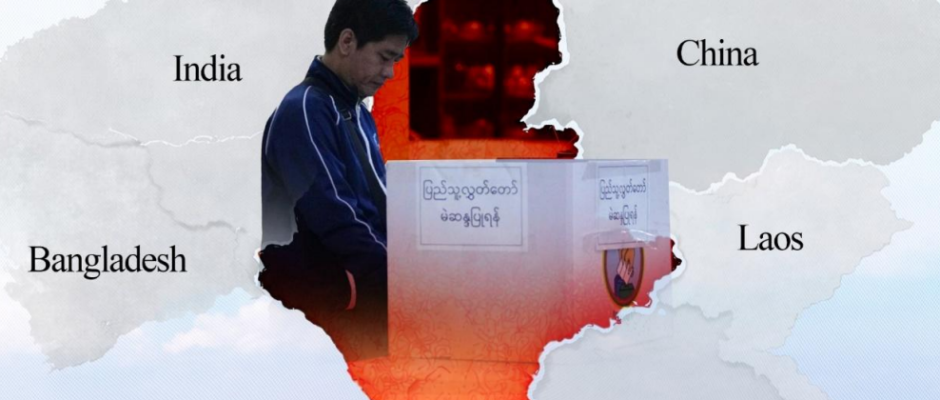
Arun Anand Myanmar (formerly Burma) sits at a critical crossroads in Asia, both geographically and geopolitically. The country’s location – bordering China, India, Bangladesh, Thailand, and Laos, with a long coastline on the Bay of Bengal and Andaman Sea – makes it a bridge between South Asia and Southeast Asia. In fact, Myanmar is often described as the “main connecting hub” linking East, South, and Southeast Asia. Its shores provide access to the Indian Ocean’s major shipping lanes, which has long attracted great power interest. In short, Myanmar’s geostrategic location grants it outsized importance: it is the only Southeast Asian nation sharing borders with both India and China, and it offers a land gateway from the Bay of Bengal into the heart of Asia.

Read More

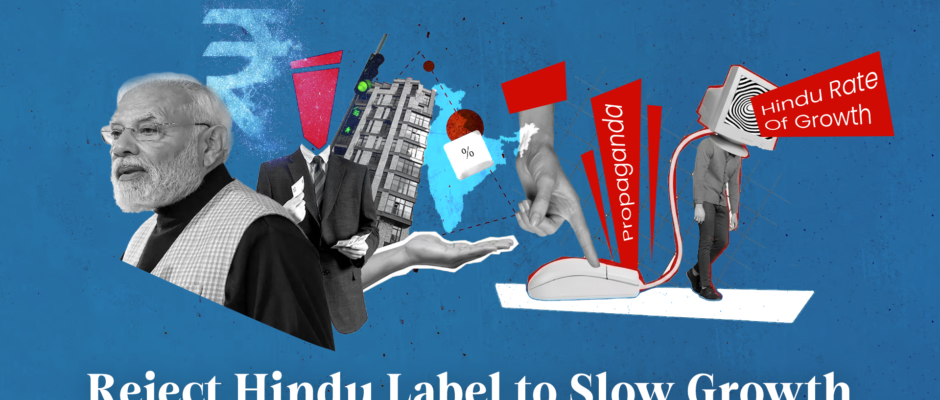
Reject Hindu Label to Slow Growth

Hinduphobia, colonial enslavement led certain intellectuals, socialists to frame Hinduness for tardy progress. Real culprits are socialists and their handlers! K.A.Badarinath It’s a colonial era slur. None has the right to deride about two billion Hindus living in 100 countries on some pretext or the other. Debunking Hindutva as being somehow responsible for Bharat’s tardy progress or sub-optimal GDP growth of 3.5 per cent in 1950s and 1980s era reeks of hatred. At last week’s Hindustan Times annual leadership summit, Prime Minister Narendra Modi rightly pointed to colonial mind-set for framing Hindu faith with tardy economic growth. Big question is why does one attribute slow economic progress and development to Hindutva? Why do some scholars make derogatory remarks and prejudiced framework to point fingers at Hindu people? Why do self-proclaimed intellectuals and economists ignore Bharat’s seven to eight per cent growth in last two decades was precisely due to these very Hindus? Colonial overhang and socialist underpinning of some intellectuals may have led to bracket low growth with Hindutva. As per The Oxford Companion to Economics in India, economist Raj Krishna made an attempt in 1982 to link the then 3.5 per cent economic growth to an inherent cultural phenomenon. Raj Krishna, a faculty member with Delhi School of Economics, blamed Hindus for not thinking big, staying reticent sans ambition etc. Well, Raj Krishna or his disciples’ arguments are not tenable. He may have grossly erred on intent and by design. Economic progress and development models hitherto adopted during Smt Indira Gandhi or Pandit Jawahar Lal Nehru were largely socialist in orientation and governance. Till, economic reforms were unveiled in 1991, state controls were overbearing and stifled growth. In pre-liberation era, strangulating free enterprise, spirit of Bharat’s businesses and individuals was the norm. Even the governance model was socialist in nature with most power concentrated in Prime Minister like the communist oligarchy. Most annoying was accusing Hindus of strangulating socio-economic development in Bharat and slowing down fight against poverty. It’s rather well documented that economist Raghuram Rajan had revived the debate on linking Hindutva to slow growth rates in 2023. In last quarter ending September 2025, Bharat’s economy reported an expansion of 8.2 per cent with about 65 crore people going to work. Similarly, Bharat was the top major economy to report growth of 7.3 per cent globally, highest amongst G-20 nations with China and Indonesia at second and third position with 5.3 per cent and 5.1 per cent respectively in 2024-25. Countries like Italy and Canada reported contractions in their economies during some quarters. Germany reportedly was at bottom of the pyramid with a feeble 0.2 per cent growth. Stellar economic performance by Bharat was not given a cultural, civilizational or Dharmic label? If it’s not Hinduphobic mind-set, why did self-proclaimed intellectuals bring in Hindu angle to lack of or slow economic progress? Consequence of this Hinduphobic mind-set was that ‘Hindu rate of growth’ gained credence internationally amongst academics and audience thereby driving wrong notion and reinforcing that Bharat and Hindus was incapable of development. Attaching a civilizational label or wrongly portraying Hindus as lethargic or not being innovative may be rejected lock stock barrel. In fact, socialist policies adopted in first four decades put Bharat’s economy on a slumber. Unleashing the potential in a free, flexible and predictable policy paradigm would allow Bharat to realize its potential and emerge the ace. Getting out of colonial mind-set and rejecting out-dated socialist doctrines is pre-requisite to further hastening growth the Bharatiya way. (author is Director & Chief Executive at New Delhi based non-partisan think tank, Centre for Integrated and Holistic Studies)

Read More

India Stopped an ISIS-K Bio-Terror Plot the World Needs to Talk About

An ISIS-K bio-terror attack that could have killed over a hundred thousand people was just stopped in India. Why isn’t the world talking about it? Rahul PAWA In a world saturated with headlines of conflict and calamity, an extraordinary victory against terrorism has gone almost unnoticed beyond specialist circles. Indian authorities quietly dismantled a bio-terror plot so chilling in ambition that its success would have rewritten the story of global security. Just days ago, India’s Gujarat Anti-Terrorism Squad (ATS) dismantled an Islamic State Khorasan Province (ISIS-K) cell, the South Asian affiliate of the Islamic State preparing to unleash a mass biological terrorist attack. At its core lay ricin, a toxin so lethally efficient, one of the deadliest known toxins, derived from something as ordinary as the castor bean. It was a scheme as simple as it was monstrous, poisoning the essentials of life itself, and it was stopped just in time. Its story came to light with an arrest that barely drew notice. Acting on specific intelligence, Gujarat ATS arrested Dr Ahmed Mohiyuddin Saiyed, a China-educated MBBS graduate, in Ahmedabad for his links to ISIS-K. Investigators say he had been extracting ricin from castor oil, four litres of which were recovered from his possession and had already procured laboratory equipment and begun initial chemical processing when officers arrested him.  According to police sources, his plan was as insidious as it was horrific: to poison public drinking water supplies and even food (prasad) at Hindu temples, thereby silently killing masses of civilians. Officials estimate the plotters intended to kill “scores of people” and were aiming for catastrophic casualties. In worst-case scenarios, analysts have speculated that hundreds of thousands of lives might have been at risk, had a major water reservoir or a large temple gathering been successfully poisoned. The ambitious reach of this foiled plot underlines why it deserves far more international attention. This was not a lone wolf or a fringe fanatic acting in isolation; it appears to have been coordinated by ISIS-K, working through educated operatives. Dr. Saiyed’s handler, Abu Khadija, was an Afghanistan-based terrorist associated with ISIS-Khorasan, and he potentially arranged arms deliveries for the cell via drones crossing the Pakistan border. Saiyed did not act alone. Two other accomplices, 20-year-old Azad Suleman Sheikh and 23-year-old Mohammad Suhail from Uttar Pradesh, India’s northern state were arrested alongside him. These men had spent the last year conducting reconnaissance on potential targets across India, scoping out crowded public places where a poison attack could yield maximum chaos. Among the locations they surveilled were Asia’s largest wholesale produce market in Delhi (Azadpur Mandi), a bustling fruit market in Ahmedabad, and even the headquarters of RSS, a prominent social organisation in Lucknow. The chosen targets, places of food, water, community life, speak volumes about the terrorist’s cruel intent to strike at the very heart of ordinary society. By targeting temple prasad (food offered to Hindu devotees) and municipal water, they aimed to turn sustenance into a weapon. The depravity is chilling. Ricin itself is a nightmare agent. Tasteless and deadly, it is classified as a Category B bioterrorism agent under the Chemical Weapons Convention. A dose of a few milligrams can kill an adult if delivered effectively, and there is no antidote. Notably, ricin is not a typical weapon in the terrorist arsenal. it has surfaced mostly in fringe plots and isolated incidents (such as poisoned letters addressed to U.S. Presidents Barack Obama and Donald Trump in past years), but never before at this scale. The rarity of ricin attacks is partly why this plot is so alarming: intelligence agencies warn that ISIS and its affiliates have been actively discussing bio-terror tactics in encrypted chats, marking a strategic shift towards unconventional methods. In other words, the very fact that jihadist groups are exploring bioweapons is a worrisome evolution of terror. Unlike bombs or guns, a biological or chemical attack can sow panic far beyond the immediate victims. It contaminates the basic trust we place in our communal resources. As one counter-terror official noted, poisoning a city’s water or food supply would not only kill people but “wreak havoc in the minds of the people”, inflicting psychological trauma on society at large. Had the ricin plot succeeded, it could have easily been one of the deadliest terror attacks in modern history, a silent mass murder stretching over days or weeks as poisoning victims fell ill, and an entire populace plunged into fear. Thankfully, that nightmare never came to pass. Indian security forces acted on a tip and caught the plotters red-handed, seizing their cache of castor oil, weapons (including imported semi-automatic pistols), and digital evidence of their plans. The swift operation, coordinated by Gujarat ATS with central intelligence support, likely saved countless lives. It was, in effect, a major victory in the global fight against terrorism. Yet outside of India, this triumph registered barely a blip. Global media outlets that routinely headline terror incidents offered only cursory reports, if any, on India’s ricin plot bust. Why? One reason may be that success stories simply garner less attention, when disaster is prevented, there are no dramatic visuals of carnage to propel 24/7 news coverage. A bomb that didn’t go off is often a footnote, while a bomb that explodes is breaking news. This asymmetry in coverage creates a perverse situation where we pay more heed to terrorist violence than to vigilance that averts violence. There is also an uncomfortable truth about geographic bias. Had a quarter-million people in a Western city been in danger from a foiled bio-attack, one suspects it would dominate international headlines and talk shows. But when such a plot is foiled in India, it struggles to capture the world’s imagination. This is despite the fact that ISIS’s operations in South Asia are very much a global concern, the ISIS-K module behind the ricin plot has ties spanning Afghanistan and Pakistan, and reflects the same menace that threatens cities from London to New York. Indeed, an Indian investigation report recently

Read More