CIHS – Centre for Integrated and Holistic Studies

Date/Time:

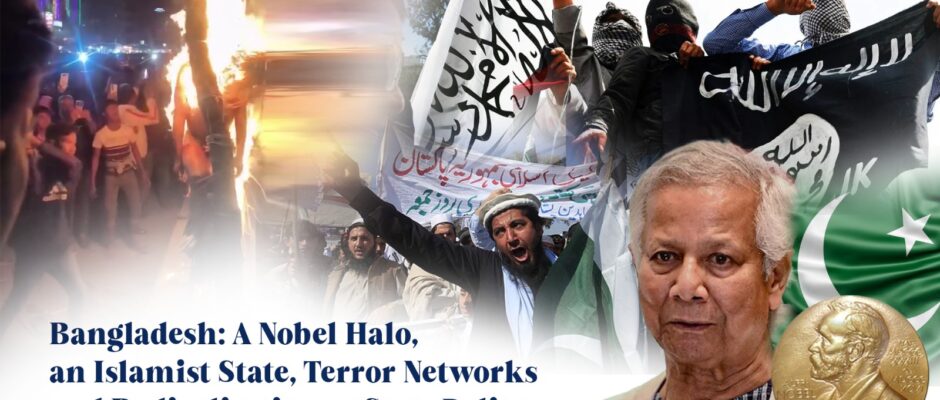
Bangladesh: A Nobel Halo, an Islamist State,Terror Networks and Radicalisation as State Policy

Rahul PAWA | @imrahulpawa (X) Global jihadists see an opening: a chance to reconnect their Pakistani networks with Bangladeshi extremists, reversing years of counterterrorism and counter-radicalisation gains. On a mid-December night in Bangladesh, 25-year-old Dipu Chandra Das, a Hindu garment factory worker was beaten by a frenzy of Islamists, hung from a tree, and set ablaze on a highway. His alleged “crime”? A rumor that he insulted Islam. Yet investigators have since confirmed there is zero evidence that Dipu ever blasphemed at all. Not one can point to a single derogatory remark he made; “no one saw or heard” anything offensive, a Rapid Action Battalion officer admitted. In other words, an innocent Hindu man was lynched and immolated over a lie. One would expect such a medieval atrocity, captured on video and circulated worldwide, to provoke an outpouring of shock from international human rights watchdogs. Imagine if the roles were reversed: a Muslim man lynched and burned by a mob in a Hindu-majority country. The global indignation would be instantaneous and deafening. But in Dipu’s case, the outrage has been oddly muted. Major human rights organizations and Western governments that normally champion minority rights barely mustered a whisper of protest. The deafening silence of these supposed watchdogs is as harrowing as the crime itself, and it exposes a disturbing double standard. Bangladesh’s own minority rights groups vehemently condemned the lynching, the Bangladesh Hindu-Buddhist-Christian Unity Council decried the “so-called blasphemy” killing as an assault on communal harmony. But where were the urgent press releases from Geneva, the high-profile tweets from Human Rights Watch, the emergency sessions at the UN? Their voices have been either absent or astonishingly subdued. Such restraint stands in stark contrast to their usual activism when religious persecution occurs elsewhere. The message implicit in this silence is chilling: that the lynching of a poor Hindu man in Bangladesh is somehow a lesser transgression on the global human rights ledger. The hypocrisy extends to Bangladesh’s interim rulers. The current government, led by Nobel Peace laureate Muhammad Yunus, swept to power in August 2024 after a Islamist-led “Monsoon Revolution” toppled Sheikh Hasina’s democratically elected administration. Internationally, Yunus is venerated for championing human rights and equality. Domestically, his regime’s actions tell a darker story. Chief Adviser Yunus was quick to issue a condemnation of Dipu’s lynching, vowing the perpetrators “will not be spared”. However, such words ring hollow against the regime’s track record: while it denounces one mob killing, it has concurrently overseen the release or escape of hundreds of criminals and Islamist extremists since taking power. At Hadi’s funeral, Yunus himself delivered a eulogy that should have set off international alarm bells. In front of tens of thousands, Yunus heaped praise on Hadi’s “mantra” and vowed to fulfill Hadi’s vision “generation after generation”. Let’s be clear: Hadi was explicitly known for his anti-India and anti-Hindu rhetoric and polarising, Islamist-tinged politics. By publicly sanctifying Hadi’s ideals, Yunus sent a dangerous signal that anti-India and anti-Hindu dictate is now quasi-official ideology in Dhaka. Unsurprisingly, the fallout was swift. Days after Hadi’s death, Bangladesh erupted in fury, not just against alleged conspirators in his killing, but against perceived Indian influence. Mobs attacked the Indian Assistant High Commission in Chittagong, and hundreds of protesters marched on the Indian High Commission in Dhaka, chanting anti-India slogans and even hurling stones at diplomatic compounds. Bangladesh’s police hinted (without evidence) that Hadi’s assassins might have fled to India – where ex-PM Hasina has taken refuge – a claim that only inflamed public paranoia. In the frenzy, fact and fiction mattered little: ‘anti-India and anti-Hindu agenda’ was the rallying cry. Caught in the crossfire were Bangladesh’s Hindu minorities, now doubly scapegoated as both “blasphemers” at home and perceived fifth-columnists for India. Attacks on Hindu homes, temples and community leaders have spiked over the past year and a half. Even before Dipu Das’s lynching, minority groups warned that the post-Hasina political climate had emboldened extremists to settle scores with Hindus, Buddhists and Christians. Tragically, those warnings proved prescient in Bhaluka, Mymensingh, when Dipu’s killers exploited a religious rumor to unleash lethal mob “justice.” Police and RAB have detained ten suspects, Mohammad Limon Sarkar, Mohammad Tarek Hossain, Mohammad Manik Mia, Ershad Ali, Nijum Uddin, Alomgir Hossain, Mohammad Miraj Hossain Akon, Mohammad Azmol Hasan Sagir, Mohammad Shahin Mia, and Mohammad Nazmul, aged 19 to 46. The interim regime’s, especially Mohammad Yunis’s own actions, from baiting an anti-Indian agitator to allowing Islamist hardliners back into public life, have fertilised the soil in which Islamist extremism and radicalisation grows. Perhaps most cynical of all has been the Bangladesh Foreign Ministry’s complicity and the atrocious attempt to downplay these horrors. When India officially protested the mob killing of a Hindu Bangladeshi (and even a small peoples demonstration in New Delhi decrying it), Dhaka’s response was dismissive. Foreign Affairs Adviser Mohammad Touhid Hossain bristled at the notion that Dipu Das’s lynching had anything to do with minority targeting. He then lectured that “such incidents occur across the region” and every country has a responsibility to address themas if mob lynching and immolation of religious minorities is just business as usual in South Asia, nothing special. This whataboutist shrug is nothing short of an attempt to normalise hate crimes. By equating a communal lynching with generic law-and-order problems everywhere, Bangladesh’s officials signal that the brutal murder of a Hindu for an unproven slur is not a national emergency but a routine matter that merits no extra soul-searching. This attitude is profoundly dangerous. Bangladesh was founded on principles of secularism and communal harmony in 1971, a legacy now under siege. To shrug off anti-Hindu violence as “common in the region” is to abandon the very idea of a pluralistic Bangladesh. It emboldens extremists and tells persecuted minorities that they are essentially on their own. Indeed, Islamist radicals have heard the message loud and clear. With the new regime’s indulgence, dormant terrorist networks are roaring back to life. Key jihadist leaders have re-entered the fray, for example,
Read More
A Nation at Risk While the World Watches

A Nation at Risk While the World Watches

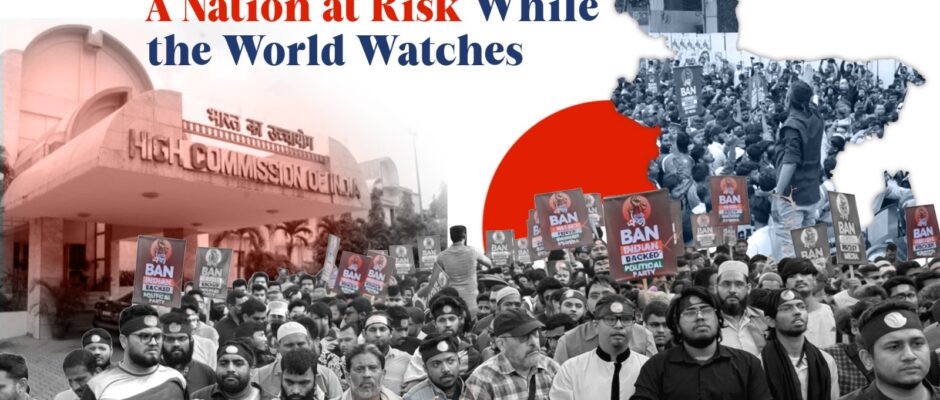
By R K Raina The events that unfolded in Dhaka this week should end any remaining illusion that Bangladesh’s current political drift is a contained or internal matter. On Wednesday afternoon, hundreds of protesters marched towards the Indian High Commission under the banner of July Oikya, raising anti-India slogans and issuing open threats against a diplomatic mission. Police restraint prevented immediate escalation, but the message was unmistakable: radical forces now feel emboldened enough to challenge diplomatic norms in broad daylight. The protest was not spontaneous. July Oikya, a front comprising several groups linked to the July mass uprising, had announced its “March to Indian High Commission” in advance. Its leaders warned that they would forcibly enter the High Commission if their demands were not met. These included the return of individuals convicted in the so-called July massacre case, including former Prime Minister Sheikh Hasina, and an end to what they described as “Indian conspiracies” against Bangladesh. Such rhetoric mirrors the familiar language of Islamist mobilisation across the region, where external enemies are invoked to justify internal radicalisation. What makes this incident especially alarming is not merely the hostility directed at India, but the broader political context in which it occurred. Several fundamentalist and extremist figures, previously detained on terrorism-related charges, have been released in recent months under the current interim administration. Many of these elements are now active on the streets, shaping protest narratives and openly threatening foreign missions. This is not accidental. It is the predictable outcome of legitimising radical actors under the pretext of political transition. Threatening a foreign high commission violates the most basic norms of the diplomatic community. When such acts are tolerated, or downplayed as expressions of popular anger, the consequences extend far beyond bilateral relations. They signal a breakdown of state authority and a willingness to allow extremist mobilisation to dictate political space. This moment must be understood within Bangladesh’s longer historical arc. The country was born in 1971 as a rejection of Pakistan’s ideological model. Bengali nationalism asserted that language, culture and democratic choice mattered more than religious uniformity imposed by the state. Sheikh Mujibur Rahman articulated this vision decades earlier, insisting that Bengal’s history and identity could not be erased. That vision guided Bangladesh through its most successful periods of economic growth and social stability. The forces now gaining ground stand in direct opposition to that legacy. Pakistan’s role in this trajectory is being conspicuously ignored. Since 1971, Islamabad has never reconciled itself to the idea of a secular, culturally confident Bangladesh. Its historical hostility to Bengali identity culminated in genocide, and its ideological influence has since flowed through organisations that opposed Bangladesh’s independence. Jamaat-e-Islami, banned for its collaboration with Pakistan during the liberation war and now politically rehabilitated, remains the clearest example. Its ideological alignment with Pakistan is neither incidental nor historical trivia; it is central to the current moment. Yet while these forces resurface, much of the  world has chosen silence. Worse, some have framed recent developments as a domestic political correction, urging restraint while avoiding any serious engagement with the ideological direction Bangladesh is being pushed towards. Treating the rise of radical street power, the intimidation of diplomatic missions and the release of extremist figures as internal matters is not neutrality. It is abdication. This selective blindness sets a dangerous precedent. Terrorism, it appears, is being judged differently depending on the target and the geography. Threats against Indian diplomatic property are brushed aside, while the same actors would be condemned instantly if they appeared near other embassies. Such double standards undermine the very international norms. The regional consequences are serious. South Asia is already burdened by fragile borders, unresolved conflicts and ideological fault lines. Allowing Bangladesh to slide towards Pakistan-style politics, marked by street radicalism, ideological hostility and economic uncertainty, risks destabilising an entire neighbourhood. The early economic signals are already troubling. Political instability and radical mobilisation have begun to erode confidence in what was once one of Asia’s most promising growth stories. Equally at stake is Bangladesh’s cultural future. The sustained assault on symbols of the liberation movement, and the replacement of Bengali nationalism with political Islam represent an attempt to rewrite the country’s founding narrative. History shows that such projects do not end with symbolism. They reshape education, law and social norms, often irreversibly. World policymakers should be under no illusion. Pakistan itself is a case study in how tolerating or enabling radical forces for short-term stability leads to long-term dysfunction. Decades of engagement have failed to undo the damage caused by ideological capture of the state. To allow Bangladesh to move down the same path is not a policy error; it is a strategic failure. The warning signs today are far clearer. Threats to diplomatic missions, the release of extremists and the open mobilisation of radical fronts are not normal features of democratic transition. They are indicators of state erosion. If the world continues to look away, it will share responsibility for what follows. The erosion of peace in this region, the empowerment of extremist networks and the slow destruction of Bengali cultural identity will not remain confined within Bangladesh’s borders. Silence, in this case, is not caution. It is complicity. (Author is a former diplomat and policy commentator focused on South Asian geopolitics, Tibet and India’s neighbourhood. He contributes to leading think tanks and policy platforms on regional and civilisational issues.)

Read More

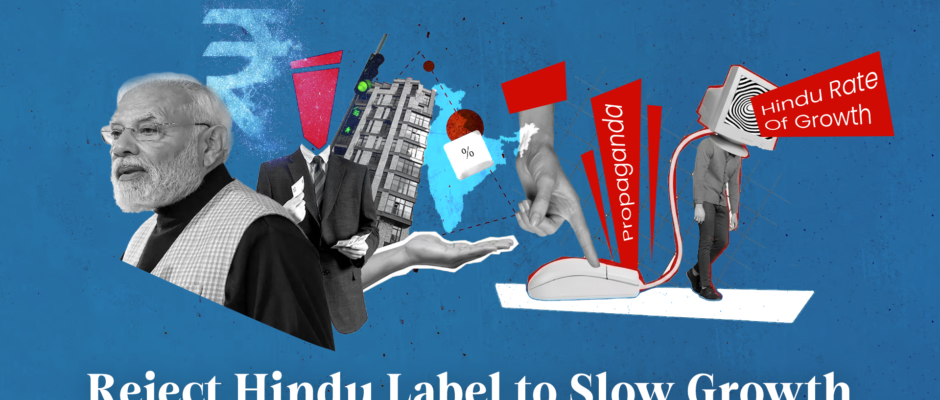
Reject Hindu Label to Slow Growth

Hinduphobia, colonial enslavement led certain intellectuals, socialists to frame Hinduness for tardy progress. Real culprits are socialists and their handlers! K.A.Badarinath It’s a colonial era slur. None has the right to deride about two billion Hindus living in 100 countries on some pretext or the other. Debunking Hindutva as being somehow responsible for Bharat’s tardy progress or sub-optimal GDP growth of 3.5 per cent in 1950s and 1980s era reeks of hatred. At last week’s Hindustan Times annual leadership summit, Prime Minister Narendra Modi rightly pointed to colonial mind-set for framing Hindu faith with tardy economic growth. Big question is why does one attribute slow economic progress and development to Hindutva? Why do some scholars make derogatory remarks and prejudiced framework to point fingers at Hindu people? Why do self-proclaimed intellectuals and economists ignore Bharat’s seven to eight per cent growth in last two decades was precisely due to these very Hindus? Colonial overhang and socialist underpinning of some intellectuals may have led to bracket low growth with Hindutva. As per The Oxford Companion to Economics in India, economist Raj Krishna made an attempt in 1982 to link the then 3.5 per cent economic growth to an inherent cultural phenomenon. Raj Krishna, a faculty member with Delhi School of Economics, blamed Hindus for not thinking big, staying reticent sans ambition etc. Well, Raj Krishna or his disciples’ arguments are not tenable. He may have grossly erred on intent and by design. Economic progress and development models hitherto adopted during Smt Indira Gandhi or Pandit Jawahar Lal Nehru were largely socialist in orientation and governance. Till, economic reforms were unveiled in 1991, state controls were overbearing and stifled growth. In pre-liberation era, strangulating free enterprise, spirit of Bharat’s businesses and individuals was the norm. Even the governance model was socialist in nature with most power concentrated in Prime Minister like the communist oligarchy. Most annoying was accusing Hindus of strangulating socio-economic development in Bharat and slowing down fight against poverty. It’s rather well documented that economist Raghuram Rajan had revived the debate on linking Hindutva to slow growth rates in 2023. In last quarter ending September 2025, Bharat’s economy reported an expansion of 8.2 per cent with about 65 crore people going to work. Similarly, Bharat was the top major economy to report growth of 7.3 per cent globally, highest amongst G-20 nations with China and Indonesia at second and third position with 5.3 per cent and 5.1 per cent respectively in 2024-25. Countries like Italy and Canada reported contractions in their economies during some quarters. Germany reportedly was at bottom of the pyramid with a feeble 0.2 per cent growth. Stellar economic performance by Bharat was not given a cultural, civilizational or Dharmic label? If it’s not Hinduphobic mind-set, why did self-proclaimed intellectuals bring in Hindu angle to lack of or slow economic progress? Consequence of this Hinduphobic mind-set was that ‘Hindu rate of growth’ gained credence internationally amongst academics and audience thereby driving wrong notion and reinforcing that Bharat and Hindus was incapable of development. Attaching a civilizational label or wrongly portraying Hindus as lethargic or not being innovative may be rejected lock stock barrel. In fact, socialist policies adopted in first four decades put Bharat’s economy on a slumber. Unleashing the potential in a free, flexible and predictable policy paradigm would allow Bharat to realize its potential and emerge the ace. Getting out of colonial mind-set and rejecting out-dated socialist doctrines is pre-requisite to further hastening growth the Bharatiya way. (author is Director & Chief Executive at New Delhi based non-partisan think tank, Centre for Integrated and Holistic Studies)

Read More

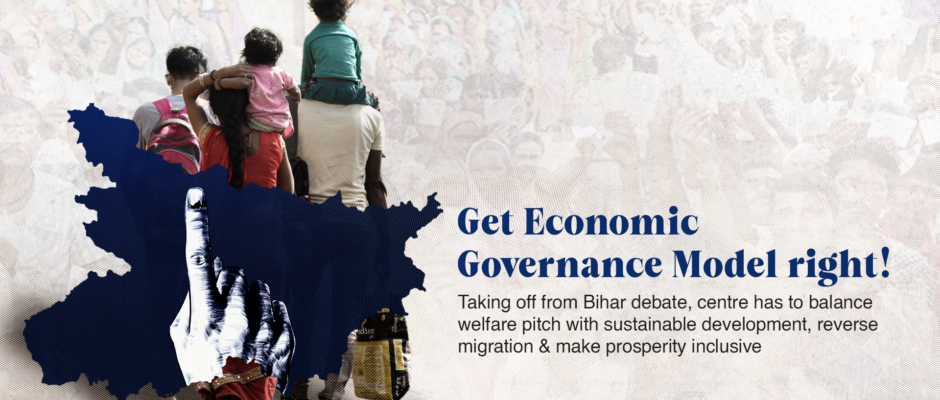
Get Economic Governance Model right!

Taking off from Bihar debate, centre has to balance welfare pitch with sustainable development, reverse migration & make prosperity inclusive K.A. Badarinath Two simultaneous developments have had happened. Both these, though unconnected, have a linkage of sorts. Our most vibrant state, Bihar has gone to polls and a new government will be in place few days from now. On the other end, finance minister Nirmala Sitharaman has begun a mammoth exercise to present her next federal budget on February 1, 2026. One could be wondering as to what’s the linkage between the two albeit even indirectly. This budget will have to put together a new model for socio-economic development taking on board political freebies that are promised in state legislative assembly elections or Lok Sabha polls. Freebies, Revdies & Social welfare Not many socio-economic analysts or thinkers would support the idea of a welfare state in a globally inter-connected world of markets, investments and trade that’s fiercely competitive. Ahead of state elections, Nitish Kumar led BJP – JDU alliance with splinter parties in tow announced two big projects. Through Mukhya Mantri Mahila Rojgar Yojana (MMRY), Rs 10,000 was given to each of 1.5 crore women through direct benefits transfer (DBT). About 1.1 crore elderly women, widows and disabled were given enhanced pension of Rs 1100 from earlier Rs 400 per month. The two schemes alone added an extra outgo of Rs 14240 crore that constitute about six per cent of total revenue expenses of Rs 252,000 crore for 2025-26. Over and above, BJP – JDU led National Democratic Alliance has promised free power, water supply, one crore jobs, higher support to farmers etc in its bid to return with a thumping mandate. Some bracket these freebies as tools for socio-economic empowerment while others call them ‘Revdis’ or vote doles’, the sweet snack made out of sesame seeds and jiggery. Well, the debate is not about direct benefit transfers which have been refined by Narendra Modi government as surest way of reaching benefits to the needy, eliminate inefficiency and pilferage of funds. Larger question is what’s the sustainable model of economic governance that Bharat should adopt to expand, deepen her growth story and spread prosperity? Cash doles can at best act as booster dose for economic empowerment on temporary basis but unsustainable in the long run as experienced in several states including Karnataka, Himachal Pradesh and now Madhya Pradesh and Maharastra. Skilling and competencies, creating work opportunities for goods and services, low-cost credit support to making large chunk capital investments that create jobs may be sustainable. No two economists agree on either of the models for development. A blend of these two approaches may be workable in the medium to long term. Taking Bihar as latest to join the bandwagon of states on the cusp of economic development, Finance Minister Nirmala Sitharaman would do well in providing clarity on approach to economic development. For several years, NDA, BJP and Prime Minister Narendra Modi resisted temptation of going populist through their campaigns in states and centre. But, competitive populism practiced by its political rivals has pushed NDA to rethink on ‘freebies’ or cash doles as a ‘winning formula’ and ‘economic empowerment’ tool. Both, Karnataka and Himachal Pradesh states have been pushed into economic chaos or deep debt burden by respective Congress governments that promised the moon in their political campaigns drawing inspiration from Aam Admi Party’s manifestos in Punjab and Delhi. Therefore, big question to be addressed by finance minister Sitharaman was salience of freebies. Mirgration & Economic Empowerment Both NDA and opposition parties led Maha ghatbandan have made huge promises on jobs to win votes in Bihar. One crore jobs have been promised by NDA and one government job in each Bihar family is what Rashtriya Janata Dal has promised. Jobs creation, investments and migration have direct and intricate linkages in Bihar and elsewhere. As per New Delhi based Institute for Human Development, over 65 per cent households in Bihar cutting across caste lines have at least one migrant each. Their remittances constitute at least 50 per cent of a household’s income. Outward migration from Bihar tripled rural wages centred in construction and agriculture sectors. The data suggests manufacturing employs a measly five per cent people. It’s near impossible to provide jobs to growing youth population. As per the institute, in 2025, 12.8 lakh youngsters completed secondary school education and over 27 per cent of state’s population was aged below 15 years. For different states, these numbers may differ. But still, youngsters below 15-years age would constitute a whopping 15.6 per cent of total population in Bharat. Creating opportunities in manufacturing, services and agriculture apart from exports from rural India is relatively more sustainable to tackle migration. A comprehensive survey on opportunities, jobs, industry, agriculture and exports in each state should dictate our policy priorities. Sridhar Vembu of Zoho Corporation has demonstrated that he could lead a global corporation even while being in a remote Tamil Nadu village. Remote working by professionals across sectors has allowed them to move out of cities while they discharged job related tasks. Huge network of roads, rail, ports, airports infrastructure, data and telecom connectivity in semi-urban and rural areas should come handy in formulating a policy against migration. First step will be to stop this migration out of villages. Secondly, reversing the migration back to villages and finally reversing brain drain from the country should be an economic priority. Re-modelling our economic development paradigm with migration at centrality of policy making should be attempted. Ultimately, economic growth should be sustainable in long run, translate into prosperity for last man standing in the spirit of Antyodaya, make welfare and opportunities inclusive while expanding global linkages. Getting the economic governance model right is the challenge. (Author is Director & Chief Executive of New Delhi based non-partisan think tank, Centre for Integrated and Holistic Studies)

Read More
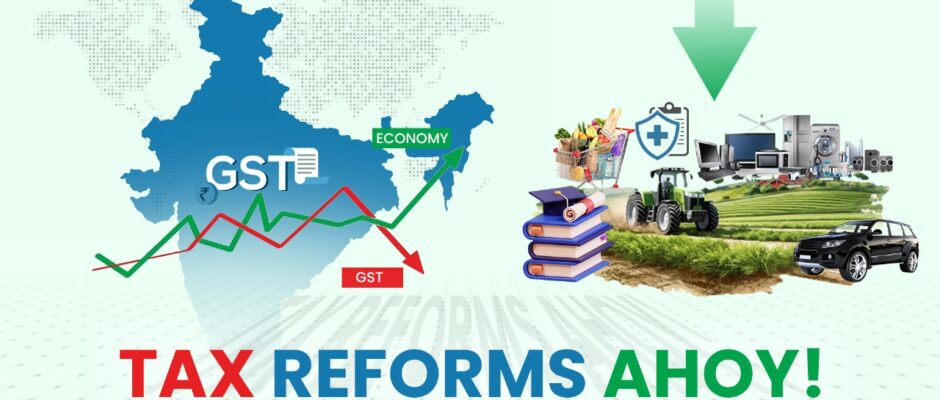
Tax Reforms Ahoy!

Tax Reforms Ahoy!

Modi government’s GST 2.0 reforms would make taxation more compliant, leave more money with people, take Bharat into a different league. K.A.Badarinath Goods and Services Tax was once sold as ‘one nation one tax’ by Narendra Modi led NDA government when it was first introduced on July 1, 2017 in Bharat. After 13-years of painful and protracted negotiation with states led by different political formations, multiple taxes at different levels were subsumed into this federal tax aimed at easing burden on businesses, taxpayers and reduce evasion. This single biggest tax reform brought in by Modi government was however seen with apprehension by a few stakeholders and several opposition parties that headed state governments. Today, most Indians are convinced that the reform path laid down by Narendra Modi government was firm, forward looking and easy to comply with. As on date, about 160 countries implement the GST or Value Added Tax (VAT) in some form or the other beginning with France in 1954. Though, India has been a late entrant into this taxation regime, it matured fast, compliance improved and held the tax mobilization campaign in last eight years on an even keel without disturbing the delicate applecart with 29 states and eight union territories. Revenue neutral rates for GST report put together by then Chief Economic Advisor, Arvind Subramanian, in December 2015 ahead the rollout studied Canada, European Union, China, Australia and Indonesia to make his recommendations. Subramanian had pointed to challenges in implementing a ‘dual rate structure’ in a federal system like ours. Similarly, Reserve Bank of India (RBI) report of 2017 had emphasised on big implementation risks faced by sovereign governments globally while implementing the GST. From evasion, under-reporting, cash deals, unregistered businesses, splitting invoices to making false claims, RBI flagged several issues in the implementation. World Bank that tracked initial years of GST implementation in India had underscored huge risks given the complexity of Bharat’s markets driven by states and local governments. But, the political leadership under Prime Minister Modi took a conscious call to implement GST, ease out the taxation burden on the system and get into the global league of ‘best compliant nations’. There were several naysayers across the spectrum. Prime Minister Modi and his economic ‘A’ team did not relent. It went ahead with roll out and implementing the dual GST with multiple rates akin to Canada which is the nearest in comparison. And, it’s for everyone to experience the impact and resultant taxation regime that delivered in eight years. Value Added Tax, State and Central Sales Tax apart from a multitude of imposts were replaced by the unified GST. This successful model served as a big trigger for Modi government to take up the next big reform measure and ring in the GST 2.0 regime beginning September 22 this year. On Wednesday, GST Council headed by Finance Minister, Nirmala Sitharaman, went into ten hour marathon huddle to thrash out two rate structure replacing the multiple slabs, provide massive relief to the hoi polloi. More than reworking the GST slabs to two at five per cent and 18 per cent, the biggest move was to do away with the12 per cent and 28 per cent slabs that were huge on revenue earnings for the government. One estimate suggests that by moving 99 per cent goods and services from 12 per cent to five per cent bracket or completely exempting daily use items from tax impost, Modi – Sitharaman played big by foregoing Rs 48,000 crore revenues in next two quarters of this fiscal. If one were to factor in the huge tax concessions of Rs 100,000 crore announced in Union Budget on February 1, 2025 and GST rate cuts as well as exemptions, middle-class and salaried classes gain substantially. Exempting both life and non-life insurance products from levy of GST is yet another big reform measure given the social security gaps prevalent across sections. Big gainers in this GST reform are farmers, women, youth and vulnerable sections that feel the pinch of high taxation. Most daily use items have been taken away from GST ambit with nil taxes. From bread, channa to paneer, all these come without taxes. Latest round of GST reforms have a serious socio, economic and political messaging as well. Leaving more money with the people that would widen and deepen the consumption basket would also push up economic growth from expected 6.5 per cent this fiscal. If one were to take exempted items, ‘sin’ and ultra-luxury goods  rate of 40 per cent that include tobacco products, the two trick-ponies would partly offset the impact of US tariffs at 50 per cent and trigger economic growth. These tax reforms have not come in without adequate confabulation and computation by the economic managers. This was coming! Prime Minister Modi himself had hinted at GST reforms from ramparts of Red Fort in his Independence Day speech last month. It’s not fait accompli or desperation. It’s a well thought out reform measure that would lay an important brick in the foundation for developed Bharat. It’s early Deepawali for all! Companies, service providers – both domestic and foreign – are bound to rejoice and make merry like the consumers. Great festivities ahead! (Author is Director and Chief Executive of New Delhi based non-partisan think tank, Centre for Integrated and Holistic Studies)

Read More
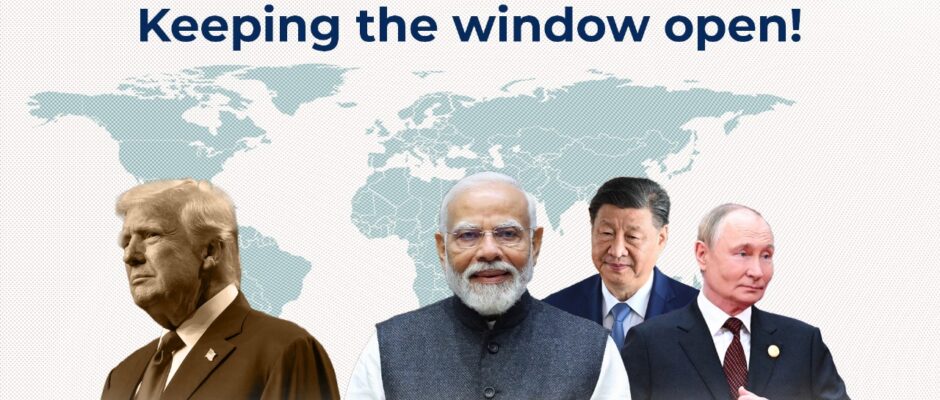
Keeping The Window Open!

Keeping The Window Open!

Delicate balancing of relations between US, China & Russia is test of Bharat’s foreign policy framework that centres on strategic autonomy. K.A.Badarinath Will there be a huge shift in Bharat’s foreign policy framework? Or, possible tilt towards China, Russia conglomeration, a permanent feature? Will this lead to increased distancing between India and US under Republican White House stewardship? What’s in store on geo-political, strategic and economic engagement for Bharat and the world? There are several unanswered and unsettling questions that pop up in inter-personal conversations and on the information highways as one scans on Google, Weibo to Douyin. Prime Minister Narendra Modi’s visit to China and Japan has set off a flurry of conversations internationally. Both, Beijing and Tokyo are most intrinsic foes that do not have much in common especially after the war leading to Japan’s surrender in 1945. Several questions that analysts, anchors and seasoned newsmen are also awe-stuck given that in the first place he lined up the visits to both China and Japan in one go. Secondly, not only do they keep distance but belong to two diametrically opposite camps but have huge issues in global equations. While China and Russia have had rivalled US-led NATO group, Japan falls into the latter alliance. Thirdly, this visit of Prime Minister Modi is significant in the backdrop of United States President Donald Trump weaponising trade, imposing 50 per cent tariff on Bharat’s goods and services and thereby burning bridges. Fourthly, Prime Minister Modi’s two nation visit gained prominence as the ‘global south’ network seeks to consolidate its position via the Shanghai Cooperation Organization whose twentieth session was held in Tianjin as China holds the rotating chair as of now. Fifth, most analysts think that Bharat’s ‘strategic autonomy’ policy framework is being put to test with re-setting its relations vis-à-vis US and China. Sixth, however, top hawks in Bharat’s foreign affairs department do expect the relations with United States to bounce back to normalcy as had happened in the past after Washington DC imposed unilateral sanctions in aftermath of Pokharan nuclear tests. Seventh, the probability of a ‘delicate balancing act’ that New Delhi would enact with caution but firmness of purpose as its near time posturing without yielding to bullying tactics of US. Eighth, there’s no reason why Bharat should not continue oil trade with Russia or any other country depending on prevailing market conditions. Neither US nor Europe have locus standi to corner Bharat citing oil trade given their own continued ‘lucrative gas deals’ with Russia and its partners. Ninth, Prime Minister Modi’s visit to both Japan and China indicate that Bharat has the depth to manage diversities. For instance, enhancing Japanese investments to US $ 68 billion from $ 34 billion through 170 deals is a big take away for both Bharat and Japan who enjoy strategic and special relationship. This is a firm message for US that sought to dry up the foreign investment pipeline in Bharat to push for a ‘bad trade deal’. By not participating in a significant programme to commemorate China’s victory over Japan is again a big message to Beijing that New Delhi has its friends elsewhere as well. Bilateral summit between Prime Minister Modi and Chinese President Xi Jinping has been regarded as pivotal to ‘resetting relations’ as development partners and ‘not as rivals’. While the intent is good, first step has been taken to normalise relations, there are several challenges especially on borders, Belt and Roads Initiative that brings Chinese projects to the doorstep via Pakistan occupied Jammu and Kashmir. Apprehensions seem to be very high on both over outcome of these meetings even as China and Bharat ready to celebrate 75-years of diplomatic relations. One significant point made by Prime Minister Modi that has gone viral was border peace and tranquillity was like an insurance policy for future enduring relations. Can the dragon and elephant in the room tango seamlessly is a billion dollar question as resetting of relations is attempted. As one Chinese scholar wrote ‘it’s rational choice and shared responsibility for both India and China to reset relations’. A big take away is a meeting between Prime Minister Modi and Russian President Vladimir Putin with carpooling and Ridge Carlton delegation level talks happening in a ‘delightful’ atmosphere. The visuals and videos of Modi, Putin traveling in a Russian made car throwing protocols to winds is not something European Union or US will want to watch. Given that US described Russia and Ukraine conflict as ‘Modi’s war’ has had no impact on the two leaders’ summit deliberations that extended a wee-bit. Also, 2025 marks 15 years of Indo-Russian strategic relationship that would come into full play later this year. From Bharat’s perspective, there have been a few takeaways from 20-members SCO summit. Unadulterated condemnation of Pahalgam attack by terrorists from across the borders is what India expected and achieved. Also, expanding trade relations between different SCO member countries with payments squared off in respective currencies is big. This would also mean that increasingly trade would get delinked from US dollar and euro while Chinese Renminbi, Russian rouble and Indian Rupee would gain in terms of acceptability. While the show in China came to a near close, the implications of new found friendship between Presidents’ Xi, Putin and Prime Minister Modi will result in sleepless nights for those in Trump administration and Brussels, housing headquarters of European Union. (Author is Director and Chief Executive of New Delhi based non-partisan think tank, Centre for Integrated and Holistic Studies)  Keeping The Window Open!

Read More
Primer – Caste Census in Bharat: Policy, Politics & Social Justice

Primer – Caste Census in Bharat: Policy, Politics & Social Justice

Caste Census in Bharat: Policy,Bharat’s renewed push for caste based enumeration or census is not just a domestic administrative reform but a landmark moment in the global conversation around equality, representation and justice. After nearly a century since last comprehensive caste enumeration in 1931, the upcoming 2027 census promises to confront deep inequalities embedded in Bharat’s social structure.

Read More
Report: Conversion Cartels, Silent War on Bharat’s Soul

Report: Conversion Cartels, Silent War on Bharat’s Soul

India’s dharmic landscape is witnessing significant alteration with patterns emerging that raise concerns about national security, social cohesion and sovereignty. These patterns include proliferation of churches, legal actions related to religious conversions, children rescued from missionary organizations and increased scrutiny of missionary bodies under Foreign Contribution Regulation Act (FCRA).​

Read More
Don’t Mess Up with Bharat!

Don’t Mess Up with Bharat!

Restructuring US industry to make its products competitive must be President Trump’s primacy and not wage tariff wars with strategic allies. K.A.Badarinath One of the most searched on internet these days is tariffs. After US President Donald J Trump talked round the corner, stakeholders across geographies have begun to make sense of these tariff lines. There’s, however, no reason why Bharat should give in to demands of quixotic President Trump who’s been holding forth with media twenty four by seven. President Trump also seems to be in tearing hurry to make early impact as head of Republican White House. Hence, he set the April 2 deadline to impose massive tariffs on Bharat’s export of products and services. Tariffs is a long story beginning with Donald Trump’s first term four years back when he went ahead and imposed tariffs on steel products, pharmaceuticals etc. There’s definitely an imbalance in trade. Its advantage Bharat as US $ has a deficit of US $ 45.6 billion on bilateral trade worth US $ 191 billion. And, India has reportedly made some proposals to rework the economic, trade and investment relations between the largest and oldest democracies globally. One way could be to enhance defence purchases worth US $ 20 billion by Bharat. Another possibility is to increase energy products including LNG and other hydrocarbon products. But, US may not be able to seize the window of opportunity opened by Bharat during bilateral engagement. Firstly, US defence establishment and deep state may not facilitate sale of F 35 fighter aircraft to Bharat.  A big section of US set up is wary of even floating a joint venture to jointly produce F-35 aircraft with a non-NATO strategic ally like Bharat. This joint venture possibly based out of Bhagyanagar aka Hyderabad need not limit itself to catering to Indian defence forces. It can become hub for exports to other destinations. Stringent protocols and agreement on who gets access to such advanced fighter jets could have been put in the blue print. Story of energy purchases is more or less similar. Would US be able to match or provide equivalent prices offered by Russia on crude, refined or liquefied natural gas products? Either spot or long term contracts, US energy products may not be cost competitive vis-à-vis the middle-east or Russian sources. For an expanding economic force like Bharat, every dollar paid per barrel translates to US $ one billion higher import bill. Insurance and freight differentials are again too huge for Bharat to enter into long term contracts with US. Reciprocal tariffs from April 2 have been proposed by President Trump who thinks that the Bharat is fleecing American people. As per World Trade Organization data, this may not be altogether true. As against an aggregate US tariff of 2,2 per cent, Bharat levies 12 per cent that’s in sync with WTO norms under differential tariff regime. President Trump may have a point relating to individual products like automobiles on which tariffs were brought down by Bharat to 70 per cent from 125 per cent on high end luxury cars. On motor cycles, the applicable tariff line is set at 40 per cent as against 50 per cent earlier. Threat to impose 25 per cent tariff on all Indian goods may not work for US except for addressing political constituency of Donald Trump or for optics. Indian goods constitute just 2.7 per cent of all US imports and do not even figure in top ten exporting countries to America. There’s no reason for mature friends like US and Bharat to haggle over manageable trade imbalance. Instead, working on the big picture like more than doubling the bilateral trade to US $ 500 billion by 2030 and clinching a ‘credible and sustainable’ trade deal in next one year is what’s more significant. Simultaneously, US may have to rework its manufacturing and supply chains to be cost and quality competitive instead of rampaging in over pitched verbal duel with friends and foes alike. Re-inventing  American manufacturing base to align with new age cut throat competition is something that Trump may have to work on beginning with massive restructuring of its industry. US and Trump may not realize this ‘Make America Great Again’ dream unless some hard work is put into it. America may have to expand its bouquet of products and services that can compete in the global market with new forces on the block. Trump’s complaint is that subsidies, non-tariff barriers and VAT system in Bharat hinder American exports. Well, his policy hawks may have conveniently forgotten that Value Added Tax (VAT) regime has come to an end several years back and it’s been subsumed into Goods and Services Tax (GST). On subsidies, US have a very weak case. Can Donald Trump’s advisors prove that America does not subsidise its industry? In Bharat, food, fertilizers and oil products constituted a large part of subsidy bill till a couple of years ago. Retail petroleum products prices have virtually been aligned with market demand and supply chain. There’s no depth in the argument that Bharat subsidises its petroleum products. It’s an emphatic no. Till a couple of years ago, kerosene was the only big subsidized oil product. After having taken piped gas and through cylinders to virtually every household, there’s hardly a big demand for kerosene. Food subsidy or free food grains to the vulnerable sectors is definitely a reality in Bharat. And, its well within its right to fight poverty and hunger through the Prime Minister’s anna yojana. In fertilizers, Bharat is more or less sufficient on urea while DAP and complex fertilizers subsidy is on the slide each year. Minimal subsidy available on a couple fertilizers is support given to farmers for ensuring enough food grains output for 1.4 billion and ward off imports. On non-tariff barriers, US are yet to come up with a list of such restrictions put in place by Bharat. If restricted access to Bharat’s agricultural markets is an issue, US will have

Read More
Modi Magic for Middle Class Works Wonders

Modi Magic for Middle Class Works Wonders

Consumption led growth, deregulation & reforms coupled with political and economic consolidation is what the budget attempts smartly! K.A.Badarinath Prime Minister Narendra Modi led government’s first full budget in its third term has deftly managed numbers, stuck to fiscal prudence & consolidation glide path, fiscal deficit reined in, borrowings manageable and put the economy on a consumption overdrive by providing huge tax relief of Rs 102660 crore. The vast middle class taxpayers who are also biggest consumers of goods and services will dance home with the goodies provided by finance minister Nirmala Sitharaman that presented her eighth consecutive budget for the Modi government on Saturday. Relief in personal income tax through rejig in both slabs and rates is the highest provided by any government in post-independence history of Bharat. And, there’s a big political message as well. Stick to the right of centre BJP-led National Democratic Alliance without drifting away. And, you will only be happy. This message is particularly important after Prime Minister Modi led alliance managed a wafer thin majority in Lok Sabha during last general elections. Also, Prime Minister Modi, BJP and NDA seem to be in no mood to let up the consolidation drive undertaken in assembly elections of Maharastra, Haryana and elsewhere post-Lok Sabha elections in June 2024. Also, in National Capital Region, Delhi’s assembly elections set for February 5, BJP has targeted the middle-class voters who are also taxpayers in a big way There may be naysayers that point fingers at huge tax exemptions and relief and Nirmala Sitharaman’s strategy to spend Rs 50.65 lakh crore to perk up growth in medium term beyond seven per cent in especially challenging conditions internationally. She has definitely not announced any ‘run away’ spending but put money where its seriously required to avoid the much feared ‘middle income trap’, keep the economy competitive, combative and at the same time expand smartly. Putting more than Rs 100,000 crore in hands of taxpayers, rewarding them handsomely for their contribution and thereby perk up consumption demand is to take economic growth way beyond 6.3 – 6.8 per cent projected in economic survey presented on Friday. Projected fiscal deficit at 4.4 per cent for 2025-26 over 4.8 per cent in current fiscal is achievable given buoyancy in tax receipts and reflects government’s steadfast commitment to consolidation, limit borrowings and shift big to infrastructure spending on capital account at Rs 15.48 lakh crore that translates to over 3.1 per cent of GDP. Borrowings would be limited at Rs 11,53,834 crore next fiscal to actual Rs 11,62,678 crore in the year ending March 31, 2025. Over next one year beginning April 1, 2025, the country’s gross domestic product in actual terms would expand to Rs 356,97,923 crore as against Rs 324,11,406 crore projected for 2024-25. Deregulation and fresh bout of reforms as an economic strategy – both policy side and taxation – recommended in Economic Survey have been accepted by Modi government. Taking stock of regulations and lifting controls has been corner stone of government’s liberalization programme when the economic liberalization was fine-tuned by Atal Bihari Vajpayee regime two decades back. Fresh overtures to reform, deregulate and thereby liberalize the economy is something Modi government would pursue to realize its full potential as it readies the journey to ‘developed nation’ status free from poverty by 2047. Focusing on agriculture, investments, micro, small & medium enterprises (MSMES) apart from exports as four growth engines is refreshing and a departure from traditional ways of looking at four economic pillars. At a time when assorted Left leaning farmers groups hit the ground seeking legal guarantee for minimum support prices (MSP) for their produce, Modi government has presented a different model to make farming a profitable enterprise, push up rural prosperity and take the famed Bharat growth story to hinterlands. Apart from sprucing up agricultural credit, mission for pulses, cotton, developing 100 agriculture-based districts, Makhana mission and initiative for vegetables and fruits is noteworthy.  Focusing on Micro, small and medium enterprises as growth engine is something that will gel well with the BJP’s core constituency of small businesses. And, it makes eminent sense to take these over 4.5 crore small enterprises up the value chain and align them to export markets to deliver both goods and services. Fund of Funds for start-ups, prioritizing footwear, leather and toys, extending first time entrepreneurship to five lakh scheduled caste and tribes women and ‘make in India’ for the world schemes would expand the landscape of these enterprises that have become hallmark of Bharat’s industry in last ten-odd years. Announcement on national manufacturing mission for MSMEs is something that will lead to consolidation of these tiny enterprises but also provide framework for nurturing and embellishing their operations in long term. The two growth engines that are significant are investments and exports given global uncertainties especially in Europe, return of Donald Trump as American President, China and Russia getting closer on geo-political front. Setting up an omnibus export mission, bringing the MSMEs to put them on export mode and involving banks, financial institutions is a pragmatic way of tiding over the global uncertainties especially in wake of ‘Make America Great Again’ and ‘Make Europe Great Again campaigns. Setting up global capability centres in different states and bharat trade net for easing documentation related issues for exporters would only add to ease of exporting Bharat’s goods and services to global consumers. Government led investments in infrastructure, mobilizing global resources for large signature projects would trigger private and foreign funds commitment to both green field and expansion projects. One big opportunity for both private and foreign players would be 100 Gw nuclear power projects that would eventually replace the heavily polluting coal-fired power plants. Nuclear mission will provide an opportunity for foreign players apart from putting together a regulatory framework given that the sector is being opened up for first time. For the first time in last few years, Bharat has opened the insurance sector wider for foreign investments with 100 per cent

Read More