CIHS – Centre for Integrated and Holistic Studies

Date/Time:

Bharat, An Evolving, Chaotic but Vibrant Democracy

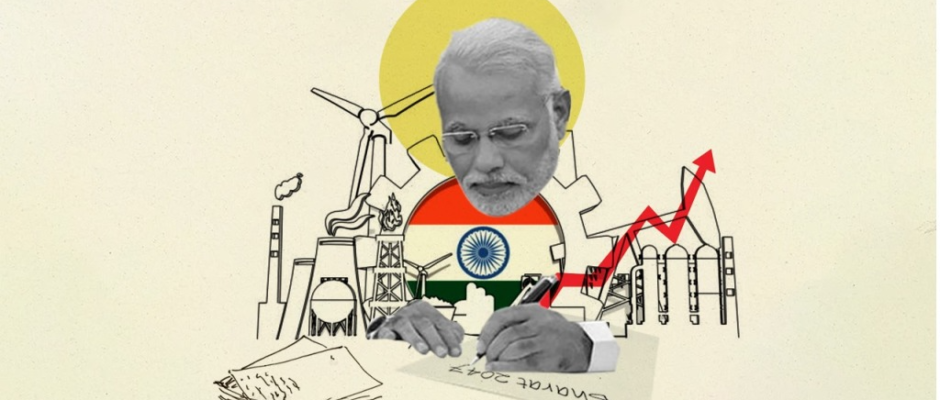
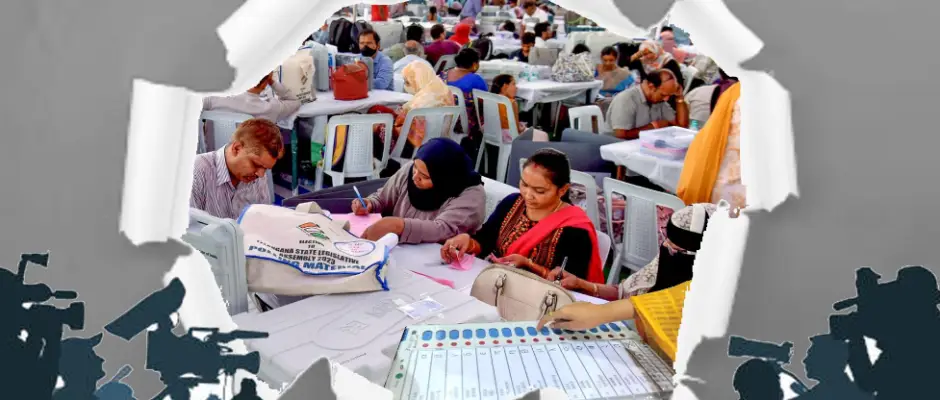
From being ‘gana rajyas’ to going high-tech in campaigns & voting, Bharat has covered huge space and willing to experiment with spiritual democracy Dr Aniruddh Subhedar Like people, nations too have a distinct nature, character and history of their own. Bharat is no exception to this and has its own uniqueness in all these three aspects. Studying Bharat diligently and objectively, one will find that ideal of democracy and freedom to choose leaders has been ingrained in her ethos since times immemorial. No doubt the modern democratic institutions of Bharat took their form after British colonization but roots of democracy in Bharat are as old as it gets. When Greece was enjoying its city states, in Bharat there were Gana-Rajyas. Ganas means the people making up a state and Gana-Rajya translates to “rule of people”. Scholars tell us that even before Gana-Rajyas, during evolution of Bharatiya civilization, in Vedic period we find existence of assemblies like Sabha, Samiti and Vidath, which used to administer people and whose leaders were elected by the people only. The Ganas were basically units as cohesive as families or clans. Later when monarchy became the norm in Bharat, it was not too far away from this basic ideal. The word ‘praja‘, which means people / subjects, literally translates to ‘offspring’ or children. In essence, Raja (King) was supposed to take care of his people as his own children. And, even during that era of monarchy, at the village level panchayats or village assemblies, usually made up of community elders, were thriving in Bharat; respected and accepted by the State. Therefore, transition to modern democratic political setup was not too hard for Bharatiyas. As soon as Bharat freed itself from colonial clutches, it made universal adult franchise one of the defining characteristics of its political system. In Letter & Practice In modern times, democratic ethics are too well entrenched in Bharat’s polity in letter and practice. Preamble of Bharat’s Constitution pledges to constitute the country into “a democratic republic”. Free and fair elections are bedrock on which this democratic systems stands upon. The Constitution ensures that there is a permanent and independent body- ‘Election Commission of India’ (ECI) which has the power to control and regulate elections to parliament, state legislatures, office of president and vice-president. Measures relating to elections are so stringent that once ‘Model Code of Conduct’ is implemented by the Election Commission, the government is prohibited from making any announcements or policy decisions that could potentially influence people’s voting choices. This means government cannot start any populist scheme and even government bodies cannot start any recruiting process. Provisions of Constitution are not a dead letter. In fact, it’s followed quite strictly. General elections in Bharat are not some run-of-the-mill affair; it is of gigantic proportions. General elections in 2024 Bharat will be the largest exercise ever in the world surpassing even the one held in 2019. Total 90 million people are eligible to vote in this election. It will be the longest-held general election in Bharat (except for the first general election of Independent Bharat in 1951-52) spanning over 44 days. One of the reasons Bharat’s democracy has endured test of time is the seriousness about voting rights and fair elections. Otherwise in Bharat’s neighbourhood there’s hardly a country which can pride itself as a true democracy. In fact, in Bharat’s west, it is hard to find a truly functioning democracy till one crosses the Middle-Eastern countries. Being one of the most populous and diverse countries in the world, Bharat plays a major role in ensuring that democracy and human rights are secure in South East Asia. Bharatiyas take their right to vote seriously and don’t like anyone meddling with it. The closest Bharat came to dictatorship was during 1975-77 emergency imposed by then Prime Minister Indira Gandhi. But what preceded and followed this 21-month stint with dictatorship is worth mentioning here. Among the other reasons, the immediate cause of Indira Gandhi implementing emergency was that the courts concluded that malpractices were used in her election and declared it as null and void. Indira Gandhi paid the price for imposing the Emergency when she and her party Congress were wiped out in elections post-emergency. Interestingly enough, she was re-elected by the people again and later her son Rajiv Gandhi won highest number of seats in Bharat’s political history owing to sympathy wave caused by Indira Gandhi’s assassination by Khalistani terrorists. It shows that Indira Gandhi always had a political stature but even Prime Minister of her standing wasn’t spared by Bharatiya people when she tried to curb their freedom. Credibility of Election Process Given the vast geographical area and size of the electorate, ECI has modernized the process by using Electronic Voting Machines (EVMs) for polling and counting votes for more than two decades. Making the process more credible and faster, EVMs were first used in 1980s, and they are used in general elections since 2004. In 2017 many Opposition parties like Congress, Bahujan Samaj Party, Aam Admi Party harboured doubts on credibility of EVMs after they lost elections in some states. It was alleged that BJP is tempering with EVMs. The allegations went as bizarre as claiming that EVMs (a self-contained, stand-alone machine, lacking any networking capability) is being hacked via internet. A leader of AAP even brought a machine to the Delhi Assembly which looked like EVM and demonstrated how it could be hacked. All this hullabaloo was silenced when in May-June 2017 the ECI invited these parties and gave them the real EVM to prove that it could be hacked. Parties like AAP did not even participate in the challenge, while other two other parties, CPI (M) and NCP, who sent their representatives said that “they just came to understand how EVMs work”. Even without going into technical know-how the allegations against EVMs could be easily dismissed by looking at the fact that even in these 2017 elections, BJP lost in Punjab and Congress won. AAP won Punjab state

Read More

Pakistan, China Rob Balochs Freedom to Live

Protests in Amsterdam, Berlin on ‘black day’ against forced occupation and annexation of Balochi land marks 76 years struggle for liberation Rahul Pawa Seventy-six years ago, on March 27, 1948, Pakistan’s occupation and forceful annexation of Balochistan ignited a bloody conflict that has simmered since decades and claimed innumerable lives. This annexation, far from being a justifiable integration, signalled start of a prolonged struggle for Baloch people, who have since endured relentless torment and despair. Despite passage of time, the spirit of resistance within Balochistan remains undiminished, as its people continue to assert their rejection of Pakistani illegal occupation. This struggle is not just a tale of contested territory but a profound testament to resilience of Baloch peoples’ steadfast in their pursuit of self-determination.  Baloch account for roughly 15 million of Pakistan’s 240 million people, however, their province, largest in current day Pakistan, stands as the country’s most backward region despite its immense wealth in natural resources. This stark contrast is highlighted by its vast reserves of oil, coal, gold, copper, and gas which significantly contribute to Pakistan’s revenue. Result of, Balochistan has experienced a prolonged period of neglect and exploitation by the Pakistani state, which has primarily focused on exploiting its rich mineral resources without consideration for the people of Balochistan. This exploitation came to a head following Pakistan’s nuclear tests on May 28, 1998, at the Ras Koh mountains in Balochistan, which had devastating environmental and health impacts on the local population. The tests resulted in significant livestock losses and led to increased cancer rates among the Baloch people due to nuclear radiation exposure. These actions have fueled discontent and resistance against the state authorities. In addition to environmental degradation and a public health crisis, the region has been subjected to severe human rights abuses, including enforced disappearances and a notorious “kill and dump” policy of the Pakistan Army. This inhumane treatment has further exacerbated tensions in the occupied territory and fueled discontent leading to resistance against the Pakistani state and highlighted the urgent need for addressing severe human rights concerns in Balochistan. The dire situation in Balochistan, as unveiled in a 2016 United Nations Working Group’s assessment and corroborated by activist accounts, illustrates a severe human rights crisis that has not been adequately reported or acknowledged by the Pakistani state. The discrepancy between the provincial government’s admission of fewer than 100 missing persons and data from local sources of over 14,000 individuals missing underscores a profound transparency and accountability issue. Furthermore, while the Pakistan Commission of Inquiry on Enforced Disappearances documented 2,708 missing persons since 2011, activists report a staggering 504 extrajudicial killings within the province in just the previous year alone. These numbers, vastly divergent from official state reports, highlight a critical gap in the state’s acknowledgment and documentation of human rights abuses pointing to state complicity in the violations against the people of Balochistan. In addition, banking on occupied territories, the province hosts Pakistan’s only deep-sea port at Gwadar. This port, pivotal to the US $65 billion China-Pakistan Economic Corridor (CPEC), a project designed to connect southwestern China with the Arabian Sea via Pakistan, has added another layer of occupation of Baloch lands by the Communist Party of China (CPC) and its People’s Liberation Army (PLA). The strategic significance of Gwadar Port extends beyond economic interests, serving as a key maritime node in China’s Belt and Road Initiative (BRI). This development aims to expand China’s influence through a vast network of trade routes and infrastructure projects across Asia, Africa, and Europe. However, the expansion of Gwadar Port and the broader CPEC initiative have raised concerns among the Baloch population regarding sovereignty and the fair distribution of resources. These massive infrastructure projects serve the interests of CPC and Pakistani federal stakeholders, compounding environmental impacts, the displacement of local populations, and the alteration of traditional livelihoods. The influx of foreign workers, particularly from China, and the prioritisation of their needs and security have created an environment where the rights and welfare of the local population are sidelined. Reports of forced marriages have sparked outrage, highlighting the exploitation and vulnerability of local communities amidst the sweeping changes brought by these Chinese projects. This scenario is further complicated by extreme instances of human rights violations, including the suppression of dissent, censorship, and the curtailing of freedoms. The Baloch population’s grievances are not limited to economic marginalisation but extend to a profound sense of cultural and societal invasion. The presence of PLA and Pakistani security forces, under the guise of protecting investments, has led to a militarisation of the region, contributing to a climate of occupation, fear and repression. In the face of persistent human rights abuses and the forceful occupation of their homeland, the Baloch community worldwide observes March 27th as a ‘black day’, symbolising resistance against their land’s forced annexation. Spearheaded by the Baloch National Movement (BNM), significant protests across cities like Amsterdam and Berlin highlight Baloch struggle for freedom, denouncing Pakistan’s oppressive control, amplified by the complicating presence of China’s CPC and PLA through projects like the CPEC. This international outcry, marked by rallies and informative campaigns, not only exposes the dire situation in Balochistan but also calls for global intervention. The Baloch people’s defiance is a plea for recognition of their sovereignty and an end to external exploitations—a clear demand for justice and respect for human rights in the shadow of occupation and exploitation.  (Author is Director – Research at Centre for Integrated and Holistic Studies, a non-partisan think tank based in New Delhi)

Read More

Jinnah’s Fallacy Commemorated as Pakistan’s National Day!

The Lahore Resolution, aka Pakistan Resolution, written by Sher-e-Bangla A.K. Fazlul Huq, said that Muslims in India were a separate country with their own social, religious, and cultural identities. It called for the creation of independent states in areas where Muslims predominated. Despite the resolution’s own lack of mention of the term “Pakistan,” it planted the seeds for its ultimate establishment. Millions of Muslims’ hopes for their political future were brought to life and given a tangible vision by the Lahore Resolution. Intellectuals like Allama Iqbal, who emphasised the political, social, and cultural distinctions between Muslims and Hindus, were instrumental in developing the idea of a distinct Muslim state. The concept gained more popularity after Choudhary Rahmat Ali’s 1933 pamphlet “Now or Never”, which suggested calling the hypothetical state “Pakistan”, was published. Pakistan is an odd outlier in the vast fabric of geopolitical history, a nation that appeared out of thin air and lacks a tangible locus. Its establishment in 1947, during the mayhem of British decolonization in the Indian subcontinent, was not a product of historical or cultural evolution, but rather of political expediency. Ever since its establishment, Pakistan has faced difficulties in defining its identity and navigating issues related to legitimacy, governance, and identity beyond its arbitrary borders. Pakistan was created by political plotting motivated by the demands of sectarian politics and colonial legacies, not by a natural process based on nationalism. Pakistan was created by the division of British India. Pakistan’s ideological foundation came from the Two-Nation Theory, which maintained that Muslims and Hindus were two distinct nations that could not cohabit in a single state. Nevertheless, this notion oversimplified the complex sociocultural context of the Indian subcontinent and ignored the diversity within Muslim communities. Pakistan’s identity gets more complex by its large geographical region. Divided by over a thousand miles of Indian territory, East and West Pakistan (now Bangladesh and Pakistan, respectively) had little in common except their shared religious beliefs. This physical separation further undermined the legitimacy of the Pakistani state, escalating racial tensions and ultimately leading to the bloody battle and Bangladesh’s secession in 1971. Two-Nation Theory of Muhammad Ali Jinnah was weak and unimpressive. It was hollow on an intellectual level and disconnected from reality. Muslims were everywhere throughout India and all of them would not have been able to have had their own homeland without a massive population swap. Although Ambedkar and Jinnah discussed it in passing but both must have understood how unrealistic it was. Yet, Jinnah was able to stir up fleeting feelings and sway Muslim sentiment in his favour. The day India was divided proved its falsehood. Just slightly more than half of the 100 million Muslims migrated to Pakistan. The remainder chose to remain in India.[1] Jinnah, leader of the All-India Muslim League, fiercely advocated Muslims’ rights in British India. He believed that the Muslims of the subcontinent were a distinct people and that they ought to have their own nation where they could openly practice their religion and have their rights to politics and culture protected. This idea served as the cornerstone of his political campaign to establish Pakistan. A fundamental element of Jinnah’s scheme and subsequent partition of the Indian subcontinent was the Two-Nation Theory. The argument that Muslims and Hindus in British India were two different nations with irreconcilable differences was used by Jinnah and his Muslim League to support the demand for a separate Muslim state.[2] With support from Muslim League, Jinnah formulated the Two-Nation Theory for the purpose of defending their political, cultural, and religious rights, contented that Muslims needed their own state.  This increased tensions between communities and prepared the ground for the terrible violence and uprooting that precipitated division in 1947. In fact, the split itself continues to rank among the most horrific events in the history of the region, causing extensive killings, large-scale migrations, and lingering hostilities. There is no denying that Jinnah’s Two-Nation Theory still has an impact on South Asia’s political climate today. The contentious relations between India and Pakistan and the continuous discussions in the region about nationalism, identity, and religious plurality are all affected by the legacy of partition. Dismissing the Myth That Hindus and Muslims Cannot Coexist With a population of over a billion, India is home to both one of the biggest Muslim populations in the world and a majority Hindu population, dispelling the idea that the two religions cannot live in harmony. Most Muslims and Hindus in India live in harmony, sharing homes, workplaces, and cultural activities.  This coexistence is a result of centuries of shared history and respect for one another, not just an oddity. Rhetoric that asserts Muslims and Hindus cannot live in harmony has reappeared in recent years. The long history of tranquilly and cohabitation between these two cultures in the Indian subcontinent is undermined by this dividing narrative, which is frequently supported by political agendas and sectarian interests. The belief that Muslims and Hindus cannot live together exaggerates complex social realities and ignores millennia of shared cultural history and respect. Many religious sects have historically called India home, contributing to the country’s rich cultural diversity. First of all, these claims are contradicted by India’s own history. For centuries, Muslims and Hindus have coexisted in the same social and cultural context, sometimes amicably and other times tensely. The blending of these two major religions is attested to by the nation’s syncretic traditions, which are seen in its literature, festivals, and architectural design. From ancient times India has been a melting pot of several religions, where mutual respect and understanding have often prevailed. During the Indian Independence movement, Muslims and Hindus fought side by side against British colonial rule. Visionaries like Mahatma Gandhi and Maulana Abul Kalam Azad, who highlighted that all Indians, regardless of their creed, share a common destiny, advocated religious harmony and cooperation. There are countless examples of Hindus and Muslims living side by side in harmony and peace throughout India. The reality on the ground belies the

Read More

China Spins Jingoistic Narrative

Bharat hits back on Chinese Communist Party’s false claims on Arunachal Pradesh. Global community including US recognize the dragon ploy. Rohan Giri There’s something innate in China that cannot change. It’s in its DNA to encroach on others. As part of its grand plan to usurp others land, properties and expand its hegemony, China and its ruling Communist Party of China (CPC) have tasted success in few areas while they eagerly look at grabbing neighbours’ territories. Tibet is one area where Chinese Communist Party has had large success in altering names of places, assert control on large swaps of land and change, culture, languages and life of ordinary citizens. Through coercion, China constructed certain structures to also advance on its border regions through coercive means. Similar attempts have been made with Bharat’s territories especially Arunachal Pradesh to assert its dominance in the region. Communist Party of China and its life time General Secretary Xi Jingping announced Chinese names to places in and around Arunachal Pradesh. Latest in the Chinese ploy of old and deceitful rhetoric is evidenced by statements made by People’s Liberation Army’s Senior Colonel Zhang Xiaogang, spokesperson for Chinese Defense Ministry. By intention, he claimed that southern region of Xizang, the Chinese nomenclature for Tibet, was integral component of China’s territory.  This was obvious reference to Arunachal Pradesh which China thinks is its own territory. Chinese Defense Ministry raked up the bogey on Bharat’s north-eastern state of Arunachal Pradesh after Sela Tunnel was constructed to enhance civic and military connectivity and capabilities in the state. The latest overtures by China expose the Chinese Communist Party ploy to initially seize Tibet and subsequently move in on Arunachal Pradesh. Bharat along with 17 other countries, mostly neighbours, has experienced adverse consequences of persistently making unsubstantiated claims by Chinese Communist Party. Henry McMahon, then foreign secretary of Britain drew an 890-km border between Bharat and Tibet in 1914. Arunachal Pradesh was formerly referred to as North Eastern Frontier Agency before the establishment of the McMahon Line. On one side of McMahon, Tibet existed as an autonomous region while on the other Arunachal Pradesh was an Indian state. Chinese communist party falsely maintains that Tibet is one component of China and refuses to acknowledge this demarcation. China’s aspirations for territorial expansion had begun to gain momentum at this point. The act of manipulating maps to include some regions of Bharat has been observed since ancient times, hence its innate to its nature. Bogus claims of Chinese communists were undermined when Japanese forces launched an invasion of Arunachal Pradesh, north-eastern state of Bharat during Second World War. Additionally, emergence of Chinese expansionism posed an enormous threat to Bharat’s territorial integrity. During that period, the British-led Indian Army provided protection to Tawang of Arunachal Pradesh. Bharat has had consistently maintained a firm stance against China’s claims and Arunachal Pradesh residents have historically rejected  China’s expansionist aspirations and unsubstantiated assertions. Latest PLA statements on Arunachal Pradesh have come after Chinese Communist Party misleading names of 11 locations in Arunachal Pradesh. In addition to expressing their outrage, local populace actively engaged in peace marches on the roads, demonstrating their opposition to China. The protesting people were holding placards that read, “We stand by India” and “Arunachal is not part of China.” The posters in their possession had the message, “Don’t we know… How China is oppressing the people of Tibet and is always engaged in looting it? At any cost, we would not like the condition of Arunachal Pradesh to become like that of Tibet…” Individuals hailing from Arunachal Pradesh, holding tricolor flags, asserted that similar demonstration were held when China changed the names of six locations in 2017 and 15 locations in 2021. The misleading names were in the Chinese and Tibetan languages. In 2023, the controversy over stapled visas gained attention as Indian Wushu players were granted such visas by China. New Delhi-based think tank Center for Integrated and Holistic Studies, at that time, had reported that the “Stapled visas incident is seen more as one step further in China’s grand expansionist plan and communist vision to occupy others’ land disregarding international treaties, pacts and ‘gentlemen’ agreements to not change on-the-ground goal posts. Only way to put an end to this psycho-warfare like stapled visas is to firmly retake ‘Aksai Chin’ under its ‘illegal’ occupation since 1950s and held after the 1962 war.” Bharat and its government always said that Arunachal Pradesh was, is, and will remain integral to the country. China’s illegal expansionist strategy extended much beyond Arunachal Pradesh, Tibet, or Nepal. Countries and international communities need to be alert to such machinations and not succumb to mechanisms like debt trap, infrastructure development or other forms of avarice. (Author: Rohan Giri is a journalism graduate from Indian Institute of Mass Communication (IIMC) New Delhi, and Manager Operations at CIHS.)

Read More

Do we have a Robust Alternative to Electoral Bonds?

If bonds scheme was struck down to end opacity in political funding, will SC, HC judges declare assets annually to ring in transparency? K.A.Badarinath Electoral bonds have been demonised. Bond purchasers, donors to political parties and all elected representatives have been thrashed in the process. After Supreme Court struck down electoral bonds scheme what followed was ‘headline hogging’ competition from every possible analyst, writer or commentator. Given that the five-member Supreme Court judgement on electoral bonds was unanimous, there has been enough mud-slinging on political parties, leaders and every individual associated with the political spectrum. Each write up made valiant attempt to ‘get to the truth’ claims and gave out figures of ‘who paid whom’ kind of screaming headlines. At stake was Rs 16, 518 crore worth bonds purchased and donated to over two dozen parties in seven years at least. What’s unacceptable though is to depict every corporate, high net-worth individual, small or big donor, social foundation as ‘dirty’. Attributing motives to every donation made irrespective of their standing in the society smacks of cynicism at its best. Over 300 petitions have reportedly been filed by individuals, businesses and industry bodies drawing them into slugfest between parties that have benefited from political funding through bonds. Let’s not forget that barring a few swindlers, not all businesses and individuals that contributed to political parties were ‘fraudsters’. For decades political parties were run on cash donations that were hardly accounted for. Today, at least a big chunk of political funding through electoral bonds has been accounted for and donations have been made through banking transactions. These transactions need to reflect in returns filed by political parties. Companies and individuals have to show source of these funds utilized to buy electoral bonds. After the ‘Lordships’ insisted, we even know as to ‘who’s who’ made donations and the parties that en-cashed these bonds. When late Arun Jaitley piloted electoral bonds scheme in 2017-18 through Bharat’s budget, it was hailed as first step towards bringing in transparency to otherwise unaccounted ‘cash donations’. Ringing in transparency and accountability to electoral funding is what Arun Jaitley had declared as the avowed objective. Honourable judges that declared electoral bonds as ‘opaque tools’ may have either been blissfully unaware of the past ‘black money market’ in politics or chose to ignore the illicit cash that made way into elections in Bharat. They may have conveniently forgotten or chose to ignore government’s bid to end cash flows into political parties. But, the fact is that electoral bonds were a baby step towards making political donations more transparent. Otherwise, restricting cash donations to Rs 2000 would not have been announced by then finance minister Arun Jaitley. There was a need to cleanse political funding in India, Jailey had stated in his budget speech. By amending Reserve Bank of India (RBI) act, the bonds scheme became operative on January 2, 2018. State Bank of India was designated as issuer of the electoral bonds. “If you ask people to disclose that (identity of the donor), I’m afraid the cash system will be back”, Arun Jaitley had stated. Well that may be come true given that SBI has been forced by Supreme Court to divulge unique identification number of each electoral bond, along with value, date of purchase and donors names. This will enable mapping political parties as beneficiaries and each donor would be identified. It’s akin to disclosing publicly from election booth as who a voter was voting for? If ‘secret ballot’ was sacrosanct in electoral process, then keeping political donations discreet was an imperative at least for now. There are valid reasons for keeping identity of donors – individuals and firms, domestic and abroad – under wraps till an effective alternative system was in place. Apprehension otherwise is that witch hunt would begin once a political regime changes in states or centre. As long as central and state agencies are convinced that there was no malaise in political donations, then keeping political funding under wraps is an option. Secondly, disclosures on political funding by businesses or individuals, big and small, should be voluntary rather than by statute. Thirdly, a roadmap to achieve full transparency in political funding can be put together through a wider national debate. Fourthly, given that electoral bonds are not available for 2024 general elections and four state legislative assemblies, a comprehensive study on possible role of unaccounted cash or black money may have to be instituted. Fifthly, preference to a political ideology, party or policies of a particular formation need not necessarily be due to business considerations or ‘revdies’ that some parties are good at distributing to purchase votes. It’s not that every donor has a clear ‘business motive’ attached to his contribution. One tends to agree with Finance Minister Nirmala Sitharaman when she says that it’s a ‘huge assumption’ to say that top 30 corporate companies made political donations through bonds to ‘save themselves’ from investigative agencies. Or, construing these donations to be ‘protection money’ is again a false narrative being peddled by a few groups or individuals. Trust and credibility of electoral bonds was an issue that was flagged by Supreme Court’s five-judge constitution bench when it struck down the scheme last week. Trust and credibility was also the issue pointed to while asking all elected members of Parliament, state legislatures and councils to declare their assets annually. If transparency, credibility and trust are the factors that govern political parties and elected representatives, then should judges of Supreme Court and 25-state high courts not declare their assets every year? Why are the honourable Lordships or the Supreme Court registry sitting on a recommendation of the 30-members Parliamentary Standing Committee led by BJP member Sushil Kumar Modi? Opacity, corruption and power peddling will have to be tackled in all arms of governance including judiciary. Will the Lordships usher in transparency? Should electoral bonds not continue in absence of a more robust, alternative to fund elections? Is belittling or trivializing every political formation or elected representative

Read More

Dr Hedgewar: Rare Gem, True Leader & Visionary

Dr. Aniket Pingley Every time I visit Reshim Bagh Karyalaya of Rashtriya Swayasevak Sangh in Nagpur, I pay my tributes at the Smriti Mandir. Firmly nestled, there is a statue of Dr. Keshav Baliram Hedgewar, carved in black stone, depicting a sentinel of this great nation of Hindus. In his chiselled form, ‘Doctor ji’ as he’s popular, appears calm and resolute, watching over the swayamsevaks who are expanding the work of RSS in every realm possible. To say that the statue stands as a symbol of inspiration is an understatement, as is saying that the man was an institution. When man first landed on the moon, the whole world believed that it was a giant leap for mankind. Dr. Hedgewar also took one such giant leap for mankind, albeit a few decades earlier, when he founded the RSS. But unlike many visionaries, he put everything into action through ‘Shakhas’, basic units of Sangh and created a universal roadmap for ‘Vyakti-Nirmaan’ (personality development) that would diligently serve not only Bharat but humanity transcending borders. More than a dozen biographies of Dr. Hedgewar have been written thus far; perhaps the most remarkable one is in Marathi by Shri Nana Palkar, titled ‘Dr. Hedgewar Charitra‘. Shri Palkar, writer and poet himself was also a lifelong pracharak of RSS. Dr. Anil Nene recently translated his book into English under the title ‘Man of the Millennia: Dr. Hedgewar.’ It was released on March 2, 2024. Almost a century since RSS inception, its key figures remain the most under-researched and bordering on enigmatic, but amply vilified, mostly due to a lack of due diligence that often stems from malicious intent. For the English-dominated intellectual space in metropolitan regions of India and the global audience, ‘Man of the Millennia: Dr. Hedgewar’ is a ‘go to’ book as it was originally authored by a Pracharak who not only had opportunities to meet Dr. Hedgewar personally but also internalized the vision-in-action laid down by the fountainhead of the RSS. The book takes us through many notable incidents in Dr. Hedgewar’s life. Since his childhood, the signs of a freedom fighter, a revolutionary and a leader have been evident. From refusing to celebrate Queen Victoria’s birthday in school to raising slogans of Vande Mataram which eventually led to his rustication from school, Dr. Hedgewar’s moral compass was palpable. He went to Kolkata for higher studies. With revolutionary moorings, he played an active role in movement of fellow revolutionaries in Bengal and assisted with supplying them ammunition. To readers, it may come as a shock that before founding the RSS in 1925, Dr. Hedgewar was an active member of Indian National Congress! His speeches against colonial rule as a grassroots’ organizer of Congress led to British charging him with sedition and imprisoning him for almost a year in 1921. When he was released from jail, he was not only met with a rousing welcome from the Congress cadre, but senior leaders like Motilal Nehru felicitated him in a public gathering. Dr. Hedgewar was imprisoned second time for leading ‘Jungle Satyagraha’ during Civil Disobedience Movement in 1930. Dr Hedgewar truly believed in collaboration without any consideration for recognition. Not just with Congress and Anushilan Samiti, he aworked closely with a spectrum of leaders like Dr B.S. Moonje, Shri Babarao Savarkar, followers of Shri Lokmanya Tilak, who also had revolutionary tendencies but deep rootedness in the cultural and civilizational position of Bharat. There must be no doubt that Dr. Hedgewar not only believed in an independent and self-reliant Bharat but made solid contributions to freedom struggle. Through all learning of working at grassroots with people holding divergent view points and methodologies, Dr. Hedgewar also experienced that sporadic passion among people and a sentimental up-tick in emotions for the freedom struggle would fade away quickly. He also saw that Hindus were divided due to narrow considerations of language, caste, region, etc. He realized that being disciplined and organized is fundamental to having lasting conviction for a unified nation. This led him to change gears and steadfastly focus organizing Hindus via the instrument of a ‘Shakha’. Now, in its 100th year since inception, the RSS has expanded to sphere of national life. Dr. Hedgewar’s genius lies in selflessness. He did not create anything for himself. Instead, through genuine affection and razor sharp focus on the goal, the world’s largest brotherhood of volunteers stands before humanity ever ready to do the needful without personal considerations. Dr. Hedgewar is a legend in his own league who continues to live on through the generations of swayamsevaks he inspires. A lot of people talk, some walk the talk, very few walk more than they talk and the rarest of the rare create a roadmap for others to walk. Dr. Hedgewar is that rare gem—a true pathfinder who once walked alone, leaving footprints in Bharat’s history. (Author is an accomplished computer scientist, educator, and holds expertise in media content strategy)

Read More

Bharat Championing Global Humanitarian Leadership

Citizenship Amendment Act unequivocally embodies Bharat’s commitment to provide sanctuary to persecuted minorities from Afghanistan, Bangladesh and Pakistan Rahul Pawa In a historic move that ignited a firestorm of debate both within and internationally, Bharat’s Parliament took a decisive step on December 11, 2019 by passing Citizenship (Amendment) Act (CAA). This landmark legislation marked a momentous shift in the nation’s approach to citizenship, amending the Citizenship Act of 1955 to offer an expedited pathway to Bharat’s nationality for certain persecuted religious minorities originating from Afghanistan, Bangladesh, and Pakistan who had arrived in Bharat by the end of 2014. The Act specifically extends olive branch to Hindus, Sikhs, Buddhists, Jains, Parsis, and Christians delineating a clear classification based on religious affiliation.  In alignment with Prime Minister Narendra Modi’s administration’s pledge to enact CAA prior to 2024 national elections, Ministry of Home Affairs delivered a crucial update on March 11, 2024 by notifying related rules. This announcement, which detailed regulatory framework supporting CAA represents a significant move towards making the Act operative. It also echos the government’s commitment in sync the manifesto and reflect the mandate given by people of Bharat. Critically, CAA represents first instance in current day Bharat’s legal history where religion has been explicitly utilised as a criterion for citizenship. This aspect of the law has spurred a plethora of opinions and interpretations sparking an intense discussion about its implications and underlying motivations. While critics argue it undermines Bharat’s constitution by excluding Muslims sparking accusations of discrimination, proponents view the CAA as a humanitarian gesture extended to protect and provide citizenship to persecuted religious minorities. In the heart of this historic decision to enact CAA, lies a complex mosaic of historical events, demographic and ideological shifts that shaped its creation. The genesis of CAA can be traced to tumultuous Partition of imperialist British-occupied Bharat in 1947. An era was marked by fallacious stance of Muslim League led by Muhammad Ali Jinnah that propagated the notion that Hindus and Muslims could not coexist. This was put to rest as millions of Muslims chose to remain in what became Bharat despite formation of East and West Pakistan exclusively for Muslims. The violent emergence of Bangladesh from Pakistan obliterated Jinnah’s claim that a singular Muslim state was the panacea for communal harmony and coexistence. Their path to a harmonious or rights respecting states has been fraught with challenges. The aspiration to uphold and foster Islamic tenets often translated into systemic and legislatively endorsed persecution of minorities—Hindus, Sikhs, Buddhists, Jains, Parsis, and Christians—who found their historical roots in the erstwhile cultural landscape of Bharat. These communities have faced and continue to confront relentless religious persecution and systematic violence. Their ordeals have been marked by forced conversions, marriages, massacres, extreme violence against women and desecration and destruction of sacred sites and educational institutions. Despite1950 Liaquat–Nehru Pact and Bangladesh Constitution of 1972 espousing minority rights and secularism, the reality remains fraught with contradictions, particularly as these nations declared Islam as their state religion. This was also echoed in Afghanistan’s constitutional journey, from the 1931 endorsement of Hanafi Shariah to the 2004 Constitution that sought to balance Shia and Sunni Islam yet declared that no law could contradict Islamic tenets, laying the groundwork for state-endorsed discrimination against minorities. The Taliban years starkly exemplified this, as their strict interpretation of Sharia law further marginalised religious and ethnic minorities evidenced by the tragic destruction of the giant Buddha statues of Bamiyan, and extreme persecution leading to almost no Christians, Hindus, Jains, Buddhists or Skilhs in Afghanistan , underscoring a history of entrenched discrimination, intolerance and violence against minorities in Afghanistan. These historical nuances highlight the backdrop against which Bharat’s CAA was conceived and implemented, setting the stage for a law aimed at providing refuge to persecuted minorities from these countries, whose cultural footprints emanate from Bharat, positioning it as a beacon of human rights and humanitarian leadership in the region and beyond. The CAA, thus, is not merely a legislative act but a response to a historical legacy of division, persecution, violence and discrimination, offering a new path towards inclusivity and protection for those fleeing persecution. In the intricate mosaic of global legislation addressing the plight of persecuted minorities, Bharat’s CAA emerges with a distinct humanitarian ethos, paralleled yet contrasted by international counterparts. Notably, the United States’ Lautenberg Amendment, introduced in 1990, similarly targets religiously persecuted minorities, facilitating their resettlement from the Soviet Union and, following a 2004 extension, from Iran. Like the CAA, it identifies specific religious communities as historically persecuted, excluding Muslims from the Soviet Union and Iran, thereby hastening the path to citizenship for these selected groups. In stark contrast, the United Kingdom’s Nationality and Borders Act of 2022 embodies a markedly different approach, empowering the government to revoke citizenship without notification under Clause 9—a provision that has sparked controversy for its potential to disproportionately affect British Muslims, highlighting ethnic and religious divides. The case of Shamima Begum, often cited in debates, underscores the law’s focus on revocation rather than protection, raising ethical and human rights concerns. While the Lautenberg and Specter Amendments in the United States echo the CAA’s intent to shelter historically persecuted groups, the UK’s Nationality and Borders Act diverges, prioritising national security over humanitarian considerations. This juxtaposition illuminates the CAA’s unique position in the international legal landscape as a beacon of refuge, distinguishing Bharat’s legislative approach to addressing religious persecution without resorting to the revocation of citizenship To conclude, the CAA unequivocally embodies Bharat’s commitment to providing sanctuary to persecuted minorities, standing out as a beacon of humanitarian leadership on the global stage. It is crucial to reiterate that the CAA is not an act designed to revoke citizenship nor is it anti-Muslim or discriminatory in nature. Instead, it represents a unique and targeted legislative effort aimed at extending a hand of protection to those with historical and cultural ties to Bharat who have and continue to suffer from injustices in Afghanistan, Pakistan and Bangladesh. By enacting this legislation, Bharat

Read More

Ayodhya Unifies Hindus World Over!

For hoi polloi, Bhagwan Ram embodies an ideal leader to emulate. Ram mandir attracts people from diverse linguistic and cultural backgrounds Ayodhya, an ancient city in Uttar Pradesh, Bharat, has been in focus of religious and political discourse due to Babri structure constructed by Mughal invader Babar over the site of Ram Janmabhoomi, birthplace of Bhagwan Ram, a revered Hindu deity. After years of legal battles and societal tensions, the landmark verdict by Supreme Court of India finally handed over the Ram Janmabhoomi to Hindus and allotted separate land to Muslims, paving the way for the construction of a grand Ram Mandir (temple). This monumental decision has not only brought a sense of closure to a longstanding issue but served as a unifying force for Hindus across the globe. The construction of Ram Mandir has arisen as an illustration of unity among Hindus, transcending regional and cultural boundaries. Devotees from all corners of Bharat as well as globe representing diverse linguistic and cultural backgrounds have come together to contribute to construction of the grand temple viewing it as a sacred endeavour that reaffirms their faith and heritage. Ram Mandir is one of the most sacred places in Bharat. Every day, 200,000 devotees have begun to flock Ayodhya to worship Bhagwan Ram Lalla following ‘pran pratishta’ on January 22 this year. From southern sun-soaked states, this holy place strengthens the already strong bond among people of the Bharat in a spiritual harmony. This huge number of devotees also marks a big change in Ayodhya’s growth and devotees thank the government efforts for turning Ram Mandir into a reality. One remarkable aspect of Ram Mandir is that it united Hindus from diverse backgrounds. Devotees from every corner of Bharat, regardless of linguistic, regional or cultural backgrounds have contributed to construction of the temple underscoring the universal appeal of Bhagwan Ram. This unity in diversity is exemplified by the participation of devotees of North to South who have come together in the spirit of shared devotion and purpose. Devotees like Sridhar from Tamil Nadu and Revanthi from Telangana who visited Ayodhya for darshan of Ram Lala, highlight that “the temple transcends regional boundaries. This dispels the myth of a north-south divide and emphasizes the shared cultural heritage of Bharat.” Every Ram devotee regardless of language or geography of south and north actively participated in campaigns such as fundraising, volunteer work and religious ceremonies associated with construction of the Bhagwan Ram temple. This cross-regional association highlights the supreme power of faith and emphasizes the significance of the Ram Mandir as a unifying symbol for Hindus globally. A Maharashtrian family believes the temple transcends state boundaries and uplifts the entire nation. They express a desire for the restoration of temples in Kashi and Mathura destroyed in the past, hoping for their revival under the current leadership. As per Maharishi Valmiki’s Ramayana, Ram is an institution of faith, hope, unity, justice, harmony, discipline, family, etc. and the Ram mandir is a medium to teach those irreplaceable values. Beyond the borders, the construction of the Ram Mandir has garnered immense support and participation from the Hindus globally. A Hindu non-resident Indian family from USA expressed their joy and gratitude for witnessing the reinstallation of Ram Lulla’s idol. A family from Jharkhand with roots in Mithila sees the temple as a source of national pride uniting Hindus worldwide. Hindu diaspora in countries such as United States of America, Canada, United Kingdom, and Australia have contributed financially and emotionally in the Ram Mandir construction and Pran Pratishtha believing it as a historic moment that reaffirms their cultural identity and religious heritage. Ram Mandir stands not only as a physical structure but demonstrates lasting faith and collective aspirations of Hindus across the globe. The Bhartiya system which teaches values and principle of “Vasudhaiva Kutumbkam” envisions whole world as a big family and “Sarve bhavantu sukhinah, Sarve santu niramayah, Sarve bhadrani pasyantu, Ma kaschit duhkhabhag bhavet” translated as “May all beings be happy, may all be free from disease, may all see auspiciousness, may none be afflicted with suffering.” These shlokas convey that human aspirations for prosperity and happiness are universal and there is a common goal that transcends culture and location. At its core, the Ram Mandir is not only a sign of faith but a symbol of hope for communal harmony and shared prosperity. The construction of Ram Mandir in Ayodhya marks a milestone in Bharat’s cultural and religious history. Apart from its grandeur, the temple also symbolizes the collective determination and commitment of Hindus from all over the globe. By bridging the regional divides and creating a sense of harmony among different communities, the Ram mandir symbolizes the eternal legacy of Bhagwan Ram and timeless values that he stands for. Estimated seven million devotees have reportedly had darshan of Ram Lulla in first few weeks it self. (Author Vivek Raina is Manager Outreach & Dissemination at Centre for Integrated and Holistic Studies)

Read More

Why’s Global Media Silent on Sandeshkhali Women’s Rapes?

Prejudiced, preconceived and pre-determined narrative-based news coverage on Bharat’s happenings is neither ethical nor objective. Dr Aniruddh Subhedar Renowned Belgian Indologist Koenraad Elst had said, “Western correspondents in Delhi just don’t know very much and also don’t feel the need to find out more.” In 1990s, Elst did extensive research on India especially Ayodhya Ram Temple Movement. In his book “Ayodhya and After: Issues Before Hindu Society”, Elst observed that Western media views India as a backward society which needs to learn the “European civilized ways”. As a natural consequence their view of any movement / political party that asserts indigenous cultural moorings of India was not their best bet. Overly and overtly critical view of Western media towards organizations like Rastriya Swayamsevak Sangh (RSS) and Bhartiya Janata Party (BJP) reflects in their reportage due to this very mind set. This prognosis may sound a wee bit sweeping allegation but a simple analysis of recent events and their coverage in international media does reveal a pattern. For past two months, the shocking and gruesome cases of financial scams, land grabbing, forced labour, sexual harassments and rapes have emerged from Sandeshkhali, a village in West Bengal in Bharat. But western media raises more questions than answering any on the issue. Our analysis examines coverage of the issue by about a dozen international media organizations like The New York Times, The Guardian, The Washington Post, The Wall Street Journal, Financial Times, Le Monde (France) The Times, Reuters, CNN International, Al Jazeera English and BBC What happened in Sandeshkhali? Sandeshkhali is a village in Indian state of West Bengal in proximity to Bangladesh border. West Bengal is currently ruled by Trinamool Congress Party (TMC) whose leader Mamta Banerjee has been an outspoken opponent of Prime Minister Narendra Modi and his political party, Bhartiya Janata Party (BJP). Being one of the very few political leaders who found some traction in resisting BJP spread in Bengal, Banerjee holds significance for anti-BJP political formations. For last few months, news reports of financial irregularities in West Bengal being investigated by the government agencies have been frequently filed by newspersons. On January 5, 2024, officials of Enforcement Directorate (ED) went to investigate TMC leader in Sandeshkhali, Sheikh Shahjahan in a financial scam. ED officials were attacked by his men following which Sheikh Shahjahan went into hiding. It was during his absence that the local women could gather courage to speak up and depth of the issue came to light. Sheikh Shahjahan and his men were de facto rulers of the area. They grabbed land of locals, made them work like slaves, facilitated illegal immigration from neighbouring Bangladesh in large numbers to numerically enlarge their supporter-base. But most horrific reality of Sandeshkhali was that women were being raped by Sheikh Shahjahan and TMC bigwigs regularly at their will and pleasure. At midnight, women were summoned from their homes, assaulted and returned: “Trinamool people will come and check out which house has a young and pretty wife”, revealed women of Sandeshkhali. As they all belonged to ruling party Trinamool Congress, this went on unabashedly and in complete know of the state police brass. After women of Sandeshkhali spoke of their ordeal in public, it turned out to be a big story in national media. Severity of Sandeshkhali incident could only be matched by what followed after it came to public knowledge. State government put its weight behind the accused and blocked investigation of the incident. Opposition leaders were being blocked by the TMC government from entering Sandeshkhali. A journalist of a leading national news channel, who was reporting on issue, was arrested by State police while on camera. Sandeshkhali in Western Media It goes without saying that what was happening in Sandeshkhali deserved media outrage and its coverage in the international media was expected. But a simple Google search tells that there was not a single article or write-up on Sandeshkhali in any of the above-mentioned international media outlets, except in BBC. British Broadcasting Corporation reported the plight of Sandeshkhali women as it has regional language offices in India that have some traction. Sandeshkhali women’s problems and misrule of TMC got some coverage in national media as Union Minister of Women and Child Development Smriti Irani flagged the issue. TMC strongman Sheikh Shahjahan absconded for 50 days, arrested later owing to court directives and Sandeshkhali could not be avoided any further. While there’s no plausible explanation to remain silent on Sandeshkhali story, western media may take umbrage in defence that the story may not warrant global attention or comment, Some even went to the extent to say that Sandeshkhali was India’s internal issue and we respect the country’s sovereignty. But as further analysis will show that it is not true either. Farmers’ Protest coverage In contrast, Punjab farmers protest hogged headlines in news portals of global media houses. This clearly debunks their stated claims of honouring sovereignty cited in Sandeshkhali story. About 16 news stories were done on farmers’ protest, not counting the multiple stories done by BBC and Al-Jazeera in first ten days of Punjab farmers hitting the streets at Sindhu border. One each by New York Times, The Guardian, Financial Times, Reuters, two stories by The Wall Street Journal, Le Monde, and CNN International and six in The Washington Post. Both BBC and Al-Jazeera did multiple stories on farmers’ protest issue. Apart from coverage of farmers’ protests, these media outlets also found space, time and invested on other stories as well. On March 1, 2024, a foreign tourist was gang-raped in the Indian state of Jharkhand. This became a prominent story followed by several global media outfits including The Washington Post, Reuters, CNN, Al-Jazeera and BBC and others. Severity of Sandeshkhali rapes is much bigger in magnitude. If the horrific crime that happened with the foreign tourist deserved media coverage, then by the same measure, Sandeshkhali story should have become a global headline given that leaders and cadres of ruling TMC were involved and it happened with

Read More

Explainer: Citizenship Amendment Act (CAA)

The Citizenship (Amendment) Rules, 2024 have been released by the Ministry of Home Affairs (MHA) today. These guidelines will specify the steps and prerequisites needed for qualified individuals to apply for Indian citizenship in accordance with the terms of the 2019 Citizenship (Amendment) Act (CAA-2019). The religious minorities, viz., Christians, Sikhs, Buddhists, Jains, Parsis, and Hindus, from Afghanistan, Bangladesh, and Pakistan who arrived in India prior to December 31, 2014, because of persecution or were afraid of being persecuted on account of their faith, the CAA-2019 offers a route to Indian citizenship. The documentation, forms, and other requirements that must be met by anyone wishing to apply for citizenship under this act will be detailed in the regulations notified by the MHA. An important step towards operationalizing the CAA-2019 has been taken with the notification of the Citizenship (Amendment) Rules, 2024. This ensures efficiency and transparency in the process of granting citizenship to eligible applicants and clarifies the procedures. The CA Rules 2024 will provide clarification and direction to applicants and pertinent authorities engaged in the CAA-2019’s implementation.

Read More