CIHS – Centre for Integrated and Holistic Studies

Date/Time:

Sustainable Environment, A Way to Growth & Life

RSS works towards bridging ancient Hindu environment wisdom and modern ecological practices through its campaigns. Dr Shailendra Kumar Pathak Hindu and Bharat centric, Rashtriya Swayamsevak Sangh (RSS) has embarked on a massive mission to campaign on environmental issues and make economic development inclusive and sustainable. As part of this campaign for preserving environment and ‘mother’ earth’s environment and re-build the ecosystem, RSS has drawn up significant plans drawing heavily from ancient Hindu scriptures and folk cultures. As part of its five-fold transformative programmes, RSS has placed emphasis on environmental awareness, seeking to harmonize traditional wisdom with contemporary ecological practices and contribute to advancing environmental protection ideas rooted in Hindu teachings and folk traditions. RSS and Environment Rashtriya Swayamsevak Sangh (RSS) is a Bharatiya Hindu nationalist volunteer driven socio-economic movement that was founded in 1925 by a staunch nationalist and freedom fighter Dr Keshav Baliram Hedgewar. Known for its disciplined structure and commitment to societal transformation, RSS has evolved its strategies to address various socio-cultural and environmental issues. In recent years, RSS has initiated several programmes under five-fold transformation agenda, one of which focuses on environmental awareness and protection. Conventional wisdom and geo-culture centric environment related campaigns run by RSS are part of its fivefold transformative agenda that also has social harmony, self-reliance, family awakening and civic duties. Environmental awareness, sensitization and family-based campaigns seek to integrate age-old environmental philosophies from Hindu scriptures and folk cultures into modern environmental protection strategies. Hindu scriptures are replete with teachings that emphasize on sanctity and protection of nature. These texts offer profound insights into maintaining ecological balance and promoting sustainable living. RSS has tapped into these resources to shape its environmental initiatives. Vedas, among the oldest and most revered Hindu scriptures, contain numerous references to natural world and its elements. The Rigveda, for instance, includes hymns that praise various aspects of nature such as rivers, trees and animals. These hymns reflect deep respect for nature and an understanding of its critical role in sustaining life. The hymn, Prithvi Sukta – Hymn to Earth — from Atharva Veda venerates Earth as ‘mother’ and underscores the interdependence between humans and nature. It promotes the idea of living in harmony with environment and calls for protection of natural resources. Bhagavad Gita, the 700-verse Hindu scripture that is part of Indian epic Mahabharata also contains significant environmental wisdom. Lord Krishna, in his discourse to Arjuna, speaks about interconnectedness of life and importance of performing one’s duty without exploiting nature. Concept of Yajna in Bhagawad Gita emphasizes selfless actions for greater good which includes environmental conservation, protection and sustainability. The practice of Yajna is seen as a way to honour and sustain natural world. Puranas, a genre of ancient Indian literature, consist of narratives about history and evolution of universe, creation and genealogies of Gods, heroes, and sages. Many stories within the Puranas advocate protection of environment. Matsya Purana includes guidelines for afforestation and preservation of water bodies highlighting the importance of ecological balance and sustainable resource management. Bharat’s rich tapestry of folk cultures and traditions also holds a treasure trove of ecological wisdom. These practices passed down through generations offer practical insights into sustainable living and environmental stewardship. Sacred groves that are patches of forest or natural vegetation continue to be conserved on religious or faith-based practices. These groves are protected by local communities due to their spiritual significance and often associated with deities and ancestral spirits. Sacred groves act as reservoirs of biodiversity, preserving various plant and animal species. RSS has been actively involved in identifying and preserving these groves, recognizing their ecological and cultural importance. Environment & Traditional Agriculture Traditional agricultural practices in Bharat are inherently sustainable, focusing on crop diversity, organic farming and natural pest control methods. Vrikhsa Ayurveda, an ancient Bharatiya practice involves the science governing plant life. It includes detailed descriptions of soil types, plant diseases and organic remedies. RSS has promoted such practices to encourage organic farming and reduce dependency on chemical fertilizers and pesticides. RSS has effectively utilized the wisdom from ancient scriptures and folk traditions to design and implement various environmental protection initiatives. These initiatives aim to address contemporary ecological challenges while staying rooted in traditional values. One key element in environmental activities undertaken by RSS is afforestation and large-scale tree plantation drives. Inspired by reverence for trees found in Hindu scriptures, these drives aim to combat deforestation and promote greenery. RSS organizes Vriksha Bandhan, an initiative where people tie sacred thread around trees, symbolizing their commitment to protect and nurture them. This practice draws from ancient Indian custom of Raksha Bandhan and emphasizes the bond between humans and nature. Water Conservation Projects Water conservation is another critical area where RSS has made significant contributions. Drawing from traditional water management practices mentioned in texts like Artha-shastra and Manusmriti, RSS has implemented projects to preserve and manage water resources. Similarly, Jal Sanchar Abhiyan focuses on construction and restoration of traditional water bodies such as step wells, ponds and lakes. RSS volunteers have established partnership with local communities to revive these structures, ensuring sustainable water management. RSS advocates organic farming practices that are deeply rooted in ancient agricultural traditions. By promoting use of natural fertilizers and pest control practices, RSS aims to create a more sustainable agricultural system. Under Krishi Bhushan Yojana, RSS provides training and resources to farmers to adopt organic farming techniques. This initiative not only helps in preserving soil health but reduces environmental impact of conventional farming practices. In addition to on-ground initiatives, RSS places a strong emphasis on environmental education and awareness. By educating the masses about environmental teachings found in Hindu scriptures and folk traditions, RSS aims to foster a culture of environmental responsibility. Periodically, RSS shakhas or swayamsevaks / volunteers conduct various campaigns in schools and colleges to educate young minds about the importance of environmental conservation. These programmes often include lessons on ecological wisdom of ancient Hindu texts and practical activities like tree planting and waste management. RSS also supports formation of Eco- clubs

Read More

Injustice Faced by Indian Students & Diaspora in the United States: Neglected Safety and Crimes

Triveni Kaul United States was/is a dream destination for quality education and better futuristic opportunities amongst the international students for several years. The most significant number of students are made up of Indian community. Even though Indian students have made substantial contribution to the academic and financial growth of the US, however they constantly encounter a wide range of threats and difficulties, from safety concerns to racial prejudices. It is an alarming situation for Indian student diaspora as the US government allegedly disregards the safety and well-being of the larger international community. With their unbeatable skills, Indian community is leading the multi-trillion-dollars technology, medicine, and academic industries. In federal taxes they pay more than $12 billion annually and represent about one percent of the country’s population. Indian community accounting nearly eight percent of all doctors, ten percent professionals in technology business and in the sector of startup Indian founders accounts approximately twenty five percent. In venture capital Indian American entrepreneurs have raised over $30 billion. With over 400,000 Indian-owned businesses making almost $100 billion in revenue, the community is vibrant to economic progress. To enrich America’s social fabric, community contributes over $1.5 billion annually to philanthropic causes. This strong presence fosters innovation and cultural diversity across the nation. Notwithstanding these outstanding contributions, hate crimes and racial prejudice continue to target the Indian student community. The worry has grown in light of the xenophobic rhetoric and targeted attacks in recent years. It appears that verbal, physical, and violent attacks are intended against Indian students. The tragic case of Srinivas Kuchibhotla, an Indian engineer who was shot and killed in Kansas in 2017 while a man yelled, “Get out of my country,” serves as a grievous reminder of the risks this population faces. These instances are often covered by media, yet they are just a tip of the iceberg. Because of disdain for the legal system or fear of repercussions, many hate crimes remain overlooked. The lack of strong punishment to offenders and frequently mild sentences further encourage others to carry out similar crimes. Systemic failure in effective dealing of hate crimes has created an atmosphere of insecurity and fear amongst Indian students.  Recent incidents of suspicious attacks and police response underscore the severity of the situation. In the beginning of this year (January-February 2024) more than nine Indian students were killed. On January 23, Kevin Dave’s police car reportedly struck Jaahnavi Kandula, a 23-year-old Indian student in Seattle, USA. Officer Dave was reportedly driving at a speed of around 120 km/h when the incident occurred while responding to a drug overdose call. Further to the grief, bodycam footage from Seattle Police Department shows Officer Daniel Auderer making a flippant remark about terrible accident, saying, “Just write a cheque.” The amount is USD 11,000. Most astonishing is that The King County Prosecutor’s Office decided not to file criminal charges against Seattle Police Officer Kevin Dave. In November 2021, the tragic murder of Pravin Varughese, a 19-year-old Indian American student at Southern Illinois University. Varughese was found dead in a wooded area, and police preliminarily reported hypothermia as the cause of death. However, an independent autopsy discovered that he had suffered blunt force trauma in the head, raising worries of foul play. The investigation was marred by holdups and speculative mismanagement of proofs, leading to extensive condemnation of local law enforcement’s response. Similarly, the case of Sharath Koppu, a 25-year-old Indian student at the University of Missouri-Kansas City, emphasized the vulnerabilities confronted by Indian students. Koppu was shot and killed in July 2018 during an attempted robbery at a restaurant where he worked part-time. The occurrence sparked outrage and prompted attention to the larger concern of safety for international students, predominantly those who work in unquestionably unsafe environments to support their education. Another troubling incident occurred in 2019 when Vamshi Reddy Mamidala, a 27-year-old computer science master’s student, was found dead in his California residence. Although the exact cause of his death is still unknown, the case has highlighted the need for improved safety precautions for off-campus students. Indian students repeatedly feel their concerns are not taken seriously and these crime reports are overlooked by law enforcement and government authorities. This negligence stems from cultural misunderstandings, racial biases, and administrative inadequacies. At the time of assistance, a lot of students claim to be patronized or ignored, and police may neglect to file complaints or carry out in-depth investigations. In addition to sustaining a cycle of injustice and neglect, this lack of responsiveness erodes confidence in law enforcement. For Indian students, added difficulties are aggravated by US immigration and visa laws. Getting an H-1B visa, which is essential to work and live in US, is becoming more and more challenging. Ambiguity over visa approval and concerns about deportation increase tension and anxiety. Stability is brought about by restrictive immigration laws and regular adjustments to regulations. Even though it was later reversed, the Trump administration’s attempt to deny visas to foreign students enrolled in online programs during the COVID-19 outbreak exposed their vulnerability and caused concern for many of them regarding their future in the US. The psychological well-being of students is significantly impacted by the persistent fear of violence, prejudice, and uncertainty pertaining to immigration. Due to the stigma and the dearth of counselling facilities that are sensitive to cultural differences. (Incomplete sentence) Even though institutions offer mental health services, they frequently aren’t enough to meet the requirements of international students. The inability to communicate, cultural differences, and the fear of misunderstandings prevent them from asking for assistance, which exacerbates their sense of injustice and loneliness. In order to guarantee the security and well-being of students, educational institutions can play a crucial role. To combat discrimination, universities must be proactive in offering counselling that is culturally sensitive, providing diverse education, and establishing clear procedures for reporting hate crimes. It’s also critical to support overseas students in developing a sense of community. The biases and indifferences that Indian Americans and students experience have to be seriously

Read More

Vienna Waltz for NSG

Modi’s visit to Austria signals global leaders to act decisively on nuclear governance, stability, innovation and facilitate India entry into NSG Rahul Pawa In a momentous visit that marks a significant milestone in India’s diplomatic history, Prime Minister Narendra Modi landed in Vienna on Wednesday after a successful tour of Russia. This visit, the first by an Indian Prime Minister to Austria in 40 years, underscores Modi’s strategic vision to elevate India’s global standing, particularly in the realm of nuclear technology and security. Austria, a key participating government of the Nuclear Suppliers Group (NSG), plays a pivotal role in shaping global nuclear policy. For India, securing NSG participating government status has been a long-held aspiration, one that Prime Minister Modi has tirelessly pursued. The NSG, a body of 48 participating governments that seeks to prevent nuclear proliferation by controlling the export of materials, equipment, and technology that can be used to manufacture nuclear weapons, represents a global group that India has sought entry into for over a decade. India’s quest for NSG entry began in earnest after its landmark civil nuclear agreement with the United States in 2008. This agreement, which allowed India access to civilian nuclear technology and fuel from other countries despite not being a signatory to the Nuclear Non-Proliferation Treaty (NPT), was a significant diplomatic achievement. However, for India to fully benefit from global nuclear commerce, NSG entry is crucial. It would provide India with greater access to nuclear materials and technology, enhancing its energy security but most importantly allowing India to contribute more significantly to global nuclear governance efforts. Modi’s visit to Vienna comes at a time when the global tech and security landscape is rapidly evolving. India’s potential inclusion in the NSG should be viewed not only as a recognition of its impeccable nuclear safety and clean usage record but also as a crucial step toward strengthening global nuclear technology and innovation. Austria’s influence within the NSG makes it a crucial ally for India in this pursuit for global good. India’s entry to the NSG has been a topic of discussion at multiple NSG plenaries over the past decade. Despite substantial support from several strong participating governments, Communist Party of China’s (CPC) opposition has been a significant obstacle. At the 2016 NSG plenary in Seoul, CPC insisted that India’s application could not be considered until the group agreed on criteria for non-NPT (Non-Proliferation Treaty) signatories, effectively blocking India’s bid despite strong backing from other major powers. CPC’s consistent stance against India’s entry, citing rules, procedural issues and the need for consensus, has frustrated many NSG members who view India’s inclusion as beneficial for global nuclear governance efforts and nuclear commerce. Meanwhile, India has made significant advancements in nuclear technology, particularly with its ambitious plans to develop thorium-based reactors. Thorium, a safer and more abundant alternative to uranium, promises to revolutionise nuclear energy. India’s expertise in thorium technology positions it as a leader in this field, with the potential to offer cleaner and safer nuclear energy solutions worldwide. The development of the Advanced Heavy Water Reactor (AHWR), designed to use thorium as its primary fuel, marks a significant stride in this direction. Several key NSG members, including the United States, France, Switzerland, and the United Kingdom, support India’s bid, arguing that India’s impeccable nuclear record, responsible nuclear behaviour, and potential contributions to global nuclear security make it a suitable candidate for the NSG. However, despite India’s commendable nuclear track record and significant advancements in nuclear technology, the Communist Party of China’s (CPC) objections to India’s entry into the NSG are perceived as a strategic maneuver to maintain its dominance in South Asia. CPC’s rationale appears to be rooted in a desire to prevent a regional competitor from accessing advanced nuclear technology and materials, thereby preserving its own strategic leverage. This stance is further complicated by CPC’s continued support for rogue nations like Pakistan and North Korea, which have contentious nuclear programs. By blocking India’s NSG entry, CPC not only undermines global efforts to foster responsible nuclear governance and energy security but also hampers broader international goals of enhancing nuclear safety, advancing technological progress in the nuclear sector and avoiding institutional scrutiny of its support to Pakistan and North Korea. As India continues its ascent as a major economic and technological power, its influence on the future of nuclear energy and security becomes increasingly crucial. PM Modi’s visit to Vienna transcends mere diplomacy; it is a powerful call for the world to acknowledge the evolving dynamics of global nuclear governance. The moment has arrived for the international community to move beyond regional politics and strategic rivalries, embracing a future where India’s contributions play a vital role in shaping global nuclear policies. During his visit, PM Modi is likely to engage in high-level discussions with Austrian leaders, emphasizing the mutual benefits of trade, business cooperation, collaborations, and significantly, India’s imminent NSG entry. This visit serves as a clear signal to the international community to recognise the significance of including India in the NSG and to act decisively in the interest of nuclear governance, stability and innovation. (Author is Director – Research, Centre for Integrated and Holistic Studies, a New Delhi based non-partisan think tank)

Read More

Strategic Autonomy, Balancing Powers

Indo-Russian summit strengthened special & privileged strategic partnership. India offers to play role of a peacenik in Ukraine conflict Dr. Punit Gaur Indian Prime Minister Narendra Modi’s two day visit to Russia has been watched keenly across world capitals. Especially so, given that it is the first bilateral engagement of Modi in his third term and it coincided with North Atlantic Treaty Organization (NATO) summit in Washington DC. Modi’s Russia visit to participate in the twenty second annual summit of India and Russia invited sharp reactions from Indian allies and foes alike. From US, European Union to Ukraine, there were comments on what Prime Minister Modi should be doing in Moscow. The Moscow summit is a first after President Vladimir Putin’s visit to New Delhi in 2021 and this engagement has come in the backdrop of ongoing conflict on East European front with Ukraine. Perhaps, global leaders expected serious talks between Modi and Putin that paved for a swift and organic end to the bloody conflict in Ukraine. To their great comfort, Prime Minister Modi did not let them down, Modi made serious attempts to counsel and convince President Putin that peace in the region was not possible with blood on hands. At the same time, Modi played a balancing act not to annoy his host in Moscow who spent most of the two days with Indian Prime Minister. On its part, Keiv expressed its disappointment on Modi’s visit to Moscow though President Zelensky is fully aware of Bharat’s position vis-à-vis Russia. Resilience in relations between the two partners who have evolved relations despite challenges may not have missed Zelensky while stating the obvious on Modi’s Moscow visit. Even White House and European Union may have known the inseparable strategic relations between Bharat and Russia. Several firsts marked Prime Minister Modi’s visit to Moscow. The milestones crossed during the visit underscore profound significance attached to this bilateral engagement. Russia’s highest state decoration, the Order of St Andrew was bestowed on Modi that may not go well with India bashers. This award signifies PM Modi’s efforts to cultivate bilateral relations between India and Russia. In 2000, India took the initiative to commence the cycle of annual summits between two countries at highest level. The tradition of having structured high-level discussions has been easily recognized by both sides as a way to take the bilateral relations to next level each time. India-Russia trade has seen an unprecedented surge to more than US $ 65 billion in 2022 owing to diverse products and services and there’s no denying the fact that energy constitute a big chunk of this bilateral transactions. India’s continued oil and gas dealings with Moscow have not gone well with the Western powers. US $ 100 billion bilateral trade targeted in six years during Modi’s visit is yet again a milestone that can be easily achieved. In recent years, Russia’s Far East and Arctic have drawn India’s attention as possible strategic investment sites. Though national currencies account for 60 per cent trade between India and Russia, the urgency for quicker and more real-time settlement of transactions is growing, especially in backdrop of Russia that got delinked from SWIFT ecosystem. Ignoring the unilateral sanctions on Russia and threats from US, India has not only maintained but strengthened its diplomatic and commercial ties with Moscow. These ties fraught with challenges and underscores the need for more diversified trade. Additionally, India has increased military collaboration with Russia announcing plans to work together on weapon manufacture, joint deployment of troops, vessels and fighter jets and access to military installations. India and Russia call on visa-free travel would significantly boost tourism and people-to-people connectivity. The move to allow students and visitors to use national currency, clearances for MiR cards in India and RuPay cards in Russia is again a significant first. The proposal to open two more consulates in Russia underlines the importance of economic and cultural ties and holds the potential for further economic growth.   Bharat’s decision to go ahead with ‘strategic autonomy’ on multilateral issues is what most allies have been trying to come to terms with. When Modi and Putin spoke at Uzbekistan in 2022 during Shanghai Cooperation Organisation (SCO) conference, he reportedly told the Russian president, “This is not the time for war.” This stance was reiterated during Modi’s Moscow visit while amplifying Bharat’s policy framework. India adopted an autonomous neutral stance regarding Ukraine and did not sign a joint communiqué at the Switzerland Summit last insisting on conditions for participation of all parties including Russia for lasting peace. Upholding UN Charter’s tenets, especially concerning value of preserving national sovereignty and territorial integrity was also insisted upon in Switzerland as well as Russia now. India firmly rejected the idea of using force to settle disputes. Peaceful negotiation and diplomacy are the most critical approaches for all disputes and this position reflected in Modi’s engagement with Russia. One significant development is Bharat’s willingness and commitment to offer a platform and play the role of a mediator for the peace process has again come to fore. At the same time, Bharat has emphasized that Russia should guarantee safety and repatriation of its citizens who are employed by Russian military ever since the conflict between Russia and Ukraine began. President Putin’s ready agreement on this request is a significant take away from Moscow. Russia seeks to create a multipolar world order and India vying for for a key role among Global South countries regard one another as crucial political allies. Russia continues to be an essential supplier of weapons, energy and space technology, all of which India views as necessary for its transition to become a major developed country by 2047.  Modi’s trip to Russia not only demonstrates New Delhi’s intention to grow ties with Russia but underscores the potential for significant mutual benefits and the importance of India’s strategic autonomy. (Author is a Research Fellow at Indian Council of World Affairs with focus on Eurasia)

Read More

Embracing Bharat’s Ancient Health Wisdom

Pummy Pandita Introduction With about $800 million in revenue, India has surpassed the US to become Herbalife’s largest market, marking a dramatic shift in the company’s operations. This significant achievement highlights the rising demand in India for wellness and health products and offers a propitious moment to investigate the possibilities of traditional and age-old medical techniques for promoting Bharat’s natural, holistic approaches to health and wellness, especially in light of the market dominance of Western manufactured and processed health products. Global nutrition giant Herbalife has been a major force in the health and wellness sector for a long time, thanks to its line of health products, meal replacements, and dietary supplements. The foundation of Herbalife’s success is its assurance of health and wellbeing through processed goods and vitamins. Manufactured supplements and processed goods are the main features of the Western health and wellness market. These consist of several kinds of dietary supplements, protein powders, meal replacement drinks, and vitamins. These goods may be more convenient and have specific nutritional advantages, but they frequently don’t follow the holistic perspective on health that views the body, mind, and spirit as interrelated beings. Furthermore, these items’ extensive processing and artificial composition result in unfavourable side effects and long-term health issues. This situation offers a chance to investigate alternatives that prioritise all-natural, holistic approaches to wellness. Traditional foods and yoga, among other old Indian health and wellness techniques, offer a powerful counterpoint to the Western industralised & processed health and wellness industry. Bharat’s Ancient Health and Wellness Practices Unlike the Western method, Bharat provides a plethora of natural health and wellness remedies because of its rich legacy in Ayurveda, traditional foods, and yoga. These methods offer a strong substitute for Western artificial and processed goods by emphasising balance, holistic health, and natural elements. Ayurveda: The Science of Life 5,000-year-old Ayurvedic medical system focuses on balancing the body’s energies (doshas) through lifestyle changes, herbal treatments, and food. Important elements consist of: Traditional Foods Traditional foods of Bharat offer a balanced approach to health and are a nutritional goldmine. These foods are high in natural components and frequently undergo minimum processing. Important elements consist of: Yoga: The Path to Holistic Wellness An essential component of Bharat’s cultural legacy, Yoga provides a holistic approach to well-being through physical postures (asanas), breathing techniques (pranayama), and meditation. Yoga has numerous established advantages, which include: Bridging the Gap: Integrating Ancient Wisdom with Modern Needs A balanced approach to wellness can be provided through the fusion of traditional Indian medical methods with contemporary demands. Important tactics consist of: By adopting Bharat’s age-old wellness and health practices, we can offer an effective substitute for the manufactured and processed goods that rule the Western health market. In addition to promoting physical health, this holistic approach also fosters mental and spiritual well-being, leading to a more all-encompassing sense of wholeness. Bharat has a potential to completely transform the field of health and wellbeing by investigating and validating these age-old methods and offering long-term, all-natural solutions. Closing Observations: Bharat’s age-old health and wellness practices present a hopeful alternative as the world struggles with the negative effects of processed and manufactured health goods. By utilising the holistic advantages of yoga, the nutritional value of traditional foods, and the wisdom of Ayurveda, we can create a more balanced and health-conscious lifestyle. Adopting these habits can improve one’s own health as well as contribute to a more equitable and sustainable global health system.   (Author is operations head at Centre for Integrated and Holistic Studies, a New Delhi based non-partisan think tank)

Read More

Radical Islamists Ravage French Identity!

Growing support for right political formations may have been triggered by Jihadists fear as French people grapples with hung verdict. Pummy Pandita Elections are much more than politics for a large number of French citizens. They are fighting to keep their traditions, values and way of life safe from what they see to be an existential threat. In the wake of recent legislative assembly elections, enhanced levels of anxiety over radical Islamists influencing French polls is being openly debated. Regaining French identity and culture is something that many voters deeply desire. Violent events that have occurred in near past are frequently cited to drive home the point on radical Islamists that today have overwhelming say on who runs the government in Paris or what happens in the French society. Many French people have a strong desire to preserve and restore their cultural identity. Let’s examine concerns surrounding radical Islamism, look at the most recent polls that support these opinions and highlight a few prominent incidents of attacks by Islamist extremists in France. Rise of Radical Islamism French polls have consistently shown that radical Islamism is a concern for sizable section of French populace. As per recent surveys, a significant segment of French people have grown more cautious towards extreme Islamism. An IFOP (Institut français d’opinion publique) study done in 2024 indicates that almost 65 per cent French people think radical Islamism poses a serious threat to national security. Concern over impact of Islamist doctrine on French culture and societal norms was also voiced by 58 per cent respondents. Reclaim Cultural Identity Cultural nationalism (Hutchinson 2013) is not a movement limited to stateless countries. It was crucial in defining primary principles of France’s proactive cultural politics during a period of significant worldwide shifts. This legacy has shifted to present century’s identity politics.[1] A strong desire among French citizens is to reclaim and preserve their cultural identity which they believe is under assault and runs parallel to the dread of radical Islamism. The belief that extreme Islamist ideas contradict French Republic values like gender equality, secularism (laïcité), freedom of speech, role of religion in public life and immigrant assimilation is the underlying sentiment. According to IFOP 2024 poll, 72 per cent participants are in favour of taking steps to protect French cultural traditions and values from alleged encroachment. Islamist Assaults and Crimes: Rise in fear and desire to protect French culture has bolstered support for far-right political parties like Marine Le Pen’s National Rally. These parties advocate for stricter immigration controls, stronger measures against radical Islamism and policies to reinforce secularism and French cultural values. Public sentiment, as reflected in recent polls, shows strong support for these measures. National Rally led by Marine Le Pen and other far-right political parties are benefiting from increased anxiety and desire to preserve French culture. Stricter immigration laws, forceful countermeasures against radical Islamism, steps to uphold secularism and French cultural values are supported by these parties. Recent polls indicate that there is substantial public support for these initiatives. Fear of radical Islamism and desire to reclaim French identity are powerful forces shaping public opinion and politics in France. French population’s response to these concerns continues to influence national debates and direction of political discourse in that country. The listed cases of Islamist assaults underscore severity of threat perceived by many French citizens. As France continues to navigate these complex issues, the challenge remains to ensure national security and cultural values while ensuring rights and integration of all its citizens. Strong factors influencing French politics and public opinion include the country’s fear of radical Islamism and its determination to restore its identity. The way French people respond to these issues continues to shape national conversations and the country’s political discourse. The assaults linked to Islamists that are listed highlight how serious a threat many French citizens believe to be. Safeguarding national security and cultural values while guaranteeing rights and integration of all its inhabitants as France continues to negotiate these complicated concerns. (Author is operations head at Centre for Integrated and Holistic Studies, a New Delhi based non-partisan think tank) [1] http://danieleconversi.com/wp-content/uploads/2020/12/Reconfiguring_the_French_nation_Public_d.pdf

Read More

Identity in Flux: Understanding Complexities of Self-Perception

Balbir Punj While speaking in Lok Sabha on Monday (July 1), Rahul Gandhi issued a proclamation, “Aap Hindu Ho Hi Nahin” (You are not Hindu). The diatribe was undoubtedly directed against the Bharatiya Janata Party and the RSS, including Prime Minister Narendra Modi, his cabinet colleagues, fellow members of both houses and millions of voters and supporters of the saffron outfit. Rahul’s profane rant smacked of three things— his sense of entitlement, ignorance of Indian ethos and outright contempt for democratic norms. Can Rahul or anybody else decide who is a Hindu or not? During the just concluded Lok Sabha polls, 23.59 crore Indians had voted for the BJP. There would be millions more who support the BJP but couldn’t vote for their favourite party for various reasons. Without a doubt, overwhelmingly, they identify themselves as Hindus. In a jiffy, Rahul stripped them of their faith and identity! Who can dare make such a condescending statement? Only someone with an acute sense of entitlement. Unlike Abrahamic religions, Hinduism is timeless (hence also Sanatan), catholic and pluralistic. There is no centralised authority in Hinduism, and none has any right to pass such edicts regarding the faith. However, Abrahamic faiths are different. The Ahmadiyya sect in Pakistan has been shunned from Islam, and its followers are routinely persecuted because their belief system, differs a little from the mainline Shia-Sunni doctrine. These two sects are also perpetually locked in internecine wars because of their conflicting theological beliefs. Ironically, Ahmadiyyas were at the forefront, along with the Communists and Muslim League, in striving for an Islamic Pakistan. Doesn’t Rahul somewhat sound like a Pakistani establishment when he decrees in Lok Sabha who is a Hindu and who isn’t? During his one-hour 40-minute speech, Rahul also observed, “Those who call themselves Hindus indulge in hatred, violence and untruths 24×7.” Can anyone, including Rahul, make such an acerbic statement about Islam, or any other faith? Don’t miss the contradiction. After suspects are identified following a terror episode anywhere in the world, the usual comment is: a terrorist has no religion. The perpetrators of terror, however, insist that they caused the mayhem as a part of a divine mandate ordained by their faith. Rahul’s scalding allegations against Hinduism are without any basis whatsoever. He can get away with this charade because of the immunity members of Parliament enjoy. In their entire history, Hindus have resorted to violence only to defend themselves. Hinduism is inclusive and has in its fold numerous traditions, all equally valid – ranging from devout idol worshippers to outright heretic atheists. Anyone who cares to call oneself a Hindu is a Hindu. Rahul spoke about violence and hate. Given his track record in this respect, he sounds sanctimonious? While Rahul argues against the two evils, he happily promotes divisive narratives and conveniently allies with those very forces that seek to divide Indians based on caste, region and faith. Reducing Indians to sheer caste identity was central to his election campaign. Hate and divisiveness, the bane of India, have been introduced into its socio-economic-religio-cultural life by alien creeds. Use of violence and or deceit are a part of their playbook while dealing with non-believers or dissent within their ranks. Uniformity, particularly in matters relating to faith, is central to their existence. In contrast, Indian ethos indifferent to uniformity, focuses only on harmony. Who ceded one-fourth of India (August 1947) to the forces of Islamic fundamentalism, where only hate and intolerance rule? Pakistan is not just a country; it’s a bigoted idea that transcends borders. Recall 1980-90 when Pakistan trained, and funded terrorists, with local help, hounded Kashmiri Pandits, out of their ancestral homeland. In a recent interview, the newly elected National Conference Member of Parliament Aga Syed Ruhullah Mehdi threatened a repetition of the black decade in retaliation to the abrogation of Articles 370 and 35A. In the recent past, Kanhaiya Lal (28 June 2022) in Rajasthan and Umesh (21 June 2022) in Maharashtra, were beheaded by Islamic zealots. Last week (June 30, 2024), a young couple was publicly humiliated and battered in Taliban style by a muscleman affiliated with the local ruling party in West Bengal’s Uttar Dinajpur. On 27 June 2024, a Muslim woman was stripped, dragged by her hair and thrashed for over an hour by goons for supporting the BJP in West Bengal’s Cooch Behar. Berating and inhuman torture of victims such as Anees Mian-Parveen Jahan (Uttarakhand, 2022), Samina (Madhya Pradesh, 2023), and Tahira Bano (Rajasthan, 2023) don’t figure in public discourse. Killings of Hafizul Sheikh (West Bengal- 2024), Aijaz Ahmad Sheikh (J&K- 2024), Babar Ali (Uttar Pradesh- 2022), Sheikh Waseem Bari (J&K- 2020) etc. could get hardly any traction at home or abroad. They were all victims of hate and were guilty of a common ‘crime’: supporting the BJP. This list of hate crimes is indicative and not an exhaustive one. This loathsome itinerary of hate and violence, however, doesn’t concern Rahul. His public utterances are shaped by the compulsions of power politics and the requirements of the ideological ecosystem he is aligned with. His narrative, divorced from reality, is solely fashioned by political dividends he is aiming to reap. No wonder, with complete disregard to facts, he conveniently blames only those “who call themselves Hindus…” for these twin evils. There is a method to this madness. For decades, Congress has been on the decline. Rahul is in a hurry to resurrect it. His options are limited. It’s difficult to fault the incumbent Modi with his performance- his achievements are outstanding in most areas. As a shortcut to gather electoral support, Rahul is increasingly leaning on identity politics and aligning, knowingly or unknowingly, with the forces of neo-colonialism, that abhor a resurgent India. Rahul won Wayanad with the Indian Union Muslim League’s (IUML) support— a rabidly communal party, a post-independence reincarnation of the infamous Mohamed Ali Jinnah-led Muslim League. M. Muhammad Ismail fathered IUML after independence. Prior to 1947, he was the President of the Madras unit of the

Read More

Indian Independence Act: A legislation that unleashed human tragedy of epic proportions

Arun Anand The Indian Independence Act was passed in 1947 in British Parliament on July 5 and it got the royal assent on July 18 thus paving the way for partition of India into two independent and sovereign nations- India and Pakistan. This division was result of what is known in common parleys as the ‘Mountbatten Plan.’ According to the British Parliamentary archives1, “The act created two new independent dominions; India and Pakistan. Pakistan was split into Pakistan and East Pakistan which is now Bangladesh. The Bengal and Punjab provinces were partitioned between the two new countries. These dominions separated the Muslim, Hindu and Sikh population and caused the biggest forced migration which has ever happened that was not the result of war or famine.”  The Act repealed the use of ‘Emperor of India’ as a title for the British Crown. It also ended all existing treaties with the princely states. However, Lord Mountbatten continued as Governor-General of India while Jawaharlal Nehru was appointed India’s first Prime Minister. Meanwhile Muhammad Ali Jinnah became Pakistan’s Governor-General and Liaquat Ali Khan its Prime Minster.  The Indian Independence Act was subsequently repealed through Article 395 of the Constitution of India that was implemented on 26 January 1950. Pakistan repealed this Act through Article 221 of its Constitution in 1956, both constitutions being intended to bring about greater independence for the new states. Some of the key takeaways from the India Independence Act, 1947 were2– -It declared India an independent and sovereign state on August 15, 1947, ending British authority in India. -It called for the partition of India and the establishment of two sovereign, Indian and Pakistani dominions, each with the right to withdraw from the British Commonwealth. -It abolished the viceroyalty and established a governor-general for each dominion, who was to be nominated by the British King on the recommendation of the dominion government. His Majesty’s Government in the United Kingdom was not to be held responsible for the governments of India or Pakistan. -It gave the two dominions’ Constituent Assemblies the right to draft and approve any constitution for their separate countries, as well as annul any British Parliament legislation, including the Independence Act itself. -It gave both dominions’ Constituent Assemblies the right to legislate for their separate regions until new constitutions were created and implemented. After August 15, 1947, no Act of the British Parliament could be extended to either of the two dominions unless it was preceded by a statute of the dominion’s legislature. -The secretary of state for India was disbanded, and his responsibilities were moved to the secretary of state for Commonwealth Affairs. -From August 15, 1947, it declared the end of British supremacy over Indian princely kingdoms and treaty agreements with tribal lands. -It gave Indian princely states the option of joining the Dominion of India or the Dominion of Pakistan, or remaining independent. -The Government of India Act of 1935 was used to rule each of the dominions and provinces until the new Constitutions were drafted. The dominions, on the other hand, were given the authority to amend the Act. -It took away the British Monarch’s ability to reject measures or request that specific bills be reserved for his approval. This power, however, was reserved for the Governor-General. In the name of His Majesty, the Governor-General would have complete authority to consent to any measure. -It named the Governor-General of India and the provincial governors as the states’ constitutional (nominal) leaders. In all things, they were required to follow the advice of their individual councils of ministers. -It removed the title of Emperor of India from the king of England’s regal titles. -It stopped the secretary of state for India from appointing civil servants and reserving jobs. Civil servants who were hired before August 15, 1947, would continue to receive any perks that they were entitled to up to that period. Partition of India Indian Independence ACT, 1947 unleashed one of the biggest human tragedies in the history of mankind caused due to partition. The Partition of India was one of the most defining events in the history of the Indian subcontinent. With no accurate accounts of how many died or lost their homes, estimates suggest that perhaps up to 20 million people were affected by the Partition and somewhere between 200,000 – 1 million lost their lives.3 Organisations like Rashtriya Swayamsevak Sangh(RSS) played an important role in saving lives of millions of Hindus and Sikhs. The volunteers of the RSS, a socio-cultural organisation also played an important role in relief and rehabilitation efforts in various cities of India where the refugees from Pakistan were trying to settle down to begin their new lives. Though the RSS was a relatively young organisation at the time as it was only set up in 1925, it played a stellar role in bringing millions of Hindus and Sikhs safely to India as there was a communal carnage targeting them in the geographical regions which were supposed to go to Pakistan. Recalling the role of the RSS’ swayamsevaks during Partition, Professor A.N. Bali, in his book Now It Can Be Told, wrote that the RSS was ever-present in Punjab.  “Who came to the rescue in those difficult times to protect the people, except those young men known as RSS. They arranged for safe passage of women and children in each and every mohalla, in every city of the state,” he wrote. “They arranged for their food, medical help, and clothing and took care in every possible way. They organised fire-fighting teams in different cities and towns. They arranged for lorries and buses to carry the escaping Hindus and Sikhs and posted defence teams in railway trains.” Bali wrote that even Congress leaders took the help of the RSS. “They patrolled relentlessly in different Hindu and Sikh localities. They trained people in self-defence. They were the first ones to reach these terrified people, first to help them and were the last to come to secure places in east Punjab,” he wrote. “I

Read More

Refusal to Reform

Self-defeating journey that Pakistan embarked upon with Jihadist mindset has rendered Shimla agreement ineffective & unworkable. Rohan Giri Fifty two years back, Shimla accord inked on July 2, 1972 by then Bharat’s Prime Minister Indira Gandhi and Pakistan’s President Zulfiqar Ali Bhutto, bears testimony to Islamabad’s refusal to learn its lessons. It’s also a missed timeframe for Pakistan for evolving as a well-meaning, affable and socio-economic development partner on western borders that Bharat was looking for. Partition of Bharat in 1947 by imperialist British forces on withdrawal mode inflicted a huge injury that cannot be easily forgotten. Instead of metamorphosing as a well-meaning society based on true Islamic values, it resorted to genocide of Bengali Hindus in East Pakistan in most inhuman way in 1971. Pakistan had to eat a humble pie after getting defeated at the hands of Indian army and consequent liberation of Bangladesh. Shimla agreement concluded in Barnes Court christened as Raj Bhavan today was intended at bringing about lasting peace in South Asia, especially Bharat and Pakistan. But, that did not happen as predicted even before ink on the Shimla agreement dried. Things did not work out as Sunni extreme leadership refused to acknowledge magnanimity of Bharat in returning their 93,000 war prisoners without a word. Questions were raised on intent of Smt Indira Gandhi who returned all major territories of Pakistan that came under Bharat fold in aftermath of the war. Intentions and goals articulated in Shimla Agreement were magnificent on paper but hollow in reality. Commitment to a direct, bilateral approach to problem solving, emphasis on face-to-face interactions, were laudable. Pakistan that had long history of deception and flopped promises saw the accord as a strategic pause rather than genuine peace initiative. Among Shimla Agreement’s six important clauses, pledge to observe Jammu and Kashmir’s Line of Control (LoC) was most significant. This was one commitment that Pakistan gravely breached very frequently. Disagreements were to be settled amicably and that no government would unilaterally change the status. This again was violated. The rogue state that it evolved to be, Pakistan, continued to fuel fires of turmoil, culminating in Kargil War in 1999. This blatant crossing of Line of Control served as vivid reminder that Pakistan had never genuinely embraced principles of the Shimla Agreement. The accord had highlighted mutual respect for one another’s geographical integrity and political independence. Pakistan, with its malicious intent and plan on Kashmir made attempts on several occasions to intervene in India’s domestic affairs, breaking the very foundation of the accord. The pledge to desist from hostile propaganda was a scam, as Pakistan’s official machinery continued to spew anti-India rhetoric, stoking hatred and division. Despite the Shimla Agreement, Pakistan’s conduct over the decades demonstrated its deceit. The Kargil conflict, in which Pakistani soldiers penetrated Indian territory along the LoC, was a clear act of aggression that shattered the already fragile agreement. This fight, which lasted for more than 60 days, exposed Pakistan’s true character, reinforcing its reputation as an untrustworthy neighbor. Indira Gandhi, acclaimed as a competent leader, was heavily criticized for signing the Shimla Agreement without achieving a resolution to the Kashmir conflict. The pact was viewed as a strategic failure, a concession that failed to capitalize on India’s resounding victory in the 1971 war. Pakistan’s claim to Kashmir, combined with its repeated efforts to internationalize the issue, have rendered the Shimla Agreement ineffective and meaningless. The Shimla Agreement’s history is one of unfulfilled promises and broken expectations. It underscored the futility of trusting a country that has repeatedly proven its propensity to destabilize peace for geographical advantage. Pakistan’s repeated betrayal, from the Kargil conflict to its current backing for cross-border terrorism, demonstrates that it never intended to comply with the Shimla Agreement. The agreement, while ostensibly a plan for peace, was a strategic failure that failed to address the two countries’ core challenges. It allowed Pakistan to recover and rearm, which eventually led to other instances of conflict. India’s generous gesture of returning POWs and territory was met with Pakistan’s unwavering enmity, demonstrating once more that Pakistan’s word could not be trusted. Finally, the Shimla Agreement, which was offered as a historic step toward peace and stability. Pakistan’s reluctance to respect its pledges, as well as its ongoing efforts to destabilize the region, have demonstrated that any agreement with such a nation is worthless. The Shimla Agreement serves as a clear reminder of the drawbacks of naive diplomacy as well as the importance of taking a hard stance when dealing with a fraudulent neighbor like Pakistan. (Author is a doctoral fellow at Amity University in Gwalior, content manager at Centre for Integrated and Holistic Studies)

Read More

Games that China Plays

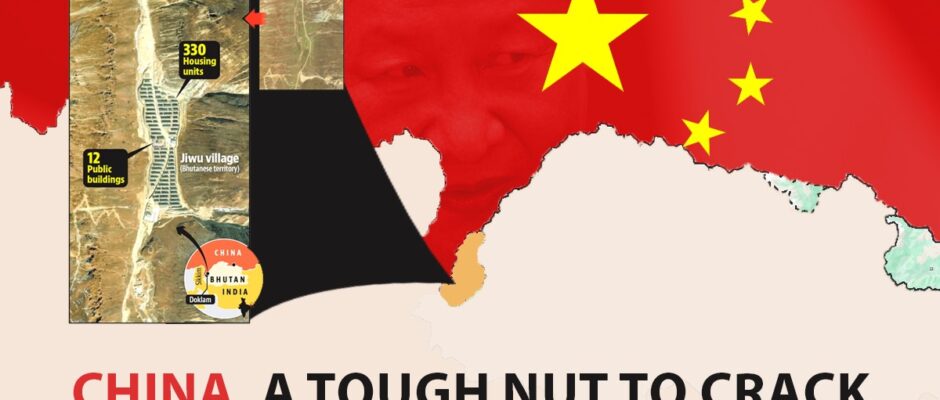
Psychological warfare, media propaganda, narratives coupled with operations beyond diplomatic relations is what China is known for. Is the world listening? Dr Amritpal Kaur Prima Facie, diplomacy is a well-rehearsed hard bargain negotiation among countries to achieve the best possible outcomes for a nation without resorting to crude force. What does not however meet the eye is that it is an incessant process to resolve outstanding issues lurking around the corners, brewing for years before the final settlement, if ever, is achieved. With core interests at the heart of diplomatic deliberations, the high stakes make this complicated dance on eggshells all more crucial. It is assumed that deliberations conducted by diplomats are a standard process with similar training in negotiation processes and the parlance used in discussions. In reality, diplomatic negotiation is a high-voltage tussle with deep and far-reaching consequences. Even more astounding is that it does not end on the negotiation table but runs like an undercurrent. In the era of Globalization or ‘Complex interdependence’ as much as the international community is reality of domestic national life, diplomacy and diplomatic signals become more significant for nations. If diplomatic engagement is mired in psychological games with the intention of one-upmanship, bilateral engagements become complex and if one of the parties is contemporary China, it raises its own share of issues. Conspicuous silence President Xi Jingping maintained when Prime Minister Modi assumed office for historic third consecutive term was marked by world leaders. This silence seems to have sent out an eloquent underlying message. Though Chinese Premier Li Qiang joined top world leaders in congratulating Prime Minister Modi ahead of swearing in on June 9, 2024, President Xi’s silence was ostensibly aimed at mounting psychological pressure on India. Post-second world war, China and its international relations give us glimpse into the country’s thinking on its relations with others including India. Beginning with Zhau Enlai, average Chinese have relentlessly pursued overt and covert ways to achieve its desired bilateral outcomes with an astonishing disregard for international treaties and modus operandi. Indo-Chinese agreement of 1993, intermittent border skirmishes and war (1962) since 1948 reiterates the point that it’s not over, until the last bell rang. Border dispute with India and People’s Liberation Army operations on Indo-Chinese border comes at crucial junctures. Former National Security Advisor Shiv Shankar Menon recounted in his book Choices (2016) that in 2014 when the first Modi government took office and President Xi came to India, PLA engaged in border skirmishes with India. Similarly, during Prime Minister Modi’s visit to China, a similar tactic unfolded. Probable explanation to such acts, according to Menon is to create psychological pressure on the newly elected Indian prime Minister as to who is the sheriff in town. Richard Solomon, former diplomat in US and former Foreign Secretary of India Vijay Gokhale have written respectively about the Chinese style of diplomacy which is remarkably different from diplomacy of democratic countries. Chinese engage in psychological warfare even in diplomacy at various levels. From setting agenda to building narratives, Chinese are adept at controlling the whole process and go beyond closed doors of diplomatic negotiations. One pattern is to engage in crude coercion and use of force while the other is to leverage media to create narratives. Two examples can be cited here, one is that of 1950s when Pt. Jawaharlal Nehru was called the ‘Bourgeoise Imperialist’ by Chinese media. Earlier this month, the state-sponsored Chinese media and related ecosystem described Prime Minister Modi as ‘weakened’ leader. These reports also suggested possible use of counter measures by China if India maintains policy status quo. Why is it that Chinese takes recourse to multi-pronged games in strategic and diplomatic relations with other countries eventually leading to disturbing regional peace and tranquility? Nature of Chinese state perhaps necessitates such behaviour. To begin with, Henry Kissinger in On China argued that since antiquity China has believed in ‘Middle Kingdom’ phenomenon which places the Chinese state over rest of the world and only beneath the heaven. This perceived middle Kingdom phenomenon has percolated to Communist China as well and hence they believe that other countries can only be vassals to the dragon power. There have been suggestions to the effect that Chinese communist expansionists harbor the idea that bilateral relations cannot be between equal sovereigns. These relations should centre on ‘superior’ China and ‘inferior’ other nations. With regards to Bharat, Chinese terminology includes ‘legalized hegemony’ and perceives India as an inferior state given that it does not have a permanent seat in United Nations Security Council. Chinese may have effortlessly used this aspect to tip balance of power in their favour, as former NSA Shiv Shankar Menon calls it.  Former foreign secretary Gokhale argued that Chinese engage in such tactics to keep power equation in their favour. Communist Party of China is the state itself and officials are appointed by the Party and not the state. Hence, their allegiance is with the Party and not the state per se. Menon sums the Chinese position succinctly when he argues that China is a lonely state rising in a crowded neighbourhood with an acute need for regime survival and internal harmony. Hence, its no wonder that being adventurous in foreign relations was to offset domestic attention from key issues. Since China is viewed as a formidable power, there is critical need to find a mutually beneficial bilateral mechanism. But, there’s no letup in tricky Chinese games loaded with psychological operations that have implications for outstanding bilateral issues. China experts, time and again, underscore that if we had to deal with China, understanding its game is more important. Only then can we find favourable outcomes in diplomatic negotiations. Jiang Zemin was famous for saying in English that it takes two to tango and it is true in this case well. For bilateral relations to succeed, it takes two to clap and a possible egalitarian approach in Chinese diplomacy. (Author is Assistant Professor in Political Sciences, Dayal Singh College, Delhi University, New Delhi)

Read More