CIHS – Centre for Integrated and Holistic Studies

Date/Time:

USCIRF 2025 - Distorting India’s Reality

USCIRF 2025: Distorting India’s Reality

The USCIRF time and again spins a one-sided tale cherry-picking facts, sidelining India’s constitutional pluralism, and pushing a loaded narrative that fits their playbook more than ground realities. Pummy M. Pandita The U.S. Commission on International Religious Freedom’s (USCIRF) 2025 India report has once again revealed the commission’s fundamentally flawed methodology, dependence on biased data sources & selection, lack of transparency in evaluating religious freedom, and a one-sided narrative that misrepresents India’s thriving democracy and plural society. By selectively choosing incidents, depending on questionable sources, and willfully avoiding India’s constitutional framework, USCIRF has created a report that is neither objective nor credible. In selectively pointing out incidents in a vacuum and ignoring the broader framework of India’s constitutional protections for all religions, USCIRF goes against its own credibility. Not only does this report misrepresent the situation on the ground, but it also unfairly defames a nation that enshrines the rights of all its citizens. USCIRF has repeatedly refused to provide its sources of data in a manner that meets rigorous journalistic or academic transparency standards. Much of the incidents quoted in the report rely on politically driven NGOs,  lobby groups, and reports from organisations that have a recorded history of ideological bias against India. Reports tend to be based on media reports instead of official government statistics, police records, or independent judicial evaluations. This selective information distorts the actual picture of religious freedom in India. Most of these sources have already been identified as previously misreporting or manipulating facts to fit a specific agenda. The lack of primary research, government interaction, or varied local opinions in the report questions its credibility. India is targeted for scrutiny, yet the USCIRF overlooks or disparages such incidents or worse in other democracies, showing a distinct double standard. The report ignores the emergence of religious extremism among some minority communities, such as instances where religious radicalization put national security at risk or affected communal harmony. It disregards the constitutional protection afforded to minorities in countries like India’s strong judicial protections, affirmative action measures, and full participation of minorities in public life. USCIRF selectively reports on local incidents without context, repeatedly leaving out legal proceedings, counter-reports, and government action taken to respond to grievances. USCIRF consistently misinterprets India’s legal structure, labeling good governance actions like anti-conversion laws and policies regarding citizenship as discriminatory, although they are founded on constitutional provisions. The report also underplays violent extremism, secessionist forces, and foreign interference in Indian internal affairs, selectively labeling state reactions as “persecution” without drawing attention to threats to national security. USCIRF’s record of going after India has followed a general geopolitics design wherein reports have been used to lever diplomatic engagements. The USCIRF has specifically targeted the Citizenship (Amendment) Act 2019 (“2019 CAA”) passed by the Indian Parliament in 2019 and its continued criticism since then reveals an inaccurate understanding of the genesis of the law and the disrespect towards sovereign Indian democratic institutions. CAA is designed to offer refuge to persecuted religious minorities—Hindus, Sikhs, Buddhists, Jains, Parsis, and Christians—from neighboring Islamic states like Pakistan, Afghanistan, and Bangladesh. These minorities have long faced systemic oppression in their home countries. CAA does not affect Indian Muslims, who are in no way disadvantaged by the law. Yet USCIRF frames it as a discriminatory tool, conveniently ignoring that it aims to address religious persecution in neighboring Islamic nations. For good order sake, United States too has a similar Citizenship Act in the form of the Lautenberg Amendment, led by US Senator Frank Lautenberg in 1989-90, which facilitates citizenship to recognized persecuted religious minorities in the former Soviet Union. Iran was added subsequently through the Specter Amendment, that provided refugee status and ultimately citizenship to a group of minorities from three nations.  Why is USCIRF silent on that and not condemned this act also? The commission has also been accused of disproportionately targeting on some nations and ignoring serious religious freedom abuses in many other nations, which puts its motives and geopolitical agendas in question. Its inability to speak out against growing cases of persecution of Hindus, Sikhs, Buddhists, and other minority groups in the neighboring countries where blasphemy laws and institutional discrimination are prevalent. This inconsistency erodes the credibility of the USCIRF and raises questions about whether its reports are motivated by facts or political goals. Suggesting India as a Country of Particular Concern (CPC) is not only factually wrong but also smells of a conscious effort to mislead about India’s religious scenario. India is still one of the most religiously plural and diverse countries, where individuals from all religions are involved in government, business, and public life. However, USCIRF’s failure to recognize this diversity and continued legal protections for religious communities reveals its biased agenda. The report also criticises India’s anti-conversion laws, which are in place to prevent coerced religious conversions, often under the guise of marriage or social coercion. These laws, intended to protect vulnerable individuals from exploitation, have become a focal point of controversy. USCIRF dismisses this as Hindu nationalist propaganda, sidestepping the genuine concerns that prompted these laws. By recommending punitive measures like sanctions and diplomatic pressure against India, USCIRF has gone beyond its mandate and attempts to intrude into the sovereign decisions of a democratic country. These suggestions are not only counterproductive but also demonstrate a basic misunderstanding of India’s democracy and devotion to pluralism. USCIRF Report 2025 is an extremely defective, ideologically charged document that fails objective scrutiny. Its selective ire, methodological shortcomings, and transparency deficiencies make it unsuitable for serious policy discussion. It is an instrument of geopolitical politics, not an objective evaluation of religious freedom. India’s commitment to religious freedom is classified in its Constitution and defended by its democratic institutions. It is essential that any honest evaluation of India is provided based on verifiable data, integrated analysis, and a recognition of India’s pluralistic fabric USCIRF 2025: Distorting India’s Realitysomething the USCIRF report utterly fails to accomplish. USCIRF’s biased reports are not an isolated phenomenon. They fit into a larger pattern

Read More
Inside China's Grey Zone Strategy

Inside China’s Grey Zone Strategy

Rahul Pawa In South China Sea, grey zone tactics unfold with laser-focused intent. Watching the PLA Navy’s manoeuvres or the maritime militia’s presence can, at times, feel like staring at a chessboard whose pieces inch forward one measured square at a time. The sight of special barges looming by the docks in Zhanjiang, China, went unnoticed by many who passed them on their daily commutes. To casual observers, these hulking platforms seemed little more than routine maritime fixtures. But for those with their eyes fixed on the shadows of international geopolitics, these barges signalled something far more ominous: a finely tuned exercise by the People’s Liberation Army (PLA) in what appeared to be over-the-shore logistics drills for a future military landing. In hushed circles in Taipei, Washington, Delhi and capitals across Asia, the question was no longer if China was meticulously preparing itself for conflict, but rather how it used the blurred space between war and peace to move closer to its global aspirations. In recent years, Chinese Communist Party (CCP) has demonstrated a distinct flair for “grey zone” strategies—actions that straddle the threshold between open conflict and the calm of peacetime. This approach is not entirely new; historical powers have long tested their adversaries with salami-slicing tactics, never crossing the bright red line that might spark a full-scale clash. Yet what sets the CCP apart is its calculated synchrony of economic, diplomatic, maritime, and cyber manoeuvres, pushing its objectives in precise increments. In effect, Beijing has mastered the subtlety of wrestling advantage while making it appear that the match has barely begun. In South China Sea, these grey zone tactics unfold with laser-focused intent. Watching the PLA Navy’s manoeuvres or the maritime militia’s presence can, at times, feel like staring at a chessboard whose pieces inch forward one measured square at a time. When disputes arise, the CCP often deploys fishing fleets that function like unofficial patrols, creating friction against neighbours like Vietnam or the Philippines. Although these fishing vessels seem harmless at a glance, their real purpose is to project CCP influence and thwart regional rivals from fully exercising their own sovereignty. Beijing’s “nine-dash line” claims—rejected as baseless by a United Nations Convention on the Law of the Sea (UNCLOS) arbitration panel—illustrate its sweeping claim over nearly the entire South China Sea. Yet China treats that ruling as little more than background noise. It has advanced its position through repeated harassment of Philippine resupply missions, demonstrating how a large naval fleet is not always necessary to assert dominance. Last year, when Philippine efforts to resupply the rusted BRP Sierra Madre near the Second Thomas Shoal were impeded by China’s Coast Guard and maritime militia. An agreement to ease tensions was eventually reached, but China then turned its gaze toward the Scarborough and Sabina Shoals, employing a range of coercive tactics that skirted just below the threshold of outright military force. This is precisely the effectiveness of Beijing’s grey zone philosophy: the CCP can repeatedly test the resolve of its neighbours and the broader international community without triggering a major conflagration. Unchallenged, those incremental gains morph into accepted realities—often reinforced by a parallel campaign of disinformation and cyberattacks that sow confusion and shape public perception. Indeed, the hallmark of the CCP’s grey zone strategy is its convergence with information operations. As the world has become more interconnected, data and narrative management have become invaluable pieces on the geopolitical chessboard. Taiwan’s National Security Bureau reported that Chinese agents circulated 60 percent more false or biased information in 2024 than in the previous year, an alarming trend that hints at a steady intensification of disinformation campaigns. It is, in effect, the other side of the same grey zone coin: while the PLA’s warships push deeper into contested waters, Beijing’s narratives undermine trust in democratic processes, making it that much harder for adversaries to mount a united response. Another front where Beijing flexes its grey zone muscles lies in the economic realm—a domain where “carrots and sticks” often speak louder than gunboats. CCP’s massive market provides an enticing lure for many nations, encouraging them to tread lightly on issues Beijing holds dear. At the same time, the CCP is quick to punish countries that challenge its aims. Witness how trade restrictions, investment blacklists, and targeted boycotts are deployed whenever a state brushes too close to opposing CCP’s territorial ambitions or welcoming dissidents. Even patrolling maritime areas in dispute can shut down foreign economic opportunities: by swarming neighbourly waters with large fishing fleets, CCP can intimidate local companies into abandoning lucrative projects such as oil and gas extraction. However, nowhere is the CCP’s grey zone approach more fraught with global tension than around Taiwan. For decades, Beijing has asserted that the island is a “breakaway province”, destined, eventually, for reunification—by force if necessary. Yet mounting a full-scale invasion comes with tremendous risk, both militarily and politically. Thus, CPC’s cross-strait strategy frequently focuses on intimidation and incremental pressure. Having declared its own Air Defense Identification Zone (ADIZ) over much of the East China Sea, the PLA has probed Taiwanese airspace with persistent sorties, testing and teasing the boundaries. Over the course of 2024, the PLA Navy stationed warships near Taiwan’s ADIZ, and by December that year, it conducted large-scale exercises with aviation and naval forces in an elaborate show of force. All of it served dual purposes: normalising frequent PLA military appearances in the region, and demonstrating that Taipei’s backers—chief among them the United States—may not muster the political will to intervene every time. For the United States and its allies, especially Japan, the grey zone creates a double bind. Acting too robustly against each provocation risks an escalation that no one wants, while complacency allows Beijing’s inroads to solidify into indisputable facts on the ground—or, in this case, at sea. The art of Beijing’s game lies in how it calibrates pressure just below that flashpoint. By the time foreign powers muster the will to intervene, the CCP has typically moved on to

Read More
Demolishing the Dawn’s Deception

Demolishing Dawn’s Deception

Rohan Giri Dawn.com, the Pakistani news outlet that hosts Naqvi’s fabrications, has a long history of anti-Indian prejudice, regularly publishing articles that undermine Indian sovereignty and national interests. While it claims to support democracy, it rarely, if ever, scrutinizes Pakistan’s establishment with the same zeal as it does India. The hypocrisy is apparent. It is a journal that thrives on manufactured frustration with India while deliberately avoiding the dictatorial reality of its country. Jawed Naqvi’s most recent piece in The Dawn, “India’s left-right centenary,” is another example of selective indignation and intellectual dishonesty. It is deliberately written to support the myth that Rashtriya Swayamsevak Sangh (RSS) is the face of fascism in India. In his distinctive manner, Naqvi weaves together hypocritical historical allusions, ideological prejudices, and plain lies to create a story that has been disproven time and time again but is still promoted by those who are unwilling to confront except facts. In addition to criticizing RSS, his piece highlights the larger intellectual squalor that plagues segments of the Indian left and its supporters abroad. Exposing his distortions is not only necessary but also morally required since, if allowed unchecked, lying takes on the appearance of reality. Naqvi’s argument’s basic tenet is a sloppy and false analogy between RSS and European fascism. It reveals a basic misinterpretation—possibly deliberate—of fascism as well as the intellectual and historical foundations of RSS. RSS has never aspired to be an authoritarian entity, in contrast to Hitler’s racial superiority or Mussolini’s corporatist state. It continued to be a sociocultural movement dedicated to self-reliance, national cohesion, and a continuation of civilization. The alleged similarities to European fascism are merely rhetorical instruments employed by people who wish to discredit the movement without actually participating in its activities. The irrationality of this accusation is further demonstrated by the fact that RSS has never supported racial supremacy, a one-party system, or a dictatorship—all of which are fundamental elements of fascism. Decentralization of authority, community-driven governance, and cultural revival—values that are directly in conflict with the core of fascist ideology—have, if anything, always been at the heart of RSS’s priorities. Naqvi’s assertion that Hitler and Mussolini were the inspiration for RSS is a well-worn fallacy that has been repeatedly disproved but is still brought up by individuals with political frustrations. The accusations are the result of selectively misinterpreting words made by specific people while disregarding the broader context. Distorting historical facts to suit a convenient political narrative is the height of intellectual dishonesty. Unlike the Communist parties, which notoriously followed the Soviet line even at the expense of national interests, the RSS has no history of working with colonial or imperialist regimes. In 1942, the Communists fiercely opposed the Quit India Movement, calling it “subversive,” at the direction of their bosses in Beijing and Moscow. They weakened the quest for independence, whereas RSS struggled diligently at the grassroots level to foster cultural awareness and a sense of pride in the country. If the study of treachery is the goal, then the Communist parties—not RSS—need to be examined. Communists teaching about nationalism is blatantly ironic. Communists were involved in violent uprisings, such as the Telangana Rebellion, which aimed to impose a Soviet-style revolution in India, while the RSS was working to unite the nation. Naqvi romanticizes this uprising as a noble peasant battle, but in reality, it was a violent and terrifying war. Under the guise of “revolution,” the Communist objective has always been to sow disarray, erode democratic institutions, and open the door for authoritarian control. It should come as no surprise that democracy has always suffered the most when Communists have taken control, whether in North Korea, the USSR, or Maoist China. The people’s rejection of their outdated, foreign-imposed ideology is what is causing their electoral downfall in India, not any alleged “fascist” repression. Naqvi’s attempts to demonize the RSS and cover up the wrongdoings of Indian Communists are blatant examples of selective amnesia. The CPI’s record is marked by obvious blemishes, including its ideological subservience to foreign powers, its unwillingness to support the 1962 war effort against China, and its vacillations on important national challenges. On the other hand, RSS has supported Indian army in needs, increased disaster relief, and supported national defense. These are not theoretical claims; they are demonstrable realities. Naqvi, however, avoids them out of convenience since they contradict his rhetoric. It is a flagrant fabrication to say that RSS and its inspired individuals were “apologists for colonialism.” The Communist leadership frequently undermined nationalist initiatives and remained ambivalent about India’s independence. While RSS karyakartas were actively involved in opposing British rule. The goal of the RSS was to create a robust, independent society that could fend off colonial domination on all fronts—politically, culturally, and economically. The Communist concern with quick and frequently violent upheavals was always in conflict with these long-term objectives. If we look at Jawed Naqvi explicitly, his history of anti-Hindu and anti-Indian hatred is well known. His publications frequently echo the talking points of Pakistan’s official narratives, raising doubts about his integrity, ethics and journalism. His previous pieces, such as “Hindutva Terrorism: Another View” and “The Crooked Timber of Modi’s India,” all follow the same formula: they show Muslims as unforgiving victims, Hindus as aggressors, and India as a country on the verge of collapse. The outrage is blatantly selective. He highlights every perceived or actual weakness in India’s democracy, but he says nothing about Pakistan’s deep state, its persecution of minorities, or its decline into political and economic catastrophe. Naqvi’s most recent article is not a rare occurrence; rather, it is a component of a larger trend—a network of authors and journals that want to discredit India’s revival of civilization by calling it “fascist.” A typical example of projection is this one. Extremist Islamism and Communism, I call that Islamo-leftist, the exact ideologies Naqvi espouses, have committed some of the most horrific crimes in recorded history. More than 100 million people have died as a result of communism worldwide, and extremist Islamist beliefs have sunk entire

Read More
The Polis Project Exposed - A Web of Bias, Misinformation, and Deception

The Polis Project Exposed: A Web of Bias, Misinformation, and Deception

Rohan Giri The Polis Project bills itself as a journalism and research group, but its activities betray a much darker purpose. Instead of being an impartial organisation dedicated to the truth, it routinely targets Hindu organisations and India, spreading misleading information while omitting the realities of religious persecution and intricate geopolitics. Under its cover of human rights, it serves as a platform for anti-India propaganda, twisting the truth and influencing opinions around the world to support its political agenda. Another illustration of The Polis Project’s continuous effort to discredit Hindu organisations and harm India’s reputation abroad is the recent propaganda report it released titled “Transnational Funding in Hindu Supremacist Movements”. This purported report is a politically driven attempt to paint Hindu institutions as extremist fronts rather than an unbiased analysis of financial networks.  With an aim to provide the impression that there is an organised supremacist movement, where none actually exists, the paper has selectively omitted important information, using inflammatory language, and cherry-picking statistics. It vilifies organisations involved in humanitarian, educational, and cultural preservation efforts while willfully ignoring the actual threats posed by radical groups operating in South Asia and abroad. There is a certain pattern to the Polis Project’s operations. While ignoring grave human rights abuses in other regions of the world, it unfairly criticises India. Its obsession to depict the current Indian government as authoritarian, using hyperbolic phrases like “genocide” and “fascism”, is to stir up indignation and sway global opinion. By creating a biased narrative that ignores the complexity of religious conflicts and communal tensions in India, their reporting on sociopolitical events distorts reality. While ignoring the persecution of Hindus in Bangladesh, Pakistan, and Kashmir, it creates the impression that India is an oppressive state by publicising certain occurrences and interpreting them with a preconceived ideological framework. Deep state funding, particularly those supported by George Soros, is the source of the Polis Project rather than an independent organisation. Its creator, Suchitra Vijayan, has a history of endorsing radical groups while posing as an activist. A cursory glance at her social media activity shows that she publicly supports people who have been charged with inciting violence, such as Umar Khalid, who was detained for his role in the Delhi riots. She also offered assistance to Irfan Mehraj, a “journalist,” who was detained in connection with a terror financing investigation in 2023. Mehraj was identified by the National Investigation Agency (NIA) as a close associate of Khurram Parvez, a well-known anti-Indian activist and a prominent member of the Jammu and Kashmir Coalition of Civil Societies (JKCCS), a group connected to dubious financial dealings that aid separatist elements. The Polis Project’s operating structure further demonstrates foreign influence over it. As per Disinfo Lab’s claim, the administrator of its Facebook page is headquartered in Pakistan, which raises severe questions regarding its legitimacy and motivation. Although its propaganda efforts are focused on India, its digital presence indicates external management, raising the prospect of planned influence tactics aimed against India’s stability. This aligns with broader international efforts to amplify divisive narratives against the country. Even outside of its digital activities, The Polis Project has close connections to groups that have openly supported separatist and Islamist causes. The Indian American Muslim Council (IAMC), an organisation well-known for advocating against India on global forums, regularly features in its events. Despite IAMC’s acknowledged affiliations with extremist organisations, The Polis Project finds common ground with them, confirming that it is far from being an unbiased research organisation. Its unclear funding structure is another issue. The Polis Project says it is transparent, although it hasn’t given a detailed account of where its funding comes from. Its closed financial sources raise serious concerns, and as a nonprofit organisation with headquarters in the United States, it is nevertheless vulnerable to outside interference. Who provides the funding for it? What outside parties gain from its persistent anti-Indian propaganda campaign? The ambiguity surrounding these issues suggests a conscious attempt to hide the foreign entities that might be controlling its operations. Besides targeting Hindus in India, The Polis Project has also reached out to the Hindu diaspora around the world. It attempts to damage the standing of charitable endeavours carried out by Hindu communities around the world by unjustly associating Hindu cultural organisations and charities with a purported supremacist purpose. Claims that organisations like Sewa International, Ekal Vidyalaya Foundation, and Hindu Swayamsevak Sangh are political fronts are unfounded, despite the fact that they have played important roles in social service, education, and disaster relief. Discrediting the Hindu diaspora and stifling its contributions to social advancement are deliberate goals. The Polis Project’s utter silence over the religious persecution of Hindus is another example of its duplicity. It vigorously promotes stories of state-led persecution of minorities in India, but it ignores the violent attacks on Hindu communities around the world, the systematic discrimination and persecution of Hindus in Bangladesh and Pakistan, and ethnic cleansing in Kashmir. Its selective activism reveals its lack of sincere support for human rights and demonstrates that its goals are not to promote justice but to pursue a political agenda. India’s sovereignty is being undermined globally by The Polis Project, who continuously depicts India as an authoritarian state. It is in line with larger efforts to destabilise India as it presents internal policies as dictatorial, supports separatist language, and purposefully leaves out important background information. This cannot merely be the result of a journalistic error, but a well calculated move to damage India’s reputation internationally. In an effort to undermine India’s position as a rising global force and sow internal strife, it manipulates narratives for the benefit of outside interests. With a blatant ideological agenda, the Polis Project is not an impartial monitor. Its biased narratives, foreign affiliations, selective activism, and untransparent funding make it clear that it is an anti-India propaganda tool. It is crucial to refute its misinformation with factual arguments and stop its lies from becoming widely accepted in global discourse. Organisations with a stake in dividing

Read More
Don’t Mess Up with Bharat!

Don’t Mess Up with Bharat!

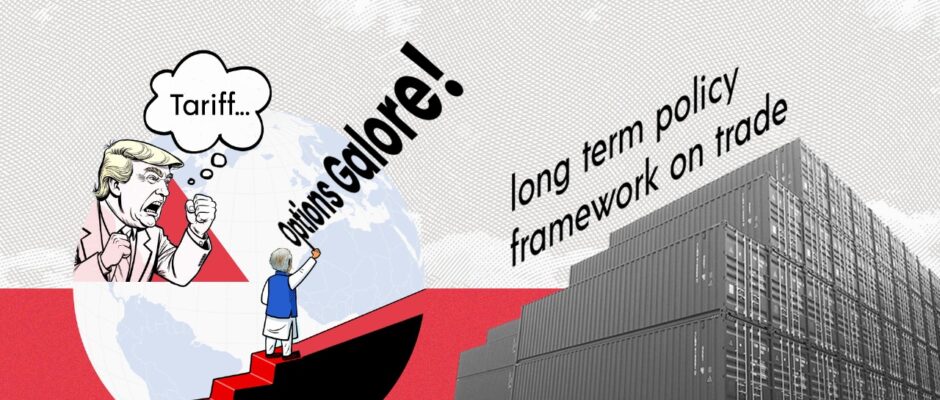
Restructuring US industry to make its products competitive must be President Trump’s primacy and not wage tariff wars with strategic allies. K.A.Badarinath One of the most searched on internet these days is tariffs. After US President Donald J Trump talked round the corner, stakeholders across geographies have begun to make sense of these tariff lines. There’s, however, no reason why Bharat should give in to demands of quixotic President Trump who’s been holding forth with media twenty four by seven. President Trump also seems to be in tearing hurry to make early impact as head of Republican White House. Hence, he set the April 2 deadline to impose massive tariffs on Bharat’s export of products and services. Tariffs is a long story beginning with Donald Trump’s first term four years back when he went ahead and imposed tariffs on steel products, pharmaceuticals etc. There’s definitely an imbalance in trade. Its advantage Bharat as US $ has a deficit of US $ 45.6 billion on bilateral trade worth US $ 191 billion. And, India has reportedly made some proposals to rework the economic, trade and investment relations between the largest and oldest democracies globally. One way could be to enhance defence purchases worth US $ 20 billion by Bharat. Another possibility is to increase energy products including LNG and other hydrocarbon products. But, US may not be able to seize the window of opportunity opened by Bharat during bilateral engagement. Firstly, US defence establishment and deep state may not facilitate sale of F 35 fighter aircraft to Bharat.  A big section of US set up is wary of even floating a joint venture to jointly produce F-35 aircraft with a non-NATO strategic ally like Bharat. This joint venture possibly based out of Bhagyanagar aka Hyderabad need not limit itself to catering to Indian defence forces. It can become hub for exports to other destinations. Stringent protocols and agreement on who gets access to such advanced fighter jets could have been put in the blue print. Story of energy purchases is more or less similar. Would US be able to match or provide equivalent prices offered by Russia on crude, refined or liquefied natural gas products? Either spot or long term contracts, US energy products may not be cost competitive vis-à-vis the middle-east or Russian sources. For an expanding economic force like Bharat, every dollar paid per barrel translates to US $ one billion higher import bill. Insurance and freight differentials are again too huge for Bharat to enter into long term contracts with US. Reciprocal tariffs from April 2 have been proposed by President Trump who thinks that the Bharat is fleecing American people. As per World Trade Organization data, this may not be altogether true. As against an aggregate US tariff of 2,2 per cent, Bharat levies 12 per cent that’s in sync with WTO norms under differential tariff regime. President Trump may have a point relating to individual products like automobiles on which tariffs were brought down by Bharat to 70 per cent from 125 per cent on high end luxury cars. On motor cycles, the applicable tariff line is set at 40 per cent as against 50 per cent earlier. Threat to impose 25 per cent tariff on all Indian goods may not work for US except for addressing political constituency of Donald Trump or for optics. Indian goods constitute just 2.7 per cent of all US imports and do not even figure in top ten exporting countries to America. There’s no reason for mature friends like US and Bharat to haggle over manageable trade imbalance. Instead, working on the big picture like more than doubling the bilateral trade to US $ 500 billion by 2030 and clinching a ‘credible and sustainable’ trade deal in next one year is what’s more significant. Simultaneously, US may have to rework its manufacturing and supply chains to be cost and quality competitive instead of rampaging in over pitched verbal duel with friends and foes alike. Re-inventing  American manufacturing base to align with new age cut throat competition is something that Trump may have to work on beginning with massive restructuring of its industry. US and Trump may not realize this ‘Make America Great Again’ dream unless some hard work is put into it. America may have to expand its bouquet of products and services that can compete in the global market with new forces on the block. Trump’s complaint is that subsidies, non-tariff barriers and VAT system in Bharat hinder American exports. Well, his policy hawks may have conveniently forgotten that Value Added Tax (VAT) regime has come to an end several years back and it’s been subsumed into Goods and Services Tax (GST). On subsidies, US have a very weak case. Can Donald Trump’s advisors prove that America does not subsidise its industry? In Bharat, food, fertilizers and oil products constituted a large part of subsidy bill till a couple of years ago. Retail petroleum products prices have virtually been aligned with market demand and supply chain. There’s no depth in the argument that Bharat subsidises its petroleum products. It’s an emphatic no. Till a couple of years ago, kerosene was the only big subsidized oil product. After having taken piped gas and through cylinders to virtually every household, there’s hardly a big demand for kerosene. Food subsidy or free food grains to the vulnerable sectors is definitely a reality in Bharat. And, its well within its right to fight poverty and hunger through the Prime Minister’s anna yojana. In fertilizers, Bharat is more or less sufficient on urea while DAP and complex fertilizers subsidy is on the slide each year. Minimal subsidy available on a couple fertilizers is support given to farmers for ensuring enough food grains output for 1.4 billion and ward off imports. On non-tariff barriers, US are yet to come up with a list of such restrictions put in place by Bharat. If restricted access to Bharat’s agricultural markets is an issue, US will have

Read More
Prime Minister Narendra Modi’s USA Visit

Prime Minister Narendra Modi’s USA Visit

Prime Minister Narendra Modi’s visit to the United States in February 2025 represents a significant milestone in the evolution of the India-U.S. relationship. This visit was not only a display of high-level diplomacy but also a demonstration of both nations’ commitment to addressing contemporary challenges while harnessing emerging opportunities in multiple domains. With a focus on strategic defense, innovative technologies, economic reforms, and multilateral cooperation, the visit set the stage for a renewed and expansive partnership between the two democracies. This report outlines the key engagements, strategic dialogues, and transformative initiatives that were announced during the visit. It aims to provide a comprehensive overview of the discussions and agreements reached, highlighting the broad range of issues that are set to shape the future of bilateral relations.

Read More
PM Modi and Trump Forge a New Dawn in U.S.-India Relations

PM Modi and Trump Forge a New Dawn in U.S.-India Relations

Prime Minister Modi’s visit to the United States not only deepened the strategic alliance between the two nations but also set in motion a cascade of initiatives that promise to reshape the geopolitical landscape for decades to come. Rahul Pawa In a dazzling display of strategic vision and personal rapport, Prime Minister Narendra Modi’s recent visit to the United States in February 2025 has set the stage for an era of renewed cooperation and transformative partnerships between two of the world’s most influential democracies. Against the backdrop of an increasingly complex global landscape, the visit showcased a masterclass in diplomacy, marked by high-level meetings, landmark agreements, and an inspiring confluence of ideas that spanned defence, trade, technology, energy, and cultural exchange. At the heart of this historic journey was the much-anticipated meeting between Prime Minister Modi and President Donald J. Trump in Washington, D.C. In an atmosphere that was as congenial as it was consequential, the two leaders not only reaffirmed the bedrock of the India-U.S. Comprehensive Global Strategic Partnership but also demonstrated a genuine personal rapport that resonated far beyond policy papers and strategic memos. Their conversation, punctuated by mutual admiration and forward-looking optimism, culminated in the launch of the ambitious U.S.-India COMPACT for the 21st Century—a transformative roadmap designed to deliver tangible results across defence, commerce, and technology within the year. In an era defined by intricate challenges—from rebalancing global tariffs and tackling illegal immigration to addressing the ramifications of the Russia-Ukraine issue—Modi’s discussions with President Trump were both candid and constructive. The leaders deliberated on the urgent need to streamline tariff structures to foster a more equitable trading relationship. They also exchanged views on sensitive judicial issues, such as the extradition of Tahawwur Rana, recognising that robust legal cooperation is pivotal in the fight against terrorism. This frank dialogue underscored their shared commitment to maintaining a rules-based international order, a cornerstone for global stability. A standout moment during the visit was Prime Minister Modi’s engaging discussion with Elon Musk, who, in his dual role as the head of the U.S. Department of Government Efficiency (DOGE) and CEO of Tesla, symbolised the seamless fusion of public policy and private innovation. In an exchange that was as energetic as it was visionary, Modi and Musk explored the boundless possibilities of emerging technologies—from space exploration and artificial intelligence to sustainable development. Musk’s presence, accentuated by the warmth of his family’s company, added a distinctly personal dimension to the dialogue, reinforcing the belief that when innovation is nurtured, boundaries dissolve and progress becomes inevitable. The visit was also a testament to the two nations unyielding commitment to security. In his meeting with U.S. National Security Advisor Michael Waltz, Prime Minister Modi delved into discussions centred on strategic technologies and defence industrial cooperation. The dialogue, which included pivotal discussions on civil nuclear energy and the deployment of small modular reactors, laid the groundwork for an enduring partnership aimed at fortifying both nations’ security frameworks. Equally significant was the meeting with U.S. Director of National Intelligence Tulsi Gabbard, where the emphasis was placed on bolstering intelligence sharing, particularly in the realms of counterterrorism and cybersecurity. These high-level engagements highlighted a shared understanding: that in today’s volatile global environment, the integration of traditional and technological security measures is indispensable. One of the most consequential outcomes of the visit was the announcement of a new ten-year major defence partnership framework. This comprehensive agreement is poised to not only enhance the interoperability of the two nations’ armed forces through expanded defence sales and co-production initiatives but also to foster the development of cutting-edge autonomous systems via the newly established Autonomous Systems Industry Alliance (ASIA). Such initiatives are testament to the strategic foresight of both nations, ensuring they remain at the vanguard of modern warfare and intelligence-sharing capabilities. In parallel, enhanced military collaboration was underscored by plans for expanded joint exercises such as the “Tiger Triumph” tri-service exercise. This commitment to operational readiness and mutual trust stands as a bulwark against both conventional and unconventional threats, ensuring that the armed forces of India and the United States are ever-prepared to respond to emerging global challenges. On the economic front, the visit heralded a bold new chapter with the introduction of “Mission 500”—an ambitious initiative aiming to double bilateral trade to $500 billion by 2030. This visionary target is complemented by ongoing negotiations for a comprehensive multi-sector Bilateral Trade Agreement, expected to streamline trade practices and dismantle barriers to market access. Modi’s discussions emphasised the importance of greenfield investments and regulatory reforms designed to create an enabling environment for business expansion, ensuring that the economic benefits of the strengthened partnership are widely shared. Energy security, a linchpin of national stability, featured prominently in the agenda. The U.S.-India Energy Security Partnership was designed to guarantee reliable, sustainable, and affordable energy supplies through joint initiatives in oil, gas, and liquefied natural gas (LNG). Complementing this was the reaffirmation of the U.S.-India 123 Civil Nuclear Agreement, aimed at advancing civil nuclear cooperation through the development of U.S.-designed reactors in India. Special emphasis was placed on the development of small modular reactors—an innovation set to revolutionise energy generation by being both cost-effective and environmentally sustainable. Perhaps one of the most forward-looking initiatives announced was the U.S.-India TRUST (Transforming the Relationship Utilizing Strategic Technology) initiative. This comprehensive programme is poised to catalyse innovation by fostering collaboration among governments, academia, and the private sector in fields as diverse as artificial intelligence, semiconductors, and quantum computing. In tandem, the INDUS Innovation Bridge aims to bolster industry–academic partnerships and create secure, trusted supply chains for vital technological components, thereby enhancing both nations’ self-reliance and resilience in an increasingly interconnected global economy. The discussion also extended to strategic mineral recovery and civil space cooperation. Recognising the critical role of raw materials in technological advancement, efforts to accelerate the recovery of essential minerals like lithium and cobalt were highlighted. Joint space projects, including a NASA-ISRO collaboration, are poised to propel both nations into a leadership role in

Read More
PM Modi Leads India’s Global AI Charge

PM Modi Leads India’s Global AI Charge

Rahul Pawa When the next AI Summit convenes, it will be on Indian soil, in a country that is scripting its own AI destiny one built on access, equity, and innovation. In the heart of Paris, under the ornate ceilings of the Grand Palais, the world witnessed a pivotal moment in technological history. The AI Action Summit, co-chaired by French President Emmanuel Macron and Indian Prime Minister Narendra Modi, convened global leaders, tech magnates, and policymakers to chart the future of artificial intelligence (AI). The two-day summit, held against the backdrop of rapid technological advancements, became a stage where India positioned itself not just as a participant but as a formidable force in the global AI ecosystem. Prime Minister Modi, in his opening address, eloquently stated, “We are at the dawn of the AI age, where this technology is fast writing the code for humanity and reshaping our polity, economy, security, and society.” He emphasised the unparalleled impact of AI, urging collective global efforts to establish governance frameworks that uphold shared values, address inherent risks, and build trust among nations. Governance, he asserted, was not merely about risk management but about fostering an environment where innovation could thrive, ensuring AI’s benefits reach all, particularly the so called “Global South”. As the summit unfolded, world leaders laid out their stakes in the AI race. French President Emmanuel Macron made a bold statement, unveiling a €109 billion investment in France’s AI sector. With characteristic flair, he highlighted France’s clean energy advantage, stating, “Here, there is no need to drill. It’s plug, baby, plug.” His words highlighted the urgency of aligning AI innovation with sustainable infrastructure, a challenge that nations around the world are grappling with. Meanwhile, U.S. Vice President JD Vance struck a different tone, advocating a laissez-faire approach to AI development. He warned against overregulation, suggesting that excessive oversight could stifle innovation. “We must allow AI to evolve freely, driven by market forces rather than bureaucratic constraints,” he remarked, in sharp contrast to Europe’s push for tighter AI governance. The European Commission’s President Ursula von der Leyen, however, took a measured stance, emphasizing the need for responsible AI development. “AI must be an enabler, not a disruptor. We must strike the right balance between innovation and ethics, ensuring technology serves humanity, not the other way around,” she stated, reinforcing the bloc’s commitment to structured AI oversight. Amid these competing visions, it was Modi’s announcement that India would host the next AI Summit that sent a resounding message. India, he declared, was not content with being a consumer of AI but was determined to be a key architect of its future. With its vast population, diverse linguistic landscape, and thriving tech ecosystem, India offered a unique testing ground for AI models that could be scaled globally. The timing of Modi’s announcement was strategic. Just last year, the Indian Cabinet had approved an ambitious ₹10,300 crore outlay for the IndiaAI Mission, a sweeping initiative designed to cement the country’s position as a global AI powerhouse. This mission, spanning the next five years, aims to build a robust AI infrastructure, develop indigenous AI models, and foster innovation through public-private partnerships. A key pillar of this initiative is the IndiaAI Compute Capacity, a scalable infrastructure deploying over 10,000 Graphics Processing Units (GPUs) to power AI research and applications. India’s AI ambitions extend beyond infrastructure. The IndiaAI Innovation Centre (IAIC) is set to become a hub for cutting-edge AI research, focusing on developing Large Language Models (LLMs) tailored to India’s linguistic multiplicity. The initiative will also enhance the IndiaAI Datasets Platform, ensuring access to high-quality, bias-free datasets critical for developing fair and accurate AI systems. As Modi took the stage once again to discuss the ethical challenges of AI, his message was clear—AI must be transparent, inclusive, and free from biases that perpetuate social inequalities. “We must build quality data sets, free from biases. We must democratise technology and create people-centric applications. We must address concerns related to cybersecurity, disinformation, and deep fakes. And we must also ensure that technology is rooted in local ecosystems for it to be effective and useful,” he emphasised. Bias in AI, he warned, was one of the most pressing concerns of the modern era. From image recognition systems that favour Western-centric depictions to healthcare AI models that perform poorly on non-white populations, the risks were vast. “Ask AI to generate an image of a person writing with their left hand, and it is likely to depict a right-handed writer instead, because right-handed examples dominate its training data,” he explained, offering a simple yet profound example of how deeply embedded biases can shape AI’s outputs. The urgency of ethical AI governance was emphasised by the presence of Chinese Vice Premier Zhang Guoqing, a stark reminder of the geopolitical stakes in AI supremacy. China’s aggressive AI push, underpinned by vast data pools and state-controlled development, has raised concerns among Western nations about the implications of an AI arms race. In contrast, India positioned itself as a neutral player—advocating for open-source AI models, transparency, and global cooperation to ensure AI serves humanity at large. As the summit concluded, a new global AI landscape had begun to take shape—one where India was no longer on the periphery but at the forefront of shaping policies, driving innovation, and ensuring ethical governance. When the next AI Summit convenes, it will be on Indian soil, in a country that is scripting its own AI destiny—one built on access, equity, and innovation. In the words of Prime Minister Modi, “The future of AI must be inclusive, just as the future of humanity must be inclusive. Let us build it together.” (Author is Research Director at Centre for Integrated and Holistic Studies, New Delhi based non-partisan think-tank)

Read More
India, Japan, and Buddha

India, Japan, and Buddha

Dr. Jay Prakash Yadav Japan’s National Day embodies a legacy shaped by cultural wisdom and strategic foresight. Since Buddhism’s arrival from India in 552 AD, Japan has integrated its principles into governance. The history of cultural friendship between India and Japan dates to AD 552, the time when Japan was introduced to Buddhism. It was the time when Japan began to drink from the Indian spring of culture, sharing the Buddhist ideals of wisdom and compassion, faith and sacrifice, purity and enlightenment. India resulted in ushering in of a new era. Since then, Buddhism has remained the core and culmination of our friendship and will continue for generations to come. Japan drew its first constitution based on the Buddhist principles of Panchasila, Triratna- Buddha, Dharma and Sangha thus gave a humanized face to the administrative system in Japan. India and Japan have a unique relationship devoid of ideological, cultural, or geographical disagreements. It is distinct and exudes warmth from giving deeds and feelings of support for one another in difficult times. Japanese culture and thinking have been influenced by Indian culture, which has been filtered through Buddhism. This is precisely why Japanese people feel very close to India. A global vision of peace, security, and shared prosperity founded on sustainable development is now shared by Japan and India. The foundation of the two nations’ international cooperation is their shared democratic principles and dedication to pluralism, human rights, open society, and the rule of law. A wide convergence of India and Japan’s long-term political, economic, and strategic interests, aspirations, objectives, and concerns can be seen in their worldwide relationship. Japan and India see each other as partners who can and should respond to regional and global issues in a way that is consistent with their global cooperation. Thus, India’s strength, prosperity, and vibrancy are beneficial to Japan, and vice versa. It has been determined to strengthen the strategic focus of Japan-India’s global collaboration in light of the given circumstances and the state of the world. With a shared interest in and complementary roles in furthering global peace and equitable development as well as the security, stability, and prosperity of Asia, India and Japan are peace partners. In April 2005, during the then-Japanese Prime Minister Junichiro Koizumi’s visit, it was decided that the two nations would deepen their cooperation and work toward a comprehensive and all-encompassing development of their bilateral relations, with a specific and pressing emphasis on bolstering economic ties by making the most of their economies’ potential and current complementarities. It was determined that both nations will work to establish stronger communication and cooperation in order to safeguard peace, stability, and prosperity in Asia; advance democracy and development; and investigate a new framework for tighter regional cooperation in Asia. Taking advantage of and expanding upon existing strategic convergences, two nations also decided to increase collaboration in a variety of fields, including energy, disarmament, non-proliferation, security, and the environment. In the context of globalization and the growing concern over the use of military power for achieving foreign policy objectives, the importance of soft power has increased considerably, and Buddhism offers many advantages. Buddhism has international appeal and is highly conducive to spreading among all nations, cultures, and civilizations because of its core teachings, which include equality, non-violence, and its dialogical approach. Furthermore, there is no more effective soft power tool for Asian nations that share a Buddhist spirituality. Buddhism has played a significant role in Japanese culture and religion for over 1500 years, despite its foreign appearance. It is currently Japan’s soft power diplomacy’s most enduring tenet. Through several private and government agencies, Japan has been from time to time at the forefront in restoring the Buddhist relics, developing the major Buddhist pilgrim sites in various countries including India. Japan has thus rendered a great service to Buddhism and the land of its birth by rediscovering, reclaiming, and keeping alive the ‘wonder that was India. India has now woken up and is using Buddhism as the focal point of its soft-power campaign throughout Asia to highlight its strong Buddhist credentials. During the past one-decade, Indian policy-makers are making conscious efforts to utilize its allure for fostering deeper engagement with Asian countries – especially in the east and southeast, as part of its “Act East” policy. This involves not just sprucing up and showcasing Buddhist sacred sites and monuments, but also establishing people-to-people contacts and promoting cultural exchanges via tourism. (Author is Assistant professor at Dr. B.R. Ambedkar University of social sciences, Mhow, Madhya Pradesh and Scholar of Buddhist Studies.)

Read More
USAID in India - A Subversive Influence

USAID in India: A Subversive Influence

The United States Agency for International Development (USAID) was established in 1961 during the Cold War, ostensibly to provide humanitarian aid and foster economic development. However, over the decades, it has evolved into a tool of American geopolitical manoeuvring, often acting against the very interests of the nations it claims to help. While USAID publicly promotes democracy, economic growth, and stability, its interventions have repeatedly served as instruments of subversion, funding extremist organizations, undermining local governance structures, and advancing ideologically driven agendas that disrupt sovereign nations. While USAID has worked extensively with national governments to implement development programs, it has often bypassed official state mechanisms, choosing instead to fund non-governmental organizations (NGOs) that operate with limited oversight. This approach has created parallel administrative structures, leading to dependency and weakened governance in several countries. Governments in Asia, Africa, and Latin America have repeatedly raised concerns over USAID’s influence, with some nations outright expelling the agency due to allegations of political interference and covert destabilization efforts.

Read More