CIHS – Centre for Integrated and Holistic Studies

Date/Time:

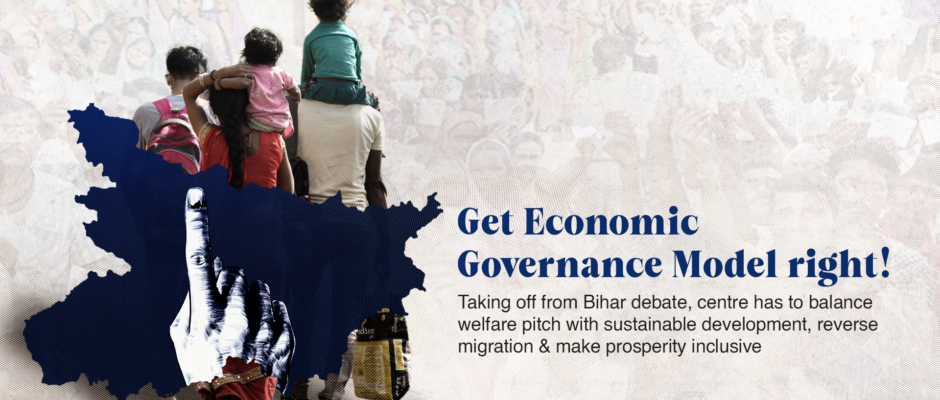
Get Economic Governance Model right!

Taking off from Bihar debate, centre has to balance welfare pitch with sustainable development, reverse migration & make prosperity inclusive K.A. Badarinath Two simultaneous developments have had happened. Both these, though unconnected, have a linkage of sorts. Our most vibrant state, Bihar has gone to polls and a new government will be in place few days from now. On the other end, finance minister Nirmala Sitharaman has begun a mammoth exercise to present her next federal budget on February 1, 2026. One could be wondering as to what’s the linkage between the two albeit even indirectly. This budget will have to put together a new model for socio-economic development taking on board political freebies that are promised in state legislative assembly elections or Lok Sabha polls. Freebies, Revdies & Social welfare Not many socio-economic analysts or thinkers would support the idea of a welfare state in a globally inter-connected world of markets, investments and trade that’s fiercely competitive. Ahead of state elections, Nitish Kumar led BJP – JDU alliance with splinter parties in tow announced two big projects. Through Mukhya Mantri Mahila Rojgar Yojana (MMRY), Rs 10,000 was given to each of 1.5 crore women through direct benefits transfer (DBT). About 1.1 crore elderly women, widows and disabled were given enhanced pension of Rs 1100 from earlier Rs 400 per month. The two schemes alone added an extra outgo of Rs 14240 crore that constitute about six per cent of total revenue expenses of Rs 252,000 crore for 2025-26. Over and above, BJP – JDU led National Democratic Alliance has promised free power, water supply, one crore jobs, higher support to farmers etc in its bid to return with a thumping mandate. Some bracket these freebies as tools for socio-economic empowerment while others call them ‘Revdis’ or vote doles’, the sweet snack made out of sesame seeds and jiggery. Well, the debate is not about direct benefit transfers which have been refined by Narendra Modi government as surest way of reaching benefits to the needy, eliminate inefficiency and pilferage of funds. Larger question is what’s the sustainable model of economic governance that Bharat should adopt to expand, deepen her growth story and spread prosperity? Cash doles can at best act as booster dose for economic empowerment on temporary basis but unsustainable in the long run as experienced in several states including Karnataka, Himachal Pradesh and now Madhya Pradesh and Maharastra. Skilling and competencies, creating work opportunities for goods and services, low-cost credit support to making large chunk capital investments that create jobs may be sustainable. No two economists agree on either of the models for development. A blend of these two approaches may be workable in the medium to long term. Taking Bihar as latest to join the bandwagon of states on the cusp of economic development, Finance Minister Nirmala Sitharaman would do well in providing clarity on approach to economic development. For several years, NDA, BJP and Prime Minister Narendra Modi resisted temptation of going populist through their campaigns in states and centre. But, competitive populism practiced by its political rivals has pushed NDA to rethink on ‘freebies’ or cash doles as a ‘winning formula’ and ‘economic empowerment’ tool. Both, Karnataka and Himachal Pradesh states have been pushed into economic chaos or deep debt burden by respective Congress governments that promised the moon in their political campaigns drawing inspiration from Aam Admi Party’s manifestos in Punjab and Delhi. Therefore, big question to be addressed by finance minister Sitharaman was salience of freebies. Mirgration & Economic Empowerment Both NDA and opposition parties led Maha ghatbandan have made huge promises on jobs to win votes in Bihar. One crore jobs have been promised by NDA and one government job in each Bihar family is what Rashtriya Janata Dal has promised. Jobs creation, investments and migration have direct and intricate linkages in Bihar and elsewhere. As per New Delhi based Institute for Human Development, over 65 per cent households in Bihar cutting across caste lines have at least one migrant each. Their remittances constitute at least 50 per cent of a household’s income. Outward migration from Bihar tripled rural wages centred in construction and agriculture sectors. The data suggests manufacturing employs a measly five per cent people. It’s near impossible to provide jobs to growing youth population. As per the institute, in 2025, 12.8 lakh youngsters completed secondary school education and over 27 per cent of state’s population was aged below 15 years. For different states, these numbers may differ. But still, youngsters below 15-years age would constitute a whopping 15.6 per cent of total population in Bharat. Creating opportunities in manufacturing, services and agriculture apart from exports from rural India is relatively more sustainable to tackle migration. A comprehensive survey on opportunities, jobs, industry, agriculture and exports in each state should dictate our policy priorities. Sridhar Vembu of Zoho Corporation has demonstrated that he could lead a global corporation even while being in a remote Tamil Nadu village. Remote working by professionals across sectors has allowed them to move out of cities while they discharged job related tasks. Huge network of roads, rail, ports, airports infrastructure, data and telecom connectivity in semi-urban and rural areas should come handy in formulating a policy against migration. First step will be to stop this migration out of villages. Secondly, reversing the migration back to villages and finally reversing brain drain from the country should be an economic priority. Re-modelling our economic development paradigm with migration at centrality of policy making should be attempted. Ultimately, economic growth should be sustainable in long run, translate into prosperity for last man standing in the spirit of Antyodaya, make welfare and opportunities inclusive while expanding global linkages. Getting the economic governance model right is the challenge. (Author is Director & Chief Executive of New Delhi based non-partisan think tank, Centre for Integrated and Holistic Studies)
Read More

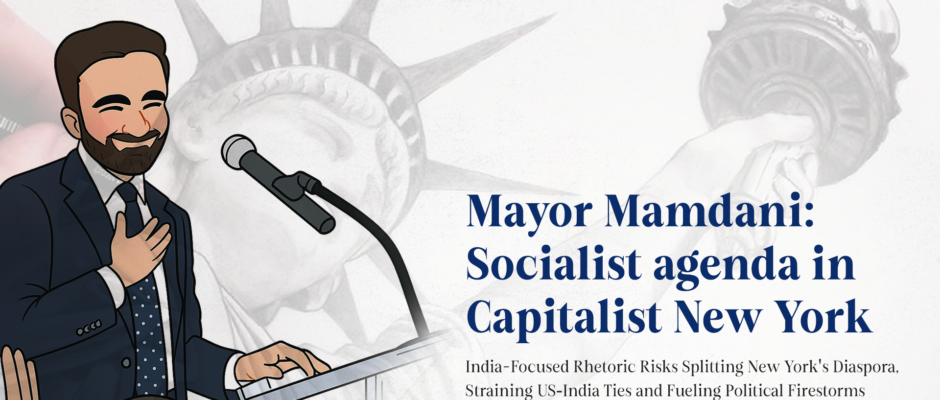
Mayor Mamdani: Socialist agenda in Capitalist New York

India-Focused Rhetoric Risks Splitting New York’s Diaspora, Straining US-India Ties and Fueling Political Firestorms N. C. Bipindra Zohran Mamdani’s victory marks a striking moment in New York politics: a young, Muslim, democratic socialist, son of filmmaker Mira Nair and Mahmood Mamdani, will lead US largest city at a time of heightened identity politics and global polarization. His biography helps explain ferocity of the debate around him. It’s his stance on India-related issues, Kashmir, Palestine, criticism of Prime Minister Narendra Modi and pointed public comments about Gujarat that has transformed what might otherwise be a municipal governance story into a transnational political flashpoint. This is not just about ideology; it is about how rhetoric issued from City Hall can fracture diaspora coalitions, complicate diplomatic ties and provide political fodder for opponents at home and abroad. Mamdani’s critics, ranging from conservative commentators to influential diaspora organizations argue that some of his statements are one-sided, factually shaky and politically inflammatory. Misinformation on Gujarat Row over his remarks about Muslims in Gujarat is instructive. Opponents in India and beyond called out a claim he made suggesting a dramatic demographic or social shift in Gujarat’s Muslim population; fact-checkers and Indian commentators quickly disputed that account, saying it mis-states census data and on-ground socio-economic diversity of Muslims in the state. Whether these were careless rhetorical flourishes or substantive errors, they gave immediate ammunition to critics who charge Mamdani with repeating misleading narratives about India. No Sympathy for Israelis, Kashmiri Pandits On Palestine and Kashmir, Mamdani’s record reflects unmistakable activism. His vocal support for Palestinian rights, his positions on settlement funding and public statements criticising Modi government’s purported human rights record have resonated with some New Yorkers particularly youngsters and left leaning advocacy networks. But these positions have alarmed others. Jewish social groups and centrist constituencies have warned that his rhetoric can blur lines between legitimate criticism of Israeli policy and statements that some interpret as insufficiently condemnatory of extremist violence; that perception has hardened a political fault line in a city with world’s largest Jewish population outside Israel. Jewish Reactions to Mamdani Several mainstream Jewish organizations issued cautious, measured statements after the election, underscoring their vigilance about anti-semitism while also acknowledging internal divisions over Israel policy – a reflection of broader tension Mamdani now inherits. Importantly, most stinging critiques do not simply target Mamdani’s policy preferences; they attack his credibility. Opponents say his India-related assertions sometimes rely on sweeping narratives rather than granular, verifiable evidence. In public fora and on social media, detractors frame those statements as kind of moralising shorthand that, in a globalised information environment, can be magnified into misinformation or selective history-telling. Indian Americans Call Him Biased For New York’s diverse South Asian community that encompasses people with attachment to India, Pakistan, Bangladesh and beyond: such simplifications risk alienating those who do not see their lived realities reflected in Mamdani’s public claims. The result is a fractured coalition: socialist base that propelled him to victory and diaspora groups who feel caricatured or dismissed. Another dimension is geopolitical optics. Mayors generally have limited formal capacity to change US foreign policy, but New York’s Mayor remains a global figure whose words carry diplomatic weight. Misinformation as a Weapon Critics warn that incendiary or ill-substantiated claims about India could complicate US–India municipal and cultural ties, from sister-city arrangements to trade and philanthropy, and could be seized upon by political actors in New Delhi eager to paint American democrats as biased or hostile. That risk is magnified because India has a politically active and often transnational diaspora that reacts swiftly to public statements by prominent figures; controversy can therefore ripple back to New Delhi and become a bilateral talking point. Indian American community in New York has sharply criticised his comments on India, as “bigotry and bias” against Indian communities, and called him “divisive, discriminatory, and unbecoming.” Fanning Domestic Polarisation Domestically, Mamdani’s India-focused controversies also feed a very immediate vulnerability: nationalised political polarisation. President Donald Trump and conservative pundits have already shaped a narrative casting Mamdani as dangerously radical, a framing Trump used in the campaign to argue that federal funds should be withheld should Mamdani assume office. That nationalisation of a municipal election transforms local disputes over housing and transit into existential fights over patriotism, security and cultural loyalty. In a hyper-partisan media environment, claims about “misinformation” on issues like Gujarat riots or about Pakistan/India politics can be weaponised to de-legitimize policy initiatives, no matter how pragmatic their intent. Keeping Governance Promises Policy implications matter. If Mamdani wants to deliver on his agenda, rent stabilisation, transit relief, childcare expansion, he must secure broad administrative cooperation, funding and buy-in from constituencies that feel threatened by his rhetoric. That requires the kind of political translation that sanctified rhetoric rarely achieves: careful, evidence-based communication; clear sourcing for claims about international events; and consistent, unequivocal condemnations of violence and extremism coupled with nuanced critiques of state policies. Failing that, even feasible policies will be cast through the prism of identity and foreign-policy controversy, making compromise harder and governance costlier. Gujarati Muslim Father, Punjabi Hindu Mother There is, however, an opening: Mamdani’s background and family story provide him with a platform to reframe the debate. His parents’ Indian origins, public intellectualism, and filmmaking sensibility give him rhetorical gifts that could be used to de-escalate rather than inflame. By commissioning independent fact-finding on contested claims, clarifying past statements and engaging directly with South Asian and Jewish community leaders not as adversaries but as partners in city governance, he could shift the narrative from cultural combat to municipal competence. That won’t please hardliners on either side, but it could blunt attacks that center on his credibility rather than his policies. Fueling Identity Politics Finally, case of Zohran Mamdani is a cautionary tale about modern urban leadership: global identity politics are now inseparable from municipal governance. Mayors must navigate local service delivery while managing transnational reputations and diaspora sensibilities. For Mamdani, pragmatic path is clear even if politically costly: root his public statements

Read More
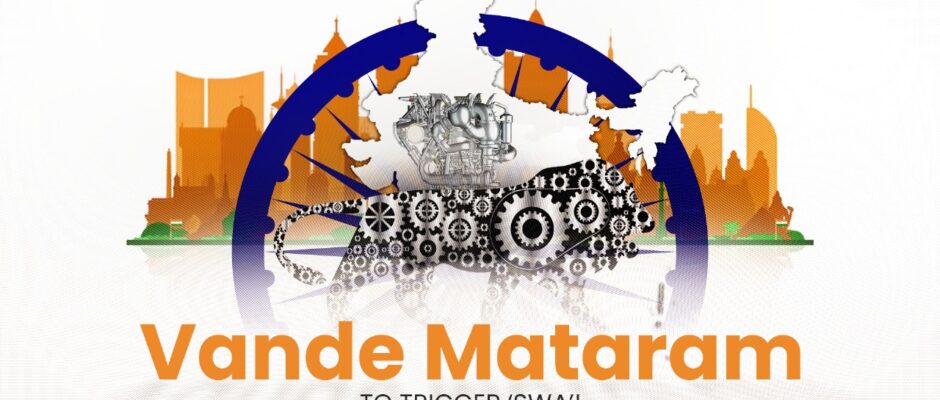
Vande Mataram to Trigger ‘Swa’!

Vande Mataram to Trigger ‘Swa’!

From home grown tech, goods, services to Bharat’s way of resolving her problems would celebrate the spirit of ‘Swa’ to’swadeshi’! K.A.Badarinath The national song ‘Vande Mataram’ that caught the imagination of all freedom fighters for united Bharat against British occupation seeking ‘swaraj’ a la self-rule has turned 150. Bankim Chandra Chattopadhyay penned the verses in 1875 and this became the swan song for complete freedom and rejection of foreign rule, goods and services. This very song can serve as inspiration for a united, developed country of 1.5 billion people overcoming both internal and external challenges. And, rightly, central executive council of Rashtriya Swayamsevak Sangh (RSS) that held three-day conclave in Jabalpur earlier this week announced one-year long campaign to celebrate and revive the spirit of ‘Vande Mataram’. It was first voiced at the Congress session in 1896 by none other than Bharat Ratna Rabindranath Tagore. And, the delegates at Congress session were swayed by this national song. It also turned the ‘mantra’ against British and sung by icons like Maharashi Arbindo, Madame Bhikaji Cama, renowned poets like Subramanya Bharati, Lala Hardayal and Lala Lajpat Rai apart from reformers like Dayananda Saraswati. Mahatma Gandhi had deftly used ‘Vande Maataram’ to greet people even in his letters to fellow compatriots and freedom fighters. When ‘Vande Mataram’ turned 100, ironically, the Congress-led government restricted its singing in 1975 after then Prime Minister Smt Indira Gandhi imposed internal emergency, trampled upon citizens’ fundamental and democratic rights. Most democratic institutions including both houses of parliament were dissolved and began two-year near lunatic undemocratic rule to stay in power. Hence, the entire Sangh parivar that bore the brunt of a criminal rule in New Delhi, seems to have decided to ring in the spirit of ‘Vande Mataram’ after 50-years. The national song treated on par with national anthem is sought to reunite the entire country’s citizenry against divisive forces seeking to weaken the fundamentals of the society on lines of caste, creed, sex, region, religion and faith. ‘Vande Mataram’ has the big potential to rekindle the spirit of ‘Swa’ (selfhood) and ‘Bharatiyata’ (Indian-ness) against forces of disruption having linkages with foreign powers. From villages, counties, communities to the entire nation, Vande Mataram could inject the sense of belonging for Bharat, resurrect its civilizational ethos, celebrate its diversity and unite to become a developed country laying a firm path for other nations to move along as well. RSS Sarkaryavah Dattatreya Hosabale has emphasised on reviving the spirit of ‘swa’ as the basis for national renaissance, development and bringing about inclusive prosperity in Bharat setting aside differences within some sections. ‘Swa’ includes reliance on domestic resources, talent, ideas, innovations and technology that could define Indian-ness. For instance Sridhar Vembu’s arattai can be our basic communication medium as against Whatsapp. For instance, building our own Kaveri engine that can power passenger and fighter aircraft should be our priority as against building Russia’s SJ-100 aircraft. As Dattatreya Hosabale said, ‘Swa’ or ‘Swadeshi’ should not translate into complete ‘isolation’ from Bharat’s perspective. It only means that heavy dependencw on domestic resources, desi talent, home grown technologies, innovations and human mind. From aerospace engineering, defence production to information technology, self-reliance should become the key word in spirit, content or processes. Puritan ‘Swadeshi’ way coupled with multiple global partnerships would bring about resilience to Bharat’s campaign for her socio-economic renaissance. One is reminded of Russia buckling under US pressure to deny Bharat the cryogenic engines technology to power her rockets and missiles. Russian space agency Glavcosmos revised its 1994 pact with Indian Space Research Organisation (ISRO) to deny the cryogenic engines technology and limited to supply nine engines. And, ISRO scientists outflanked the global space powers to rise from ashes and dominate the space sector. Big positive in this campaign is also Narendra Modi led government’s move to join the parivar campaign on ‘Vande Mataram’. If the recent Home Ministry memorandum is any indication, Prime Minister Modi will lead the nation to rekindle the spirit of ‘Vande Mataram’ way on Friday, November 7 that’s Akshay Navami. Last month itself, Union Cabinet had through a resolution decided to celebrate ‘Vande Mataram’ till November 7 next year. This campaign would become more purposeful if the governance at every level adapts ‘swadeshi’ as the ‘mantra’ Overtaking Japan or Germany, competing for the top of the stack position vis-à-vis China and US on economic front is a doable project if the spirit of ‘swa’ in every sector was applied. From governance reforms to celebrating diverse languages of Bharat’s people, governments, political formations and leadership will play a significant role. (Author is Director & Chief Executive of New Delhi based non-partisan think tank, Centre for Integrated and Holistic Studies)
Read More

RSS at a Glance

Introducing “RSS at a Glance” a crisp infographic-ready snapshot of the Rashtriya Swayamsevak Sangh’s scale and momentum. It captures headline metrics you can cite at a glance: volunteers (swayamsevaks), daily shakhas, annual seva projects, educational initiatives and schools, disaster-relief deployments. A numerical backbone behind a century of volunteerism and nation-building.

Read More

An introduction to Rashtriya Swayamsevak Sangh (RSS)

As the Rashtriya Swayamsevak Sangh (RSS) enters its centennial year, we present “An introduction to Rashtriya Swayamsevak Sangh (RSS)” a primer on RSS’s origins, ethos, and impact. From daily shakhas and disciplined selfless volunteerism to nationwide seva initiatives in education, social harmony, environment, and disaster relief, this primer shows how character-building and community leadership translate into nation-building. Explore the milestones, the organisational cadence, and the living culture that has impacted social life across Bharat for a hundred years and continues to do so with purpose.

Read More
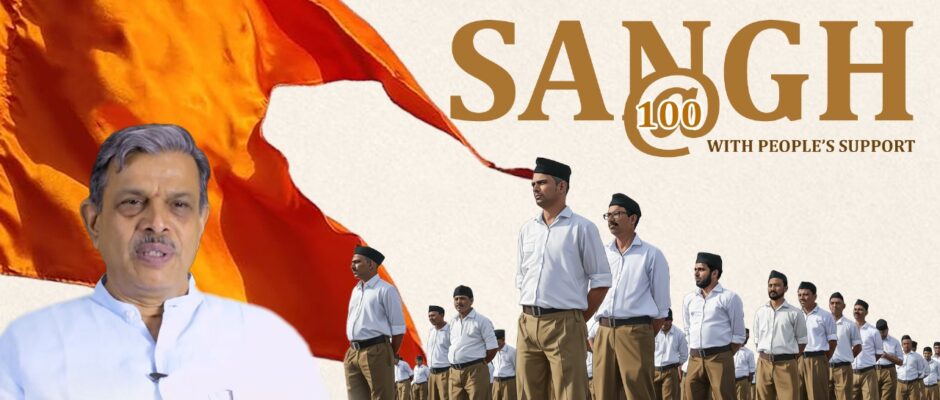
Sangh@100 with People’s Support

Sangh@100 with People’s Support

Dattatreya Hosabale The work of the Rashtriya Swayamsevak Sangh has now completed one hundred years. In this long journey, countless people have been companions, contributors, and well-wishers. This journey was full of hard work and challenges, but the unwavering support of ordinary citizens turned it into a fulfilling one. As we pause in the centenary year and look back, memories of many such moments and people come alive—those who devoted their everything to ensure the success of this mission. In the early years, young karyakartas set forth across the country like dedicated warriors, driven entirely by their love for the nation. Family man like Appaji Joshi or full-time pracharaks such as Dadarav Parmarth, Balasaheb and Bhaurao Deoras brothers, Yadavrao Joshi, Eknath Ranade—all of them, under the guidance of Dr. Hedgewar, took Sangh work as a sacred vow of lifelong service to the nation. The progress of the Sangh has always rested on society’s constant support. Because its work remained in tune with the spirit of the people, acceptance grew steadily over time. Once, Swami Vivekananda was asked during his foreign travels: “Most of your countrymen are uneducated, they don’t even know English, so how will they understand these profound things you talk about?” Swamiji had replied, “Just as ants do not need to learn English to find sugar, my people do not need foreign tongues to recognise a noble and spiritual cause. Their inner wisdom will guide them.” This statement turned out to be remarkably true. Similarly, despite the slow pace, society at large has continuously recognised and supported the Sangh’s sincere efforts. From the very beginning, Sangh Karyakartas received blessings, shelter, and encouragement from ordinary families. In fact, the households of swayamsevaks themselves became the foundational centres of the work. The contribution of mothers and sisters has been critical in giving completeness to this journey. Inspired figures like Dattopant Thengadi, Yashwantrao Kelkar, Balasaheb Deshpande, Eknath Ranade, Deendayal Upadhyaya, and Dadasaheb Apte drew strength from the Sangh and went on to build several organisations in different walks of social life. Today these organisations, with immense growth, have brought about constructive changes across many fields. Among women too, towering personalities like  Mausiji Kelkar and Pramila Tai Medhe, through the Rashtriya Sevika Samiti, have offered a motherly strength that has been central to this mission. Over the decades, the Sangh has raised several issues of national importance, always with society standing in support. At times even those publicly opposed have lent their voices for the larger Hindu cause. The Sangh consistently sought consensus and cooperation on matters of Hindu unity, national security, social harmony, democracy, and preservation of culture. Thousands of Swayamsevaks endured unimaginable hardships, and many laid down their lives. Through all this, society’s hand of support was always there. In 1981, when a few Hindus in Meenakshipuram, Tamil Nadu, were converted under misleading circumstances, a massive Hindu awakening movement followed. A conference attended by nearly half a million people was presided over by Dr. Karan Singh, then a senior Congress leader. In 1964, the Vishwa Hindu Parishad was founded with the active participation of renowned spiritual leaders like Swami Chinmayananda, Master Tara Singh, Jain muni Sushil Kumar, Buddhist bhikshu Kushok Bakula, and Namdhari Sikh Guru Jagjit Singh.  The initiative was inspired by Shri Guruji Golwalkar, with the purpose of reaffirming that untouchability had no place in Hindu scriptures. To uphold this principle a grand  World Hindu Conference was conveyed in Udupi where revered spiritual leaders, saints and mahants came together extending their blessings and support. The spirit voiced earlier at the Prayagraj conference—that Na Hindu patito bhavet (No Hindu can ever fall from grace) was echoed at this conference as Hindavah Sodara Sarve (All Hindus are brothers, children of Bharat Mata.)  From the campaign for cow protection, to the Ram Janmabhoomi movement, Sant-samaj (saintly fraternity) has always given blessings to the Sangh swayamsevaks. After Independence, when political reasons led to a ban on the Sangh’s activities, it was not only ordinary people but also highly respected figures who openly stood by it, giving courage in those difficult times. The same was experienced during the Emergency. That is why, despite so many obstacles, Sangh work has continued seamlessly and steadily. Through crises, it has often been the mothers and sisters who shouldered the responsibility of keeping Swayamsevaks and their work intact, becoming a constant source of inspiration. Looking ahead, in this centenary year, Sangh Swayamsevaks will make a special effort to reach every household—across big cities, remote villages, and among all sections of society—to invite wider cooperation and participation in the mission of national service. With the coordinated effort of all well-meaning forces of society, the next stage of our nation’s journey—towards holistic development—will certainly be smoother and more successful. (The writer is the Sarkaryavah of the Rashtriya Swayamsevak Sangh)Sangh@100 with People’s Support

Read More
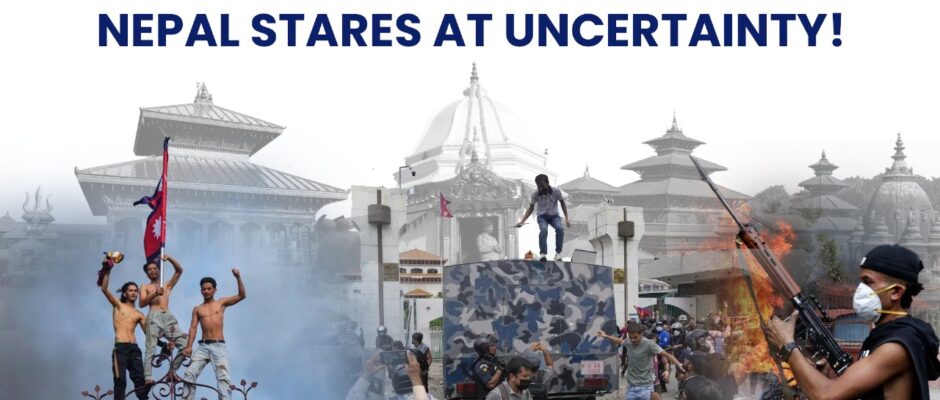
Nepal Stares at Uncertainty!

Nepal Stares at Uncertainty!

A stable, open, vibrant Himalayan nation retaining its Hindu core with cultural, civilizational and spiritual underpinning is most sustainable. K.A.Badarinath Peace and tranquillity, political stability and nursing the tiny Himalayan nation, Nepal to normalcy is pivotal to enduring growth and sustained development in South Asia. Bharat’s nearest and one of the most trusted partners, Nepal went through a lot in last couple of weeks. Disturbing and painful scenes of complete anarchy, loss of 19 young lives, scores injured, iconic Parliament, Supreme Court and other top-end buildings burning to ashes in part or completely painted a distressing picture of this picturesque country. There’s no place for corrupt, authoritarian or anti-people regimes that let down their own people. Be it Bangladesh, Nepal or Sri Lanka, zero tolerance to corruption is something that each will have to prioritize as basic tenant of a democratic polity. And, Nepali political leadership of all hues and shades have got thoroughly exposed after they failed to provide corrupt-free governance. Social media related policies were incidental and served as trigger for youngsters to hit the road. Eight major political formations with diverse ideologies and linkages like Nepali Congress, CPN-UML, Moist Centre, Jan Samajwadi Party, CPN – United Socialist, Loktantrik Samajbadi Party, Rashtriya Janmorcha that dominated the political arena today find themselves out of the system after K.P.Oli led coalition was forced out by the youngsters. Kathmandu Mayor Balen Shah and Sudan Gurung that apparently played a key role during the protests seem to have shifted behind the screen in their activities. While uncertainty stares in Nepal, an interim government headed by Prime Minister Sushila Karki and her three ministers do not fit into any of these political parties. And, they would find it difficult to find their in moving forward. Given that the young protesters did not have centralized leadership or entity that led the violent protests, the interim government will have to carve out its own socio-political space. Home Minister Om Prakash Aryal, Power Minister Kulman Ghising and finance Minister Rameshwar Khanal appointed by the first lady Prime Minister reportedly enjoy clean image and do not come with political baggage of any kind. Their work in respective areas stands out. All the four including Prime Minister Karki seem to have western orientation either due to their profession or outlook. Hence, their work in the government would be subjected to closer scrutiny by all stakeholders in Nepal. For the first time, overtly professional Nepal army had to play a semi-political role leading to dissolution of Parliament, formation of interim government that will lead the country into general elections in March 2026. To its credit, Nepal Army displayed exemplary professionalism by not taking reins of governance and backed the Karki regime to see through difficult transition next few months. Also, it is immensely possible that political parties that lost people’s confidence may realign to bounce back to centre stage seeking a second chance. After adoption of the new constitution ringing in democracy in 2008, fourteen governments were formed, dislodged with political alignments happening all through. None of these political formations were able to complete the mandated five-year term after an election. In these 18-years of political turbulence marked by twists, turns and realignments, India stood as beacon of strength to lend a helping hand in the Himalayan nation’s transition to democracy. Notwithstanding political ideologies of a government that ruled Kathmandu, India stood firmly with Nepal in its socio-economic development journey as a steadfast partner with no strings attached. If Prime Minister Narendra Modi and external affairs minister S.Jaishankar’s statements are any indication, India continues to be firmly behind Nepal. One also needs to watch out for cold play from Communist China and Republican US while Nepal struggles to end uncertainty and get back its rhythm. Hard part for Nepal would be to retain its basic Hindu character while diverse ideological formations and external forces come into play. There were wild guesses that the former monarchs were behind protests which were proved wrong. An open, vibrant and bustling Nepal retaining its Hindu core in terms of its cultural, civilizational and spiritual orientation is what would sustain itself as a sovereign nation. (Author is Director and Chief Executive of non-partisan New Delhi based think-tank, Centre for Integrated and Holistic Studies)

Read More
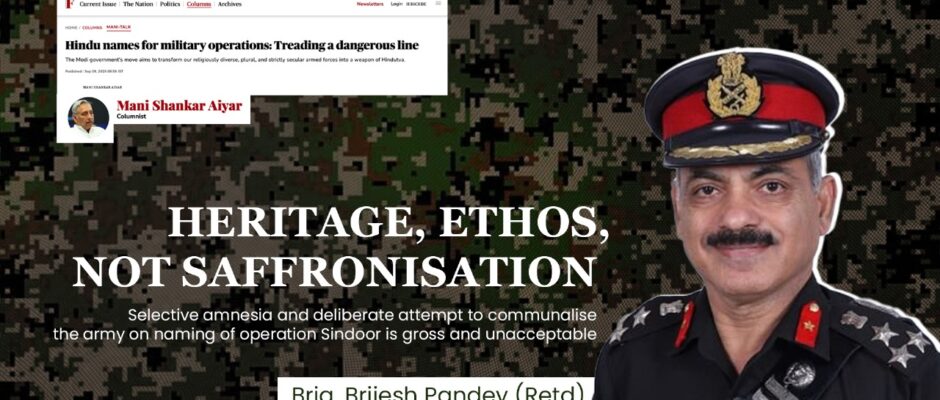
Heritage, Ethos, Not Saffronisation

Heritage, Ethos, Not Saffronisation

Selective amnesia and deliberate attempt to communalise the army on naming of operation Sindoor is gross and unacceptable. Brig Brijesh Pandey Frontline column “Hindu Names for Military Operations: Treading a Dangerous Line” by Mani Shankar Aiyar published on 09, September 2025 argues that naming of military operations by the present government – most recently Operation Sindoor reflects a deliberate “saffronisation of Indian Army.” The argument is provocative, selective and highly misleading. Having served for 35 years in Indian Army, I never felt that I’m a Hindu or so to say only a Hindu. Being from a pure Sikh Regiment, felt more like a SIKH, behaved like a Sikh and whenever there was a chance to name an institution, exercise or force, the first name that would come to the mind was one that related to Sikh traditions of valour. Yet no one, including my parents, questioned my secular or Hindu credentials. This is so, because anyone who understands armed forces – the history, military tradition and institutional structure – knows that operation or force names are cultural symbols, not ideological manifestos. The culture of naming operations and exercises is older than modern warfare and militaries across the globe use evocative names for operations and exercises – sometimes as a code for secrecy, motivation and more often for messaging deterrence to the adversary as much as public consumption. From earliest days of independent India, armed forces have drawn names from mythology, Sanskrit, geography and abstract concepts. This practice cuts across political regimes led by Congress, BJP or coalitions. In 1984, almost four decades prior to the debate, Indian Army launched Operation Meghdoot to secure Siachen Glacier. The name comes from Kalidasa’s Sanskrit classic Meghaduta (Cloud Messenger from Hindu Cosmology) where an exiled Yaksha asks a cloud to carry a message to his beloved in the Himalayas. Name was chosen, as it was apt reflection of the nature of operation wherein Indian troops were airlifted like clouds into Himalayan heights. It was nothing but a cultural resonance. The name of recently concluded operation Sindoor has been used as evidence to create a discourse that Army is getting communalized or saffronised. Rationale for the name is very clear. Terrorists in Pahalgam targeted married Hindu men, widowing women overnight.  Sindoor (vermilion) symbolizes marital bond in Indian culture. Naming the operation which was primarily a retaliatory action against such a heinous crime selectively inflicted on the majority community of the country was meant to be a tribute to victims and their families, not as a religious decree. Branding it as ideologically motivated reflects ignorance as well as crafty effort to question secular credentials of the armed forces. The act of symbolism and resolve when questioned post-operation Sindoor, a defense ministry official had said, “There is no single written policy on naming. Choices are pragmatic, contextual and meant to evoke resolve.” More often than not, the ideas get generated at very junior level and accepted as such to keep the initiative alive. The writer of “Hindu Names for Military Operations: Treading a Dangerous Line” has been selective about names in recent times, without considering full spectrum since evolution of Indian Armed Forces. When names like Operation Trident (1971), Operation Shakti (1998) or Exercise Ashvamedha (2007) were chosen, no one accused the government of the day – the Congress-led in each case – of religious indoctrination. In the name “Operation Trident”, famous naval strike on Karachi in 1971, “trident” is nothing else than “Trishul”, the weapon of Lord Shiva. Operation Shakti, India’s nuclear test in 1998 drew the name from Goddess power in the Hindu philosophy. But then, these names were accepted as civilizational, not sectarian. When no questions were Congress raised then, why do it now? To illustrate that there is neither any disruption in naming the operations nor is any correlation with appointment of CDS, it is important to analyze few names that relate to the pre and post-2014 era. Era Operation/Exercise Name Year Origin/Meaning Mythological/ Cultural link Pre-2014 Operation Meghdoot 1984 Kalidasa’s Meghadoota Yaksha sends clouds to Himalayas   Operation Trident 1971 Trident (Trishul) Weapon of Lord Shiva   Operation Pawan 1987 Pawan = Wind Vedic Deity   Operation Shakti 1998 Shakti = Power Goddess Power   Exercise Ashvamedha 2007 Royal Horse sacrifice Ancient Hindu Ritual   Exercise Sudarshan Shakti 2011 Sudarshan Chakra Vishnu’s discus   Missiles Prithvi, Agni, Akash, Nag Ongoing Fire, Earth, Sky, Serpent Vedic / Hindu roots   Exercise Indra Ongoing Indra = God of rain Vedic deity Post 2014 Operation Maitri 2015 Maitree = Friendship Sanskrit, Budhist ethos   Exercise Shatrujeet 2016 Shatrujeet = Enemy Conqueror Sanskrit motivational If Armed Forces were being transformed to suit a particular religion, their names and demography would also have started changing. Instead, the regimental system remains plural – Sikh Regiment, Rajputana Rifles, Maratha Light Infantry, Punjab Regiment, Assam Regiment, Madras regiment, Gorkha Regiment, Brigade of Guards, and so on – each maintaining regional, caste or faith-based traditions. The very regimentation of Indian Armed Forces is proof of pluralism. If the army was being saffronised as claimed by Aiyar, there would be a written directive mandating Hindu names. Whether it is regiments, exercises or operations, they would all start assuming names relating to Hindu religion only. Unlike compulsory recruitment of persons of religions based on which regiments exist only Hindus will get recruited. Likewise, promotion criteria will change. There would be no non-Hindu tenanting critical appointments such as Chief of Army / Navy / Air Force. Contrary to this, what we see is continuity: a mixture of neutral, mythological and cultural names chosen for operational and symbolic value. Seen through Cognitive Warfare lens, such narratives follow a familiar toolkit: disinformation (casting doubts on facts by portraying cultural symbolism as ideological capture), amplification (mainstreaming selective examples while ignoring historical continuity) and de-legitimization (eroding trust in one of the most patriotic institutions). We saw a similar pattern when opposition leaders questioned authenticity of 2016 Surgical Strikes and 2019 Balakot airstrike. In each case, rumour and

Read More
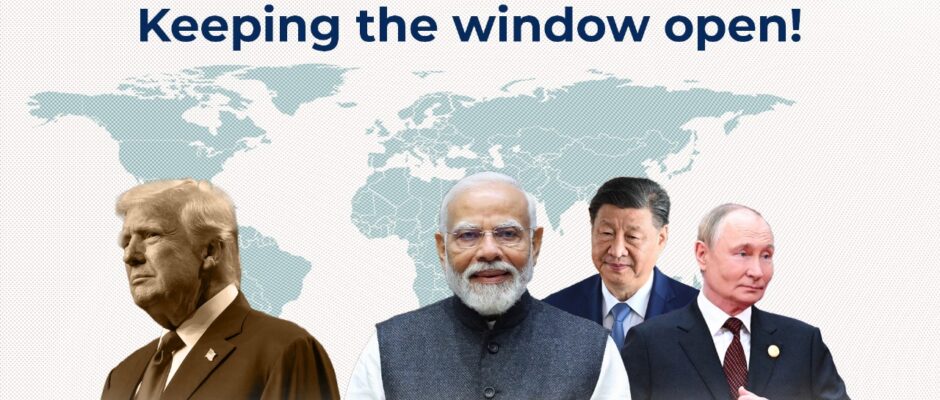
Keeping The Window Open!

Keeping The Window Open!

Delicate balancing of relations between US, China & Russia is test of Bharat’s foreign policy framework that centres on strategic autonomy. K.A.Badarinath Will there be a huge shift in Bharat’s foreign policy framework? Or, possible tilt towards China, Russia conglomeration, a permanent feature? Will this lead to increased distancing between India and US under Republican White House stewardship? What’s in store on geo-political, strategic and economic engagement for Bharat and the world? There are several unanswered and unsettling questions that pop up in inter-personal conversations and on the information highways as one scans on Google, Weibo to Douyin. Prime Minister Narendra Modi’s visit to China and Japan has set off a flurry of conversations internationally. Both, Beijing and Tokyo are most intrinsic foes that do not have much in common especially after the war leading to Japan’s surrender in 1945. Several questions that analysts, anchors and seasoned newsmen are also awe-stuck given that in the first place he lined up the visits to both China and Japan in one go. Secondly, not only do they keep distance but belong to two diametrically opposite camps but have huge issues in global equations. While China and Russia have had rivalled US-led NATO group, Japan falls into the latter alliance. Thirdly, this visit of Prime Minister Modi is significant in the backdrop of United States President Donald Trump weaponising trade, imposing 50 per cent tariff on Bharat’s goods and services and thereby burning bridges. Fourthly, Prime Minister Modi’s two nation visit gained prominence as the ‘global south’ network seeks to consolidate its position via the Shanghai Cooperation Organization whose twentieth session was held in Tianjin as China holds the rotating chair as of now. Fifth, most analysts think that Bharat’s ‘strategic autonomy’ policy framework is being put to test with re-setting its relations vis-à-vis US and China. Sixth, however, top hawks in Bharat’s foreign affairs department do expect the relations with United States to bounce back to normalcy as had happened in the past after Washington DC imposed unilateral sanctions in aftermath of Pokharan nuclear tests. Seventh, the probability of a ‘delicate balancing act’ that New Delhi would enact with caution but firmness of purpose as its near time posturing without yielding to bullying tactics of US. Eighth, there’s no reason why Bharat should not continue oil trade with Russia or any other country depending on prevailing market conditions. Neither US nor Europe have locus standi to corner Bharat citing oil trade given their own continued ‘lucrative gas deals’ with Russia and its partners. Ninth, Prime Minister Modi’s visit to both Japan and China indicate that Bharat has the depth to manage diversities. For instance, enhancing Japanese investments to US $ 68 billion from $ 34 billion through 170 deals is a big take away for both Bharat and Japan who enjoy strategic and special relationship. This is a firm message for US that sought to dry up the foreign investment pipeline in Bharat to push for a ‘bad trade deal’. By not participating in a significant programme to commemorate China’s victory over Japan is again a big message to Beijing that New Delhi has its friends elsewhere as well. Bilateral summit between Prime Minister Modi and Chinese President Xi Jinping has been regarded as pivotal to ‘resetting relations’ as development partners and ‘not as rivals’. While the intent is good, first step has been taken to normalise relations, there are several challenges especially on borders, Belt and Roads Initiative that brings Chinese projects to the doorstep via Pakistan occupied Jammu and Kashmir. Apprehensions seem to be very high on both over outcome of these meetings even as China and Bharat ready to celebrate 75-years of diplomatic relations. One significant point made by Prime Minister Modi that has gone viral was border peace and tranquillity was like an insurance policy for future enduring relations. Can the dragon and elephant in the room tango seamlessly is a billion dollar question as resetting of relations is attempted. As one Chinese scholar wrote ‘it’s rational choice and shared responsibility for both India and China to reset relations’. A big take away is a meeting between Prime Minister Modi and Russian President Vladimir Putin with carpooling and Ridge Carlton delegation level talks happening in a ‘delightful’ atmosphere. The visuals and videos of Modi, Putin traveling in a Russian made car throwing protocols to winds is not something European Union or US will want to watch. Given that US described Russia and Ukraine conflict as ‘Modi’s war’ has had no impact on the two leaders’ summit deliberations that extended a wee-bit. Also, 2025 marks 15 years of Indo-Russian strategic relationship that would come into full play later this year. From Bharat’s perspective, there have been a few takeaways from 20-members SCO summit. Unadulterated condemnation of Pahalgam attack by terrorists from across the borders is what India expected and achieved. Also, expanding trade relations between different SCO member countries with payments squared off in respective currencies is big. This would also mean that increasingly trade would get delinked from US dollar and euro while Chinese Renminbi, Russian rouble and Indian Rupee would gain in terms of acceptability. While the show in China came to a near close, the implications of new found friendship between Presidents’ Xi, Putin and Prime Minister Modi will result in sleepless nights for those in Trump administration and Brussels, housing headquarters of European Union. (Author is Director and Chief Executive of New Delhi based non-partisan think tank, Centre for Integrated and Holistic Studies)  Keeping The Window Open!
Read More
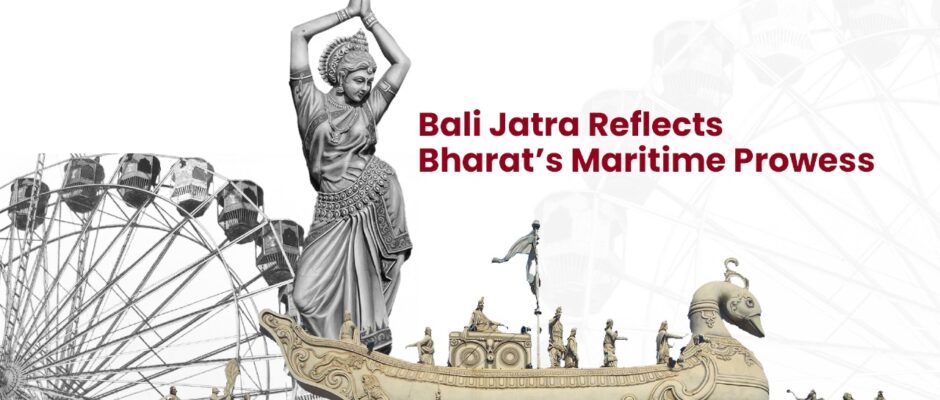
Bali Jatra Reflects Bharat’s Maritime Prowess

Bali Jatra Reflects Bharat’s Maritime Prowess

India and Southeast Asia share civilizational connect, maritime and cultural heritage that’s now dubbed as Global South. Dr Aniket Pingley Connections between India and Southeast Asia go back more than two thousand years, shaped by vast waters of Indian Ocean. These seas were not barriers but bridges, linking ports of ancient India with the islands and coastal regions of what we now call Southeast Asia. Merchants, monks, artisans and travelers carried more than goods; they carried stories, languages, faiths and practices. Over time, these exchanges left enduring marks on societies from Sumatra to the Malay Peninsula and beyond. In many ways, Southeast Asia became a mirror that reflected civilizational outreach of Bharat. Trade was the most visible layer of this relationship. India exported textiles, spices, beads and ivory while importing gold, tin, camphor and exotic wood from Southeast Asia. These exchanges were never limited to commerce alone. Maritime routes were also pathways for ideas. Ramayana and the Mahabharata were retold in local languages; Sanskrit and later Pali shaped courts and religious practices and Indian temple architecture inspired monuments from Angkor in Cambodia to Borobudur in Indonesia. The very names of places such as Yogyakarta, Ayutthaya and Srivijaya testify to these cultural flows. These interactions reveal how India’s influence went beyond its borders helping to form cosmopolitan societies in Southeast Asia that were both rooted in local traditions and open to outside influences. Diplomatic and political exchanges played an important role. Rulers in Java, Bali and Sumatra often drew on Indian ideas of kingship, legitimizing their authority through symbols and rituals derived from the subcontinent. The legend of King Airlangga of Java, for example, shows how Indian epics and models of governance were woven into local traditions [5]. Similarly, in Malay Peninsula, early polities combined maritime trade with cultural borrowing from India, laying the foundations for the region’s lasting connections with the subcontinent [7]. These layers of connection commercial, cultural, religious and political formed a civilizational network that is now increasingly referred to as “Global South.” India’s historic outreach demonstrated how societies of South could link with each other, exchange resources, and build hybrid cultures without external domination. This perspective is particularly important today as countries of Asia, Africa, and Latin America seek greater cooperation outside the traditional frameworks of the West [7]. Bali Jatra: Memory of the Ocean Voyages Odisha, known as Kalinga in ancient times, was a formidable maritime power. Its strategic location along Bharat’s eastern coast made it a hub for trade and cultural exchange. Major ports like Tamralipti, Palur and Manikapatna were bustling centres of commerce, facilitating movement of goods and ideas between India and Southeast Asia. It is in this context that festival of Bali Jatra (Baliyatra), celebrated in Cuttack, Odisha, hold such significance. Literally meaning “voyage to Bali,” the festival commemorates the journeys once undertaken by Sadhabas or Odia merchants, who sailed across the Bay of Bengal to trade with Java, Bali, Sumatra and other parts of Southeast Asia [1][2]. During full moon of Kartik Purnima every year, families in Odisha still set afloat small boats made of banana bark, paper, or cork, symbolizing vessels that once braved seas. The Balinese celebration of Nyepi, Hindu New Year, bears similarities to rituals of Kartik Purnima in Odisha. Both festivals involve offerings to the gods, prayers for prosperity and rituals closely tied to agricultural and maritime cycles. The practice is more than a regional ritual; it is a living archive of India’s maritime past. Bali Jatra reminds us that Indian Ocean trade was not incidental but central to Bharat’s engagement with Southeast Asia. At its height, these voyages established a dense web of relationships that enriched both sides. For Southeast Asia, Indian traders brought goods and technologies that supported local economies. For India, the voyages opened access to new markets, resources and cultural influences. The festival, therefore, is not only about nostalgia but also about acknowledging an interconnected past. Today, Bali Jatra has grown into one of the largest open-air fairs in Asia, attracting millions of visitors [3]. It showcases not just Odisha’s heritage but wider story of India’s role in maritime Asia. The festival includes cultural performances, food, handicrafts, and exhibitions that highlight the living traditions of seafaring communities. It also increasingly serves as a site of cultural diplomacy, inviting participation from Southeast Asian countries whose histories are tied to these voyages. Contemporary Relevance & Policy Play The significance of Bali Jatra does not end with heritage. It has clear implications for policy and diplomacy in the present. India and ASEAN today are strategic partners, cooperating in trade, security and cultural exchange. Yet for these partnerships to deepen, they need narratives that bind them beyond statistics. Bali Jatra provides one such narrative, rooted in shared history and civilizational connect. For Bharat’s policymakers, the festival is an example of India’s civilizational diplomacy. The presence of diplomats and foreign representatives at recent Bali Jatra celebrations shows growing recognition of its potential [3]. By inviting Southeast Asian leaders, academics, and artists to participate in the event, India can use the festival to create dialogues that are both cultural and strategic. Such engagements could align with forums like the Delhi Dialogue and ASEAN–India summits [8], making cultural heritage an integral part of foreign policy. For Southeast Asian nations, acknowledging festivals like Bali Jatra opens space to emphasize shared heritage while respecting national diversity. Countries such as Indonesia and Malaysia, where Indian cultural imprints remain visible, can view these connections not as relics of the past but as foundations for renewed cooperation. Policy research papers from think tanks such as Institute of Strategic and International Studies Malaysia already suggest that cultural diplomacy can strengthen the Comprehensive Strategic Partnership between India and Malaysia [6]. Similarly, Indonesian scholars point to the shared legacy of figures like King Airlangga as a reminder of intertweaved histories [4]. For the academic community, Bali Jatra offers a platform for dialogue on the meaning of the Global South. As scholars note, the Global South is not only

Read More